This chapter will discuss key policy issues regional policy makers need to consider when adapting to demographic change through spatial planning, development of infrastructure and housing policies. A key guiding principle is to promote efficient land use and service provision by fostering density in well-connected areas, ensuring long-term regional sustainability and resilience.
Shrinking Smartly and Sustainably
Strategies for Action

Abstract
Granular information on population, population and built-up area trends, infrastructure networks and accessibility can inform government decisions on public service provision, infrastructure investment, and densification. For example, it can help identify local centres for service provision. The policy responses to demographic shrinkage should take into account the opportunities arising from digitalisation as well as the need to address environmental challenges and opportunities, for example, by limiting artificial surface cover, car dependency. They should also consider impacts on housing and on exposure and vulnerability to future extreme climate evens. The Annex provides relevant geospatial data sources.
Severe depopulation leads to changes in population density and vacant buildings while raising challenges concerning infrastructure, its costs, and the access to services it provides. These considerations must therefore be integrated into land use and spatial planning plans. Spatial planning is defined as a set of governance practices for developing and implementing strategies for territorial development and the future distribution of activities and built-up areas in space. While spatial planning establishes a framework for the alignment of broad strategic spatial goals and balanced territorial development, land use refers to the specific processes by which land can be used, with common instruments including permitted uses, floor-area ratios for buildings, and designated settlement zones (OECD, 2022[1]).
Long-term and severe population decline results in fixed assets like roads, water supply, and wastewater being shared by a decreasing number of users (Hollander, 2018[2]) (Luescher and Shetty, 2013[3]) (Johnson, Hollander and Hallulli, 2014[4]) (Németh and Hollander, 2016[5]) (Sousa and Pinho, 2015[6]). Many networks are characterised by fixed operating and maintenance costs that do not depend much on network use. Consequently, low-density land use results in higher costs per capita (Hortas-Rico and Solé-Ollé, 2010[7]) (OECD, 2018[8]). Operating and maintenance costs per capita increase with the severity of depopulation. Housing is at risk of abandonment, leading to the creation of vacant developed land. The presence of abandoned or partly-abandoned housing and inadequately maintained infrastructure diminishes the overall quality of built environments, detracting from well-being and regional attractiveness. Well-designed spatial plans in the context of depopulation enable the alignment of infrastructure and settlement plans with population projections and enhance overall land use efficiency.
Failing to integrate depopulation into spatial and land use planning also reinforces land use patterns that are inconsistent with environmental policy priorities. For example, low-density development contributes to biodiversity loss (OECD, 2022[1]).
Spatial and land use planning must also adapt to an older and socio-economically more vulnerable population with specific needs. Regions with severe depopulation often have small populations of young individuals, active or in education. Good living conditions for the young and economically active population are also important, as they can meet employment and skills needs in the regional economy, including for public service provision. Spatial planning and land use decisions can help improve their physical, economic and digital access to employment, cultural, educational and social opportunities.
Some places experiencing strong population decline initially attempt to reverse the trend through a “growth” policy and continue investing in road infrastructure and attracting new commercial and residential developments by offering low tax rates (EPSON, 2017[9]) (Creutzig, 2023[10]). Residential built-up areas are expanding in many regions where population is decreasing, and in some they are expanding even more quickly than in regions with positive population growth (Figure 3.1). Persistently investing in new infrastructure with the hope of attracting new residents can have long-term costs if not aligned with demographic and economic realities. For example, some Swedish municipalities are still repaying loans that were granted for the construction of buildings demolished a long time ago (Syssner, 2023[11]).
Change in residential built-up area and population across TL2 regions in the OECD (2010-20)
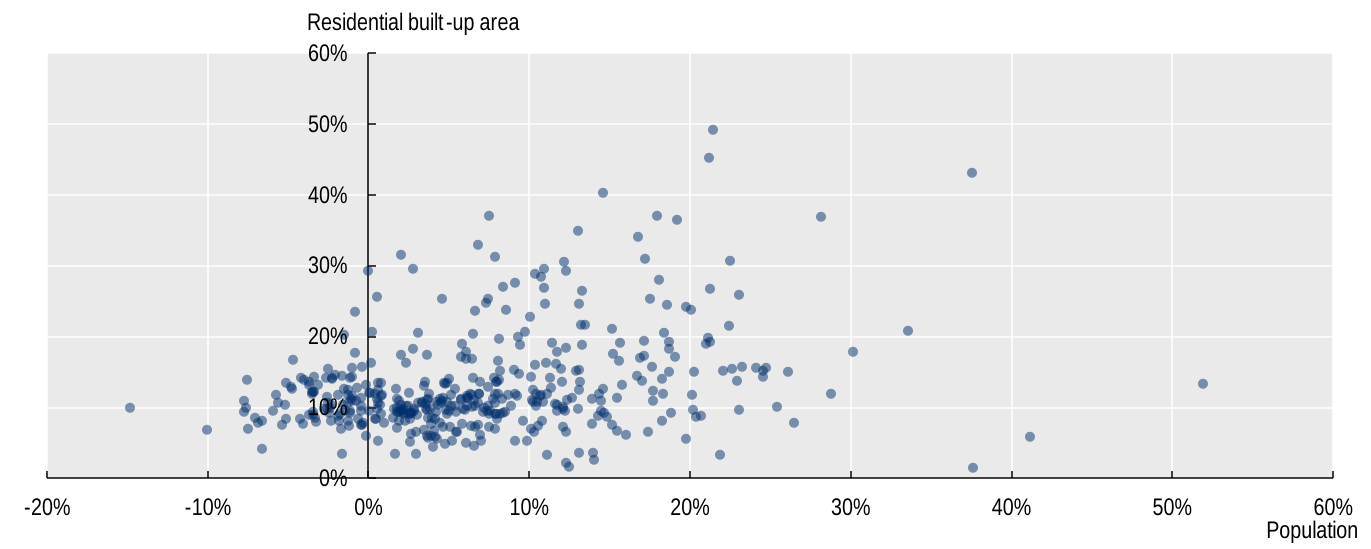
Note: Built-up statistics are calculated using (Pesaresi and Politis, 2023[12]).
Source: (Pesaresi and Politis, 2023[12]), (OECD[13]), (OECD[14]).
Spatial data on population, demographic projections and built-up areas need to be developed at the national, regional, and local scale to identify areas affected by severe depopulation and estimate local demand for land and housing. Failing to include demographic projections can lead to planning decisions based on unrealistic assumptions. Where population projections are provided at a higher level of aggregation, low level plans need to be co-ordinated to achieve consistency. Regions or municipalities undergoing depopulation frequently encounter challenges in planning capacity, thus requiring support at higher levels of government. In such instances, the central government should provide open data, information systems, and administrative assistance to municipalities.
Densification is key for sustainable development in regions and cities
Limiting land consumption and densification in central areas can offer a solution to alleviate the costs associated with severe depopulation while keeping regions attractive.
In Japan, the National Spatial Strategy is grounded on the concept of “compact and networked” settlements, aimed at fostering agglomeration economies, acknowledging some areas will face inevitable depopulation, but aiming for a broad, national settlement distribution. This involves managing the contraction of settlements, including cities. Japan’s strategy emphasises economic benefits from enhancing links between cities (OECD, 2016[15]).
Similarly, in Korea, the “1st Comprehensive Plan for Local Era” applies the “compact and networked” approach, which emphasises developing a sustainable economic growth base within the urban areas of regions, and enhancing living conditions by concentrating services (e.g. education, culture, healthcare) and high-quality housing in dense, accessible settlements that effectively serve surrounding areas. The plan aims at the expansion of transport infrastructure and digitalisation. Through this multifaceted approach, the plan seeks to make every part of Korea an attractive place to live, fostering inclusive and sustainable development.
To encourage densification, commonly used tools include urban growth boundaries and urban service boundaries, which aid in discouraging extensive development. These tools need to remain flexible and align with housing demand. In declining areas, the boundaries might become overly expansive with the decreasing population. Additionally, clearly defining the roles of central, regional and local government in addressing cross-boundary issues is crucial, reinforcing the necessity for co-operation.
Flexible zoning regulations can help accommodate population shrinkage. It enables the repurposing of underused buildings or areas, helping to avoid unnecessary, sprawling new development elsewhere. Mixed-use zoning regulations can set maximum nuisance levels, allowing for diverse uses within defined limits. Density regulations can allow gradual densification of central neighbourhoods, particularly in rural areas, coupled with well-functioning public transport networks to reduce infrastructure costs. This approach is key for rural areas and small towns facing strong population decline to reduce land consumption and increase land use efficiency.
The redeployment of underused or unused but already developed land offers diverse opportunities for leisure space, urban agriculture, or commercial use, considering soil quality, previous land use and infrastructure connection (Johnson, Hollander and Hallulli, 2014[4]). Brownfield sites could be repurposed for renewable electricity generation for example, while uncontaminated sites may be suitable for cultural facilities, reforestation or agriculture. Geospatial data on the technical renewables potential of regions can assist such decisions. Vacant houses could accommodate small businesses. Local participation in decision making and in profits can help develop these opportunities. Moreover, a noteworthy option to consider is "land banking," a practice involving the acquisition of undeveloped or abandoned land for future development or sale (OECD, 2023[16]). The land bank plays a role in revitalising vacant or abandoned land, promoting economic activity through commercial and industrial endeavours, and establishing new green and open spaces.
Transit-oriented development could enhance efficiency and cost reduction
Low-density development increases travel distances, boosting the demand for transportation and road infrastructure. These sparsely populated areas are often underserved by public transport, increasing car dependency, energy use and transport-related carbon emissions (OECD, 2021[17]). Figure 3.2 illustrates the significant positive correlation between the built-up area per inhabitant and the quantity of private vehicles up to approximately 250 m² of built-up area per person. As private vehicle ownership increases, road infrastructure costs as well as the expenditure on road maintenance and upkeep also go up (OECD, 2022[1]).
Spatial and land use plans should prioritise well-functioning public transport networks, incorporating demand-responsive transport (DRT) services, which are well-suited to low-density areas. For instance, the municipality of Niepołomice in Poland has successfully enhanced public transport efficiency with the Tele-Bus system, an on-demand service that has increased users from 300 to over 3 500 per month since its launch in 2007, catering to commuting workers, students, and old-age individuals, despite initial opposition. These land use patterns not only result in better service, but also lead to reduced costs (OECD, 2022[1]).
Private vehicles per 1 000 inhabitants, OECD TL3 regions

Source: (OECD, 2022[1])
Service provision constitutes a significant portion of local government budgets as discussed below. Strongly declining population density can result in higher cost, ill-maintenance and poorer access to facilities providing key public services (OECD/EC-JRC, 2021[18]). Commercial services may also decline. Ensuring accessibility to basic commercial services, such as grocery stores, petrol and charging stations, pharmacies, postal services, and banking services, is also critical for maintaining quality of life in rural and remote areas facing demographic decline. The optimal location of these service facilities is a constant debate, especially in remote, rural, and sparsely populated municipalities (Syssner, 2023[11]). Assessment of physical accessibility to facilities such as schools, hospitals or shops can help discover where services are inadequate or at risk of becoming so and should inform spatial planning decisions as well as decisions to locate facilities to avoid such risks.
Accessibility is the ability of land use and transport systems to enable individuals’ reach destinations through various modes of transport (Dalvi and Martin, 1976[19]). Geospatial accessibility analysis can help assess which policy interventions can safeguard or improve access to key services and ensure their sustainable provision. These policies can relate to decisions about where to locate the infrastructure providing these services (hospitals, schools), provision of transport infrastructure to reach services (rail or road), as well as to the development and maintenance of housing in locations where access to infrastructure and services can be provided at low cost.
Identifying conditions of access to key facilities may be particularly important for socio-economically vulnerable groups, whose share may rise in regions facing strong population decline. These include, for example, old-age populations in need of social care, families with low income, residents with weak education backgrounds or young and old people who do not drive. Challenges may also include reduced mobility, inadequately designed public transport, safety concerns, and perceived security issues. For instance, in the Seoul Metropolitan Area in Korea, the actual accessibility to services and amenities is spatially unequal, particularly impacting older population (ITF, 2023[20]). Granular population data allows to identify vulnerable populations to then carry out a tailored accessibility assessment.
Accessibility analysis can support infrastructure planning in regions facing depopulation. There are several metrics. One option is the total number of facilities reachable from a settlement within a designated travel time for particular modes of transportation. This settlement-to-facility approach can help identify settlements which risk lacking access to key services such as emergency care and pharmacies. It has been used to assess transport performance and improve transport system design. In Toronto (Canada), the accessibility index was used to support transport investment by demonstrating spatial gaps in access to jobs and educational opportunities (Farber and Allen, 2019[21]).
Alternatively, accessibility can also be calculated from a facility point to surrounding settlements to capture how many residents can reach the location of a facility. It can allow policy makers to assess infrastructure and service facilities that have limited or overlapping coverage of potential users. Based on this information, policy makers may consider relocation or consolidation of facilities depending on the type of services provided.
In addition, policy makers can measure settlement-to-settlement accessibility to detect potential regional service centres that can offer multiple services to surrounding settlements and plan infrastructure accordingly. A regional centre can be defined as the largest settlement in terms of population within a certain driving time, for example 30 minutes (Figure 3.3) (Dolle et al., forthcoming[22]). On account of their relative position with respect to other settlements, they may be robust service providers even in the context of demographic decline.
Settlements that can be reached with 30-minutes drive from Ballarat (Victoria, Australia)

Note: Calculated using Mapbox Isochrone API (https://docs.mapbox.com/api/navigation/isochrone/).
Source: Dolle, C. et al. (forthcoming), “The role of service provision for regional development”.
It is also possible to combine the spatial supply of and demand for a service facility using a single metric. This measure assesses the supply of facilities that can be reached within a time limit as well as the demand from potential users within the area. This allows to assess the needed scale of facilities where it matters to meet demand (Higgins et al., 2022[23]).
Combining accessibility indicators with population projection data helps infrastructure planning by predicting future service demand. For instance, a study in Surrey (Canada) investigated how projected population changes affect accessibility to healthcare facilities and schools, taking into account supply and demand. Focusing on two vulnerable age groups, the research assessed equity in accessibility and guided the allocation of new services (Mayaud et al., 2019[24]). Similar analyses can be done in depopulating regions to balance accessibility across a region by reallocating service facilities.
Digital access to public services can complement efforts to support physical accessibility, such as for administrative services, medical services or for education and training. Heavily depopulating regions may be in bigger need but may suffer from the relatively weak provision of infrastructure. Geospatial data on internet broadband access and internet speed can provide information on digital infrastructure gaps (Annex B, Table B.2).
Strong, lasting depopulation entails risks of increasing vacant housing and higher housing maintenance costs, which may lead to deteriorating housing quality over long stretches of time. Partly empty, poorly maintained buildings, in turn may detract from pleasant living environments and are less energy efficient. They result in higher costs for utilities such as heating and gas and the infrastructure they require. They also reduce regions’ attractiveness.
Oversupply and poor-quality living environments depress house prices. Lower house prices reduce wealth and make it more difficult to secure mortgages or loans as house values may not act as collateral. This may exclude depopulating regions from real estate and renovation investment, but also from attracting workers to fill skill gaps, leading to a vicious circle. They may also reduce mobility to regions where house prices are higher. This in turn widens regional disparities in the housing market and makes it harder for workers to move to other regions where house prices may not be falling (OECD, 2022[1]). These negative consequences may particularly affect regions facing strong population decline. Regions facing only slow population decline may benefit from less congestion and more affordable housing.
Declining housing quality, higher costs and falling house prices may disproportionately affect poorer households, further aggravating socio-economic disparities. Lower house prices could also result in lower municipal tax revenues (OECD, 2022[1]).
Housing policies should be based on limiting land consumption and densification of central areas
Steps to reduce land consumption and densify central areas can lead to improvements to the built environment, better connections to services and a functioning real estate market. Two main policy avenues can help achieve these goals.
First, housing development should integrate population projections. Land use instruments such as developer obligations can encourage compact development. Developer obligations (called impact fees in some countries) require developers to bear the cost of additional public infrastructure and services that private development requires, for example new roads or sewage systems (OECD/Lincoln Institute of Land Policy, PKU-Lincoln Institute Center, 2022[25]). Developer obligations can internalise the additional costs related to public infrastructure and service delivery.
Second, in regions facing strong population decline, demolition could reduce vacant housing. This may be particularly useful where settlements cannot be offered access to key services at a reasonable cost, where building quality is poor, or where the environmental costs of keeping them are high. The central government should help municipalities by establishing and providing data on vacant houses and buildings (OECD, 2022[1]).
Renovation projects should seek to improve housing quality and the built environment in central areas or in regional service centres to increase their attractiveness. They can also work as a meeting point for surrounding local populations. Renovation projects should favour neighbourhoods that are close to public services and transport. Box 3.1 provides two examples of demolition and renovation programmes in Germany and France.
Demolition and renovation require co-operation between government levels within the spatial planning framework. Spatial and land use plans should outline which areas need demolition and renovation, based on demographic projections and spatial development trajectories (OECD, 2022[1]). Legislation for expropriation may need to be revised to allow for easier demolition of vacant buildings.
Land readjustment can complement demolition and renovation projects. With land readjustment, residents are provided with an alternative residence close to their current plot but more valuable due to better public infrastructure and services quality, access as well as built environment improvements (OECD/Lincoln Institute of Land Policy, PKU-Lincoln Institute Center, 2022[25]). Municipalities could use this strategy to promote a more efficient use of land.
Strategies such as demolition and renovation, expropriation and land readjustment should be implemented in a participatory manner, involving residents and landowners. Eliciting public understanding, support and participation is key. Taking the example of land readjustment, resistance by property owners is one of the major obstacles to successful implementation. Land readjustment is used more successfully when communication channels with landowners and stakeholders exist and the benefits from a proposed readjustment project are clearly laid out. In Japan, for example, where land readjustment is successfully used in urban growth contexts, communication procedures are laid out in legislation (OECD/Lincoln Institute of Land Policy, PKU-Lincoln Institute Center, 2022[25]).
Central and regional governments should prepare a financing mechanism for demolition and renovation projects giving priority to regions where depopulation and vacant housing issues are prominent (OECD, 2022[1]).The central government should also support municipalities in improving administrative capacity to use these instruments, for example through capacity-building workshops.
Urban regeneration in Saint-Étienne, France
The city of Saint-Étienne declined in population with the closures of mining enterprises and major industrial firms in the 1970s and 1980s. Affected central city areas became unattractive. Sub-urbanisation followed, with new economic activity and middle- to upper-class residents moving to the outskirts in lower-density development. This left residents who were unable to relocate behind, reducing social diversity. Moreover, the city’s proximity to Lyon, the third largest and growing city in France, prevented Saint-Étienne from developing as a regional economic centre.
Saint-Étienne’s initial approach to stabilise employment and attract investment for development by providing loans and financial aid to the private sector had only a limited impact on population recovery and deteriorated the city government’s finances. Subsequently the city government-initiated housing regeneration and cultural projects, financed by the national government. The National Urban Renovation Agency (ANRU) funded rehabilitation including demolishing 14 000 deteriorated houses and renovating 4 700. Cultural initiatives, including a new a fine arts school and the Design Biennale, also contributed to urban regeneration. Industrial brownfield sites were repurposed into a “village”, hosting cultural institutions and a research centre. The project provided residents with access to high-quality housing and a pleasant living environment within the city, reducing suburban sprawl.
This regeneration effort transformed the city’s physical landscape with the construction of high-quality dwellings. Despite attempts to maintain social housing, critics pointed to the perceived focus on attracting new residents instead of preserving the local population.
Demolition and renovation in Eastern Germany
Between 1989 and 2002, following Germany’s reunification, nearly 2.8 million people moved from Eastern to Western Germany in search of job opportunities and a better life. The rate of vacant housing in Eastern Germany was more than double that of Western Germany, reaching 14% by 2000. As a response, the federal government introduced the programme “Urban Redevelopment East” (Stadtumbau Ost) in 2002. Around a fifth of Eastern German municipalities have taken part in the programme, encompassing around 60% of the Eastern German population.
The programme aimed at upgrading dwellings in inner-city districts and reducing housing stock in peripheral areas. However, the programme did not manage to totally renovate inner-city dwellings. While the federal and regional governments fully funded demolitions (each contributing 50%), upgrading projects required a one-third contribution from local authorities. Upgrading was less attractive due to the financial difficulties faced by depopulating municipalities. With demolitions fully publicly funded, decisions may have been excessively determined by short-term financial interests of the businesses owning them.
On the other hand, around 334 000 apartment buildings were demolished by 2018. Approximately 70‑80% of residents were relocated within the same neighbourhood. Perceived quality of life increased in some places. For example, in the city of Leipzig, 74% of residents in the largest prefabricated housing estate (Leipzig-Grünau) expressed satisfaction with their residence in 2009, compared to 35% in 1992. However, the demolitions are partly responsible for housing shortages and affordability issues in some Eastern German cities whose populations have been bouncing back in recent years, such as Leipzig and Dresden. Therefore, demolitions should be undertaken carefully, in line with long-term strategic planning. Repurposing and renovation can be more flexible alternatives to address changing housing needs and improve citizen well-being. Given the emotional bond there can be to housing, demolition and redevelopment programmes should also involve affected residents.
Integrated policies to promote dense and inclusive neighbourhoods in cities
Cities have their own particular social challenges linked to demographic change, including strong and lasting depopulation, marked ageing, social isolation, loneliness and mental health and densification. These challenges can be tackled through urban policies aimed at designing neighbourhoods around the “X-minute city” concepts, such as the 15-minute city proposed in Paris (France), or the “10‑minute city” model of Utrecht (the Netherlands) and of Brussels (Belgium). These models are based on strong connections between housing, transport, and services – to provide access to all essential services and daily needs within a short distance and guarantee accessibility for all demographic and social groups. “X‑minute” cities can help fixing spatial segregation, if coupled with policies targeting housing affordability located in areas with good access to economic opportunities.
To adapt neighbourhoods to ageing, housing options should be diversified to accommodate different preferences corresponding to different life stages. This involves incorporating a mix of inter-generational residences, and senior living facilities. This design encourages interactions among different age groups. For instance, Alicante (Spain), provided 244 social housing units for older residents and young professionals willing to participate in social and care activities as part of their stay contract (Burgalassi and Matsumoto, 2024[30]).
Local governments can take advantage of opportunities to repurpose empty buildings to address the housing needs of single-person households, particularly young adults and older residents. This can also help older residents move from isolated, deteriorating homes to more supportive living environments, which are better connected to people and services. In Fuenlabrada (Spain), the SHARE project introduces a Solidarity Housing System, where elderly homeowners offer low-cost rentals to young tenants, and an Early Protection of Autonomy programme, which provides supportive housing for seniors in a repurposed former school building. The initiative has doubled youth rental options, revitalised the neighbourhood, and strengthened intergenerational connections (EU Urban Initiative, n.d.[31]).
Catering to the diverse needs of people of different ages and backgrounds increases opportunities for social interaction. This includes the creation of child-friendly spaces (OECD, 2021[32]). For instance, the city of Barranquilla (Colombia) engaged local residents in a co-design process of parks with a specific focus on the needs of children, older adults, and people with reduced mobility. The "Austrian Spatial Planning Concept" focuses on improving the social infrastructure for children, too.
Policies to address regional depopulation require a long-term planning perspective. Making these policies economically sustainable therefore requires integrating environmental issues in spatial planning, housing, and infrastructure decisions. These environmental issues include the local actions needed to address the three global challenges threatening the foundations of human wellbeing, namely climate change, biodiversity loss and the degradation of land. This strengthens the case for an adaptive approach to shrinkage with sparing use of newly built-up area. Regions which do not follow an adaptive approach are likely to face higher costs also from rising environmental policy priorities in the future. Integrating environmental aspects can also provide opportunities to gain wellbeing or avoid costs.
Spatial planning to minimise artificial land cover and encourage dense settlements well-connected to public transport helps reduce energy use, construction and material use and harnesses the potential of soils to provide carbon sinks and biodiversity (Creutzig, 2023[10]). Regions differ in their potential to contribute to these essential ecosystem services, for example through wetlands or forest protection and restoration.
Geospatial data identify environmental “hotspot” regions where the value of such ecosystem services is particularly large, as well as the specific local nature of these potentials (Annex B). They can be contrasted with actual land cover data and data on land use regulation. Restoration and protection of natural habitats can make depopulating regions more attractive, improve water and air quality, and provide employment opportunities, as well as a sense of purpose to local populations. For example, ecosystem payments can encourage communities to harness these potentials and provide additional income (OECD, 2021[17]).
Per capita production-based GHG emissions tend to be highest in sparsely populated, remote regions (Figure 3.4). These are often the most affected by population decline. High per capita emissions suggest that the population may be particularly vulnerable to economic transformations towards climate neutrality. For example, they are economically less diversified and are likely to dispose of fewer resources for investment in skills and technology. Indeed, regions hosting high-emission industrial activities that are particularly difficult to make climate-neutral tend to face out-migration and low GDP per capita. They may require specific support to deploy climate-neutral infrastructure, zero-emission transport as well as skills (OECD, 2023[33]). Regional estimates of emissions and their sectoral origin can help identify specific challenges these regions face (Annex B).
Strong depopulation may result in small settlements being abandoned, while other settlements may become regional centres for service provision. Such decisions need to be informed by expected climate hazards. For example, maritime flooding, risks of river flooding or storms, extreme heat and their potential impacts on infrastructure may reinforce decisions to abandon depopulating settlements or, instead, require adaptation measures, for example in infrastructure or in access to health care. Strong population decline may aggravate vulnerability to climate change, for example because of degraded natural of physical infrastructure. For example, abandoned forest management may increase fire hazards.
Contribution to GHG emissions (bars) and GHG emissions per capita (line) by type of region, 2018
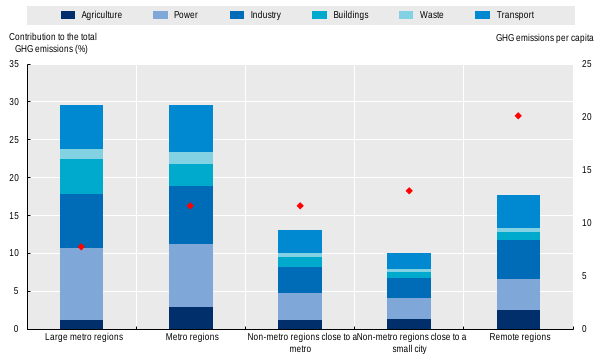
Note: OECD countries, Bulgaria and Romania. Each stacked bar indicates the contribution of each region type to the total of GHG emissions in these countries. Excluding emissions from land use and land use change.
Source: Author’s elaboration on EDGAR 8.0
References
[30] Burgalassi, D. and T. Matsumoto (2024), “Demographic change in cities: Trends, challenges and insights from G7 economies”, OECD Regional Development Papers, No. 67, OECD Publishing, Paris, https://doi.org/10.1787/f2aec988-en.
[10] Creutzig, F. (2023), “Global Environmental Goods, Local Public Bads? Place-Based Transitions as a Key Contribution to Global Stewardship”.
[19] Dalvi, M. and K. Martin (1976), “The measurement of accessibility: Some preliminary results”, Transportation, Vol. 5/1, pp. 17-42, https://doi.org/10.1007/bf00165245.
[22] Dolle, C. et al. (forthcoming), The Role of Service Provision for Regional Development.
[9] EPSON (2017), Shrinking rural regions in Europe: Towards smart and innovative approaches to regional development challenges in depopulating rural regions Inspire Policy Making with Territorial Evidence.
[31] EU Urban Initiative (n.d.), SHARE - Fuenlabrada, https://www.urban-initiative.eu/ia-cities/fuenlabrada/about-projects# (accessed on 18 March 2025).
[21] Farber, S. and J. Allen (2019), Planning for Transit Equity in the GTHA: Quantifying the Accessibility-Activity Participation Relationship for Low-Income Households, https://uttri.utoronto.ca/files/2019/06/Planning-for-Transit-Equity-in-the-GTHA-Report-May-29-2019.pdf.
[23] Higgins, C. et al. (2022), “Calculating place-based transit accessibility: Methods, tools and algorithmic dependence”, Journal of Transport and Land Use, Vol. 15/1, https://doi.org/10.5198/jtlu.2022.2012.
[2] Hollander, J. (2018), A Research Agenda for Shrinking Cities.
[7] Hortas-Rico, M. and A. Solé-Ollé (2010), “Does urban sprawl increase the costs of providing local public services? Evidence from Spanish municipalities”, Urban Studies, Vol. 47/7, pp. 1513-1540, https://doi.org/10.1177/0042098009353620.
[20] ITF (2023), Accessibility in the Seoul Metropolitan Area: does transport serve all equally?, OECD PUblishing, Paris, https://www.itf-oecd.org/accessibility-seoul.
[4] Johnson, M., J. Hollander and A. Hallulli (2014), “Maintain, demolish, re-purpose: Policy design for vacant land management using decision models”, Cities, Vol. 40, pp. 151-162, https://doi.org/10.1016/j.cities.2013.05.005.
[3] Luescher, A. and S. Shetty (2013), An introductory review to the special issue: Shrinking cities and towns: Challenge and responses, https://doi.org/10.1057/udi.2012.36.
[24] Mayaud, J. et al. (2019), “Future access to essential services in a growing smart city: The case of Surrey, British Columbia”, Computers, Environment and Urban Systems, Vol. 73, pp. 1-15, https://doi.org/10.1016/j.compenvurbsys.2018.07.005.
[5] Németh, J. and J. Hollander (2016), Right-sizing shrinking cities: a landscape and design strategy for abandoned properties.
[13] OECD (2024), OECD Territorial Reviews: Brussels-Capital Region, Belgium, OECD Territorial Reviews, OECD Publishing, Paris, https://doi.org/10.1787/0552847b-en.
[16] OECD (2023), Financing Cities of Tomorrow: G20/OECD Report for the G20 Infrastructure Working Group under the Indian Presidency, OECD Publishing, Paris, https://doi.org/10.1787/51bd124a-en.
[33] OECD (2023), Regional Industrial Transitions to Climate Neutrality, OECD Regional Development Studies, OECD Publishing, Paris, https://doi.org/10.1787/35247cc7-en.
[1] OECD (2022), Shrinking Smartly in Estonia: Preparing Regions for Demographic Change, OECD Rural Studies, OECD Publishing, Paris, https://doi.org/10.1787/77cfe25e-en.
[32] OECD (2021), Measuring What Matters for Child Well‑being and Policies, https://www.oecd-ilibrary.org/docserver/e82fded1-en.pdf?expires=1697731013&id=id&accname=ocid84004878&checksum=8DC50E4D4534CE8CDF604959B98E11E6.
[17] OECD (2021), OECD Regional Outlook 2021: Addressing COVID-19 and Moving to Net Zero Greenhouse Gas Emissions, OECD Publishing, Paris, https://doi.org/10.1787/17017efe-en.
[8] OECD (2018), Rethinking Urban Sprawl: Moving Towards Sustainable Cities, OECD Publishing, Paris, https://doi.org/10.1787/9789264189881-en.
[15] OECD (2016), OECD Territorial Reviews: Japan 2016, OECD Territorial Reviews, OECD Publishing, Paris, https://doi.org/10.1787/9789264250543-en.
[14] OECD (n.d.), Population by broad age groups - Regions, https://data-explorer.oecd.org/vis?lc=en&tm=population%20TL2&pg=0&hc[Measure]=Population&hc[Territorial%20level]=TL2&snb=34&vw=ov&df[ds]=dsDisseminateFinalDMZ&df[id]=DSD_REG_DEMO%40DF_POP_BROAD&df[ag]=OECD.CFE.EDS&df[vs]=1.0&pd=2010%2C2010&dq=A.CTRY%2BTL2 (accessed on 6 February 2024).
[18] OECD/EC-JRC (2021), Access and Cost of Education and Health Services: Preparing Regions for Demographic Change, OECD Rural Studies, OECD Publishing, Paris, https://doi.org/10.1787/4ab69cf3-en.
[25] OECD/Lincoln Institute of Land Policy, PKU-Lincoln Institute Center (2022), Global Compendium of Land Value Capture Policies, OECD Regional Development Studies, OECD Publishing, Paris, https://doi.org/10.1787/4f9559ee-en.
[26] Pallagst, K., T. Wiechmann and C. Martinez-Fernandez (eds.) (2013), Growth Paradigm against Urban Shrinkage: A Standardized Fight? The Cases of Glasgow (UK) and Saint-Etienne (France), Routledge, https://doi.org/10.4324/9780203597255.
[12] Pesaresi, M. and P. Politis (2023), GHS-BUILT-S R2023A - GHS built-up surface grid, derived from Sentinel2 composite and Landsat, multitemporal (1975-2030). European Commission, Joint Research Centre (JRC), https://doi.org/10.2905/9F06F36F-4B11-47EC-ABB0-4F8B7B1D72EA (accessed on 6 February 2024).
[27] Provan, B. (2016), “Saint-Étienne city story”, CASE reports, http://eprints.lse.ac.uk/id/eprint/67848.
[29] Rink, D. (2022), “Urban development, housing market and housing policy in Leipzig”, UFZ Discussion Papers, https://www.ufz.de/export/data/global/260743_DP_2022_1_Rink.pdf.
[28] Sievers, K. (2019), Stadtumbau Ost – Lösung einer Wohnungsfrage?, https://www.bpb.de/themen/deutschlandarchiv/286642/stadtumbau-ost-loesung-einer-wohnungsfrage/.
[6] Sousa, S. and P. Pinho (2015), “Planning for Shrinkage: Paradox or Paradigm”, European Planning Studies, Vol. 23/1, pp. 12-32, https://doi.org/10.1080/09654313.2013.820082.
[11] Syssner, J. (2023), Place-based policy objectives and the provision of public goods in depopulating areas: equality, adaptation, and economic sustainability, https://www.oecd.org/regional/place-based-policy-objectives-and-the-provision-of-public-goods-in-depopulating-areas-equality-adaptation-and-economic-sustainability.pdf.