This chapter provides an overview of the current asset forfeiture system in Bulgaria, including the legal framework and relevant institutional actors. The first section covers primary anti-corruption legislation, secondary regulations governing the forfeiture process, and relevant court decisions. It discusses both criminal and civil forfeiture procedures but focuses on the civil process for which the Commission for Illegal Asset Forfeiture (CIAF) is responsible. The second section provides recommendations to improve the current instructions establishing the steps and best practices to detect, trace and forfeit illegally acquired assets. These include recommendations for improving the legal framework, clarifying institutional responsibilities, ensuring institutions have adequate resources as well as enhancing international co-operation.
Reforming Bulgaria’s Anti‑corruption Authorities

Abstract
2.1.1. Promoting public integrity by strengthening asset forfeiture and asset management in Bulgaria: Towards the consolidation of its legal and institutional framework
The 2017 OECD Recommendation on Public Integrity provides policymakers with a vision for a public integrity strategy. It shifts the focus from ad hoc integrity policies to a context dependent, behavioural, risk-based approach with an emphasis on cultivating a culture of integrity across the whole of society. One of the three pillars of the OECD Recommendation on Public Integrity is devoted to the development of a coherent and comprehensive integrity system. In this respect, the CACIAF, and its replacing institution Commission for Confiscation of Illegally Acquired Property (CIAF, Комисия за отнемане на незаконно придобитото имущество) have and will serve as an institutional mechanism to promoting ethical behaviour both in the public and private sectors. Specifically, the Recommendation asks countries to clarify institutional responsibilities across the public sector to strengthen the effectiveness of the public integrity system (OECD, 2017[9]).
Undoubtedly, the effectiveness of an integrity system, also relies on the ability to enforce accountability mechanisms, the strengthening of law enforcement agencies and providing a resilient environment for the implementation of anti-corruption measures (OECD, 2017[9]). A strong mechanism for asset forfeiture promotes public integrity in multiple ways. Such a mechanism serves as a deterrent against corruption and other illegal activities, disrupts illicit criminal networks by removing the assets that facilitate illegal activities, restores potential lost revenues to the public treasury and prevents money laundering. Therefore, a strong illegal asset forfeiture mechanism will undoubtedly contribute to public integrity by deterring corruption of public officials and encouraging ethical behaviour.
Similarly, promoting seamless collaboration among law enforcement agencies and fostering effective information-sharing mechanisms is crucial. Efficiency of the illegal asset forfeiture is enhanced by ensuring enforcement mechanisms co-operate and share information effectively, avoiding overlaps and gaps. The 2017 OECD Recommendation on Public Integrity encourages efficient enforcement by promoting mechanisms for co-operation and exchange of information between the relevant bodies, units and officials (at the organisational, subnational or national level) to avoid overlap and gaps, and to increase the timeliness and proportionality of enforcement mechanisms. For this purpose, clarifying institutional responsibilities and promoting mechanisms for co-operation between public officials through formal or informal means becomes essential for the overall coherence of the system (OECD, 2017[9]).
Finally, the OECD Convention on Combating Bribery of Foreign Public Officials in International Business Transactions (OECD, 1997[23]) also contains some guidance regarding asset tracing and asset recovery. In particular, the Convention calls for countries to ensure that a broad range of investigative measures is available in foreign bribery investigations and prosecutions, such as access to financial, banking and company information, including on beneficial ownership, asset tracing, forensics, and special investigative techniques, where appropriate.
Considering the above-mentioned standards, this chapter will, first, provide a general overview of the asset forfeiture system in Bulgaria, including existing challenges at a legal and institutional level. Second, it will provide recommendations for strengthening the “Instructions for Establishment of Illegally Acquired Property, Imposition of Precautionary Measures and Confiscation of the Illegally Acquired Property in Favor of the State Pursuant to the Anti-Corruption Law” (from now on “the Instructions”), including on co-ordination improvement, enacting of regulatory guidance and fine-tuning tasks and procedures of CIAF. This methodology presented for review meets the requirements for completeness and objectivity of the inspection.
Through the chapter, guidance will be provided on how CIAF can build on the strengths of Bulgaria’s existing illegal assets forfeiture and asset management system by proposing specific recommendations for potential improvements. Since its establishment, CACIAF (now CIAF) has developed a strong mechanism for illegal asset forfeiture, and the purpose of this chapter is to suggest practical improvements that could build on the existing strengths.
Legal framework for asset forfeiture in Bulgaria
As of October 2023, the two primary anti-corruption laws in Bulgaria are Law 84/2023 on Combatting Corruption (LCC) and Law 7/2018 on Illegal Asset Forfeiture (LIAF). The first law establishes measures to prevent and counter corruption, including the declaration and management of conflicts-of-interest, while the second focuses on the procedure for investigating, seizing, and forfeiting illegally acquired assets. Law 7/2018 previously contained all of these provisions under the tile Law on Combatting Corruption and Illegal Asset Forfeiture (LCCIAF), but the LAC was carved off into a separate law to mirror the institutional splitting of CACIAF into the Commission for Combatting Corruption (CCC, Комисия за борба с корупцията) and CIAF.
Under the Bulgarian legal system, assets can be recovered through both criminal (conviction-based) and civil (non-conviction-based) procedures. The Prosecutor’s Office (PO, Прокуратурата на Република България) investigates in the former process, while CIAF investigates in the latter. The criminal procedure is grounded in Article 53 of the Bulgarian Criminal Code (CC), which establishes confiscation in favour of the state for objects intended or used for the perpetration of an intentional crime, objects that were the subject of an intentional crime (in specific cases), objects that have been the subject or means of crime whose possession is forbidden, and objects acquired through the crime if they do not need to be returned or restored. Article 234 of the Criminal Procedure Code (CPC) limits the investigation period for such cases to two months, with subsequent two-month extensions in the case of complex cases that must be requested each time. This article also limits the length of any coercive measures to a maximum of 18 months. A noteworthy idiosyncrasy of this procedure is that many of the precautionary measures for freezing assets are contained in the Code of Civil Procedure (CCP) rather than the CPC (MONEYVAL, 2022[24]).
The Law on Illegal Asset Forfeiture (LIAF) outlines the civil procedure in line with the CCP. This procedure still requires PO to formally charges an individual with a crime, but once PO has informed CIAF of such an accusation and CIAF begins its investigation, the civil and criminal proceedings progress independently of each other as per Article 5. Article 5 also defines assets subject to forfeiture as any assets for which no legal source has been established.
Chapters 1-3 (Articles 1-29) focus on the powers and organisation of CIAF. Chapter 10 of the LIAF outlines the process for establishing that an asset has been illegally obtained. As per Article 107, all that is required to initiate proceedings is reasonable assumption that the asset was illegally acquired. A significant discrepancy in the property of inspected persons (above BGN 150 000) is a sufficient reasonable assumption. Under Article 108 the CIAF investigation formally begins when the PO charges an individual with a crime and informs the relevant territorial directorate. Under Articles 110 and 111 the Ministry of Justice sends the notification if a foreign court charges a Bulgarian citizen. Article 108 defines the underlying offences based on corresponding articles in the CC, which include corruption offences such as bribery and embezzlement. CIAF can also open a formal forfeiture investigation even if the offences are not of a criminal nature. For example, when the facts constitute an administrative or disciplinary offence (e.g. failure to submit an asset declaration). Investigations can last up to 18 months under Article 112 and cover assets acquired in the past 10 years.
Chapter 11 details what information CIAF can access and request in the course of its investigation and Chapter 12 outlines proceedings before the court. These include precautionary seizure of assets and the forfeiture proceedings themselves. Under Articles 116 and 153, all court proceedings take place in the district court with territorial jurisdiction over the accused individual’s permanent address, except in cases involving real estate where the competent court is the district court with territorial jurisdiction over the location of the property. Under Article 116, precautionary seizure is only possible once CIAF has sufficiently established a reasonable assumption that assets were acquired illegally. Once this happens the court can impose precautionary measures in line with Article 397 of the CCP. Chapter 12 Section II establishes a procedure whereby the investigated individual can present evidence and objections to CIAF. Under Article 140 the relevant territorial directorate must then submit a report with recommendations to the members of CIAF within one month and CIAF then has another month to decide whether to pursue forfeiture.
Chapter 12 Section III defines which assets are subject to forfeiture. These include illegally acquired assets in the possession of the accused (Article 141) and the monetary equivalent value of those assets when they themselves cannot be confiscated (Article 142). Assets of the accused’s spouse, minor children, and de facto cohabitants are also considered (Articles 142 and 144), as are assets transferred to a legal entity (Article 145) and property transferred to a third party (Article 146) when there is sufficient proof that this was done to avoid its confiscation or conceal its origin. Third parties must have known or had reason to suspect that the asset was illegally acquired. Asset value is assessed via the rules in Article 148.
Chapter 12 Section IV covers proceedings before the court. CIAF must prove beyond a reasonable doubt that all assets in question were acquired illegally. Under Article 153 a claim for confiscation in favour of the state must be filed before the district court within three months of the last act of imposing precautionary measures. Judicial proceedings then begin with CIAF (represented by the chairman) bringing a claim against the investigated person and any relevant third parties under Article 156. CIAF presents evidence of the discrepancy in assets (as well as evidence that third parties knew or could have assumed the property was illegally acquired). The defendant then also presents evidence, and the court renders a decision (Article 157), which is subject to appeal. Cases may also be settled for no less than 75 percent of the property or its monetary equivalent under Article 158.
Finally, Chapter 13 covers management of seized and forfeited assets. CCIAP manages seized assets (Section I), while an Interdepartmental Council for the Management of Confiscated Property (ICMCP) consisting of deputy ministers from the Ministries of Justice, Finance, the Economy, Labour, and Regional Development/Public Works takes decisions on forfeited property. The Council may decide to repurpose the assets in the public interest, but if this Council decides to sell the assets, the National Revenue Agency carries out the sale (Article 168) in accordance with the Tax and Insurance Procedure Code. Under Chapter 14 (Article 170), CCIAP maintains an electronic register of seized assets.
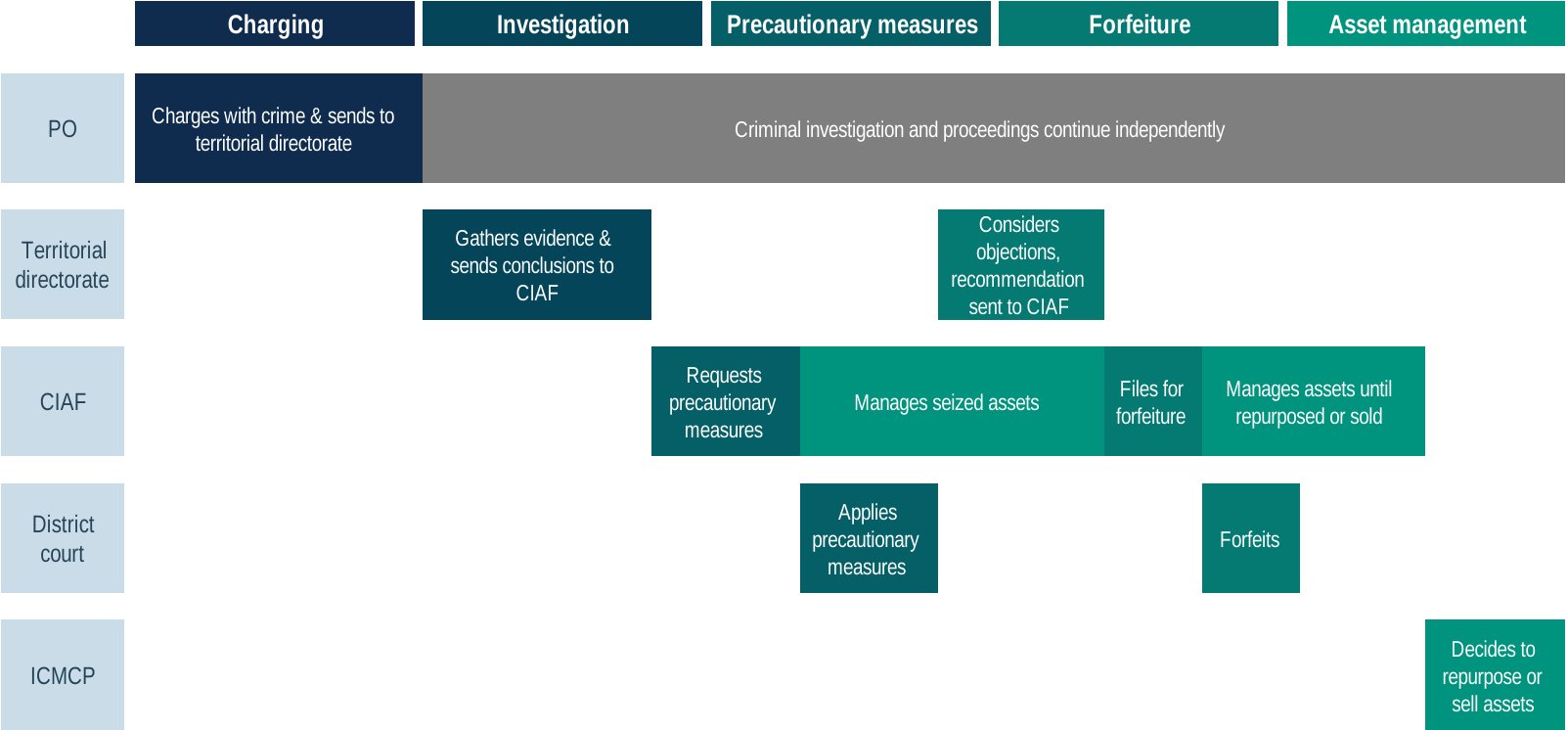
Source: Law on Illegal Asset Forfeiture (LIAF).
Methodology/Instructions for Establishing a Significant Discrepancy in the Property of the Inspected Person
The aforementioned Instructions contain more detail on the process for the investigations and court proceedings envisaged in the LCCIAF (and subsequently under the LIAF). Section 2 covers the verification of illegally obtained assets, with Section I focusing on the purpose of the investigation, Section II focusing on the grounds, Section III focusing on verification and registration of notifications, Section IV focusing on jurisdiction, Section V focusing on the initiation and period of verification, Section VI focusing on the actions of the investigator, and Section VII focusing on the preparation of the analysis. Section 3 then covers the application of preventative measures and Section 4 covers proceedings before the court. Further detail on the provisions of the Instruction is included in Box 2.1 below.
Section 2: Verification of the Identification of Illegally Obtained Assets
Section 2 deals with the procedures and regulations for the verification of the identification of illegally obtained assets. It outlines the purpose, grounds for initiation, jurisdiction, and the actions taken by inspectors during the verification process. The section emphasises the importance of addressing discrepancies in assets compared to net income, initiating inspections based on specific criteria, and conducting thorough investigations, including checks on various information systems and requests for relevant documents from different institutions. The purpose of the verification is to determine whether there is a significant discrepancy in the assets of the inspected person, specifically whether the difference between assets and net income exceeds BGN 150 000 for the entire period under scrutiny.
Notably, Section VI outlines the steps involved in preparing an analysis during the process of identifying and forfeiting illegally obtained assets. The process commences with the authorised inspector receiving a complete file and submitting an application for the security of future actions for asset confiscation. If the court grants the security request, further actions involve submitting applications for attachment orders and registrations. Subsequently, a detailed report is prepared for the Commission’s review, proposing either the termination of proceedings or the submission of a claim for asset confiscation.
Proceedings before the court, including the submission of the Commission’s request, informing directors of judicial progress, and actions upon court decisions, are detailed in Section VII (Articles 69-73). The possibility of concluding agreements and the associated procedures, including the examination of proposals and the submission of settlements to the court, are also addressed (Articles 75-78).
Section 3: Application for Interim Measures
In this section, the process for applying interim measures is outlined. The authorised inspector, upon receiving the complete file, submits an application for the security of future action aimed at confiscating illegally obtained assets. This application, accompanied by collected evidence, is filed at the district court relevant to the person inspected or the legal entity’s registered office. Special considerations are made when dealing with immovable property located in different provincial courts or when multiple properties are involved. If granted, the inspector proceeds with attachment orders and registration for foreclosure. In case of rejection or partial approval, an avenue for appeal is available. Following all precautionary measures, the inspector finalises the process by submitting orders and preservation orders to judicial enforcement and registration services for inclusion in the register.
Section 4: Proceedings for the Forfeiture of Illegally Obtained Assets
This section outlines proceedings for the forfeiture of illegally obtained assets. In proceedings before the court (Article 69-74), the authorised legal representative submits the Commission’s request and evidence, with provisions for amendments and actions in response to court decisions. The possibility of a settlement agreement is discussed in Articles 75 to 78, covering conditions, reporting processes, and decision making by the KPKONPI. The legal representative submits the final decision to the court based on settlement outcomes.
Source: Instructions for the Identification of Illegally Acquired Assets under the Anti-Corruption and Forfeiture of Illegally Acquired Assets Acts (Protocol No. 994/21.04.2021).
Interpretive Decision 4/2021 of the Supreme Court of Cassation
Interpretive Decision 4/2021 of the Supreme Court of Cassation (SCC, Върховен касационен съд) has further defined the scope of CIAF investigations. In this decision SCC ruled on the question of whether assets not in the possession of the investigated person can be forfeited. The Court first reaffirmed the conclusions of Constitutional Court Decision 13/2012 that investigations can only consider assets potentially acquired illegally during the defined time period. Assets acquired before this period and held during the period are not subject to investigation. Furthermore, the Court ruled that cash funds that have not been proven to have been transformed into movable or immovable assets held by third parties are not subject to confiscation because this would entail confiscation of costs rather than confiscation of an asset. Finally, the Court reaffirmed that assets held by third parties that they could not have reasonably concluded were acquired illegally are not subject to confiscation, since this possibility was not included in the LCCIAF (and is not included in the LIAF).
Elements of this ruling respond to the European Court of Human Rights (ECtHR) rulings in Dimitrov v. Bulgaria (Application no. 78441/11) and Todorov et al. v. Bulgaria (Application no. 50705/11) that elements of the Bulgarian asset forfeiture system under prior versions of the law dating to 2005 had violated the right to peaceful enjoyment of one’s property outlined in Article 1 Protocol 1 of the European Convention on Human Rights (ECHR). The ECtHR also subsequently ruled in Yordanov et al. v. Bulgaria (Applications no. 265/17 and 26473/18) that while the 2012 version of the law had a legitimate goal, certain elements of it the envisaged forfeiture measures were not proportionate. The ECtHR concluded that the legal regime under these laws had placed an unjustified burden on those investigated to prove the lawful origin of their assets and concluded the Bulgarian authorities had not sufficiently proven a connection between illegal activity and the assets in question. The legal debate surrounding the proportionality of civil asset forfeiture procedures like the one in Bulgaria is ongoing – both in the decisions of the ECtHR and in academic literature (Moiseienko, 2022[25]) (Hendry and King, 2017[26]) (King, 2017[27]). Other countries with similar systems have been able to find ways to maintain them while putting in place safeguards to protect human rights (Brun et al., 2023[28]) (France, 2022[29]).
Institutional framework for asset forfeiture in Bulgaria
Integrity actors are at the “core” of any integrity system. In Bulgaria, the main actor of the current integrity system was CACIAF. CACIAF was established through Law 7/2018 "Act on Counteracting Corruption and on Seizure of Illegally Acquired Property" (Anti-corruption Law) as an independent, specialised, and permanent public institution. It combined five former entities, namely the previous Commission for Prevention and Ascertainment of Conflict of Interest, the Centre for Prevention and Counteracting Corruption and Organised Crime at the Council of Ministers, the unit of the National Audit Office, the specialised directorate of the State Agency National Security dedicated to combating corruption among individuals in senior state positions and the Commission for Illegal Assets Forfeiture. Therefore, CACIAF was able to consolidate existing state structures, whilst continuing the activities related to asset forfeiture, conflict of interest and prevention and combatting of corruption. On October 6th, 2023, Law 7/2018 was amended and split CACIAF into two distinct institutions, one for the prevention of corruption and one for asset forfeiture. Namely, the Commission for Illegal Assets Forfeiture (CIAF) and the Commission for Anti-corruption (CAC). For the remaining of this chapter, and in view of recent changes, this chapter will focus its recommendations on the future role to be played by CIAF.
Furthermore, other stakeholders are key for both the role of CIAF and the success of the asset forfeiture system, as they either initiate or complement the asset forfeiture procedure (Box 2.2).
The Office of the General Prosecutor (PO, Прокуратурата на Република България) oversees the investigation of crimes and ensures that the investigative procedure is consistent with applicable laws. Regarding recovery of assets under the Criminal Code (Наказателен кодекс), the PO plays the leading role in investigations. The PO is led by the Prosecutor General and comprises 28 district prosecutor’s offices (POs), each authorised to handle money laundering (ML) cases. Both territorial and specialised POs house investigation departments where magistrates, functioning as Investigators, conduct inquiries into specific, often intricate cases under the prosecutor's guidance.
In cases governed by the LIAF, prosecutors play a pivotal role by notifying CIAF and initiating investigations when the necessary conditions are met. Furthermore, the establishment of joint teams between CIAF and the PO allows for the exchange of information, analyses, and data, facilitating more effective collaboration in conducting relevant investigations.
The National Revenue Agency (NRA; Национална Агенция по Приходите) provides tax and insurance information and holds the national mandate for licensing and overseeing entities within the gambling sector, encompassing both land-based and remote casinos. While in practice NRA also assumes certain Anti-Money Laundering/Countering the Financing of Terrorism (AML/CFT) supervisory responsibilities concerning currency exchange offices, it's noteworthy that the legal foundation for this role is not explicitly defined.
The NRA has the authority to conduct investigations under specific conditions. Upon the completion of an inspection that reveals no substantial discrepancies, the NRA may be informed to undertake a review of an individual, particularly when inconsistencies arise in their income and assets. Furthermore, the NRA is the entity responsible for either selling confiscated assets or collecting confiscated sums on behalf of the state.
The Ministry of Justice (MOJ; Министерството на Правосъдието) oversees a variety of international legal assistance matters, including mutual legal assistance (MLA) requests, proceedings transfers, sentenced persons transfers, extraditions, recognition, and enforcement of judgments. Within the Ministry of Justice, there are two units for MLA, one for criminal proceedings and one for civil proceedings. Depending on the nature of the requested action and the stage of criminal proceedings (whether pre-trial or in court), the MoJ strategically directs the request to either the "International Department of the Supreme Cassation Prosecutor's Office (SCPO) or the appropriate court for execution, as these entities are competent bodies to carry out such requests. In terms of co-operation with the former CACIAF, now CIAF, the MoJ notifies the Commission of any case of criminal proceedings initiated in another country or of a judgment entered into force by a foreign court against Bulgarian citizens for crimes corresponding to those specified in Art. 108, ac. 1 of the LIAF or in case of transfer of criminal proceedings. Finally, the Registry Agency within the MoJ administers several registers of property and commercial entities.
Interdepartmental Council for Management of Confiscated Property (ICMCP, Междуведомствен съвет за управление на отнетото имущество) is an interinstitutional entity comprising deputy ministers appointed by the Minister of Justice, the Minister of Finance, the Minister of Economy, the Minister of Labour and Social Policy and the Minister of Regional Development and Public Works.
The Council is responsible for the liquidation of seized assets. It either recommends to the Council of Ministers to transfer or repurpose the assets for state use (for example if the asset is real estate that could be used by a state body) or orders its sale. If the ICMCP decides to sell, the National Revenue Agency carries out the sale in accordance with the Code of Taxation and Social Insurance Procedure (CTSIP). A minimum of 30 percent of the value of the confiscated property, allocated for the benefit of the state, is earmarked for social purposes, with the specific terms and conditions determined by a decree from the Council of Ministers.
The Ministry of Interior (MoI, Министерство на вътрешните работи на България) oversees the police in Bulgaria and includes several general directorates focused on relevant crimes. These include the General Directorate for the National Police, the General Directorate for Combatting Organised Crime, and the General Directorate for Border Police. These general directorates conduct their own investigations and co-operate with CIAF in investigations related to asset forfeiture. The International Operational Co-operation Directorate is responsible for international exchange of operational law enforcement information and is the national contact point in several international law enforcement institutions and networks, including the International Criminal Police Organisation (INTERPOL), European Union Agency for Law Enforcement Cooperation (EUROPOL), European Travel Information and Authorisation System (ETIAS), and Schengen Information System (SIS) as well as the contact point in bilateral information exchange.
The Financial Intelligence Directorate of the State Agency for National Security (FID-SANS, САД Финансово разузнаване - Държавна агенция Национална сигурност) is a financial intelligence unit that stores, analyses, and disseminates financial intelligence. It plays an active role in developing AML/CFT policy and supervises obliged entities under AML/CFT legislation. In the context of asset forfeiture FID-SANS shares its intelligence analysis with CIAF upon request, which can then assist CIAF in its investigations.
Source: (MONEYVAL, 2022[24]); (OECD, 2022[4]); Information gathered during OECD fact finding mission in Bulgaria, 2023.
2.2.1. Strengthening Bulgaria’s procedures for asset forfeiture
Bulgaria faces a number of legal challenges undermining the civil asset forfeiture system in Bulgaria, and the recommendations in this chapter focus on overcoming these challenges. In particular, recent judicial interpretive decisions, evidentiary standards, the statutory powers of CIAF, the scope of criminal liability, structural differences between the civil and criminal procedures have limited the system’s effectiveness. To address these concerns, based on feedback from the Bulgarian law experts encountered during the on-site visit in October 2023 as well as the training session in January 2024, a range of solutions could be explored. In some cases, legislative change may be appropriate, such as when it comes to resolving difficulties borne out of judicial interpretive decisions or clarifying the statutory powers of CIAF. In other instances, reforms may be needed in the criminal and civil procedure codes, as is the case for evidentiary burden requirements. In each case, the exact nature of the legal reform would require consultation with Bulgarian legal experts to ensure the most effective implementation within the broader legal framework.
Considering these challenges, Bulgaria could consider the following recommendations aimed at improving the detection, tracing, management, recovery, and sale of assets. In the area of detecting and tracing, Bulgaria could consider updating the Instructions to include more detailed procedures for international co-operation, tracing assets held in offshore jurisdictions, and tracing digital assets such as cryptocurrencies. Updates to the instructions could also incorporate best practices on managing assets—particularly digital assets. When it comes to recovering assets, legislative changes may be more appropriate to resolve procedural and human rights-related shortcomings of the current legal framework. Finally, in terms of the sale of assets, Bulgaria could consider providing similar instructions for officials in the ICMCP and NRA on conducting an effective valuation and sale.
Recommendations for embedding the detection and tracing of assets in the upcoming Methodology, main issues and challenges
Due to increasing threats posed by the globalisation of trade, countries are confronted with the challenges involved in enforcing national laws in a borderless commercial environment (FATF/Egmont Group, 2018[30]). The FATF Recommendations highlight the need for robust frameworks of law, regulations, and operational measures to ensure countries can take effective action to detect and disrupt illegal financial flows (FATF, 2023[31]). Accordingly, these frameworks can be used as empowering tools to detect and facilitate the identification of assets abroad.
Based on the FATF Recommendations (FATF, 2023[32]), aspects of empowering legislation may include:
Clear designation of jurisdictional authority which allows relevant institutions to investigate, identify, and trace assets held abroad by individuals or entities.
Enhanced investigative tools such as access to international financial databases, information-sharing platforms, and the authority to request information from foreign counterparts.
Enhanced ability to establish mutual legal assistance agreements between countries, which allow for collaboration in identification and recovery of assets.
Comprehensive and practical procedures for the freezing, seizure, and repatriation of assets identified abroad.
Mechanisms for public-private collaboration, for example with financial institutions, to enhance the monitoring of financial transactions.
During the fact-finding mission it was noted that CACIAF, now CIAF, sends requests for international co-operation to the Ministry of the Interior, which then liaises with the appropriate foreign authorities or international bodies. The International Operational Co-operation Directorate (IOCD, Дирекция международно оперативно сътрудничество) of the Ministry is the authority responsible for co-ordinating law enforcement information exchange in Bulgaria and serves as the national contact point for other law enforcement institutions and networks such as INTERPOL and EUROPOL (MONEYVAL, 2022[24]). Information contained in shared databases that is accessible by the Ministry of the Interior can be very effective in identifying natural persons or assets abroad.
For its part CACIAF (now CIAF) represents Bulgaria in international fora such as the CARIN network and SIENA programme and is the designated asset recovery office (ARO) for Bulgaria. Other institutions participating in exchange of data pertinent to investigations include the FID-SANS, the Financial Supervision Commission, the Bulgarian National Bank (BNB). Finally, Bulgaria has periodically established joint investigation teams with other countries to facilitate co-operation (MONEYVAL, 2022[24]). In some instances, the international co-operation requests that are sent and received by Bulgaria take significant time to be processed, and for the pertinent information to arrive in Bulgaria. The situation is especially acute when it refers to offshore jurisdictions, which usually request very specific information and a high degree of knowledge of the local legislation in their jurisdiction. Another challenge for CIAF in obtaining co-operation with authorities abroad (where assets are located abroad) is that the CIAF is not a criminal enforcement authority, and legislation in many countries only permits co-operation with criminal enforcement authorities based on criminal investigations. Sharing information with countries which do not have civil forfeiture is therefore a major roadblock in obtaining timely information for investigations. Bulgarian law currently does not envision the possibility of CIAF requesting the criminal authorities in Bulgaria to send requests to criminal authorities in foreign countries. The high evidentiary standard in many types of cases augments these problems by making Bulgaria overly dependent on international co-operation since it is necessary to ensure that cases will stand up in court. Finally, international co-operation is inefficient with MONEYVAL noting extensive duplication of requests sent by different Bulgarian institutions for the same information (MONEYVAL, 2022[24]). Bulgaria could address this last issue by facilitating better communication between relevant instructions.
The current instructions do not address many of these issues, as Article 8 merely describes when and investigation abroad is allowed, and Article 32 only describes the role of the International Cooperation Unit. Therefore, a possible methodology could expand on it in, even if in many cases, success will depend more on foreign authorities than on CIAF. Therefore, Bulgaria could consider identifying possible legal and policy mechanisms at its disposal to assist CIAF in its efforts to obtain civil forfeiture abroad, including potential legislative reform. Bulgaria could also consider raising this issue at the EU level, given that most of such co-operation requests are directed to other EU countries. Additionally, Bulgaria could improve co-ordination with offshore jurisdictions by offering training for CIAF employees on drafting international co-operation requests and including input from the Ministry of Interior and/or foreign authorities on the type of information required by such foreign authorities. This will improve the quality of the information requests being sent outside of Bulgaria, ensuring completeness, level of details being provided, and therefore avoiding delays due to missing or incomplete information. Thus far, Bulgaria has made over 50 inquiries to offshore jurisdictions, with response times ranging from one week to five months. Finally, other international organisations have noted that Bulgaria generally provides timely and constructive assistance across a range of requests for international co-operation, including mutual legal assistance (MONEYVAL, 2022[24]). Stakeholders interviewed for this report noted that CIAF could provide feedback to foreign and intergovernmental authorities, on ways to improve the quality of information being provided, and in this way, ensuring faster processing of such requests.
Bulgaria could also consider other avenues to improve identification of assets abroad, in particular in offshore jurisdictions by including specific references to the following issues in the upcoming Methodology (Box 2.3). Best practices on this area could improve and be embedded in the discussed Instructions.
Offshore Financial Centres (OFC)
Offshore financial centres (OFC) host a significant proportion of global assets, with some estimates putting the value of assets located in these jurisdictions as high as USD 21 trillion (Henry, 2012[33]). While there is no commonly agreed definition of an OFC, common characteristics include a low tax rate, a lack of transparency, limits on information exchange, a preference for mobile capital, marketing as a place to escape taxes and regulations, and a lack of “substantial” business or investment activities in the host jurisdiction by involved firms and individuals (Basel Institute on Governance, 2015[34]). Some studies have attempted to classify OFCs based on capital flows (Hines, 2010[35]) (Fichtner, 2015[36]) (Garcia-Bernardo et al., 2017[37]), with most of these lists relying on the volume of financial flows proportionate to a jurisdiction’s GDP. If the former is much larger than the latter, then a jurisdiction is likely an OFC.
Identifying ownership of assets in offshore jurisdictions
It can be exceptionally difficult to locate assets held in OFCs due to the characteristics described above. In the context of criminal investigations, the excessive secrecy that some OFCs provide can create a favourable environment for their use for illicit purposes, such as the laundering of money obtained through corruption (FATF, 2019[38]). Corporate vehicles located in OFCs such as shell companies, shelf companies, and trusts can be used to conceal the origin and owner of assets (Basel Institute on Governance, 2015[34]), thus frustrating attempts to pursue forfeiture.
The key to solving this problem is identifying the beneficial owner of these entities, which can help uncover to whom assets truly belong. The Financial Action Task Force (FATF) defines the beneficial owner as “the natural person(s) who ultimately owns or controls a customer and/or the natural person on whose behalf a transaction is being conducted. It also includes those persons who exercise ultimate effective control over a legal person or arrangement” (FATF, 2014[39]).
Establishing a beneficial owner of a legal entity located in an OFC organically can be difficult. Investigators should make sure they are familiar with commonly used corporate vehicles and the information that should be sourced for each if undertaking this process themselves (Basel Institute on Governance, 2015[34]). This is particularly true for trusts, which for the most part only exist in common law jurisdictions and may therefore be unfamiliar to investigators in civil law jurisdictions.
However, there is often an easier way to identify a beneficial owner. Legal entities located in EU countries must declare their beneficial owner in line with the EU Anti-Money Laundering and Terrorist Financing Directives V and VI. This information is then stored in a register that is accessible to law enforcement authorities, tax authorities, watchdogs, and other relevant actors. While many jurisdictions around the world have similar registers, such measures are usually absent in OFCs. Nonetheless, information from beneficial ownership registers in those countries that do have them can help reduce the amount of information that needs to be requested from OFCs by skipping to the end of the ownership chain.
Outside of beneficial ownership registers themselves, cross referencing with other public databases can help establish ownership. Relevant databases in this regard include those containing financial intelligence reports, tax records, court records, land and vehicle ownership information, asset declarations, government audit information, utility bill records, and immigration and customs information.
International co-operation in acquiring information about assets held offshore
When information from OFCs is still needed to determine or substantiate beneficial ownership, negotiating information sharing agreements with OFCs bilaterally that allow for MLA requests can be an arduous process. A first solution is therefore to rely on existing databases containing information on assets located in OFCs, such as the International Centre for Asset Recovery (ICAR)’s Asset Recovery Intelligence System (ARIS) tool (Basel Institute on Governance, 2015[34]).
Another solution is relying on relevant multilateral agreements. One of the most effective agreements is the Multilateral Convention on Mutual Assistance in Tax Matters (MCMATM), which allows authorities to request tax information from 147 other jurisdictions, including many of the biggest OFCs (Brun et al., 2023[28]). Authorities can also use United Nations Convention Against Corruption (UNCAC), which covers nearly all global jurisdictions, to request assistance (Basel Institute on Governance, 2015[34]). Networks of law enforcement actors, ranging from Interpol and Europol to more informal networks like CARIN can also be used to acquire the necessary information.
Source: (Henry, 2012[33]; Basel Institute on Governance, 2015[34]; Hines, 2010[35]; Fichtner, 2015[36]; Garcia-Bernardo et al., 2017[37]; FATF, 2014[39]; FATF, 2019[38]; Brun et al., 2023[28]); Information gathered during OECD workshops in Bulgaria, 2024.
As it relates to access to internal information, the OECD Recommendation on Public Integrity encourages efficient enforcement by promoting mechanisms for exchange of information between relevant bodies to avoid overlaps and gaps, and increase timeliness of enforcement (OECD, 2017[9]). This becomes even more fundamental, when identifying illegally acquired assets, whether in Bulgaria or abroad. Some ideas could be relevant to be included in a possible re-drafting of the existing Instructions (Box 2.4). CIAF officials noted during the fact-finding mission that under current legislation they do not have direct access to the register of bank accounts maintained by the BNB, unlike the tax authorities. CIAF must send a written request to access such information, which can be time consuming. Regarding information that constitutes a banking secret, judicial authorisation is required to gain access, which can also create delays. These delays can lead to assets being disposed of by the investigation target. Bulgaria could therefore consider allowing CIAF direct electronic access to banking information and streamlining the procedure for access information that constitutes a banking secret.
Similarly, during the fact-finding mission, financial institutions noted that their collaboration with CIAF is good and that they are generally able to treat requests sent by CIAF in a timely manner. However, as some requests can be very voluminous (e.g. requests for transaction records for multiple persons over large number of years), CIAF could examine setting up an electronic platform or other means to securely receive requested documents, where financial institutions could upload documents easily. Similarly, CIAF could consider adding in its existing Instructions and eventual Methodology, sending more targeted requests to financial institutions as part of its investigations, and ensure that all information is transferred securely electronically, thereby reducing the response time and resources needed by financial institutions in responding the requests.
Cryptocurrency Typologies
Cryptocurrencies are an emerging risk area when it comes to asset tracing because the technology is evolving quickly while regulations have been slow to adapt. Criminal organisations have exploited this dissymmetry and are increasingly using cryptocurrencies to launder proceeds of crime.
Cryptocurrencies are characterised by digital tokens that rely on cryptography (for chaining together digital signatures of token transfers), peer-to-peer networking and decentralisation. Unlike currencies issued by national or supranational central banks, cryptocurrencies are not regulated by a central financial institution. Instead, they rely on peer-to-peer networking whereby a network of people voluntarily pools their computing power to manage and clear transactions, which are verified and recorded permanently and irreversibly in a shared public ledger. A similar peer-to-peer networking approach is used to issue new tokens through a process called “mining”. Those individuals lending their computing power are rewarded for this by receiving tokens of their own and revenue from transaction fees.
The public ledger used to record transactions is built on blockchain technology, which records, timestamps, and verifies transactions. A blockchain stores transaction information in small batches called blocks, which are linked together sequentially to provide a record of all transactions ever conducted with a given cryptocurrency. Each block also has a unique signature that cannot be tampered with. Because the ledger is stored in a decentralised manner, the continued integrity of the ledger is ensured through the fact that all nodes in the network verify each new transaction against all other nodes before adding the new block that corresponds to the new transaction to their chain.
Cryptocurrencies—particularly Bitcoin—are increasingly accepted as a medium of exchange but remain largely unregulated in most countries. This lack of regulation coupled with the lack of a central authority issuing the cryptocurrencies themselves makes them a useful tool for money laundering. In the event that criminals use these cryptocurrencies to launder the proceeds of crime, there is no company or executive that can be served a court order to reveal ownership information, no central account that can be seized or confiscated, and no main server that can be shut down. This makes it difficult—but not impossible—for authorities to recover assets that have been converted into cryptocurrency.
Investigative techniques for tracing cryptocurrency
While many characteristics of cryptocurrencies make them difficult to trace and seize, their blockchains can also be useful as an investigative tool. Unlike transactions carried out in cash, any transaction carried out via a blockchain leaves an irrevocable trace. These blockchains record all transactions with unique identifiers, and this information is stored on thousands of computers and servers where anyone—including law enforcement—can access and analyse them.
The key step is to link a specific transaction to the identity of a specific person, and from there it becomes easy to use the blockchain to track financial flows related to that transaction. While a baseline understanding of how to read the information contained in a given block is required (especially given the multi-input, multi-output nature of cryptocurrency transactions), investigators can use classic investigative techniques like subpoenaing exchanges themselves for user information, surveillance, and forensic analysis of an individual’s IT devices to establish a link between illicit activity and transactions performed in the blockchain. Many jurisdictions have established registration and know your customer (KYC) requirements for cryptocurrency exchanges, which can facilitate the subpoenaing of information. Law enforcement can then use this information in combination with surveillance and other methods to seize an individual’s computer and use the information on it to follow the transaction history, establish a link to criminal activity, and bring the evidence to the judge.
Seizing cryptocurrency
Once a criminal link has been established, the judge can issue a warrant to seize cryptocurrency as they could for any other type of asset. The assets are then transferred into a virtual “wallet”, which can take the form of either a cold wallet or a hot wallet. A cold wallet involves storing cryptocurrency on a physical medium that is not connected to the internet or a mobile phone. This method is more secure as it is not susceptible to hacking. On the other hand, a hot wallet involves storing the cryptocurrency on a mobile app or remote service, which is more user-friendly but less secure. Authorities can therefore store the cryptocurrency in one of these two forms of wallets—preferably a cold one—until forfeiture orders provide for the liquidation of the asset and the cryptocurrency is sold. Most established cryptocurrencies can be exchanged into other currencies, thereby allowing the state to recover the value of the illegally acquired asset.
Source: (Basel Institute on Governance, 2015[34]); OECD workshops, 2024.
To enhance efficiency of the enforcement mechanism, Bulgaria could consider amending Article 115 of the LIAF and Article 25 of the Instructions to allow CIAF to directly access bank account information by being able to request such information directly from the financial institutions. During the fact-finding mission, it was noted that CAC has been granted direct access, so similar access could be granted to CIAF. Such legislation could include the obligation to notify the court at the same time, which would prevent delays in accessing sensitive financial information. If the court subsequently finds that the access to bank account information was not justified under the circumstances, such evidence could then be excluded from future court proceedings.
Recommendations for improving proceedings on asset forfeiture, legal reform and a practical guide for a Methodology
As explained in previous sections, in Bulgaria, the legislative framework regarding asset forfeiture is found in Law 7/2018 on Illegal Asset Forfeiture (LIAF). However, several elements of the legislation and the Instructions could be fine-tuned to improve CIAF’s and the PO’s capacity to forfeit assets in an expeditious and efficient manner. In particular, Bulgaria could consider legal reform that would resolve the human rights-related shortcomings of the civil asset forfeiture procedure, reduce or reverse the burden of proof in criminal money laundering and asset confiscation cases, allow for sufficient investigation time in criminal cases, and establish corporate criminal liability.
First, Bulgaria could consider legislative change to better align the civil asset forfeiture procedure with the ECHR and overcome the limitations imposed by Interpretive Decision 4 of 2021 of the SCC. This decision (Government of Bulgaria, 2023[40]) has challenged Bulgaria’s reliance on non-conviction-based forfeiture and has limited effectiveness of the asset forfeiture process in Bulgaria. As stated, the decision provides that assets that have been sold and whose value is now held by third parties with no clear link to criminal behaviour are not subject to forfeiture. The practical consequences of this Decision have reduced CIAF’s capacity to effectively conduct asset forfeiture processes as it cannot act once assets have been sold. The body therefore frequently finds itself in a “race against time” to forfeit assets before they are sold. During the fact-finding mission, several authorities raised concerns about this Interpretive Decision, as it has led to significant confusion within enforcement authorities. However, any legislative changes in this area would need to remain within the boundaries imposed by the ECtHR rulings, which present a further complication.
In recent years good practice for civil asset forfeiture has been shifting toward the unexplained wealth order (UWO) model, which does not require the authorities to prove that assets are derived from a crime but rather that there is an unexplainable discrepancy between a person’s legitimate income and wealth and the observed income of that person (Brun et al., 2023[28]). They typically focus on politically exposed persons with large discrepancies in income and wealth. UWOs also generally have a lower burden of proof and allow for more indirect links to criminal activity. This can have the added effect of circumventing international co-operation blockages arising from bank secrecy, lack of MLA agreements, overly burdensome foreign legal procedures by placing the onus to provide information about the assets in question onto the investigated person. In some countries UWOs are primarily an investigative tool and investigated persons are then required to provide proof that their assets were acquired illegally which can be used to launch civil forfeiture proceedings, while in other countries the discrepancy alone is enough to launch forfeiture proceedings.
UWOs generally originated in common law jurisdictions, such as Australia and the United Kingdom and would appear at first glance to not be necessary in civil law jurisdictions where evidentiary requirements are lower and characteristics of UWOs like reversing the burden of proof often already exist in the criminal procedure for corruption cases. However, in recent years civil law jurisdictions such as Colombia, Germany, Italy, and Switzerland have increasingly adopted similar non-conviction-based models, and these models are in line with the UNCAC and standards of the, FATF, the European Union, and the Council of Europe, which call for increased use of non-conviction-based measures. The following countries currently have some form of non-conviction-based asset forfeiture procedure and could serve as inspiration for Bulgaria: Antigua and Barbuda, Australia, Canada, Colombia, Fiji, Georgia, Ireland, Italy, Kenya, Malaysia, Mauritius, the Netherlands, New Zealand, Nigeria, Peru, the Philippines, South Africa, Switzerland, the United Kingdom, and the United States (Bright Line Law, 2020[41]) (Brun et al., 2023[28]). See Box 2.5 for more information on the civil asset forfeiture procedure in Ireland. It is therefore theoretically possible for Bulgaria to pursue legal reform that maintains the civil asset forfeiture system while at the same time bringing it in line with the ECHR and other international legal instruments. Such changes could be modelled on the system of other European jurisdictions whose models have withstood legal challenges, such as Italy and Georgia.
Ireland’s Proceeds of Crime Act establishes one of the oldest non-conviction-based civil asset forfeiture procedures in the world, dating back to 1996. Specifically, the Act establishes a civil procedure whereby it is incumbent upon the accused to prove the legitimate origin of their assets. The Criminal Assets Bureau (CAB), a multidisciplinary, independent, statutory body comprised of officials from several government departments and agencies, is responsible for conducting investigations and bringing cases under the Act. It is noteworthy that unlike in the case of CIAF in Bulgaria, CAB can bring civil forfeiture cases to the court directly without an initial notification from the prosecutor’s office. The interdisciplinary nature of CAB has contributed to the success of the institution by bringing together expertise from the police, tax and customs agencies, revenue agency, Department of Justice, and Department of Social Protection.
To begin forfeiture proceedings CAB must present sufficient evidence that specified assets (valued above EUR 5 000) are the proceeds of crime and that the individual in question is still in possession or control of the specified asset. To address the issue of assets being sold during the proceedings, the Act provides for an interim court order that prohibits the accused person from disposing of or devaluing the asset. Amendments to the Act in 2016 also allowed CAB to detain assets discovered during a lawful search for 24 hours and in cases where there are reasonable grounds to assume they were acquired illegally and would be disposed of if released, continue to detain them for up to 21 days while preparing a case for forfeiture. CAB can then follow up on the interim order by requesting an interlocutory order with similar prohibitions against disposing of or devaluing the asset that remains in place until the conclusion of proceedings.
Another final important element added to the Proceeds of Crime Act in 2005 is a provision allowing the court to issue a “corrupt enrichment order”. In cases where there is sufficient evidence that a person has derived pecuniary or other advantages from an act of corruption, the court can order the defendant to pay the Ministry of Finance the amount that it has assessed they obtained through corruption.
The procedure laid out in the Proceeds of Crime Act has withstood numerous constitutional court challenges within Ireland, and so far, there have been no ECtHR cases alleging that it violates Article 1 Protocol 1, although the Act withstood an ECtHR challenge erroneously arguing that it violated Article 6. As one of the original non-conviction-based asset forfeiture regimes, it can provide guidance for other countries on how to construct such a regime.
Source: (Brun et al., 2023[28]; King, 2017[27]); Proceeds of Crime Act of 1996.
The ECtHR has repeatedly ruled that civil asset forfeiture procedures—including those with a reversed or altered burden of proof based on the defendant proving the legitimate origin of their assets—do not inherently violate Article 1 Protocol 1 of the ECHR. The proportionality of such procedures insofar as they apply to the accused has been upheld in cases such as Phililps v. United Kingdom (Application no. 41087/98), and the case of Silickienė v. Lithuania (Application no. 20496/02) came to a similar conclusion about family members of the accused (Orlovska and Stepanova, 2020[42]). The ECtHR has however stressed that there needs to be a sufficiently clear connection (although there is a lower bar than in criminal proceedings) between an asset and a specific offence and the forfeiture procedure must not place undue burden on the accused to prove the legitimate origin of their assets. In Gogitidze et al. v. Georgia (Application 36862/05), the ECtHR formalised the requirements that a civil asset forfeiture procedure must meet to be in line with Article 1 Protocol 1 (France, 2022[29]):
The forfeiture action is lawful, which requires that the law is clear, precise and foreseeable.
The forfeiture action has a legitimate public purpose, which in the case of these procedures is usually a combination of compensating the victim of a crime (the state) and deterring future corruption.
The forfeiture action is proportionate to its cause, which means that the severity of the imposed penalty must be proportionate to the gravity of the offence.
The primary issue with the current Bulgarian procedure as identified by the ECtHR and the SCC is that lacks the necessary proportionality safeguards, particularly with regard to the broad scope of offences included in forfeiture legislation and protections for third parties. However, as the systems of other countries demonstrate, safeguards to protect human rights and due process can be included in civil asset forfeiture procedures, including review by a judicial officer, prohibitions on use of statements required in civil proceedings in criminal proceedings, limitations on the use of disclosed information and disclosure to third parties, protections for innocent third parties, independent oversight of the framework by parliament or another body, limits or judicial discretion on how far back the respondent can be compelled to explain the origin of assets, minimum thresholds for the value of the unexplained assets, and the opportunity for respondents to apply for recoupment of legal fees, under certain circumstances (Brun et al., 2023[28]). For example, Bulgaria could consider legal reform to adhere to proportionality tests. These can be introduced at different procedural stages and protections can be put in place to ensure compensation for bona fide third parties, protections against self-incrimination, the right to appeal, and the right to legal aid. Allowing a degree of judicial discretion in forfeiture proceedings, as is the case in Australia, Canada, Ireland, New Zealand, and the United States can also help safeguard proportionality (Council of Europe, 2013[43]).
Non-confiscation-based procedures should only be implemented in countries where the rule of law is sufficiently strong to prevent political interference (France, 2022[29]). Many of these protections are already present in the Bulgarian legal framework for asset forfeiture, but more could be added to strengthen proportionality vis a vis third parties. Introducing stricter rules preventing the transfer or sale of assets while an investigation is ongoing—such as those that exist in Ireland—could also help ensure these assets remain subject to forfeiture while also protecting the rights of third parties. Another interesting model for the Bulgarian context could be the Italian Anti-Mafia Code, which allows for non-conviction-based forfeiture in cases of affiliation to an organised criminal group. Specifically, this is possible when a person is proven to be habitually involved in the commission of criminal activities or proven to habitually live by means of the proceeds of crime (Bright Line Law, 2020[41]). Establishing rebuttable presumptions that an individual ought to have known an asset was illegally acquired—such as by nature of their affiliation to a member of an organised crime group—can help resolve difficulties forfeiting assets held by third parties. Bulgaria could therefore consider adopting similar provisions in its legislation to resolve legal doubts surrounding proportionality and reduce the likelihood of future legal challenges.
Such rebuttable presumptions speak to a broader issue, which is the need to distinguish between bona fide and non-bona fide third parties. In the former case, the third part could not have reasonably known that assets they acquired were originally acquired through unlawful behaviour, while in the latter case, the third party either knew or ought to have known that these were originally acquired as a result of unlawful behaviour. In this regard, improved investigative techniques may be sufficient without a need for legislative reform. Effective procedures for identifying an asset’s beneficial owner, for example, can help distinguish between bona fide and non-bona fide third parties. CIAF could therefore consider elaborating further guidance on compiling the evidence necessary to prove that a third party is not bona fide.
Examples from other countries could also prove useful in overcoming some of the challenges with the current civil asset forfeiture process in Bulgaria. For example, CIAF currently faces challenges because it cannot seize the equivalent monetary value of assets that have been disposed of. This makes it relatively easy for perpetrators of corruption to place assets outside the reach of the state by selling or transferring them. In light of this Bulgaria could consider introducing a corrupt enrichment order like the one that exists in Ireland, which allows the court to order that the defendant pay a specified amount to the state not only if he or she is in possession of assets acquired through corruption but also if he or she is in possession of assets acquired via the aforementioned assets acquired through corruption or if he or she “has derived a specified pecuniary or other advantage or benefit” from corruption. Since the court can order this payment in cases where “the defendant does not account satisfactorily for his or her property or for the resources, income or source of income from which it was acquired”, the broader scope of such an order allows the state to recover the equivalent monetary value of an asset that is no longer in the defendant’s possession. Box 2.6 provides an example of a system used in Colombia that would require more extensive legislative reform but nevertheless presents an interesting alternative.
Extinción de dominio is a Constitutional Action. It is not criminal, nor civil. It follows the principles of an in rem confiscation, but it is an autonomous action deriving directly from a provision of the Political Charter that guarantees private property in accordance with civil laws, but at the same time provides a strong limitation to this right (art. 58 of the Political Charter): property has a social function and therefore implies obligations, and it has an inherent ecological function. The State can therefore extinguish such right in two cases: if the property was not acquired according to the legal standards (its origin), or if the property is used in a way that causes serious harm to the social morals (its function). This includes crimes against public health, the economic and social order, the natural resources and the environment, public security, the public administration, the constitutional and legal regime and other crimes, such as kidnapping, extortion and pandering.
According to the Constitution, the declaration of extinción de dominio needs to be done through judiciary sentence or order. For many years, under the first extinción de dominio law, this role was assigned to criminal judges and could not be carried out simultaneously with a criminal procedure because of the principle of double jeopardy. This had greatly limited the practice’s efficiency. Law 793 of 2002 changed this: extinción de dominio became independent from a criminal procedure and the action was passed on to the General Prosecutor’s Office, which had enormous powers to investigate and no other judiciary controls to safeguard fundamental or subjective rights. This was highly criticised by human rights guardians, but the Constitutional Court expressed a favourable opinion of the special powers of the General Prosecutor’s Office in this matter, given the fact that the declaration of extinción de dominio is not a criminal procedure, bound to the principles of criminal law, but a completely autonomous constitutional action.
In 2014, the legislature codified extinción de dominio into one single law (law 1708/2014) that streamlined the procedure to make it less lengthy and further protect the rights of third bona fide persons. The assets from the extinción de dominio go to FRISCO (Fund for the Rehabilitation, Social Inversion and Fight against Organised Crime) and are allocated as follows: 25% for the judiciary branch, 25% for the General Prosecutor’s Office and 50% for the National Government. The new extinción de dominio code has created a special jurisdiction with specialised prosecutors and judges. This special jurisdiction will play an important role in the transitional justice process that the country is currently undergoing.
Source: (Ortiz Fonseca, 2018[44]).
In summary, Bulgaria could consider introducing legislation towards clarifying the treatment of illegally acquired assets that have been sold or otherwise become “unavailable assets” to overcome the limitations imposed by Interpretive Decision 4 of 2021 of the SCC. This would allow Bulgarian authorities to pursue forfeiture against other assets of the investigation subject (including bank accounts or other movable or immovable assets) or impose liens on future assets to be acquired by the investigation subject. Effective legislative reform would allow CIAF to continue to pursue other current or future assets of equivalent value from an investigation subject, even if the person has deliberately disposed of such assets to avoid potential forfeiture.
Similarly, Bulgaria could provide specialised training to criminal judges of the first instance to enhance their understanding of financial investigations, thus enabling more informed and effective judicial decision making in such matters. While participants during the fact-finding mission considered that Bulgarian criminal judges dealing with asset recovery matters were competent, several participants, including prosecutors, suggested that criminal judges of the first instance would benefit from receiving specialised training on issues relating to financial investigations. Public prosecutors noted that while judges in larger cities were more likely to be familiar with analysis of financial statements and corporate balance sheets, understanding of corporate structures, first instance judges outside of major cities would benefit from specialised training in such topics, including analysis of financial data provided as evidence. The training would likely be best done in collaboration with existing Bulgarian judges who are most familiar with financial investigations, complemented by experts in the field of accounting, asset tracing and asset recovery.
Finally, Bulgaria could consider offering comprehensive training programmes for civil judges focused on the asset forfeiture process to improve their understanding and application of applicable procedures within civil court proceedings. Providing access to comprehensive training to judicial authorities on a periodic basis as needed, can help enhance the effectiveness of the illegal asset forfeiture system. Participants during the fact-finding mission noted that it may be useful to provide additional training to civil judges on asset forfeiture procedures, which could help in their understanding of the application of applicable forfeiture procedures during civil proceedings. In particular, participants in the fact-finding mission indicated that it could be beneficial to invite the Institute for Judges to such a training. Bulgaria could therefore consider offering comprehensive training programmes for civil judges focused on the asset forfeiture process to improve their understanding and application of applicable procedures within civil court proceedings.
Recommendations to strengthen the process for freezing assets
Several authorities during the fact-finding mission noted that CACIAF’s inability to freeze assets as a precautionary measure is an impediment to its effectiveness. If investigation targets become aware or suspect a potential investigation, they are more likely to dispose of such assets, making them “unavailable assets”, falling outside CACIAF’s, now CIAF forfeiture powers. Participants at the fact-finding mission noted that such powers currently exist for tax authorities, as well as the money laundering authorities, which enables the prosecutor to then bring charges as part of criminal forfeiture proceedings. Therefore, Bulgaria could consider introducing legislation allowing CIAF to proactively freeze assets where it has a reasonable basis to suspect potential illegal activity, thereby enhancing its ability to forfeit assets obtained from illicit activity. Bulgaria could consider introducing legislation allowing CACIAF (now CIAF) to proactively freeze assets to enhance its ability for tracing and forfeiting assets obtained from illicit activity.
Several OECD countries have enacted similar guidance to improve their process of freezing assets Box 2.7), in particular how to improve the detection system of persons or entities named in a freezing measure and the assets to be frozen. For example, CIAF could consider including a register, similar to the one in France, of persons subject to an asset freezing measure.
Pursuant to Article R. 562-2 of the Monetary and Financial Code, the Directorate General of the Treasury has set up a French national register of persons subject to a freezing measure on its website. This register lists all persons and entities named in UN, European and French freezing measures and is updated as soon as new European regulations or decrees ministerial orders enter into force. To ensure that freezing measures are implemented quickly, a subscription-based “freeze newsflash” is sent to notify professionals when updates occur to the national register. As part of their AML/CFT system, regulated entities must consider the freezing measures set out in UNSC resolutions and the decisions of the Sanctions Committees as soon as they are published on the UNSC website and until they are transposed into European law or a ministerial order is issued under French law.
In their assessment of the risks of money laundering and terrorist financing, they must in particular take into account the fact that a person or entity has been named specifically and must implement appropriate due diligence measures in accordance with Article L. 561-10-1 I of the Monetary and Financial Code30. Where there is a suspicion of money laundering or terrorist financing, they must report this to TRACFIN, in particular where there is a risk that the funds or economic resources may be withdrawn or that the freezing measure may be circumvented (e.g. a request for full redemption of the units or shares held or for termination of the discretionary mandate).
The suspicious transaction report must be made in such a way as to enable TRACFIN to prevent the transaction from being executed. Using the Directorate General of the Treasury’s single list enables regulated entities to detect in their client databases the persons or entities whose assets are about to be frozen. Early detection of these persons or entities enables them to implement the freezing measure immediately following publication of the European regulation or ministerial order.
Source: (AMF, 2020[45]).
Finally, CIAF should consider including measures to facilitate preservation of the maximum value of property that may depreciate while frozen or seized in the upcoming Methodology in order to protect the respective interests of the parties concerned, in accordance with the G8 best practice principles on tracing, freezing and confiscation of assets. For example, by providing for the appointment in appropriate cases of specialist accountants or receivers for the management or selling frozen/seized property and holding the proceeds of the sale in escrow pending a final determination as to confiscation (G8, 2004[46]). The adoption of procedures to enable the voiding of conveyances or transfers of property designed to defeat freezing or confiscation, would be a key aspect of any upcoming methodology.
Recommendations for managing assets, including virtual assets
Participants in the fact-finding mission explained that they face difficulty in securing, managing and confiscation of virtual assets (such as bitcoin). MONEYVAL noted that “both the pre-trial authorities and CIAF appear equally incapable to effectively secure, manage and recover virtual assets (e.g. Bitcoin). The interlocutors met onsite were unsure exactly how the decision on seizure, confiscation and thus the appropriation of a cryptocurrency would be executed and indeed, it has never happened in practice” (MONEYVAL, 2022[24]).
Indeed, the rapid evolution of the virtual assets industry demands a rapid response from government policymakers. First, it is essential that CIAF identifies new threats as they arise – or if possible, anticipate them. This will require that the upcoming methodology develops a typology identifying possibles risks ways on anticipating many of these (Box 2.8).
A current example is Decentralised Finance (DeFi) services, an emerging area of concern for virtual assets-based money laundering due to their apparently decentralised, autonomous and anonymous nature. Likewise, markets around non-fungible tokens (NFTs), gaming and the metaverse call for greater attention by law enforcement, regulators, the private sector and developers of cyber forensics tools and techniques. Second, the nature of virtual assets and blockchain technologies opens up fresh opportunities to combat money laundering.
Organised crime groups and others that operate darknet marketplaces, launch ransomware attacks or carry out fraud schemes are increasingly using cryptocurrencies to make and receive payments and to launder their illicit funds. This gives law enforcement an advantage, because cryptocurrency transactions are recorded permanently in a publicly accessible ledger – the blockchain.
The information cannot be altered or falsified, unlike most monetary transactions in the physical world. Financial investigations can trace funds through the blockchain and gather evidence years after a crime has taken place. Also enshrined in the blockchain are errors made by criminals, which can help to reveal a suspect’s identity or wider network.
CIAF could therefore consider including in its upcoming Methodology, a section describing the process of seizing and storing cryptocurrency, including: a) training on the use of a virtual “wallet”, which can take the form of either a cold wallet or a hot wallet; b) liquidation of the asset; and c) the selling of cryptocurrencies. Similarly, given the generalised nature of the challenges with virtual assets, the Methodology could order the developing of a task force (potentially comprising of CIAF, criminal authorities as well as other national experts) which would develop guidelines on securing, managing and confiscation of virtual assets. Combining the expertise of financial investigators, IT/forensics experts and cybercrime specialists to tackle cases of virtual assets-based money laundering and related crypto-enabled crimes. In a law enforcement context, this means increasing intra-agency co-operation between different units. Where feasible, specialist teams could also be established to lead complex cases and provide in-house support to other units (Basel Institute of Governance, 2021[47]).
More specifically, the Methodology could include different steps for the recovery of virtual assets, namely (Basel Institute of Governance, 2021[47]):
Treat virtual assets like traditional assets – such as jewellery or artwork – to facilitate their freezing and confiscation. Easing the recovery of virtual assets helps not only to return stolen funds, but also to deter future crypto-enabled crimes and virtual assets-based money laundering.
Recognised strategies such as pre-seizure planning and public-private collaboration have been pivotal in many jurisdictions.
Join the subgroup on virtual currencies within the Asset Recovery Office (ARO) platform hosted by the European Commission, in which Europol and EU AROs participate. Bulgaria is a member of the ARO, but CIFAF is not currently a member of this subgroup.
Establish trust and effective mechanisms for public-private co-operation to address virtual assets-based money laundering, especially between law enforcement and VASPs (natural or legal person who exchanges, holds, safe-keeps, sells, converts, or otherwise transfers VAs on behalf of another natural or legal person).
Both operational and strategic information sharing are facilitated where VASPs have dedicated departments for co-operating with law enforcement and other government bodies, including internationally. Contact details for such departments should be made available to all law enforcement authorities to facilitate subpoenas and requests from investigators to VASPs.
Stakeholders can also consider using existing public-private partnerships as a platform for exchanging information and building trust, such as the Europol Financial Intelligence Public Private Partnership (EFIPPP).
Recommendations to improve the sale of forfeited movable and immovable assets (including property under injunction)
An important consideration in anticipation of a sale is assessing the value of assets, which may increase or decrease over the course of an investigation. CIAF officials have noted that the process of sale of frozen assets involves CIAF approaching the public bailiffs with a request for sale accompanied by an injunctive order. A case officer is promptly and randomly appointed and takes necessary measures on the same day. Asset sales, particularly of injunctive property, are limited and primarily occur when the property's value might decrease while in CIAF’s possession, especially in situations where the proceeds may not fully cover the property owner’s liability.
It is important to have procedures in place to establish the market value of assets that will be sold. A recent case involved a court-authorised sale of a high-value vehicle under the LCCIAF (lex specialis), rather than a public sale under the CCP, which presented challenges since the LICCAF lacks additional guidance provided in the CCP. Under the CCP sales of movable objects above a certain monetary threshold have the same requirements as selling real property (i.e. valuation, description of property, treatment of bidders, etc.) (Government of Bulgaria, 2007[48]). Since the LCCIAF lacked guidance on the valuation and sale of a high value movable asset, it created confusion as to the correct procedure. This issue is of particular concern, since if a person whose injunctive property is sold without the necessary procedural protections on valuation is eventually acquitted (in parallel criminal proceedings), he or she could bring a claim against the State for any value lost in the asset sale. Bulgaria could therefore consider legislative reforms to harmonise the rules for asset sales in the LIAF and the CCP in order to ensure that assets are sold for their market value.
Similarly, Bulgaria could examine giving the National Revenue Agency, which carries out sales ordered by the Interdepartmental Council on Management of Confiscated Property, the necessary financial resources and technical training to establish electronic auctions, which could lead to better valuation and links with global markets. In fact, the inability to access the broadest possible market for confiscated illegal acquired property leads to reduction in the value recovered by the State. Making such property available for auction to the widest possible should be one of the core principles to be introduced in the asset forfeiture process.
For example, participants in the fact-finding mission identified the need for electronic auctions for assets seized by CIAF and subsequently managed by the Interdepartmental Council on Management of Confiscated Property. This is because the current auctions for movable assets are only held in Bulgaria. While foreign nationals can technically participate in the local auctions, they are only offered in the Bulgarian language and not linked to the broader European auction sites. Bulgaria could therefore consider giving the National Revenue Agency the necessary financial resources and technical training it needs to establish electronic auctions, which could give Bulgaria access to a broader market for confiscated movable property.
2.2.2. Strengthening Bulgaria’s institutional framework for asset forfeiture: co-ordination and resources
Bulgaria could enhance the already effective co-ordination between CIAF and the Prosecutor’s Office by expanding the use of contact officers beyond specific cases
The OECD Recommendation on Public Integrity encourages efficient enforcement by promoting mechanisms for exchange of information between relevant bodies to avoid overlaps and gaps and increase timeliness of enforcement.
CACIF members during the fact-finding mission noted they were generally satisfied with the level of co-ordination and co-operation with Prosecutor’s office, but that such co-ordination could be improved, making investigations and forfeiture more efficient.
It was further emphasised during the fact-finding mission that in some cases joint case teams are organised with the prosecution, whereby information can be exchanged informally on an operational level without going through awkward administrative processes. For instance, information collected in connection with a criminal investigation can be shared with civil authorities to avoid the collection of the same information by both authorities. This arrangement has proved to be mutually beneficial, as in some cases the PO may have more information on a particular issue than CIAF, and vice versa.
CIAF staff shared some examples when the PO had made certain requests and operations have been conducted in parallel with the Prosecutor’s Office, which is more efficient, and reduces the risk of the person under investigation being alerted in an earlier stage. A future methodology could therefore encourage the proactive communication and parallel investigation between CIAF and the Prosecution’s Office as well as more proactive communications regarding existing requests.
To ensure the effective interaction between CIAF and the PO, the appointment of contact officers is foreseen. Pursuant to Art. 6, para. 2 of Instruction No. 1, contact officers assist the relevant bodies in carrying out the general management and control of the interaction between them, carry out the general co-ordination and organisation of the interaction between the bodies and ensure the operational interaction on specific inspections to establish illegally acquired property. Participants in the fact-finding mission indicated that while the contact officers can be helpful in co-ordinating on specific cases, it could also be beneficial to have periodic dedicated meetings co-ordinated by the contact officers, to deal with broader issues.
Bulgaria could consider changes to the CPC that would increase the use of the criminal confiscation procedure in practice and increase the effectiveness of this procedure by involving CIAF
Other international organisations have noted that the evidentiary burdens as well as the more restrictive time constraints imposed by Article 234 of the CPC result in practice, in prosecutors referring cases to CIAF, which has a dedicated team to investigate, secure and confiscate illicit assets (MONEYVAL, 2022[24]). Similarly, during the fact-finding mission, stakeholders confirmed that prosecutors frequently prefer the civil confiscation proceedings to the more burdensome criminal confiscation proceedings under the CPC. Consequently, CIAF will not focus on the underlying criminal law (and notably money laundering) violations (as it falls outside of its jurisdiction) by the accused or a related person, even in cases where the civil confiscation process is being used to recover the assets.
In view of this, Bulgaria could consider, as part of a broader reform of its criminal and civil procedure, to conduct reforms to the CPC that could allow it to be less burdensome, most notably by revising the regime of deadlines so that a pre-trial investigation can last longer than two months, whilst increasing efficiency of its judicial system, including the pre-trial investigation phase. This would make pursuing confiscation through the criminal procedure more viable and reduce reliance on the civil asset forfeiture procedure. Bulgaria could also take steps to improve electronic communication channels between authorities, which could make the judicial process more efficient, along with ensuring security of sensitive financial data (MONEYVAL, 2022[24]). The ability to submit evidence to the Court electronically would be particularly useful in this regard.
Furthermore, Bulgaria could consider granting CIAF the competence to support the PO in certain aspects of the criminal confiscation procedure. This could further increase synergy between the two institutions and make the criminal procedure more viable. For example, in Romania the Agency for the Management of Seized Assets (ANABI) supports the Prosecutor’s Office by helping to identify illegally acquired assets, managing and selling assets seized in criminal proceedings in certain instances, national integrated electronic system of criminal assets, supporting judicial authorities in making use of best practices for identifying and managing frozen and confiscated assets, and co-ordinating and monitoring different legal procedures for recovering assets (National Agency for the Management of Seized Assets, 2021[49]). ANABI also supports the Prosecutor’s Office by, for example, executing the court ordered seizure of money in bank accounts. Leveraging the resources and expertise of CIAF to support the PO in a similar way could help make the criminal confiscation procedure more effective and reduce reliance on the civil forfeiture procedure.
Bulgaria should ensure that the recent reorganisation of CIAF and CAC does not compromise essential resources, particularly focusing on providing adequate support to CIAF for the investigation and forfeiture of cryptocurrency and virtual assets
The OECD Recommendation on Public Integrity asks adherents to clarify institutional responsibilities across the public sector, by establishing clear responsibilities at the relevant level as part of an integrity system. At the time of the fact-finding mission, members of the CIAF were generally satisfied with the level of resources allocated to them, although ongoing training was noted as always being welcome. The CIAF members had indicated however that they did not have sufficiently specialised resources to trace cryptocurrency and other virtual assets, which could require more specialised resources. Given the recent reorganisation of the CACIAF into CAIF and CAC, it would be important to ascertain that there has not been any reduction in necessary resources for the restructured entities, enabling then to perform their roles effectively, and ensure sufficient resources are allocated to CAIF to allow it to investigate and forfeit cryptocurrency and other virtual assets.
Consequently, Bulgaria could review whether the creation of the CAIF has not resulted in a reduction of resources for effective functioning and consider allocating necessary resources and expertise to CAIF to ensure it can effectively trace and forfeit cryptocurrency and other virtual assets.
2.2.3. Proposals for action
The recommendations detailed in this section provide input on ways through which Bulgaria could develop and improve its upcoming Methodology for asset forfeiture. These recommendations can inform current and ongoing reforms and strengthen Bulgaria’s capacity to respond to corruption. Bulgaria could consider taking steps to further strengthen its integrity system by:
Bulgaria could improve procedures for the identification and tracing of assets
Improving mechanisms for international co-operation to improve capacity to recover assets located outside of Bulgaria
Increasing capacity to identify and gather information on assets located in offshore jurisdictions
Improving digital mechanisms for sharing financial information
Increasing capacity to trace virtual assets such as cryptocurrencies
Bulgaria could pursue legislative changes to overcome limitations of the current civil asset forfeiture procedure
Establishing proportionality protections for third parties that would allow for increased forfeiture of assets held by third parties
Introducing provisions to limit the ability of those under investigation to transfer assets once they are under investigation
Improving provisions to forfeit the value of assets that have already been disposed of
Bulgaria could strengthen the procedure for freezing assets
Conducting training on freezing and recovering virtual assets
Bulgaria could improve procedures for selling forfeited assets
Harmonising procedures for assets sales between the CCP and LIAF
Introducing electronic auctions for forfeited assets
Bulgaria further strengthen co-ordination between CIAF and the Prosecutor’s Office
Increasing information sharing and joint investigations for specific cases
Organising more regular meetings with contact officers to facilitate co-ordination
Bulgaria could reform the CPC to increase the use of the criminal confiscation procedure in practice
Revising the system of deadlines in criminal investigation to allow for longer pre-trial investigations, less frequent requests for extensions, and longer or more variable limits on coercive actions
Improving electronic communication channels that allow for the sharing of information between financial institutions, CIAF, and the courts
Bulgaria could review the institutional responsibilities of CIAF and CAC in light of the recent split
Ensuring that both institutions have the necessary financial, technical, and human resources to function effectively