This chapter looks at Moldova's curriculum review from an international perspective. It explores six key questions to inform the design and implementation of a curriculum review cycle, drawing on insights from international research and experience, as well as Moldova’s experience. It identifies both strengths and challenges in Moldova’s past and current curriculum reviews, and offers recommendations for developing a curriculum review cycle that reflects international good practice while being tailored to the Moldovan context.
Proposal for a Curriculum Review Cycle Fitting the Moldovan Context

Abstract
The purposes of curriculum reviews vary across countries
Education 2030/40 shows that, in recent years, many OECD countries have undertaken reviews of their school curricula to ensure their continued relevance to students and to the world outside of school. While the specific purposes of these reviews vary, common themes have emerged, and there is substantial evidence that setting a clear and coherent direction is critical for success (OECD, 2021[1]). Common purposes for curriculum reviews often concern desired changes in educational goals/content, subject renewal, and modifications in the allocation of instructional time. For example, over the last decades many countries have pursued substantial changes in education goals and content by moving towards a competency-based curriculum – Moldova is among these countries. In addition, more recently, several OECD countries, such as New Zealand, the Netherlands and Sweden, have emphasised a focus on foundational competencies, particularly literacy and mathematics (Swedish Ministry of Education, 2025[2]; Dutch Inspectorate of Education, 2024[3]; New Zealand Ministry of Education, 2024[4]).
Curriculum reviews also frequently have as their purpose the reduction of curriculum overload or a change of instructional time, for all subjects or selected subjects (OECD, 2020[5]). Japan, for example, reduced curriculum content and decreased the amount of instruction time in its 1998 reform to ease anxiety among students and parents about intensified competition for university entrance. Although the purpose was to let no students fall behind and to enhance the quality of learning time, the reform was misunderstood as a lowering of standards. In response to a backlash to the 1998 reform, the 2008 curriculum again increased both content and instruction time (OECD, 2020[6]; Yamanaka and Suzuki, 2020[7]). In addition to highlighting the importance of clearly communicating the purposes of a review, this example shows that curriculum reviews often pursue multiple review purposes.
Having many curriculum review purposes risks a less-than-optimal curriculum review, or even failure
While countries often pursue multiple purposes within a single curriculum review, this approach requires careful consideration. When the number of purposes exceeds the education system’s capacity for curriculum design and implementation, there is a risk that efforts become fragmented, which can ultimately undermine the reform’s success. A lack of focus can lead to the inefficient use of limited time, human and financial resources (Bryson, George and Seo, 2024[8]; Gouëdard et al., 2020[9]).
Incorporating multiple changes into a curriculum framework simultaneously is also a complex undertaking that can risk undermining its overall quality. For example, transitioning to a competency-based curriculum, integrating new cross-cutting concepts, themes or values, and integrating subjects are each significant reforms, and even more so when pursued simultaneously. If not well managed, such changes can lead to curriculum overload or result in content that is overly broad yet lacking in depth – often described as “a mile wide and an inch deep” (OECD, 2020[10]).
Introducing several curriculum changes at once can also place significant strain on the teaching workforce, particularly when these involve unfamiliar concepts or pedagogical approaches. As mentioned earlier, this has also been a challenge for Moldova where many teachers continue to struggle to transition towards competency-based teaching and to use formative assessments to enhance their teaching and student learning.
Moldova could clarify and prioritise the key purpose(s) of the current curriculum review
Moldova’s current curriculum review appears to pursue multiple purposes, which risks overstretching the system’s capacity for curriculum design and implementation. The list of purposes for curriculum change as stipulated in MoER’s Concept for School Curriculum Development (see Box 1.2) is extensive (Ministry of Education and Research of the Republic of Moldova, 2024[11]). The document identifies no fewer than nine review purposes, without providing insight into their relative priority.
The purposes span a wide range of issues, several of which represent significant curriculum changes in their own right. For example, revising the graduate profile and strengthening the connections between formal, non-formal and informal education are both important but complex undertakings that may entail substantial curriculum changes. Attempting to address all nine purposes simultaneously obviously risks a less-than-optimal curriculum review, especially considering the system’s limited capacity for curriculum design and implementation (Government of the Republic of Moldova, 2023[12]). One could argue that revising the graduate profile to better prepare them for future professions should be among the key purposes also because of the direction it provides for the curriculum review.
Moreover, the Concept document appears to lack an overarching rationale and clearly defined goal for the curriculum review. Establishing such a goal could help Moldova in identifying a manageable number of specific review purposes and in determining their relative importance, thereby enhancing the focus and coherence of the curriculum review. For example, in England, the government has articulated a clear overarching goal to “modernise the curriculum” and has an expert-led study to define the specific purposes and activities required to achieve this goal (Department of Education, 2024[13]).
To determine the overarching goal and underlying purposes of the curriculum review, Moldova will want to ensure policy coherence with related reforms and policies, such as the development of Model Schools and the establishment of a national mentoring system (see below). Moldova also needs to understand the implementation context, and in particular factors that have shaped the previous attempts to adapt the school curriculum. The OECD team acknowledges that this may present challenges, as past investments in the monitoring and evaluation of curriculum implementation have been limited (OECD, 2023[14]; UNICEF, 2019[15]).
In light of this challenge, the MoER has amended the timeline of the current curriculum review and allocated additional time and resources to support further curriculum analysis and stakeholder consultations. The evidence generated through these efforts could inform the definition of a clear overarching goal. This, in turn, could support the clarification and prioritisation of the purposes listed in the Concept document.
The MoER is rightly focused on the need to improve the quality of curriculum documents, which could be given more prominence in the review
In clarifying the purpose(s) of the review, the MoER should pay particular attention to the need to enhance the rigour, coherence, focus and clarity of curriculum documents. This specific purpose appears to be missing from the Concept document, yet, as noted earlier, the poor quality of curriculum documents has been a persistent concern in Moldova and one that has impeded the success of previous curricula. High-quality curriculum resources can significantly support their effective use in schools and serve as a powerful tool to improve teaching and student learning (Glatthorn et al., 2018[16]).
The MoER and the CWG have acknowledged the importance of addressing this issue. One of the first activities of the current curriculum review was the development of a simplified subject curriculum framework format, designed to improve the clarity and structure of curriculum documents by focusing on clearly formulated learning outcomes (referred to in Moldova as “units of competence”). This format was co-developed by representatives of the MoER, CWG, teacher training institutions, teachers, curriculum experts and other education stakeholders, with technical support from the OECD, during an international peer learning event held in November 2024. The new format is intended to guide the redesign or update of all subject curriculum frameworks (Government of the Republic of Moldova, 2023[12]). In recognition of these efforts, Moldova should consider making the improvement of curriculum resource quality a key purpose of the current curriculum review. This would help to ensure that this work receives adequate attention and investment.
Strong leadership is needed to determine and prioritise the review’s purposes
Strong leadership from the MoER is essential to determine which curriculum review purpose(s) to prioritise. Current and future reviews are likely to benefit from stakeholder consultations and more robust evidence generated through the systematic monitoring and evaluation of curriculum implementation (see below). Such evidence may point to the need for multiple curriculum changes. In this context, strong leadership and clear decision-making are critical to interpret the evidence and establish priorities. Prioritisation is essential to maintain focus in the review process and ensure alignment with the system’s capacity for curriculum design and implementation. However, the extensive list of review purposes outlined in the Concept document suggests that such prioritisation has not yet occurred. This risks a lack of focus and an overestimation of the system’s capacity for curriculum review.
While curriculum reviews vary among countries, three distinct approaches concerning their scale can be identified
Education 2030/40 shows that countries adopt a wide range of approaches to curriculum review (OECD, 2024[17]; OECD, 2020[18]). However, a closer examination reveals several common patterns. In particular, three distinct approaches can be identified based on the scale of curriculum reviews.
The first approach concerns what may be referred to as an “integral approach”, in which all levels of education are reviewed at the same time. Countries that have adopted such an integral approach include Armenia, Estonia, New Zealand and Singapore (English Department of Education, 2024[19]; OECD, 2020[20]; NCEE, 2021[21]; New Zealand Ministry of Education, 2021[22]; Sarv and Rõuk, 2020[23]; Lemos et al., 2024[24]) (see Box 2.1) – and also Moldova in its most recent curriculum reviews. A key advantage of this approach is that it supports curriculum continuity by aligning curricula and learning outcomes across different levels of education. This can help prevent gaps in curricula and facilitate smooth transitions between levels of education (Shuey et al., 2019[25]; Benyon, 2007[26]).
Potential disadvantages of such an approach include the high opportunity costs that are all incurred at the same time. Curriculum review, like many other education reforms, typically requires substantial investments of time, financial resources and human capital (Gouëdard et al., 2020[9]). Moreover, this approach can be particularly complex and demanding to manage, as was evidenced by Moldova’s own experiences. For example, during the fourth curriculum review, all subjects across primary, lower secondary and upper secondary education were reviewed within a two-year period (2017–18). This compressed timeline seems to have further challenged Moldova’s capacity to effectively oversee and quality-assure the curriculum review process and contributed to a lack of quality of curriculum resources.
A “sequential approach” to curriculum review involves reviewing the curricula for primary, lower secondary and upper secondary education through separate processes. Countries such as Ireland, Hungary and Lithuania have adopted this approach (National Council for Curriculum and Assessment, 2024[27]; OECD, 2020[10]) (see Box 2.1). Moldova also applied a sequential approach in its first curriculum review, initiated in 1996. However, subsequent reviews have adopted an integrated approach.
Armenia – an example of an integral approach to curriculum review
In 2020, Armenia launched a comprehensive curriculum reform aimed at transitioning to a competency-based school curriculum guided by clearly defined learning outcomes. The reform adopted an integral approach, simultaneously reviewing the curricula for primary, lower secondary, and upper secondary education. Particular emphasis was placed on STEM subjects (science, technology, engineering and mathematics), green education, and foreign languages. To support effective implementation, the reformed curriculum was piloted in the Tavush region over two school years (2021/22 and 2022/23).
The pilot phase was considered successful, with piloting of additional subjects and roll-out in other regions ongoing or planned at the time of finalising this paper. Full nationwide implementation of the revised school curriculum is to be completed by 2026.
Ireland – an example of a sequenced approach to curriculum review
Ireland is among those countries that have adopted a sequential approach to curriculum review. The most recent completed review focused on the lower secondary level, known as the “Junior Cycle.” Announced in 2012, the Junior Cycle reform aimed to modernise the curriculum and the Junior Certificate, which marks the completion of lower secondary education. Implementation began with the introduction of revised subject specifications in 2014, followed by the first student certification in 2017. The final set of revised subjects was introduced in 2019, with the first certification taking place in 2022. Meanwhile, preparations for the primary curriculum review began in 2016. By the time of finalising this paper, all curriculum area specifications had been developed and were awaiting ministerial approval. Similarly, work on the upper secondary curriculum review also commenced in 2016, leading to the publication of an advisory report in 2022. The redesign process has since started, with all revised subjects expected to be in place by September 2029.
Wales (United Kingdom) – an example of a “subject-based approach” to curriculum review
In 2011, Wales embarked on a large-scale school improvement reform and introduced a range of policies to improve the quality and equity of its school system. The disappointing PISA 2009 results sparked a national debate on the quality and future of education in Wales, which had resulted in a broad consensus on the need for change. Among the key reforms was the development of the Literacy and Numeracy Framework (LNF), a subject-specific initiative designed to strengthen foundational competencies across the curriculum. The LNF became a statutory requirement in September 2013 for all students from Year 0 (the first year of primary education) through to Year 9 (the end of lower secondary education). In addition to implementing the framework, teachers were mandated to conduct annual assessments of students’ progress in meeting the LNF expectations and to report these results to parents. Together, the introduction of the LNF and the accompanying assessment obligations marked a substantial shift in curriculum and assessment policy in Wales, demonstrating how a targeted, subject-based approach can drive focused improvements within a broader reform strategy.
While Moldova’s limited capacity for curriculum design and implementation supports the adoption of a sequential approach to curriculum review, there may be cases where a targeted, subject-specific review is warranted. As the MoER strengthens curriculum monitoring and evaluation, new evidence may emerge that justifies a more immediate response – one that cannot wait for the full curriculum review cycle to conclude.
Sources: Lemos et al. (2024[24]) Curriculum and Learning: Towards a Competency-based Science, Technology, Engineering, and Mathematics (STEM) Curriculum Reform in Armenia (English), Washington, D.C., World Bank Group, http://documents.worldbank.org/curated/en/099021724065028226 (accessed on 18 December 2014); National Council for Curriculum and Assessment (2020[28]), Draft primary curriculum framework: Primary curriculum review and redevelopment, NCCA, https://www.ncca.ie/en/resources/draft-primary-curriculum-framework; National Council for Curriculum and Assessment (2024[29]), Schedule of senior cycle subjects for redevelopment, https://ncca.ie/en/senior-cycle/senior-cycle-redevelopment/schedule-of-senior-cycle-subjects-for-redevelopment/ (accessed on 18 December 2024); OECD (2014[30]), Improving schools in Wales: an OECD perspective, OECD Publishing, Paris (accessed on 18 December 2014).
One potential disadvantage of the sequential approach is the risk of misalignment of curricula education levels – if not managed well. Another potential disadvantage is the perceived continued disturbance from the public debate that often accompanies a curriculum review. This public debate may become politicised (Nieveen, van den Akker and Voogt, 2023[31]; Gouëdard et al., 2020[9]).
Conversely, possible advantages of sequencing a curriculum review by levels of education include the spreading of opportunity costs over a longer period. This is particularly important for countries with tight public budgets and limited capacity for curriculum design and implementation, such as Moldova. This approach may also make the review process less complex and easier to manage. For the same reason it may also help the quality assurance of all curriculum resources, which as mentioned has been a challenge for Moldova in the past.
With a “subject-based approach” to curriculum review, the process is limited to a review of specific subjects only. Such reviews are often ad hoc in nature and may be prompted by emerging evidence, societal developments, or identified gaps that require an immediate response. Wales (United Kingdom) provides an example of this approach (see Box 2.2) (OECD, 2014[30]).
Moldova could consider sequencing curriculum reviews by levels of education
Moldova’s previous experiences with curriculum reviews suggest that an integrated approach to curriculum review is a complex exercise to manage, especially considering the country’s limited system capacity for curriculum design and implementation (Government of the Republic of Moldova, 2023[12]). Evidence from past reviews also indicate persistent difficulties in overseeing and assuring the quality of curriculum resources across all levels of education. These challenges have contributed to enduring concerns regarding the quality of curriculum resources (Gremalschi, 2015[32]; UNICEF, 2019[15]; Dumbraveanu, 2022[33]). Taken together, these issues suggest an integrated approach to curriculum review does not seem to match well with the system’s current capacity for curriculum design and implementation.
Moldova should therefore consider adopting a sequential approach to curriculum review. Sequencing curriculum reviews by educational level could make the process more manageable and facilitate better oversight and quality assurance. This approach would also allow Moldova to spread opportunity costs (i.e. time, financial, and human resources) over a longer period, an important advantage for a country with a constrained public budget and limited implementation capacity. During interviews and stakeholder consultations conducted by the OECD team, most education stakeholders expressed support, or at least openness to transitioning to a sequential approach. This suggests that there may be a conducive policy environment for making this shift in the curriculum review approach.
However, it could still allow for ad hoc, subject-based curriculum reviews, if needed
While adopting a sequential approach to curriculum review could make the overall process more manageable for Moldova, this does not preclude the possibility of undertaking targeted, subject-specific reviews when justified by evidence. The planned systematic monitoring and evaluation of curriculum implementation is expected to significantly strengthen Moldova’s evidence base in the coming years. This enhanced data may reveal pressing issues in specific subject areas that require more immediate attention. In such cases, rather than initiating a full-scale curriculum review earlier than planned, an ad hoc subject-based review could offer a more efficient and responsive means of addressing specific curriculum shortcomings. Moldova has prior experience with this approach, for instance through the targeted review and update of the Computer Sciences curriculum (Gremalschi, 2015[32]). This flexibility within a broader sequential curriculum review approach can help balance long-term planning with short-term responsiveness to emerging needs.
Countries often develop a main curriculum document that sets out the basis for the curriculum, and supplement this with separate subject frameworks and guidance documents
A central question for a curriculum review is to determine the main outputs in terms of the core curriculum resources that will be developed or updated. Answering this question helps bring further focus to the review effort and is vital for developing a costed action plan. Countries often produce a main document – frequently termed a “national curriculum framework” – that sets out the defining features of their curriculum. While the scope of this main document varies, it often sets out the overall vision of the curriculum, its core values and main goals, rationale and guiding design principles. It often lists key competencies to be achieved and includes a philosophy of teaching and learning that provides users with an underlying conceptual approach to selecting and sequencing content, as well as to teaching practice (OECD, 2020[6]; UNESCO, 2017[34]). Moldova as mentioned earlier also has such a main curriculum document, the National Curriculum Reference Framework, which is revised during a curriculum review.
In addition, many countries complement their overarching curriculum framework with more detailed curriculum documents that provide specific content guidance and define the desired learning outcomes for each learning area or subject – sometimes referred to as subject curriculum frameworks. Countries vary in terms of which elements of the curriculum are mandatory and which are provided as non-mandatory guidance. In some cases, these subject-specific documents are further supplemented by additional resources, such as pedagogical guidelines and assessment guidelines (see Table 2.1.).
Source: Adjusted from original table in OECD (2020[6]), Curriculum (re)design: A series of thematic reports from the OECD Education 2030 project, OECD Publishing, Paris.
Moldova could simplify and clarify the subject curriculum frameworks, and develop separate, non-mandatory pedagogical guidelines and assessment guidelines
Moldova should, as it has done in previous reviews, define the main curriculum outputs at the outset of the review cycle. These may include the National Curriculum Reference Framework and the subject curriculum frameworks, among others. However, evidence indicates that these curriculum documents have faced several challenges. As previously noted, they were often overly theoretical and lacked the necessary rigour, focus, coherence, and clarity (Vivdici, 2023[35]; UNICEF, 2019[15]). This was also evident in the OECD team's analysis of the lower secondary mathematics curriculum framework. The document was lengthy, difficult to navigate, and included extensive pedagogical guidance that overshadowed the presentation of learning outcomes. This was problematic, especially considering that Moldova had already developed separate pedagogical guidance documents – namely, the guidelines for the “methodological organisation of the educational process” for both primary and secondary education (see Table 2.2.).
As mentioned earlier, the MoER and CWG acknowledged these challenges. One of the first activities undertaken as part of the current curriculum review was the development of a simplified subject curriculum framework format. This new format focuses on the clear articulation of learning outcomes and excludes pedagogical guidance and theoretical underpinnings. It is intended to be used consistently in the redesign or updating of all subject curriculum frameworks and represents an important step toward enhancing the quality and usability of Moldova’s curriculum resources. To achieve this, it is essential that all subject curriculum frameworks are written in clear, accessible language to support use not only by teachers but also by students, parents, and other stakeholders.
In addition, the MoER has decided to continue providing pedagogical guidelines and assessment guidelines, as non-mandatory resources. Their non-mandatory nature allows for regular revisions and updates, for instance, to incorporate innovations and emerging best practices in teaching and assessment. Moreover, it is recommended that the existing assessment guidance documents (see Table 2.2.) be reviewed to improve their quality and consolidated into a single, coherent resource to enhance usability for teachers and other stakeholders. The review should also prioritise reducing the reported administrative burden associated with their use (UNICEF, 2019[15]).
Source: Overview based on the report UNICEF (2019[15]), Republic of Moldova: Review of the Evaluation and Assessment in Education, available at https://www.unicef.org/moldova/en/reports/review-evaluation-and-assessment-education-0m, and updated by the authors.
Moldova is mobilising the “untapped” potential of digital technologies for curriculum implementation
The OECD team learned of several initiatives to support the implementation of the curriculum through the development of a suite of digital resources, including digital textbooks and an online student assessment platform. As noted in an earlier OECD paper (2023[14]), these digital resources hold considerable potential for improving teaching and student learning. In many OECD member countries digital technologies and resources, sometimes powered by Artificial Intelligence, are increasingly used to assist teachers and students in the classroom or students in their learning at home. Smart digital technologies can improve education systems and education delivery in different ways. They can enhance access to education, improve its quality for students and enhance its cost-efficiency for societies. Another promise is to make education more inclusive, and it can provide additional learning opportunities to students from more disadvantaged groups – assuming that they are widely accessible and used. Even if these promises of digitalisation do not fully materialise, digitalisation could still open new avenues for formal education by making it more engaging for students and teachers (OECD, 2021[36]; OECD, 2023[37]).
When developing digital textbooks, Moldova should therefore consider moving beyond static (non-interactive) formats that simply replicate traditional chalk-and-board teaching methods in digital form. While such resources remain useful and will continue to play a role in education, relying solely on them risks missing out on the potential of AI-enabled tools to enhance teaching and learning. Interactive digital textbooks can offer more personalised and engaging learning experiences, adapting content to students’ individual needs and providing real-time feedback. Several OECD countries have adopted such resources. For example, in Korea, interactive textbooks are available through Edunet T-Clear, the national teaching and learning platform. These textbooks offer a wide range of interactive and adaptive materials and are interoperable with other Edunet T-Clear platforms via a single sign-on (SSO) service (OECD, 2023[37]).
In addition, the MoER’s plan to develop an online student assessment platform is a promising initiative to support teachers in the effective use of formative assessment. Online assessment platforms can offer several benefits, including immediate, personalised feedback that helps students identify their strengths and areas for improvement. Such a platform can also provide teachers with detailed analytics on student learning across topics and skills, enabling more targeted instruction. Moreover, interactive digital environments and gamified features can make assessments more engaging and less stressful for students, while fostering self-directed learning. To realise these and other benefits of online student assessment platforms, the MoER should carefully design the platform’s governance and resourcing structure. The development of both the content and underlying technology should be guided by principles of quality, security and privacy, with a strong focus on user needs. Moreover, it is important to establish processes for the ongoing maintenance of test items, including ensuring their alignment with curriculum learning outcomes in the event of a curriculum review, to secure the platform’s long-term effectiveness and positive impact on educational practices (OECD, 2023[38]).
Given the time, human and financial resources involved, the development of the “new” curriculum outputs – namely, a suite of digital curriculum resources – should be fully integrated into Moldova’s curriculum review cycle and action plan. This integration would help ensure their systematic revision during future curriculum reviews and maintain their alignment with curriculum learning outcomes, as well as with pedagogical and assessment guidelines.
While some countries seem to favour ad hoc curriculum reviews, many have increasingly adopted more planned, cyclical approaches
The findings from Education 2030/40 show that countries operationalise their curriculum reviews differently. Some countries conduct their curriculum reviews on an ad hoc basis, for example following a change in government or in response to an external "shock" such as poor performance in an international student assessment such as PISA (OECD, 2020[10]; Lingard, 2021[39]). Such an “ad hoc curriculum review” is conducted when the need arises, without a fixed interval. Here lies one of its main advantages in that it allows for a rapid response to new demands or identified needs. It also signals responsiveness of the system and can be an effective means for making modifications in specific curriculum areas or subjects. However, frequent ad hoc changes may have negative consequences, including reform fatigue, reduced teacher engagement and a lack of policy coherence (e.g. misalignment of the curriculum with student assessments).
While some countries conduct reviews on an ad hoc basis, an increasing number of countries and jurisdictions have moved towards more planned and cyclical approaches to curriculum review (OECD, 2020[10]). A “cyclical curriculum review” is conducted at regular, predefined intervals. Although this approach may be less responsive to immediate needs, it offers several advantages. A planned review cycle allows for sufficient time to prepare the review process, which can support cost-efficiency, stakeholder engagement and stronger policy alignment. It also provides time for the careful redesign or updating of curriculum resources, as well as for piloting before full-scale implementation. In recognition of these advantages, the MoER has indicated its intent to move away from an ad hoc approach to curriculum review to one that is planned and cyclical in nature.
Planned, cyclical approaches to curriculum review tend to follow a series of common steps
Data from 17 OECD member countries and jurisdictions, as well as 7 non-member countries, show that curriculum review cycles vary significantly (OECD, 2020[10]). As illustrated in Table 2.3., the duration and steps involved in the review process differ across countries and jurisdictions. Despite this variation, five overarching steps are commonly observed in curriculum review processes: analysis and planning; redesign; preparation; implementation; and monitoring and evaluation.
Source: Data derived from the OECD 2030/40 Policy Questionnaire on Curriculum Redesign (2020[10]), item 2.1.1, https://doi.org/10.1787/888934195017.
Previous curriculum reviews have not always provided sufficient time and resources for curriculum analysis and planning, redesign, preparation, implementation, and monitoring and evaluation
As mentioned above, the MoER aims to move away from an ad hoc curriculum review approach to one that is planned and cyclical in nature. It may look towards the above-mentioned main steps or phases for shaping its curriculum review cycle. Regardless of how the different phases are defined, Moldova’s curriculum review cycle should provide ample time and other resources for activities that support curriculum analysis and planning, redesign, preparation, implementation, and monitoring and evaluation.
Past curriculum reviews have not consistently done so. For example, the previous review launched in 2017 concentrated heavily on the redesign of the curriculum, with limited attention paid to the analysis and planning, implementation, and particularly monitoring and evaluation phases. All subjects were reviewed without piloting, which limited the opportunity to test and refine the new curriculum prior to full implementation. Implementation was further hindered by significant delays in textbook development. Evidence also indicates that schools received limited support during the implementation phase, partly due to the impact of the COVID-19 pandemic (Dumbraveanu, 2022[33]; Vivdici, 2023[35]; Casap, Midari and Gonta, 2022[40]). Moreover, investments in monitoring and evaluation were minimal, preventing timely adjustments and limiting the availability of data to inform planning. This lack of evidence also posed challenges for the MoER and CWG in preparing for the current curriculum review. Therefore, Moldova should ensure that both current and future curriculum review cycles provide ample time and other resources for activities that support analysis and planning, redesign of the curriculum, its implementation (which calls for the necessary preparations), and monitoring and evaluation. Figure 2.1 provides an overview of possible activities associated with each phase. Building on lessons from past experience, the following text offers additional guidance to the MoER and CWG for defining and operationalising these phases.
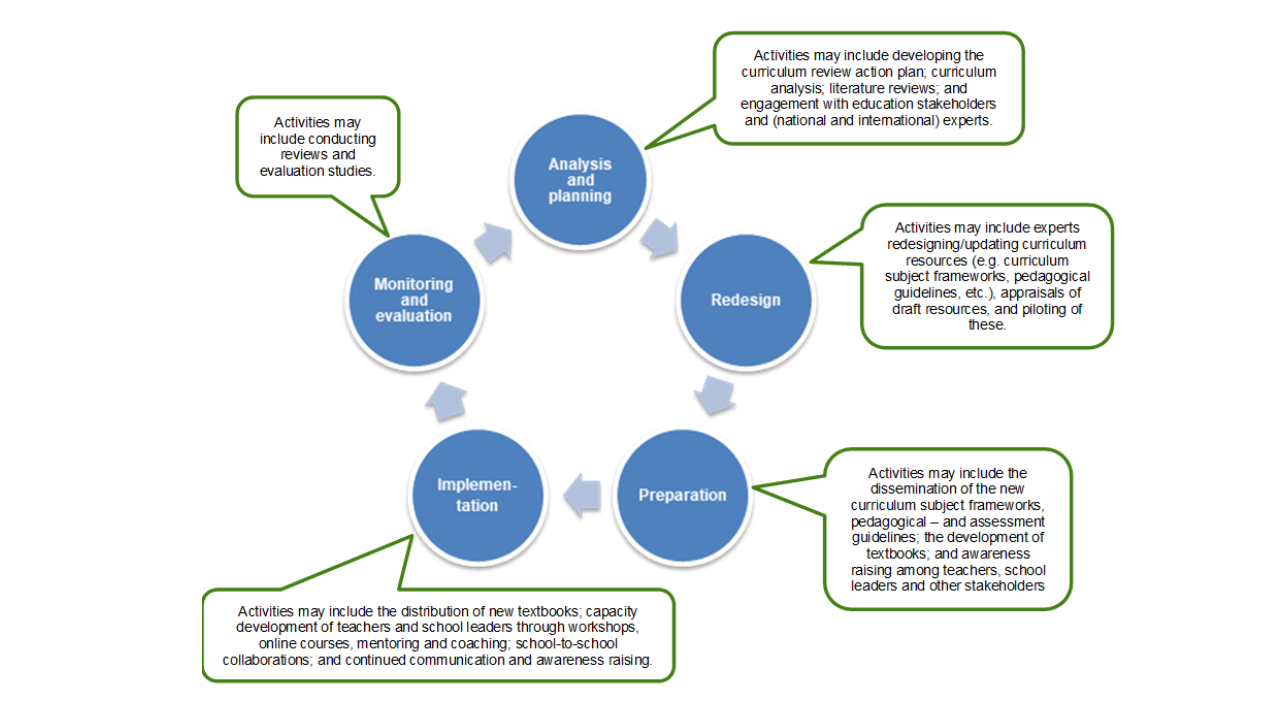
Source: Developed by the authors of this report.
Moldova’s current curriculum review lacks a costed action plan that covers the entire curriculum review
As outlined above, a critical first step in the analysis and planning phase is for the MoER to define the overarching goal and key purpose(s) of the curriculum review. These provide the foundation for developing, and subsequently implementing, and monitoring and evaluating a coherent curriculum review action plan. A well-designed and clearly communicated action plan can guide all curriculum review activities and support the monitoring of progress towards achieving the defined review purposes and milestones. To be effective, the plan should clearly set out all key activities to be undertaken throughout the curriculum review cycle. It should also account for the necessary time, equipment, facilities, and financial and human resources (Gouëdard et al., 2020[9]).
The evidence suggests action planning is an area for improvement for Moldova’s current curriculum review, however. The action plan of the current curriculum review is not costed and primarily concerns the redesign of the curriculum and does not address curriculum implementation and monitoring and evaluation (Ministry of Education and Research of the Republic of Moldova, 2024[11]). While the OECD team learned of different plans and initiatives to support the implementation and monitoring and evaluation of the curriculum, these were not consolidated into a coherent action plan.
The absence of a coherent action plan covering the full curriculum review cycle presents several challenges. These include the potential duplication of efforts, gaps in implementation, inefficient use or misallocation of resources, and a lack of clarity regarding the roles and responsibilities of implementation partners and other education stakeholders (Gouëdard et al., 2020[9]). Moreover, without such a plan, the reform risks becoming misaligned with the curriculum review purposes – an issue that may have affected Moldova’s current curriculum review. For instance, while finalising this paper, the OECD team became aware of a pilot initiative to develop and trial an integrated science curriculum for lower secondary grades 5 to 7, while maintaining the existing (non-integrated) curriculum for grades 8 and 9. It was not clear to the OECD team how this initiative aligned with the stated review purposes (see Box 1.2).
In sum, it is recommended that for the current and future curriculum reviews, Moldova develops a costed action plan that covers the whole curriculum review cycle. This action plan should be based on clearly defined review purposes and describe all activities to be undertaken throughout the review cycle. The review purposes can serve as a basis for prioritising activities within the plan and for identifying those that could be deferred or excluded.
Expert consultations support the redesign of curriculum documents
While the proposed sequencing of the curriculum review by levels of education would support the MoER and the curriculum review body proposed in this paper (see below), in planning, implementing and quality‑assuring the redesign process, it remains important to allocate adequate time and other resources to the redesign of the curriculum. This is particularly relevant given Moldova’s current limited capacity in this area, which will require time to strengthen.
Nevertheless, Moldova can build on several strengths in curriculum design. These include good practices from the current curriculum review, such as the use of expert consultations during the drafting of curriculum documents and their engagement in the piloting of these resources. These expert consultations should be continued in future redesign phases to ensure Moldova’s teachers, teacher trainers and other stakeholders have an opportunity to provide feedback. Beyond enhancing the quality and user friendliness of the curriculum – both of which have posed challenges in Moldova in the past – the active involvement of teachers and other stakeholders can help build broader support for the curriculum review process (see below) (Gouëdard et al., 2020[9]; Van den Akker, 2018[41]; Nieveen et al., 2022[42]).
The quality assurance of new textbooks has received insufficient attention in the past
As noted above, Moldova has experienced the negative consequences of insufficient attention to textbook quality assurance. During interviews, the OECD team frequently heard concerns regarding the quality of Moldova’s textbooks. These concerns included poor alignment with subject curriculum frameworks and an overly theoretical approach – issues that may reflect broader quality challenges identified in the curriculum resources.
OECDs work on curriculum design and implementation – notably Education 2030/40, shows different approaches to textbook development across countries (OECD, 2020[10]; OECD, 2021[1]; OECD, 2020[43]). Governments support both public and private textbook development, depending on the country context. While some countries adopt a more decentralised approach to textbook development, quality assurance and procurement – granting autonomy to local authorities or schools, others adopt a more centralised approach with the government playing a dominant role in these processes. Countries such as Greece, Japan and Moldova fall into the latter category. In Japan, textbooks are developed by private textbook publishers but must undergo a rigorous approval process administered by the Ministry of Education, Culture, Sports, Science and Technology. The Textbook Authorization and Research Council evaluates submissions to ensure compliance with national curriculum guidelines. The Council prepares an assessment report, which is submitted to the Minister for examination and authorisation (OECD, 2018[44]).
Moldova’s approach to textbook development shares some similarities with that of Japan, particularly in its efforts to regulate private textbook publishers and promote quality and transparency through a competitive selection process that is managed by the MoER. However, unlike Japan, Moldova has a much smaller domestic market of textbook developers and publishers, which limits competition. Moreover, interviews with education stakeholders and findings from recent studies point to limited experience and capacity among textbook developers and publishers in Moldova as a contributing factor to concerns about textbook quality, as mentioned earlier (UNICEF, 2019[15]; Hadîrcă and Vivdici, 2021[45]).
The earlier mentioned efforts by the MoER to improve subject curriculum frameworks are expected to support textbook developers in aligning content more effectively with learning outcomes. However, these improvements may not fully address the underlying challenge of limited capacity among textbook developers and publishers in Moldova. One option the MoER may consider is opening the competitive process for textbook development and publishing to international service providers. These providers could operate independently or in partnership with national textbook developers and publishers through consortia. Such a measure could help broaden the pool of qualified textbook developers and publishers and improve the overall quality of curriculum resources.
Furthermore, the OECD team learned the MoER was considering leading the development of the textbook content of selected subjects, i.e. with the support of curriculum experts. It would (only) leave the publishing and distribution of these textbooks to private companies. The experiences and lessons learned of trialling this approach as part of the ongoing curriculum review could help in deciding whether to continue and possibly expand this (more centralised) approach to curriculum development in future curriculum review cycles.
In addition, the MoER should ensure a rigorous and transparent quality assurance process for all new draft textbooks. This may require reviewing and updating existing procedures for textbook approval to ensure they are sufficiently clear and support a robust review process. Moreover, international evidence highlights the importance of establishing an independent review panel, comprising curriculum experts, teachers, subject specialists and other relevant stakeholders, to support the quality assurance of curriculum resources (Glatthorn et al., 2018[16]). In recognition of this evidence and following the example of countries such as Japan, the MoER recently established the National Council for Textbook Selection. Composed of teachers and curriculum experts, the Council is tasked with reviewing textbooks for alignment with the curriculum and providing recommendations for approval to the MoER. This is a promising step toward strengthening textbook quality assurance in Moldova. However, the MoER should closely monitor the effectiveness of the Council and take additional measures as needed. These could include involving the curriculum review body proposed in this paper (see below) in the textbook review process or engaging international experts to support the Council’s work by providing independent expert judgement.
Moldova recognises the importance of ensuring student assessments and examinations are aligned to the new curriculum
The MoER has recognised the importance of aligning student assessments with the learning outcomes promoted through the curriculum, and of maintaining this alignment following a curriculum review. This is crucial because assessments shape significantly what is taught in classrooms and are therefore central in determining whether a curriculum’s stated aims are reflected in practice. International research shows that often one of the biggest obstacles to successful curriculum implementation is the failure to adapt assessments, in particular high-stakes exams, to reflect changed expectations for learner outcomes (Glatthorn et al., 2018[16]; Gouëdard et al., 2020[9]).
The MoER plans to broaden its use of assessment instruments to gain a clearer understanding of students’ learning levels and to better align student assessment with the national curriculum. In addition to updating the national assessment guidelines, the MoER is also planning to develop an online student assessment platform. This platform is expected to offer significant benefits for both teachers and students. For example, for teachers, it can enhance efficiency by providing immediate feedback, thereby allowing more targeted instructional planning and student support. For students, instant results and explanations can foster self-directed learning and reflection. The platform may also support a wider variety of question formats such as simulations and drag-and-drop tasks that better assess 21st-century competencies (OECD, 2023[38]; Foster and Piacentini, 2023[46]). When developing the planned online student assessment platform, the MoER should consider the inclusion of 21st-century competencies embedded in the curriculum (e.g. digital competence, critical and creative thinking), beyond easily measurable competencies.
Moldova should also review its examination framework to ensure alignment with the new curriculum. As well as reviewing the specifications of the nationally administered exams, Moldova might also want to consider introducing an internally assessed component to the graduation requirement in Grade 12. A number of OECD countries include portfolios or projects as part of a final certificate as a means of assessing a wider range of competencies and better reflecting the breadth of the curriculum. For example, in British Columbia, Canada, the K–12 Student Reporting Policy requires learners to reflect on their development of Core Competencies and to engage in goal setting. While the policy establishes provincial standards, schools are given flexibility in how they implement and document this reflection process. Students can also choose which competencies they reflect on. Singapore offers another example, where A-level students complete a General Paper and a Project Work component to develop their critical thinking, process, and communication skills, reflecting the curriculum’s emphasis on knowledge skills (OECD, 2024[47]). Moldova may look towards these and other international examples when reviewing its examination framework.
The MoER also plans to introduce standardised, sample-based student assessments to strengthen national-level monitoring of learning outcomes. These assessments will enable Moldova to better monitor curriculum implementation through in-depth analysis of student assessment data. Insights into the competencies students have mastered, as well as those they find challenging, can inform current and future curriculum reviews and support timely adjustments to meet students’ learning needs. For example, these findings could guide investments in teacher professional development and additional teaching and learning resources, including digital resources.
In light of the above, the MoER should consider developing a coherent national assessment framework that integrates various student assessment instruments and provides a structured approach to monitoring, evaluating and supporting student learning in relation to curriculum learning outcomes across the education system. A well-designed national assessment framework helps ensure that assessments are aligned with the intended learning outcomes of the curriculum. Clear and consistent communication about planned policy measures, as well as the purposes and appropriate uses of different types of assessment is essential. This is particularly important for key stakeholders such as teachers, school leaders, students and parents, to ensure that assessment practices contribute effectively to improvements in teaching and learning at the classroom, school and system levels (OECD, 2013[48]).
The mentor system, a large-scale professional development initiative, has significant potential to help teachers improve their practice in line with the new curriculum
Professional development of teachers is essential to the successful implementation of curricula. When aligned with a new curriculum, professional development can act as a key driver of change, enhancing teaching practices and improving student learning outcomes. Curriculum-based professional development may include a wide range of activities, such as participation in formal courses, collaborative working and learning within and between schools, and mentoring support (Boeskens, Nusche and Yurita, 2020[49]).
Moldova has recently launched a large-scale professional development initiative focused on mentoring support. Beginning in the 2024/25 school year, approximately 1 000 mentors – practising teachers – were selected and trained to support their peers in innovating and enhancing teaching practices, integrating digital technologies, and developing both professional and personal competencies. Research evidence shows the potential of mentoring programmes in helping teachers improve their practice and encouraging a focus on shared goals (OECD, 2019[50]; OECD, 2024[51]). To realise this potential in Moldova, it is essential that all mentors are qualified. However, several stakeholders raised concerns about inconsistent mentor quality. They noted that the rapid scale-up of the initiative may have limited the establishment of a rigorous process to clearly define mentor roles and apply consistent criteria during selection. Therefore, in addition to using research to monitor the effectiveness of the mentoring system in supporting curriculum implementation, Moldova should consider setting clear expectations for mentors and ensuring consistency in how mentors are selected. It could draw on examples from the United States (see Box 2.2).
In the federalised education system of the United States, various states have implemented mentoring standards to ensure high-quality mentoring practices in education. The Washington Office of Superintendent of Public Instruction, for example, has outlined six standards that define the necessary skills and dispositions for effective mentoring. These standards aim to provide a shared vision and serve as a self-reflection tool for mentors. According to these standards, a proficient mentor should:
Establish a learning-focused relationship with mentees
Encourage mentees’ reflective practices
Emphasise professional growth and ethics for mentors
Enhance mentees’ knowledge and skills in curriculum, instruction, and assessment
Connect mentees with organisational systems and learning communities
Promote equitable thinking, practices, and outcomes.
Each standard details effective mentor actions through multiple descriptors and examples of excellence in mentoring.
Similarly, the state of New York has developed a set of standards to guide the design and implementation of teacher mentoring programs. These standards are grouped into four categories: qualities and dispositions of an effective mentor, professional practice, knowledge of the mentee, and knowledge and skills of mentoring in practice. Each standard includes a definition and a set of performance indicators outlining the qualities and activities required to meet the standard.
Source: Washington Office of Superintendent of Public Instruction (2020[52]), Washington State Standards for Mentoring,
https://ospi.k12.wa.us/sites/default/files/public/best/pubdocs/Standards_for_Mentoring_2020.pdf (accessed on 5 March 2025); New York State Professional Standards and Practices Board (2022[53]), Mentoring Standards and Program Guidance,
https://www.nysed.gov/sites/default/files/nysed-mentoring-standards-and-program-guidance_0523.pdf (accessed on 5 March 2025).
Key criteria for selecting mentors include a demonstrated record of effectiveness in their own classrooms, a strong understanding of pedagogy and instructional practice, and the capacity and willingness to work with adults (OECD, 2024[51]). Additional criteria for consideration in the Moldovan context may include a deep understanding of the new curriculum, as well as practical skills in designing lessons and assessments aligned with subject curriculum framework learning outcomes.
In addition, while Moldova has provided initial short training to all mentors, various stakeholders consider this unlikely to have been sufficient to ensure that all mentors have the competencies required to support teacher in adapting their practices in line with the curriculum. Planning for continuous training opportunities and the development of self-learning resources is likely to be necessary to support the effectiveness of the mentoring system. Importantly, once the new curriculum is finalised, it will be crucial to provide all mentors with targeted training to ensure they have a deep understanding of its content, and the competencies needed to help teachers innovate their instruction and serve as leaders of curriculum change (see Box 2.3).
In 2025 the OECD Future of Education and Skills project (Education 2030/40) released the OECD Teaching Compass. This visionary framework aims to reimagine teaching as a proactive, purpose-driven and future-ready force for positive change – in particular, viewing teachers as curriculum change agents.
It’s built on the pillars of teacher agency, competencies and well-being, aligning them with curriculum goals and system transformation, anchoring professional identify, sense of purpose, professional integrity and dignity at the centre. The Teaching Compass is a response to the persistent gaps in education reform is the misalignment between curriculum goals and teacher capacity/ system capacity. It aims to help education systems bridge this divide by guiding both teacher education reforms and in-service professional development, ensuring that teachers have the tools to bring modern curricula to life in their classrooms, not just in theory but in practice.
It is also important to recognise the influence of factors beyond the school, including parents and local communities, where students often engage in community service, project-based learning, and other experiential activities in modern curriculum. The Teaching Compass promotes an ecosystem approach to curriculum change, emphasising shared responsibility among all stakeholders to ensure that every student receives a quality and relevant education.
The Teaching Compass is grounded in research, and enriched through international collaboration, dialogue and co-creation among the Education 2030/40 project’s diverse group of stakeholders. It is structured around the following key concepts:
Making the future we want a reality for both students and teachers: Clarifying a shared vision and purpose, aligning education with collective aspirations for the future.
Anchoring the Compass: Navigating change without losing focus - grounding teaching practices in a strong professional identity and clear ethical values that guide educators through complexity, supporting improved student learning and well-being.
Teacher agency to lead curriculum change: Empowering educators with the autonomy, confidence and capabilities necessary to initiate and sustain meaningful innovation and transformation in education.
Teacher competencies for navigating complexity: Cultivating critical competencies and adaptive skills that enable educators to effectively manage complexity, uncertainty and continuous change in educational environments.
Teacher well-being for thriving professionals: Promoting comprehensive well-being strategies to ensure that teachers flourish personally and professionally, sustaining their capacity to educate, inspire and engage students.
Teachers as integral to a learning ecosystem for collective impact: Positioning educators within collaborative networks and partnerships that foster collective responsibility, mutual learning, and systemic educational improvement.
Source: OECD (2025[54]), “OECD Teaching Compass: Reimagining teachers as agents of curriculum changes”, OECD Education Policy Perspectives, No. 123, OECD Publishing, Paris, https://doi.org/10.1787/8297a24a-en.
The MoER has taken several measures to strengthen curriculum monitoring and evaluation, which could be sustained and built on in future curriculum review cycles
Countries that adopt an evidence-informed approach to curriculum redesign and implementation are more likely to achieve the intended impact on student outcomes (OECD, 2020[10]). As mentioned earlier, careful monitoring of implementation enables timely adjustments where necessary and informs the planning of future curriculum reviews. The MoER recognised that previous curriculum reviews had lacked adequate monitoring and evaluation of implementation. To address this, it committed to strengthening monitoring and evaluation processes, including the development of a comprehensive monitoring and evaluation framework. This framework is intended to guide the tracking of progress in implementing the new curriculum and conducting evaluation studies. Additionally, the MoER has expanded the mandate of National Agency for Curriculum and Evaluation (NACE) to include broader responsibilities for curriculum monitoring and evaluation, including the development and administration of the standardised, sample-based student assessments mentioned earlier. In line with recommendations from a recent OECD paper (2023[14]), NACE has been tasked with conducting in-depth analyses of student assessment data. These analyses are expected to inform current and future curriculum reviews and support timely adjustments in response to students’ learning needs.
These measures for strengthening curriculum monitoring and evaluation should be continued and built on in future curriculum review cycles.
Initiating the monitoring of curriculum implementation early in the implementation phase can help identify good practices and enable timely adjustments
In some OECD countries the different phases of the curriculum review cycles deliberately overlap, while in others they do not, or the overlap is minimal (OECD, 2020[10]). For example, in Estonia, Japan and Wales (United Kingdom) the monitoring of curriculum implementation started as soon as the new curriculum was rolled out (OECD, 2020[10]; Gouëdard et al., 2020[9]). Moldova could consider adopting a similar approach by initiating the monitoring of curriculum implementation early in the implementation phase. Early tracking of progress can help identify both good practices and potential obstacles as they emerge. This enables a clearer understanding of the challenges faced by schools and teachers, thereby supporting the provision of timely and targeted support.
However, it is important to note that monitoring and evaluation serve multiple purposes throughout the entire curriculum review cycle. For instance, the piloting of curriculum resources during the design phase relies on robust evidence generated through monitoring. In addition, the continuous analysis of standardised student assessment data and findings from school evaluations contributes valuable insights. Together, these and other monitoring and evaluation activities generate evidence to support improvements at the classroom, school, and system levels, as well as to inform future curriculum review cycles.
Evidence from 24 countries showed an average curriculum review lasts 9.5 years, however there are considerable differences among countries
The pace and duration of a curriculum review (cycle) determine how the implementation process unfolds. A variety of factors can influence decisions regarding the length of a curriculum review. These include national culture (e.g. uncertainty avoidance, long term-orientation) (Morena and Calvan, 2019[55]; Hofstede, 2011[56]), political factors (e.g. political short-termism) (OECD, 2020[5]; Van den Akker, 2018[41]) and the systems’ capacity for curriculum design and implementation, including teachers’ skills for realising the desired curriculum changes (Gouëdard et al., 2020[9]; OECD, 2021[57]; OECD, 2020[10]). Data collected from 17 OECD member countries and jurisdictions, along with 7 non-member countries, through the OECD Education 2030/40 project, show that the average duration of a curriculum review is approximately 9.5 years (OECD, 2020[10]). However, this average masks significant variation across countries and jurisdictions (see Table 2.3.).
While Moldova on average started a new curriculum review once every seven years, it may consider lengthening this period for future curriculum review cycles
In 2024, Moldova initiated its fifth curriculum review, having completed four previous reviews over a span of 28 years (between 1996 and 2024). These reviews varied in terms of complexity and the scale of curriculum changes, resulting in an average curriculum review of approximately seven years. While initiating a new curriculum review every seven years is not uncommon among OECD countries, Moldova may wish to consider extending the duration of future curriculum review cycles.
The system’s limited capacity for curriculum design and implementation underscores the importance of allocating sufficient time and resources to each phase of Moldova’s curriculum review cycle. As noted above, previous curriculum reviews have not always devoted adequate time and resources to all phases. This observation was corroborated by several stakeholders interviewed by the OECD team, who emphasised the need for additional time to redesign and quality-assure subject curriculum frameworks and other curriculum resources. While the proposed sequencing of the review by levels of education could reduce the demands associated with the redesign and quality assurance of curriculum resources (compared to an integrated curriculum review approach), the overall system capacity for developing high-quality curriculum resources remains limited. Capacity development of curriculum developers should be prioritised and factored into the curriculum review timeline.
Furthermore, international evidence underscores the importance of investing in preparatory activities to support effective curriculum implementation. Data collected by the OECD from 24 countries and jurisdictions show that, on average, more than three years are allocated to such activities, including the dissemination of new subject curriculum frameworks, pedagogical guidelines and assessment guidelines, and the development of textbooks (OECD, 2020[10]). International evidence indicates that preparatory activities can begin during the curriculum redesign phase and continue into the implementation phase, thereby facilitating an effective and timely roll-out of the new curriculum. That said, the MoER should allocate adequate time and resources to preparatory activities in future curriculum review cycles. One critical activity is the development and dissemination of textbooks, which during the previous curriculum review took significantly longer than anticipated and delayed the grade-by-grade roll-out of the curriculum.
The MoER should ensure that future curriculum reviews allocate sufficient time for the implementation phase, which has not always been the case in the past. This research evidence shows that improvements in teaching and student learning take time, and that schools may initially experience an “implementation dip” (Cooper, Bumbarger and Moore, 2015[58]; Hopkins et al., 2013[59]). Typically, modest gains may be observed in the first year of implementation, followed by a decline over the next two to four years – the “implementation dip” – before improvements are consolidated and sustained over a five- to eight-year period. Therefore, allocating sufficient time for curriculum implementation is essential.
In addition, the MoER may consider varying the duration of implementation by education level, especially if it continues to use a grade-by-grade roll-out approach as in previous reviews. For example, the grade-by-grade roll-out of the revised curriculum at the lower secondary level (Grades 5 to 9) would span five years, whereas at the upper secondary level (Grades 10 to 12), it would require only three years.
As noted earlier, the MoER should also consider initiating curriculum monitoring activities shortly after implementation begins. This would enable timely course corrections, where necessary. However, determining whether such adjustments yield the intended effects on teaching practices and student learning requires time.
In sum, given Moldova’s currently limited capacity for curriculum design and implementation, the MoER may consider establishing a curriculum review cycle of approximately 10 years. However, a flexible approach is advisable. A slightly longer cycle may be appropriate for lower secondary education compared to primary and upper secondary levels if a grade-by-grade curriculum roll-out is maintained. As Moldova’s capacity for curriculum design and implementation improves over time, it may become feasible to shorten the review cycle if desired. Furthermore, one can argue that for a curriculum review that is more complex and entails large-scale curriculum changes a longer review cycle may be needed to successfully complete each of the review phases. During this period, ad hoc, subject-based curriculum reviews could allow for responding to immediate needs, as mentioned earlier.
Education governance structures may be more or less conducive to curriculum review and can evolve over time to respond to changing needs and national contexts
Education systems are among the most complex public sector organisations, making reform and innovation particularly challenging. The inherent characteristics of the sector, including a wide range of stakeholders, differing time horizons and the unpredictability and limited measurability of outcomes distinguish it from other public services (Cerna, 2014[60]). Education governance structures may also be more or less conducive to curriculum review. These structures typically evolve over time in response to changing needs and national contexts (Gouëdard et al., 2020[9]). Governance structures that facilitate a curriculum review typically demonstrate strong government leadership, which defines the overall vision, goals and purposes of the review. Additionally, they involve effective and efficient coordination among central government, specialised agencies responsible for curriculum or relevant bodies within broader agencies, expert groups, and other stakeholders actively engaged in the curriculum review process (Nieveen et al., 2022[42]). Governance structures that leverage existing system capacity for curriculum design and implementation – and invest in its continuous development – are also more likely to support successful curriculum reviews. Stakeholder engagement plays a critical role in mobilising available curriculum expertise within the system and in fostering a policy environment conducive to change (OECD, 2024[17]).
In some countries and jurisdictions ministries of education play a leading role in the curriculum review process…
In systems such as England, France, Hungary, Japan, Portugal and Singapore, the curriculum review process is led by ministries of education (Department of Education, 2024[13]; OECD, 2023[61]; OECD, 2018[44]; Gouëdard et al., 2020[9]). For example, in Singapore the Ministry of Education is the main agent for curriculum review at the national level and has a dedicated curriculum planning and development division. The Ministry leads the design of the curriculum, directs all related policies, orchestrates consultation and communication, and closely monitors implementation and results.
Ministries of education often draw on the expertise of external groups to support specific aspects of the review process. In some cases, they delegate tasks related to the analysis and planning of the review or curriculum design to temporary expert groups or advisory committees. In England, for instance, the government recently appointed an independent panel of experts to review the national curriculum. In parallel, it launched a broader Curriculum and Assessment Review, encouraging contributions through an online platform and actively seeking input from children and young people, parents, teachers, educational experts, schools and employers. To ensure transparency and rigour, the review was framed by clearly defined aims, terms of reference and guiding principles (Department of Education, 2024[62]). In Moldova, the MoER has established a similar expert group, the Curriculum Working Group (CWG), to support the current curriculum review process, particularly the analysis and planning, and redesign of the curriculum.
… while in other countries and jurisdictions ministries of education give responsibilities for curriculum review to specialised agencies
In countries such as Ireland, Finland, Latvia and Sweden, governments have established specialised agencies that often operate at arm’s length and lead all or part of the curriculum review process. One example is Ireland’s National Council for Curriculum and Assessment (NCCA), a statutory body under the Department of Education governed by a broad representation of stakeholders. The NCCA is responsible for leading the analysis and planning, and redesign of the curriculum. While it is not responsible for curriculum implementation, it supports educational change in early childhood settings and schools by developing various support materials. These include examples of practice, samples of student work, online toolkits, and curriculum planning resources.
Another example is Sweden, where the National Agency for Education carries out curriculum redesign as part of a broader organisational mandate. Its responsibilities include developing school improvement programmes, delivering in-service teacher training, distributing grants, organising school leader training and administering large-scale student assessments. The agency as such plays a central role in supporting schools with curriculum implementation (Swedish National Agency for Education, n.d.[63]).
Establishing a curriculum review body can strengthen a system’s capacity for curriculum design and implementation
The option of establishing a specialised, semi-autonomous curriculum agency in Moldova was proposed in earlier reviews by the OECD (2003[64]) and the World Bank (2005[65]), nearly two decades ago. At the time, this recommendation was not pursued. However, there are several reasons why the MoER should consider establishing a specialised curriculum review body. First, the establishment of such a body could allow for consolidating and further developing the available expertise for curriculum design in the country – thereby directly responding to the call for action of the Education Development Strategy 2030. The proposal of this paper that Moldova considers sequencing curriculum reviews by levels of education, and make such reviews a regular, planned function of the education system, makes the creation of a permanent body for curriculum expertise all the more important. Second, establishing a specialised body at arm’s length from the MoER, with a (semi-) autonomous and neutral role, could be beneficial given the often complex and politically sensitive nature of curriculum review (Gouëdard et al., 2020[9]; Nieveen et al., 2022[42]). In the case of Moldova, this involves managing different stakeholder views. Third, establishing a specialised body with curriculum expertise could help strengthen the much-needed quality assurance of curriculum resources. The persistent lack of quality in curriculum resources has been noted across several curriculum reviews (Gremalschi, 2015[32]; UNICEF, 2019[15]; Dumbraveanu, 2022[33]).
Within this institutional set up, the MoER would retain responsibility for the overall vision, goals and purposes of a review, while the proposed body’s mandate would focus on analysis, curriculum redesign and technical input to the planning of any changes. A key activity during the analysis and planning phase is the development of a curriculum review action plan. The proposed body could support the MoER in preparing this plan, although MoER’s leadership would remain essential, particularly given its central role in implementation.
Establishing a separate agency would, however, entail significant costs. Therefore, the MoER could consider creating a dedicated body (e.g. centre or unit) within a larger existing agency. Two potential host agencies stand out, both of which were mentioned by several stakeholders during interviews conducted by the OECD team. One option is the recently established National Institute for Education and Leadership. The Institute’s mandate includes managing and modernising Moldova’s teacher professional development programmes, implementing the earlier mentioned mentoring system, and conducting educational research (OECD, 2023[14]). Locating the proposed body within the Institute could strengthen the link between curriculum development and teacher professional development (Lysaght et al., 2019[66]; Cordingley, 2019[67]). A potential disadvantage of this option is the separation of responsibilities for curriculum and assessment policy, which leads to a second option for Moldova to consider.
Another option is NACE. The NACE is responsible for the design, development and implementation of national student assessments and examinations. Its mandate for curriculum monitoring and evaluation has recently been expanded. The OECD team also learned that NACE is expected to play a key role in updating assessment guidelines. Establishing the proposed curriculum body within NACE could help strengthen the alignment between curriculum and assessment policy, which is vital for successful curriculum implementation (Glatthorn et al., 2018[16]).
Whichever host agency is selected, it will be essential for Moldova to invest in strengthening the organisational capacity of the curriculum review body, in line with the Education Development Strategy 2030’s call to enhance the system’s capacity for curriculum design. This may involve establishing a dedicated core team and investing in their professional development. Additionally, the curriculum review body could benefit significantly from networking and forming partnerships with similar agencies in EU and OECD member countries to support its capacity development.
Stakeholder engagement is central to the success of a curriculum review
International examples of successful curriculum reviews highlight the importance of engaging teachers, students, parents and other education stakeholders in the review process. This includes communicating why the curriculum should be changed (i.e. the rationale) and what is to be achieved (i.e. the purpose(s) of the review). This is important to help enhance their understanding of the desired curriculum changes and gain their support for the curriculum review (Gouëdard et al., 2020[9]; OECD, 2021[1]). On the other hand, a lack of stakeholder involvement can result in groups feeling left out. Especially when teachers and school leaders are not sufficiently included, this can hinder the curriculum review or may even lead to resistance. Furthermore, the engagement of teachers, school leaders, curriculum experts and other education stakeholders could, as mentioned earlier, help ensure the quality and user friendliness of curriculum resources (Nieveen et al., 2022[42]; Gouëdard et al., 2020[9]). Therefore, many countries and jurisdictions engage education stakeholders throughout the curriculum review cycle.
Moldova has in past reviews engaged stakeholders in the curriculum review process, though in varying degrees. The curriculum review that was started in 1996 was considered a good example of strong stakeholder engagement throughout the review. This included early consultations to help define the purposes of the review, the redesign of the curriculum and its implementation (World Bank, 2005[65]). While stakeholder engagement may not have been equally strong in some of the curriculum reviews that followed, the MoER and CWG have demonstrated a clear commitment to a strong stakeholder process in the current curriculum review. This is important as Moldova’s teachers, school leaders, curriculum experts and other education stakeholders are central to the system’ capacity for curriculum design and implementation.
In addition, as in many systems, such as Australia, England (United Kingdom), Estonia and the Netherlands, the MoER and CWG have proactively engaged international experts to inform the curriculum review and to complement the national pool of curriculum expertise (OECD, 2023[14]). These are good practices that should be continued and embedded in future curriculum review cycles and action plans.
References
[26] Benyon, L. (2007), “Curriculum Continuity”, International Journal of Primary, Elementary and Early Years Education, pp. 36-41, https://doi.org/10.1080/03004278185200201.
[49] Boeskens, L., D. Nusche and M. Yurita (2020), Policies to support teachers’ continuing professional learning: A conceptual framework and mapping of OECD data, OECD Publishing, https://doi.org/10.1787/247b7c4d-en.
[8] Bryson, J., B. George and D. Seo (2024), “Understanding goal formation in strategic public management: a proposed theoretical framework”, Public Management Review, Vol. 26/2, pp. 539-564, https://doi.org/10.1080/14719037.2022.2103173.
[40] Casap, L., V. Midari and I. Gonta (2022), Human Development Assessment for Moldova : Background Paper on Education, World Bank, http://documents.worldbank.org/curated/en/099940106202222966.
[60] Cerna, L. (2014), “Trust: What it is and Why it Matters for Governance and Education”, OECD Education Working Papers, No. 108, OECD Publishing, Paris, https://doi.org/10.1787/5jxswcg0t6wl-en.
[58] Cooper, B., B. Bumbarger and J. Moore (2015), “Sustaining evidence-based prevention programs: Correlates in a large-scale dissemination initiative”, Prevention Science, Vol. 16/1, pp. 145-157, https://doi.org/10.1007/s11121-013-0427-1.
[67] Cordingley, P. (2019), Future of Education and Skills 2030: Curriculum Analysis - Draft Literature review on aligning pedagogies and assessments with changes in curriculum, https://one.oecd.org/document/EDU/EDPC(2019)16/en/pdf.
[13] Department of Education (2024), Curriculum and Assessment Review: Review Aims, Terms of Reference and Working Principles, https://assets.publishing.service.gov.uk/media/6699698f49b9c0597fdb0010/Curriculum_and_assessment_review_-_aims_terms_of_reference_and_working_principles.pdf.
[62] Department of Education (2024), Curriculum and Assessment Review: Review Aims, Terms of Reference and Working Principles, Department of Education of England, https://assets.publishing.service.gov.uk/media/6699698f49b9c0597fdb0010/Curriculum_and_assessment_review_-_aims_terms_of_reference_and_working_principles.pdf (accessed on 17 December 2024).
[33] Dumbraveanu, R. (2022), “Science Education in Moldova”, in Lecture Notes in Educational Technology, Science Education in Countries Along the Belt & Road, Springer Nature Singapore, Singapore, https://doi.org/10.1007/978-981-16-6955-2_26.
[3] Dutch Inspectorate of Education (2024), Dutch Education System: Background information, https://english.onderwijsinspectie.nl/documents/publications/2024/06/05/dutch-education-system---background-information (accessed on 10 March 2025).
[19] English Department of Education (2024), Curriculum and Assessment Review: Review Aims, Terms of Reference and Working Principles, https://assets.publishing.service.gov.uk/media/6699698f49b9c0597fdb0010/Curriculum_and_assessment_review_-_aims_terms_of_reference_and_working_principles.pdf (accessed on 17 December 2024).
[46] Foster, N. and M. Piacentini (2023), Innovating Assessments to Measure and Support Complex Skills, OECD Publishing, Paris, https://doi.org/10.1787/e5f3e341-en.
[16] Glatthorn, A. et al. (2018), Curriculum Leadership : Strategies for Development and Implementation, Sage.
[9] Gouëdard, P. et al. (2020), “Curriculum reform: A literature review to support effective implementation”, OECD Education Working Papers, No. 239, OECD Publishing, Paris, https://doi.org/10.1787/efe8a48c-en.
[12] Government of the Republic of Moldova (2023), Education Development Strategy 2021-2030, Government of Moldova, https://gov.md/sites/default/files/document/attachments/subiect-02-nu-900-mec-2022_1.pdf (accessed on 14 August 2024).
[32] Gremalschi, A. (2015), Formarea competenţelor-cheie în învăţământul general: Provocări si constrângeri (Key competences in general education: challenges and constraints), https://soros.md/wp-content/uploads/2023/03/Studiu-Formarea-Competentelor-Cheie.pdf (accessed on 18 March 2024).
[45] Hadîrcă, M. and A. Vivdici (2021), Societal trends and challenges for the transformation in a learning society, pp. 85-95, https://izss.uken.krakow.pl/wp-content/uploads/sites/13/2023/01/Maria-Hadirca-Ana-Vivdici-SOCIETAL-TRENDS-AND-CHALLENGES-FOR-THE-TRANSFORMATION.pdf.
[56] Hofstede, G. (2011), “Dimensionalizing cultures: The Hofstede model in context”, Online Readings in Psychology and Culture, Vol. 2/1, pp. 1-26, https://doi.org/10.9707/2307-0919.1014.
[59] Hopkins, D. et al. (2013), Creating the conditions for classroom improvement. A handbook of staff development activities, Routledge, https://doi.org/10.4324/9781315068749.
[24] Lemos, R. et al. (2024), Curriculum and Learning: Towards a Competency-based Science, Technology, Engineering, and Mathematics (STEM) Curriculum Reform in Armenia (English), Washington, D.C.: World Bank Group., http://documents.worldbank.org/curated/en/099021724065028226 (accessed on 18 December 2024).
[39] Lingard, B. (2021), “National Curriculum Making as More or Less Expressions of and Responses to Globalization”, in Curriculum Making in Europe: Policy and Practice within and Across Diverse Contexts, Emerald Publishing Limited, https://doi.org/10.1108/978-1-83867-735-020211003.
[66] Lysaght, Z. et al. (2019), Aligning Assessment, Learning and Teaching in Curricular Reform and Implementation, https://www.ncca.ie/media/3925/aligning-assessment-learning-and-teaching-in-curricular-reform-and-implementation.pdf.
[11] Ministry of Education and Research of the Republic of Moldova (2024), Concepția Dezvoltării Curriculumului Școlar (Conception of the Development of the School Curriculum), https://mecc.gov.md/sites/default/files/last_version_copy_compressed_1_0_0.pdf (accessed on 4 March 2025).
[55] Morena, I. and C. Calvan (2019), “Hofstede’s cultural dimensions in an educational context”, The European Proceedings of Social & Behavioural Sciences, pp. 298-306, https://doi.org/10.15405/epsbs.2019.04.02.38.
[27] National Council for Curriculum and Assessment (2024), About us, https://ncca.ie/en/about-ncca/about-us/ (accessed on 4 December 2024).
[29] National Council for Curriculum and Assessment (2024), Schedule of senior cycle subjects for redevelopment, https://ncca.ie/en/senior-cycle/senior-cycle-redevelopment/schedule-of-senior-cycle-subjects-for-redevelopment/ (accessed on 18 December 2024).
[28] National Council for Curriculum and Assessment (2020), Draft primary curriculum framework: Primary curriculum review and redevelopment, https://ncca.ie/media/4456/ncca-primary-curriculum-framework-2020.pdf (accessed on 18 December 2024).
[21] NCEE (2021), Country Profile: Singapore, https://ncee.org/country/singapore/ (accessed on 12 December 2024).
[53] New York State Professional Standards and Practices Board (2022), , New York State Professional Standards and Practices Board, https://www.nysed.gov/sites/default/files/nysed-mentoring-standards-and-program-guidance_0523.pdf (accessed on 5 March 2025).
[4] New Zealand Ministry of Education (2024), Changes to our national curriculum: An update on how we are strengthening the national curriculum so every child can succeed., https://web-assets.education.govt.nz/s3fs-public/2025-01/Understanding%20changes%20to%20our%20National%20Curriculum.pdf?VersionId=MT2wmb70W4kgChMeICEcsqiuAdFzA2QF (accessed on 11 March 2025).
[22] New Zealand Ministry of Education (2021), Refreshing the New Zealand Curriculum: YOUR GUIDE TO THE NZC REFRESH, https://curriculumrefresh-live-assetstorages3bucket-l5w0dsj7zmbm.s3.amazonaws.com/s3fs-public/2022-09/MOE0038_Refresh_Booklet_v09_DIGITAL.pdf?VersionId=D8srztkEV2B1HPdOSaON94wC9CVUtV.M (accessed on 14 December 2024).
[42] Nieveen, N. et al. (2022), Perspectives on curriculum change. An overview study to provide insights for the Dutch context, University of Twente, https://www.nro.nl/sites/nro/files/media-files/Perspectives%20on%20Curriculum%20Change_0.pdf.
[31] Nieveen, N., J. van den Akker and J. Voogt (2023), “Curriculum design”, in International Encyclopedia of Education(Fourth Edition), Elsevier, https://doi.org/10.1016/b978-0-12-818630-5.03032-3.
[54] OECD (2025), “OECD Teaching Compass: Reimagining teachers as agents of curriculum change”, OECD Education Policy Perspectives, No. 123, OECD Publishing, Paris, https://doi.org/10.1787/8297a24a-en.
[47] OECD (2024), ““What shapes upper secondary pathways and transitions?: Insights for Wales””, OECD Education Policy Persectives, No. 92, OECD Publishing, Paris, https://doi.org/10.1787/7139d7f1-en.
[17] OECD (2024), Curriculum Flexibility and Autonomy: Promoting a Thriving Learning Environment, OECD Publishing, Paris, https://doi.org/10.1787/eccbbac2-en.
[51] OECD (2024), “Reforming school education in Romania: Strengthening governance, evaluation and support systems”, OECD Education Policy Perspectives, No. 92, OECD Publishing, Paris, https://doi.org/10.1787/5333f031-en.
[14] OECD (2023), “An assessment of the professional development of teachers and school leaders, and curriculum and learning resources in Moldova”, OECD Education Policy Perspectives, No. 78, OECD Publishing, Paris, https://doi.org/10.1787/22633a40-en.
[61] OECD (2023), OECD Digital Education Outlook 2023: Towards an Effective Digital Education Ecosystem, OECD Publishing, Paris, https://doi.org/10.1787/c74f03de-en.
[37] OECD (2023), Shaping Digital Education: Enabling Factors for Quality, Equity and Efficiency, OECD Publishing, https://doi.org/10.1787/bac4dc9f-en.
[38] OECD (2023), Untapping the potential of resource banks in the classroom, OECD Publishing, Paris, https://doi.org/10.1787/f1a19b94-en.
[1] OECD (2021), Adapting Curriculum to Bridge Equity Gaps: Towards an Inclusive Curriculum, OECD Publishing, Paris, https://doi.org/10.1787/6b49e118-en.
[36] OECD (2021), OECD Digital Education Outlook 2021: Pushing the Frontiers with Artificial Intelligence, Blockchain and Robots, https://doi.org/10.1787/589b283f-en.
[57] OECD (2021), Scotland’s Curriculum for Excellence: Into the Future, Implementing Education Policies, OECD Publishing, Paris, https://doi.org/10.1787/bf624417-en.
[43] OECD (2020), Achieving the new curriculum for Wales, OECD Publishing, Paris, https://doi.org/10.1787/37ba25ee-en.
[6] OECD (2020), Curriculum (re)design: A series of thematic reports from the OECD Education 2030 project, OECD Publishing, Paris, https://www.oecd.org/content/dam/oecd/en/about/projects/edu/education-2040/2-1-curriculum-design/brochure-thematic-reports-on-curriculum-redesign.pdf.
[5] OECD (2020), Curriculum Overload: A Way Forward, OECD Publishing, Paris, https://doi.org/10.1787/3081ceca-en.
[18] OECD (2020), Education in Ireland: An OECD Assessment of the Senior Cycle Review, Implementing Education Policies, OECD Publishing, Paris, https://doi.org/10.1787/636bc6c1-en.
[20] OECD (2020), “Education Policy Outlook in Estonia”, OECD Education Policy Perspectives, No. 13, OECD Publishing, Paris, https://doi.org/10.1787/9d472195-en.
[10] OECD (2020), What Students Learn Matters: Towards a 21st Century Curriculum, OECD Publishing, Paris, https://doi.org/10.1787/d86d4d9a-en.
[50] OECD (2019), Working and Learning Together: Rethinking Human Resource Policies for Schools, OECD Publishing, Paris, https://doi.org/10.1787/b7aaf050-en.
[44] OECD (2018), Education Policy in Japan: Building Bridges towards 2030, OECD Publishing, Paris, https://doi.org/10.1787/9789264302402-en.
[30] OECD (2014), Improving Schools in Wales: An OECD Perspective, OECD Publishing, Paris, https://www.researchgate.net/publication/317170291 (accessed on 18 December 2024).
[48] OECD (2013), Synergies for Better Learning: An International Perspective on Evaluation and Assessment, OECD Reviews of Evaluation and Assessment in Education, OECD Publishing, Paris, https://doi.org/10.1787/9789264190658-en.
[64] OECD (2003), Reviews of National Policies for Education: South Eastern Europe 2003: Volume 2: FYROM, Moldova, Montenegro, Romania, Serbia, Reviews of National Policies for Education, OECD Publishing, Paris, https://doi.org/10.1787/9789264030879-en.
[23] Sarv, E. and V. Rõuk (2020), Estonian Curriculum: Becoming Independent, University of Latvia Press, https://doi.org/10.22364/bahp-pes.1990-2004.05.
[25] Shuey, E. et al. (2019), “Curriculum alignment and progression between early childhood education and care and primary school: A brief review and case studies”, OECD Education Working Papers, No. 193, OECD Publishing, Paris, https://doi.org/10.1787/d2821a65-en.
[2] Swedish Ministry of Education (2025), Government investing in more reading time and less screen time, https://www.government.se/articles/2024/02/government-investing-in-more-reading-time-and-less-screen-time/ (accessed on 10 March 2025).
[63] Swedish National Agency for Education (n.d.), “Skolverket”, https://www.skolverket.se/andra-sprak-other-languages/english-engelska.
[34] UNESCO (2017), Prototype of a national curriculum framework, https://unesdoc.unesco.org/ark:/48223/pf0000260045.
[15] UNICEF (2019), Republic of Moldova. Review of the evaluation and assessment in education, UNICEF, https://www.unicef.org/moldova/en/reports/review-evaluation-and-assessment-education-0 (accessed on 11 December 2024).
[41] Van den Akker, J. (2018), Public Involvement in Curriculum Reform in Upper Secondary Education, National Council for Curriculum and Assessment, https://ncca.ie/media/3362/dublin_jvda_200218.pdf.
[35] Vivdici, A. (2023), Developing the general plan of national curriculum from the perspective of key competences’ development, https://anacec.md/files/Tibuleac-absract.pdf (accessed on 28 August 2024).
[52] Washington Office of Superintendent of Public Instruction (2020), Washington State Standards for Mentoring, Washington Office of Superintendent of Public Instruction, https://ospi.k12.wa.us/sites/default/files/2023-08/standards_for_mentoring_2020_0.pdf (accessed on 5 March 2025).
[65] World Bank (2005), Implementation Completion Report - General Education Project, Washington, D.C. : World Bank Group., http://documents.worldbank.org/curated/en/500181468774587254/Moldova-General-Education-Project (accessed on 17 December 2024).
[7] Yamanaka, S. and K. Suzuki (2020), Japanese education reform towards twenty-first century education, Springer, https://doi.org/10.1007/978-3-030-41882-3_4.