Ensuring access to high-quality and cost-effective key public services requires long-term planning and restructuring. Banská Bystrica region (BBSK) would benefit from adapting its public service provision to the demographic reality through enhanced accessibility and digitalisation, consolidation of certain facilities and better co-ordination among different actors.
Preparing for Demographic Change in the Banská Bystrica Region, Slovak Republic

Abstract
Depopulation and ageing are impacting the provision of public services (Box 1.1). The projected acceleration of population ageing is expected to increase the demand for healthcare services, leading to higher per-patient treatment costs and placing additional pressure on the healthcare infrastructure. This trend raises concerns regarding the fiscal sustainability in the short to medium term, before the decline in population lowers the total healthcare expenditure in the medium to long run. The decline in the student population is anticipated to elevate the per-student education costs, further straining subnational finances. Ensuring an efficient allocation of resources in the healthcare and education sectors will require optimising the facilities network; however, if not carefully designed, such adjustments could significantly and negatively affect travel times to services. In light of these demographic shifts, the Banská Bystrica Region (BBSK) requires innovative and multi-faceted policy responses to enhance the cost-effectiveness, quality and accessibility of its public services.
Balancing accessibility, costs and quality
With demographic change, maintaining accessibility and quality of public services becomes increasingly costly. Depopulation, resulting in lower population densities, increases the per capita cost of providing public transport and healthcare, while declining student cohorts raise the per-student costs of delivering education within affected areas. Ageing further challenges the healthcare provision by increasing demand for specialised healthcare and long-term care, as well as raising per capita treatment costs due to the greater complexity of health conditions. As a result, ageing is driving up total healthcare expenditure, a trend that is expected to continue over the short to medium term.
In a context of depopulation and ageing, balancing cost containment may compromise service quality or accessibility. Budgetary constraints that restrict investments in infrastructure, workforce retention, professional development and technological innovation can lead to a significant decline in service standards. Conversely, preserving quality while limiting expenditure often requires service reductions and facility closures, disproportionately impacting low-income households, particularly in remote areas.
Demographic change requires innovative policy solutions to maintain public service accessibility and quality while balancing costs
As ageing and depopulation persist, the service provision must evolve. Developing resilient public services in the context of demographic change will require innovative policy solutions that balance cost, accessibility and quality. This can include strategies to enhance efficiency through service integration and administrative simplification. Service networks can be restructured and optimised to maintain quality and equitable access while managing costs effectively. Alternatives to the physical public provision can be explored, including public-private partnerships, community-based initiatives and the use of digital or demand-based solutions.
Accessibility refers to the ability of individuals to reach, use and benefit from services and opportunities without barriers, and can be physical or digital. As demographic change unfolds, maintaining accessibility to public services will require innovative policy approaches. Digitalisation presents an opportunity to bridge gaps, complementing the traditional physical public service provision.
The transport infrastructure in BBSK provides limited physical access to opportunities
In the Slovak Republic, the competencies over the infrastructure determining physical accessibility are divided between the different levels of government. The national Ministry of Transport and Construction is responsible for overseeing the policy and planning. The airports (and ports), the railway and motorway networks are national-level competencies. The national rail networks are owned and managed by ŽSR (Railways of the Slovak Republic), a state-owned company. In turn, regional and local road networks are the competencies of the regional and local governments, respectively.
In BBSK transport infrastructure allows residents to reach fewer opportunities than both the Slovak and EU averages, within a given distance or travel time by road, rail or air (Figure 1.1). The region is served by the R1 dual carriageway (or rýchlostná cesta), which links to one of the four motorways (dial’nica) in the Slovak Republic (D1). Additional dual carriageways, R2 and R3, are under construction. Regional and local roads connect smaller towns, villages and rural areas to the national road network. Although BBSK has a relatively extensive rail network, it is not integrated into any trans-European rail corridor. Moreover, large network sections remain single-track, and variations in track quality restrict speed, particularly in the region’s mountainous areas (World Bank, 2020[1]). The closest international airport to Banská Bystrica is Poprad-Tatry Airport (TAT), located approximately 110 km to the northeast, with limited international connections. The nearest major international airports with more frequent flight connections are Bratislava Airport (BTS), situated 200 km to the west, and Vienna International Airport (VIE), 270 km from the region’s capital.
Infrastructure pillar of the EU Regional Competitiveness Index 2.0 (EU27=100, 2022)

Note: The infrastructure pillar is based on measures of road and rail transport performance, measured by the share of population accessible within 1h30 by road and rail in a neighbourhood within a 120km radius, and accessibility to passenger flights as measured by the daily number of passenger flights.
Source: European Commission (2022[2]), EU Regional Competitiveness Index 2.0, https://ec.europa.eu/regional_policy/assets/regional-competitiveness/index.html#/SK/SK03.
Public transport contributes little to physical accessibility
In the Slovak Republic, public transport is overseen nationally by the Ministry of Transport and Construction. The provision of bus services is divided among regional bus operators. In the cities and large towns, buses are under the control of the municipality. The public rail transport service is the responsibility of the national government and is operated by ZSSK, a state-owned company.
Public transport coverage in BBSK is uneven, with an extensive but irregular bus network and limited railway service frequency, which results in a greater dependence on cars for commuting compared to other Slovak regions (Figure 1.2). The bus network offers broad geographic coverage with 319 bus lines operated by different providers. But bus services are irregular and particularly limited in rural areas. For example, on Sundays, 133 municipalities with close to 36 000 inhabitants, accounting for 6% of the regional population, lack a feasible round-trip bus connection to the regional capital Banská Bystrica (Székely and Novotný, 2022[3]). Slovak legislation aims to improve public transport accessibility, setting a maximum distance of 1 500 meters to the nearest public transport stop, adjusted based on population density, to ensure that over 90% of the population in a given area has access to public transport. However, in practice, service frequency and reliability remain key challenges (World Bank, 2020[1]). Since 2014, national rail use has increased following the introduction of free rail travel for young people under 15 and seniors over 62. However, low platforms in many stations make access difficult for passengers with reduced mobility.
Share of commutes by mode of transport (%, 2021)

Source: OECD calculations based on: OECD (2024[4]), OECD Local data portal, https://localdataportal.oecd.org (accessed on 31 October 2024).
With the support from the World Bank and the European Commission, BBSK has taken steps to integrate its public transport system into the Catching-Up Regions initiative (Banska Bystrica Self-Governing region, 2023[5]). In 2021, the region created IDS BBSK, a region-owned company, to co-ordinate urban public transport, bus services and rail transport and enhance efficiency and accessibility. Its mandate comprises the standardisation of transport conditions, setting technical and operational standards across all modes of public transport, and advancing the digitalisation of services, including the development of an integrated ticketing system and real-time passenger information, improving both accessibility and user experience, which might help incentivise public transport use.
Slow internet connectivity reduces opportunities for remote accessibility
In the Slovak Republic, digital infrastructure is primarily the responsibility of the national government. The Ministry of Investments, Regional Development and Informatisation (MIRRI) oversees the country’s digitalisation strategy, including the National Broadband Plan, and plays a central role in expanding high-speed internet access. The Ministry of Transport of the Slovak Republic also contributes, serving as the Managing Authority for the Operational Programme Integrated Infrastructure (2014-2020), which has supported projects aimed at improving broadband connectivity. Additionally, the National Agency for Network and Electronic Services (NASES), operating under the MIRRI, is responsible for advancing eGovernment services and ensuring interoperability across digital platforms.
BBSK plays a supporting role. It works with municipalities, businesses, and national authorities to support the expansion of digital accessibility by promoting fibre optic infrastructure, particularly in underserved areas (Lafférsová, Kubišová and Strategy and Analysis Department of the BBSK Office, 2022[6]).
The share of households with internet access in BBSK is the lowest in the Slovak Republic and among the lowest in the EU. In 2019, 79% of households in the region had internet access. In addition, digital connectivity speed (Figure 1.3) is relatively weak and worsening compared to the national average, limiting the opportunities offered by digital access (OECD, 2022[7]). Internet connectivity gaps are particularly pronounced in the rural and mountainous areas of BBSK, particularly in the southern and southeastern districts, where slower speeds and inconsistent coverage persist. While major cities benefit from well-developed broadband infrastructure, access to high-speed connections (e.g. fibre and 5G) remains limited in smaller towns and remote settlements, reinforcing the urban-rural divide in accessibility. However, recent survey evidence suggests good basic digital skills, especially among the youngest (16-26 years old) (OECD, 2022[7]).
Average download speed for fixed devices as deviations from national average (%, 2019 and 2023)

Note: Gaps in Internet download speed refer to average peak speed tests of fixed broadband internet connections, weighted by the number of tests. The information refers to 2019 and 2023 Q2.
Source: OECD calculations based on: OECD (2024[4]), OECD Local data portal, https://localdataportal.oecd.org (accessed on 31 October 2024).
Providing education services is a major subnational government responsibility. Education represents 40% of total subnational government spending in 2022 (Chapter 4). Governance responsibilities are shared across the levels of the subnational government, with municipalities managing nurseries, pre-primary and primary schools, while regional governments manage secondary schools. The Ministry of Education, Research, Development and Youth provides overall supervision from pre-primary to tertiary education (European Commission, 2023[8]; Santiago et al., 2016[9]; OECD, 2016[10]). The Ministry of Labour, Social Affairs and Family oversees nurseries, which are considered part of social services.
Early childhood education (ECE) is provided in nurseries for children below 3 years and in pre-primary schools (kindergartens) for children from 3 to 6 years. While nurseries are mainly operated by private entities or churches, pre-primary schools are either public and municipally funded or privately run and funded, including by churches. A slot in kindergarten is legally granted to any child who reaches the age of 4 years and attendance is compulsory at the age of 5 years (Eurodyce, 2024[11]). However, despite the regulation, available capacity in kindergartens is limited.
Primary and secondary compulsory education spans ten years, from the age of 6 to 16, concluding either upon completion of the first year of upper secondary education or when a student reaches the age threshold of 16. The education system is structured into primary (four years), lower secondary (five years) and upper secondary education, which offers general, vocational and arts-oriented pathways starting at age 15. Primary and lower secondary education are both provided in primary schools, while upper secondary education is provided in secondary schools. While public education is free of charge, private and church-affiliated schools may levy tuition fees (Eurodyce, 2024[11]).
BBSK’s education system underdelivers in effective learning
Despite increasing per-student education expenditure (Annex Figure 1.A.1), BBSK’s education system faces challenges in achieving effective learning outcomes. Limited learning effectiveness is a broader issue affecting all education levels across the Slovak Republic. According to PISA results, a significant share of 15-year-old students in the country do not reach the minimum proficiency level in fundamental mathematics, reading and science skills, and perform below the OECD average in all three domains. Furthermore, results are worsening with PISA 2022 scores being the lowest ever measured in mathematics, and among the lowest in reading and science. Overall, results have been declining between 2009 and 2022 in all three subjects (European Commission, 2024[12]).
Weak learning outcomes at earlier stages persist into secondary school, hindering enrolment and completion rates in upper secondary education. In turn, this hampers the supply of skills, critical in the context of demographic decline. In 2022, the share of 15-19 years old enrolled in education was 84% in Central Slovakia, the large (TL2) region including BBSK and the neighbouring Žilina region, and dropout rates in upper secondary education are high in parts of the region. In 2022, the district of Veľký Krtíš saw 8% of secondary school students dropping out compared to 2% in the region (Figure 1.4).
Share of students who leave upper secondary education before completion (%, 2022)

Source: OECD calculations based on data provided by the Department of Data Analytics in BBSK.
Learning outcomes are worse among Roma students. The performance difference in PISA scores between Roma and non-Roma pupils at the age of 15 years is approximately 160 points, the equivalent of almost five years of schooling in the country (Bednarik, Hidas and Machlica, 2019[13]).1 As a consequence, the proportion of 16-24 years old Roma not in work, education or further training (NEET) is 65% in the Slovak Republic compared to a NEET rate for the non-Roma within the same age bracket of 14 %. The worst situation is observed for young Roma women, 77% of whom are not in work, education or further training, compared to 52% of young Roma men (Holubová et al., 2020[14]).
The education system is undergoing a series of reforms to improve learning outcomes. A recent reform proposed under the Catching-Up Regions initiative aligns upper secondary vocational training and education more closely with labour market needs (World Bank, 2020[15]). In 2023, the country launched the pilot phase of a reform implementing new curricula in primary and lower secondary education. The reform introduces updated learning content, structured into three multiannual cycles, to equip students with key competencies for the future. However, the reform’s increased flexibility in adapting curricula to local needs may exacerbate regional disparities without targeted support measures, which may raise drop-out in upper secondary education in areas where it is already high. The establishment of a network of regional support centres, currently funded through the National Recovery and Resilience Plan (NRRP) and expected to receive continued support from the EU’s Recovery and Resilience Facility (RFF) (European Commission, 2024[12]) can help mitigate this risk.
Enrolment in early childhood education remains low
Low enrolment in ECE leads to weaker learning outcomes in primary and secondary education. ECE has a marked positive role in children’s cognitive and social development (Heckman, Pinto and Savelyev, 2013[16]; Braga, Checchi and Meschi, 2013[17]; OECD, 2022[18]), especially for children from low-income households (Phillips et al., 2017[19]). The Slovak Republic has the lowest enrolment rate of children under three years in formal ECE in the EU, with only 2.3% enrolled in 2022 (down to 1% in 2023) compared to an EU average of 35.9% in 2022. Widespread negative perceptions of ECE and extended parental leave and allowances for children up to three years of age discourage families from enrolling their children in formal ECE (European Commission, 2024[12]). For children from three to five, enrolment in pre-primary education is also relatively low, with 77.4% participation in 2021 compared to a 92.5% EU average.
To integrate children into formal education earlier and improve long-term learning outcomes, the Slovak Republic is expanding public kindergarten places, focused on ensuring sufficient capacity for five-year-old children, while legal entitlements to kindergarten are being progressively extended to three-year-olds from 2025/2026. The necessary capacity is not yet in place to fully implement this provision.
NGOs like Cesta Von work to further ease transitions into primary education for Roma children in the region. With their Omama project, Cesta Von involves women from the Roma community to work with children and parents and assist in the development of essential skills (Box 1.2). Earlier policies targeted children from socioeconomically disadvantaged backgrounds with the similar goal of improving long-term learning outcomes. In 1992, the Ministry of Education, Research, Development and Youth experimentally introduced the grade zero to provide preparatory education for children who reached six years of age by 1 September and who were not considered ready for the first grade in primary school. Delivered within primary schools, and as part of primary education, grade zero focuses on the development of essential language, numeracy and social skills.2
The Omama project provides early childhood interventions to enhance the development of Roma children living in poverty. Created by the NGO Cesta Von (the Way Out in its English translation) in 2018, the Omama project implements its activities through omamas (grandmothers in Romani), Roma women from the local communities, who are trained and formally employed by the organisation. Each Omama works with up to 15 children in her community and provides weekly individual sessions to the families, focusing on cognitive stimulation and interactive play. The curriculum was developed in co-operation with Play Wisely, a US-based program focused on children's brain development. Furthermore, the program actively involves parents as an integral part of each lesson, ensuring parental engagement in their children's development.
Source: European Commission (n.d.[20]), Omama case study, https://european-social-fund-plus.ec.europa.eu/en/social-innovation-match/case-study/omama (accessed on 19 November 2024).
The education system is adapting to a changing number of students
In BBSK, the number of students in both pre-primary and primary schools increased during the last decade, by 7.4% and 6.5% respectively; whereas the number of secondary school students fell by -8% from 2014-23.3 However, changes in the number of students have varied across districts (Figure 1.5). The growth in the number of pre-primary school students was widespread across all districts, with increases ranging from 0.4% in Poltár and Lučenec to 21% in Žarnovica. At the primary school level, student numbers rose in all but five districts (Revúca, Veľký Krtíš, Brezno, Poltár and Krupina), which experienced declines ranging from -0.1% to -4.1%. In contrast, the number of secondary school students declined in 10 of the region’s 13 districts. Only Rimavská Sobota (11.4%), Banská Štiavnica (3.8%) and Banská Bystrica (3.6%) recorded increases.
Change in the number of students by type of school and district (%, 2014-23)

Source: OECD calculations based on data provided by the Department of Data Analytics in BBSK.
The school network has partly adapted (Figure 1.6). From 2014-23, municipalities have closed 2 pre-primary schools in the districts of Brezno (1) and Krupina (1), and 14 primary schools in the districts of Veľký Krtíš (8), Brezno (3), Poltár (1), Detva (1) and Banská Bystrica (1). The region has closed 5 secondary schools, in Revúca (2), Žiar nad Hronom (2) and Brezno (1). However, several districts in the region have experienced a decline in the number of secondary school students and no secondary school closures have occurred over the same period. These are the districts of Žarnovica, with a -28% decline in the number of secondary school students, Detva (-27%), Poltár (-25%), Krupina (-23%), Lučenec (-17%) Veľký Krtíš (-13%) and Zvolen (-9%).
Changes in the number of students and schools by type of school and district (%, 2014-23)

Note: Each point refers to a district. For each district there are three points, one for each type of schools. Primary schools provide primary and lower secondary education. Secondary schools provide upper secondary education.
Source: OECD calculations based on data provided by the Department of Data Analytics in BBSK.
Student-to-teacher ratios remain low in the region, with no major changes in most districts over the last ten years (Figure 1.7). In 2022, BBSK had a student-to-teacher ratio of 10 in pre-primary schools, notably lower than the OECD average of 15. In primary and secondary schools, the student-to-teacher ratios were 12 and 10, respectively, compared to OECD averages of 14 and 13 (OECD, 2024[21]).4 From 2014-23, the largest change in the student-to-teacher ratio was registered in Revúca’s secondary education, following an important decline in the number of teachers, exceeding the decline in the number of students, which led to an increase of close to 30%.
Change in the student-to-teacher ratio by type of school and district (%, 2014-23)

Source: OECD calculations based on data provided by the Department of Data Analytics in BBSK.
Teacher and teaching assistant shortages reduce the quality of education
Paradoxically, while the student-to-teacher ratios are below the OECD average, the region faces shortages of teachers, further contributing to the underperformance of the education sector. Teacher shortages are a widespread issue across the Slovak Republic at all levels of education and in specific subjects, including reading, writing and literature, mathematics, natural sciences and languages (OECD, 2024[21]).
Teachers’ salaries are relatively low, and the profession is perceived as lacking prestige. The actual teachers’ salaries relative to the average earnings of full-time full-year tertiary education workers ranged from 56% in pre-primary to 75% in upper secondary in 2022 (OECD, 2024[21]). Teachers often engage in other paid work activities. Furthermore, only 5% of teachers in the Slovak Republic agreed that their profession is valued in society, compared to an OECD average of 26% in 2018 (OECD, 2025[22]). However, the margin to increase salaries is limited in the region if no further changes are made in the education budget, as staff salaries and insurance payments represent 77% of current education expenditure in pre-primary and primary schools and 54% in secondary schools in 2023.5
To improve the attractiveness of the profession, the region is investing in teacher training and professional development opportunities for secondary school teachers to enhance practical teaching skills that are not covered in formal training degrees. These initiatives aim to improve the quality and relevance of teacher education, expand mentoring opportunities, and strengthen the profession’s attractiveness by equipping educators with the tools needed to address students’ specific learning needs.6
The availability of teaching assistants also has positive effects on the attractiveness of the profession (European Commission, 2024[23]). However, differences persist across levels of education and assistance support is discontinued after primary school, contributing to the student dropout rates observed in some parts of the region in secondary schools. In 2023, the student-to-assistant teacher ratio was 838 students per assistant in secondary schools, highlighting the limited presence of support staff at this level. By contrast, the ratio stood at 168 students per assistant in pre-primary schools and 55 students per assistant in primary education, indicating a greater availability of support staff in earlier educational levels.
Accessibility to education facilities
In 2023, BBSK had 387 kindergartens, 264 primary schools and 84 secondary schools. Rimavská Sobota, Banská Bystrica and Lučenec, the first three districts by number of schools, had 44% of the total number of schools in the region, aligned with the share of population (Figure 1.8).
Number of education facilities by district and education level (2023)

Source: OECD calculations based on data provided by the Department of Data Analytics in BBSK.
In half of the municipalities in the region, the average driving time by private car to the closest education facility is up to 10 minutes for pre-primary schools, 11 minutes for primary schools and 19 minutes for secondary schools. Children face travel times over 30 minutes to the closest facilities in 1 municipality for pre-primary and primary schools (Figure 1.9) and 44 municipalities for secondary school facilities (Figure 1.10).
Average travel time by private car to the closest facility (in minutes), at a time with no traffic congestion

Source: OECD calculations based on the Banska Bystrica self-governing region (n.d.[24]), Portál otvorených dát, https://opendata.bbsk.sk/ (accessed on 31 October 2024).
Average travel time by private car to the closest facility (in minutes), at a time with no traffic congestion

Source: OECD calculations based on the Banska Bystrica self-governing region (n.d.[24]), Portál otvorených dát, https://opendata.bbsk.sk/ (accessed on 31 October 2024).
Travel times by public transport are likely longer than by private car. Although BBSK regulates the location of primary schools to ensure accessibility, the region does not control maximum travel times for school commutes, nor does it impose similar location requirements for other types of schools. BBSK’s primary schools are located within walking distance of a public transport stop, at most 500 metres to suburban bus stops or railway stations and up to 1 500 metres otherwise. The public transport offer for most schools is ensured with at least one connection in the morning and one in the afternoon, although most locations have a higher level of service.
The impact of demographic change on early childhood education and education provision
The overall number of students is expected to decrease in the medium and long term. BBSK projections suggest a decline in the number of secondary students to 18 993 in 2035, 16% fewer than in 2023. Demographic change will exacerbate the challenges in the education provision and drive up per-student expenditure as student numbers decline (Chapter 4), particularly in smaller schools. As fixed costs associated with the education provision remain largely unchanged, such as capital expenditures, staff salaries and insurance payments, if the numbers of students decline, the per-student education expenditure will rise. Rising teacher salaries or increasing the number of teaching assistants may further increase per-student costs. Veľký Krtíš and Žarnovica may be the most affected districts by lower student numbers. As a result, these districts may concentrate the school network optimisation efforts, including school closures.
Teacher shortages are expected to become more acute as teachers approach retirement age, especially in ECE and vocational training and education. In the Slovak Republic, 35% of ECE teachers and 47% of upper secondary vocational education teachers are 50 years or older.
In the Slovak Republic, healthcare is provided by public and private healthcare institutions, all within the compulsory health insurance system that finances most of the healthcare provision.
The health insurance system covers all permanent residents. Residents make monthly contributions based on their income to the insurance company of their choice, except if economically inactive, in which case the insurance contributions are paid by the state, such as for children, full-time students, social benefits recipients, retired or unemployed individuals. The country has three competing health insurance companies, one publicly owned, whose unique shareholder is the Ministry of Health, and two private. In 2023, the public insurance company covered 55% of the Slovak Republic’s population. Essential healthcare services are fully covered, including general practitioner visits or basic prescription medications, but some procedures may incur additional out-of-pocket costs for patients, such as dental care or selected diagnostic tests.
In the Slovak Republic, the healthcare system is managed through a multi-level governance structure, with distinct roles and responsibilities allocated to each level and with the national government focusing on policy and regulation, while regional and municipal governments handle the administration and provision of services. The national government is in charge of regulatory functions by defining the benefits package to be provided by the three insurance companies, setting the minimum quality criteria of healthcare provision and managing national health registries. In addition, the Ministry of Health manages various healthcare facilities, including university hospitals (OECD/Observatory, 2023[25]). General hospitals and outpatient care centres are managed by the regions and municipalities, respectively (OECD/UCLG, 2022[26]).
Current state of healthcare provision
Health outcomes in BBSK are below national and EU averages
In 2022, life expectancy at birth was nearly 76 years in BBSK (OECD, 2023[27]).7 In the Slovak Republic, mortality rates from preventable and treatable causes, including among working-age adults, are among the highest in the EU due to gaps in early detection. Cancer mortality also ranks among the highest, underscoring the need for preventive and specialised care (European Commission, 2024[12]). In BBSK, the higher incidence of diabetes underscores the heightened need for enhanced preventive and specialised care (Table 1.1). The substantially worse health outcomes for the Roma and disadvantaged communities contribute to the relatively worse health outcomes in the region (Box 1.3).
Descriptive health statistics, BBSK and Slovak Republic (2022)
Source: National Health Information Centre (2022[28]), Health Statistics Yearbook, http://www.nczisk.sk/Documents/rocenky/2022/Zdravotnicka_rocenka_Slovenskej_republiky_2022_en.pdf (accessed on 12 November 2024).
The estimated life expectancy of Roma is six years lower than that of the rest of the population. Roma in settlements with poor living conditions have a life expectancy of barely 53 years. Infant mortality is almost three times higher than for the non-Roma population. Roma suffer more from infectious and chronic diseases, including cardiovascular diseases. For example, while three out of four Slovaks live without any chronic conditions, only 50% of Roma women do in the country.
Poor housing conditions can partly explain the worse health outcomes. For example, 86% of Roma families live in overcrowded dwellings that often lack basic facilities, such as access to tap water and basic sanitary facilities. Moreover, the Roma have a higher prevalence of risky lifestyles such as smoking and unhealthy nutrition.
Despite good physical accessibility to healthcare facilities, the use of healthcare services is a third lower than among the non-Roma. Costs, such as transportation and complementary fees for extra medical services, not covered by the national insurance plan, continue to hinder access to care. Reported discrimination by healthcare workers contributes to a lack of trust.
The initiative Zdravé komunity (“Healthy Communities”), implemented by the "Healthy Regions" organisation of the Ministry of Health of the Slovak Republic and co-funded by the European Social Fund (ESF), aims to reduce these health inequalities. It focuses on identifying social determinants of health, removing barriers to healthcare access, enhancing health literacy and promoting healthier behaviours. The project also generates broader social benefits by engaging Roma community members, for example, in co-ordinator roles, and providing them with formal training opportunities, with many completing additional formal education as a result of their participation in the programme. Other similar initiatives engaging members of the community to fill gaps in the use of healthcare and other public services included the field social work programme (Terénna sociálna práca), which provides assistance to the Roma community where no other form of support is available, and the Community centres programme (Komunitné centrá) that facilitates access to social services for children of school age (Holubová et al., 2020[14]).
Source: Bednarik, Hidas and Machlica (2019[13]), “Enhancing the social integration of Roma in the Slovak Republic”, OECD Economics Department Working Papers, No. 1551, OECD Publishing, Paris, https://doi.org/10.1787/197eb309-en.
Subnational healthcare expenditures are low and complement insurance-related spending
While healthcare expenditures have risen in recent years, regional healthcare expenditure represents less than 1% of the total regional expenditure in BBSK (Figure 1.11). Regional healthcare expenditure increased sharply in 2023, almost quadrupling compared to 2018, with the creation and management of ten doctor offices since 2023 (seven in 2023, three in 2024) to guarantee better accessibility to healthcare for the region’s residents.
Total healthcare expenditure by BBSK regional government (2018-23)

Source: OECD calculations based on data from the Department of Data Analytics in BBSK.
Healthcare personnel are limited
BBSK has relatively few nurses and doctors (Figure 1.12), including outpatient care specialists (Table 5.1). Despite improvements, in 2023, BBSK had 50 fewer doctors, including 9 fewer outpatient care specialists, and 30 fewer nurses for each 100 000 inhabitants than the Slovak average. The gap with the OECD average was by an order of magnitude larger, with 420 fewer nurses per 100 000 inhabitants in BBSK.8
Number of doctors and nurses per 1 000 inhabitants, 2016-23

Source: OECD elaboration based on data provided by the Ministry of Health.
More than one-third of doctors were already over 65 years old in 2021. The lack of intergenerational replacement exacerbates the situation. The situation is particularly acute in the districts of Lučenec, Veľký Krtíš and Brezno, where more than half of the doctors were 65 or older in 2021 (58% in Veľký Krtíš, 57% in Lučenec and 52% in Brezno) (World Bank, 2024[29]).
Accessibility of healthcare facilities
In 2021, BBSK had a total of 21 hospitals, 9 outpatient care centres and 1 787 other medical facilities, including general practitioners and specialists' offices (Banska Bystrica Self-Governing region, 2023[5]). However, the implementation of national law 540/2021 aims to optimise the network of hospitals by establishing local, regional and national hospitals and to improve the quality and efficiency of healthcare services (OECD/Observatory, 2023[25]) will change the number of healthcare facilities in the region.
Physical access to hospitals is the most challenging
Residents in half of the municipalities can access a general practitioner within an 11-minute drive. The legal requirement of a maximum 25-minute drive time to access a general practitioner is met for residents in nearly all municipalities (97.5%) (OECD/Observatory, 2023[25]) In 13 municipalities driving takes up to 35 minutes (Figure 1.13).
Travel time by private car to the closest facility (in minutes) in each municipality, at a time with no traffic congestion

Source: OECD calculations based on the Banska Bystrica self-governing region (n.d.[24]), Portál otvorených dát, https://opendata.bbsk.sk/ (accessed on 31 October 2024).
Travel times to the nearest general hospital are above 45 minutes in half of the municipalities of the region. Residents in most municipalities of the Veľký Krtíš district and in a few municipalities located close to the border with Hungary, within the Rimavská Sobota district, face driving times above 60 minutes (Figure 1.14), not counting cross-border access.
Travel time by private car to the closest facility (in minutes) in each municipality, at a time with no traffic congestion

Source: OECD calculations based on the Banska Bystrica self-governing region (n.d.[24]), Portál otvorených dát, https://opendata.bbsk.sk/ (accessed on 31 October 2024).
The relatively easy physical access to general practitioners, combined with more limited accessibility to other healthcare facilities, results in a higher share of health services being delivered by general practitioners to patients in BBSK compared to the national average (World Bank, 2024[29]), making the doctor shortages even more critical for the region.
Greater efforts are required to enable access to digital healthcare services
Since 2025, legislation has allowed patients to receive medical assistance remotely.9 Efforts are needed to facilitate uptake by patients and providers. The regulatory framework for telemedicine not yet fully developed regarding reporting, payment and reimbursement. Over one-third of the population is not familiar with the service, and distrust among both patients and healthcare providers further limits its use.10
The impact of demographic trends on healthcare provision
An ageing population will continue to drive the demand and spending for healthcare services up, while a shortage of healthcare professionals may compromise the quality of service and attractiveness of the region more generally. By 2035, assuming current healthcare utilisation remains unchanged compared to 2021, an additional 200 000 general practitioner visits are projected in BBSK (World Bank, 2024[29]).11 As more people require medical attention for age-related conditions, the average cost of treatment is expected to rise, reflecting the increasing complexity and severity of health issues.
Beyond acute care, the need for long-term care and long-stay beds for chronically ill patients will expand, requiring additional investment in healthcare infrastructure and workforce capacity. The region is piloting an integrated social and healthcare service model for the elderly under the Catching-Up Regions initiative based on inter-municipal co-operation, to address the increasing demand for long-term care following population ageing (World Bank, 2020[30]). The pilot includes a range of services, notably the expansion of specialised facility-based care to 140 additional municipalities and the development of home care options. The home care options, where older individuals receive personalised healthcare information and are monitored through smart bracelets, offer a more cost-effective alternative with an estimated monthly cost of EUR 400 compared to approximately EUR 1 000 for facility-based care. The pilot builds on earlier initiatives supported by the European Commission, including the Community-Based Social Service Centres (CSSCs) that promote multi-level partnerships and integrated public service provision models for long-term elderly care in BBSK (World Bank, 2020[30]; European Commission, 2019[31]).
Encouraging labour market participation can help mitigate the effects of depopulation on employment and raise the attractiveness of the region. Public employment services (PES) also play a critical role in integrating long-term unemployed individuals, including in the Roma community (Chapter 2) into employment. Reskilling and upskilling are essential for boosting productivity in the context of demographic change and limited labour productivity growth in BBSK in recent years (European Commission, 2024[12]).
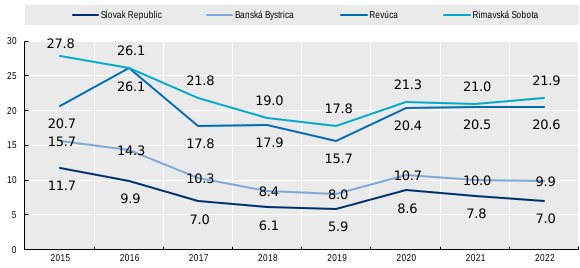
The share of women in the labour force in BBSK stands at 75.8%, higher than the national average of 73.7%. The region does, however, consistently record a higher female unemployment rate compared to the national average (Figure 1.15). Significant regional disparities also exist within BBSK. For example, while Banská Bystrica and Zvolen had relatively low female unemployment rates in 2022, the districts of Rimavská Sobota (21.9%) and Revúca (20.6%) had particulary high rates-more than double the regional average. The proportion of unemployed young women under the age of 25 among all registered unemployed was also notably high in some districts-Krupina (14.1%) and Rimavská Sobota (11.6%)-compared to the BBSK average 10.7% and the national average 11.2% in 2024. In terms of long-term unemployment, Rimavská Sobota (62.6%) and Revúca (61.4%) recorded the highest rates in the region in 2022. All these districts-Krupina, Rimavská Sobota and Revúca-also have a large Roma population, as noted in Chapter 2.
Female unemployment rate by district (%, 2015-2022)
Source: OECD elaboration based on data provided by the Central Office of Labour, Social Affairs and Family, https;//www.upsvr.gov.sk/statistiky/nezamestnanost-mesacne-statistiky.html?page_id=1254 (accessed on 27 June 2025)
PES assist Slovak job seekers, employees and employers by providing job mediation, counselling, training and income replacement. Through active labour market measures, PES help individuals find employment, transition between jobs and upskill, while also addressing labour shortages by connecting employers with suitable candidates. In the Slovak Republic, PES are a national government competency, while regional governments operate their own programmes to address specific needs. PES can either be provided by state or non-state providers. State providers include the Central and Local Offices of Labour, Social Affairs and Family (Central and Local Labour Offices in short) and their regional counterparts, such as the Regional Career Centres and the SPACE Centres, originated from the Catching-Up Regions initiative to provide support to young Roma residents in BBSK. An Employment Agency founded by BBSK and non-profit partner Človek v ohrození also takes roles on long-term unemployed and marginalised individuals such as Roma by providing training and counselling services. Non-state providers include licensed professionals and temporary employment agencies.
Current state of the provision of public employment services
The Local Labour Office has 8 of its 46 regular branch offices in the districts of Banská Bystrica, Banská Štiavnica, Brezno, Lučenec, Revúca, Rimavská Sobota, Veľký Krtíš and Zvolen.12 The six Regional Career Centres in the region provide vocational education and training services to primary and secondary school students. The SPACE Centres through its seven offices in the region provide counselling, mentoring, career guidance and employment support for young people from 13 to 29, including employment support. The Employment Agency is located in Lučenec and operates as a non-profit organisation.
The public employment services in BBSK target the young and the long-term unemployed
The three institutions providing public employment services for the young-Local Labour Offices, Regional Career Centres and SPACE centres–operated without effective coordination. The Local Labour Office has two policies targeted at the young, i.e. the “Right to first employment”, which has continued under the broader "Financial incentives for Employment” initiative since late 2024, and “Through counselling to Employment”. The “Right to first employment” supported job creation by providing a 6-month wage subsidy to employers creating at least a 12-month position, up to 90% of the wage, with a ceiling of EUR 1 320. Under the "Financial incentives for Employment” initiative, financial contributions include both wage and mentoring support for individuals under 30. Meanwhile, “Through counselling to Employment” provides professional guidance and counselling for those not in employment, education or training (NEET) under 30 and other disadvantaged jobseekers. Since 2025, the regional government has been implementing the Regional Action Plan for the Youth Guarantee in BBSK, primarily funded by the European Social Fund Plus (ESF+). This plan was developed through a participatory process involving key stakeholders working with NEET youth in the region, including representatives from civic and youth organisations, the social services and education sectors, Local Labour Offices, and employers.
The Local Labour Office has policies to tackle long-term unemployment, such as “Skills for the labour market” and “Step to social economy”. “Skills for the labour market” enhances employability by providing targeted upskilling and reskilling opportunities based on current labour market needs. “Step to social economy” supports the development of social enterprises as a means to foster the labour market integration of the Roma community and other disadvantaged groups. The Local Labour Office also provides professional counselling services and guidance, including advice on job choices and occupational changes.
The Employment Agency delivers training and counselling services for long-term unemployed. Its UPre Women programme targets Roma women facing multiple barriers in employment, education and social inclusion by providing job-search skills and financial literacy development. The Agency also offers general employment services, emphasising support for women and disadvantaged groups. Most of these programmes are primarily funded by the European Social Plus (ESF+) under the Operational Programme Slovakia 2021-2027, except for UPre Women programme, which is financed by Norwegian Grants and the Slovak government.
BBSK has launched a network of youth centres—SPACE (Jednotné kontaktné miesta pre mladých)—to strengthen service provision for young people at risk of marginalisation, particularly those not in employment, education or training (NEET). Coordinated by the Regional Development Agency of BBSK (RRA BBSK), the initiative responds to structural youth challenges across seven districts of the region by offering holistic support under a single, accessible point of contact.
The project is implemented over a 66-month period (January 2024 – June 2029) with financial support from the European Social Fund Plus (ESF+), Priority 4P4 – Youth Guarantee, under the national Operational Programme Slovakia 2021–2027. The total eligible budget is EUR 12.14 million, of which 92% (EUR 11.17 million) is co-financed by the European Union and Slovak central government through a non-repayable grant. The remaining 8% (EUR 971,200) is covered by BBSK via RRA BBSK.
The initiative is implemented in collaboration with the Ministry of Labour, Social Affairs and Family, which serves as the managing authority for ESF+.
The SPACE centres provide a range of free services for youth aged 13–30, including psychological and social counselling, career guidance, life skills training, coaching, and digital innovation workshops through so-called “Innolabs.” The centres aim to build self-confidence, enhance employability, and promote active social engagement.
SPACE represents a replicable model of integrated youth services at the regional level, combining EU funding with local leadership to address socio-economic disparities and labour market detachment among youth in less-developed territories.
Source: Space Centre, https://www.tvojspace.sk (accessed on 30 June 2025), Regional Development Agency, SPACE - single points of contact for young people in BBSK - Dobrý kraj (accessed on 30 June 2025)
The impact of demographic trends on public employment services
The national PES providers in the region recognise demographic change and resulting skill shortages as key future challenges. However, the Local Labour Offices primarily implement centrally designed programmes without regional adaptation, lacking a place-based approach that leverages the local assets and addresses the challenges for BBSK notably higher levels of long-term unemployment and a pressing need for Roma integration (Chapter 2). Past examples of place-based public employment services implemented by the Central and Local Labour Offices include the 2018 pilot initiative “A chance for everyone”, targeting the labour market integration of long-term unemployed Roma community members by leveraging the existence of a major employer such as Železiarne Podbrezová, an iron and steel works in the Brezno district with difficulties to having its labour demand met and providing training opportunities to its future workers (Jendekova, 2019[32]).
Adapt public service provision through effective national regulation
The Ministry of Transport could reform regulations to support on-demand passenger transport service could significantly improve accessibility, especially in sparsely populated areas. This would make room for revising the current requirement for fixed daily bus service frequencies to serve local needs in the region more cost-effectively.
The Ministry of Health may update national legislation on telemedicine, including provisions for payment and reimbursement, would facilitate its wider adoption.
The Ministry of Education might explore the possibility of consolidating the management of nurseries and pre-primary schools-currently split between the Ministry of Labour, Social Affairs and Family (for nurseries) and the Ministry of Education (for pre-primary schools)- under a single authority of the Ministry of Education. This could enhance coordination between nurseries and pre-primary schools and strengthen the educational focus of ECE.
Strengthen public service accessibility and emphasise its importance broadly
Piloting public transport on demand
The regional government could pilot the use of public transport on demand from the smallest municipalities to regional centres, a successful public transport system used in low population density areas in other countries and other Slovak regions despite the lack of a supportive regulatory framework at the national level (Box 1.5).
A bus-on-demand service was launched in the region of Trnava in 2019 to provide more efficient transport in areas with low passenger numbers. Designed to offer a more flexible alternative for residents in underserved areas, the service aimed to improve accessibility to public transport while reducing overall transport costs. A month after its introduction, weekend and bank holiday services were added. Primarily benefiting rural residents needing reliable connections to schools, workplaces, or essential services, the buses operate based on telephone bookings, which can be made 48 hours and up to 30 minutes before departure. The service significantly enhances the accessibility and efficiency of travel. In its first year, nearly 1 400 passengers used the service for a total of 6 174 km, helping them save time with fewer stops and more direct routes than regular service.
In the Košice region, bus service on demand was introduced in 2019 to improve transport in remote areas. Designed to operate solely on the basis of specific requests, buses are deployed only when there is confirmed interest in a journey, optimising resources and reducing unnecessary travel. The success of this initiative has led to its expansion, as its effectiveness in addressing the accessibility needs of underserved communities has been demonstrated. The service requires reservations at least 60 minutes before departure. By serving areas with low passenger frequencies, the service enhances public transport availability while lowering operating costs. Fares remain consistent with regular suburban transport, following the applicable prices.
Source: Prognostic Institute CSPV SAS (2024), Examples of good practice for tackling transport poverty, https://www.prog.sav.sk/portfolio/priklady-dobrej-praxe-pre-riesenie-dopravnej-chudoby/ (accessed 28 January 2025).
Investing in digital technologies and skills
The region could improve access to internet connectivity, with support from the national government where needed. The Ministry of Investments, Regional Development and Informatisation, in coordination with the Ministry of Transport, could fill gaps in internet connectivity speed, increasing the attractiveness of different districts for both young and ageing people. The European Regional Development Fund (ERDF), through the programme Slovakia, could be a potential funding source for these efforts.
BBSK should continue strengthening the digital skills of its population, including among the elderly, to support digital accessibility to public services.
Placing physical accessibility at the core of regulation
Municipal urban plans should prevent development in areas where public service accessibility will be challenged in the context of demographic change (Chapter 3).
BBSK should promote the establishment of multi-service centres in the region and promote municipal co-ordination in the provision of public services and transport by building on existing forms of inter-municipal co-operation, even if informal (Chapter 4).
Optimise the use of available resources to respond to evolving educational needs
Promote early childhood education
Municipal and national governments -including the Ministry of Education and the Ministry of Labour, Social Affairs and Family- should actively encourage early childhood education (ECE) attendance, particularly among children from low-income families. This could involve launching new comprehensive parental awareness and outreach programs to highlight the benefits of ECE. Key measures may also include waiving partly or totally the fees and providing free meals to students from low-income families.
Municipalities should expand pre-primary education capacity to align available slots with the expected increase in demand following the change in national regulation that decreases the age at which children are entitled to a slot. In addition, the Ministry of Education should continue to lower gradually the age of initial eligibility.
Increase the attractiveness of the teaching occupation
All levels of government should act to address teacher shortages. In the short term, at all levels of education, subnational governments should consider increasing class sizes in facilities where student-per-teacher ratios remain below the regional average to relocate teachers to nearby schools in need. This measure is particularly relevant for pre-primary (competence of municipalities) and upper-secondary vocational education (competence of the regional government), where demand for teachers is expected to rise above supply as current staff retire. In addition, both the regional government and the Ministry of Education should reflect on whether there is a need to train more population to align the supply with the demand for staff in the short and medium term.
The regional government should continue to strengthen the teaching skills of secondary school teachers in the region and target primary school teachers too. Strengthening the opportunities for professional development for teachers can enhance teaching quality while also making the profession more attractive, contributing to addressing teacher shortages.
The regional government could make more assistant teachers available in secondary schools to support students in need. To this end, the regional government should decide based on projected need whether increasing the capacity in pedagogical and social academies is necessary to increase the supply of assistant teachers, who can take some of the teaching tasks, and the Ministry of Education should do the equivalent regarding the bachelor’s and master’s programmes in education and pedagogy. If the training capacity is already available in other regions at the upper secondary education level, the national government could encourage professional mobility within the Slovak Republic to help the supply meet demand.
Optimise the school network
The regional and municipal governments should tailor the optimisation of the school network to the specific local circumstances and to reflect the evolving education needs of the local population. The regional government should assess the potential for consolidating secondary schools in the districts of Krupina, Veľký Krtíš and Poltár, where no changes in the number of secondary schools were made between 2014 and 2023 despite a decreasing number of students and a projected decline in future demand due to a shrinking primary school population, while maintaining accessibility levels (Krupina has two secondary schools and Poltár one). School consolidation may be more widely accepted if accompanied by strengthened school transport services and tangible improvements in the quality of education provided, which could be partly financed with the savings generated by promoting a more efficient network of school facilities. The regional government may also consider participating in the primary school network optimisation process, as changes at the primary level could have significant implications for the optimisation of the secondary school network.
Other changes in the school network that can be considered are the creation of school clusters (i.e. the sharing of the school administration across schools) or the co-location of grades (i.e. integrating pre-primary, primary, lower and upper secondary education within the same building), to help maintain the levels of accessibility and align the service provision with demand in a cost-effective way.
Enhance the ties between education and labour market needs
While progress has been made in vocational training programmes within the Catching-up Regions initiative, efforts by municipal and regional governments-as well as the Ministry of Education- should be expanded to other levels of education to ensure a more responsive and adaptive education system to labour market needs and address current and projected labour shortages.
The Ministry of Education should closely monitor the impact of the ongoing pilot of the curriculum reform to ensure it effectively delivers improved learning outcomes, including in the schools with the greatest shares of Roma students.
Respond more flexibly to rising healthcare demand
The current healthcare accessibility gaps should be addressed. The Ministry of Health should evaluate the need for a general hospital in the Veľký Krtíš district, where current physical accessibility is limited but where the strongest depopulation is projected in the coming decades (Chapter 2). Additionally, the regional government could consider expanding its pilot outpatient clinic project. Telemedicine and the use of other healthcare facilities could help address the gaps in the district’s healthcare provision. For example, telemedicine options could involve hybrid teleconsultations with healthcare assistants travelling to patients and linking up with doctors via digital devices. The regional government could facilitate the adoption of telemedicine in the region by promoting existing Slovak initiatives such as Telemon, a platform to deliver telemedicine, already in use in other Slovak regions and internationally.
The regional government should invest in preventive care. The Ministry of Health should support the regions in investing in disease prevention. Telemedicine could help improve the monitoring of health outcomes in the region. The European Regional Development Fund (ERDF), through the Programme Slovakia could be a potential funding source for these efforts.
The regional government could consider developing a comprehensive strategy to promote healthy and active ageing, including targeted information campaigns that reflect local cultural norms and preferences. Leveraging the region’s natural assets, such as its mountainous terrain and extensive outdoor recreational opportunities, can encourage greater physical activity and foster healthier lifestyles while also contributing to the local economy.
Provide place-based public employment services
The high rate of long-term and women’s unemployment in BBSK, along with regional disparities, should be addressed. The regional government and Central Labour Office could consider strengthening the capacity and services provided by the Employment Agency. Potential funding sources include the European Social Fund Plus (ESF+) and Just Transition Fund (JTF). In addition, the regional government might consider optimising its service network, including SPACE centres.
Although the implementation of pilot projects at the regional or local level is currently possible-subject to approval by the Central Labour Office-and Local Labour Office directors are tasked to conduct annual analyses of regional labour market conditions, a more place-based approach is recommended. The Central Labour Office may grant greater discretion to its Local Labour Offices, enabling them to design or customise programmes more actively in response to local needs rather than primarily implementing initiatives designed centrally, combined with monitoring and evaluation of Local Labour Office performance.
Strengthening co-ordination between Local Labour Offices, SPACE centres, Employment Agency and Regional Career Centres would help reduce duplication and improve efficiency and thereby job matches that make the region more attractive for both young and ageing residents. More information sharing across agencies and increased presence in areas where the Roma communities live could improve service uptake.
Expanding the role of private providers in public employment services (PES)’s training could increase flexibility and ensure training programmes remain aligned with evolving labour market demands (Langenbucher and Vodopivec, 2022[33]). For example, policies like France’s Compte Personnel de Formation (CPF), a universal training fund where every worker accumulates annual training credits, allow individuals to choose from a government-accredited list of programs. This ensures that all workers, regardless of income or employment status, have access to upskilling opportunities. Such a system could help prevent exclusion by giving low-income and disadvantaged workers the financial means to enrol in quality training programs, even if employment services are privately provided.
In addition, the region could promote the establishment of social enterprises among small municipalities as a first step to integrate the Roma community into the local labour market. The regional government could provide information and support, including details regarding the benefits, underlying regulations and sharing best practices by successful municipal social enterprises in BBSK (Chapter 2) and other Slovak regions (Box 1.6), as the lack of information was recognised as the most common barrier to municipal social entrepreneurship by municipalities (Machničová and Chreneková, 2020[34]).
A successful example of a municipal social enterprise is the Hrhovské služby (Hrhov services, in English), established in 1998 in the village of Spišský Hrhov in the Prešov region and the first registered social enterprise in the Slovak Republic. The social enterprise started as a construction company and was founded to reduce unemployment among Roma residents. Over time, it has expanded its activities to include a local grocery store and a swimming pool among other activities and has significantly reduced joblessness among Roma residents from close to 100% in 1998 to below 20%. The profits from the enterprise are reinvested into local infrastructure, further benefiting the village residents.
The integration efforts in Spišský Hrhov have extended beyond employment to include social inclusion. Under the leadership of long-serving mayor Vladimír Ledecký, the municipality implemented initiatives aimed at improving living conditions and access to services. His successor, Zuzana Kučerová, who worked alongside him for a decade, continues to advance these efforts. In 1998, many Roma residents lived in settlements without electricity, and a significant share of children attended special schools separated from the majority population. Today, housing conditions have improved, with access to running water, and children participate in early childhood education while growing up in households with employed parents. Additionally, the work of the municipal social enterprise has contributed to ending segregated schooling, and some Roma students have continued to tertiary education.
The village’s approach, focusing on economic inclusion, demonstrates that investing in integration yields long-term benefits for the entire community. The initiative, internationally recognised as a best practice in Roma integration, has inspired other municipalities in the Slovak Republic and other countries.
Source: Senior Social Entrepreneurship, “Vladimír Ledecký, the first social enterprise in Slovakia as a motivation for others”, https://senior-entrepreneurs.uma.es/wp-content/uploads/2021/12/Vladimir_Slovakia_MI_EN.pdf (accessed on 13 February 2025).
Expenditure per student (in EUR thousands) by pre-primary and primary (left) and secondary (right) schools

Note: Total expenditure is the sum of the current expenditure and capital expenditure. For pre-primary and primary education expenditure per student increased by 42% since 2018, from EUR 1 498 to EUR 2 130 in 2023. The rise in expenditure per student secondary education over the same period was greater (113%), from EUR 3 554 in 2018 to EUR 7 585 in 2023, mostly driven by an increase in capital spending.
Source: OECD calculations based on data shared by BBSK.
Travel time by private car to the closest facility (in minutes) in the median municipality, at a time with no traffic congestion

Source: OECD calculations based on Banska Bystrica self governing region (n.d.[24]), Portál otvorených dát, https://opendata.bbsk.sk/ (accessed on 31 October 2024).
References
[24] Banská Bystrica self governing region (n.d.), Portál otvorených dát, https://opendata.bbsk.sk/ (accessed on October 2024).
[5] Banska Bystrica Self-Governing region (2023), BBSK Transport Service Plan, https://www.bbsk.sk/plan-dopravnej-obsluznosti (accessed on 21 February 2025).
[13] Bednarik, M., S. Hidas and G. Machlica (2019), “Enhancing the social integration of Roma in Slovak Republic”, OECD Economics Department Working Papers, No. 1551, OECD Publishing, Paris, https://doi.org/10.1787/197eb309-en.
[17] Braga, M., D. Checchi and E. Meschi (2013), “Educational policies in a long-run perspective”, Economic Policy, Vol. 28/73, pp. 45-100, https://doi.org/10.1111/1468-0327.12002.
[11] Eurodyce (2024), “National Education System: Slovakia”, https://eurydice.eacea.ec.europa.eu/national-education-systems/slovakia/overview (accessed on 8 February 2025).
[23] European Commission (2024), 2024 European Semester: Country Report Italy, https://economy-finance.ec.europa.eu/document/download/b276f45e-e9f4-4c8a-920c-c275e8133402_en?filename=SWD_2024_612_1_EN_Italy.pdf (accessed on 12 December 2024).
[12] European Commission (2024), 2024 European Semester: Country Report Slovakia, https://economy-finance.ec.europa.eu/document/download/e2c1dea3-1062-4824-a06d-4219d1e31f9b_en?filename=SWD_2024_625_1_EN_Slovakia.pdf (accessed on 12 December 2024).
[8] European Commission (2023), Education and training monitor 2023 – Slovakia, Publications Office of the European Union, https://data.europa.eu/doi/10.2766/935310 (accessed on 23 May 2024).
[2] European Commission (2022), EU Regional Competitiveness Index 2.0, https://ec.europa.eu/regional_policy/assets/regional-competitiveness/index.html#/SK/SK03.
[31] European Commission (2019), Community-based social service centres as a tool of multilevel partnership for providing long-term care in Slovakia, https://www.google.com/url?sa=t&rct=j&q=&esrc=s&source=web&cd=&cad=rja&uact=8&ved=2ahUKEwjRkvvJjfOMAxUjK_sDHUFtHjgQFnoECBYQAQ&url=https%3A%2F%2Fec.europa.eu%2Fsocial%2FBlobServlet%3FdocId%3D25319%26langId%3Den&usg=AOvVaw3RdjS6vbVfJ-MvPyxu19lj&opi=89978449 (accessed on October 2024).
[20] European Commission (n.d.), Omama case study, https://european-social-fund-plus.ec.europa.eu/en/social-innovation-match/case-study/omama (accessed on 19 November 2024).
[16] Heckman, J., R. Pinto and P. Savelyev (2013), “Understanding the Mechanisms Through Which an Influential Early Childhood Program Boosted Adult Outcomes”, American Economic Review, Vol. 103/6, pp. 2052-2086, https://doi.org/10.1257/aer.103.6.2052.
[14] Holubová, B. et al. (2020), The social and employment situation of Roma communities in Slovakia, European Parliament, Directorate for Economic and Scientific Policies.
[32] Jendekova, M. (2019), Železiarne Podbrezová (Iron and Steel Works) and adult learning fo social inclusion, https://epale.ec.europa.eu/en/blog/zeleziarne-podbrezova-iron-and-steel-works-and-adult-learning-fo-social-inclusion?utm_source=chatgpt.com.
[6] Lafférsová, Z., Ľ. Kubišová and Strategy and Analysis Department of the BBSK Office (2022), Programme of Economic and Social Development of the Banská Bystrica Self-Governing Region for 2022-2030.
[33] Langenbucher, K. and M. Vodopivec (2022), “Paying for results: Contracting out employment services through outcome-based payment schemes in OECD countries”.
[35] Machničová, Z. and M. Chreneková (2020), “Development of Municipal Social Entrepreneurship in the Conditions of the Banská Bystrica Self-Governing Region”, EU agrarian Law, Vol. 9/2, pp. 7-13, https://doi.org/10.2478/eual-2020-0007.
[34] Machničová, Z. and M. Chreneková (2020), “Development of Municipal Social Entrepreneurship in the Conditions of the Banská Bystrica Self-Governing Region”, EU agrarian Law, Vol. 9/2, pp. 7-13.
[28] National Health Information Centre (2022), Health Statistics Yearbook, http://www.nczisk.sk/Documents/rocenky/2022/Zdravotnicka_rocenka_Slovenskej_republiky_2022_en.pdf (accessed on 12 November 2024).
[22] OECD (2025), Educations GPS, https://gpseducation.oecd.org/CountryProfile?primaryCountry=SVK&treshold=5&topic=TA (accessed on 11 February 2025).
[21] OECD (2024), Education at a Glance 2024: OECD Indicators, OECD Publishing, Paris, https://doi.org/10.1787/c00cad36-en.
[4] OECD (2024), OECD Local data portal, https://localdataportal.oecd.org/?indicator=POP_CH_5Y (accessed on October 2024).
[27] OECD (2023), Health at a Glance 2023: OECD Indicators, OECD Publishing, Paris, https://doi.org/10.1787/7a7afb35-en.
[7] OECD (2022), Strengthening FDI and SME Linkages in the Slovak Republic, OECD Publishing, Paris, https://doi.org/10.1787/972046f5-en.
[18] OECD (2022), Value for Money in School Education: Smart Investments, Quality Outcomes, Equal Opportunities, OECD Publishing, Paris, https://doi.org/10.1787/f6de8710-en.
[10] OECD (2016), “School education in the Slovak Republic”, in OECD Reviews of School Resources: Slovak Republic 2015, OECD Publishing, Paris, https://doi.org/10.1787/9789264247567-5-en.
[25] OECD/Observatory (2023), State of Health in the EU Slovakia Country Health Profile 2023, https://health.ec.europa.eu/state-health-eu/country-health-profiles_en (accessed on 1 February 2025).
[26] OECD/UCLG (2022), 2022 Country Profiles of the World Observatory on Subnational Government Finance and Investment..
[19] Phillips, D. et al. (2017), Puzzling It Out: The Current State of Scientific Knowledge on Pre-Kindergarten Effects A Consensus Statement, Brookings, https://www.brookings.edu/wp-content/uploads/2017/04/consensus-statement_final.pdf (accessed on 14 March 2025).
[9] Santiago, P. et al. (2016), OECD Reviews of School Resources: Slovak Republic 2015, OECD Reviews of School Resources, OECD Publishing, Paris, https://doi.org/10.1787/9789264247567-en.
[3] Székely, V. and J. Novotný (2022), “Public transport-disadvantaged rural areas in relation to daily accessibility of regional centre: Case study from Slovakia”, Journal of Rural Studies, Vol. 92, pp. 1-16, https://doi.org/10.1016/j.jrurstud.2022.03.015.
[29] World Bank (2024), Slovakia Catching-Up Regions: Addressing health workforce challenges in the BBSK.
[30] World Bank (2020), Integrated elderly care model for the South Gemer functional grouping of municipalities.
[15] World Bank (2020), Minding the skills gap and mismatches: a report on secondary vocational education in Banská Bystrica region of the Slovak Republic. Secondary VET schools project. Slovakia Catching-up Regions.
[1] World Bank (2020), Slovakia catching-up regions: digitalization of public transport in the Basnká Bystrica region.
← 1. Average PISA scores in mathematics and reading, 2015.
← 2. For more details about the grade zero refer to https://www.old.romaeducationfund.org/sites/default/files/publications/zero_grade_slovakia_research_study_final.pdf.
← 3. In pre-primary schools, the number of students increased by 7.4% (from 17 051 in 2014 to 18 310 in 2023) and primary school students increased by 6.5%, from 48 796 in 2014 to 51 802 in 2023. In turn, the number of secondary school students decreased by -8%.
← 4. The student per teacher for BBSK refer to 2023.
← 5. OECD calculations based on data shared by BBSK.
← 6. https://teachforall.org/
← 7. The information for BBSK refers to the average between the life expectancy at birth of women (79.14) and men (72) in 2022. Source: OECD Regional Health Database.
← 8. The information on outpatient care specialists refers to 2022. The information about the number of nurses in OECD and BBSK refers to 2021.
← 9. https://www.euractiv.com/section/health-consumers/news/slovak-telemedicine-roll-out-driving-healthcare-efficiency-resilience/
← 10. https://www.euractiv.com/section/health-consumers/news/slovak-telemedicine-roll-out-driving-healthcare-efficiency-resilience/
← 11. This includes a projected increase of 300 000 additional visits by those aged 65 and over, increasing from 1.2 million visits in 2021 to 1.5 million in 2035, and an additional 100 000 visits among individuals aged 45-64, increasing from 1.2 to 1.3 million. Conversely, the number of visits from individuals under 45 years of age is expected to decrease by 200 000, from 1.5 million in 2021 to 1.3 million in 2035 (World Bank, 2024[29]).
← 12. In the Slovak Republic, the Local Labour Office is present in each district with either a regular branch office (46) or at least a remote workplace (135).