This chapter examines the socio-demographic profiles of adults with low foundational skills, as well as variation in the economic and non-economic outcomes they are able to achieve. It identifies the characteristics most predictive of low skills, and analyses barriers to participation in adult learning activities among adults with low skills.
Navigating Life with Low Literacy and Numeracy
New Results from the 2023 Survey of Adult Skills

Abstract
Who are the adults with low foundational skills?
Own levels of educational attainment and the level of education achieved by parents are the strongest predictors of having low literacy or numeracy skills in most countries. On average, knowing the level of education allows one to correctly identify an adult with low skills with 70% accuracy.
In Denmark, Norway and Sweden the strongest predictor of low skills is migration background. The predictive power of this trait is, however, weaker than that of education in most other countries.
Adults with low skills are not a homogeneous group. Looking at the socio-demographic characteristics adults most commonly share, three distinct profiles emerge: old natives from low-education families, migrants with language barriers, and a third group of “unexpected underperformers”, who end up with low skills despite favourable observable background conditions.
Similarly, not all adults with low skills achieve the same economic and non-economic outcomes. About one-third of them stand out as being detached from the labour market. Another third is employed but in low-quality jobs paying low salaries. The final third is employed, enjoys significantly better working conditions and reports higher life satisfaction and better health than the second group.
The achievement of better economic and non-economic outcomes for adults with low skills is largely uncorrelated with socio-demographic profiles. Old natives from low-education families are, however, significantly more likely to be out of the labour force.
Adults with low foundational skills participate less in adult learning than the rest of the population. Structural barriers, as well as a reported lack of desire to participate, contribute to this gap. Among those adults who express unmet demand for adult training, a relative majority report lack of time for work-related reasons as the main barrier that prevents participation in learning activities.
The first two chapters focused on the size of the population with low foundational skills and described their performance in the PIAAC literacy and numeracy assessments. This chapter focuses on the socio-demographic and economic characteristics associated with low skills. It also investigates the variation in economic and non-economic outcomes among adults with low skills and attempts to identify adults who beat the odds and enjoy relatively good outcomes. Finally, the chapter examines the barriers adults face in participation in adult education and training.
The chapter is structured in three sections. The first section examines which characteristics are associated with having low literacy or numeracy skills. It first presents descriptive relationships between a range of socio-demographic characteristics and low foundational skills and then uses machine learning methods to identify the most predictive characteristics. This supports policymakers and adult education providers to more effectively identify and target individuals with low foundational skills.
The second section looks more closely at adults with low skills and identifies distinct profiles, or groups, that share similar characteristics. This helps to better understand the diversity within this population. A similar exercise is then used to identify clusters of adults with low skills sharing the same (or similar) economic and non-economic outcomes. Comparing these groups helps identify which adults with low skills achieve better outcomes.
The third section examines participation in adult education and training activities, a key tool for improving skills. It focuses on the barriers that limit participation and highlights ways to increase the attractiveness and take-up of learning opportunities by adults with low skills.
The likelihood of having low literacy or numeracy skills varies significantly across population groups and is strongly associated with socio-demographic characteristics (Table A.3.1). On average across OECD countries, around 24% of young adults (aged 16-25) have low foundational skills, compared with 43% of older adults (aged 55-65). Educational attainment is also associated with proficiency in literacy and numeracy: 54% of adults who have not completed upper-secondary education (e.g. high-school, A-Levels) have low skills, compared with only 16% of tertiary graduates (e.g. Bachelor’s or Master’s). There are also differences by migration status: while 27% of native-born adults have low skills, this share rises to 52% among foreign-born adults. Consistent with the lack of large gender differences in average literacy or numeracy skills (OECD, 2024[1]), men and women are equally likely to have low foundational skills.
Regression analysis estimates the association between socio-demographic characteristics and the probability of having low skills, while accounting for correlations between these characteristics. For instance, older adults tend to have, on average, lower levels of education than younger adults. Similarly, foreign-born adults may differ from native-born adults in both educational attainment and language background. Figure 3.1 presents some results from such regression analysis, focusing on the estimated difference in the likelihood of living with low skills between older (55-65 year-olds) and prime-aged (25‑36 year-olds) adults, between foreign-born and native-born adults, and between tertiary educated adults and adults who have not attained upper-secondary education.1
The relationship between different background characteristics and the probability of low foundational skills varies across countries (Figure 3.1). In terms of age, for instance, there is no statistically significant difference in the probability of low foundational skills between older (aged 56-65) and prime-aged adults (aged 26-35) in New Zealand, the Slovak Republic and Sweden, but this gap exceeds 20 percentage points in Chile, Estonia and Korea.
Compared with tertiary-educated adults, those without upper-secondary education have a much higher predicted probability of having low foundational skills in all countries. This ranges from 32 percentage points in Croatia and Norway to 59 percentage points in Hungary (Table A.3.2). Since this group is relatively small in many countries, it may be more meaningful to examine upper-secondary educated adults. Their estimated probability of low foundational skills is also higher than for tertiary-educated adults, ranging from 9 percentage points in Finland, the Netherlands and Sweden to about 30 percentage points in Chile, France, Hungary, Singapore and the United States.
Parental education also matters, as adults with low-educated parents are more likely to have low skills themselves. The difference between those with low-educated parents (no parent with upper-secondary education) and those with at least one parent with a tertiary education is as large as 27 percentage points in Israel and as low as 5 percentage points in Spain.
Foreign-born adults are much more likely than native-born adults to have low foundational skills in Korea (by 30 percentage points) and France (by 20 percentage points). No statistically significant differences are found in many other countries, including Croatia, Ireland, Israel, Hungary, Latvia, the Slovak Republic and the United States. The results for foreign-born adults illustrate how the analysis changes when accounting for other characteristics.
Change in the probability of low foundational skills associated with socio-demographic characteristics, percentage points
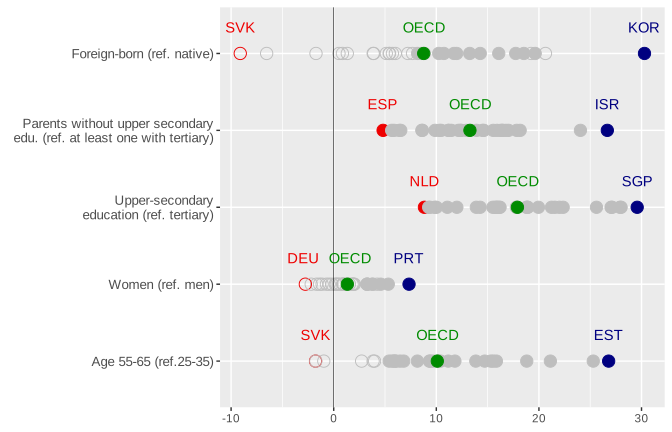
Note: The figure displays estimated coefficients from a linear regression of low-skills status on a range of socio-demographic characteristics, including: age, gender, highest level of education, parental education, immigrant status, whether the respondent native language is different from the language of the assessment, whether the respondent speaks at home a language different from the language of the assessment, whether the highest level of education was completed abroad, and whether the respondent dropped out of formal education without completing the programme. Statistically significant coefficients are highlighted with filled circles.
Source: OECD (2024), Survey of Adult Skills (PIAAC) database, http://www.oecd.org/skills/piaac/publicdataandanalysis/ and Table A.3.2
How can we identify adults with low foundational skills?
The results presented above provide valuable insights into the statistical association between socio-demographic characteristics and the probability of low foundational skills. However, comparing regression coefficients does not allow one to establish which characteristics are “more important” or “matter the most”.
The “importance” of a characteristic can be interpreted in different ways. A variable may be important because it has a large causal impact on an outcome: for example, education may be important if additional years of schooling causally improve skills. Alternatively, it may be important because it explains a large share of the variation in the outcome, or because it helps to predict which individuals are more likely to have low skills.
Establishing causal relationships with cross-sectional survey data like PIAAC is a challenging task. While the regression analysis presented above does not have the ambition to establish a causal link between regressors and the outcome of having low skills, it is (implicitly) designed to serve that objective: it controls for potential confounding factors and excludes variables that are likely to be consequences rather than determinants of skills. This is why the regression included variables that are likely to influence skills acquisition (and unlikely to be influenced by it), and it excluded labour market outcomes, which are more likely to be a consequence of skills proficiency, rather than a cause of it.2
For policy makers and providers of adult learning programmes, a key objective is to identify adults with low foundational skills on the basis of easily observable characteristics. This allows for better targeting of policies and programmes to individuals who are more likely to benefit. Regression coefficients indicate how the probability of low foundational skills changes with a given characteristic, holding other factors constant. However, they do not measure how important a variable is for predicting whether an adult has low foundational skills. First, coefficients depend on the scale of variables, so it can be challenging to compare the size of the coefficients across characteristics – for example the coefficients associated with education with the one associated with migration status. Secondly, because coefficients do not reflect how much a variable varies in the population. For example, migration status may be strongly associated with low skills, but if most individuals are native-born, it will have limited predictive value in practice.
For these reasons, this subsection relies on two statistical methods (LASSO and Random Forests, briefly illustrated in Box 3.1) to identify which variables carry the strongest predictive signal. In other words, the analysis asks which variables are most useful for correctly identifying individuals with low literacy or numeracy skills. This results in a ranking of variables by predictive importance, complementing the regression analysis presented above, which focuses on the strength of associations with low foundational skills.
For predictive purposes, an “important” characteristic is one that helps distinguish individuals with low and high foundational skills, independently of the direction of the causal link between the variable and low-skills status. An outcome variable like employment status or wages can be useful in this predictive sense, even though one cannot claim that earning a higher or a lower wage causally affects skill proficiency – most likely, the causal link works in the opposite direction, with higher skills being rewarded on the labour market with higher wages.
LASSO (Least Absolute Shrinkage and Selection Operator) and random forests are two well-established machine learning methods which can be used to identify which variables matter most for predicting an outcome. They do so in fundamentally different ways.
LASSO is a form of linear regression with an added penalty that shrinks coefficients of unimportant variables toward zero. Variables whose contribution is too weak to overcome the penalty have their coefficients set exactly to zero, dropping them from the model. For this reason, LASSO is often used as a variable selection model. LASSO assumes that relationships are essentially linear and that variables combine additively.
Random forests take a very different approach. They build many decision trees, each grown on a random subsample of the data using a random subset of variables and then average their predictions across trees. Because trees split repeatedly on different variables and combine them at each split, random forests automatically capture non-linear patterns and interactions, without the need to specify them in advance. Variable importance is measured by how much predictive accuracy deteriorates when a variable's values are randomly shuffled across observations. Contrary to LASSO – which is a regression model where the sign of the coefficient is informative about the relationship between the regressors and the outcome – the importance metrics of random forests have no sign attached.
Because the two methods rest on different assumptions, they have complementary strengths, hence the interest in using both, at least for robustness purposes. LASSO is a more transparent and easier to interpret model but can miss variables whose influence operates through interactions or non-linearities. Random forests handle complex relationships well but are harder to interpret and provide no directional reading. When both methods agree that a variable matters, the finding is robust to assumptions about functional form. When they disagree, the disagreement is itself informative – often signalling non-linear effects that a linear model cannot detect.
Assessing model performance
Both models are evaluated using out-of-sample predictions – cross-validation for LASSO, out-of-bag predictions for the random forest – so that performance reflects how well each model generalises beyond the data used to fit it. A common summary indicator of the predictive performance of the model is the Area Under the ROC Curve (AUC), which can be interpreted as the probability that the model assigns a higher predicted risk of having low skills to a randomly chosen adult with low skills than to a randomly chosen adult who does not have low skills. An AUC of 0.5 corresponds to random guessing and 1.0 to perfect ranking. The ROC curve (Receiver Operating Characteristic curve) traces the trade-off between correctly identifying adults with low skills (sensitivity) and falsely flagging adults who do not have low foundational skills (false positive rate) as the classification threshold varies; the AUC is the area beneath this curve.
The analysis therefore includes the socio-demographic characteristics already used in the regression analysis presented in Table A.3.2, but also additional outcome variables – in particular labour force status, type of contract and the occupational classification of the respondent’s job (based on the job’s skill level). These variables are included because they are easily observable by policy makers and training providers, thus making the results of the analysis more directly informative and applicable.
Before moving to the results, it is important to emphasise that the “importance” of any variable included in the analysis should not be interpreted in a causal sense: the analysis does not identify the determinants of low skills; it identifies only which variables are useful for predicting whether an individual has low foundational skills.
How accurately can we predict low foundational skills?
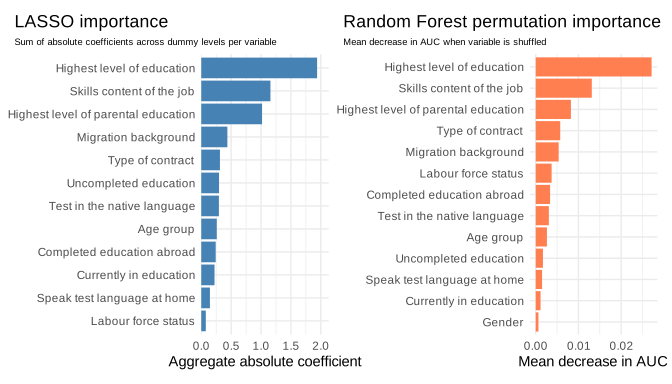
The two models – LASSO and random forests – perform very similarly in terms of predictive performance, as well as in terms of the ranking of variables. When confronted with two randomly chosen individuals, one with low foundational skills and the other without, both models are able to correctly assign a higher probability to the actual individual with low skills 78% of the time.3 This is a noticeable improvement over the baseline probability, which would be simply equal to 50%. Moreover, both models agree on the top three variables in terms of importance, which are education, the occupational classification of the respondent’s job, and parental education (Figure 3.2).
Ranking of variables included in the LASSO and random forests model, by predictive importance
Source: OECD (2024), Survey of Adult Skills (PIAAC) database, http://www.oecd.org/skills/piaac/publicdataandanalysis/ and Table A.3.3
When interpreting the variable ranking, it should be kept in mind that, for both LASSO and random forests, the metric presented in Figure 3.2 report the contribution of each variable conditional on all the other variables included in the model. In the random forest model, for example, when education is shuffled randomly across observations, and all other variables are kept in the model, the predictive power of the model (as measured by the AUC) decreases by about 3 percentage points. The reduction in predictive performance is rather small, because the model includes other variables that are highly correlated with education.
This is clearly seen in Figure 3.3, which shows how the predictive performance of the model increases as variables are progressively added to an empty model. Most of the improvement relative to the baseline comes from the three most important variables. As variables are added in order of importance, education is the first. When doing so, the predictive performance of both models increases by about 20 percentage points, which – for the random forests model – may look like a much larger effect than the 3 percentage points decrease in AUC (presented in Figure 3.2) when the variable is shuffled. The difference lies precisely in the fact that the importance score is based on shuffling a variable while keeping all other variables in the model, while the cumulative increase in predictive power shows the effect of adding a variable to an empty model. When doing so, the first variable that is added will have mechanically a larger impact than the subsequent variables.
Increase in the predictive power of LASSO and Random Forest as variables are added to the models
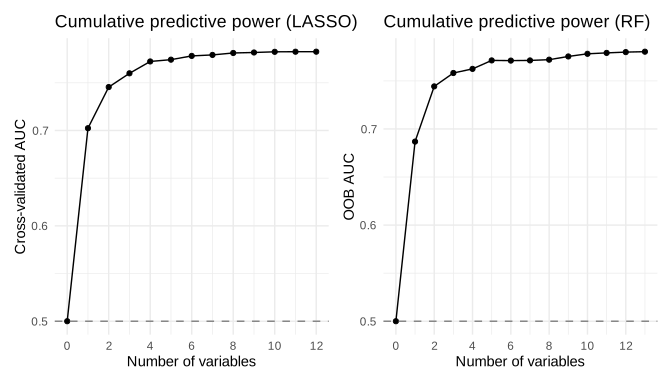
Note: The figure shows how the predictive power of the LASSO and Random Forest model increases with the number of variables added to the model. Variables are added in order of importance, with the most important variable added first.
Source: OECD (2024), Survey of Adult Skills (PIAAC) database, http://www.oecd.org/skills/piaac/publicdataandanalysis/
Country-level results
Estimating the models on country-specific samples broadly confirms the findings from the pooled analysis, although with some nuances (Figure 3.4). In 25 out of 31 countries, education is the most important predictor. In most of the remaining countries, it ranks second, with a predictive power above 80 percent of the predictive power of the most important variable. Sweden is the only country where the predictive power of education is substantially lower - only about half of the most important variable (language background) – although it still ranks among the top three variables.
In Denmark, Sweden and Norway, the most important predictor of low foundational skills is whether the native language of the respondent is different from the language of the assessment. This likely reflects the fact that the vast majority of adults with low skills in those countries are foreign-born (see the following section). In Israel parental education is the most important predictor, followed by one’s own education. In Estonia, the most important predictor is age, followed by the respondent’s occupation.
Relative importance of variables in the random forest models, by country
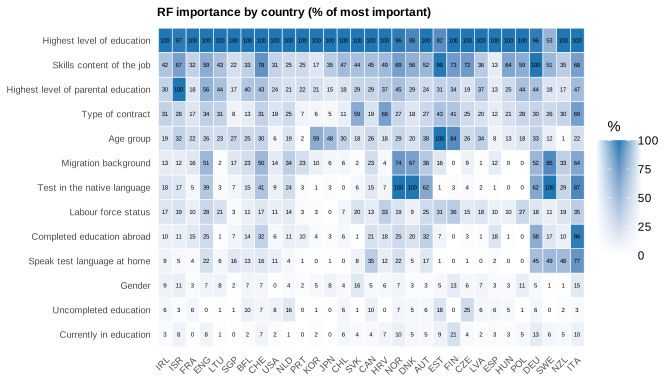
Note: The figure shows the relative importance of each variable, setting to 100 the most important variable in each country. Countries are ordered by their "agreement with the average" – measured by the correlation of country's ranking with the mean ranking.
Source: OECD (2024), Survey of Adult Skills (PIAAC) database, http://www.oecd.org/skills/piaac/publicdataandanalysis/ and Table A.3.4
On average across OECD countries, the most important variable achieves almost 80% of the predictive power of the full model (Table A.3.5). In Latvia, Portugal and Spain just knowing the most important variable (education) helps correctly identify most adults with low skills: the predictive power of a model with only education is in fact about 86% of the predictive power achieved by the full model. In Denmark, Norway and Sweden, on the other hand, the most important variable (having a native language different from the language of the assessment) is able to achieve an AUC below 70% of the one achieved by the full model (60 percent in Denmark, 62 percent in Norway and 68 percent in Sweden). This implies that, while language background is the most important predictor, other characteristics also contribute meaningfully to improving the predictive power of the model.
This section groups the population of adults with low skills according to their socio-demographic characteristics, as well as their main economic and non-economic outcomes.
Socio-demographic characteristics can be understood as antecedents of foundational skills. As argued in the preceding section, they are likely determinants of skills proficiency. At a minimum, one can say that, if a causal link is present, it runs from socio-demographic characteristics to skills proficiency, and not the other way round.4 In the case of outcome variables, causality is generally assumed to run from skills to economic and non-economic outcomes, although this often requires stronger assumptions.5
The analysis in this section does not seek to establish causal relationships between skills, outcomes and socio-demographic characteristics. The variables used are nonetheless classified as either background characteristics (antecedent to skills) or as outcomes, the latter being normally influenced (at least to some extent) by skills proficiency.
Socio-demographic profiles of adults with low foundational skills
Adults with low foundational skills tend to be relatively old. On average across the OECD countries participating in PIAAC, the majority are aged 45 or older, and about a third are aged 55 or above (Table A.3.6). In Finland, almost 60% of adults with low skills are above 55 years old. This share is more than 40% in Estonia, Japan and Korea. In a number of countries (Austria, Czechia, Estonia, Germany, Italy, Japan, Korea, Singapore and Switzerland), fewer than 10% of adults with low skills are between 16 and 24 years old. Israel, New Zealand, Sweden and the United States stand out as countries where all age groups are more equally represented.6
About half of adults with low skills have upper secondary education as their highest level of educational attainment, and about 30% did not complete upper secondary. The share of adults with low skills who do not have an upper secondary qualification is much higher in Italy and Spain (about 55%) and Portugal (66%), and below 20% in Czechia, Korea, England (UK), Poland and Singapore.
A large share of adults with low skills – 42% on average – grew up in families where neither parent completed upper secondary education. This share exceeds 60% in Korea, Spain and Singapore, and is as high as 76% in Italy. It is well below average (20-30%) in Germany, Latvia, Poland, the Slovak Republic and the United States, and below 10 % in Czechia.
Less than a quarter of adults with low skills are foreign-born, on average, though this share varies substantially across countries, partly reflecting the size of the foreign-born population. Fewer than 5% of adults with low skills are foreign-born in Czechia, Japan, Korea, Poland and the Slovak Republic, while in Norway, Sweden and Switzerland a majority of adults with low foundational skills are foreign-born (54%, 60% and 56%, respectively).
What does a typical adult with low foundational skills look like? The statistics above cannot answer this directly: knowing the share of foreign-born adults, or the share aged 55 or older, says nothing about how these characteristics overlap within individuals. Cluster analysis addresses this by identifying groups of adults who share similar combinations of characteristics, yielding a small number of interpretable profiles (Box 3.2).
The clustering analysis reveals three distinct profiles:
Cluster 1: Older natives from low-education families
Cluster 2: Migrants with language barriers
Cluster 3: Unexpected underperformers
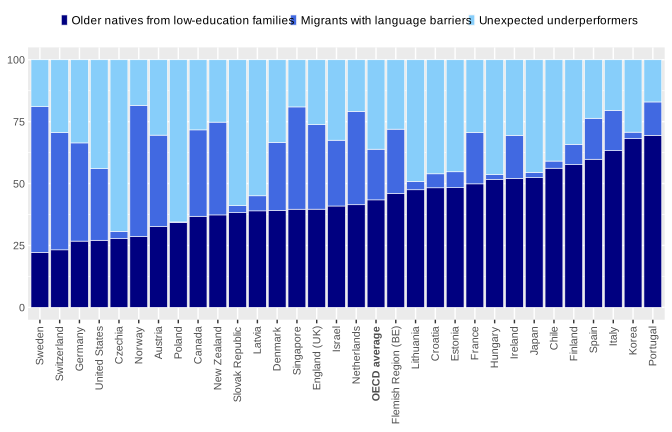
Cluster 1 is the largest, accounting for 43% of adults with low skills across OECD countries participating in PIAAC (Table A.3.8). Adults in this group tend to be older (65% are between 55 and 65, with an average age of 54; Table A.3.7). Almost all are native-born and speak the language of the assessment as their native language. About three quarters had parents without upper-secondary education. Only 15 percent have attained tertiary education, and 37 percent did not attain upper secondary. This is the largest share across the three clusters.
Cluster 2, the smallest, accounts for about 20% of adults with low skills (Table A.3.8). It is almost exclusively composed of adults with a migration background: 92% were born abroad, and 88% have a native language different from the assessment language (Table A.3.7). Compared to the first cluster, they are younger (only 20% are above 55). The educational profile of this group is polarised: 30% attained tertiary education, but 40% did not complete upper secondary. 23% have at least one parent with tertiary education, while 53% have parents who have not completed upper-secondary education.
Cluster analysis groups individuals based on similarity across multiple characteristics, without specifying in advance what those groups should look like. Clustering algorithms aim to form groups as homogeneous as possible, and at the same time as different as possible from other clusters. Where regression-based methods (such as LASSO) ask which variables predict an outcome, clustering asks a different question: do the data fall into distinct profiles, and if so, what do those profiles look like?
K-modes is a clustering algorithm designed for categorical data. The more frequently used k-means algorithm groups observations around averages – but averages are not defined for categorical variables such as level of education, migration background, or employment status. K-modes replaces the average with the mode (the most frequent value taken by a categorical variable) and measures the distance between two individuals as the count of variables on which they differ. The algorithm iteratively reassigns individuals to the cluster whose mode they most resemble, until the assignments stabilise.
The algorithm was applied separately to two sets of variables: socio-demographic characteristics, which can be considered antecedents of skills formation (early-life and structural determinants such as parental education, migration background, and educational attainment) and outcomes, which can be assumed to be at least partly determined by skills proficiency (e.g. current labour market outcomes, health or life satisfaction). This results in two separate profiles, one based on socio-demographic characteristics, and one based on outcomes. Cross-tabulating profiles memberships allows one to ask whether different “origin” profiles map onto different outcome profiles – or, in other words, whether sharing a set of background characteristics is associated to also sharing a set of outcomes.
The clustering analysis is performed on the pooled sample. In this way, it is possible to meaningfully compare the distribution of adults in different profiles across countries. Sampling weights were rescaled so that each country contributes equally irrespective of sample size. The analysis excludes young adults aged 16-24: this helps with the interpretation of the highest level of educational attainment and labour force participation, as many young adults are still in education.
Clustering methods have no built-in test for the "right" number of groups. Analysis of silhouette scores (a measure of how well-separated the clusters are), split-sample stability (whether the same profiles emerge in independent halves of the data), and the substantive interpretability of the resulting groups suggested that three clusters were a reasonable and interpretable way to summarise the data for both clustering exercise.
Clustering offers a compact way of summarising the joint distribution of many categorical variables at once. Rather than inspecting correlations between each pair of variables – and then trying to hold several of them in mind simultaneously to identify recurring combinations – clustering surfaces those combinations directly, in the form of a small number of profiles. This however comes at the cost of detail: each profile is represented by its most common values, as if every individual in the cluster shared exactly those characteristics. Individuals within a cluster vary, sometimes substantially, around that central profile. The clusters should therefore be read as stylised summaries of the dominant patterns in the data, more than as homogeneous categories.
Cluster 3 is labelled as “unexpected underperformers” because they present, by and large, a socio-demographic profile which is normally associated with higher proficiency in foundational skills. They are the youngest (22% is between 25 and 36, and only 14% are above 55; Table A.3.7); less than 10% was born abroad, and 95% are native speakers in the assessment language; 22% attained tertiary education, and only 19% did not complete upper secondary; and only 7% have parents without an upper-secondary qualification. Further analysis would be needed to identify the reason for the underperformance of this group. Possible candidates would be quality of education (not captured by the simple fact of having achieved a degree), or other sources of disadvantage like poor cultural capital which are less easily measurable in a survey like PIAAC.
The distribution across profiles varies substantially across countries (Figure 3.5). In Sweden and Switzerland, less than 25% of adults with low foundational skills belong to the first cluster (older natives from disadvantaged families), while in Italy, Korea and Portugal the share of this cluster exceeds 60%. Cluster 2 (migrants with language barriers) is virtually absent in Hungary, Japan, Korea and Poland; yet the share of adults with low skills belonging to this cluster approaches 40% in Austria, Canada, Germany, the Netherlands, New Zealand and Singapore and exceeds 50% in Norway and Sweden. The share of adults in Cluster 3 (unexpected underperformers) varies less across countries - around 20% in Italy, Norway, the Netherlands, Portugal, Sweden, and Singapore; and exceeding 50% in Czechia, Latvia and Poland.
Source: OECD (2024), Survey of Adult Skills (PIAAC) database, http://www.oecd.org/skills/piaac/publicdataandanalysis/ and Table A.3.8
Economic and non-economic outcomes of adults with low foundational skills
This subsection focuses on the economic and non-economic outcomes of adults with low foundational skills. The economic outcomes included in the analysis are labour force status, position in the national wage distribution, type of occupation (elementary, semi-skilled blue collar, semi-skilled white collar, skilled), type of contract, and whether adults have ever participated in adult education and training. Among non-economic outcomes, the analysis considers health and life satisfaction (both self-reported).
On average across OECD countries, about two in three adults with low skills are employed, and only 5% are unemployed (Table A.3.9). Employment rates range from 52% in Italy to 76% in Singapore. The relatively high share of adults out of the labour force (30%) partly reflects the age distribution: as many adults with low skills are above 55, many are likely already retired.7 As the demographic transition pushes many countries to raise retirement ages, this inactivity should not be seen as a “neutral” fact - it is quite possible that some of these adults would have remained in work, had they possessed higher skills and better job opportunities.
Among those in employment, a minority work in elementary occupations (16% on average), while 60% work in semi-skilled occupations (evenly split between blue-collar and white-collar). Adults with low skills are however over-represented at the bottom of the national wage distribution: 31% are in the bottom quintile (ranging from 24% in Korea to 43% in Sweden), and only 9% are among the top wage earners in their country (only 4% in Finland, and up to 17% in Korea).
In terms of non-economic outcomes, 36% report good health, while 25% report poor health (see Chapter 1 for more information on how health and life satisfaction are measured). The share reporting poor self-reported health is highest in Estonia (48%) and lowest in Poland (7%). More than half (55%) report high life satisfaction, with the highest levels reported in Switzerland (71%) and the lowest in Japan (25%).8 Fewer than 5% of adults with low foundational skills report low life satisfaction.
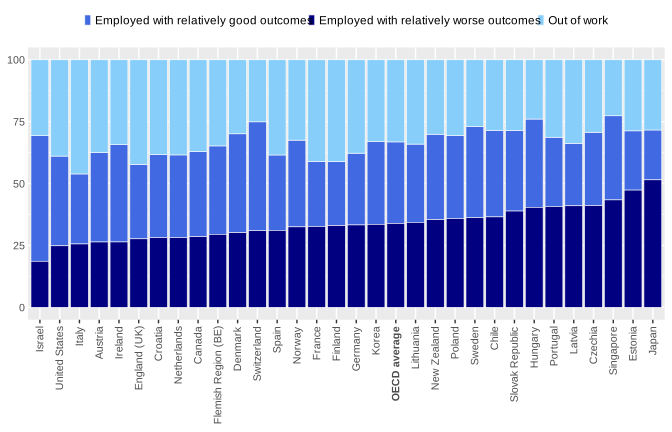
Applying the same cluster analysis as before, three profiles emerge, each accounting for roughly one-third of adults with low skills, on average:9
Cluster 1: Employed with relatively good outcomes
Cluster 2: Employed with relatively worse outcomes
Cluster 3: Out of work
All adults in the first two clusters are employed; what distinguishes them is the quality of such employment. Almost 40% of adults in the first cluster work in skilled occupations, compared to 13% of adults in the second cluster (Table A.3.10). Twice as many adults in the first cluster earn wages that put them in the top quintile of the national wage distribution (10% and 5%, respectively). Nearly 40% of adults in the second cluster are in the bottom quintile of the wage distributions, compared to only 12% of adults in the first cluster.
Adults in the first and second clusters also differ in terms of non-economic outcomes. Among “employed with relatively good outcomes” adults, 54% report good health, and 80% report high life satisfaction, compared with 15% and 31%, respectively, among those “employed with relatively worse outcomes” (Table A.3.10).
Adults in cluster three are mainly out of work: 84% are inactive and 13% are unemployed (Table A.3.10). Some of this inactivity may be voluntary and linked to retirement: 45% of adults in the third cluster are above 55 years of age, compared to 30% of those “employed with relatively worse outcomes” and 25 percent of those “employed with relatively good outcomes”. Voluntary inactivity may also explain why self-reported life satisfaction is relatively high (41%), and age may partly explain why 52% of adults in this cluster report poor health (compared 21% in the first cluster and 29% in the second cluster).While the cluster analysis and the characterisation of the different clusters were conducted on the pooled sample and apply therefore on average across all countries, the results replicate well at the country level, indicating that the analysis is able of meaningfully discriminate clusters of adults within each individual country. Annex tables A.3.11-A.3.17 replicate Table A.3.10, showing, for each country, the distribution of economic and non-economic outcomes within each cluster. Across countries, the same pattern emerges that characterise in particular cluster 1 and cluster 2: a higher share of adults reporting high levels of life satisfaction and good health in cluster 1, a relative majority of adults in cluster 2 at the bottom quintile of the wage distribution (while a relative majority of adults in cluster 1 are in the second quintile), and a relative majority of adults in cluster 1 working in skilled occupations.
It is also important to note that, while the size of the low-skilled population varies a lot across countries (with less than 20% of adults having low skills in Finland, Japan, the Netherlands, Norway and Sweden, as opposed to more than 40% in Israel, Italy, Lithuania, Poland and Portugal, and up to 61% in Chile; see Chapter 1), there does not appear to be a correlation between the overall size of the low-skilled population and the distribution of adults with low skills in the different clusters. This is further evidence that the cluster analysis is not picking up any particular country-level features. The statistical separation observed, on average, between adults belonging to different clusters reinforces then the view (already expressed in Chapter 2) that adults with low skills are not a homogeneous group, as they can experience significantly different economic and non-economic outcomes.10
Moreover, the share of adults with low skills experiencing relatively good or relatively bad outcomes varies across countries, indicating institutional or structural economic differences that affect the relationship between foundational skills and economic and non-economic outcomes. Restricting attention to countries where at least 20% of adults have low foundational skills, to avoid over-interpreting differences among a relatively small group of adults, the share of adults with low skills in cluster 2 (“employed with relatively worse outcomes”) ranges from 19% in Israel to 47% in Estonia, while the share of adults with low skills in cluster 1 (“employed with relatively good outcomes”) ranges from about 25% in Estonia and Latvia to 44% in Switzerland and 51% in Israel (Figure 3.6). Fewer than 25% of adults with low skills fall into cluster 3 (“out of work”) in Hungary and Singapore, while more than 40% do so in France, Italy and England (United Kingdom).
Source: OECD (2024), Survey of Adult Skills (PIAAC) database, http://www.oecd.org/skills/piaac/publicdataandanalysis/ and Table A.3.18.
Do socio-demographic profiles predict economic and non-economic outcomes?
The natural concluding question is to what extent socio-demographic profiles map onto outcomes profiles – and thus to what extent characteristics that are largely predetermined for adults shape their economic and non-economic lives.
While it is well established that family background, education and migration history are strongly correlated to economic outcomes, among the population of adults with low skills such link does not seem very strong. Table A.3.19 shows, for each socio-demographic profile, the share of adults that are classified in the three outcome profiles. The mapping can be visualised in Figure 3.7.
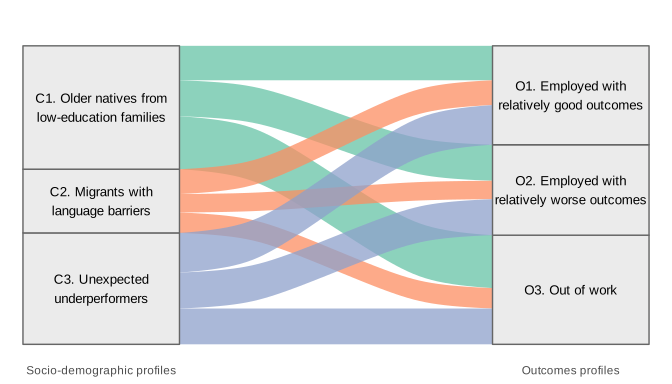
Note: The figure shows the mapping between socio-demographic and outcomes profiles. The flows connecting socio-demographic to outcome profiles represents the shares of adults in each socio-demographic profile who are classified in each of the three outcomes profiles.
Source: OECD (2024), Survey of Adult Skills (PIAAC) database, http://www.oecd.org/skills/piaac/publicdataandanalysis/ and Table A.3.19.
Adults with low skills and a migrant background (cluster C2) are roughly equally likely to be “employed with relatively good outcomes” (34%), “employed with relatively worse outcomes” (37%), and “out of work” (29%). Similarly, among “unexpected underperformers” (cluster C3), 37% are “employed with relatively good outcomes”, 35% are “employed with relatively worse outcomes”, and 26% are “out of work”. A larger correlation between socio-demographic background and outcomes can be observed for “older natives from low-education families” (cluster C1), where 41% are “out of work” – but this most likely reflects the older age profile of this group.
A more granular picture emerges from examining outcomes directly within each socio-demographic profile, rather than mapping profiles to profiles (which discards within-cluster variation). Table A.3.20 shows that the main difference between socio-demographic profiles lies in the employment rates: about three quarters of adults with low skills in clusters 2 and 3 (those with a migrant background and the “unexpected underperformers”) are employed, compared to 60 percent of adults in cluster 1 (“older natives from low-education families”). Unemployment rates are similarly low across the three clusters, confirming that what set the three clusters apart is mainly the probability of being out of the labour force, partly driven by age. Life satisfaction varies little across clusters, while health varies more – again, partly because of differences in the age structure (22% of older natives from low-education families report good health, compared to 35% of adults in the two other clusters). Amongst those in employment, job quality does not vary significantly across socio-demographic profiles.
To conclude the chapter, this last section will look at the participation of adults with low skills in adult education and training activities, which are the main policy tool explicitly targeted to raise adults’ skills. A recent OECD report found that, despite growing consensus on the importance of lifelong learning for economic resilience and individual opportunity, participation in adult education is stagnating or even declining in many countries (OECD, 2025[2]). The report also found persistently low participation rates of adults from disadvantaged backgrounds, including low skills proficiency.
The results presented in Table A.3.21 confirm this finding: on average, only 27% of adults with low foundational skills participated in adult learning in the year preceding the survey, compared to 50% of all other adults.11 Less than one in five adults with low skills participated in adult learning in Korea (12%) Croatia and Italy (14%), Hungary (16%), the Slovak Republic (17%), Austria and Japan (19%). Participation rates of adults with low skills were much higher (although still well below those of other adults) in Sweden (35%), the United States (38%), Ireland and New Zealand (39%) and Norway (44%).
Even more concerningly, the low participation rates of adults with low skills does not appear to stem primarily from constraints to participation, but rather from a lack of desire to participate (or lack of any suitable offer). Only 18% of adults with low skills (and 27% of other adults) reported wanting to participate in training activities but were ultimately unable to do so (Table A.3.22). This unmet demand for training is highest in Sweden (reported by 35% of adults with low foundational skills) and lowest in Austria (9%).
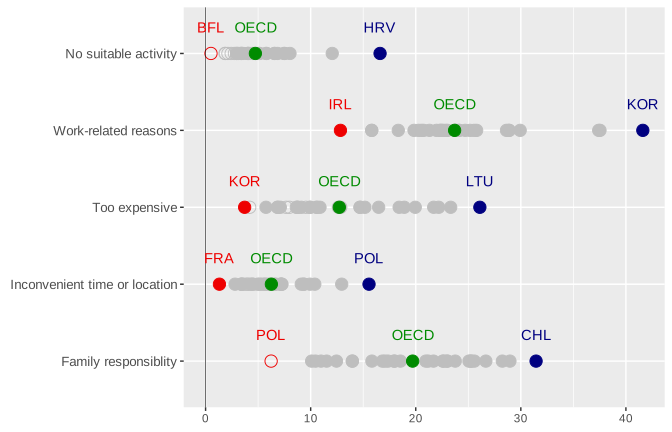
To adults who expressed such an unmet desire to participate in training, the Survey also asked them to name the most important reason that prevented them from attending the training activity. On average, the most common barrier was lack of time due to work-related reasons, reported by about a quarter of respondents with low skills (Table A.3.23 and Figure 3.8). About 40% of respondents reported this barrier in Japan, Korea and Singapore, compared with about 15% of respondents in Canada and Germany and 12% in Ireland.
Lack of time due to family responsibilities was reported by about one in five respondents on average. The share of respondents reporting this barrier approached or exceeded 30% in Chile, Italy and Japan, while it was reported by only about 10% of respondents in Denmark, Estonia and Hungary, and by 6% of respondents in Poland.
Financial barriers (the activity being too expensive) were reported by 13% of respondents on average. However, variation across countries is large in this respect, with the share ranging from 4% in Korea to more than 20% in Canada, Hungary and Israel, exceeding 25% in Lithuania.
Share of adults with low skills reporting the following as the main reason for not participating in adult learning
Source: OECD (2024), Survey of Adult Skills (PIAAC) database, http://www.oecd.org/skills/piaac/publicdataandanalysis/ and Table A.3.23.
References
[2] OECD (2025), Trends in Adult Learning: New Data from the 2023 Survey of Adult Skills, Getting Skills Right, OECD Publishing, Paris, https://doi.org/10.1787/ec0624a6-en.
[1] OECD (2024), Do Adults Have the Skills They Need to Thrive in a Changing World?: Survey of Adult Skills 2023, OECD Skills Studies, OECD Publishing, Paris, https://doi.org/10.1787/b263dc5d-en.
[3] OECD (2024), Survey of Adult Skills – Reader’s Companion: 2023, OECD Skills Studies, OECD Publishing, Paris, https://doi.org/10.1787/3639d1e2-en.
← 1. The full results are presented in Table A3.2. In order to get a cleaner estimate of the association between skills and education, young adults aged 16-24 (who are likely to be still in education) are excluded from the analysis. Respondents who only took the Doorstep interview (see Chapter 1 and OECD (2024[3])) are also excluded from the regression (as well as from most other analysis in this chapter), because the Doorstep interview did not collect much of the information needed for this and subsequent analysis.
← 2. In fact, it is possible that some variables that are here classified as “outcome” do have an influence on skills. Being employed in jobs that require constant use of literacy and numeracy, for example, can plausibly contribute to maintain (or increase) proficiency in literacy and numeracy. At the same time, it is likely that having sufficient levels of literacy and numeracy is a prerequisite for obtaining those jobs. In this example, occupation and proficiency mutually reinforce each other. Cross-sectional data like PIAAC are unfortunately unable to disentangle this complex interrelationship.
← 3. This comes from an AUC of 0.78 for both models estimated on the pooled sample which includes all countries. Estimation on the pooled sample is more robust because it is based on a larger number of observations. Whenever in this chapter an analysis is performed on the pooled sample, survey weights are rescaled so that each country contributes equally, irrespective of their size.
← 4. The causal link is often not direct, but it is mediated by other channels. For example, immigrant status does not affect skills proficiency directly, but through particular education and life experiences that adults with an immigrant background have gone through (e.g. the native language they learnt in their family, or the type of education they had the opportunity to acquire). The central point here is the exclusion of a causal link going from skills to socio-demographic characteristics.
← 5. For example, as pointed out in endnote 2, it is possible that, while skills skill affect employment, being employed also helps to maintain and develop skills.
← 6. In some cases, the demographic structure of the population of adults with low skills can be traced back to specific country-specific policies or historical experiences. Sweden, for example, is a country with a relatively low share of low-skilled adults in the population (15%), a majority of which have a migrant background. Over several years, a substantial share of migrants who entered Sweden were refugees, a group of migrants spanning a wide age range.
← 7. The analysis presented in Chapter 1 shows that, even after controlling for age, low skills remain statistically associated with lower labour market participation. While Chapter 1 compared labour force status across the skills distribution, the analysis presented here only focuses on the population of adults with low foundational skills.
← 8. Cross-country differences in such self-reported measures may suffer from cultural bias and should therefore be interpreted with caution. More meaningful information can be drawn when comparing how these self-reported indicators are related with skills within each country.
← 9. For this analysis, the sample is again restricted to adults above 25 years of age; when information on economic outcomes like wages, contract or type of jobs is missing by design (i.e., because the individual is not employed) a separate category is included to account for that.
← 10. At the same time, it should be stressed that a significant degree of within-cluster heterogeneity is still present and any in-depth analysis of the outcomes experienced by adults with low skills should take that into account.
← 11. Even controlling for age does not significantly change the picture, as the average adjusted gap remains high at 21 percentage points.