This chapter examines current practices and perceptions of portfolio‑level risk management among state ownership entities. Drawing on the findings of an OECD SOE Risk Management Survey, it shows that while recognition of portfolio-level risk management systems is widespread, implementation remains uneven. The chapter examines institutional arrangements, the use of risk information in ownership decision making, and the key governance enablers that support effective portfolio‑level risk management.
Managing Risk Across State‑Owned Enterprises

Abstract
This chapter delves into the results of the perception-based OECD SOE Risk Management Survey conducted by the OECD for the purpose of this report. It aimed at identifying current portfolio level risk management frameworks and practices at the state ownership level. The key findings of the survey, summarised below, cover several dimensions of portfolio-level risk management: (i) the perceived importance of risk management; (ii) the existence and design of in-house risk management frameworks and functions; (iii) the resourcing and capacity available for risk management; (iv) the use of risk information to inform ownership decision making; and (v) the institutional enablers to effective implementation.
Recognition of the importance of portfolio level risk management is high, with 80% of responding ownership entities considering it to be very important or important.
Implementation remains uneven, with only around half of ownership entities reporting dedicated portfolio-level risk management functions or frameworks.
Where established, portfolio-level risk management increasingly supports strategic ownership decisions, including acquisitions, restructuring and divestitures.
Respondents identify institutional capacity, including reporting systems, shareholder dialogue, and appropriate capacities and skills, as principal enablers of effective portfolio-level risk management.
Ownership entities broadly recognise the value of portfolio-level risk management and its alignment with SOE‑level systems. Portfolio-level risk management frameworks were considered very important or important by 80% of respondents. By comparison, 17% expressed a neutral view, and only 4% did not consider them important (Figure 2.1). Respondents also placed high value on aligning portfolio-level risk frameworks with the risk management systems already in place at the SOE level. Half (50%) considered such alignment very important, and a further 21% rated it as important, with 25% expressing a neutral view (Figure 2.2).
Overall, the findings suggest a high awareness on the importance of portfolio-level risk management. This growing recognition provides a favourable foundation for strengthening institutional arrangements and practical implementation.
Based on your experience and/or opinion, how important is it to have a risk management framework to manage portfolio-level risks and opportunities at the state level (as opposed to SOE‑level)?
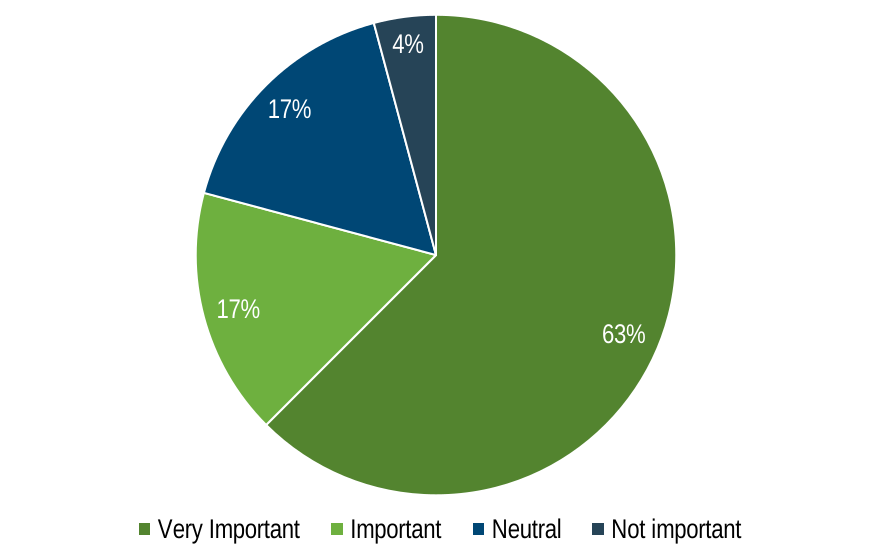
Note: The percentages add up to 101% for rounding reasons.
Source: OECD SOE Risk Management Survey.
How important is it to align the state portfolio-level risk framework with the risk management systems already in place at the SOE level?
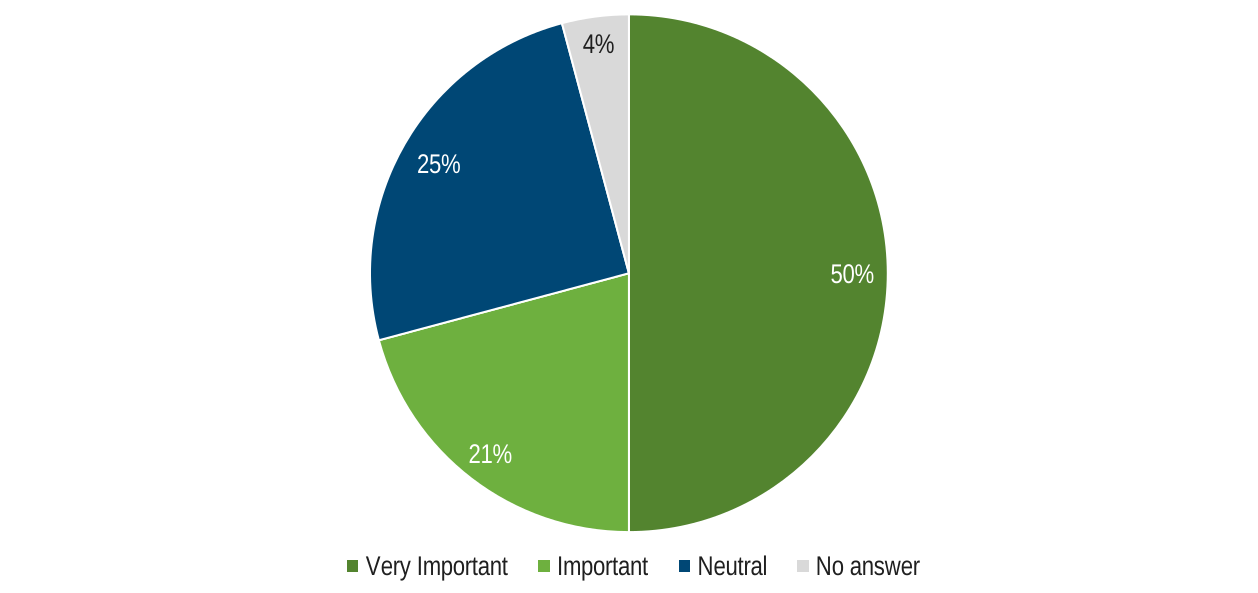
Source: OECD SOE Risk Management Survey.
Implementation of a portfolio-level risk management framework is lower than recognition of its value, with many ownership entities still developing or lacking portfolio-level risk management arrangements. While 54% of respondents reported that they have an in-house risk management function/department (Figure 2.3), only 46% reported having a risk management framework (Figure 1.3). This gap suggests that many ownership entities continue to rely on broader internal control or audit functions rather than dedicated risk management teams. Among the 42% without a portfolio level framework, half considered SOE‑level risk management arrangements sufficient, while a small number indicated that a framework was under development or that they lacked the knowledge to develop one (Figure 2.4).
These findings suggest that although ownership entities increasingly recognise the importance of portfolio-level oversight of risks, many have yet to establish dedicated institutional arrangements to support it beyond the existing internal audit or control functions. Reliance on SOE‑level frameworks is often considered sufficient to manage risks. However, interconnected exposures, concentration risks and cross-portfolio opportunities may only become visible in an aggregate view. The neutral responses on alignment with SOE‑level systems may further suggest uneven understanding of how state and enterprise frameworks should connect.
Does your organisation have an in-house risk management function/department?
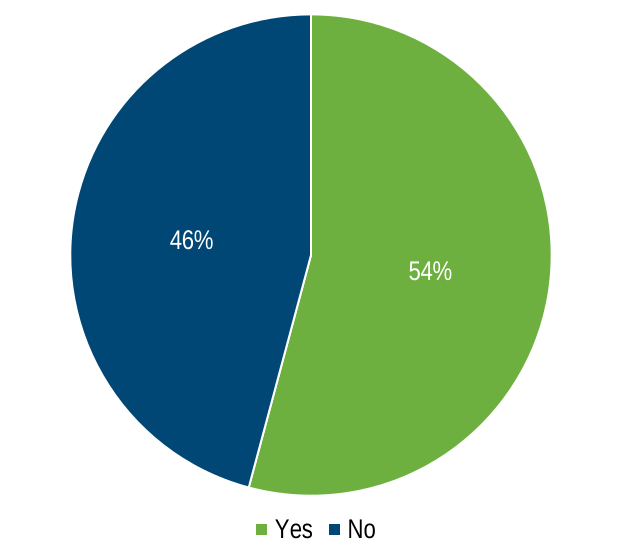
Source: OECD SOE Risk Management Survey.
If no portfolio risk management framework is in place, why?
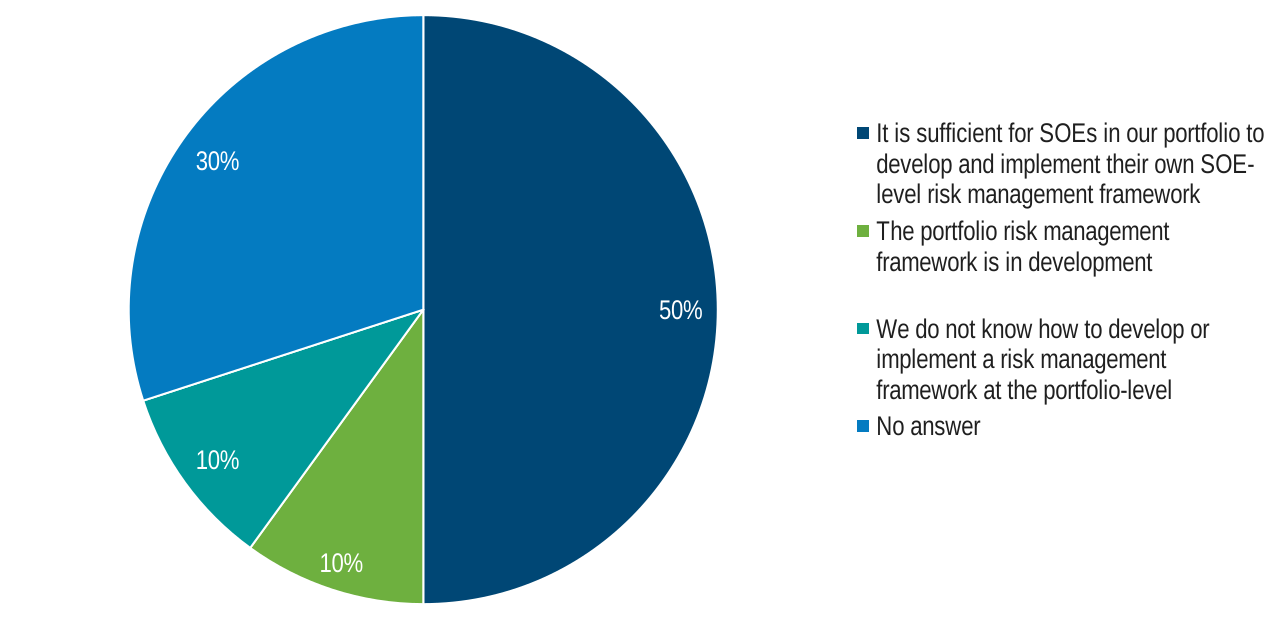
Note: The sample covers the 10 respondents (42%) that answered “No” to the question “Does your entity currently have a portfolio risk management framework at the level of the state?”.
Source: OECD SOE Risk Management Survey.
The findings further suggest that while institutional arrangements are becoming more common, their effectiveness depends on the resources dedicated to them and the extent to which risk management is integrated into day-to-day ownership decision making and based on robust risk management systems in the SOEs themselves.
Where portfolio-level risk management exists, it is increasingly viewed as an investment that supports strategic ownership decisions rather than merely serving as a compliance function. Most respondents (54%) characterised spending on anti-corruption, integrity and sustainability risk management as an investment rather than an operational cost, while 13% viewed it as a cost (Figure 2.5). This finding supports broad recognition that sustained investment is needed to develop portfolio-level risk management capabilities.
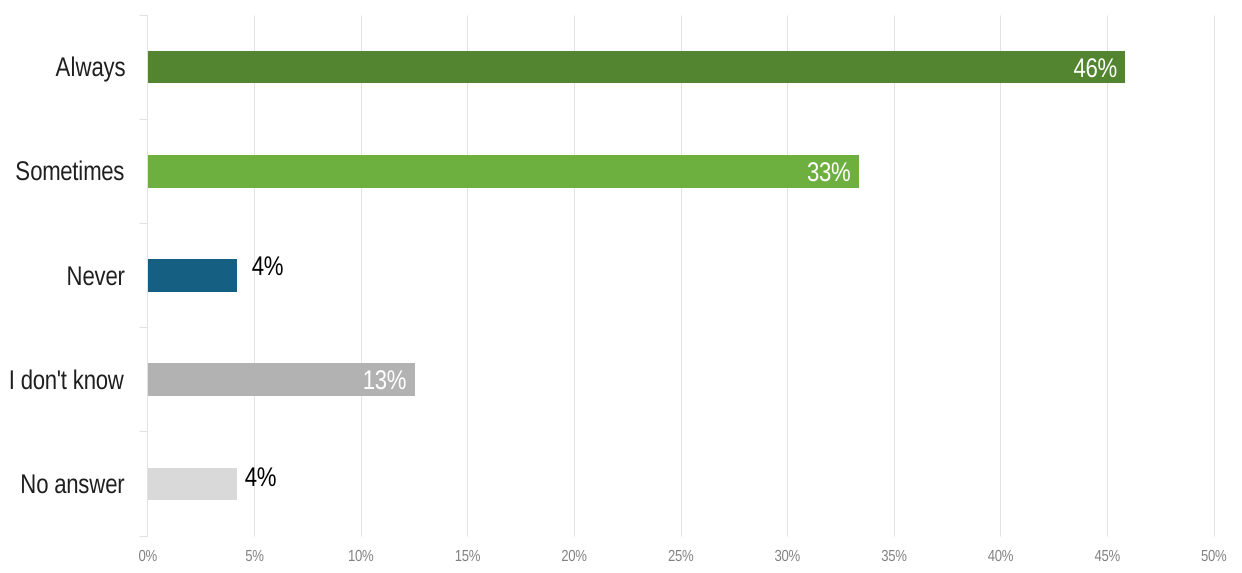
This recognition is also reflected in how portfolio-level risk management frameworks are used in practice. Nearly half of respondents (46%) reported always using them to inform decisions on state asset acquisitions, divestitures and restructuring, while a further 33% reported using them sometimes. Only 4% indicated that they have never used them for these purposes (Figure 2.6).
In your view, how would you characterise the allocation of operational budget to preventing, detecting and addressing anti-corruption, integrity and sustainability risks and opportunities in the state’s SOE portfolio of the state?
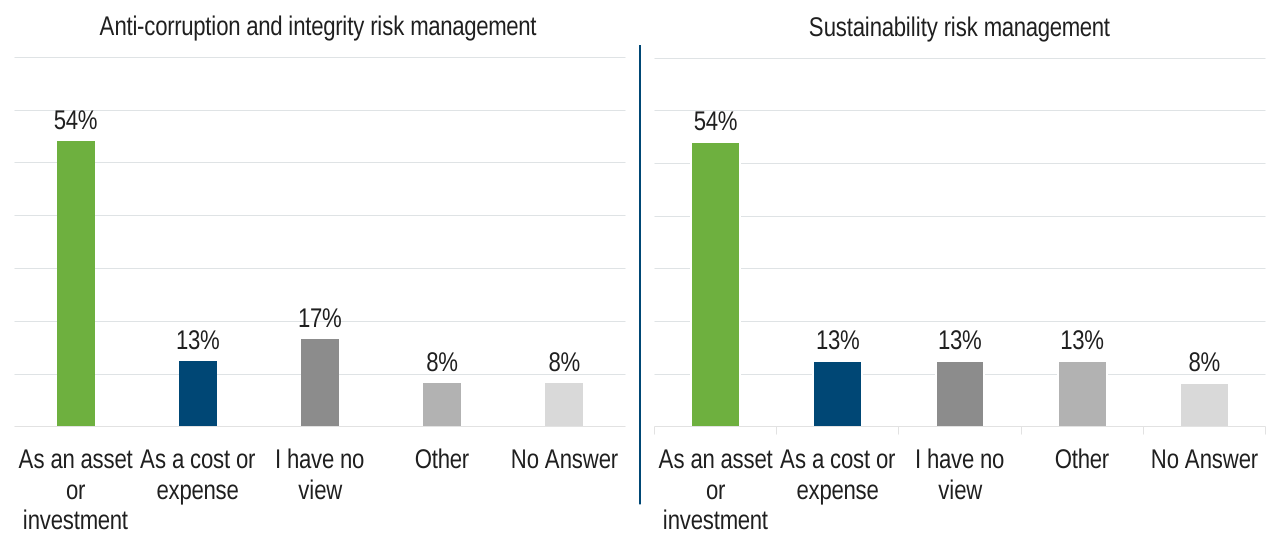
Note: The percentages on “Sustainability risk management” add up to 101% for rounding reasons.
Source: OECD SOE Risk Management Survey.
To what extent do you use a well-articulated risk management framework to help make informed decisions regarding state asset acquisition, divestiture, or restructuring?
Source: OECD SOE Risk Management Survey.
The findings suggest that many ownership entities increasingly view portfolio-level risk management as a strategic tool for key decisions, linking risk analysis with capital allocation, acquisitions, divestitures and restructuring rather than serving solely as a compliance exercise.
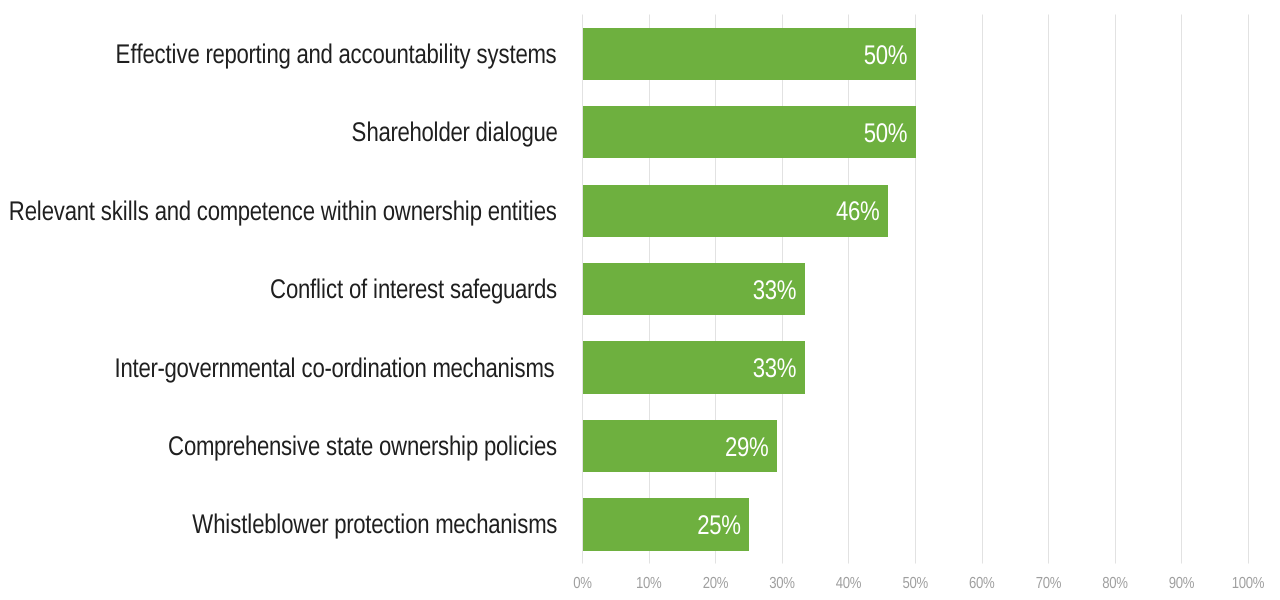
Effective portfolio-level risk management depends not only on formal frameworks, but also on institutional capabilities, reporting systems and co‑ordination mechanisms. Participants were asked to give their views on what would be the key enablers or policies and procedures to have in place to allow for efficient and effective portfolio risk management frameworks at the state level. The top five policies and procedures identified were (Figure 2.7), “effective reporting and accountability systems” (50%), “shareholder dialogue” (50%), “relevant skills and competence within ownership entities” (46%), “conflict of interest safeguards” (33%), and “inter-governmental co-ordination mechanisms” (33%) (such as co‑ordination between ownership entities, ministries of finance and line ministries).
In practice, this finding points towards building reliable data pipelines from SOEs to the ownership entity, formalising regular two‑way engagement with boards and management, investing in specialised risk and compliance skills, integrating anti-corruption and integrity safeguards into policies and appointments, and aligning ministries and central agencies so that risk policies are coherent across the state. These enablers mirror international expectations for sound governance, compliance and assurance, and they are widely seen as prerequisites for a portfolio-level framework that can identify interconnected risks and opportunities and act on them in a timely manner.
In your opinion, what are key enablers that can help support the successful implementation of a portfolio risk management framework at the state ownership level?
Source: OECD SOE Risk Management Survey.
Taken together, the survey findings show that portfolio-level risk management is becoming an increasingly important component of active and informed state ownership practices. While implementation varies across jurisdictions, respondents identify clear priorities for strengthening institutional capacity, governance arrangements and decision making processes that can help ownership entities better anticipate interconnected risks and opportunities across their portfolios.