Retail and wholesale SMEs in the EU are undergoing significant structural changes, driven by the twin digital and green transitions and rising competition from large firms and non-EU online platforms. Although SMEs remain a key pillar of the retail sector, and their production has risen in absolute terms over the last decade, their share of turnover, value added and employment relative to larger firms has declined over the past decade, reflecting growing market concentration. Digital adoption has expanded and correlates with stronger firm performance, but progress remains uneven across countries and firm sizes. Environmental performance has also improved, yet persistent data and measurement gaps continue to limit the ability to track SME-specific progress. EU and national policies are increasingly mobilising support for the twin transition, including though major funding instruments. However, complex access conditions, limited internal capacities and integration challenges still constrain many smaller firms.
Local Retail, Global Trends

Abstract
The first section of this chapter provides an overview of the retail ecosystem in the EU, focusing on key changes in the competitive landscape for retail and wholesale SMEs over the last decade. The analysis draws on quantitative indicators to highlight market trends, challenges and opportunities across five domains: economic performance, business dynamics, international trade, digitalisation and environmental sustainability. For each of these, the most significant shifts observed over the 2012-2013 to 2022-2023 period, a decade marked by substantial transformation for retailers and wholesalers worldwide, are presented and discussed.
The retail ecosystem is a cornerstone of the EU economy, contributing significantly to GDP and serving over 450 million consumers daily (European Commission, 2024[1]). As the largest industrial ecosystem in the EU, it encompasses a broad range of actors, including retailers, wholesalers and supporting services such as logistics. Retailers and wholesalers alone comprise nearly 5 million businesses and generate 11.5% of total value added, serving local markets and shaping the vibrancy of towns and cities of all sizes. Retail and wholesale SMEs alone account for nearly one-fourth of all SMEs within the non-financial business sector. They tend to operate on high volume but low margins, with the lowest gross operating profit rate among major sectors (Eurostat, 2025[2]).
The retail ecosystem is also the EU’s largest private-sector employer, providing jobs to nearly 30 million people across all regions and offering roles at every skill level (European Commission, 2024[1]). As a key entry point into the labour market, the sector provides accessible employment opportunities for women, young people, migrants, people re-entering employment and other underrepresented groups, making it central to inclusive economic participation (see Chapter 3).
Beyond its economic and employment contributions, the retail ecosystem also shapes urban infrastructure and spatial development. Shops, warehouses, and distribution centres tend to cluster around commercial hubs, influencing city layouts and placing demands on transport networks. Wholesale and retail depend heavily on road, rail, maritime and air transport, as well as on reliable logistics and storage infrastructure for timely delivery and inventory management. The rise of e-commerce has intensified these demands, increasing the need for last-mile delivery centres and proximity logistics hubs (ITF, 2022[3]; ITF, 2024[4]).
At the same time, e-commerce is driving innovation in logistics systems, such as electric delivery fleets, parcel lockers and route optimisation technologies, which offer potential efficiency and environmental benefits when well implemented (ITF, 2024[5]). However, shifting consumer patterns have also contributed to declining foot traffic in traditional commercial districts, rising vacancy rates and growing pressure on urban mobility systems (ITF, 2022[3]; ITF, 2024[4]). As cities adapt to changing consumer behaviours and distribution models, managing these trade-offs will be key (see Chapter 4).
The retail ecosystem also acts as a key link between producers and consumers, shaping supply and demand across industries. Retail and wholesale are deeply interconnected with other sectors, such as manufacturing, food processing and agriculture, and with cross-sectoral economic activities, like tourism and services (European Commission, 2024[6]). More than just an intermediary, the ecosystem manages vast human, material, and natural resources, influencing how they are distributed and used across supply chains. As a result, its digital and green transitions have far-reaching implications, not only for wholesalers and retailers themselves but also for an extensive and diverse supplier base (Ytterhus, Arnestad and Lothe, 1999[7]; Jones et al., 2005[8])
Retailers are uniquely positioned as intermediaries of consumer markets, which enables them to understand consumer preferences and shape purchasing behaviour. Their strategic and operational decisions, ranging from product offerings and pricing models to distribution methods, influence not only immediate buying choices but also production patterns, broader consumption trends, and societal values. For instance, by adopting business models centred on rental, repair, and resale, retailers can accelerate the shift towards circularity and foster a more responsible consumer culture (OECD, 2025[9]).
These dynamics unfold within a highly diverse sector, encompassing businesses of all sizes, from self-employed shop owners to multinational corporations. This heterogeneity extends to business models and distribution channels, with retailers engaging customers through brick-and-mortar stores, e-commerce websites, third-party marketplaces, and integrated omnichannel experiences. The sector is also segmented by product focus, broadly divided into grocery and non-grocery retail. Within these categories, further differentiation occurs by store format (e.g. supermarkets, discounters, pop-up shops) and product specialisation (e.g. apparel, electronics, health and beauty, furniture and home goods). This highlights retail’s adaptability in meeting diverse consumer needs and preferences.
Despite the sector’s diversity, all retailers are navigating a period of rapid and profound transformations, driven by shifting demographics, evolving consumer behaviour, emerging digital technologies, and a growing demand for sustainability. One of the most significant shifts has been the accelerated evolution of omnichannel retail, where digital and physical shopping experiences are increasingly intertwined (Ailawadi and Farris, 2017[10]; Evanschitzky et al., 2020[11]; OECD, 2023[12]). The COVID-19 pandemic not only sped up the adoption of digital tools, but also introduced new consumer expectations, including faster delivery options and flexible fulfilment models (Verhoef, Noordhoff and Sloot, 2023[13]; Ratchford et al., 2023[14]). While these changes have enabled some retailers to expand their reach, it has also widened the gap between businesses that can invest in digitalisation and those struggling to keep pace, putting pressure on physical stores to innovate and adapt to the new landscape (Breugelmans et al., 2023[15]; Szocs et al., 2023[16]; Alexander and Blazquez Cano, 2020[17]).
This section takes a high-level perspective on the retail and wholesale sectors across the EU-27 Member States, focusing on data at the national level to assess their evolving composition and economic role.1 The analysis draws on international and publicly available databases, primarily from Eurostat and the OECD. Together, these data sources enable the longitudinal analysis of sectoral trends while also allowing cross-country comparisons.
The distributive trade sector – comprising retail, wholesale, and motor vehicle trade (NACE Rev. 2 Section G divisions 45-47) – is a core component of the European economy, both in terms of business numbers and economic weight. In 2022, it comprised approximately six million enterprises, accounting for about one-fifth of the EU business economy and representing the largest enterprise population among all NACE sections (Eurostat, 2025[2]). It also employed nearly 30 million people, more than any other sector. The sector generated over EUR 11 trillion in net turnover and around EUR 1.6 trillion in value added, making it the largest by turnover and second only to manufacturing in value added (Eurostat, 2025[2]). The significant gap between turnover and value added reflects the high pass-through of purchased goods, indicating low margins.
Most firms in both retail and wholesale are micro-enterprises, employing fewer than 10 people, although the two sectors differ slightly in their size distribution. In 2023, micro-enterprises accounted for approximately 95% of retail firms and 91% of wholesale firms. Small enterprises represented 5% of retail and 8% of wholesale firms, while medium-sized businesses made up less than 1% in both sectors. Large companies (those with 250 or more employees) are extremely rare, comprising only 0.1% of retail and 0.2% of wholesale enterprises. In short, both sectors are marked by a long tail of micro-enterprises and a very short head of large players.
Despite their small numbers, large firms in retail and wholesale contribute a disproportionate share of sales, value added and employment. By contrast, micro and small enterprises account for only a modest share in these metrics. This pattern is common across EU industries, but it is particularly pronounced in distributive trades, where numerous family-run shops, independent dealers and small traders coexist with a few large retail chains and wholesale distributors.
Employment is distributed very differently across firm sizes in both industries, with retail showing stronger polarisation and wholesale a more even spread (see Figure 2.1). Based on 2023 data, the retail workforce is concentrated at the extremes: more than one-third of jobs are in micro-enterprises (35.7%) and almost two fifths in large companies (38.7%), leaving only a quarter spread across small and medium-sized firms. Wholesale, by contrast, shows a more balanced profile: micro-enterprises and large firms employ just over a quarter of workers (28.1% and 26.1%, respectively), while nearly half are in small and medium firms combined (45.9%). These patterns suggest that wholesale firms more often expand incrementally into small or medium size without necessarily transitioning into large enterprises.
Employment distribution by firm size in EU retail and wholesale (%), 2023
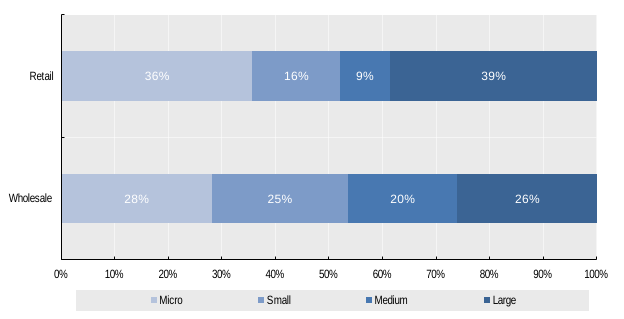
Note: The EU figure is calculated by aggregating employment across countries within each firm size class, not by averaging country-level percentages.
Source: OECD Structural Business Statistics
Labour market differences are also evident in personnel costs. In 2019, the average cost per employee was EUR 42 000 in wholesale, compared with EUR 24 000 in retail (Eurostat, 2025[18]). This reflects higher wages and productivity in wholesale, where larger firms and business-to-business (B2B) operations are more common. Retail’s lower average stems from its labour-intensive nature and the prevalence of part-time, low-wage employment. These wage differences are mirrored in aggregate productivity levels. In 2019, wholesale accounted for 32.6% in the distributive trades sector and generated 49.7% of value added, compared with 55.3% and 38.1% respectively for retail (Eurostat, 2025[18]).
Retail and wholesale are closely linked to other sectors, such as transportation and storage, manufacturing and agriculture. However, in official classifications, these activities fall under different categories. For instance, transport and storage activities are classified under NACE section H, which include land transport, warehousing, and postal or courier services, all of which are critical for the physical flow of goods. Manufacturing (section C) supplies most consumer goods distributed through retailers and wholesalers, while agriculture (section A) contributes significantly to food retail and wholesale. As a result, a large share of the value chain underpinning distributive trades is statistically recorded outside divisions G46 and G47.2
The analysis in this chapter focuses on retail trade (G47) and wholesale trade (G46), which are isolated from motor vehicle trade (G45) and other interconnected industries to ensure analytical consistency and comparability. Division G45 is more capital intensive, heavily regulated, cyclically sensitive and vertically integrated, and vehicle dealers frequently bundle goods and services within a single business unit (e.g. sales, financing, after-sales support, repairs), blurring the line between trade, services, and even financial intermediation. These characteristics distort firm-level indicators, which is why these divisions are separated in structural statistics. Furthermore, including motor vehicle trade in the same analytical frame would risk conflating distinct policy priorities as its technological and environmental transition pathways differ substantively. G45 faces unique challenges like shifting mobility preferences, EV servicing infrastructure, and end-of-life vehicle regulation.
This section presents an overview of the economic performance of the wholesale and retail sectors, with a particular focus on the evolution of contribution of SMEs to turnover, value-added, employment, and labour productivity. To provide broader economic context, the analysis begins by examining overall production trends in these industries, without distinguishing between SMEs and large enterprises, before zooming in on the specific contributions of smaller firms.
The analysis draws on data sourced from Eurostat’s annual detailed enterprise statistics, which ensures international comparability over time. These statistics are broken down by size class (based on the number of persons employed) and economic activity. This level of granularity allows for a detailed examination of SME contributions within both the wholesale and retail sectors.
Over the last 10 years, a clear overarching trend has been the growth of production (measured by trade margins, i.e. the difference between sales revenues and the costs of goods purchased for resale) in the retail and wholesale sector. However, this growth has not been steady, as the COVID-19 pandemic caused a temporary contraction in 2020, followed by a strong rebound in 2021 and 2022.
SMEs continue to account for most turnover, value-added, and employment in both retail and wholesale, and their production in absolute terms has increased over the last decade. However, their share in these key indicators has been declining across EU countries over the same period, pointing at a stronger ability by larger firms to capitalise on recent shifts, including e-commerce.
SMEs’ share of turnover declined sharply in nearly all EU countries between 2013 and 2023, dropping from 81% to 73% in wholesale and from 57% to 50% in retail.
Over the past decade, SMEs’ share of value added fell from 82% to 76% in wholesale and from 59% to 52% in retail.
SMEs' share of employment remains relatively high, at approximately 60% in retail and 80% in wholesale, despite a decline of more than 6 percentage points in both sectors over the past decade.
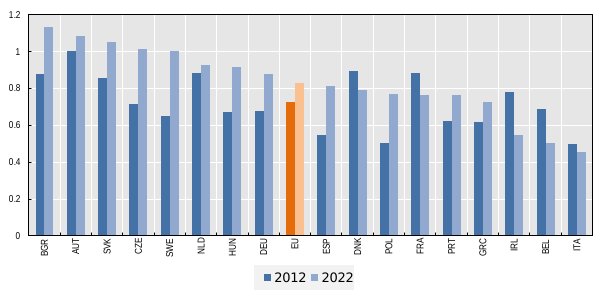
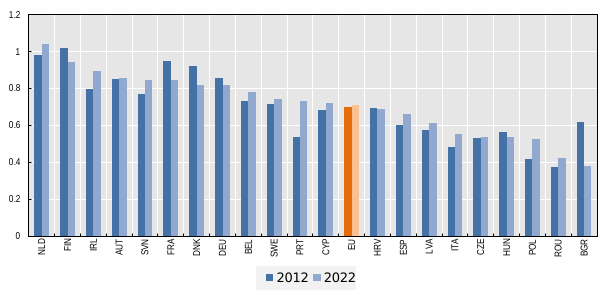
In terms of labour productivity, SMEs expectedly lag behind larger firms. Between 2012 and 2022, the productivity gap decreased in wholesale, as the EU-wide ratio of SME labour productivity to large firms rose from 0.73 to 0.83, whereas the ratio in retail went from 0.70 to 0.71.
While SMEs remain vital for economic activity and employment in the EU, they face increasing competitive pressures from large companies. Economic shocks further highlighted vulnerabilities and prompted shifts towards e-commerce. Beyond these general trends, the disparities observed across the EU underscore that country-specific conditions can significantly influence the economic performance of retail SMEs.
Production
Over the past decade, wholesale and retail production – measured by the value of trade margins, i.e. the difference between sales and the costs of goods sold – has steadily expanded across most EU countries, typically growing a few percent per year in line with consumer spending. This trend persisted from 2014 to 2019 before disruption in 2020, when, during the COVID-19 pandemic, lockdowns and economic uncertainty caused retail activity to contract. A strong rebound followed in 2021 and 2022, but part of this growth reflects inflation and currency fluctuations rather than real output expansion. Notably, the recovery in the wholesale sector appears steeper than in retail, possibly reflecting faster normalisation of business-to-business (B2B) transactions. Still, after a relative flat growth from 2008 to 2013, over the last decade production has risen rather strongly in absolute terms for both SMEs and large firms in the value chain.
Wholesale and retail production (EUR billion) in selected EU countries, 2008-2022
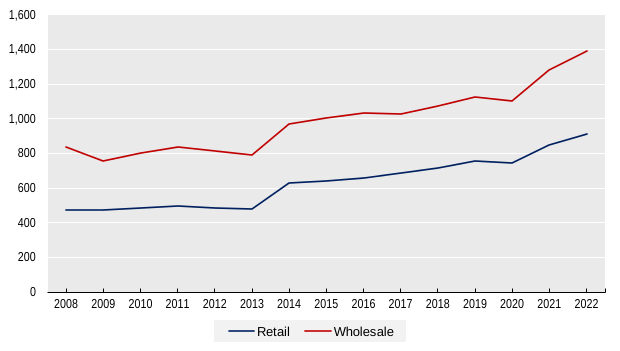
Note: Only 16 countries for which there is consistent data across the whole period of analysis are considered (AUT, BEL, EST, FIN, FRA, DEU, GRC, IRL, ITA, LVA, LTU, LUX, NLD, PRT, SVK, SVN, ESP, CYP).
Source: OECD Structural Business Statistics
SMEs’ share of turnover
In most EU Members States, SMEs’ share of total turnover hovers around 70% in wholesale and between 50% and 60% in retail. Some countries report more moderate wholesale SME shares, reflecting stronger competition from large multinational wholesalers, but the figure can reach above 85% in certain economies. Retail typically has lower SME turnover shares, as large chains tend to hold significant positions in end-consumer sales.
Between 2013 and 2023, wholesale SMEs’ turnover share fell from 81% to 73%, while retail SMEs’ share declined from 57% to 50%. In wholesale, Belgium and France experienced the steepest decline, while Greece and Romania recorded the largest drops in retail. However, a few exceptions exist: Ireland and Slovenia posted slight increases in retail SME turnover share.
Overall, it appears that large multinational and domestic wholesale and retail chains are capturing a growing market share in Europe, often at the expense of smaller, independent merchants. This is evident in grocery retail, where supermarket chains and discounters have expanded, and in online retail, where big platforms typically dominate the space. Yet the picture varies by country and segment, and national policies can influence these trends.
Wholesale SMEs’ share of total turnover (%), 2013 and 2023
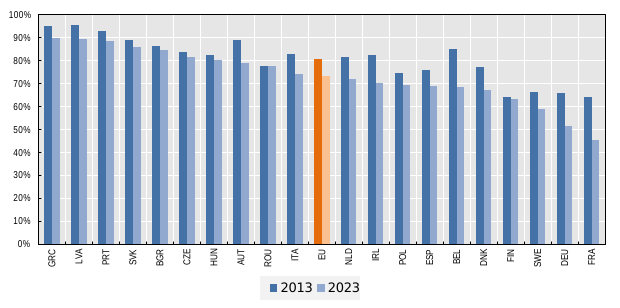
Note: The “EU” value is an unweighted mean of the displayed countries.
Source: OECD Structural Business Statistics
Retail SMEs’ share of total turnover (%), 2013 and 2023
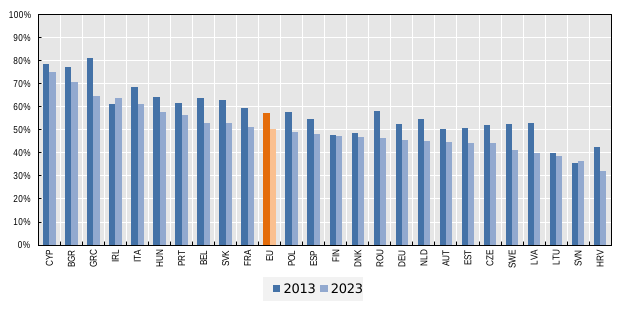
Note: The “EU” value is an unweighted mean of the displayed countries.
Source: OECD Structural Business Statistics
SMEs’ share of value added
In most European countries, SMEs contribute around 70-90% of value added in wholesale and 45-60% in retail, in line with what is observed for turnover shares. Similarly, over the last decade, SMEs’ share of value added has been declining across both wholesale and retail, with larger firms capturing a greater share of economic output.
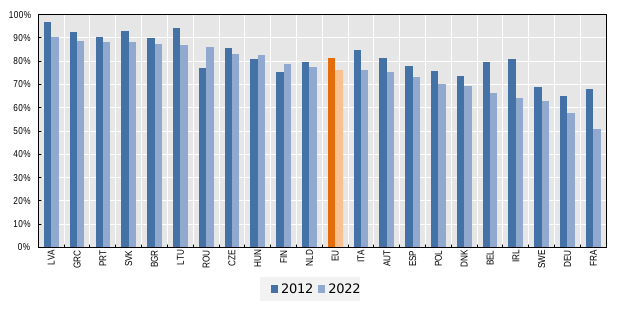
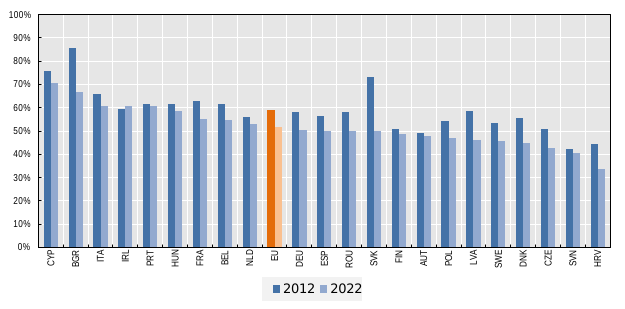
Between 2012 and 2022, SME value-added share fell from 82% to 76% in wholesale, and from 59% to 52% in retail. In wholesale, France, Ireland, and Belgium experienced the steepest drops, while Romania, Hungary, and Finland were the only countries to record increases. In retail, the Slovak Republic and Bulgaria experienced the largest decreases, while Ireland was the only country to show growth – though the gain was relatively small.
Wholesale SMEs’ share of total value added (%), 2012 and 2022
Note: The “EU” value is an unweighted mean of the displayed countries.
Source: OECD Structural Business Statistics
Retail SMEs’ share of total value added (%), 2012 and 2022
Note: The “EU” value is an unweighted mean of the displayed countries.
Source: OECD Structural Business Statistics
SMEs’ share of employment
On the workforce side, retail’s employment structures are rapidly evolving, but SMEs continue to account for most jobs in both retail (~60%) and wholesale (~80%), reflecting their critical role in local economies. When considering their broader network of suppliers and commercial partners, the impact of SME employment extends even further. While large retailers have been implementing process innovations (e.g. self-checkouts) that can limit job growth, smaller retailers remain labour-intensive. As reported by the academic literature, a slight decline in employment has been occurring in small traditional retail stores, especially in rural areas or inner cities with footfall declines (Lafontaine and Sivadasan, 2022[19]). This contrasts with employment growth in areas like logistics, delivery, and digital marketing. Remarkably, new skill sets are in demand, including within SMEs (Pissareva et al., 2025[20]). For instance, digital and e-commerce capabilities (such as managing web shops), sustainability knowledge to guide customer choices, and interpersonal skills to enhance the customer experience are all growing in importance.
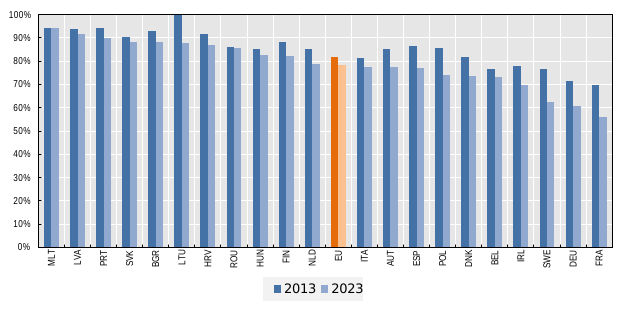
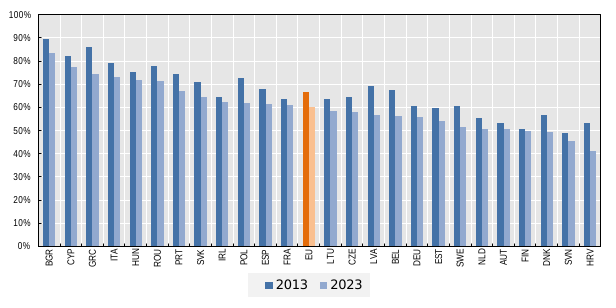
Over the past decade, SMEs' employment share has significantly declined in both sectors, with retail experiencing a greater relative loss. Between 2013 and 2023, the SME employment share fell from 85% to 79%. In retail, the share decreased from 67% to 60%. However, the decline in the share of SME employment has not been uniform, with some countries experiencing significantly sharper contractions than others. In wholesale, Sweden and France registered the largest drops, while Latvia and Croatia experienced the sharpest declines in retail. These trends highlight a continued concentration of employment in larger firms and mounting economic pressures on small retailers.
Wholesale SMEs’ share of total employment (%), 2013 and 2023
Note: The “EU” value is an unweighted mean of the displayed countries.
Source: OECD Structural Business Statistics
Retail SMEs’ share of total employment (%), 2013 and 2023
Note: The “EU” value is an unweighted mean of the displayed countries.
Source: OECD Structural Business Statistics
Labour productivity
Retail sector productivity has remained relatively low and stable compared to other industries such as manufacturing (European Commission, 2018[21]). This reflects the sector’s reliance on labour-intensive, small-format stores, which generate less output per euro of personnel cost. While technology has improved operational processes over the past decade, these gains appear to have often been offset by the expansion of lower-productivity segments, such as large warehouses that require extensive manual labour.
In both wholesale and retail, SMEs exhibit lower productivity than large firms, reflecting differences in economies of scale and business models. Over the whole period under study (2005-2022), SME productivity ratios typically fall below 1, indicating that large retail chains and big-box stores achieve higher output per worker than small shops. When comparing the two sectors, wholesale SMEs tend to have a narrower productivity gap than retail SMEs, where differences are often more pronounced. In most countries, retail SMEs register lower productivity ratios, typically ranging from 0.50 to 0.85.
Between 2012 and 2022, the productivity gap between large firms and SMEs narrowed in wholesale, with the EU-wide index rising from 0.73 to 0.83, and remained largely unchanged in retail, where the ratio went from 0.70 to 0.71. Wholesale SMEs achieved remarkable productivity gains in some countries, while retail productivity trends tended to remain stagnant in most places. In wholesale, strong relative improvements occurred in Czech Republic, Sweden and Poland. In retail, relative productivity gains among SMEs were more modest and unevenly distributed, with moderate improvements observed in the Netherlands, Ireland, and Portugal.
Ratio of SME labour productivity to large firms in wholesale, 2012 and 2022
Note: The “EU” value is an unweighted mean of the displayed countries.
Source: OECD Structural Business Statistics
Ratio of SME labour productivity to large firms in retail, 2012 and 2022
Note: The “EU” value is an unweighted mean of the displayed countries.
Source: OECD Structural Business Statistics
This section examines the business dynamics of wholesale and retail, looking at the evolution of the number of enterprises, turnover rates (birth, death, and churn), and the prevalence of high- and medium-growth enterprises in these industries. Tracking these indicators provides insights on the changing competitive landscape in which wholesale and retail SMEs operate. The analysis is based on the OECD Structural and Demographic Business Statistics (SDBS) database, which provides detailed information on the structure and dynamics of economic sectors.
The retail ecosystem is overwhelmingly dominated by SMEs, often ranging between 99.7% and 99.9% of all firms. While the overall number of enterprises has grown in some countries, many retail markets appear to be experiencing consolidation, reflecting intensified competitive pressures from large companies and foreign firms.
The figures reveal a dynamic yet challenging competitive landscape for retail SMEs. High entry rates among micro firms suggest robust entrepreneurial activity, but the corresponding high exit underscores industry pressures and market volatility, particularly during periods of economic disruption like the COVID-19 pandemic.
While churn has declined over time, it remains elevated when compared to industry. The average churn rate declined across EU countries between 2011 and 2021, with wholesale falling from 18% to 15%, and retail from 20% to 19%.
The relatively low share of medium- and high-growth enterprises points to difficulties in scaling, despite some regions showing stronger growth capacities, notably in some Nordic and Central and Eastern European countries.
This mix of rapid entry and exit flows highlights both the resilience and fragility inherent in competitive markets. While entrepreneurial dynamism remains a characteristic of the EU retail ecosystem, the challenges in sustaining growth call for targeted policies.
Number of enterprises
In the EU‑27, nearly 5 million businesses operate in the wholesale and retail sectors, the overwhelming majority of which are SMEs. Across all country-year observations from 2005 to 2023, SMEs consistently accounted for over 99% of enterprises, often ranging between 99.7% and 99.9%.
Retail consistently outnumbers wholesale in firm count, reflecting its fragmented structure. While wholesale businesses typically operate on a larger scale, serving as intermediaries between producers and retailers, retail firms are more dispersed across local markets, directly meeting consumer demand through small, independent stores.
While the number of firms has remained high, overall growth has been subdued. In mature markets, e-commerce expansion has contributed to a stagnant or declining number of physical retail establishments, whereas newer Member States recorded a surge of retail entrants in the 2010s. Yet, retail remains a major sector for entrepreneurship; in 2022, one in five newly registered firms in the EU operated in wholesale and retail trade or motor vehicle repair.
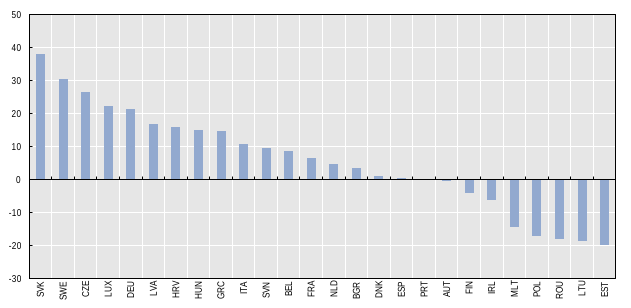
Long-term data indicate enterprise growth in wholesale, but trends over the past decade have been mixed. In wholesale, some countries experienced substantial expansion, including the Slovak Republic, Sweden, and Czechia. However, other economies, such as Estonia, Lithuania, Romania, and Poland, experienced significant declines, possibly reflecting consolidation and shifting trade patterns.
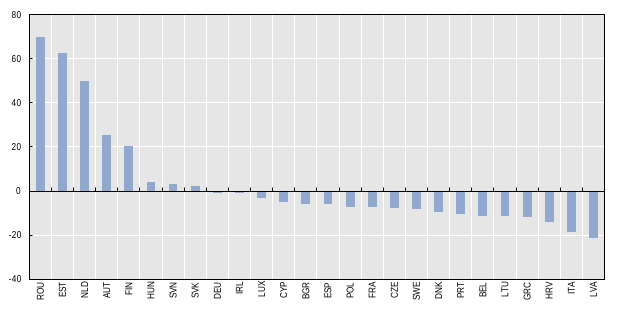
In retail, market consolidation has intensified, with most EU economies seeing declines in the number of firms. Some exceptions include Romania, Estonia, and the Netherlands, where retail firm numbers grew notably. However, many countries experienced contractions, including Italy, Croatia, and Lithuania, suggesting that traditional retail businesses face growing challenges from e-commerce, digitalisation, and rising operational costs.
Percentage change in the number of wholesale enterprises (%), 2013 and 2023
Note: Values are indexed to 100 in 2013 for each country, representing relative percentage change over time.
Source: OECD Structural and Business Statistics (SDBS)
Percentage change in the number of retail enterprises (%), 2013 and 2023
Note: Values are indexed to 100 in 2013 for each country, representing relative percentage change over time.
Source: OECD Structural and Business Statistics (SDBS)
Birth, death, and churn rates
The retail ecosystem is a dynamic sector with high turnover of businesses, having one of the highest churns across industries, meaning a high rate of new firm entries (births) and exits (deaths) each year (European Commission, 2018[21]). As suggested by OECD Product Market Regulation indicators, this dynamism reflects relatively fewer regulatory constraints compared to other sectors, but entry is not without challenges (OECD, 2025[22]). Administrative procedures, zoning restrictions, and competitive pressures still pose barriers, especially for physical retail. Many entrepreneurs open physical stores or online shops, but survival can be tough in the face of shifting market conditions, including changing consumer trends or the arrival of large competitors. As expected, entries and exits in both wholesale and retail are primarily driven by micro-enterprises (0–9 employees).
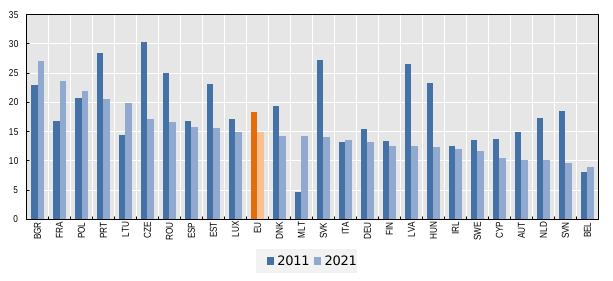
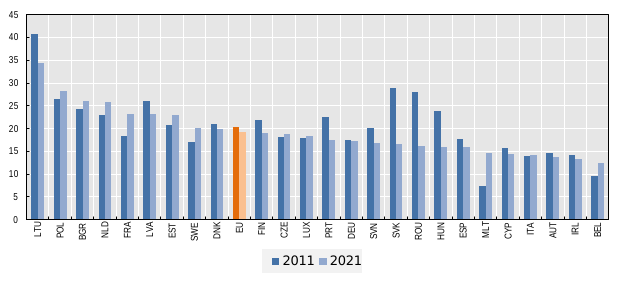
On average, between 2011 and 2021, churn rates declined across both sectors in the EU, with wholesale falling from 18% to 15%, and retail from 20% to 19%. Czechia and the Slovak Republic led the decline in wholesale, while important increases were observed in France and Malta. In retail, the Slovak Republic and Croatia experienced the sharpest drops, whereas Malta recorded the highest increase. This overall decline in churn likely reflects a combination of post-crisis stabilisation, growing market consolidation, and rising structural entry barriers, particularly in physical retail. Country-level variations likely reflect more fluid market conditions or less restrictive entry and exit dynamics in specific retail segments.
Over 2014–2019, net positive retail enterprise creation was observed in most countries, but the COVID-19 pandemic triggered a spike in closures due to lockdowns and liquidity problems (OECD, 2020[23]). Government support schemes mitigated insolvencies, and many businesses adapted by going online or switching formats. By 2021 and 2022, new businesses picked up again, highlighting the sector’s resilience. Still, consolidation has increased as some small shops did not reopen, and larger chains or franchisers expanded into the gaps.
Retail churn rates are often higher than wholesale’s, particularly among smaller businesses. In some countries, such as France and Poland, retail churn rates increased while wholesale rates decreased, highlighting sector-specific challenges in business dynamics. High churn might underscore robust entrepreneurial activity, but it might also suggest financial vulnerability among a large number of SMEs.
Churn rates in wholesale (%), 2011 and 2021
Note: The “EU” value is an unweighted mean of the displayed countries.
Source: SDBS Business Demography Indicators
Churn rates in retail (%), 2011 and 2021
Note: The “EU” value is an unweighted mean of the displayed countries.
Source: SDBS Business Demography Indicators
Rate of medium- and high-growth enterprises
The rate of medium- and high-growth enterprises is measured as the percentage of businesses, with 10 employees or more, having an average annualised employment growth greater than 10% over a three-year period. Although only a small percentage of firms achieve this, such businesses are often key sources of job creation and turnover growth in OECD economies (OECD, 2021[24]). Monitoring this indicator provides valuable insights into whether a given business environment supports enterprise scaling, as opposed to systems where SMEs face persistent barriers to growth.
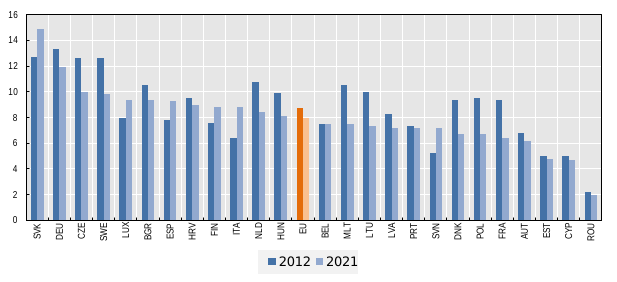
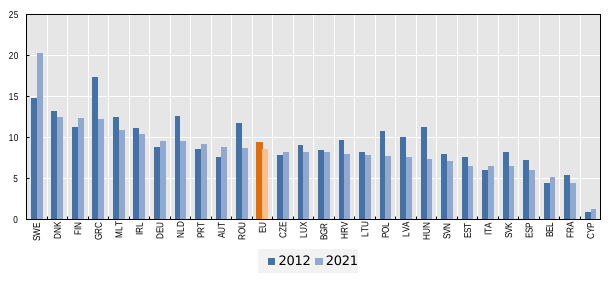
Specifically, between 2012 and 2021, the share of medium- and high-growth enterprises declined slightly across the EU, falling from 8.7% to 8.0% in wholesale and from 9.4% to 8.6% in retail. In wholesale, Sweden and Poland experienced the steepest declines, while Italy and the Slovak Republic recorded notable increases, contrasting with the overall trend. In retail, Greece and Romania exhibited the largest drops, whereas Sweden posted the strongest growth.
In most EU countries, the proportion of medium- and high-growth enterprises in wholesale and retail typically remains in the single or low double digits. This indicates that while some firms in these sectors pursue growth, the majority experience stable or limited expansion. Consistent with this, an OECD study on “scalers” (OECD, 2021[24]) found that firms in less knowledge-intensive industries, including wholesale and retail, generally show a lower rate of scaling in employment compared to those in more knowledge-intensive sectors. In the study, across five European countries, (Finland, Italy, Portugal, the Slovak Republic and Spain), the average share of firms scaling in employment in knowledge-intensive services was around 15-20%, whereas the average for less knowledge-intensive services was around 10%.
Comparing figures from early post-crisis years (2012–2013) to more recent ones (2020–2021) often reveals dips during the periods of major disruptions, followed by recoveries as economies rebounded. In some markets, these shocks accelerated e-commerce or digital transformations, enabling certain retail SMEs to scale more quickly. Conversely, wholesale expansions often rely on stable cross-border supply chains that can be more vulnerable to global logistics disruptions.
This suggests that national ecosystems heavily influence growth patterns. While some countries report notably higher shares of growth-oriented firms in wholesale, reflecting advantages in B2B activities, logistics, or global supply chain integration, others see stronger growth rates in retail, possibly linked to the successful adoption of digital technologies. In general, Nordic countries appear consistently in the upper tier, which is indicative of the existence of well-developed markets with strong digital and financial infrastructures that support expansion.
This section examines the evolving role of SMEs in export and import activities in wholesale and retail. The analysis draws on the Trade by Enterprise Characteristics (TEC) dataset, compiled by the OECD in cooperation with Eurostat and directly from national statistical offices. TEC links business and international trade statistics, providing breakdowns by economic activity and size-class for most OECD and EU countries.
Wholesale and retail are deeply intertwined with international trade, mainly through the import of consumer goods. Over the past decade, imports handled by both sectors have increased, reflecting globalisation and consumer preference for a wider variety of products. Even small retailers can become active importers, stocking international and niche products to meet consumer demand in local markets.
Within this broader context, the rise of cross-border e-commerce within the EU has been a major shift over the last decade. Digitalisation has enabled smaller retailers to reach customers in other Member States without a physical presence. By 2017, already 42% of online shoppers in the EU had made purchases from sellers in other EU countries (European Commission, 2018[21]), and cross-border online purchasing has continued to expand in subsequent years. SMEs are also increasingly using online marketplaces that serve multiple countries, leveraging single market integration. Surveys indicate that over a quarter of SMEs already sell cross-border within the EU, and many view the single market as essential to their growth strategies (European Commission, 2025[25]). However, competition from non-EU retailers has intensified as global e-commerce firms and marketplaces (e.g. Amazon, TEMU, Shein) have expanded their footprint in Europe, increasing consumer choice while adding pressure on local SMEs.
A range of EU policies has supported cross-border digital trade. The Digital Single Market strategy (2015) aimed to remove barriers and expand e-commerce in the EU (European Commission, 2015[26]). Measures such as the Geo-Blocking Regulation (2018) prohibit discrimination of customers based on nationality or residence, allowing consumers to access foreign EU websites and deals more easily (European Commission, 2025[27]), while VAT simplification through the One-Stop Shop system has simplified tax compliance for cross-border online sellers (European Commission, 2025[28]). Beyond digital policies, common product standards and safety rules facilitate the sale of goods across Member States, and euro-area infrastructure such as the Single Euro Payments Area (SEPA) has contributed to streamline cross-border payments (European Central Bank, 2025[29]).
Cross-border e-commerce can still involve significant frictions for retailers. Logistics constraints, including delivery delays, returns management and higher shipping costs since the COVID-19 pandemic can disproportionately affect smaller businesses (OECD, 2021[30]). In addition, compliance obligations in certain product categories can create fixed costs for cross-border B2C sales. This is notably the case for extended producer responsibility (EPR) schemes (e.g. textiles), where sellers may face registration and, in some cases, representation obligations in multiple Member States, and where clear arrangements with suppliers are needed to avoid duplication of responsibilities and fees (European Commission, 2025[31]).
Trade policy and geopolitical developments also shape retailers’ trading environment. The EU has concluded several free trade agreements (e.g. Canada, Japan, Vietnam) aiming to reduce or eliminate tariffs on various goods, thereby lowering import costs for retailers and increasing product availability for consumers (European Commission, 2025[32]). However, shifts in the trade-policy environment – including sudden changes in tariff levels – can weaken legal certainty and complicate business planning, affecting sourcing strategies, pricing and inventory management. The United Kingdom’s exit from the EU added customs and non-tariff barriers, complicating trade for retailers that source from or sell to that country (British Chambers of Commerce, 2023[33]). Geopolitical and pandemic-era disruptions have also exposed retail’s vulnerability to logistics bottlenecks, prompting businesses of all sizes to reassess suppliers and explore local or regional sourcing alternatives (Schleper et al., 2021[34]; Bednarski et al., 2025[35]).
Reducing administrative burdens and regulatory fragmentation remains a recurring EU priority. In May 2025, the European Commission adopted its new Single Market Strategy (“A simpler Single Market to make companies choose Europe”), which identifies the “most harmful barriers” to intra-EU trade and investment and proposes measures to simplify compliance and digitise key administrative processes, including the recognition of professional qualifications and the deployment of digital identity tools for businesses (European Commission, 2025[36]).
Despite these dynamics, the sector’s openness to trade remains fundamentally different from manufacturing. While industrial firms drive EU exports by leveraging large-scale production and global supply chains, retailers remain primarily oriented towards domestic markets, with far fewer businesses engaged in outbound trade. The value of goods exported by retail and wholesale companies remains significantly lower than that of manufacturers, underscoring the sector’s stronger dependence on imports to meet consumer demand rather than on exports as a growth strategy (Eurostat, 2024[37])
Over the past decade, SMEs in wholesale and retail have become more engaged in international trade, with retailers consistently outpacing wholesalers in export and import growth. However, these trends highlighting the rapid internationalisation of retail and wholesale SMEs also mask persistent regional disparities in trade participation.
Between 2012 and 2021, the number of exporting SMEs grew by an average of 9% in wholesale and 57% in retail, while importing SMEs increased by 11% in wholesale and 49% in retail.
Beyond firm numbers, the export and import values of SMEs have risen significantly. Wholesale export values increased by 42% and retail by 126%, while SME import values grew by 45% and 56% in these sectors, respectively.
SMEs’ share of export value increased in wholesale (from 73% to 77%) but declined slightly in retail (from 52% to 50%), highlighting diverging trends in SME internationalisation.
Meanwhile, SMEs’ share of import value dropped significantly in wholesale (from 76% to 45%) and moderately in retail (from 45% to 40%), suggesting consolidation along global supply chains, with larger firms increasingly dominating procurement operations.
The rapid adoption of e-commerce, both B2B and B2C, has lowered barriers to cross-border trade for SMEs in both wholesale and retail, helping them become more globally connected. While the policy environment has generally moved toward openness and integration, external shocks have tested the resilience of retail supply chains.
Looking ahead, further reductions in trade barriers and targeted support for the internationalisation of retail SMEs will be essential to overcoming scale-related challenges and ensuring a more level playing field.
Number of exporting and importing SMEs
SMEs in both wholesale and retail have become more engaged in international trade, as reflected in the rising number of exporting and importing firms. Remarkably, retail has generally outpaced wholesale in both export and import numbers growth.
Between 2012 and 2021, the average number of exporting SMEs across EU Member States grew by approximately 9% in wholesale and 57% in retail. In wholesale, Spain and Belgium recorded the strongest growth, while Croatia and the Slovak Republic experienced the steepest declines. In retail, Spain and France recorded exceptional increases, followed by Romania and Germany, whereas Croatia and Czechia experienced the sharpest drops.
Over the same period, the average number of importing SMEs increased by 11% in wholesale and 49% in retail, mirroring many of the trends observed in the case of exporters. Spain and Belgium also led growth in importing wholesalers, while Spain and France posted again the largest gains in the number of importing retailers. Croatia and Malta experienced the most significant declines in the number of importing SMEs across both sectors.
SMEs’ export and import value
Over the last decade (2012-2021), the value exported by SMEs grew significantly across EU Member States, increasing by an average of 42% in wholesale and an even more substantial 126% in retail. In wholesale, Croatia and Bulgaria led growth. Similarly, retail exports surged in Croatia and Romania, with Denmark and Estonia also posting remarkable gains. Malta experienced the largest drop in both sectors. Regional disparities are evident, and Croatia presents an interesting case. Despite a decline in the number of exporting retail SMEs over the last decade – coinciding with its EU accession in 2013 –, the value exported by these businesses has surged, suggesting that a smaller, more competitive core of firms is successfully scaling up their export activities, reflecting strategic adaptation to the opportunities and challenges of EU integration.
Over the same period, SME import values also increased significantly across EU Member States, averaging a 45% increase in wholesale and 56% in retail. In wholesale, Romania and Bulgaria posted the highest increases, while Malta recorded the only decline. The Netherlands and Hungary led growth in retail, followed by Poland and Germany. Cyprus and Latvia experienced the sharpest drops.
SMEs’ share of export and import values
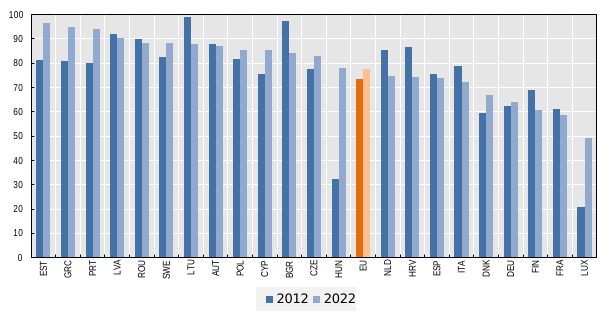
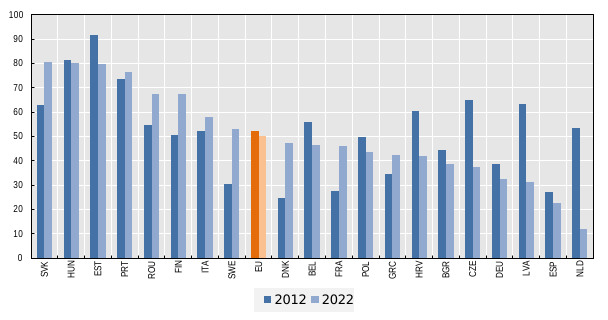
Over the past decade, SMEs’ share of export value increased in wholesale (from 73% to 77%), while it declined slightly in retail (from 52% to 50%), highlighting contrasting trends between the two sectors. Hungary and Luxembourg experienced the largest gains in wholesale, while the Slovak Republic and Bulgaria recorded the steepest declines. In retail, Luxembourg exhibited the strongest growth, whereas the Netherlands and Latvia experienced the largest drops. Overall, this shift suggests that smaller wholesalers are successfully broadening their international reach, benefiting from factors such as EU market integration, improved logistics, digital platforms, and supportive policy measures. In turn, retail SMEs’ relative contributions to exports have been more volatile across the EU. In some countries, SME export shares have grown significantly, while some markets have witnessed steep declines. These divergent trends suggest that scale-based advantages and the dominance of large online platforms may be increasingly sidelining smaller exporters.
Wholesale SMEs’ share of export value (%), 2012 and 2022
Note: The “EU” value is an unweighted mean of the displayed countries.
Source: OECD TEC Database
Retail SMEs’ share of export value (%), 2012 and 2022
Note: The “EU” value is an unweighted mean of the displayed countries.
Source: OECD TEC Database
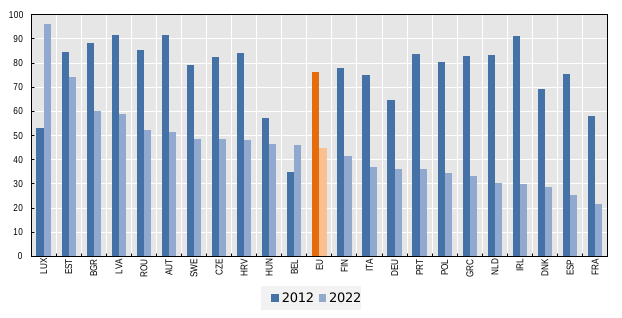
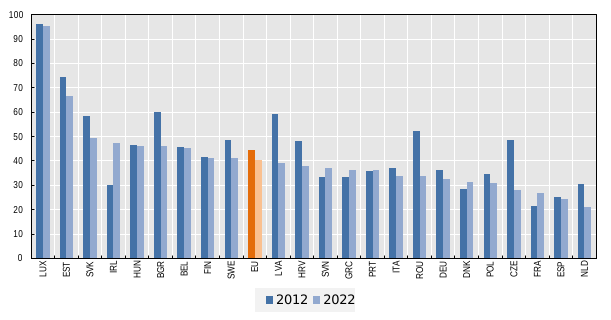
Over the past decade, despite growth in absolute terms, SMEs’ share of import value declined sharply in wholesale (from 76% to 45%) and more moderately in retail (from 45% to 40%), reflecting a shift toward larger importers within an expanding market. Ireland experienced one of the most significant drops in wholesale, while Latvia and the Czech Republic recorded the steepest declines in retail. Despite the overall downward trend, countries like Luxembourg in wholesale, and Ireland and France in retail, were among the few exceptions showing growth. These patterns indicate an increasing concentration of import activity among larger firms, particularly in wholesale, though some markets have seen resilience among SME importers.
Overall, SMEs in both wholesale and retail have deepened their engagement in international trade, with significant increases in absolute export and import values, but their relative share of export and import activity has evolved differently across sectors. While retail SMEs are exporting more, they face intensifying competition from larger firms and dominant online platforms, which capture a growing portion of total export activity. Similarly, SMEs’ share of import value has declined in both sectors, suggesting that larger firms are increasingly dominating procurement and supply chain operations, consolidating their influence over global trade flows.
Wholesale SMEs’ share of import value (%), 2012 and 2022
Note: The “EU” value is an unweighted mean of the displayed countries.
Source: OECD TEC Database
Retail SMEs’ share of import value (%), 2012 and 2022
Note: The “EU” value is an unweighted mean of the displayed countries.
Source: OECD TEC Database
E-commerce has transformed retail over the past decade, driven by changing consumer habits and accelerated by the COVID-19 pandemic (OECD, 2023[38]). The share of EU internet users purchasing online grew from 59% in 2014 to 77% in 2024, significantly expanding the market for digital commerce (Eurostat, 2024[39]). Online sales also account for a larger share of total retail turnover, rising from 10% in 2017 to 19% in 2023 (Eurostat, 2024[40]), with certain product categories recording even higher online penetration rates, such as clothing, shoes, electronics, and books (Statista, 2023[41]).
However, the rise of digital marketplaces has been a double-edged sword for SMEs. While platforms such as Amazon, eBay, Allegro, Zalando, and Vinted enable small retailers to access national and EU-wide markets, they also generate fierce competition. Even before the pandemic, e-commerce played an increasingly important role in consumer markets and policymaking (OECD, 2019[42]). In some countries, such as France, online marketplaces accounted for more than half of online purchases (Statista, 2021[43]). This concentration often reduces the visibility of SMEs and compresses their profit margins, making it more difficult for smaller businesses to compete unless they invest in platform advertising or adopt niche strategies. More recently, some non-EU platforms have allowed the sale of goods that do not comply with EU standards and regulations, which constitutes an unfair competition practice for European SME retailers and breaches the Digital Services Act (European Commission, 2025[44]).
In response to these shifts, hybrid and omnichannel retailing are gradually becoming the norm (OECD, 2023[38]). As consumers expect seamless online and offline experiences, even small retailers are offering home delivery, online ordering, or at least digital product catalogues. Many SMEs have redefined their store roles. Some act as fulfilment hubs, while others leverage mobile apps and loyalty programs to enhance customer engagement.
Beyond e-commerce, broader digital adoption has increased among businesses of all sizes, though large retailers lead the way. Major firms benefit from dedicated IT teams, while many SMEs still struggle with basic digitalisation. However, infrastructure improvements have helped close the gap: virtually all EU businesses now have broadband access, and over 15% benefit from high-speed connections (1 Gb/s or more) (Eurostat, 2024[40]). Expanding 4G/5G coverage, rural broadband initiatives, and secure online payments have boosted digital transactions. Meanwhile, logistics improvements, including parcel delivery networks, pickup lockers, and faster courier services, have enabled quicker and more reliable order fulfilment, even for SMEs.
Digitalisation is also reshaping productivity and supply chain processes. Large retailers increasingly use Electronic Data Interchange (EDI) systems to automate reordering, with EDI-driven sales accounting for 12% of total EU enterprise turnover in 2023 (Eurostat, 2024[40]). While SMEs lag behind in such advanced systems, more businesses are adopting cloud computing and CRM tools, which enable them to streamline operations and expand customer reach without proportional cost increases. Likewise, while adoption is still in its early stages, AI-driven solutions are beginning to play a greater role in retail and wholesale and have the potential to further enhance SME competitiveness. By 2024, about 13.5% of EU enterprises used already some form of AI (Eurostat, 2025[45]). According to the EMI Enterprise Survey 2024, the adoption of advanced digital technologies increased productivity by 16.5% on average in retail companies, as proxied by the output per hour worked (European Commission, 2025[46]) .
SMEs in the wholesale and retail sectors are increasingly adopting digital tools, including e-commerce, websites, social media, cloud computing, customer relationship management (CRM), and artificial intelligence (AI). This analysis is based on the OECD ICT Access and Usage by Businesses database, which surveys enterprises with 10 or more employees and provides insights into digitalisation trends across OECD and EU countries.
Wholesale businesses have traditionally led in adopting digital tools, but retailers’ growing emphasis on omnichannel models has narrowed this gap over recent years.
Across the EU, the share of enterprises receiving online orders has steadily increased since 2013, from 31% to 43% in wholesale and from 23% to 43% in retail, reflecting the growing role of e-commerce.
Across the EU, 85% of wholesale businesses and 67% of retail businesses had an operating website in 2023. Ownership is near-universal in some countries, reflecting the widespread recognition that an online presence is essential for visibility and customer engagement.
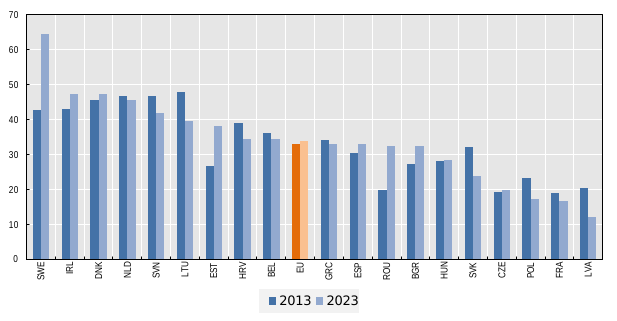
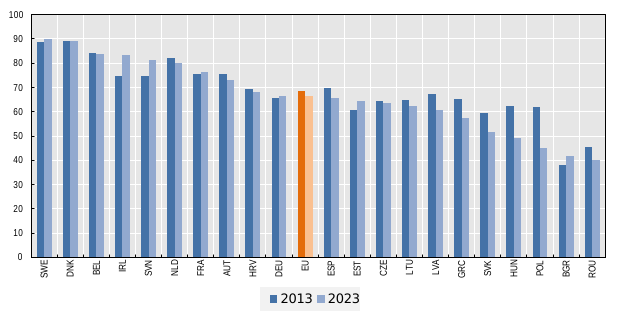
Social media adoption in wholesale has remained relatively stable, with an EU average of 33% in 2013, rising only slightly to 34% in 2023. In contrast, retail SMEs maintain significantly higher adoption rates, though usage has slightly declined over the same period, from 69% to 66%.
Cloud computing adoption has surged across both sectors, rising from 19% to 51% in wholesale and from 14% to 39% in retail between 2014 and 2023.
From 2014 to 2023, CRM adoption has shown contrasting trends across sectors, with wholesale experiencing a slight decline (from 39% to 37%) and retail seeing a modest increase (23% to 24%).
Between 2020 and 2024, AI adoption has accelerated in both sectors, rising from 6% to 15% in wholesale, and from 7% to 12% in retail. The increase has been more pronounced in Northern and Western Europe.
The employment of ICT specialists has seen only a modest increase over the past decade, rising from 25% to 26% in wholesale and from 15% to 16% in retail.
Digital adoption offers SMEs opportunities to expand their reach and compete more effectively, but resource constraints, skill shortages, and uncertainty about its relevance often slow their transformation. Sustaining and accelerating an upward trajectory will require investments in technology and ensuring businesses have access to a skilled workforce.
E-commerce adoption
The first indicators presented are related to the extent to which businesses sell goods and services online. Two different indicators are used to assess the degree to which wholesale and retail businesses have adopted e-commerce:
Businesses receiving orders over computer networks: Businesses receiving orders (i.e. making sales) over computer networks by methods specifically designed for the purpose (includes web pages, extranet or EDI – Electronic Data Interchange), within the last 12 months.
Businesses with websites allowing for online ordering: Businesses with a website allowing for online ordering or reservation or booking (e.g. shopping cart).
Although these two measures may overlap, they capture slightly different aspects of e-commerce. Some firms may operate an online shop on their website yet report minimal digital orders; others can conduct significant online sales exclusively through third-party channels without their own e-commerce site. Taken together, these measures offer a complementary view of the e-commerce landscape, highlighting the diversity of digital sales strategies among businesses.
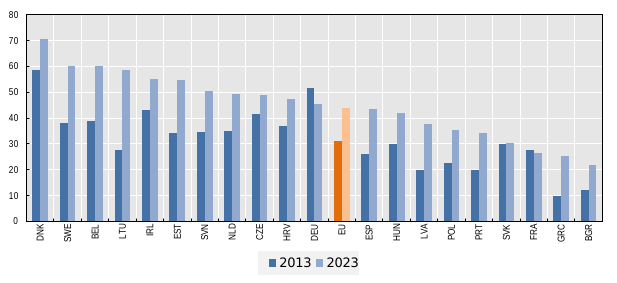
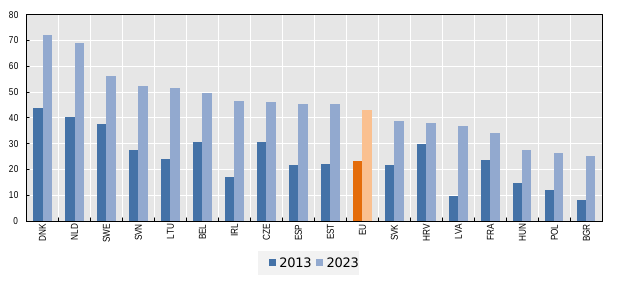
Across the EU, the share of enterprises receiving orders over computer networks has steadily increased since 2013, from 31% to 43% in wholesale, and from 23% to 43% in retail. In countries like Denmark and Sweden, adoption exceeds 60–70% of enterprises, reflecting robust digital infrastructure and widespread use of online sales channels. By contrast, economies such as Greece, Bulgaria, and Romania started from lower bases in single-digit percentages and, despite gradual growth, still lag behind in relative terms.
From a sectoral perspective, retail often outperforms wholesale in e-commerce adoption, likely reflecting the relative ease of (and pressure for) B2C online sales. In some large economies such as France and Germany, wholesale and retail adoption levels are more balanced, suggesting that B2B channels are embracing digital ordering too.
Wholesale businesses receiving orders over computer networks as a percentage of total enterprises (%), 2013 and 2023
Note: Businesses with 10 or more employees. The “EU” value is an unweighted mean of the displayed countries.
Source: OECD ICT Access and Usage by Businesses
Retail businesses receiving orders over computer networks as a percentage of total enterprises (%), 2013 and 2023
Note: Businesses with 10 or more employees. The “EU” value is an unweighted mean of the displayed countries.
Source: OECD ICT Access and Usage by Businesses
Data on businesses with dedicated e-commerce websites generally mirror trends seen in businesses receiving orders over computer networks. Still, this indicator may understate e-commerce reliance in countries where third-party marketplaces play a dominant role.
Between 2013 and 2023, the share of businesses with dedicated e-commerce websites increased significantly across the EU, rising from 31% to 44% in wholesale and from 23% to 43% in retail. In wholesale, Lithuania and Estonia recorded the largest increases, while in retail, Ireland, Denmark, and Lithuania led growth.
Overall, retail exhibited faster adoption than wholesale, reflecting shifting consumer preferences and increasing digitalisation in retail trade. Despite this trend, a few countries (e.g. Czechia, Latvia) show instances in which wholesale businesses equal or surpass retailers in this metric.
Wholesale businesses with websites allowing for online ordering as a percentage of total enterprises (%), 2013 and 2023
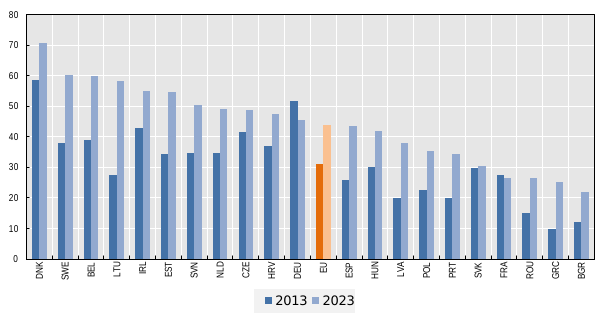
Note: Businesses with 10 or more employees. The “EU” value is an unweighted mean of the displayed countries.
Source: OECD ICT Access and Usage by Businesses
Retail businesses with websites allowing for online ordering as a percentage of total enterprises (%), 2013 and 2023
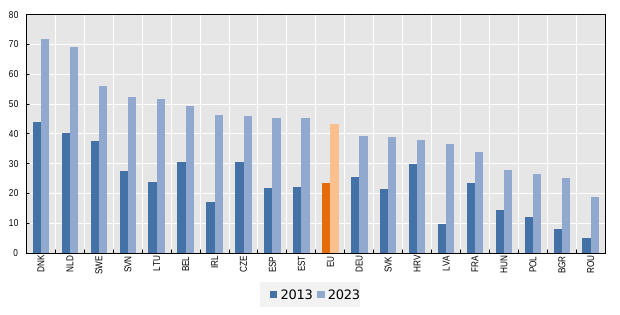
Note: Businesses with 10 or more employees. The “EU” value is an unweighted mean of the displayed countries.
Source: OECD ICT Access and Usage by Businesses
Website ownership
Across the EU, 85% of wholesale businesses and 67% of retail businesses had an operating website in 2023. Maintaining a website or homepage has evolved into a near-standard practice across Europe. Many EU Member States (e.g. Denmark, Sweden, Germany, the Netherlands) report website ownership rates of 80–90% or higher among wholesale enterprises, with retail often following closely. This trend extends from the late 2000s through the early 2020s and underscores that an online presence, whether B2B or B2C, is now viewed as a fundamental element of doing business in these industries.
Despite this widespread ownership of websites in wholesale and retail, cross-country disparities persist. Some economies display large wholesale–retail gaps in website ownership (e.g. Austria, Germany, where wholesale exceeds 90% while retail lags by 10–15 percentage points). Conversely, in markets like Slovenia and Denmark, retail closely matches or even surpasses wholesale rates, reflecting a strong push among consumer-facing businesses to build brand visibility online. Central and Eastern European countries have also made substantial gains in recent years, in some cases moving from moderate adoption to near the frontier.
Wholesale businesses with a website as a percentage of total enterprises (%), 2013 and 2023
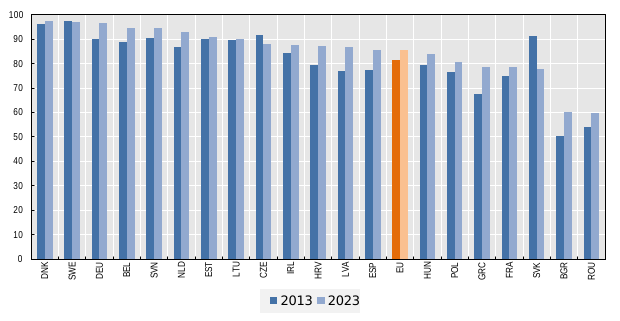
Note: Businesses with 10 or more employees. The “EU” value is an unweighted mean of the displayed countries.
Source: OECD ICT Access and Usage by Businesses
Retail businesses with a website as a percentage of total enterprises (%), 2013 and 2023
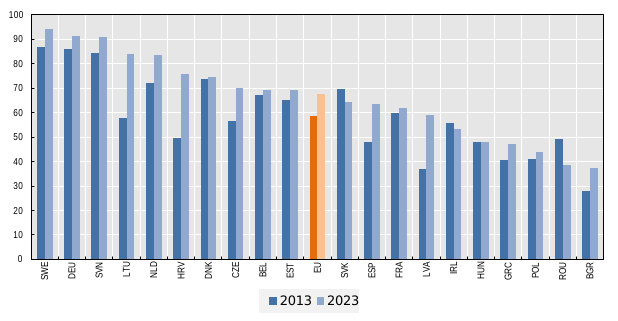
Note: Businesses with 10 or more employees. The “EU” value is an unweighted mean of the displayed countries.
Source: OECD ICT Access and Usage by Businesses
Social media
As social networks and online reviews grow in influence, wholesale and retail businesses have been integrating social media into their marketing and engagement efforts since the early 2010s, with small variations in the last decade. Indeed, use of social media for business purposes has become a relatively standard practice by the 2020s in most EU countries, providing powerful channels for brand building, promotions, and directly interacting with customers.
From a sectoral perspective, retail tends to record higher usage compared to wholesale. Northern and Western European economies (e.g. Denmark, the Netherlands, Sweden, and Finland) often report adoption rates exceeding 80%, and in some cases, even surpassing 90%. However, while the wholesale sector has seen a modest increase in social media adoption across the EU over the decade (+ 1 pp), the retail sector experienced a slight decline (-2 pp).
Although social media usage does not necessarily translate into online sales or operational improvements, it often serves as an entry point to broader digital transformation efforts. While initial usage focuses on marketing in low-cost platforms (e.g. Instagram, WhatsApp) for brand visibility and customer service (live chats, feedback collection), it can create foundational digital capabilities that enable expansion into data analytics for market insights, CRM and cloud-based project management tools, and e-commerce integration.
Wholesale businesses using social media as a percentage of total enterprises (%), 2013 and 2023
Note: Businesses with 10 or more employees. The “EU” value is an unweighted mean of the displayed countries.
Source: OECD ICT Access and Usage by Businesses
Retail businesses using social media as a percentage of total enterprises (%), 2013 and 2023
Note: Businesses with 10 or more employees. The “EU” value is an unweighted mean of the displayed countries.
Source: OECD ICT Access and Usage by Businesses
Cloud Computing
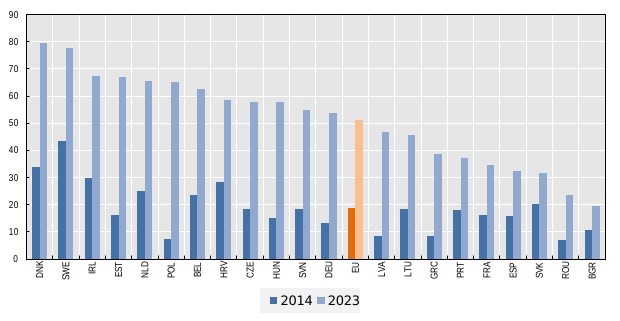
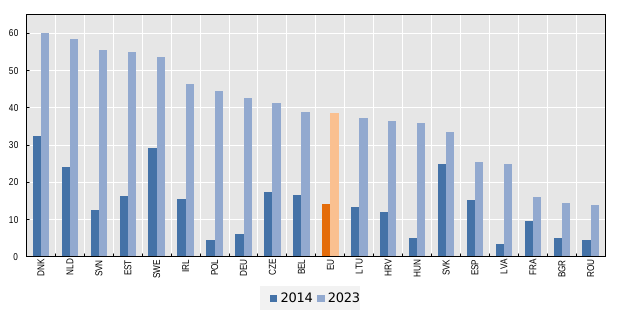
At EU level, the share of businesses using cloud computing services increased significantly over the last decade in both wholesale (19% to 51%) and retail (14% to 39%). Data collected since 2014 indicate that most EU Member States started with single- or low double-digit cloud adoption rates and have since risen substantially, often into the 30–50% range or higher.
Nordic countries like Denmark and Sweden show strong adoption in both sectors. In wholesale, leading countries include Denmark (79%), Sweden (78%) and Ireland (67%). Poland shows the largest increase of 58 percentage points, while Bulgaria has the lowest adoption rate at 8%. In retail, Denmark again leads with 60%, followed by the Netherlands (58%). Slovenia and Estonia show the largest increases of 43 and 39 percentage points, respectively, while Bulgaria has the lowest adoption rate at 15%.
In many markets, wholesale shows stronger uptake than retail, likely driven by the more complex logistics, inventory management, and data analytics requirements in B2B distribution. Denmark, the leader in both sectors, exemplifies this gap. Nonetheless, in a few countries (e.g. Slovenia, the Slovak Republic), retail matches or slightly outpaces wholesale. As cloud computing continues to evolve, further increases in adoption rates are expected.
Wholesale businesses purchasing cloud computing services as a percentage of total enterprises (%), 2014 and 2023
Note: Businesses with 10 or more employees. The “EU” value is an unweighted mean of the displayed countries.
Source: OECD ICT Access and Usage by Businesses
Retail businesses purchasing cloud computing services as a percentage of total enterprises (%), 2014 and 2023
Note: Businesses with 10 or more employees. The “EU” value is an unweighted mean of the displayed countries.
Source: OECD ICT Access and Usage by Businesses
Customer Relationship Management (CRM)
Wholesalers adopt CRM systems at higher rates than retailers, likely reflecting the greater complexity of managing large B2B accounts, partner networks and logistics operations. Over the past decade, however, wholesale usage has declined slightly, while retail SMEs have shown only marginal gains. This pattern suggests limited perceived value, cost or complexity barriers, or a shift in SME priorities toward other digital investments.
In 2014, the average CRM adoption rate among wholesale businesses in the EU was 39%, declining slightly to 37% by 2023, while retail SMEs started with a lower baseline of 23%, rising to only 24% over the same period. In both sectors, CRM adoption varies widely across Europe, reflecting broader regional disparities. In wholesale, the Netherlands and Sweden lead, benefiting from strong B2B market integration and well-developed digital infrastructure. Similarly, in retail, the Netherlands and Slovenia rank highest, followed by Denmark and Lithuania. At the other end of the spectrum, Romania and Bulgaria show the lowest adoption rates in both sectors.
In contrast with the rapid uptake of other digital technologies, CRM use remains largely stagnant. Despite the recognised value of tracking and engaging customers across multiple touchpoints, and the potential of these tools to support hybrid strategies, few retailers have integrated them into their operations. While CRM adoption declined in wholesale, its higher baseline reflects greater reliance on relationship management in B2B transactions than in consumer-facing retail.
Wholesale businesses using CRM software as a percentage of all businesses (%), 2014 and 2023
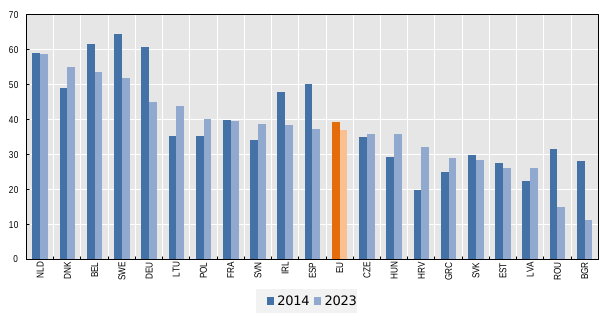
Note: Businesses with 10 or more employees. The “EU” value is an unweighted mean of the displayed countries.
Source: OECD ICT Access and Usage by Businesses
Retail businesses using CRM software as a percentage of all businesses (%), 2014 and 2023
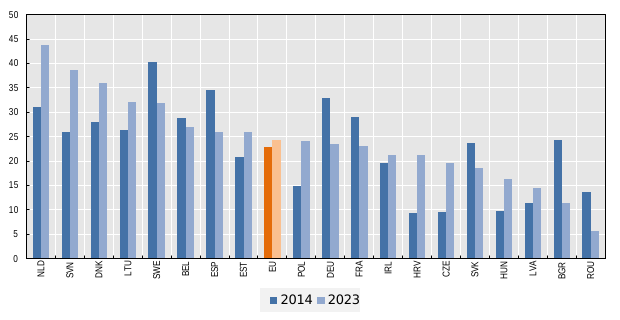
Note: Businesses with 10 or more employees. The “EU” value is an unweighted mean of the displayed countries.
Source: OECD ICT Access and Usage by Businesses
Artificial Intelligence (AI)
In 2024, 13.5% of enterprises in the EU used artificial intelligence (AI), marking a notable increase from previous years (Eurostat, 2025[45]). However, adoption rates vary significantly by enterprise size, sector, and country. Large enterprises lead with an AI adoption rate of 41%, while medium-sized and small businesses report significantly lower figures at 21% and 11%, respectively. At the national level, Denmark, Sweden, and Belgium lead in AI adoption, while Romania, Poland, and Bulgaria lag behind.
AI uptake is highest in technology-intensive industries, particularly information and communication (49%) and professional, scientific, and technical services (31%). Construction and accommodation report the lowest adoption levels, likely due to lower digitalisation rates and limited AI-driven use cases. Across all sectors, businesses primarily use AI for marketing and sales, business administration, and ICT security. The most commonly deployed AI technologies include text mining, natural language generation, and machine learning. In wholesale and retail, AI adoption is primarily driven by marketing and sales applications. The most commonly used AI technologies include workflow automation, decision support systems, and machine learning for data analysis, followed by text mining.
The wholesale and retail sectors have seen steady growth in AI adoption since 2020, when systematic tracking began across EU Member States. AI adoption accelerated sharply in 2024, with rates almost doubling in some markets – largely due to the commercialisation of Generative AI tools, particularly Large Language Models (LLMs), which are now widely accessible.
In wholesale, the average AI adoption rate rose from about 6% in 2020 to 15% in 2024, while retail recorded an increase from roughly 7% to 12% over the same period. AI adoption, however, remains uneven. By 2024, wholesale use exceeded 30% in Denmark and Sweden, while it stayed below 10% in Poland and Hungary. In retail, more than 30% of Dutch businesses reported using AI, contrasting with the low single-digit levels in Bulgaria and Latvia. Over this four-year period, Denmark and Sweden also recorded the largest growth in wholesale, with increases of more than 24 percentage points. The Netherlands and Slovenia led retail growth with gains over more than 20 percentage points.
Wholesale businesses using AI as a percentage of total businesses (%), 2020 and 2024
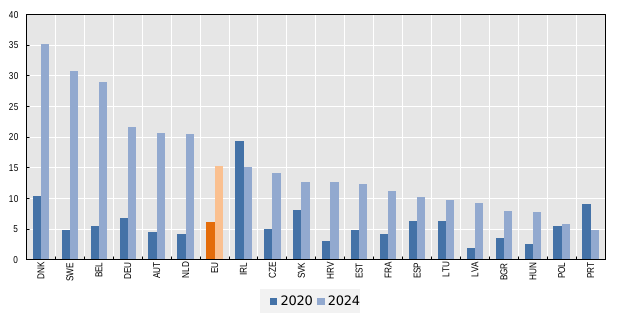
Note: Businesses with 10 or more employees. The “EU” value is an unweighted mean of the displayed countries.
Source: OECD ICT Access and Usage by Businesses
Retail businesses using AI as a percentage of total businesses (%), 2020 and 2024
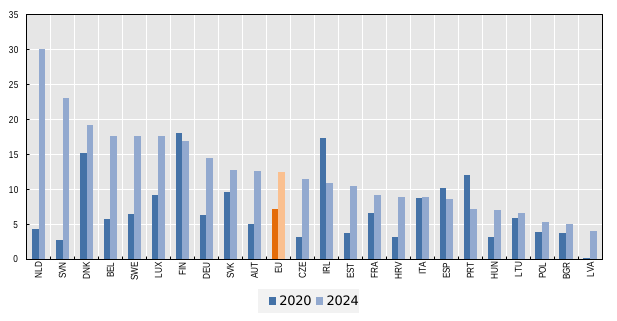
Note: Businesses with 10 or more employees. The “EU” value is an unweighted mean of the displayed countries.
Source: OECD ICT Access and Usage by Businesses
ICT specialists
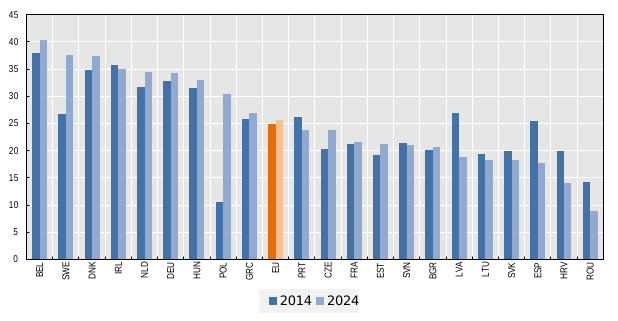
From 2014 to 2024, there was only a slight increase in the percentage of businesses reporting employing ICT specialists over the last three months, with the average figures hovering around 25% in wholesale and 15% in retail. In wholesale, notable increases are observed in countries like Poland and Sweden, indicating a strong push towards the digital transformation of the sector. However, some countries like Spain and Croatia show a decline, suggesting potential challenges in adopting ICT or shifts in business strategies.
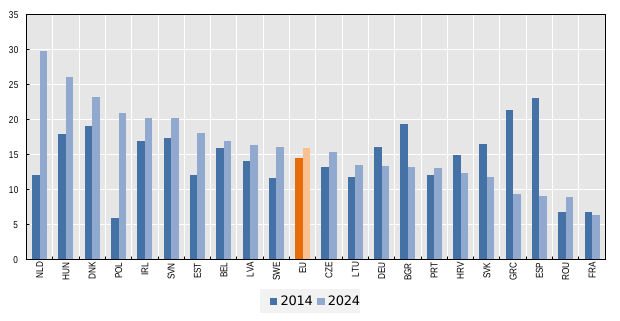
The retail sector also shows mixed trends over this period, with some countries experiencing significant growth in this indicator while others see declines. The Netherlands, Hungary, and Poland show substantial increases, while Denmark and Ireland consolidated their progress on top of a high baseline level. In contrast, significant declines are observed in countries like Bulgaria, the Slovak Republic, Greece and Spain, implying the existence of challenges in maintaining ICT specialist employment.
Disparities across countries in ICT employment may reflect differences in organisational capabilities and strategic investments in human capital. Businesses with a higher number of ICT specialists are likely better positioned to innovate and adapt to market changes. Conversely, the decline in ICT specialists in some countries indicates competitive pressures that force firms to prioritise cost-cutting over ICT investment. It may also result from strategic shifts towards outsourcing.
Wholesale businesses which employ ICT Specialists as a percentage of total businesses (%), 2014 and 2024
Note: Businesses with 10 or more employees. The “EU” value is an unweighted mean of the displayed countries.
Source: OECD ICT Access and Usage by Businesses
Retail businesses which employ ICT Specialists as a percentage of total businesses (%), 2014 and 2024
Note: Businesses with 10 or more employees. The “EU” value is an unweighted mean of the displayed countries.
Source: OECD ICT Access and Usage by Businesses
Rate of medium- and high-growth wholesale enterprises (%), 2012 and 2021
Note: The “EU” value is an unweighted mean of the displayed countries.
Source: SDBS Business Demography Indicators
Rate of medium- and high-growth retail enterprises (%), 2012 and 2021
Note: The “EU” value is an unweighted mean of the displayed countries.
Source: SDBS Business Demography Indicators
Sustainability has become central to retail strategy and regulation over the last decade. This analysis uses data from the OECD Air Emissions Accounts and Physical Energy Flow Accounts (PEFA) to monitor the evolution in this area. The Air Emissions Accounts track emissions by the country of economic activity, while PEFA records industry-level energy use, measuring natural inputs, consumption, and residual outputs in terajoules (TJ), broken down by economic activity.
Retailers are major energy users (e.g. lighting and temperature control for stores), but most of their emissions fall into Scope 3, deriving mostly from procurement and use of sold products (McKinsey & Company, 2022[47]). In other words, such emissions continue after the sale takes place; on average, customers return up to 30% of products bought online (European Commission, 2025[46]). However, growing environmental awareness is driving change: recent surveys indicate that around half of European consumers consider health and environmental factors in their shopping choices (McKinsey & Company, 2024[48]), even if there might be issues with the information they are given (OECD, 2025[49]). In response, retailers are setting science-based targets to reduce carbon emissions, expanding their eco-friendly product offerings (such as organic foods, sustainably sourced textiles, and refillable household goods) and increasingly adopting circular economy practices, like take-back schemes.
Regulatory shifts at both the EU and national levels have accelerated retail’s sustainability transition, though often presenting short-term compliance challenges. For instance, the Single-Use Plastics Directive, implemented in 2021, banned plastic cutlery, plates, and straws while requiring reductions in plastic food containers, prompting retailers to adopt alternative materials, including biodegradable, compostable, and reusable options (European Commission, 2025[50]). Similarly, the Waste Framework and Packaging Directives introduced stricter recycling obligations and packaging waste fees, pushing SMEs to reduce packaging or switch to recyclable materials to avoid high fees (European Commission, 2025[51]; European Commission, 2025[52]).
In addition to regulatory requirements, many large retail chains have set ambitious sustainability targets, such as carbon neutrality pledges and zero-deforestation supply chains (McKinsey & Company, 2022[47]). SMEs, though facing greater resource constraints, are also engaging in sustainability initiatives. At the EU level, the Code of Conduct for Responsible Food Business and Marketing Practices has driven commitments from retail associations and SME groups to reduce waste and promote sustainable consumer choices (European Commission, 2025[53]; OECD, 2025[9]). Moreover, sustainability is now understood as both an environmental (Vadakkepatt et al., 2021[54]) and social (Kim et al., 2024[55]) responsibility, with both large chains and independent retailers increasingly emphasising local sourcing and community support.
While regulatory changes and voluntary commitments have pushed retailers toward sustainability, external shocks have also played a role. The energy price spikes of 2021–2022 had a dual effect: the rising costs strained SME operations, but they also reinforced the urgency of improving energy efficiency and investing in renewables (OECD, 2022[56]). In response to rising energy cost, retailers can also respond with basic cost-saving measures such as switching off lights and ventilation systems during nighttime hours, reducing light intensity, staggering ice production, or lowering store temperatures.
Over the past 15 years, CO₂ emissions in the EU have declined in both wholesale (35 to 31 million tonnes) and retail (28 to 18 million tonnes), with retail showing a more consistent downward trend. When considering broader GHG emissions, wholesale emissions dropped from 44 to 37 million tonnes, while retail posted a steeper decline from 42 to 24 million tonnes, highlighting stronger decarbonisation progress in retail.
SMEs’ share of emissions is significant, but measurement gaps hinder accurate assessment across EU economies. Estimation in this report suggests that wholesale SME emissions remain consistently higher than those in retail, with emissions in both sectors peaking around 2017-2019 before stabilising at lower levels.
Retail records more net domestic energy use than wholesale across the EU, likely driven by their reliance on physical stores, lighting, heating, and refrigeration. Wholesale energy use appears to be more variable, responding to economic and technological shifts.
Differentiating between structural improvements and short-term fluctuations in energy use remains challenging, particularly in volatile economic contexts.
Production- and demand-based emissions
Emissions can be measured using two main approaches: production-based and demand-based. Production-based emissions account for all emissions generated within a country’s borders, reflecting its energy mix, industrial processes, and technological efficiency. In contrast, demand-based emissions assign responsibility to the end-user by including emissions embedded in imported goods and excluding those from exports. This distinction is particularly relevant in a globalised economy, where production and consumption often occur in different locations. Countries that import energy-intensive goods may have a much higher demand-based footprint than their production-based emissions, while net exporters may show the opposite trend.
All sectors combined, in the EU-27, both production- and demand-based emissions have declined significantly over time. Production-based emissions fell from about 4.7 billion tonnes in 2006 to roughly 3.5 billion tonnes in 2020, while demand-based emissions dropped from approximately 5.6 to 4.0 billion tonnes over the same period. The consistently higher demand-based figures reflect the fact that these economies are net importers of emission-intensive goods. Despite sustained economic activity and high consumption levels, the data suggest a growing decoupling between economic growth and emissions, driven by improvements in energy efficiency and a shift toward less carbon‐intensive sectors.
The distributive trades sector (G45-G47 combined) account for a higher share of total production- and demand-based emissions in the EU compared to the global average. Production-based emissions from the sector ranged from roughly 1.9% in 2006 to about 2.7% in 2020, while demand-based emissions typically accounted for between 1.6% and 2.5%. Globally, the sector's share is lower, at around 1.1%, a figure that has remained relatively stable over time.
Several factors help explain why the EU retail sector has a higher relative emissions share than the global average, although with country differences. In general, European economies tend to be more service-oriented than many emerging economies, where industrial and energy sectors dominate the emissions profile, leading to smaller shares for the retail sector. However, notable differences are observed within the EU itself: in countries like Denmark and Sweden, retail emissions are also low in absolute terms, likely reflecting factors such as high building energy efficiency and widespread use of low-carbon electricity.
Carbon dioxide (CO₂) and greenhouse gas (GHG) emissions
Between 2008 and 2023, CO₂ emissions in the EU have decreased in both wholesale (35 to 31 million tonnes) and retail (28 to 18 million tonnes), declining by about 11.4% and 35.7% respectively. Retail emissions declined fairly consistently, whereas wholesale emissions rose for part of the period before trending downward.
Considering the broader greenhouse gas (GHG) profile, wholesale emissions fell by about 15.9% (from approximately 44 million tonnes in 2008 to about 37 million tonnes in 2023), and retail emissions declined by about 42.9% (from around 42 million tonnes to roughly 24 million tonnes over the same period).3 These trends suggest that decarbonisation in retail has been stronger, whereas progress in wholesale has proved comparatively more difficult.
Carbon dioxide emissions in the EU27, million tonnes
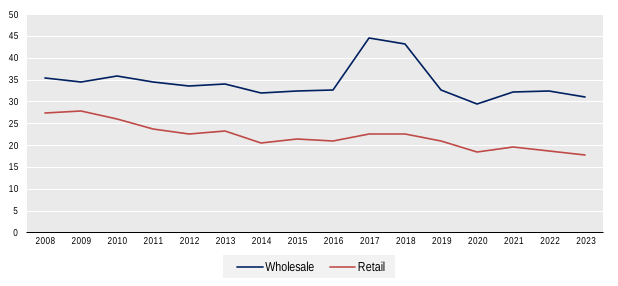
Note: Residence principle.
Source: OECD Air Emissions Accounts
GHG emissions in the EU27, million tonnes
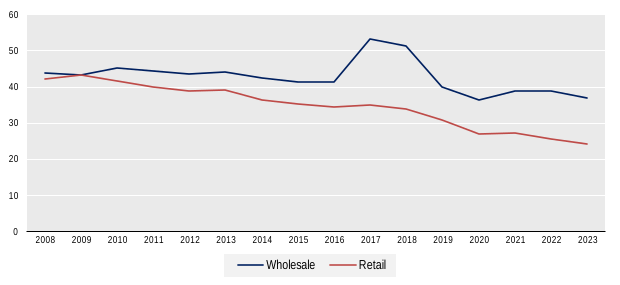
Note: Residence principle.
Source: OECD Air Emissions Accounts
At the national level, the relative changes in CO₂ emissions are consistent with the broader trends observed when analysing both carbon dioxide and overall greenhouse gas emissions. Countries such as Denmark and Sweden have experienced consistent declines in their retail emissions, reflecting robust decarbonisation policies and investments in cleaner energy infrastructure. Major economies like France, Germany, and Italy, despite their high absolute emission levels, also display gradual reductions in both carbon dioxide and broader GHG emissions, indicating steady progress in mitigating the environmental impacts of their retail operations. In contrast, markets such as Lithuania and Ireland exhibit rising wholesale and retail emissions across both datasets.
Percentage change in wholesale’s carbon dioxide emissions (%) between 2013 and 2023
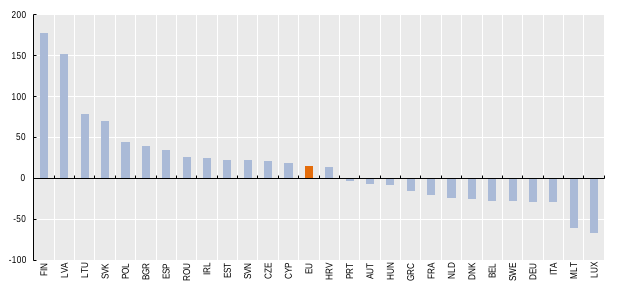
Note: Residence principle. The “EU” value is an unweighted mean of the displayed countries.
Source: OECD Air Emissions Accounts
Percentage change in retail’s carbon dioxide emissions (%) between 2013 and 2023
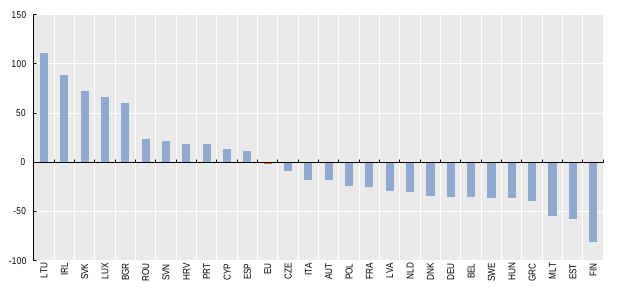
Note: Residence principle. The “EU” value is an unweighted mean of the displayed countries.
Source: OECD Air Emissions Accounts
SME share of carbon dioxide and GHG emissions
As governments work towards their climate objectives, monitoring emissions and energy consumption in the business sector, including SMEs, is essential. Due to their large presence in the economy, SMEs account for a significant share of such emissions, but reliable estimates remain limited. Previous studies suggest that SMEs could contribute around 64% of industrial pollution in Europe (OECD, 2021[57]), yet measurement gaps make it difficult to accurately calculate their environmental footprint in EU economies and elsewhere. Existing evidence originates mostly from case-specific studies or qualitative surveys. For example, Eurobarometer 498 found that 89% of EU SMEs reported having implemented at least one resource-efficiency measure (such as saving energy, minimising waste, or recycling), and 24% had a concrete strategy to reduce their carbon footprint or reach climate neutrality (European Commission, 2022[58]). While informative, such sources remain fragmented and not always comparable across business segments or over time, underscoring the need for more systematic data collection to design and evaluate targeted policies for SMEs’ green transition.
Building on a previous OECD study (OECD, 2023[59]), the analysis draws on Eurostat’s air emissions database combined with output weights (SMEs’ share of value-added and employment) at the two-digit sector level to estimate the share of emissions attributable to SMEs in both wholesale and retail. The analysis focuses on 16 EU countries with reporting data throughout the study period.
Wholesale SME emissions remain higher than those in retail throughout the period, both for SMEs and the sector overall. Likewise, wholesale emissions (both overall and SME-specific) peak sharply around 2017-2019 before dropping. After the drop, SME emissions appear to stabilise at lower levels. The use of employment weights results in higher estimates of the environmental footprint of SMEs, which in part reflects the average lower productivity of SMEs compared to larger companies.
Estimated share of wholesale and retail SMEs’ carbon dioxide emissions (2008-2023), million tonnes
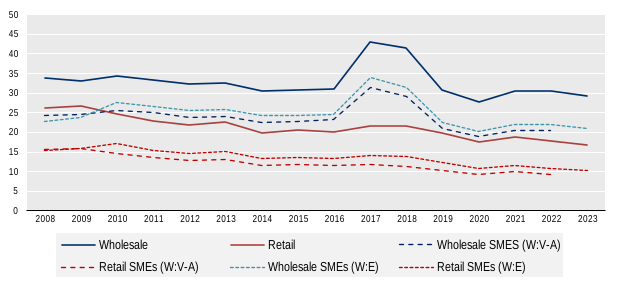
Note: Only 16 countries for which there is consistent data across the whole period of analysis are considered (AUT, BEL, CZE, DNK, FIN, FRA, DEU, HUN, ITA, NLD, POL, PRT, ESP, SWE, BGR, ROU). SMEs’ shares of value-added and employment are used as weights.
Source: OECD Air Emissions Accounts and OECD Structural Business Statistics
Estimated share of wholesale and retail SMEs’ GHG emissions (2008-2023), million tonnes
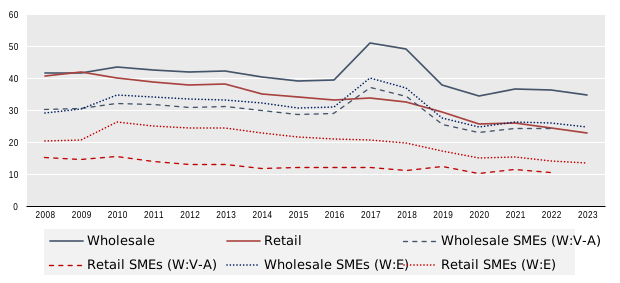
Note: Only sixteen EU countries for which there is consistent reporting data across the whole period of analysis are considered (AUT, BEL, CZE, DNK, FIN, FRA, DEU, HUN, ITA, NLD, POL, PRT, ESP, SWE, BGR, ROU). SMEs’ shares of value-added and employment are used as weights.
Source: OECD Air Emissions Accounts and OECD Structural Business Statistics
Net domestic energy use
Net domestic energy use serves as a key indicator of operational scale and energy efficiency, providing insights into the energy intensity and environmental footprint of various economic activities, including wholesale and retail. Concretely, it measures the amount of energy consumed by economic activities that is no longer available for further use, either because it is lost as dissipative heat or embedded in products. Thus, high energy consumption can signal large-scale commercial activity, but it may also indicate inefficiencies.
Across the EU, retail generally consumes more energy than wholesale, reflecting its higher reliance on physical stores, lighting, heating, and refrigeration. Wholesale energy use, on the other hand, exhibits greater variability, influenced by economic and technological shifts. Indeed, economic downturns and recoveries can significantly impact energy consumption, as seen in the fluctuations around 2020, when the COVID-19 pandemic temporarily reduced commercial activity.
At the country level, Germany, France, and Italy are among the highest energy consumers in both sectors, consistent with the large size of their economies. Belgium and the Netherlands also show high energy consumption, particularly in retail. Poland experienced a sharp increase in wholesale energy use between 2017 and 2018, a trend significant enough to visibly influence the EU aggregate.4
Countries with strong energy efficiency policies, such as Finland, have demonstrated declining trends in retail energy consumption. Large economies like Germany and Italy have also seen a gradual reduction in energy use across both sectors, suggesting the impact of technological improvements, shifts in business practices, and stricter regulations. However, distinguishing between genuine efficiency gains and short-term economic disruptions remains challenging. The sharp decline in energy consumption in 2020, followed by a partial rebound in 2021, underscores the need for policymakers to differentiate between structural improvements and temporary fluctuations driven by external shocks.
Net domestic energy use in the EU27, thousand TeraJoules (TJ)
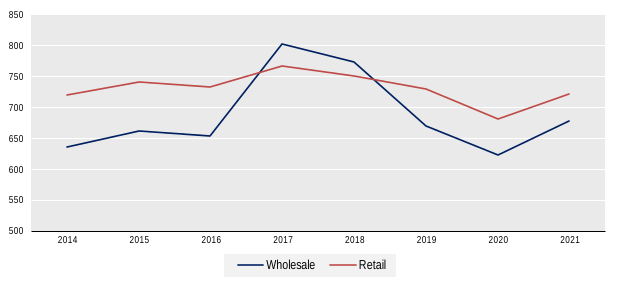
Note: Supply from domestic activities
Source: Physical Energy Flow Accounts (PEFA)
As traditional business models are transformed by the twin transition, the analysis reveals a complex mix of challenges and opportunities that are reshaping the competitive landscape for retailers and wholesalers of all sizes. This chapter provided an overview of the EU’s retail ecosystem with particular attention to the role of SMEs in five different areas: economic performance, business dynamics, international trade, digitalisation, and environmental sustainability.
Findings indicate that although wholesale and retail SMEs remain central to the ecosystem, their relative shares of turnover, value added, and employment have gradually declined over time. Larger, digitally advanced firms are steadily capturing a greater portion of the market, compelling SMEs to adapt and innovate to remain competitive. While e-commerce has lowered traditional market barriers and expanded access to new customers, integration has been uneven. Large companies and major online platforms continue to dominate international transactions, limiting the competitive reach of smaller firms.
Digitalisation has emerged as a cornerstone of contemporary retail, radically reshaping business operations and market structures. The rapid and widespread adoption of digital tools is enabling many firms to modernise their processes and organisational practices. However, despite these advances, many SMEs face resource constraints and skill shortages, which hinder their ability to fully leverage digital innovations. This digital divide may exacerbate existing disparities between large and small market players.
On the environmental front, the retail sector has demonstrated notable progress in reducing emissions through improvements in energy efficiency and a shift towards less carbon-intensive operations. Production-based and demand-based emissions in the EU have declined, suggesting that green policies and business efforts are yielding tangible benefits. However, in the wholesale sector, the expansion of logistics and distribution activities has hindered consistent progress, with some countries recording increases over time. Although the overall emissions of the EU retail sector remain modest in national contexts, they exceed global averages, highlighting the unique challenges posed by retail operations that demand extensive energy for lighting, heating, and refrigeration.
The convergence of digital and green innovations offers a promising pathway to enhanced competitiveness. As the retail landscape continues to evolve, targeted policy measures will be vital in supporting SMEs to overcome resource limitations, bridge the digital divide, and adopt environmentally sustainable practices. Shifts in consumer preferences have an important role, and consumer protection remains of paramount importance as the synergies of the twin transition materialise (OECD, 2025[49]; OECD, 2025[9]). Coordinated policy efforts that simultaneously promote digitalisation and sustainability can strengthen SME resilience, foster innovation, and contribute to an inclusive digital and green transition.
Data, scope and methodology
This section presents a descriptive and exploratory analysis of web technology adoption among 27 000 retail firms in five EU countries: Italy, Estonia, Hungary, Romania, and Spain. Digital technologies, such as websites or e-commerce platforms, are powerful tools to foster firm productivity, innovation, and growth, especially among SMEs (OECD, 2021[60]; Forman and van Zeebroeck, 2019[61]). However, large cross-country differences in firm adoption of digital technologies persist within the EU. The share of SMEs with basic digital intensity ranges between 41% in Greece and 90% in Finland (Eurostat, 2023[62]). While several studies have surveyed digital technology adoption in the whole economy, there are few studies that focus on the retail sector specifically. Addressing this knowledge gap, this section focuses on retail firms and the adoption of five specific digital technologies related to the Internet: (i) an original domain company website, (ii) electronic payment methods, (iii) multilingual webpages, (iv) e-commerce tools, and (v) shipping services. Box 2.6 provides further details on the dataset and methodology.
Data sources and coverage
The analysis in this section combines firm-level variables from the Moody’s/Bureau van Dijk Orbis database with website-level information from BuiltWith. The Orbis data cover over 70% of all retail firms with more than 10 employees in Estonia, Hungary, Italy, Romania, and Spain (around 27 700 firms in Orbis, compared to roughly 38 600 according to OECD Structural Business Statistics). These countries were selected for their high coverage in the 2023 wave of the Orbis dataset, which refers to the year 2021. The dataset comprises non-consolidated company accounts, meaning the observational units are legal entities rather than firms or establishments (Bajgar et al., 2020[63]). For ease of reference, however, we refer to these units as firms.
Among all observed retail firms, 30.3% (97 089 units, including micro-firms) report having a website. To gather information on web technologies, company websites recorded in Orbis were matched with data from BuiltWith, a website profiling service that tracks major web technologies in nearly 100% of active web domains (BuiltWith, 2025[64]). Firms with missing employment data (17.6% of the raw dataset) were excluded from the analysis.
Data cleaning and limitations
Some firm websites do not refer to original domains, but rather to free hosting providers or social media pages. For example, websites created through hosting services such as Google Sites or WordPress are not recorded as separate domains, but instead attributed to the main host address. In these cases, technology adoption is overestimated, as BuiltWith captures the full range of tools available on the host platform, not those actually purchased by the firm. A similar issue arises when firms report a social media page as their website. Here too, BuiltWith identifies the technology of the social media platform rather than that of the firm itself. Overall, such mismeasured observations represent around 1% of the original dataset, including firms with fewer than 10 employees.
Free host providers were identified manually and validated through ChatGPT-4, leading to the exclusion of 0.6% of units in the original data (1.8 % of firms with a website). Social media pages were identified by detecting substrings such as “facebook”, “instagram”, “tiktok” and “pinterest” in the web domain. This step excluded a further 0.4% of units (1.2% of those with a website). The final dataset comprises 27 731 retail firms, of which 16 048 have an original domain website.
Scope of the analysis
From the full range of web technologies that BuiltWith tracks, the analysis in this section focuses on those most relevant to retail: multilingual website options, online shops (e-commerce), electronic payments and shipping technologies. Future research may expand to incorporate marketing and cyber security technologies.
Additionally, the analysis includes limited information on social media activity, but only where company websites link to such accounts. It excludes companies that have social media accounts without a website, or where such accounts are not linked from the website. It also excludes firms that sell only via online marketplaces without maintaining their own website (e.g. through Amazon, eBay or national marketplaces such as Subito in Italy).
A novel feature of this analysis is the approximate identification of firms affiliated with a retail group, based on website information in the Orbis data. The approach may capture a variety of business models, including franchise systems, cooperative groups and other forms of loose retail affiliation. As such, the report refers to these collectively as group-affiliated retailers. A firm is considered group-affiliated if it shares its website with (i) at least three other firms and together they employ at least 250 people, or (ii) at least nine other firms and together they employ at least 70 people. While this method only identifies those with a website and cannot distinguish between ownership models or governance structures, it offers an indicative view of retailers operating under a shared commercial identity. In the analysis sample, group-affiliated retailers account for 2.4% of units and 6.1% of total employment.
Results and discussion
Almost 60% of retail firms with at least 10 employees in the five countries have a website, but less than one in four uses any other web technology. While 59% of firms have a website, less than half of them offer electronic payment methods on their web page (23%) (Figure 2.44). The share of firms with a multilingual website and the share with an e-commerce technology are both between 12% and 13%, and less than 2% integrate common shipping and tracking technologies.
The general picture of web technology adoption masks large cross-country differences, especially for additional web technologies. For instance, in Estonia, over 70% of retail enterprises maintain a website. This is followed by Italy and Spain, where more than 60% of retail firms have an online presence. In contrast, fewer than 55% of retail businesses in Hungary have a website, while in Romania the figure stands at approximately 30%.5
Share of all observed retail firms by technology, 2025.
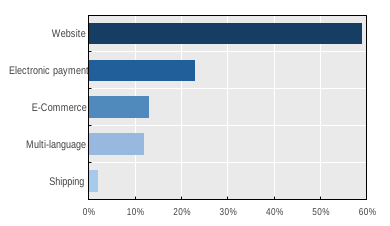
Note: Retail firms with more than 10 employees in Italy, Spain, Hungary, Estonia and Romania; N=27 731.
Source: Based on Orbis and BuiltWith data.
The adoption rate of electronic payment is around six times higher in Estonia (49%) than in Romania and Hungary (8% and 9%, respectively) (Figure 2.45). Estonia leads by a large margin in all digital technologies except shipping, followed by Spain and Italy. Many fewer retail firms in Romania and Hungary have adopted digital technologies. Cross-country differences are larger for electronic payment and multilingual websites than for e-commerce and shipping. In particular, adoption rates of shipping technologies are low for all countries in the sample. Website usage shows high rates above 50% in all countries, except Romania. Overall, the country breakdown confirms that additional web technologies complementing company websites are not frequent, except for Estonia.
Share of all observed retail firms by technology in five EU countries, 2025.
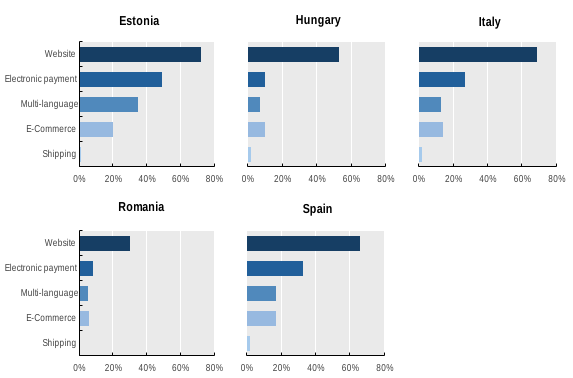
Note: Retail firms with more than 10 employees in Italy, Spain, Hungary, Estonia and Romania; N=27 731. The dataset excludes the two Spanish insular regions (Balearic Islands and Canary Islands).
Source: Based on Orbis and BuiltWith data.
Website adoption increases with firm size, and the largest cross-country differences are among the small firms. Almost all large firms with at least 250 employees have an own website, with shares above 80% in all countries (Figure 2.46). On the contrary, medium-sized firms (50-249 employees) range between 54% in Romania and 92% in Estonia. For small firms (10-49 employees), the corresponding statistics are 27 and 57%. Among small firms, a more pronounced gap stands out between Romania and Estonia and the other ones. Italy exhibits the lowest differences between large and small firms in website adoption (23 percentage points).
Web technology usage is also dependent on size, but group-affiliated retailers often exhibit higher adoption rates than the even largest firms in several areas. These businesses lead the adoption rankings for most technologies and countries (Figure 2.47). As group-affiliated retailers benefit from the shared trademarks, platforms or business infrastructure, decisions on web technology adoption are likely made at the group level rather than by the individual firm. Exceptions include e-commerce in Estonia, multi-lingual websites in Hungary and Romania, and shipping in Italy and Spain. This pattern suggests that affiliation with a retail group provides access to shared resources that support the adoption and use of online tools.
Share of observed retail firms with a website in five EU countries, by size, 2025.
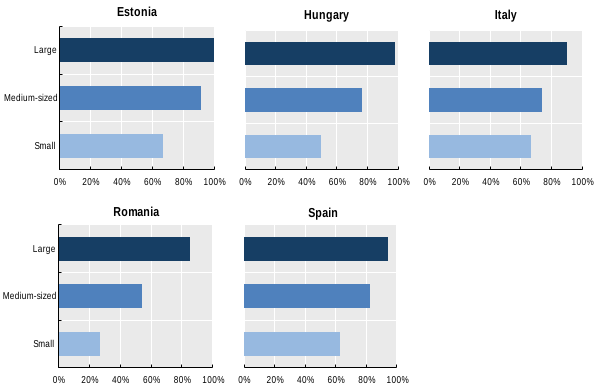
Note: Retail firms with more than 10 employees in Italy, Spain, Hungary, Estonia and Romania; N=27 731. The dataset excludes the two Spanish insular regions (Balearic Islands and Canary Islands). Group-affiliated retailers are omitted from the graph, as they take a value of 100% by construction.
Source: Based on Orbis and BuiltWith data.
Shares of observed retail firms by technology in five EU countries, by size, 2025.

Note: Retail firms with more than 10 employees in Italy, Spain, Hungary, Estonia and Romania; N=27 731. The dataset excludes the two Spanish insular regions (Balearic Islands and Canary Islands).
Source: Based on Orbis and BuiltWith data.
Website and web technology adoption do not vary systematically between metropolitan and remote areas. In Estonia, Hungary, Italy and Spain, the share of firms with a website are similar across regional types. The share of firms with a website in remote regions is even slightly higher than in cities for Italy, Hungary and Estonia (see Figure 2.48). A clear increase in web technology adoption with urbanisation is visible only in Romania for the presence of a website and the web technologies and, for Spain among the web technologies, but not the share of websites. Multiple OECD countries still face persistent urban-rural divides in broadband infrastructure provision, a fact that may hinder the adoption of web technologies in rural regions (OECD, 2018[65]; OECD, 2024[66]). Furthermore, some country case studies have documented rural-urban gaps in web technology adoption (Thonipara et al., 2023[67]; Mazzoni, Pinelli and Riccaboni, 2024[68]). However, this pattern does not hold for all countries in this analysis. Urban-rural differences in adoption rates are statistically and economically significant for nearly all technologies in Spain and Romania, but smaller and statistically significant only in some cases for Italy, Hungary and Estonia.
Shares of observed retail firms with a website in five EU countries, by region type, 2025.
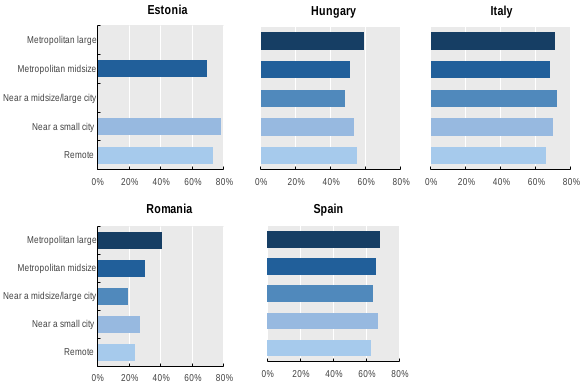
Note: Retail firms with more than 10 employees in Italy, Spain, Hungary, Estonia and Romania; N=27 731. The dataset excludes the two Spanish insular regions (Balearic Islands and Canary Islands). The regional classification follows Fadic et al. (2019[69]). None of the Estonian TL3 regions is classified as “Metropolitan large” or “Near a midsize/large city”.
Source: Based on Orbis and BuiltWith data.
Technologies to facilitate multilingual websites are most frequently found in regions with minority population or otherwise have a recognised local language. Retail firms in regions such as Catalonia and the Basque Country in Spain, and Valle d’Aosta and Alto Adige/Südtirol in Italy stand out as having substantially higher adoption of technologies to facilitate multilingual presentation relative to other regions in their respective countries. Retail websites that include technologies to facilitate multilingual presentation potentially make it easier to service a European wide customer base by allowing a website to be represented in some of the most commonly used languages in the EU. However, multilingual retail websites are often also a reflection of local circumstances, and the need to service a local clientele in multiple languages rather than a tool to service an international customer base.
Shares of observed retail firms by technology in five EU countries, by region type, 2025.
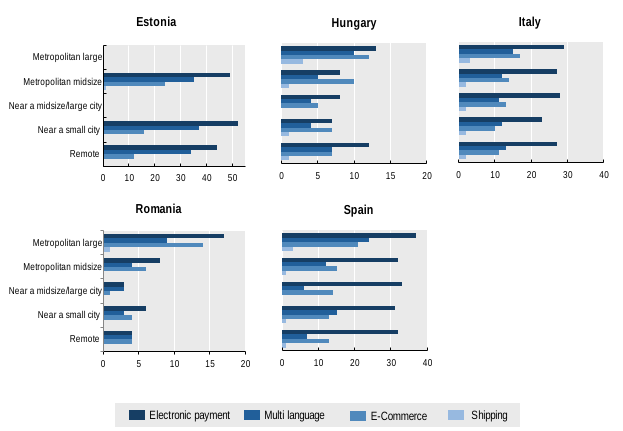
Note: Retail firms with more than 10 employees in Italy, Spain, Hungary, Estonia and Romania; N=27 731. The dataset excludes the two Spanish insular regions (Balearic Islands and Canary Islands). The regional classification follows Fadic et al. (2019[10]). None of the Estonian TL3 regions is classified as “Metropolitan large” or “Near a midsize/large city”.
Source: Based on Orbis and BuiltWith data.
About half of retail firms with a website use social media channels, but usage is higher among larger firms and group-affiliated retailers. In all countries, the majority of firms with 250 or more employees have their own social media profile linked on their website, peaking at 81% in Estonia (see Figure 2.50). Conversely, medium-sized firms range between 27% and 69% across the five countries, while among small firms, the range interval is 10% to 38%. Once again, group-affiliated firms lead in technology adoption, with values consistently exceeding those of the largest independent firms.
Firms with a website show 20 to 40% higher labour productivity than other firms, and additional web technologies are associated with further productivity differences. The largest correlation is observed in Hungary, and the smallest in Italy (see Figure 2.51). The adoption of other web technologies is associated with an additional productivity advantage ranging from 2% in Spain (statistically insignificant) to 24% in Estonia. To rule out the influence of other productivity determinants, all estimates control for firm characteristics such as firm age and size class, as well as unobserved heterogeneity at the small region (TL3) level. These results are correlations and do not suggest a causal link between the web technology and productivity. Nevertheless, they highlight a performance difference between web technology adopters and non-adopters.
Shares of observed retail firms with a website and with at least one social media account in five EU countries, by size, 2025.
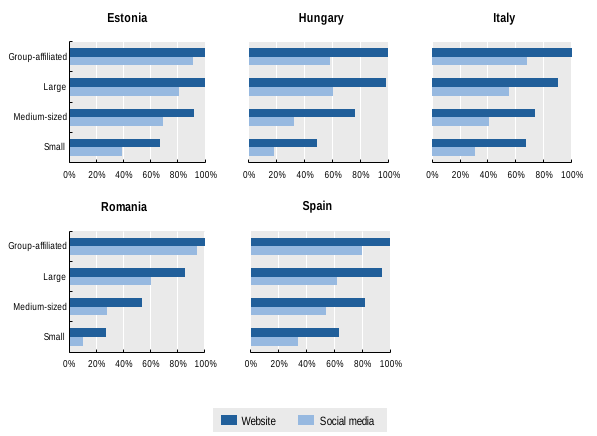
Note: Retail firms with more than 10 employees in Italy, Spain, Hungary, Estonia and Romania; N=27 731. The social media indicator equals 1 if a firm has at least one recorded social media account in the BuiltWith dataset (covered platfoms: Facebook, Instagram, Twitter, LinkedIn, YouTube, Pinterest, Weibo, TikTok, Vimeo). The dataset excludes the two Spanish insular regions (Balearic Islands and Canary Islands). Shares exclude firms with a social media account but no website.
Source: Based on Orbis and BuiltWith data.
OLS estimates of labour productivity differences in retail firms linked to website and web technology adoption
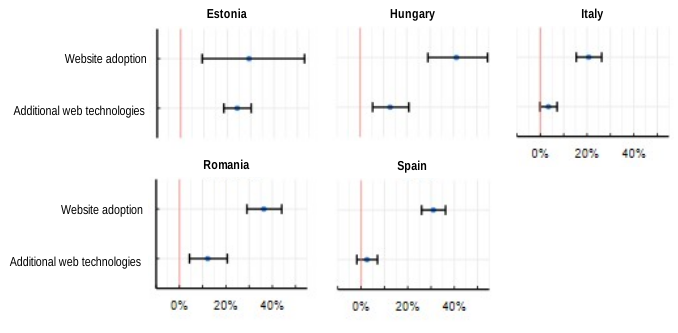
Note: Retail firms with more than 10 employees in Italy, Spain, Hungary, Estonia and Romania; N=27 731. OLS coefficients are from country-level regressions of log labour productivity (value added per worker, in purchasing power parity) on two web technology adoption indicators. ‘Website adoption’ equals 1 if a firm has a registered web page in the BuiltWith dataset, and 0 otherwise. ‘’Additional web technologies” equals 1 if a firm uses at least one of the following: electronic payment, multilingual website, e-commerce or shipping features, and 0 otherwise. The estimated effect of additional web technologies is therefore over and above the effect of having a website. Coefficients and standard errors from the log-linear regressions are expressed as percentage changes. All regressions control for firm size (50-249 and more than 250 employees), group-affiliation, and firm age (five years or older), and TL3 fixed effects. The dataset excludes the two Spanish insular regions (Balearic Islands and Canary Islands).
Source: Based on Orbis and BuiltWith data.
Given the scale and pace of structural and demand-side pressures, and the intensifying requirements of the twin transition, co-ordinated action across levels of government is critical to enable SMEs to adapt and compete. This section reviews EU-wide and national policy instruments that support retail SMEs, focusing on measures targeting digitalisation, sustainability, or an integration of both.
Despite its economic weight and capacity to shape wider socio-economic outcomes, retail SMEs face persistent barriers to transformation, such as constrained finance, skills shortages, and regulatory complexity. Recent shocks, including rising energy costs, inflationary pressures, and weakening consumer demand, have tightened these constraints and dampened investment in digital and green capabilities.
Policy responses unfold across multiple levels of governance. At the EU level, institutions define overarching strategic priorities for the twin transition, set common regulatory frameworks, and mobilise large-scale funding. At the national level, governments adapt these priorities to their domestic contexts, co-finance, and deliver programmes tailored to the structure of their labour markets and business populations. Regional and local authorities also play a role; for instance, through place-based initiatives, cluster development, or municipal support schemes.
To address these challenges, policymakers at both the EU and national levels have introduced targeted measures to support SMEs in adapting to the digital and green transitions. While the EU sets policy priorities, provides funding, and establishes regulations, national governments play a critical role in designing, financing, and delivering tailored programmes that respond to their local needs and domestic conditions.
Most SME support schemes in Europe are designed on a cross-sectoral basis rather than targeted specifically to retail. Retail SMEs must therefore navigate instruments organised by firm size, investment type, or technological domain, rather than tailored to the distinctive needs of its industry. While this has the advantage of broad reach and administrative simplicity, it can also limit effectiveness for sectors such as retail where structural features – thin profit margins, reliance on part-time or temporary labour, and high exposure to consumer demand – pose distinctive challenges.
Against this backdrop, the analysis that follows reviews SME policies that, though not exclusive to retail, are particularly salient to its twin transition. The identification of national policies is guided by their potential to reshape how retail SMEs operate and to align business performance with digital and green objectives.
Overview of the EU policy and regulatory landscape
EU strategic framework
The EU’s strategic framework supporting the twin transition of SMEs combines broad policy initiatives with targeted financial and technical assistance. This integrated approach is designed to align high-level EU priorities with practical, on-the-ground support, fostering synergies between regulatory objectives, funding instruments, and capacity-building initiatives.
The EU has an ambitious agenda, underpinned by clear targets for both the green and digital transition of its economy. To achieve these goals, the EU has set out specific strategies, including the European Green Deal in 2019, the 2030 Digital Compass (‘the European way for the Digital Decade’) in 2021, and the Competitiveness Compass, unveiled in January 2025. At the heart of the European Green Deal is a pledge for Europe's economy and society to become climate-neutral by 2050, with an intermediate target of reducing greenhouse gases to 55% of their 1990 levels by 2030 (European Commission, 2019[70]). Similarly, in pursuing a more prosperous digital future, Europe’s Digital Decade is set to guide its transformation with a mission for 80% of the population to have basic digital skills and more than 90% of SMEs with a basic level of digital intensity by 2030 (European Commission, 2021[71]). The Competitiveness Compass charts the course for EU action from 2025 to 2029, and is designed to tackle long-standing structural constraints and restore Europe’s productivity, innovation, and global leadership, all while advancing the green and digital transitions within the Single Market (European Commission, 2025[72]).
In support of these ambitions, the Commission has placed SMEs at the centre of its transition strategy, recognising their critical role and unique constraints. Through the EU SME Strategy for a sustainable and digital Europe (European Commission, 2020[73]), the Commission is working to create a more business-friendly environment by reducing administrative burdens (via the SME Test and “Think Small First” principle), improving access to finance (through programmes like InvestEU), and enhancing SME readiness through tailored support. Key instruments include the Enterprise Europe Network, which provides dedicated Sustainability Advisors, and the rollout of Digital Innovation Hubs across EU regions to help SMEs adopt advanced technologies such as AI, cybersecurity, and data analytics.
The Single Market Programme (SMP), launched in 2021 for the 2021-2027 period, seeks to improve market access, simplify regulatory compliance, and foster fair competition for SMEs (European Commission, 2025[74]). The SMP operates as a policy and regulatory framework, aiming to reduce bureaucratic obstacles and harmonise rules across EU Member States. For retail SMEs, this can mean fewer legal and administrative hurdles when expanding cross-border, a more predictable regulatory environment, and access to EU-wide opportunities for digital and green innovation.
Complementing this, the SME Relief Package, adopted in 2023, proposes measures to address barriers such as late payments, complex tax systems, and fragmented procurement procedures (European Commission, 2023[75]). It includes a proposed Late Payment Regulation, a tax simplification directive, a reinforced role for the EU SME Envoy, and efforts to promote more standardised public procurement conditions across the EU. While intended to improve payment discipline and liquidity for suppliers, stakeholders have raised concerns about potential impacts on SMEs acting as buyers.
As part of its Industrial Strategy, the EU launched the Transition Pathway for a more resilient, digital, and green retail ecosystem in 2024 (European Commission, 2024[6]). The initiative represents a collaborative roadmap developed with stakeholders (business actors in the retail ecosystem, including large companies and SMEs, EU Member States’ authorities at different levels, trade unions, representatives of consumers, civil society) to outline actions needed for digital and sustainable transformation by 2030. It recognises the importance of SMEs for the retail ecosystem and puts emphasis on the challenges and opportunities they face in adapting their business models to the rapidly evolving consumer preferences and market developments.
Navigating EU and national regulations in retail
Retail businesses, as service providers, operate within the boundaries defined by EU regulations, notably the Services Directive and Treaty provisions that guarantee freedom of establishment and the free provision of services. In addition, depending on their activity or retail segment, they are subject to a range of specific rules, including those related to digitalisation, sustainability, circularity, product design, distribution and consumer protection. These regulations present both opportunities and challenges for retail SMEs.
EU regulatory frameworks aim to ensure a well-functioning Single Market, harmonise rules across Member States, promote a level playing field and support broader objectives such as digitalisation, sustainability and consumer protection. These frameworks can facilitate cross-border trade and help ensure the provision of high-quality, safe products and services to consumers.
Yet the regulatory landscape in the EU remains complex, with numerous rules shaping retail operations. This complexity can place a disproportionate burden on smaller businesses, which often lack the resources and expertise to navigate multiple compliance requirements. As a result, retail SMEs may face higher operational costs and barriers to market entry, potentially limiting competition and innovation.
Differences in national enforcement further complicate regulatory compliance, as SMEs must navigate varying interpretations and implementation practices across EU Member States. Regulations – such as those on zoning, licensing, shop sizes, operating hours, promotional rules, sourcing restrictions and retail-specific taxes – can differ significantly between countries (European Commission, 2018[76]). This regulatory fragmentation increases compliance costs for SMEs and poses challenges for those seeking to expand across borders.
OECD Product Market Regulation (PMR) indicators show that retail remains one of the most heavily regulated sectors in the EU (OECD, 2025[22]). Significant barriers to competition persist across Member States, including establishment restrictions, administrative burdens, limits on shop opening hours and constraints on large-format stores. Successive waves of OECD PMR indicators for retail trade also reveal substantial cross-country variation in regulatory restrictiveness, reflecting a broad range of national regulatory approaches. Based on updated PMR data, the OECD estimates that aligning regulations in retail trade and professional services with those of the three least restrictive OECD countries could raise labour productivity by around 2% on average, with even greater gains in the most heavily regulated economies (OECD, 2025[77]).
Drawing on the OECD PMR methodology, the European Commission developed the Retail Restrictiveness Indicator (RRI), a composite indicator based on scores for both establishment barriers (such as permits, size thresholds and zoning) and operational constraints (including opening hours, distribution channels, product sourcing and retail-specific taxes) (European Commission, 2025[78]). The 2022 update of the RRI confirms that retail remains one of the most restrictively regulated sectors in the EU, with many countries showing little or no improvement since the initial 2018 assessment. The indicator highlights substantial fragmentation, not only between countries but also within them, at regional and local levels. High RRI scores are associated with lower market dynamism, reduced productivity, higher consumer prices and fewer market entrants. However, the RRI does not assess whether restrictions are justified or proportionate; its purpose is solely to identify and quantify them.
In this context, the Commission is advancing a series of targeted reforms to reduce regulatory burdens at both EU and national levels. These efforts aim to promote a more coherent and business-friendly regulatory environment, with particular attention to the needs of SMEs. Key initiatives include the simplification of sustainability reporting requirements and due diligence obligations, where disproportionate compliance costs have been identified as barriers to market entry and innovation. In the digital domain, a new simplification package – comprising a “digital omnibus” to streamline rules on AI, cybersecurity and data, along with a proposed European Business Wallet – is expected to generate substantial cost savings (European Commission, 2025[79]). The Commission has committed to reducing administrative burdens by 25% by 2029, with a more ambitious 35% target for SMEs (European Commission, 2025[80]; OECD, 2024[81]). These reforms are supported by structured peer-learning among Member States to encourage the exchange of good practices and regulatory convergence.
Regulations shaping retail digitalisation and sustainability
The regulatory landscape shaping the retail sector at the EU level has evolved significantly in recent years, with new legislation targeting the twin transition, fair platform practices, and consumer protection. For retail SMEs, these frameworks offer both opportunities and compliance challenges. Some regulations affect core retail operations such as sourcing, product information, and supply chain governance, while others focus on platform governance, data use, and digital market access, which are especially relevant for online sellers.
The Platform-to-Business (P2B) Regulation was the first EU instrument explicitly designed to improve fairness and transparency for business users trading via online platforms (European Parliament and the Council of the European Union, 2019[82]). It introduced obligations on transparency of terms and conditions, disclosure of ranking parameters, and dispute resolution mechanisms. For SMEs relying on e-commerce marketplaces or app stores, these provisions have supported legal clarity and predictability, enabling fairer treatment and reducing exposure to abrupt changes in platform policies or algorithmic visibility. However, recent proposals to streamline the EU digital rulebook, notably through the Digital Omnibus package, would repeal or consolidate parts of this framework into newer platforms regulations (European Commission, 2025[83]).
The Digital Markets Act (DMA) complements the P2B Regulation by targeting a narrow set of large online “gatekeeper” platforms with significant market power (European Parliament and the Council of the European Union, 2022[84]). It prohibits anti-competitive practices such as self-preferencing, bundling, and the misuse of business users’ data. Although SMEs are not subject to the DMA’s obligations, they stand to benefit indirectly through fairer conditions for accessing digital infrastructure. In particular, the DMA promotes interoperability and data portability, making it easier for SMEs to engage with multiple platforms and avoid lock-in effects.
The Digital Services Act (DSA) provides a broader regulatory framework for digital platforms and services, focused on transparency, user protection, and the safe functioning of online marketplaces (European Parliament and the Council of the European Union, 2022[85]). For retailers, especially those operating through third-party platforms, the DSA introduces new obligations for traceability of traders and disclosure of key information to consumers. Importantly, the DSA adopts a proportionate approach to regulatory obligations, with micro and small enterprises subject to lighter requirements than larger players.
Complementing this framework, the Data Act introduces new rules on access to and use of data generated by connected products and related services, and includes protections against unfair contractual terms in certain business-to-business data-sharing arrangements (European Commission, 2025[86]). For retailers, it is particularly relevant in facilitating access to operational and usage data from connected devices and in reducing lock-in by easing the switching of data processing services. The Act also incorporates proportionality features to limit excessive burdens on smaller firms. In parallel, the General Data Protection Regulation (GDPR) shapes how retailers – especially those with online operations – handle personal data (European Commission, 2025[87]). In force since 2018, GDPR remains a core compliance obligation, particularly in relation to customer profiling, email marketing, and data security.
A growing concern for EU retailers is the rising volume of non-compliant products imported from third-country online sellers, particularly via large e-commerce platforms. The European Commission’s recent Communication, A comprehensive EU toolbox for safe and sustainable e-commerce, highlights that imports from outside the EU increasingly pose risks to health and safety, are often environmentally unsustainable, and create unfair competition for compliant EU businesses, including SMEs (European Commission, 2025[88]). In 2024, approximately 4.6 billion low-value consignments entered the EU, with online purchases now accounting for over 97% of all customs declarations. To address these distortions, the Communication proposes a set of short- and medium-term measures, including the swift adoption of customs reforms to remove the EUR 150 duty exemption for low-value parcels, the possible introduction of a non-discriminatory handling fee on e-commerce imports, and a shift towards designating online marketplaces or intermediaries as the “deemed importer” responsible for providing data and collecting duties and VAT.
Looking ahead, the European Commission launched an open public consultation on the forthcoming Digital Fairness Act (DFA), which ran until October 2025 (European Commission, 2025[89]). The initiative aims to address harmful online practices, including manipulative interface design (“dark patterns”), influencer-driven misleading marketing, addictive design features and unfair practices of personalisation, notably where consumer vulnerabilities are exploited. For SMEs, the DFA could bring benefits by clarifying and streamlining the application of EU consumer protection rules in digital markets and by reducing fragmentation across Member States. A legislative proposal is planned for the fourth quarter of 2026.
In the area of sustainability, the Ecodesign for Sustainable Products Regulation (ESPR) marks a major shift in EU product policy (European Commission, 2024[90]). The ESPR introduces horizontal sustainability requirements that apply across product categories, covering durability, reparability, recyclability, and restrictions on the use of harmful substances. A key innovation is the introduction of the Digital Product Passport (DPP), which will store essential environmental and technical information and make it accessible throughout the supply chain. While manufacturers are primarily responsible for creating and filling the DPP, retailers placing products on the market under their own name assume the same obligations. For most retailers and wholesalers, the main implication is the requirement to access and use DPP information in sourcing and compliance processes, and to ensure that this information is properly passed on to customers.
The ESPR is part of a broader legislative package supporting the EU’s circular economy goals, including the Packaging and Packaging Waste Regulation (PPWR) and revisions to the Waste Framework Directive (European Commission, 2025[52]). Adopted in early 2025, the PPWR imposes EU-wide rules on packaging recyclability, minimum recycled content and targets for reusable packaging, aiming for all packaging to be recyclable by 2030. It also introduces new obligations for retailers, including reducing packaging waste, using standardised formats and participating in extended producer responsibility schemes. In parallel, the revised Waste Framework Directive mandates separate collection (for example, textiles and biowaste) and reinforces the waste hierarchy of prevention, reuse, and recycling. These measures encourage business models based on refill, take-back, and repair services in retail.
Retailers are also affected by forthcoming sector-specific sustainability rules, particularly in textiles and transport. The Commission is preparing new regulations on textile labelling, which will require clearer disclosure of material composition, fibre origin, and environmental attributes. Additional measures will address microplastic pollution and transport packaging standards, aligning these with broader circularity objectives. While many of these proposals are still in development, they signal increasing scrutiny of product lifecycles and logistics, particularly in high-impact sectors like fashion, food, and electronics.
Beyond product and packaging legislation, the Corporate Sustainability Reporting Directive (CSRD) and the Corporate Sustainability Due Diligence Directive (CSDDD) extend sustainability obligations to the corporate and supply-chain level (European Commission, 2025[91]; European Commission, 2025[92]). The CSRD, entering into application from 2024 onward, significantly broadens the scope of companies required to publish audited environmental, social, and governance (ESG) reports. While most SMEs are exempt, many will be indirectly affected as larger customers request sustainability data from their suppliers. A Commission simplification package introduced in 2025 proposes delaying obligations for smaller in-scope companies and raising employee thresholds to ease SME reporting burdens. Similarly, the CSDDD, adopted in 2024, requires large companies to identify and mitigate environmental and human rights risks in their operations and supply chains.6
Together, these legislative efforts reflect a comprehensive EU strategy to embed sustainability across the retail ecosystem, from product design and packaging to marketing and supply chain conduct. For large retailers, these frameworks can provide a clearer, more harmonised basis for sustainable operations. While it is different for wholesalers, for SMEs in retail, the picture is more nuanced. While new standards and traceability tools may open access to green markets and build consumer trust, they also impose compliance challenges, particularly in areas like data reporting, product sourcing, and regulatory interpretation.
Funding, infrastructure, and technical assistance for innovation and industrial transformation
Acknowledging the challenges SMEs may encounter in adapting to the digital and green transitions, the European Commission has mobilised substantial funding through 2027 across various programmes. While these initiatives do not exclusively target SMEs, they provide significant financial support for businesses to integrate digital and sustainable innovations and strengthen their competitiveness.
For SMEs engaged in research and innovation, Horizon Europe offers EUR 95.5 billion in funding for the period 2021-2027 (European Commission, 2025[93]). While this programme serves a wide range of beneficiaries, its European Innovation Council provides targeted support for SMEs through grants, equity investments, and tailored advisory services. Meanwhile, the Innovation Fund, funded by the EU Emissions Trading System (ETS), supports the commercialisation of innovative low-carbon technologies, with an estimated budget that could amount to about EUR 40 billion from 2020 to 2030 (European Commission, 2025[94]). SMEs working on energy-efficient logistics, sustainable packaging, waste reduction, and resource-efficient supply chains could benefit from this fund, which helps de-risk green investments and make sustainability financially viable.
The Connecting Europe Facility (CEF) plays a crucial role in supporting the development of high-performing, sustainable, and interconnected trans-European networks in transport, energy, and digital services, helping retail SMEs streamline logistics, reduce costs, and operate more efficiently across EU markets (European Commission, 2025[95]). For instance, a retail SME relying on last-mile delivery might benefit from the deployment of smart mobility solutions (e.g. digital traffic management systems) and upgraded energy and digital infrastructure, like expanded charging stations for electric vehicles and high-speed broadband. These upgrades strengthen competitiveness, lower retailers’ carbon footprints, and are especially valuable when paired with e-commerce, where last-mile delivery generates 40% of total emissions (European Commission, 2025[46]).Data from Green Postal Day 2025 shows that 32% of participating postal fleets are now alternative-fuel vehicles, of which 26% are electric, meaning that the sector met its 2030 electrification target five years early (International Post Corporation (IPC), 2025[96]).
Complementing the financing efforts, the European Commission implemented several initiatives emphasizing technical assistance to support SMEs in their digital and green transitions. Notably, the Circular Economy for SMEs (CESME) project, part of the Interreg Europe programme (2016–2020), aimed to assist SMEs in adopting circular economy principles by facilitating knowledge transfer, mentoring, and developing practical tools (Interreg Europe, 2020[97]). Similarly, the initiative GreenSME aims to help manufacturing SMEs integrate advanced technologies and social innovations for sustainability by providing assessment tools, action plans, and financial support to foster collaboration with sustainability and technology providers.
Public-private partnerships and institutional networks
Public-private partnerships (PPPs) play a pivotal role in mobilising resources, sharing risks, and fostering innovation. In particular, the European Investment Bank (EIB) Group, and the European Investment Fund (EIF) are key actors in this area. In collaboration with the European Commission, they launched the InvestEU SME Window, an integrated guarantee facility aimed at improving access to finance for high-risk SMEs or those lacking sufficient collateral (European Commission, 2025[98]). These instruments are designed to incentivise private sector lending, particularly for projects linked to sustainability and digitalisation.
Beyond direct financing, the EIB and the EIF play a central role in fostering bilateral and multilateral agreements that expand capital access for SMEs. The EIB Group collaborates with over 40 financial institutions – including private banks and national development banks – to provide financing solutions tailored to the green and digital transformation of SMEs. Concrete examples include the EIF Guarantee Agreements to boost SME sustainability in Bulgaria and the Multi-Partnership Guarantee Agreement for Sustainable Investments in Finland. Additionally, in Sweden, the EIF has committed EUR 30 million to a green-financing initiative aimed at helping SMEs reduce their environmental footprint. These partnerships aim to improve access to funding by smaller businesses, as to invest in innovation without facing prohibitive financial risks.
Private sector engagement is a vital component of the broader support ecosystem for SME competitiveness. Business associations, universities, and foundations often complement public efforts by providing sector-specific training, business mentoring, and targeted resources aligned with emerging business needs. For example, the Digital4Sustainability initiative, coordinated by the European DIGITAL SME Alliance, supports SMEs in building digital and sustainability skills to transition towards e-commerce, data-driven operations, and AI-enhanced logistics (Digital4Sustainability, 2025[99]). Similarly, Independent Retail Europe gathers and shares best practices for SME sustainability efforts, offering practical guidance for small retailers aiming to adopt greener business models (Independent Retail Europe, 2025[100]). These initiatives contribute to a more diversified and responsive ecosystem of support.
Large corporations can favour SME growth by integrating smaller businesses into supply chains, offering technological solutions, and providing training and logistical support. For instance, in 2022, Amazon reported investing over EUR 8 billion in logistics, services, tools, and training across Europe to help 125 000 EU-based SMEs expand their digital capabilities and access global markets (Amazon, 2023[101]). Google has aided SME digitalisation through tools like Merchant Centre, Market Finder, and Grow with Google, helping businesses list products online, expand into new markets, and improve digital skills (Google, 2025[102]). In France, Carrefour’s ‘zero kilometre’ commitment fosters local alliances with small producers, offering simplified contracts, faster payment terms, and priority shelf placement to support cash flow and market access for sustainable, locally sourced products (Carrefour Group, 2020[103]). However, while such initiatives offer tangible benefits, they also raise concerns about SME dependency on dominant platforms and competitive imbalances.
Cross-national cooperation programmes
Cross-border cooperation can advance SME digitalisation and sustainability by expanding access to funding, advisory services, and innovation networks. While most of the cross-border and regional cooperation programmes within the EU are not retail-specific, they provide Member States with means for improving the capacities of SMEs at large. Notable cases are regional Interreg programmes, and initiatives led by the EIB and the EIF.
Several cross-national programmes blend financial and technical assistance to advance SME innovation. The EIF-UniCredit Guarantees for the Twin Transition and the EIF-Komerční Banka Guarantee for Sustainability, Innovation, and Inclusive Growth mobilise over EUR 1 billion in favourable financing for environmentally friendly equipment, digital infrastructure, and social entrepreneurship in Central and Eastern Europe. The EIF-Lithuania’s SME Bank Guarantee Agreement directs EUR 37 million in loan guarantees to SMEs investing in sustainability, digitalisation, and innovation.
Green-focused programmes also combine preferential financing with capacity building to help SMEs reduce their environmental impact. The EIB-Deutsche Leasing Green Transformation Agreement supports low-carbon technology adoption in Bulgaria, Germany, and Hungary, while the EBRD Green Initiatives Loan provides EUR 60 million to Bulgaria’s ProCredit Bank for renewable energy and energy efficiency projects in Bulgaria and Greece. Other targeted initiatives, such as the EIB-ING Agreement to Boost SME Sustainability in Belgium and Luxembourg, and the EIB-SG Equipment Finance Guarantee for Climate-Relevant Investments in Czechia and the Slovak Republic, offer dedicated financing for climate-relevant SME investments. Likewise, the Interreg NEXT MED Green Transition Financing programme provides EUR 83.7 million to support decarbonisation, climate-tech innovation, and resilient business models in the Mediterranean region.
Many cross-border cooperation programmes focus on capacity building, skills development, and knowledge exchange, with the aim to help SMEs adopt digital solutions, improve sustainability practices, and integrate innovation into their business models. The SMEs Competitiveness and EmBRACE programmes, operating in Croatia, Bosnia and Herzegovina, and Montenegro, support digital adoption and green pilot actions for SMEs. The Twinnovation initiative between Estonia and Latvia fosters joint innovation pilots and peer learning to accelerate SME digitalisation and sustainability efforts.
Some initiatives focus on enhancing SME digital competencies through training and mentoring. The Building Competencies for Competitive Companies (COM3) and Futures by Design (FBD) programmes, covering Belgium, Denmark, Germany, the Netherlands, Norway, Sweden, and the United Kingdom, provide consulting, knowledge-sharing, and e-learning resources. These programmes aim to help rural businesses and under-resourced SMEs improve digital readiness, adopt data-driven solutions, and foster innovation through customised training and cooperation with public authorities.
Some countries outside the EU provide assistance in selected Member States to foster SME transformation through digitalisation and sustainability initiatives. Norway is a notable case in point in this regard. The Business Development, Innovation and SMEs Programme in Bulgaria and the Green ICT Programme in Estonia, both funded by Innovation Norway, provide training and grants for green business development, sustainable supply chains, and digital marketing. Similarly, Sustainable Business Futures: Green Skills and Digital Capacity for Small Businesses in Greece, funded by International Development Norway AS, supports SMEs in e-commerce, circular economy, renewable energy, and sustainable supply chain management.
Complementary policies in a broader transformative ecosystem
The success of SME-focused interventions depends not only on direct financial and technical support but also on complementary policies and regulations that shape the business environment, labour market conditions, and the physical spaces where retail activity occurs. Urban policy, competition and consumer protection policy, and horizontal, cross-sectoral policies all play a crucial role in determining whether retail SMEs can thrive in an evolving economic landscape. Aligning these broader policy dimensions is essential to fostering SMEs’ long-term resilience and competitiveness.
Urban revitalisation is a key component of this ecosystem-based approach (see Chapter 4). The vibrancy of retail environments is also determined by the quality of urban infrastructure, accessibility, and commercial space availability. Well-designed policies that enhance foot traffic, public transport, green spaces, and mixed-use urban planning contribute to thriving retail districts, benefiting both businesses and consumers. Effective revitalisation requires multi-level coordination, ensuring that local, regional, and national policies are mutually reinforcing. A relevant initiative in this area is the “European Capitals of Small Retail”, passed in 2023 by the European Parliament and under implementation by the European Commission, which encourages local governments to adopt best practices in urban retail development through recognition and peer learning (European Commission, 2024[104]).
Competition and consumer protection are pillars of a well-functioning retail ecosystem. One key area of concern is Territorial Supply Constraints (TSCs), practices by large manufacturers that limit cross-border wholesale supplies, often by segmenting national markets or restricting access to certain products or pricing (European Commission, 2020[105]). While these constraints primarily affect larger retail chains, they can also impact SMEs, particularly when they operate in cross-border regions or depend on upstream distribution networks dominated by exclusive agreements. Recognising the market distortion caused by TSCs, the European Commission’s new Single Market Strategy, adopted in May 2025, identifies TSCs as one of the “ten most harmful barriers” to the functioning of the Single Market and announced targeted enforcement and regulatory action to address them (European Commission, 2025[36]).
On the consumer side, initiatives such as the New Deal for Consumers (European Commission, 2018[106]) and the Consumer Protection Cooperation (CPC) Regulation (European Commission, 2024[107]) aim to build trust in online retail and improve enforcement against unfair commercial practices. These frameworks are particularly relevant for SMEs operating in digital markets, where maintaining credibility and legal certainty is crucial. Their ability to level the playing field will depend on robust and coordinated enforcement across Member States, ensuring that consumer protection rules are applied consistently and transparently regardless of company size or location.
Pro-competitive regulatory reforms at the national level can also play a role in improving business conditions for retail SMEs. In Italy, the liberalisation of retail opening hours in the 2010s gave SMEs greater flexibility to open on Sundays and evenings, expanding consumer access to local businesses (Belhocine and Garcia-Macia, 2020[108]; Rizzica, Roma and Rovigatti, 2020[109]). In France, the “silence is consent” principle was introduced for certain administrative procedures, meaning that if public authorities do not respond within a legal deadline, approval is granted by default. This reduces uncertainty and delays for business registration, store renovation, and service permits. In Portugal, the simplified urban licensing system established one-stop shop portals, allowing entrepreneurs to complete regulatory procedures online, thereby reducing administrative burdens and accelerating business creation.
Improving framework conditions, such as insolvency regimes and payment practices, and complementing them with broader innovation instruments can also facilitate SMEs’ twin transition. For instance, in Belgium, its SME Policy seeks to ease access to finance by harmonising insolvency legislation and introducing revisions to its Late Payment Directive. Malta’s SME Fund (EUIPO) reimburses up to 75% of cost for trademarks and patent filing. Luxembourg’s Aide à l’innovation en faveur des PME also supports patenting and provides advisory and innovation services. Latvia’s Innovation Voucher Support Instrument structures its support by financing R&D collaborations with research organisations.
Energy policy is another key area of complementary action, as achieving sustainability goals requires both financial incentives and robust regulatory frameworks. The EU Energy Efficiency Directive (EED) and Renewable Energy Directive (RED) establish binding targets that encourage energy savings and renewable adoption, while national-level initiatives provide subsidized energy audits, incentives for energy-efficient equipment, and financing for self-generation solutions (e.g., solar panels). The revised EED sets a binding 11.7% energy reduction target by 2030 (European Commission, 2023[110]), while the RED raises the EU's renewable energy target to a minimum of 42.5% for the same year (European Commission, 2023[111]). By linking regulatory measures with funding programmes, SMEs in the retail sector can enhance energy security and cost efficiency, making sustainability a more economically viable transition.
Finally, strengthening retail SMEs also requires investment in connected industries. Small retailers are deeply intertwined with logistics, tourism, manufacturing, hospitality, creative sectors, and agri-food industries. Growth and innovation in one sector can unlock opportunities in others, making cross-sectoral synergies a crucial policy consideration. Targeted industrial policies, improved logistics infrastructure, and sustainable supply chain investments can enhance SME competitiveness and resilience by reducing operational costs, increasing efficiency, and expanding market opportunities.
Targeted EU funding mechanisms
EU funding programmes for the 2021-2027 cycle are organised around six pillars designed to advance regional development, innovation and social cohesion in the EU, but also contribute to its relationship with the international community on key issues like migration, security, and international cooperation. Three of the pillars (Single Market, Innovation, and Digital; Cohesion and Values; and Natural Resources & Environment) underpin the EU’s commitment to driving the green and digital transitions offering a comprehensive framework that includes financial and technical assistance for SMEs.
National Recovery and Resilience Plans (NRRPs)
In partnership with the European Commission, all EU Member States have adopted a National Recovery and Resilience Plan (NRRP) with earmarked contributions to support climate objectives (37% of the budget) and digitalisation (20%). Support for SMEs is a key feature across these plans designed to stimulate post-pandemic economic recovery and accelerate the twin green and digital transitions.
National recovery and resilience initiatives, such as France Relance, or Italy’s Transition 4.0, are comprehensive policy frameworks. Their primary focus extends beyond SMEs and the retail sector. These programmes aim to foster economic resilience, environmental sustainability, and technological advancement across entire economies, with retail SMEs benefiting directly or indirectly through broader measures like digital infrastructure investments, energy efficiency incentives, and workforce upskilling. For example, Latvia’s and Romania’s post-Covid National Recovery and Resilience Plans encompass SME-specific clauses, allocating ~ EUR 597 million and ~ EUR 125 million, respectively. More targeted SME initiatives often operate within or alongside these frameworks.
Remarkably, a considerable share of the initiatives mapped in this analysis have been financed over the NRRP. Under the EU’s long-term budget coupled with NextGenerationEU, the largest stimulus package in Europe’s history, over EUR 2 trillion have been made available to finance policies to boost Europe’s economic recovery, including a series of programmes in support of the twin transition of SMEs. Despite the higher percentage of resources earmarked for climate objectives under NRRPs, most programmes supporting the twin transition of retail SMEs prioritise digitalisation. Many countries have developed comprehensive initiatives to facilitate this transformation, offering consulting services, financial aid, and direct grants to enhance SMEs' digital capacity.
European countries have pursued a range of approaches to accelerate SME digitalisation, combining financial investment with targeted support programmes. These funds enable SMEs to introduce new digital technology systems, set up e-commerce platforms, strengthen cybersecurity, and cover installation and training costs, ultimately improving efficiency, productivity, and competitiveness. For example, Estonia anticipated that EUR 58 million would be invested to provide financial support for the digitalisation of 230 SMEs by 2026, and Belgium announced EUR 80 million in cyber resilience and security for SMEs. Austria’s KMU.DIGITAL, Denmark’s SMV:Grøn, and Portugal’s Coaching 4.0 (Supporting Business Models for Digital Transition) provide tailored support for SMEs, helping them improve IT security, develop digital business strategies, and enhance customer experiences through digital platforms. Similarly, Latvia’s Support for Digitalisation of Processes in Commercial Activities, Malta’s Digitalise Your Business and Digitalise Your Micro Business schemes, and Ireland’s Digital Process Innovation offer grants ranging from EUR 9 999 to EUR 120 000, depending on the country and company size. The Grants for Digitalisation scheme (EUR 30 million), managed by the Croatian Agency for SMEs, Innovations and Investments (HAMAG-BICRO), offers EUR 20 000 to EUR 100 000 per SME to boost their capacity to invest in and acquire digital technologies. Complementing this, the Croatian Vouchers for Digitalisation scheme (EUR 11 million) provides up to EUR 10 000 per SME for digital marketing support, employee training in digital skills, and the development of digital transformation and cybersecurity strategies – critical areas for retail SMEs looking to adapt and thrive in an increasingly digital economy.
A series of programmes have also made loans and grants available in support of the twin transition of retail SMEs, integrating both digitalisation and sustainability objectives. The HBOR Direct Loans for Special SME Segments in Croatia offers loans up to EUR 500,000 to support SMEs adapt business models based on the circular economy, transition to renewable energy sources, and invest in energy efficiency, along with investments in digital infrastructure, including digital marketing and procurement, automation and digitalisation of sales representatives. The Sustainable Growth Programme in Finland (Suomen Kestävän Kasvun Ohjelma, SSKO) supports the transformation of businesses through grants to support the introduction of similar digital and sustainable solutions, but also to finance the skills needed to boost such solutions.
A small number of initiatives, primarily of financial nature, have prioritised sustainable investments by SMEs. Denmark announced the allocation of EUR 235 million for energy efficiency measures in public buildings and SMEs, while Czechia announced that EUR 907 million would be invested in installation of renewable energy sources for households and businesses. The Circular Economy Grant Scheme in Poland and the Climate Action Voucher in Ireland provide grants to SMEs to implement actions that will address circular gaps in their businesses. The Grant Scheme in Poland can finance up to 85% of project costs related to investments in environmental technologies that help improve raw material management, increase energy efficiency, and reduce waste generation and greenhouse gas emissions. The Voucher in Ireland focuses more on early planning and the financing is designed to facilitate advisory support for the development of an action plan on sustainability, decarbonisation, and circular economy, with an expectation that it will lead to further training, technical feasibility, innovation, and capital projects.
Beyond direct financial support, some recovery funds have also been allocated to revitalising commercial districts and urban centres, recognising that the twin transition extends beyond individual businesses to the environments in which they operate. For example, the Sustainable Markets programme in Spain offered financial assistance to support markets, commercial urban areas, non-sedentary commerce, and short distribution channels to foster the adoption of technology and sustainable practices within the commercial sector. Another goal of the programme is to enhance the shopping experience, both online and in physical stores, by creating more attractive, accessible and engaging commercial environments.
While the NRRPs (2021–2026) have mobilised unprecedented resources for SMEs –supporting digitalisation, sustainability, and post-COVID recovery – their impending expiration raises questions about long-term continuity, particularly for sectors like retail. From e-commerce integration to waste reduction systems, recovery funds have enabled many retail SMEs to modernise. But without sustained investment and targeted action, there is a risk that recent progress will stall. To ensure that SMEs remain competitive in an increasingly digital and green economy, 2026 should only mark a transition – not a conclusion – in policy focus.
Cohesion Policy
For the 2021–2027 cycle, nearly one-third of the EU budget has been allocated to Cohesion Policy, with the aim of reinforcing European solidarity and reducing economic, social, and territorial disparities. As part of this framework, all Member States adopted Partnership Agreements with the European Commission, outlining their investment priorities for EU funds under shared management. A key component of these agreements is earmarked funding for the digital and green transition, supporting national efforts to enhance SME competitiveness and sustainability.
SME financing under Cohesion Policy is primarily facilitated through the European Regional Development Fund (ERDF), the European Social Fund+ (ESF+), and REACT-EU. Although many Partnership Agreements cite SME digitalisation and sustainability among their priorities, the level of specificity varies significantly across countries and regions. On its end, the ERDF allocated EUR 2.4 billion to the retail industrial ecosystem from 2014-2020 (European Commission, 2025[46]). Nonetheless, some agreements articulate these goals in rather broad terms, making it difficult to anticipate the scale or precise direction of future investments. This variation underscores the importance of robust implementation monitoring and further evaluation to ensure that Cohesion funds effectively support SMEs in the twin green and digital transitions.
Some Partnership Agreements go beyond broad financial commitments, embedding specific SME-focused programmes directly into their agreements. Estonia, for example, incorporated detailed initiatives into its EUR 781 million circular economy pledge, including the EUR 2 million Circular Production and Consumption Models initiative and EUR 500 000 for Resource Audits of Companies, which provide SMEs with grants to assess resource efficiency and access green financing mechanisms. In a similar way, Slovenia implemented the Incentives for the digital transformation of SMEs (P4D 2025), which provides grant-based support covering up to 50% of eligible digitalisation investments for SMEs across the country.
Digitalisation is primarily linked to economic competitiveness, with many Partnership Agreements setting SME-specific targets. For example, Cyprus and the Slovak Republic allocated EUR 147 million and EUR 1.9 billion to SME digitalisation, respectively. In line with these commitments, several cohesion-funded programmes aim to close the digitalisation gap among SMEs. Initiatives such as Vouchers for Digitalisation in Slovenia and Greece’s Digital Transformation of SMEs Action Package provide tiered financing for businesses at different stages of digital adoption. Others, like Grow as a Business in Estonia and Modern Enterprises Programme in Hungary, focus on tailored mentorship, professional networking, and action plans, helping SMEs assess digital readiness and address knowledge gaps.
While Cohesion Policy has extensively financed green initiatives at the national level, few programmes have directly targeted SMEs. Instead, green transition funding tends to be broader, prioritising energy independence, renewable energy adoption, and infrastructure upgrades such as public buildings and transport networks. However, some countries have made direct commitments to SME sustainability. Poland pledged EUR 3.85 billion to help businesses retrain workers and implement low-carbon strategies in regions most affected by climate policies. Malta committed EUR 417 million to joint green and digital investments for SMEs, supporting a smarter, low-carbon economy.
A smaller set of targeted programmes provide direct financial and technical support for SME sustainability. The Greek Green Transition of SMEs Action Package and Cyprus' Operational Programme Competitiveness and Sustainable Development offer grants for green investments, including infrastructure, certifications, and payroll for specialised green skills. Sweden’s Green Transition Leap (Omställningslyftet) and Denmark’s COMMIT programme focus on technical assistance, aiming to help SMEs develop sustainable business models, secure financing, and build the necessary workforce skills.
While most cohesion-funded policies target either digital or green transition, some integrated approaches have emerged. Twinnovation, a joint Latvia-Estonia programme, facilitates cross-border collaboration through peer learning, study visits, and mentorship, supporting SMEs in integrating both digital and green innovations into their operations. In the Czech Republic, the Operational Programme for Technologies and Application for Competitiveness has focused on advanced ICT services, Industry 4.0, and resource efficiency, providing grants to nearly 2 000 enterprises and reducing GHG emissions by 300 000 tonnes of CO₂ annually.
Digital Europe Programme
Also designed in the context of the COVID-19 pandemic, the Digital Europe Programme seeks to accelerate economic recovery and drive digital transformation. With a EUR 7.5 billion budget for 2021-2027, it supports critical digital infrastructure, prioritising investments in cutting-edge technologies such as AI and high-performing computing.
At the national level, countries have used Digital Europe funds to implement SME-specific digitalisation programmes. For instance, Cyprus’ Supporting Competitiveness and Innovation Potential of SMEs initiative offers grants of up to EUR 150 000 to help SMEs develop advanced computational capabilities and digitise business processes. Similarly, the Netherland’s Digital Economy Strategy mobilises both national and Digital Europe funds to create EDIHs and support digital research facilities, while Ireland’s Cybersecurity Improvement Grant focuses on cyber resilience and upskilling, financing recommendations from the National Cybersecurity Coordination and Development Centre (NCC-IE). Besides examples of direct investment, initiatives like Czechia’s The Country for the Future, focus on increasing their readiness to later make use of the available resources.
The European Digital Innovation Hubs (EDIHs), a landmark initiative of the Digital Europe Programme, serve as one-stop shops helping businesses and public sector organisations tackle digital challenges to enhance competitiveness. The EDIH network, with over 400 hubs across Europe, acts as a crucial intermediary between EU-level digital strategies and on-the-ground implementation. Like NRRPs and Cohesion Policy, EDIH implementation is delegated to Member States, which develop national strategies for their use. Through local and national partnerships, hubs provide regionally tailored services, combining specialised digital expertise with pan-European knowledge exchange. The network structure allows hubs to share best practices across countries and offer cross-border digital services when local expertise is unavailable.
EDIHs help SMEs improve business and production processes, products or services using digital technologies by providing innovation services and the possibility to “test before invest” before integrating new technologies. Some countries have developed specific policies to facilitate SME access to EDIH resources. Romania’s Financing Projects for the Digitisation of SMEs through EDIHs programme, for example, offers grants up to EUR 220 000 to help businesses develop structured digitalisation frameworks in collaboration with national EDIH members.
Although primarily a digitalisation instrument, some EU Member States are leveraging EDIHs to advance the twin transition, aligning digital and green objectives. Germany’s nationwide Netzwerk der Mittelstand-Digital Zentren (Network of Mittelstand-Digital Innovation Hubs), comprising regional, topic- and industry-specific hubs, supports SMEs, start-ups and skilled crafts by providing expert knowledge, workshops, training sessions, demonstration centres, networking events and practical examples on digitalisation, including circular economy and climate-related issues to promote environmental sustainability. From 2027 onwards, a new network of Mittelstand-Digital Innovation Hubs will be established in Germany.
National policies
National governments play a critical role in supporting the digital and green transition of retail SMEs. While EU-level frameworks offer strategic direction and funding instruments, many countries have developed their own tailored approaches that respond to specific market conditions and policy priorities. These national strategies are often complemented by regional and local initiatives, which help adapt support to the needs of different territories and business ecosystems.
This assessment follows a structured policy mapping of “twin transition” SME support programmes across EU Member States. The first step involved identifying national-level initiatives that provide financial, technical, or combined assistance for digitalisation, sustainability, or both. Policies were then categorised by their type of support – including grants, loans, guarantees, and advisory services – as well as by focus area, distinguishing between digital transition, green transition, and integrated digital-green strategies. Special attention was paid to whether these support measures were accessible and relevant to retailers, or whether retail-specific provisions were in place. Programmes were reviewed for their alignment with common retail challenges, such as the uptake of e-commerce, energy efficiency in physical stores, and access to tailored digital or sustainability training.
A list of over 100 policies is presented in Annex B. The list provides basic information, including the policy name, country, lead institution, scope and type of instrument. The mapping and analysis are based primarily on publicly available sources as of March 2025, complemented by inputs from national delegations where provided.
Building on this mapping, the assessment is organised in two parts. The first presents a general overview of cross-cutting findings that apply across the SME support landscape, including challenges related to access, uptake, and the balance between digital and green priorities. The second part is structured around specific policy areas (i.e. scope) and mechanisms (i.e. type of instrument). This structure allows for both a system-wide view and a targeted examination of how policies are designed and implemented, with particular attention to their relevance for retail SMEs.
National policies supporting the digital transition of retail SMEs
Across the EU, a wide range of national initiatives have been introduced to support the digital transformation of SMEs, particularly in the retail sector. These policies differ in scope and delivery mechanisms but can be broadly categorised into three types of support: financial instruments, technical capacity-building initiatives, and integrated programmes that combine funding with technical support. Together, they reflect a growing recognition that SME digitalisation requires not only capital investment but also advice, training and strategic consulting.
Financial support
Most EU Member States have implemented financial instruments to facilitate SME digitalisation, particularly in the retail sector. These include grants, loans and vouchers designed to reduce the upfront costs of adopting new technologies and upgrading digital infrastructure. Such instruments are especially critical for smaller firms facing capital constraints, enabling them to modernise operations, improve efficiency and respond to evolving consumer expectations, creating the conditions for more widespread technology uptake.
In several countries, national initiatives provide targeted funding for technology adoption, cybersecurity and business process optimisation. For example, in Germany, programmes such as Digital Now and Go-Digital (which ran to late 2023 and 2024, respectively) offered non-repayable grants to SMEs investing in digital hardware, software and strategy consulting. Austria’s KMU.E-Commerce similarly supports the development of online sales channels by subsidising new e-commerce platforms, secure payment systems and user experience enhancements. Lithuania’s Funding Call for Digital Activities of Enterprises is a grant specific for SMEs to develop e-sales transactions, enhance visual design and strengthen their online presence, making it especially relevant for retail SMEs. Meanwhile, Slovenia’s Strategy of Digital Transformation of the Economy is structured around three pillars: technology as an enabler, an efficient ecosystem, and an open and sustainable society. Conversely, Malta’s SME Digitalisation Grant Scheme & Digital Intensification Scheme consists of two grants, one specific for SMEs and another for larger companies that supports their digitalisation projects. Finally, France’s Prêt Transformation Numérique provided accessible loans to accelerate the digital transformation of small firms, especially in customer engagement and online service delivery.
Several countries in Southern, Central and Eastern Europe have adopted voucher schemes and structured grant programmes to reach a broader base of SMEs, particularly micro and small enterprises. Croatia’s Grants for Digitalisation and Digitalisation Vouchers offer financial support for the adoption of digital tools, e-commerce platforms, cybersecurity upgrades and digital strategy development. Greece’s Digital Transformation Action Package and Digitalisation of Business voucher scheme, supported by EU recovery funds, help SMEs adopt a tiered approach to digitalisation, from basic tools to cutting-edge technologies. Cyprus’ Digital Upgrade Scheme for Businesses covers up to 50% of digital tools and material technology costs for SMEs aiming to digitalise. Italy’s Sustainable Investments 4.0 facilitates private investment into sustainable, digital technologies for SMEs, targeting firms in southern regions, while its Incentivo per la Trasformazione Digitale delle PMI serves a broader geographical scope. Similarly, Romania’s Financing Projects for the Digitisation of SMEs through EDIHs scheme provides non-repayable grants to support digital adoption, including AI, cloud computing and staff training, while the Start-up Nation programme offers comparable support to newly established enterprises.
Likewise, Spain and Portugal have each mobilised complementary national grant schemes aimed at supporting the digitalisation of SMEs. Indeed, In Spain, Bono de Conectividad and Programa Kit Digital come together to provide internet access, connectivity support, and transformative digital solutions. Meanwhile, Portugal’s Vale Indústria 4.0, Internacionalização via E-Commerce and Mini-Agendas initiatives individually focus on key aspects of digitalisation, such as e-commerce setup and internationalisation. As such, SMEs in Portugal can use grant funding to encourage digital channel development and international market access through technology.
Aside from voucher and grant programmes, loan-based financial support is also emerging as a flexible alternative in several EU countries. Denmark’s agreements with the EIF and Finland’s Digitalisation and Innovation Loan facilitate SME access to capital for digital investments, backed by EU-level guarantees under the InvestEU programme. Greece’s Digitalisation Co-Financing Loans, offered in partnership with the Hellenic Development Bank, combine commercial lending with state-supported interest subsidies. These financial tools can help SMEs invest in digital technologies and business model innovation while easing credit constraints.
Technical support
A growing number of EU countries have developed technical support instruments to help SMEs build the internal capacity needed for effective digitalisation. These programmes emphasise advisory services, training, mentoring and knowledge sharing, particularly valuable for smaller firms that may lack in-house expertise. In Germany, the Mittelstand-Digital Zentrum Handel provides targeted assistance to retail SMEs, offering free workshops, webinars, guidelines, demonstrations, checks and navigators to help businesses adopt new digital tools. Similarly, Hungary’s Modern Enterprises Programme delivers no-cost audits and IT consulting to thousands of SMEs, particularly in rural areas. These initiatives not only foster digital uptake but also improve SMEs’ ability to navigate public funding and certification schemes.
Some EU Member States have introduced digital maturity assessments and localised support platforms to guide SMEs through their digital journey. Latvia’s SMART Latvia initiative offers an online Digital Maturity Test that evaluates a company's readiness across multiple domains (e.g. customer interaction, data security, operations and marketing) and connects businesses to recommended IT solutions. In Portugal, the Programa Comércio Digital uses a network of Digital Trade Accelerators to deliver mentoring, workshops and practical assistance to over 25,000 SMEs in the commerce and consumer services sectors. Spain’s Connected Commerce Platform plays a complementary role, offering online self-assessment tools, multimedia training resources and community-building features aimed at improving SMEs’ digital literacy and competitiveness.
Technical instruments also play a critical role in strengthening cybersecurity awareness and localised support networks. Belgium’s Dissemination and Sharing of Knowledge, Tools and Material initiative, managed by the National Cybersecurity Coordination Centre, distributes EU-resources to micro and small firms with limited digital infrastructure. Luxembourg’s LetzShop supports smaller retailers in establishing an online presence, offering a low-cost national e-commerce platform tailored to non-digital businesses. Finally, in the Netherlands, the Versnelling Digitalisering MKB programme builds regional capacity through Digital SME Workshops, where students and local partners assist SMEs with online marketing, data use and process automation. Together, these initiatives illustrate how Member States are leveraging technical assistance to ensure that SME digitalisation is not solely technology-driven, but also grounded in practical guidance, sector-specific expertise and the strength of local ecosystems.
The Mittelstand-Digital Zentrum Handel is part of the broader Mittelstand-Digital initiative, launched in 2011 and funded by the Federal Ministry for Economic Affairs and Energy (BMWE), to support the digitalisation of SMEs across sectors in Germany. The initiative operates through a nationwide Netzwerk der Mittelstand-Digital Zentren (Network of Mittelstand-Digital Innovation Hubs), which provide impartial, tailored support free of charge.
Each hub functions as a one-stop shop and is managed by a consortium of public and non-profit universities, research institutions, associations, chambers of commerce or skilled crafts, and regional economic development agencies. These consortia collaborate closely with other national and EU initiatives, including the European Digital Innovation Hubs (EDIHs).
The Mittelstand-Digital Zentrum Handel focuses specifically on small and medium-sized retailers, offering practical guidance, demonstrations, and hands-on support for adopting digital technologies and processes. Key focus areas include e-commerce, digital marketing, electronic payments, process automation, IT and cybersecurity, and data protection. Services are delivered through workshops, webinars, information events and demonstration centres where businesses can explore use cases and test solutions.
Two notable initiatives illustrate the hub’s outreach efforts: DigitalMobil Handel, a mobile exhibit showcasing digital tools for the customer journey, and the Retail Garage in Berlin, a 300 m² showroom that operated from April 2023 to June 2025, allowing businesses to experience retail-focused digital innovations in practice. While service offerings may vary slightly across regional locations, all are provided free of charge and on an impartial basis.
Integrated support
Several EU Member States have adopted integrated approaches to digital policy by combining financial assistance with technical support to help SMEs overcome both cost and capability barriers. These initiatives offer not just funding for technology acquisition but also advisory services, mentoring and skills development to guide effective implementation. In Ireland, the Digital for Business programme supports smaller enterprises with tailored consultancy services to identify digital priorities and develop structured action plans. In Poland, the Dig.IT programme offers financial support to foster digital and economic development. Both schemes provide both advisory and grant-based support to ensure that improvements in processes, customer engagement, and data use are strategically integrated into business objectives. Similarly, Portugal’s Coaching 4.0 combines coaching and financial incentives to help SMEs reconfigure their business models around digital technologies, including automation, supply chain innovation and Industry 4.0 applications.
Some initiatives also serve as hubs for broader ecosystem development, fostering collaboration between public authorities, private service providers and SMEs. In Italy, the Punto Impresa Digitale (PID) initiative delivers integrated support through a decentralised network of Digital Business Points within Chambers of Commerce. SMEs can access digital maturity assessments, consultancy services, workshops and digital vouchers for technology investments. Additionally, Spain’s Plan de Digitalización de PYMEs 2021-2025 mobilises EUR 4.5 million to accelerate basic SME digitalisation, transformation, disruptive innovation and digital entrepreneurship, among other goals. France’s France Num initiative follows a similar model, offering personalised guidance via a network of certified advisors, along with information resources and access to guaranteed loans to finance digital transformation projects. Beyond financial support, these ecosystem-based approaches focus on facilitating SME access to peer learning, expert advice and continued skill development.
Some programmes offer businesses both financial incentives and expert consultancy to help assess digital opportunities, automate processes and implement IT security upgrades. In Denmark, between 2018 and 2022, the SME:Digital programme supported over 6 000 digitalisation projects, reflecting the value of integrated approaches that align investment readiness with technical support. Through a selective cohort model, the initiative combines deep, hands-on technical engagement with targeted financial aid, ensuring that SMEs are equipped to carry forward their digital strategies beyond the life of the programme.
Some integrated programmes are also rooted in national recovery strategies and reforms, combining multi-year planning with targeted calls for proposals. The Czech Republic’s Platform for the Digitalisation of the Economy, developed under its National Recovery Plan, supports both reforms and project-level investments through grants, capacity-building activities and stakeholder coordination. The EUR 85 million initiative prioritises cybersecurity and digital process transformation, positioning the platform as both a policy driver and delivery mechanism. Overall, these examples highlight a shift toward integrated support ecosystems that acknowledge SMEs' multiple needs in navigating their digital transitions.
Policies supporting the green transition of retail SMEs
Financial support
The green transition of retail SMEs is being supported by a wide array of financial instruments aimed at improving access to capital, incentivising climate-friendly investments and facilitating the adoption of sustainable technologies. Numerous EU Member States have established loan facilities and credit guarantees tailored to SMEs, many co-financed by European instruments such as InvestEU, the Recovery and Resilience Facility (RRF) or national development banks. For example, the EIB-HBOR Sustainable Development programme in Croatia, the EIB-NBG Green Financing Agreement in Greece, the EIB-BluOr Bank Green Financing for SMEs in Latvia, and the EIB-INVEGA Loan Guarantee in Lithuania finance SME investments in renewable energy, energy efficiency and clean transport. These facilities are typically deployed through local financial intermediaries and are often earmarked to support cohesion regions or under-served markets.
In parallel, a growing number of green loan guarantee schemes are helping to de-risk sustainability investments, particularly for SMEs and mid-caps lacking sufficient collateral or long credit histories. Instruments such as BMKB-Groen in the Netherlands, IMM INVEST in Romania, EIF-EIFO’s Sustainability Guarantee in Denmark, The Accelerated Transition to a Green Economy plan in Cyprus (Axis 2 of its Recovery and Resilience Plan), and the EIF Guarantee Agreements in Romania and Poland offer preferential loan terms and lower interest rates for eligible green projects. These schemes often target projects aligned with the EU taxonomy for sustainable activities, such as renewable energy generation, circular economy measures or electrification of transport, and aim to mainstream green financing across national banking systems.
Alongside loan-based support, non-repayable grants continue to play a central role in encouraging smaller firms to undertake environmentally beneficial investments they might otherwise defer. National schemes such as Austria’s aws Energy & Climate, France’s Tremplin pour la Transition Écologique des PME, Ireland’s Energy Efficiency Grant, Lithuania’s Innovation Vouchers Programme, Malta’s Enterprise Incentive Schemes and Cyprus’s Circular Economy in SMEs scheme provide flat-rate or project-based subsidies for energy audits, acquisition of energy-efficient machinery, or the installation of renewable energy systems. Some of these programmes, like Italy’s Support to SMEs for Self-Production from Renewable Energy Sources, target investment in solar and wind power, while others focus on broader categories such as waste reduction, sustainable logistics, resource efficiency, or in the case of Belgium’s Transition Acceleration Policy, financial support may be allocated to any transition idea, as long as it comprises a verified plan.
Moreover, several financial instruments blend green transition support with broader innovation or competitiveness agendas. For instance, Hungary’s GINOP, as well as Bulgaria’s EBRD Green Portfolio Guarantee, and Smart Specialisation Strategy, facilitate financing for green technologies as part of wider economic modernisation strategies. The growing number of multinational guarantee schemes, including those signed by the EIB with private banks, reflects ongoing efforts to promote a more pan-European approach to SME greening, with financial products designed to operate across multiple EU countries. These initiatives suggest a move towards a more coordinated landscape of green financial instruments in Europe, though further evidence is needed to assess the extent to which they are strategically aligned with national priorities and EU climate targets.
Technical support
Alongside financial incentives, many countries have introduced technical assistance programmes to support sustainability efforts. These measures are increasingly important to build organisational readiness, raise awareness, and equip businesses with practical tools for environmental action. Many initiatives target foundational needs, such as improving energy efficiency, reducing emissions, and integrating circular economy principles, through free or subsidised consulting, tailored diagnostics, or training programmes. France, for example, offers a wide array of initiatives under ADEME and BPI France, including Diag Éco-Flux, Diag Décarbon’Action, Accélérateur Décarbonatation and Diag Ecoconception, which guide SMEs through evaluating their environmental performance, measuring emissions, and redesigning products and processes for greater sustainability.
Other initiatives focus on building long-term competencies and fostering networked learning environments. France’s Communauté du Coq Vert and Denmark’s COMMIT facilitate communities of business leaders and local advisors, respectively, to scale green transition support through peer learning and good practice dissemination. Similarly, Ireland’s Green for Business offers free consultancy to help small firms identify concrete first steps toward sustainability, while the All-Ireland Climate Action Pilot Programme explored how larger companies could work collectively to support SMEs within their supply chains in decarbonising operations. In Germany, the Mittelstandsinitiative Energiewende und Klimaschutz focuses on practical training, local partnerships, and advisory tools designed specifically for tradespeople and small business owners. Finland’s Climate Community operates in a similar way, but on top of trainings, it organises two annual networking events in Helsinki, where cooperation and knowledge-sharing among SMEs can take place.
At the sectoral level, some programmes provide bespoke technical guidance tailored to high-impact industries. Finland’s Sustainable Travel Finland (STF) offers a structured toolkit and certification path for the tourism sector, while France’s ACT (Accelerate Climate Transition) initiative helps businesses across sectors align with Paris Agreement targets through structured emissions-reduction planning. Le Parcours Énergie combines audits, training, and action plans to assist SMEs with energy performance improvements, complemented by online platforms like Climatomètre and Mission Transition Écologique, which guide SMEs through available national support services.
Several cross-border programmes further highlight the European dimension of technical support for SMEs. SME POWER (covering five countries) and GRESS (covering four) facilitated peer learning and policy improvement around energy management and green entrepreneurship, while the EU-backed initiative on Renewable Energy Communities for Agrifood and Retail SMEs supports the formation of local renewable energy collectives to stabilise energy costs and reduce emissions. As climate ambitions rise, these technical and advisory programmes represent crucial levers to build the skills, knowledge and practical capabilities that SMEs need to make the green transition a reality.
Integrated support
A growing number of green transition initiatives for SMEs combine financial incentives with technical assistance, creating more comprehensive support structures. These integrated approaches acknowledge that neither capital nor technical support alone is sufficient, and that firms require both to effectively implement sustainable business models.
Some programmes offer bundled support that begins with assessments and leads to funding. In France, the Aid for the Ecological Transition of SMEs provides up to 35,000 free ecological diagnostics and 10,000 follow-up support actions for small enterprises, including artisans and merchants. Similarly, Project GREEN in Denmark combines energy audits with grants for business model development, backed by peer exchange events to disseminate findings. Ireland’s GreenStart offers funding for environmental consultancy to implement structured management systems, while Accompagnement Écoconception in France and Innobooster in Denmark support both training and implementation of eco-design strategies, covering up to 80% and 35% of costs, respectively.
Cross-border efforts such as the EU’s GreenSME and CESME projects integrate advisory services, match-making platforms, and financing tools, enabling SMEs to assess sustainability readiness, network with peers, and access up to EUR 35 000 or EUR 10 000 respectively in funding. These initiatives have placed emphasis on digital tools, sector-specific challenges (especially for manufacturers), and the practicalities of entering circular economy value chains. For instance, CESME developed a Circular Economy Toolkit and White Book, guiding SMEs across Europe step-by-step through green transformation, engaging over 690 firms.
Several programmes also align with broader regional development and bilateral cooperation goals. The Business Development, Innovation and SMEs Programme in Bulgaria and Lithuania, funded by Innovation Norway, supported over EUR 40 million in green innovation grants, while also strengthening bilateral ties through joint training and capacity-building activities. Similarly, the EIB-BDB Accelerating the Green Transition initiative in Bulgaria blends EUR 175 million in loans with advisory support under the EIB’s Green Gateway facility, helping SMEs secure finance and build institutional knowledge on sustainable operations.
These integrated programmes are particularly well suited to support SMEs in overcoming multiple barriers at once. By offering a package of technical advice and financial support, they are more likely to achieve durable change, allowing SMEs not just to fund isolated green projects, but to embed sustainability within their core business model.
Policies supporting the twin transition of retail SMEs
Financial support
Recognising the intertwined nature of environmental sustainability and digital innovation, a number of SME support schemes are structured to jointly advance the twin transition. These programmes combine financial support for green and digital investment, with the aim to assist businesses in modernising operations while reducing environmental impact.
The InvestEU programme plays a central role in these efforts. Across numerous EU countries, EIF-backed guarantee agreements are enabling commercial and promotional banks to offer low-collateral, low-interest loans for projects that simultaneously enhance sustainability and digital capacity. For instance, the EIF-UniCredit guarantees mobilise EUR 1 billion in seven Central and Eastern European countries for SME investments in twin transition technologies. Similar EIF agreements in Latvia, Malta, Estonia, Slovenia, Denmark, Belgium, Croatia, Finland, Greece and Portugal support initiatives ranging from AI-driven green solutions to energy efficiency upgrades and digital infrastructure investments.
Several national development banks have embedded the twin transition into their core lending strategies. The Croatian Bank for Reconstruction and Development (HBOR) provides direct loans for digital and green investments, with tailored products for start-ups and underrepresented entrepreneur groups. In Greece, the EIB-HDB cooperation unlocks up to EUR 2 billion in liquidity and co-funded loans for digital upgrades and green transformation, while Germany’s KfW aims to provide up to EUR 100 million per year.
Many schemes are sector-neutral but prioritise impact. For example, Austria’s aws Digitalisierung funds first-time AI use in green technologies, focusing on trustworthy, sustainable applications and its aws Green Frontrunner Programme supports enterprises of all sizes with up to EUR 1 million, conditional on them aiming to execute exceptional technological innovations aligned with climate goals. Malta’s Smart Sustainable Investment Grant supports technology adoption projects that both modernise business operations and reduce emissions. Similarly, Poland’s Smart Track provides grant-based aid for SMEs to strengthen digitalisation and greening of their operations. In Luxembourg, the SME Packages programme co-finances up to 70% of project costs for initiatives worth between EUR 3 000 and 25 000 that fit within its Digital or Sustainability tracks. In Portugal, financing for similar projects can go up to EUR 30 000 under the Vouchers para Startups – Novos Produtos Verdes e Digitais initiative. Additionally, Spain’s Fondo Tecnológico and Sustainable Markets programmes target retail and urban commerce modernisation, blending sustainability upgrades with digitisation of supply chains, point-of-sale systems, and logistics.
Some programmes embed twin transition support into broader economic recovery or industrial strategies. Two examples are Finland’s Sustainable Growth Programme and Hungary’s Digital and Green SME Investments. These target digital productivity gains and carbon neutrality through investments in areas like Industry 4.0, circular economy models, or automation. In the Czech Republic, the Operational Programme for Technologies and Application for Competitiveness supports over EUR 7.6 billion in grants for innovation, resource efficiency, and digital infrastructure outside of major urban centres. Although some of these calls have concluded, like Hungary’s 2021 twin transition grant, Ireland’s Regional Enterprise Transition Scheme, or Poland’s Cluster Action For Ecosystem Innovation Network (CAFEIN), they laid important groundwork by helping SMEs adopt smart manufacturing technologies, decarbonise logistics, and digitise internal systems.
Technical support
The twin transition demands not only financial resources but also new skills, tools, and institutional support to guide SMEs through evolving technologies and sustainability expectations. Across Europe, numerous initiatives have been launched to provide technical assistance, knowledge-sharing, consulting services, and targeted training to accelerate SMEs’ readiness for this shift.
At the national level, programmes are helping build digital capabilities while embedding environmental performance into core business models. Denmark’s IoT-Driven Business Design supports sustainable applications of Internet of Things (IoT) technologies, enabling SMEs to assess the environmental impact of systems from the design phase onwards. In France, mentorship programmes, such as Bpifrance's Consulting Missions and CCI France’s Network of Chambers of Commerce and Industry are in place to provide SMEs with diagnostics and tailored strategies that integrate environmental responsibility with digital marketing, e-commerce, and customer engagement.
A strong policy trend lies in using “missions” or thematic roadmaps to guide business support. Business Finland’s Mission-based model focuses national support around five forward-looking themes, such as zero waste and digital productivity, aligning R&D, funding and networking resources.
Programmes often target skills gaps and operational readiness, particularly for micro-enterprises and SMEs in more traditional sectors. In Greece, the Sustainable Business Futures programme offers targeted training on topics ranging from renewable energy to sustainable branding and supply chain management. In Croatia and surrounding regions, EmBRACE and others blend technical coaching with innovation strategy development, ensuring SMEs are not just compliant with twin transition goals, but actively leading in their implementation.
Integrated support
The complexity of the twin transition requires not only targeted interventions but also comprehensive, integrated support frameworks. These initiatives combine financial tools, consulting services, capacity-building activities, and networking platforms to help SMEs become more resilient, resource-efficient and future-ready. Across Europe, national and multinational programmes are offering such integrated assistance, tailored to SMEs' evolving needs in the face of climate change and digitalisation.
Austria’s KMU.DIGITAL programme and Slovenia’s Industrial Strategy are good examples of integrated support, providing a mix of financial assistance, strategic consulting and digital readiness assessments to SMEs pursuing both digital upgrades and ecological transformation. Backed by EU recovery funds, the two programmes have created a strong system of certified advisors, workshops and tools tailored to small businesses’ realities. Hungary’s EDIOP Plus, Estonia’s Green ICT Programme and the Netherlands’ MKB!dee and Green and Digital Jobs Action Plan further illustrate the integration of technical and financial tools. EDIOP Plus mobilised significant EU funds to support energy efficiency, ICT upgrades and sustainable production, while Estonia’s programme promoted cross-sector collaboration and knowledge exchange through a green ICT lens. Relatedly, both MKB!dee and the Green and Digital Jobs Action Plan focus on supporting the development of employee skills and practice-oriented research in the green and digital sectors, allocating EUR 26.8 million and ~ EUR 297 million, respectively.
In Bulgaria, the Competitiveness and Innovation in Enterprises Programme combines grants, loans and technical guidance to foster innovation, circular economy solutions, and international competitiveness. Its structure supports SMEs in accessing finance and advisory support in tandem, covering both digital and environmental upgrades. Nationally, other policies complement the programme, namely the Research, Innovation and Digitilasation for Smart Transformation Programme 2021-2027, which finances up to 100% of science-intensive service costs, and the National Strategy for Small and Medium-Sized Enterprises 2021–2027, which tackles entrepreneurship, access to markets and finance, digitalisation, better regulation and environment. The latter has a similar approach to the Czech Republic’s SME Support Strategy 2021-2027, which in turn also addresses productivity and resource efficiency.
Similarly, Cyprus’s THALIA Programme, encompassing over EUR 1.8 billion, delivers co-financing, training and infrastructure development through multiple thematic priorities that directly address SME digitalisation, circular economy, and climate neutrality. Lithuania’s Boosting Green Innovation programme is comparable, as it mobilises grants of up to EUR 50 000 per SME and collaborates with sustainability consultants to fund eco-friendly and digital product development. Italy’s Transition Plan 5.0 shares this objective, but distinguishes itself by using tax credits, alongside other support measures, as a key instrument to accelerate SMEs’ twin transition. Additionally, to ensure accountability and impact, projects must obtain independent certification, including ex ante and ex post evaluations confirming their compliance and results.
Regional strategies in Denmark (via the Strong Enterprises framework), Portugal (through Digital Commercial Neighbourhoods) and France (with The Fund for the Restructuring of Business Premises), apply place-based approaches to build digital infrastructure, enhance local value chains, and regenerate economic activity in alignment with green and digital goals. In Portugal and France, the initiatives target the revitalisation of commercial districts, blending urban renewal with digital adoption and sustainability. Austria’s Accelerate GDT has a similar approach, but operates by strengthening already functioning national and regional cluster policies to accelerate the twin transition whilst improving SME competitiveness.
Sector-specific initiatives are also emerging in connected industries. The ST3ER project, operating in five countries, addresses the tourism sector with innovation grants, mentoring and training to support carbon footprint reduction and smart digital solutions. Likewise, the EU-funded Innovate to Transform mechanism uses a dual approach, combining advisory services and financial support, to guide SMEs in key industries (textiles, aerospace, construction, and advanced manufacturing) through the development and adoption of sustainable, digitally enabled business models.
Portugal’s Digital Commercial Neighbourhoods programme aims to enhance SME competitiveness by integrating digital technologies into high-density commercial areas and transforming them into connected digital marketplaces. The initiative plans to establish 50 neighbourhoods by 2025, fostering unified brand identities and community engagement through advanced digital infrastructure and centralised management. These neighbourhoods promote shared logistics solutions, local marketplaces, and the integration of businesses into existing digital platforms.
The programme is funded through EUR 52.5 million from the EU Recovery and Resilience Facility (RRF) and is overseen by the Agency for Competitiveness and Innovation (IAPMEI). A broader national budget of EUR 77.5 million supports the creation of 95 digital shopping districts across Portugal.
Priority is given to dense commercial zones such as Coimbra’s Baixa and Setúbal’s historic centre. SMEs and local businesses within designated areas are eligible to participate, provided they meet certain criteria, including legal registration, compliance with tax and social security obligations, and authorisation to conduct commercial activities. Collaboration between local authorities, businesses and technology providers is essential for developing and maintaining these digital ecosystems.
The programme supports SME digital transformation by providing tools to expand online presence, improve logistics infrastructure, and strengthen market visibility. Shared delivery services, dark stores and click-and-collect points are expected to improve operational efficiency. Training and capacity-building measures are also offered to help business owners build the digital skills needed to adapt and grow. Additional features, such as augmented reality, geo-analytics and a unified visual identity, are designed to revitalise commercial districts and attract more consumers, contributing to both local vibrancy and broader national objectives.
General assessment
Recognising the role of SMEs in navigating the twin transition, national governments and financial institutions have expanded SME support through grants, loans, and guarantees in order to boost investments in digitalisation and sustainability. However, while financing mechanisms are widely available, the overall policy landscape remains fragmented, with digital and green transitions often treated separately rather than as complementary objectives.
While many SMEs benefit from both digital and green support mechanisms, relatively few programmes are explicitly designed to leverage the synergies between the two transitions. Most financing instruments treat digital and sustainability upgrades as separate objectives, rather than encouraging SMEs to use digital tools as enablers of sustainability. To fully unlock these cross-cutting benefits, policy frameworks need to promote integrated investments, combining digitalisation and sustainability incentives while strengthening advisory services that help SMEs align these transformations with their business models.
European SMEs have made significant strides in digitalisation, supported by funding for automation, cybersecurity, e-commerce, and AI-driven solutions. However, many initiatives remain technology-focused rather than strategic, that is, they support businesses in adopting digital tools but do not necessarily focus on how SMEs can effectively integrate them into broader business models. A major gap remains in SME capacity-building efforts, particularly in areas such as data-driven decision making. Without stronger strategic guidance, many SMEs risk underutilising digital investments or failing to connect them with long-term competitiveness and sustainability goals.
Public and private funding for SME sustainability initiatives has increased significantly, with numerous programmes supporting clean energy adoption, resource efficiency, and decarbonisation efforts. However, SMEs face varying degrees of readiness to take advantage of these schemes, with smaller businesses often struggling to navigate complex funding structures, implement sustainability frameworks, or measure environmental impact. Furthermore, while financial incentives for green investment are widespread, technical assistance remains relatively underdeveloped. Greater emphasis on advisory services and best-practice sharing would improve SME participation and long-term impact.
Financial assistance remains the backbone of SME support, with a high concentration of grants, low-interest loans, and guarantee schemes aimed at accelerating both digital and green investments. However, access to funding remains uneven, as some businesses (particularly micro-enterprises and firms in traditional sectors) struggle with eligibility criteria, administrative complexity, or limited technical capacity to develop investment-ready projects. Among SMEs that have taken resource efficiency actions, 64% rely on their own financial resources and 54% on their own technical expertise. Comparatively fewer SMEs rely on external support (24%) (European Commission, 2022[58]). Beyond improving accessibility, more tailored financing mechanisms can facilitate that SMEs receive support aligned with their size, sector, and specific transition needs, making funding more actionable and effective.
One of the most significant gaps in SME policies is the limited availability of technical assistance and advisory services complementing financial support. While financial incentives encourage investment, many SMEs lack the internal expertise to implement and sustain the changes effectively. Expanding training, mentoring, and advisory services – particularly those tailored to retail-specific needs – would strengthen retail SMEs’ capacity to integrate digital and sustainability strategies into their core operations, ensuring long-term success beyond initial funding cycles.
While European countries have made substantial progress in enabling SMEs to navigate the twin transition, challenges remain in ensuring that financial support is accessible, digital and green strategies are fully integrated, and SMEs receive the necessary technical guidance. A more coordinated policy approach, with expanded capacity-building efforts, regulatory incentives, and cross-sector collaboration, could accelerate the impact of SME investments, helping businesses not only adopt new technologies and sustainable practices but also turn them into long-term competitive advantages.
Conclusions
EU and national policymakers have made significant strides in strengthening the capacity of retail SMEs to navigate the twin transition toward digitalisation and sustainability. Strategic frameworks such as the Digital Decade, European Green Deal, and National Recovery and Resilience Plans have laid a solid foundation. Yet, implementation challenges remain. Without deliberate efforts to sustain momentum, there is a real risk that policy advances may fall short of driving widespread adoption and lasting competitiveness among smaller retailers. Continued engagement and investment are essential to help maintain progress.
Financial and technical support: Still uneven and fragmented
While financial tools – grants, loans, guarantees – are widely available, many small and micro-retailers continue to face barriers to access, including administrative complexity, eligibility restrictions, and lack of awareness. Traditional retail, particularly independent shops, remains underserved. Furthermore, technical assistance is often treated as secondary to funding, even though access to capital without adequate advisory support may reduce the effectiveness of investments in new technologies and limit innovation potential.
The most effective programmes combine funding with targeted technical assistance, including diagnostics, mentoring, and capacity-building. Scaling such integrated approaches, especially for under-resourced retailers, is essential. Simplified application procedures, micro-grants, and embedded advisory services would help broaden participation and support long-term transformation beyond initial investments.
Digitalisation: Bridging the gaps in adoption and capabilities
Digitalisation is advancing in the retail sector, with investments in e-commerce platforms, digital payments, customer data tools, and marketing. However, adoption is highly uneven. Smaller, often family-run or rural retailers struggle not only with acquiring digital tools but also with integrating them into their core business models. Existing schemes often promote technology adoption without accompanying managerial and strategic training, leading to limited or fragmented use.
To accelerate inclusive digital uptake, support must go beyond hardware and software procurement. Programmes should include user-centred digital readiness assessments, business model innovation coaching, and continuous digital skills training. Public investment in local digital ecosystems, via chambers of commerce, digital innovation hubs and city-led initiatives, can also enhance accessibility, especially for smaller retailers with limited internal capacity.
Sustainability: Higher expectations, persistent barriers
Retail SMEs face mounting pressure to adopt sustainable practices, from reducing emissions and energy use to complying with EU-wide environmental standards. Yet many lack the capital, skills, or planning tools needed to operationalise sustainability. Green funding often exists but is hard to access or not retail-specific, and few retailers can estimate the long-term return on investment for green upgrades.
Addressing these structural barriers requires more than increasing funding volumes. Targeted solutions, such as on-site audits, simplified energy efficiency grants, and sector-specific advisory services, can enable retailers to act. At the same time, sustainability regulations should be designed with SME-friendly implementation frameworks, balancing ambition with administrative feasibility.
Retail-specific policy design: One size does not fit all
Retail SMEs differ fundamentally from other sectors in terms of margins, investment horizons, cash flow patterns, and exposure to consumer trends. Many current programmes were designed with manufacturing or technologically intensive SMEs in mind and do not reflect the operational realities of retail businesses. Overlapping compliance requirements and long funding timelines deter participation.
Policy design must better reflect retailers’ business model. This includes streamlined eligibility criteria, faster approval processes, and smaller-scale, rapid-access instruments. Moreover, support should focus on building capabilities, such as digital strategy, customer experience design, and low-cost sustainability actions, rather than large capital investments alone.
A collaborative path forward
The success of retail SMEs in navigating the twin transition hinges on coordinated action across multiple levels and actors. EU institutions should continue to provide strategic direction, policy frameworks, and funding instruments. National governments play a key role in tailoring these tools to local market conditions, while local authorities, chambers, and trade associations serve as crucial bridges to the retail community.
At the same time, the active engagement of retail SMEs themselves is essential. Retailers must be empowered as co-creators, not merely recipients, of transition programmes, ensuring that future policies are grounded in real-world needs and experiences. Establishing robust feedback loops between SME networks and policymakers can improve targeting, uptake, and ultimately impact of policies. With the right support architecture in place, Europe’s retail SMEs can emerge as resilient, digitally enabled, and sustainable contributors to economic dynamism and social cohesion.
References
[10] Ailawadi, K. and P. Farris (2017), “Managing Multi- and Omni-Channel Distribution: Metrics and Research Directions”, Journal of Retailing, Vol. 93/1, pp. 120-135, https://doi.org/10.1016/j.jretai.2016.12.003.
[17] Alexander, B. and M. Blazquez Cano (2020), “Store of the future: Towards a (re)invention and (re)imagination of physical store space in an omnichannel context”, Journal of Retailing and Consumer Services, Vol. 55, p. 101913, https://doi.org/10.1016/J.JRETCONSER.2019.101913.
[101] Amazon (2023), Amazon EU Impact Report 2023, https://assets.aboutamazon.com/37/16/af1c11494db3b3e086b5ea7896a1/amazon-eu-economic-impact-report-2023.pdf.
[63] Bajgar, M. et al. (2020), “Coverage and representativeness of Orbis data”, OECD Science, Technology and Industry Working Papers, No. 2020/06, OECD Publishing, Paris, https://doi.org/10.1787/c7bdaa03-en.
[35] Bednarski, L. et al. (2025), “Geopolitical disruptions in global supply chains: a state-of-the-art literature review”, Production Planning & Control, https://doi.org/10.1080/09537287.2023.2286283.
[108] Belhocine, N. and D. Garcia-Macia (2020), “Identifying Service Market Reform Priorities in Italy”, IMF Working Papers, Vol. 2020/039, https://doi.org/10.5089/9781513529998.001.A001.
[15] Breugelmans, E. et al. (2023), “The Future of Physical Stores: Creating Reasons for Customers to Visit”, Journal of Retailing, Vol. 99/4, pp. 532-546, https://doi.org/10.1016/j.jretai.2023.10.005.
[33] British Chambers of Commerce (2023), Trade and Cooperation Agreement Three Years On: Proposals for Reform by UK Business, https://www.britishchambers.org.uk/policy-campaigns/global-britain/our-impact/trade-and-cooperation-agreement-three-years-on/#flipbook-df_19396/3/.
[64] BuiltWith (2025), Data Coverage, https://builtwith.com/data-coverage.
[103] Carrefour Group (2020), Carrefour launches its “Zero kilometre” commitment to help local producers, https://www.carrefour.com/en/news/carrefour-launches-its-zero-kilometre-commitment-help-local-producers.
[99] Digital4Sustainability (2025), Digital4Sustainability — Skills For Europe’s Twin Transition, https://digital4sustainability.eu/.
[29] European Central Bank (2025), Single Euro Payments Area (SEPA), https://www.ecb.europa.eu/paym/integration/retail/sepa/html/index.en.html.
[72] European Commission (2025), A Competitiveness Compass for the EU, https://ec.europa.eu/commission/presscorner/detail/en/ip_25_339.
[88] European Commission (2025), A comprehensive EU toolbox for safe and sustainable e-commerce, https://eur-lex.europa.eu/legal-content/EN/TXT/HTML/?uri=CELEX:52025DC0037.
[95] European Commission (2025), About the Connecting Europe Facility, 2025, https://cinea.ec.europa.eu/programmes/connecting-europe-facility/about-connecting-europe-facility_en.
[83] European Commission (2025), An agile Digital Rulebook for the EU, https://digital-strategy.ec.europa.eu/en/policies/digital-rulebook.
[89] European Commission (2025), Commission launches open consultation on the forthcoming Digital Fairness Act, 2025, https://digital-strategy.ec.europa.eu/en/consultations/commission-launches-open-consultation-forthcoming-digital-fairness-act.
[44] European Commission (2025), Commission preliminarily finds Temu in breach of the Digital Services Act in relation to illegal products on its platform, https://ec.europa.eu/commission/presscorner/detail/en/ip_25_1913.
[80] European Commission (2025), Commission proposes to cut red tape and simplify business environment, https://commission.europa.eu/news-and-media/news/commission-proposes-cut-red-tape-and-simplify-business-environment-2025-02-26_en.
[92] European Commission (2025), Corporate sustainability due diligence, https://commission.europa.eu/business-economy-euro/doing-business-eu/sustainability-due-diligence-responsible-business/corporate-sustainability-due-diligence_en.
[91] European Commission (2025), Corporate sustainability reporting, https://finance.ec.europa.eu/capital-markets-union-and-financial-markets/company-reporting-and-auditing/company-reporting/corporate-sustainability-reporting_en.
[86] European Commission (2025), Data Act, https://digital-strategy.ec.europa.eu/en/policies/data-act.
[87] European Commission (2025), Data protection under GDPR, https://commission.europa.eu/law/law-topic/data-protection_en.
[53] European Commission (2025), EU Code of Conduct on Responsible Food Business and Marketing Practices, https://food.ec.europa.eu/horizontal-topics/farm-fork-strategy/sustainable-food-processing/code-conduct_en.
[25] European Commission (2025), Flash Eurobarometer 559: Startups, scaleups and entrepreneurship, https://europa.eu/eurobarometer/surveys/detail/3359.
[113] European Commission (2025), Green claims, https://environment.ec.europa.eu/topics/circular-economy/green-claims_en.
[93] European Commission (2025), Horizon Europe, https://research-and-innovation.ec.europa.eu/funding/funding-opportunities/funding-programmes-and-open-calls/horizon-europe_en.
[98] European Commission (2025), InvestEU Fund – SME window, https://single-market-economy.ec.europa.eu/access-finance/investeu/investeu-fund-sme-window_en.
[46] European Commission (2025), Monitoring industrial ecosystems – Retail – Analytical reports – 2024 edition, https://monitor-industrial-ecosystems.ec.europa.eu/sites/default/files/2025-06/EMI_WP4_Retail_report_2024_Final.pdf.
[32] European Commission (2025), Negotiations and agreements, https://policy.trade.ec.europa.eu/eu-trade-relationships-country-and-region/negotiations-and-agreements_en.
[52] European Commission (2025), Packaging waste, https://environment.ec.europa.eu/topics/waste-and-recycling/packaging-waste_en.
[78] European Commission (2025), Retail Restrictiveness Indicator (RRI), https://single-market-economy.ec.europa.eu/single-market/services/retail/retail-restrictiveness-indicator-rri_en.
[31] European Commission (2025), Revised Waste Framework Directive enters into force to boost circularity of textile sector and slash food waste, https://environment.ec.europa.eu/news/revised-waste-framework-directive-enters-force-2025-10-16_en.
[27] European Commission (2025), Shaping Europe’s digital future: Geo-blocking, https://digital-strategy.ec.europa.eu/en/policies/geoblocking.
[79] European Commission (2025), Simpler EU digital rules and new digital wallets to save billions for businesses and boost innovation, https://ec.europa.eu/commission/presscorner/detail/en/ip_25_2718.
[74] European Commission (2025), Single Market Programme: Support to businesses, https://commission.europa.eu/funding-tenders/find-funding/eu-funding-programmes/single-market-programme/overview/support-businesses_en.
[50] European Commission (2025), Single-use plastics, https://environment.ec.europa.eu/topics/plastics/single-use-plastics_en.
[36] European Commission (2025), The Single Market: Our European home market in an uncertain world, https://single-market-economy.ec.europa.eu/document/download/d92c78d0-7d47-4a16-b53f-1cead54bcb49_en?filename=Communication%20-%20Single%20Market%20Strategy.pdf.
[28] European Commission (2025), VAT One Stop Shop, https://vat-one-stop-shop.ec.europa.eu/index_en.
[51] European Commission (2025), Waste Framework Directive, https://environment.ec.europa.eu/topics/waste-and-recycling/waste-framework-directive_en.
[94] European Commission (2025), What is the Innovation Fund?, https://climate.ec.europa.eu/eu-action/eu-funding-climate-action/innovation-fund/what-innovation-fund_en.
[6] European Commission (2024), A Transition Pathway for a More Resilient, Digital and Green Retail Ecosystem, https://doi.org/10.2873/08359.
[107] European Commission (2024), Consumer protection cooperation regulation, https://commission.europa.eu/law/law-topic/consumer-protection-law/consumer-protection-cooperation-regulation_en.
[104] European Commission (2024), Creation of the European Capitals of Small Retail (EISMEA/2024/OP/0017), https://eismea.ec.europa.eu/funding-opportunities/calls-tenders/creation-european-capitals-small-retail-eismea2024op0017_en.
[90] European Commission (2024), Ecodesign for Sustainable Products Regulation: Making sustainable products the norm in the EU, https://commission.europa.eu/energy-climate-change-environment/standards-tools-and-labels/products-labelling-rules-and-requirements/ecodesign-sustainable-products-regulation_en.
[1] European Commission (2024), Retail, Internal Market, Industry, Entrepreneurship and SMEs, https://single-market-economy.ec.europa.eu/single-market/services/retail_en.
[110] European Commission (2023), Energy Efficiency Directive, https://energy.ec.europa.eu/topics/energy-efficiency/energy-efficiency-targets-directive-and-rules/energy-efficiency-directive_en.
[111] European Commission (2023), Renewable Energy Directive, https://energy.ec.europa.eu/topics/renewable-energy/renewable-energy-directive-targets-and-rules/renewable-energy-directive_en.
[75] European Commission (2023), SME Relief Package, https://single-market-economy.ec.europa.eu/publications/sme-relief-package_en.
[58] European Commission (2022), Flash Eurobarometer 498 SMEs, green markets and resource efficiency, https://europa.eu/eurobarometer/surveys/detail/2287.
[71] European Commission (2021), 2030 Digital Compass: the European way for the Digital Decade, https://eur-lex.europa.eu/legal-content/EN/TXT/?uri=CELEX%3A52021DC0118.
[112] European Commission (2021), Industrial Strategy, https://single-market-economy.ec.europa.eu/industry/strategy_en.
[73] European Commission (2020), An SME Strategy for a sustainable and digital Europe, https://eur-lex.europa.eu/legal-content/EN/TXT/?uri=COM%3A2020%3A103%3AFIN.
[105] European Commission (2020), Study on territorial supply constraints in the EU retail sector: Final report, European Commission: Directorate-General for Internal Market, Industry, Entrepreneurship and SMEs, https://doi.org/10.2873/59256.
[70] European Commission (2019), The European Green Deal (2019), https://commission.europa.eu/strategy-and-policy/priorities-2019-2024/european-green-deal_en.
[21] European Commission (2018), “A European retail sector fit for the 21st century”, https://eur-lex.europa.eu/legal-content/EN/TXT/PDF/?uri=CELEX:52018SC0236.
[106] European Commission (2018), New Deal for Consumers, https://ec.europa.eu/commission/presscorner/detail/es/memo_18_2821.
[76] European Commission (2018), Operational Restrictions in the Retail Sector, https://doi.org/10.2873/6677.
[26] European Commission (2015), A Digital Single Market Strategy for Europe, https://www.europarl.europa.eu/RegData/etudes/BRIE/2015/568325/EPRS_BRI%282015%29568325_EN.pdf.
[84] European Parliament and the Council of the European Union (2022), Regulation (EU) 2022/1925 (Digital Markets Act), https://eur-lex.europa.eu/eli/reg/2022/1925/oj/eng.
[85] European Parliament and the Council of the European Union (2022), Regulation (EU) 2022/2065 (Digital Services Act), https://eur-lex.europa.eu/eli/reg/2022/2065/oj/eng.
[82] European Parliament and the Council of the European Union (2019), Regulation (EU) 2019/1150 on promoting fairness and transparency for business users of online intermediation services, https://eur-lex.europa.eu/legal-content/EN/TXT/PDF/?uri=CELEX:32019R1150.
[2] Eurostat (2025), Businesses in distributive trade sector, https://ec.europa.eu/eurostat/statistics-explained/index.php?title=Businesses_in_distributive_trade_sector.
[18] Eurostat (2025), Key figures on European business – 2022 edition: Distributive trades, https://ec.europa.eu/eurostat/cache/htmlpub/key-figures-on-european-business-2022/distributive_trades.html.
[45] Eurostat (2025), Statistics Explained: Use of artificial intelligence in enterprises, https://ec.europa.eu/eurostat/statistics-explained/index.php?title=Use_of_artificial_intelligence_in_enterprises.
[40] Eurostat (2024), Statistics Explained: Digital economy and society statistics - Enterprises, https://ec.europa.eu/eurostat/statistics-explained/index.php?title=Digital_economy_and_society_statistics_-_enterprises.
[39] Eurostat (2024), Statistics Explained: E-commerce statistics for individuals, https://ec.europa.eu/eurostat/statistics-explained/index.php?title=E-commerce_statistics_for_individuals.
[37] Eurostat (2024), Statistics Explained: International trade in goods by economic sector, https://ec.europa.eu/eurostat/statistics-explained/index.php?title=International_trade_in_goods.
[62] Eurostat (2023), Digitalisation in Europe – 2023 edition, https://ec.europa.eu/eurostat/web/interactive-publications/digitalisation-2023#businesses-online.
[11] Evanschitzky, H. et al. (2020), “Digital Disruption in Retailing and Beyond”, Journal of Service Management Research, Vol. 4, pp. 187-204, https://doi.org/10.15358/2511-8676-2020-4-187.
[69] Fadic, M. et al. (2019), Classifying small (TL3) regions based on metropolitan population, low density and remoteness, https://doi.org/10.1787/b902cc00-en.
[61] Forman, C. and N. van Zeebroeck (2019), “Digital technology adoption and knowledge flows within firms: Can the Internet overcome geographic and technological distance?”, Research Policy, Vol. 48/8, https://doi.org/10.1016/j.respol.2018.10.021.
[102] Google (2025), Grow with Google Europe, https://grow.google/intl/europe/about/.
[100] Independent Retail Europe (2025), Retailers for sustainability, https://independentretaileurope.eu/en/members-initiative.
[96] International Post Corporation (IPC) (2025), Green Postal Day 2025, https://www.ipc.be/news-portal/general-news/2025/09/17/12/45/green-postal-day-2025.
[97] Interreg Europe (2020), Circular Economy for SMEs, https://projects2014-2020.interregeurope.eu/cesme/.
[5] ITF (2024), The Final Frontier of Urban Logistics: Tackling the Last Metres, https://www.itf-oecd.org/final-frontier-urban-logistics.
[4] ITF (2024), “Urban Logistics Hubs: Summary and Conclusions”, ITF Roundtable Reports 195, https://doi.org/10.1787/da4dee9f-en.
[3] ITF (2022), “The Freight Space Race: Curbing the Impact of Freight Deliveries in Cities”, International Transport Forum Policy Papers 109, https://doi.org/10.1787/61fdaaee-en.
[8] Jones, P. et al. (2005), “Retailers and Sustainable Development in the UK”, International Journal of Retail and Distribution Management, Vol. 33/3, pp. 207-214, https://doi.org/10.1108/09590550510588370.
[55] Kim, Y. et al. (2024), “Corporate sustainability research in marketing: Mapping progress and broadening our perspective”, Journal of the Academy of Marketing Science 2024 52:5, Vol. 52/5, pp. 1495-1512, https://doi.org/10.1007/S11747-024-01050-9.
[19] Lafontaine, F. and J. Sivadasan (2022), “The Recent Evolution of Physical Retail Markets: Online Retailing, Big Box Stores, and the Rise of Restaurants”, The Role of Innovation and Entrepreneurship in Economic Growth, p. 620, https://www.nber.org/books-and-chapters/role-innovation-and-entrepreneurship-economic-growth/recent-evolution-physical-retail-markets-online-retailing-big-box-stores-and-rise-restaurants.
[68] Mazzoni, L., F. Pinelli and M. Riccaboni (2024), “Measuring corporate digital divide through websites: insights from Italian firms”, EPJ Data Science, Vol. 13/51, https://doi.org/10.1140/epjds/s13688-024-00491-0.
[48] McKinsey & Company (2024), Consumer confidence and sentiment in Europe, https://www.mckinsey.com/industries/consumer-packaged-goods/our-insights/an-update-on-european-consumer-sentiment.
[47] McKinsey & Company (2022), Climate sustainability in retail: Who will pay?, https://www.mckinsey.com/industries/retail/our-insights/climate-sustainability-in-retail-who-will-pay.
[9] OECD (2025), “Leveraging digital business models, tools and technologies for reliable environmental information and consumer engagement in the circular economy”, OECD Digital Economy Papers 377, https://doi.org/10.1787/33c6e2b.
[77] OECD (2025), OECD Economic Outlook, Volume 2025 Issue 2: Resilient Growth but with Increasing Fragilities, OECD Publishing, Paris, https://doi.org/10.1787/9f653ca1-en.
[22] OECD (2025), OECD Product Market Regulation Database, https://www.oecd.org/en/topics/sub-issues/product-market-regulation.html.
[49] OECD (2025), “Protecting and empowering consumers in the green transition: Misleading green claims”, OECD Digital Economy Papers 375, https://doi.org/10.1787/12f28e4f-en.
[81] OECD (2024), Financing SMEs for sustainability - Financial institution strategies and approaches, https://www.oecd.org/content/dam/oecd/en/about/programmes/cfe/oecd-platform-on-financing-smes-for-sustainability/Financing-SMEs-for-sustainability-Survey-report.pdf.
[66] OECD (2024), OECD Regions and Cities at a Glance 2024, OECD Publishing, Paris, https://doi.org/10.1787/f42db3bf-en.
[59] OECD (2023), “Assessing greenhouse gas emissions and energy consumption in SMEs: Towards a pilot dashboard of SME greening and green entrepreneurship indicators”, OECD SME and Entrepreneurship Papers, No. 42, OECD Publishing, Paris, https://doi.org/10.1787/ac8e6450-en.
[12] OECD (2023), “SMEs in the era of hybrid retail: Evidence from an OECD D4SME survey”, OECD SME and Entrepreneurship Papers, No. 41, OECD Publishing, Paris, https://doi.org/10.1787/882f30b0-en.
[38] OECD (2023), “SMEs in the era of hybrid retail: Evidence from an OECD D4SME survey”, OECD SME and Entrepreneurship Papers, No. 41, OECD Publishing, Paris, https://doi.org/10.1787/882f30b0-en.
[56] OECD (2022), Energy Crisis Impact for SMEs: Business at OECD (BIAC) SME Survey, December 2022.
[57] OECD (2021), “No net zero without SMEs: Exploring the key issues for greening SMEs and green entrepreneurship”, OECD SME and Entrepreneurship Papers, No. 30, OECD Publishing, Paris, https://doi.org/10.1787/bab63915-en.
[60] OECD (2021), The Digital Transformation of SMEs, OECD Studies on SMEs and Entrepreneurship, OECD Publishing, Paris, https://doi.org/10.1787/bdb9256a-en.
[30] OECD (2021), “Trade in the Time of Parcels”, OECD Trade Policy Papers, https://doi.org/10.1787/18166873.
[24] OECD (2021), Understanding Firm Growth: Helping SMEs Scale Up, OECD Studies on SMEs and Entrepreneurship, OECD Publishing, Paris, https://doi.org/10.1787/fc60b04c-en.
[23] OECD (2020), “COVID-19 and the Retail Sector: Impact and Policy Responses”, OECD Policy Responses to Coronavirus (COVID-19), https://www.oecd.org/coronavirus/policy-responses/covid-19-and-the-retail-sector-impact-and-policy-responses-371d7599/.
[42] OECD (2019), Unpacking E-commerce: Business Models, Trends and Policies, OECD Publishing, Paris, https://doi.org/10.1787/23561431-en.
[65] OECD (2018), “Bridging the Rural Digital Divide”, OECD Digital Economy Papers 265.
[20] Pissareva, L. et al. (2025), “Equipping SMEs with the skills to navigate the twin transition”, OECD SME and Entrepreneurship Papers, No. 65, OECD Publishing, Paris, https://doi.org/10.1787/caf420e6-en.
[14] Ratchford, B. et al. (2023), “Innovations in Retail Delivery: Current Trends and Future Directions”, Journal of Retailing, Vol. 99/4, pp. 547-562, https://doi.org/10.1016/j.jretai.2023.10.006.
[109] Rizzica, L., G. Roma and G. Rovigatti (2020), “The Effects of Shop Opening Hours Deregulation: Evidence from Italy”, Bank of Italy, https://doi.org/10.2139/ssrn.3659541.
[34] Schleper, M. et al. (2021), “Pandemic-induced knowledge gaps in operations and supply chain management: COVID-19’s impacts on retailing”, International Journal of Operations and Production Management, Vol. 41/3, pp. 193-205, https://doi.org/10.1108/IJOPM-12-2020-0837/FULL/PDF.
[41] Statista (2023), Digital Shopping Behavior in Europe, https://www.statista.com/study/104166/digital-shopping-behavior-in-europe/.
[43] Statista (2021), Omnichannel retail in France, https://www.statista.com/topics/7553/omnichannel-retail-in-france/#topicOverview.
[16] Szocs, C. et al. (2023), “The Store of the Future: Engaging Customers through Sensory Elements, Personalized Atmospherics, and Interpersonal Interaction”, Journal of Retailing, Vol. 99/4, pp. 605-620, https://doi.org/10.1016/j.jretai.2023.11.005.
[67] Thonipara, A. et al. (2023), “Digital divide, craft firms’ websites and urban-rural disparities—empirical evidence from a web-scraping approach”, Review of Regional Research, Vol. 43/1, https://doi.org/10.1007/s10037-022-00170-5.
[54] Vadakkepatt, G. et al. (2021), “Sustainable Retailing”, Journal of Retailing, Vol. 97/1, pp. 62-80, https://doi.org/10.1016/J.JRETAI.2020.10.008.
[13] Verhoef, P., C. Noordhoff and L. Sloot (2023), “Reflections and Predictions on Effects of COVID-19 Pandemic on Retailing”, Journal of Service Management, Vol. 34/2, pp. 274-293, https://doi.org/10.1108/JOSM-09-2021-0343.
[7] Ytterhus, B., P. Arnestad and S. Lothe (1999), “Environmental Initiatives in the Retailing Sector: An Analysis of Supply Chain Pressures and Partnerships”, Eco‐Management and Auditing, Vol. 6/4, pp. 181-188.
Percentage change in the number of exporting wholesale SMEs (%) between 2012 and 2022
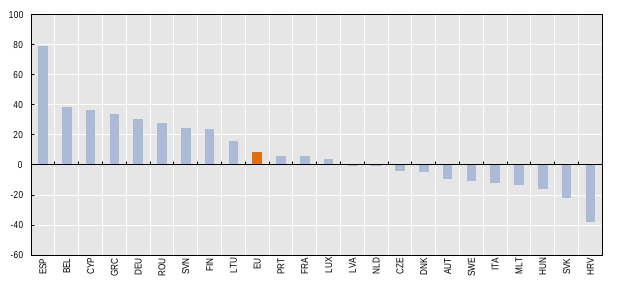
Note: Values are indexed to 100 in 2012 for each country, representing relative percentage change over the period.
Source: OECD TEC Database
Percentage change in the number of exporting retail SMEs (%) between 2012 and 2022
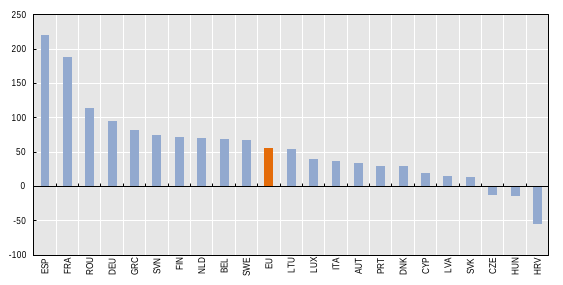
Note: Values are indexed to 100 in 2012 for each country, representing relative percentage change over the period.
Source: OECD TEC Database
Percentage change in the number of importing wholesale SMEs (%) between 2012 and 2022
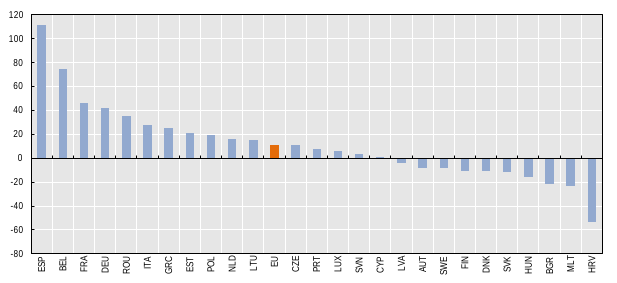
Note: Values are indexed to 100 in 2012 for each country, representing relative percentage change over the period.
Source: OECD TEC Database
Percentage change in the number of importing retail SMEs (%) between 2012 and 2022
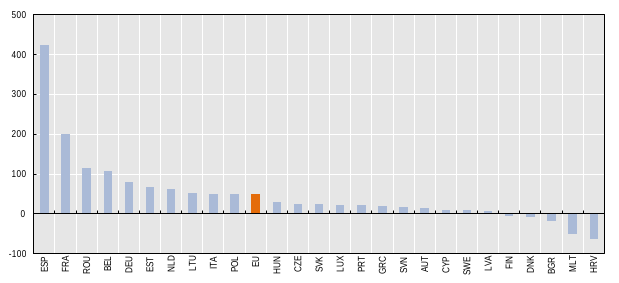
Note: Values are indexed to 100 in 2012 for each country, representing relative percentage change over the period.
Source: OECD TEC Database
Percentage change in the value exported by wholesale SMEs (%) between 2012 and 2022
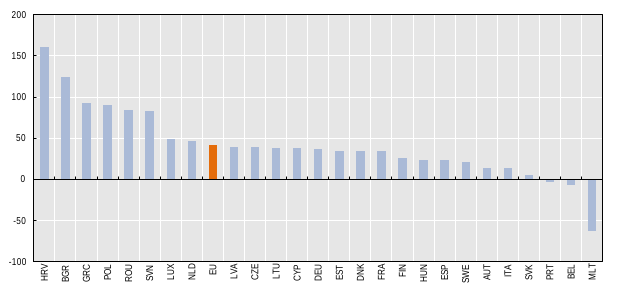
Note: Values are indexed to 100 in 2012 for each country, representing relative percentage change over the period.
Source: OECD TEC Database
Percentage change in the value exported by retail SMEs (%) between 2012 and 2022
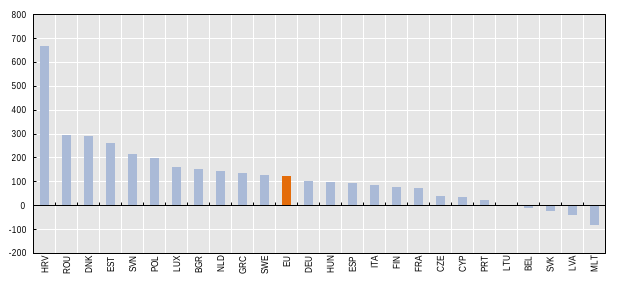
Note: Values are indexed to 100 in 2012 for each country, representing relative percentage change over the period.
Source: OECD TEC Database
Percentage change in the value imported by wholesale SMEs (%) between 2012 and 2022
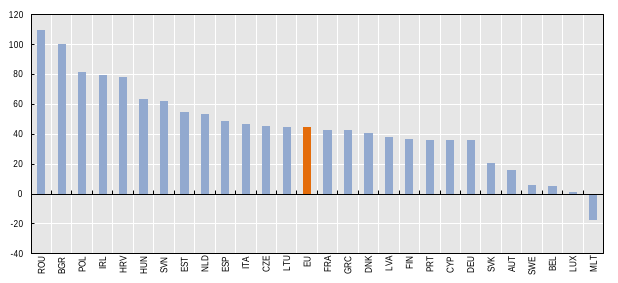
Note: Values are indexed to 100 in 2012 for each country, representing relative percentage change over the period.
Source: OECD TEC Database
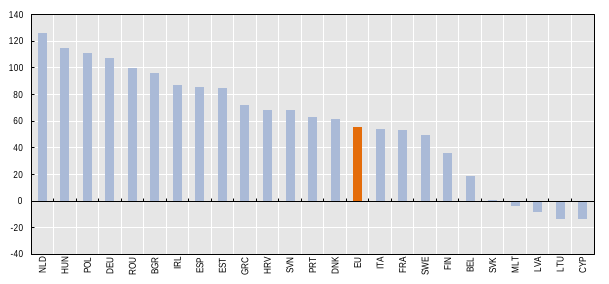
Note: Values are indexed to 100 in 2012 for each country, representing relative percentage change over the period.
Source: OECD TEC Database
Classified by policy scope and type of support
Note: The table does not indicate the period of activity or current status of each initiative; some are included based on recent relevance despite no longer being in effect.
← 1. Given the distinct roles of wholesale and retail trade within the supply chain, the two sectors are investigated separately to better capture their unique dynamics and contributions. Additionally, to facilitate direct comparisons across time and space, the report presents unweighted averages for the EU, treating all countries equally rather than weighting by economic size. This approach ensures that smaller economies are not overshadowed by larger ones. However, it also means that aggregate trends mask the influence of countries that contribute disproportionately to EU-wide economic activity.
← 2. This fragmented classification complicates the quantitative analysis of what the European Commission refers to as the “retail ecosystem”, one of the 14 industrial ecosystems identified in its updated Industrial Strategy (European Commission, 2021[112]). While the ecosystem perspective highlights functional complementarities across sectors, conventional sectoral statistics follow a different logic, treating these activities separately. As a result, headline business statistics may understate the ecosystem’s overall economic weight and distort the picture of structural change, since many activities that are functionally integral to modern retail business models are counted in other sectors.
← 3. Greenhouse gases include carbon dioxide, methane, nitrous oxide and fluorinated gases, often reported as CO₂-equivalent to combine their warming effects.
← 4. While this surge may reflect sectoral expansion, its magnitude raises questions about potential reporting inconsistencies or changes in data collection methods.
← 5. These figures closely align with data from the ICT Access and Usage by Businesses database on the indicator ‘percentage of business with a website’ in the retail sector, which reports the following shares: Estonia, 69%; Spain, 63%; Italy, 60%; Hungary, 48%; and Romania, 39%.
← 6. Another high-profile initiative, the Green Claims Directive, was initially proposed to tackle misleading environmental marketing by requiring companies to verify voluntary green claims through independent certification (European Commission, 2025[113]). However, amid growing political concern over the cumulative burden on smaller businesses, the Commission announced in mid-2025 its intention to withdraw or fundamentally revise the proposal, and negotiations were suspended.