Cardiovascular diseases (CVD) – such as stroke and heart attacks – are the leading cause of death in the EU and in the OECD. In the EU, CVD accounts for one‑in-three deaths (1.7 million deaths in 2022) and affects an estimated 62 million people. The Patient-Reported Indicators Surveys (PaRIS)– which collect data from primary care users aged 45 and over – help assess health outcomes, prevention and management strategies for people at risk or living with cardiovascular diseases.
People living with CVD report worse outcomes across multiple dimensions of self-reported health and well-being compared to those without CVD. People with CVD report lower overall well-being (4.5‑point difference on a 0‑100 scale); similar results are seen in social functioning, mental health, and physical health. Among people with CVD, women report worse physical health compared to men. These findings highlight that the burden of CVD extends beyond clinical outcomes, affecting daily functioning and quality of life across multiple domains.
People living with CVD are frequent users of emergency and hospital services and many of these visits could be prevented through effective and well co‑ordinated primary care. People with CVD are nearly twice as likely to visit the emergency department or be hospitalised.
Almost 80% of primary care users living with CVD report taking three or more medicines – around 30% more than those without CVD – reflecting challenges for care co‑ordination. Only two out of five (44%) of people with CVD or hypertension report having a care plan, a tool which enhances co‑ordination and can lead to improved outcomes.
Addressing behavioural and lifestyle risk factors through systematic screening and advice is essential for identifying and preventing CVD in primary care. Yet, fewer than half of primary care users report receiving guidance on healthy behaviours. Only half receive advice on physical activity, a third on healthy eating, only 28% of previous or current smokers on tobacco risks, and just 13% of current or former drinkers on harmful alcohol consumption. Effective self-management support can enhance the quality of life and health outcomes of CVD patients. CVD patients who are confident in managing their own health report higher levels of well-being and assess their general health better compared with those who lack such confidence.
Living with cardiovascular diseases
Cardiovascular diseases (CVD) – such as strokes, heart attacks, and other conditions that affect the heart and blood vessels – are the leading cause of death in the EU and in the OECD. In the EU, it accounts for one‑in-three of all deaths (1.7 million deaths in 2022) and affects an estimated 62 million people. Across EU countries, 1 301.9 potential years of life are lost per 100 000 due to premature deaths linked to CVD, among people younger than 75.
Besides the health impact, cardiovascular disease imposes a heavy economic burden on EU health systems and societies, estimated at over EUR 282 billion in 2021. This includes direct medical costs, productivity losses due to premature mortality and morbidity, and long-term disability care. Approximately 256 million working days were lost in 2021 due to illness and disability. Premature deaths resulted in a loss of 1.3 million working years. The estimated cost of lost productivity due to premature mortality and illness is EUR 47 billion in 2021 (OECD, 2025[1]).1
CVD represents a substantial burden not only on economies and societies, but also on patients. Yet, until recently, patient-reported indicators – an essential input to steer healthcare systems – were lacking. The OECD’s Patient Reported Indicator Surveys (PaRIS) fills this knowledge gap by capturing how 107 011 primary care users from 1 816 practices across 19 countries assess their health and experience healthcare (OECD, 2025[2]). PaRIS sheds light on how healthcare affects the lives of people with CVD across multiple dimensions – including physical and mental health, their ability to fulfil social roles, and their experience with preventive and chronic care management. Incorporating this patient perspective strengthens the evidence base for assessing and improving CVD prevention and management. Results herein presented are from PaRIS, unless otherwise mentioned.
The Patient-Reported Indicator Surveys (PaRIS) is an OECD initiative that systematically measures the outcomes and experiences of healthcare that matter most to people. The survey focusses on people aged 45 years and older who receive primary care, 80% of which live with chronic conditions.2 Data collection of the first cycle took place in 2023-2024, with results published as of February 2025.
PaRIS offers a unique multi-level dataset linking patient perspectives with the primary care settings where care is delivered. In addition to Patient-Reported Outcome Measures (PROMs) and Patient-Reported Experience Measures (PREMs), the dataset includes information on primary care practice characteristics (workforce composition, service provision, and digital tool availability) and patient background factors (sociodemographic characteristics, health behaviours, and healthcare capabilities, including digital health literacy).
PaRIS results are age‑ and sex- standardised and account for distinct variance at country, primary care practice and patient levels, unless otherwise stated. The average presented in this report refers to the EU‑11 average, which is the unweighted average of the EU countries participating in PaRIS, which include: Belgium, Czechia, France, Greece, Italy, Luxembourg, the Netherlands, Portugal, Romania, Slovenia and Spain. For more information on the survey see OECD (2025[2]).
PaRIS includes data from:
107 011 patients
linked to 1 816 primary care practices
in 19 countries
For more information, including publications, questionnaires, and FAQs, see: https://www.oecd.org/en/about/programmes/patient-reported-indicator-surveys-paris.html.
Source: OECD (2025[2]), Does Healthcare Deliver?: Results from the Patient-Reported Indicator Surveys (PaRIS), OECD Publishing, Paris, https://doi.org/10.1787/c8af05a5‑en.
In all countries surveyed, the average well-being, physical and mental health for people with CVD falls well below that of people without CVD. PaRIS data show that primary care users with CVD report lower overall well-being (4.5 point difference, on a 0 to 100 scale), reduced social functioning (5.8 percentage points (p.p.) difference), worse physical health (1.8 p.p. difference) and poorer mental health (1.3 p.p. difference) as compared to those without CVD (see Figure 1).3 These differences are even more prominent when comparing men and women; women with CVD report lower levels of physical health compared to men with CVD (40.8 vs. 43.9 p.p.) – a cutoff of 42 represents good physical health or higher, with the average score of women falling below this cutoff. The gap in social functioning is especially wide in countries such as Spain and Italy (9 p.p. difference), where less than 75% of people with CVD report good to excellent social functioning. France and Slovenia report smaller differences (less than 3 p.p. difference), with more than 85% of people with CVD report good to excellent social functioning, suggesting more inclusive health and social environments for people with CVD (OECD, 2025[1]).

Note: The EU‑11 average refers to the unweighted average of the following countries: Belgium, Czechia, France, Greece, Italy, Luxembourg, the Netherlands, Portugal, Romania, Slovenia and Spain. Includes WHO‑5 Well-Being Index (0‑100 scale) and PROMIS® Global Health measures for social activities, physical health (T-score 16‑68, cutoff 42), and mental health (T-score 21‑68, cutoff 40). Higher scores indicate better outcomes (pink represents lowest scores and green represents highest scores). Differences between people with and without CVD are statistically significant (p<0.05) for most countries, with some exceptions.
Source: OECD PaRIS Database, 2024.
40% of primary care users living with CVD have visited the emergency department in the year preceding the survey
People aged over 45 years with CVD report having visited the Emergency Department (ED) 1.5 times more often as those without CVD in the same age group (40% and 26% respectively, Figure 2); this higher share of visits to the ED in people with CVD is seen across all countries participating in PaRIS. In the Netherlands, where only less than a third (29%) of primary care users with CVD report having been to the ED in the past 12 months, it is still 14 p.p. higher than those without CVD (OECD, 2025[1]). In the Netherlands and France, where primary care users with CVD report lower rates of ED visits (29% and 32%, respectively), more than 70% of them report feeling confident that they can manage their own health. Self-management support along with effective primary care can help avoid many CVD events and thus reduce ED visits. Once there is an acute CVD event – such as stroke or heart attack – high-quality care to provide timely diagnosis and treatment in the ED can be lifesaving. The high number of ED visits of patients with CVD (40%) calls for both stronger primary care to prevent recurring CVD events and high-quality ED and hospital care to manage acute CVD events.
During acute cardiac events, timely intervention was crucial. I have witnessed the life-saving impact of rapid emergency response and treatment in my own and family members’ experiences. However, delays due to system inefficiencies or lack of awareness can cause critical setbacks. It is vital that emergency pathways and public education continue to improve to ensure prompt care.
Antonis, 58, congenital heart disease patient and advocate for digital health and patient empowerment.
People with CVD are twice as likely to be hospitalised than other primary care users
Reflecting difficulties in managing CVD, people with cardiovascular diseases are twice as likely to be hospitalised than those without CVD (Figure 2). This highlights that accessibility and high-quality emergency care and hospital care are critical for treating CVD, although some CVD-related hospital admissions could be avoided with effective primary care. Hospitalisation rates among people with CVD vary widely across countries; 20% of people with CVD in the Netherlands, 22% in Portugal and 23% in Iceland report being hospitalised in the year preceding the survey, but the share is much higher at 42% in Romania, followed by 32% in Italy and 30% in Czechia (OECD, 2025[1]).
EU‑11 average

Note: The EU‑11 average refers to the unweighted average of the following countries: Belgium, Czechia, France, Greece, Italy, Luxembourg, the Netherlands, Portugal, Romania, Slovenia and Spain. Indicators are based on responses to the questions: “In the last 12 months, have you been to a hospital emergency department for your own medical care?” (Yes) and “In the last 12 months, have you been in a hospital for one night or longer?” (Yes). Differences between people living with CVD and those without CVD are statistically significant (p<0.05) for all countries.
Source: OECD PaRIS 2024 Database.
Patients with CVD require complex medication regimens
While healthcare policy, research, professional training and clinical guidelines have traditionally focussed on single diseases, multimorbidity – people living with two or more chronic conditions – is a major challenge in healthcare, particularly in primary care. Most people with CVD actually live with multiple chronic conditions. This imposes numerous management challenges for patients and their healthcare professionals, particularly in co‑ordinating care and self-management support (Violán et al., 2016[3]). For example, CVD patients with multiple chronic conditions require medication regimens involving multiple drugs. International guidelines highlight the complexity of tailoring treatment to the needs of these patients. Almost 80% of primary care users with CVD reported taking three or more medications – compared to 50% of all other primary care users (OECD, 2025[1]).
Less than half of primary care users with hypertension or CVD report having a care plan
Most primary care patients experience sub-optimal care co‑ordination; but the percentage of patients with care plans4 is higher in the case of certain co-morbidities. Only two out of five (44%) of people aged 45 and older with CVD or hypertension report having a care plan, a tool which enhances co‑ordination and can lead to improved outcomes (OECD, 2025[2]). More than half (55%) of people living with diabetes alongside CVD or hypertension report having a care plan. For people with a mental health condition, in addition to CVD or hypertension, only two out of five (44%) report having a care plan. Mental health conditions are relevant in CVD management because they can determine adherence to lifestyle changes and drug treatments (Figure 3).
Among PaRIS respondents, having a mental health condition, such as anxiety or depression, is associated with worse perceived well-being, underscoring the need for stronger support within primary care. People with CVD or hypertension but no mental health condition report well-being scores about 20 points higher (on a 0‑100 scale) than those who also report a mental health condition (OECD, 2025[1]). There is a need for a targeted approach and the use of care plans to co‑ordinate care for people with CVD and mental health conditions, to provide better support to improve mental health and thus improve adherence to lifestyle changes and drug treatments.
Percentage of primary care users aged 45 and older reporting having a care plan

Note: 1. non-EU European Economic Area countries. 2. non-EU OECD G20 countries. In this analysis CVD includes people reporting hypertension. Response to the question: “Do you have a care plan that takes into account all your health and well-being needs?” (Yes). Differences between people with CVD (including hypertension) and those with CVD and diabetes are statistically significant in Belgium, Italy, Norway and Australia. * Data for Italy refer to patients enrolled in outpatient settings for specialist visits in selected regions. ** the United States sample only includes people aged 65 years or older.
Source: OECD PaRIS 2024 Database.
In the EU, 76% of all deaths due to CVD in 2021 were attributable to modifiable risk factors; behavioural risks account for 37% of the CVD deaths in the EU (OECD, 2025[1]; IHME, 2021[4]). PaRIS data show how primary care providers are working to reduce major behavioural risk factors – such as tobacco and alcohol use, unhealthy diets, and lack of physical activity (OECD, 2025[1]).
Primary healthcare professionals can reduce tobacco use by counselling patients on the risks of smoking and sharing information on how to quit. Yet, less than a third (28%) of people who previously or currently smoke report that a healthcare professional talked to them about the health risks of smoking or using tobacco and ways to quit; this figure goes up to 35% among those reporting CVD (Figure 4). Surprisingly, among healthcare users that report currently smoking, only about half (49%) report that a healthcare professional talked to them about the health risks of smoking and ways to quit – ranging from 29% in the Netherlands to 68% in Italy (OECD, 2025[1]).
I stopped smoking after my stroke, but no one asked me if I needed help to quit. It wasn’t easy, but I felt that I had no option!... Health professionals are more present in the acute phase, but in the chronic phase I’ve felt a little bit abandoned.
Diana, 48, stroke survivor.
Most (80%) people report drinking alcohol – including more than three‑quarters (76%) of those with CVD. However, counselling on alcohol use is uncommon and falls below that of tobacco use – only 13% of those current or former drinkers report that a healthcare professional advised them on the risks of alcohol use in the past 12 months (Figure 4). This figure rises to 17% among people who report living with CVD.

Note: The EU‑11 average refers to the unweighted average of the following countries: Belgium, Czechia, France, Greece, Italy, Luxembourg, the Netherlands, Portugal, Romania, Slovenia and Spain. Smoking status is based on self-reported tobacco use (daily or occasional vs. no). Receipt of advice refers to respondents answering “yes” to whether a healthcare professional discussed tobacco use (among current or former daily smokers), healthy eating, physical activity, or harmful alcohol use in the past 12 months; alcohol advice applies to those who drank in the past 12 months or no longer drink.
Source: OECD PaRIS 2024 Database.
OECD analysis finds that if everyone were to meet the WHO recommended activity levels for adults – 150 minutes of moderate‑intensity or 75 minutes of vigorous‑intensity physical activity per week – more than 10 000 premature deaths per year (among people aged 30 to 70) could be prevented; and EU member states could save, on average, 0.6% of their healthcare budget (OECD/WHO, 2023[5]). Yet, PaRIS data show that less than half (45%) report engaging in moderate‑vigorous exercise for at least 30 minutes three or more times a week (≥90 min a week), and only one‑quarter (25%) reported doing physical activity for at least 30 minutes five or more times a week (≥ 150 min a week). Physical activity counselling in primary care has been found to be a cost-effective intervention to reduce the impact of CVD – and can demonstrate effects in as little as four weeks (Galea et al., 2025[6]). Yet less than half (49%) of primary care users aged 45 and over report that a healthcare professional talked to them about their physical activity (Figure 4). The rate is slightly higher (58%) among people reporting CVD.
I notice that when I do exercise and follow a good diet my symptoms get better. On the other side, when I spend too much time sitting down and eat too much, they get worse. When I was first diagnosed, I was told to avoid high impact sports, but I wasn’t guided very well in what I was and what I was not allowed to do.
Francesca, 34, female living with hypertrophic cardiomyopathy and an implantable cardioverter-defibrillator.
Healthy dietary habits – including high intakes of vegetables, fruits, legumes, wholegrains and lean protein sources (i.e. fish and poultry) and low intakes of sugar, saturated fats and salt – promote cardiovascular health by reducing key metabolic risk factors such as diabetes, hypertension, dyslipidaemia and obesity (Diab et al., 2023[7]). The European Society of Cardiology (ESC) Prevention Guidelines recommend a healthy diet to reduce the risk of CVD, including the daily consumption of fruits and vegetables, with two to three servings of each group per day (200g or more per day) (ESC, 2021[8]). Only one‑in-five (20%) people report consuming vegetables more than once a day, and about one‑in-three (29%) consumes fruit more than once a day. Despite generally low levels of patients reporting having a healthy diet, only 34% of primary care users aged 45 and over report that a healthcare professional talked to them about healthy eating – increasing to 41% among people reporting CVD (Figure 4).
Although clinical practice guidelines, such as the ESC guidelines on CVD prevention in clinical practice, call for clinicians to encourage lifestyle changes and support adherence to drug therapy, these guideline recommendations face challenges (ESC, 2021[8]). PaRIS results show that there are missed opportunities in primary care to strengthen prevention of risk behaviours and promote healthy lifestyles. Given the importance of managing risk factors to prevent and manage CVD, prevention and promotion strategies in primary care need to be strengthened to reduce avoidable cardiovascular burden across the EU.
Patients who are confident in managing their own health report higher levels of well-being
Effective self-management support – particularly when it resonates with and empowers patients – can enhance quality of life and health outcomes. CVD patients who are confident in managing their own health report higher levels of well-being and are more likely to assess their general health as good or very good, compared to those who lack such confidence. For instance, Figure 5 shows that the average well-being score among CVD patients who are confident that they can manage their health was 62 out of 100, similar to the score of patients without CVD (63). For CVD patients who are lacking confidence to self-manage this is significantly lower (48). Similarly, the share of people reporting good or better general health was 69% among non-CVD patients, 58% among CVD patients confident to self-manage, and only 34% among CVD patients lacking confidence to self-manage.
WHO5 Well-being index
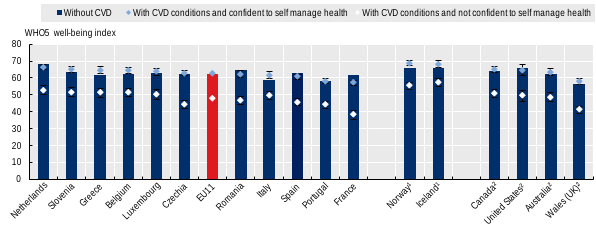
Note: 1. non-EU European Economic Area countries. 2. non-EU OECD G20 countries. CVD status is self-reported using the question: “Have you ever been told by a doctor that you have any of the following health conditions?” and answer: “Cardiovascular or heart condition”. WHO‑5 well-being index; response to five questions measuring well-being, raw scale 0‑25 converted to 0‑100 scale, higher scores represent higher well-being. Error bars correspond to comparative intervals (84%CI).
Source: OECD PaRIS 2024 Database.
Cardiovascular diseases (CVD), https://www.oecd.org/en/topics/sub-issues/cardiovascular-diseases-cvd.html.
Patient-Reported Indicator Surveys (PaRIS), https://www.oecd.org/en/about/programmes/patient-reported-indicator-surveys-paris.html.
References
[7] Diab, A. et al. (2023), “A Heart-Healthy Diet for Cardiovascular Disease Prevention: Where Are We Now?”, Vascular Health and Risk Management, Vol. Volume 19, pp. 237-253, https://doi.org/10.2147/vhrm.s379874.
[8] ESC (2021), “2021 ESC Guidelines on cardiovascular disease prevention in clinical practice”, European Heart Journal, Vol. 42/34, pp. 3227-3337, https://doi.org/10.1093/eurheartj/ehab484.
[6] Galea, G. et al. (2025), “Quick buys for prevention and control of noncommunicable diseases”, The Lancet Regional Health - Europe, Vol. 52, p. 101281, https://doi.org/10.1016/j.lanepe.2025.101281.
[4] IHME (2021), GDB Compare, https://healthdata-digex.healthdata.org/data-tools-practices/interactive-data-visuals (accessed on 16 June 2025).
[2] OECD (2025), Does Healthcare Deliver?: Results from the Patient-Reported Indicator Surveys (PaRIS), OECD Publishing, Paris, https://doi.org/10.1787/c8af05a5-en.
[1] OECD (2025), The State of Cardiovascular Health in the European Union, OECD Publishing, Paris, https://doi.org/10.1787/ea7a15f4-en.
[5] OECD/WHO (2023), Step Up! Tackling the Burden of Insufficient Physical Activity in Europe, OECD Publishing, Paris, https://doi.org/10.1787/500a9601-en.
[3] Violán, C. et al. (2016), “The burden of cardiovascular morbidity in a European Mediterranean population with multimorbidity: a cross-sectional study”, BMC Family Practice, Vol. 17/1, https://doi.org/10.1186/s12875-016-0546-4.
Contact
Katherine DE BIENASSIS (✉ Katherine.DEBIENASSIS@oecd.org).
Diana CASTELBLANCO (✉ Diana.CASTELBLANCO@oecd.org).

← 1. 2021-2022 data on mortality and cost estimates may not be directly comparable with 2023-2024 PaRIS data, results may be influenced by COVID-19-related effects.
← 2. PaRIS is not a population-based survey therefore individuals with diagnosed or managed conditions may be over-represented and individuals that have not received access to primary care are under-represented.
← 3. Well-being is a scale score ranging from 0 to100 measuring the degree to which a person feels positive in terms of their mood, vitality and fulfilment. Social functioning refers to the percentage of people responding good to excellent to the question: “In general, please rate how well you carry out your usual social activities and roles [further specified in questionnaire]”, “good, very good or excellent” versus “fair or poor”. Physical health is a 4‑item scale score measuring the ability to carry out everyday physical activities, degree of pain and fatigue. Mental health is a 4‑item scale score measuring the perception of quality of life, mood and ability to think, satisfaction with social activities and relationships, emotional distress (OECD, 2025[2]).
← 4. The P3CEQ care co‑ordination scale, used in the PaRIS survey, assesses if the care a patient receives: includes a single professional responsible to co‑ordinate care across services the patient uses; is organised in a way that works for the patients, uses care plans, and provides information and support to self-manage (OECD, 2025[2]). PaRIS data show that out of these five components, insufficient care planning is the main contributor to lowering patient’s overall experience with care co‑ordination (OECD, 2025[2]).