This chapter analyses Japan’s rural policy framework with a focus on rural innovation. It first examines the policy framework at the national level. Given the challenges brought by population decline in rural regions, the chapter focuses on land-use strategies to sustaining local communities and address emerging land-use conflicts. The chapter also focuses on innovation innovative initiatives at the prefectural level, drawing on examples from Yamagata Prefecture.
Enhancing Rural Innovation in Japan

Abstract
Demographic change imposes critical challenges for the development and the sustainability of rural areas in Japan. Thus, rural policies need to take into account these changes in demography and land-use. Projections estimate that some 20% of the current inhabitant land will be uninhabited in 2050, and municipalities with the population size of less than 10 000 are estimated to lose half of their population by 2050. Rural areas in Japan cover around 88.2% of the national land and are home to 18.8% of the total population. Rural policy also focuses on hilly and mountain areas, which cover 74.1% of the national land and are home to 10.6% of total population.
There are 4 main pillars of rural policy in Japan managed by the Ministry of Agriculture Forestry and Fisheries. These along with their main programmes will need to embrace innovation to mitigate the projected declines in the rural workforce and the ageing of population.
Rural innovation development programmes should be implemented in a holistic manner to attain policy complementarity. Sub-national governments have an important role to play to improve coordination. Local communities and regions can improve innovation initiatives in rural areas by mobilising local communities through bottom-up initiatives and introducing innovations in land-use policies. For this it important to improve capacity building at the sub-national level and improve coordination locally and across levels of government to support rural innovation, sustainable land-use management, policy complementarity and more coherence.
A local-resource-exploitation initiative is made possible in the form of collective actions of local stakeholders, which is set up by consensus among them. Rural policy should conduct local-resource-assessment at national-level to foster bottom-up approach. Collective action is enabled by attaining consensus among local stakeholders on what to do and how to do, in exploring local resources. This type of consensus is made if local resources to exploit are assessed, and local stakeholders share the common idea and vision in the community. Assessing challenges and opportunities of each rural area is the first step for evidence-based policy making, fostering bottom-up engagement of local stakeholders. Assessment of rural areas need to examine their service-delivery potential as well, since the decline of social-service provision is a decisive factor to give negative effects on local community.
Public entrepreneurs can work for local stakeholders to reach a consensus and take collective actions. Public sector could invest in capacity building for those who work for public interests. Public entrepreneurs are those who work in non-market economies to help achieve socio-political objectives. The Yamagata case studies exemplify distinguished public entrepreneurs who coordinated collective actions of local stakeholders and helped achieve endogenous development exploiting local resources. Their professional skills and empirical practices need to be shared amongst those who work for public interests. MAFF has initiated capacity development programme of which prototype is found in Yamagata, and those public entrepreneurs need to be placed on multilevel sectors: national government, sub-national government, and local community.
The innovation initiative in rural areas can help encourage sustainable national land-use management as well as community management, by inducing endogenous bottom-up development to mobilise local resources and help with economic diversification. Mobilisation of local resources is enabled if land is managed sustainably, and a community is well maintained since land contains resources and a community inherits local culture and history.
At the same time, sustainable land-use management stands on the premises of a community being maintained since land-use calls for collective actions and collective action depends on community engagement. Demographic change is estimated to accelerate depopulation and erosion of communities in rural areas, and it could hinder sustainable land-use management and rural innovation. Community management initiative such as MAFF’s rural RMO (Region Management Organisation) serves to be an essential platform to manage land-use as well as to support innovation.
Sustainable land-use management calls for a coordinated and institutional arrangement in the four pillars of rural policy managed by MAFF. While land-use part is the fourth pilar of rural policy, land issue covers wider a range of rural matters, necessitating integrated implementation of rural development programmes. In addition, land issues are not self-contained in rural terrain. Its multiple dimensions stretch over the whole regional territory.
Forest and agriculture are dominant land-use types in rural areas, and economic diversification needs to consider sustainable economic development of those sectors. However, the agriculture-forest frontier needs to be scrutinised with a regional and rural lens. Forest covers 67% of the national land and farmland covers 11.2% respectively. Economic outputs from these sectors are important to rural society and their economies. Forests cover more land than agriculture and provide a variety of amenities that can help with economic diversification. Converting economically marginal farmland into forest can help, but the corresponding land-use change can also affect rural areas in multiple dimensions that spillovers the rural terrain. It should be considered with regional lens.
Sustainable land-use management needs to consider multi-functionality of landscape with a place-based approach which can be implemented by aligning bottom-up approach with multi-level governance. Land use management that is economically feasible and socially equitable, while protecting rural regions’ natural environments, needs to take a systemic approach. This approach can be designed and implemented in a placed-based manner with relevant knowledge being inherited from local people and communities. A bottom-up approach for rural policy allows rural dwellers to decide and collaborate to implement their own development future. Integrating different sectoral policies across all levels of government originating with a bottom-up approach has the potential to unlock policy complementarities and attain sustainable policy outcomes.
Profitability is proven to be an essential factor for the sustainable land-use management, with linkage and public support being another indispensable component. The Yamagata case studies exemplify good practices of agri-food industry that internalise non-market values of landscape and ensure profitability by selling their products at market prices. Groups of local stakeholders being linked with external groups and supported by public sectors display innovations in producing and selling their products. Linkages with volunteer groups and Public-Private Partnership work effectively, but for local SMEs to trigger innovation, R&D and infrastructure development are also essential supports from the public sector.
Digitalisation is a crucial for sustainable land-use management, but digital literacy needs to be considered in the rural context. Digitalisation is a driver to boost urban-rural linkages and is a necessary means to overcome the distance penalty of rural places. Moreover, it can help to mitigate labour shortages. Rural areas, however, display lower rates of innovation adoption and digital-device usage than urban areas, and this trend is more significant among older generations. As mobilisation of elder generation is crucial for rural innovation, bringing the digital divide through skills and digital access is critical to maintaining well-being.
The ongoing progress of demographic change that prevails in Japan’s rural regions conditions rural development strategies and their sustainability moving forward. In Japan, population projections show that only very few territories will experience population growth, mainly in large metropolitan regions, representing 2.5% of the total land mass in Japan, while the rest of territories will experience population decline. It is estimated that 20% of the inhabited territories will become uninhabited in 2050. These changes will bring new challenges on how land is managed to ensure it can adapt to a shrinking population and can address new uses of land and land-use conflicts. Against this backdrop of population decline in rural regions, sustainable land-use management becomes a critical pillar to ensure the sustainability on rural places and thus a critical pillar for rural policies. Rural policy acknowledges that revitalisation of rural economy is an essential piece for the continuation, and a new initiative has been started to drive innovation approaches in rural areas. This chapter examines how innovative initiatives can support sustainable land-use management under the demographic change, drawing its analysis from a series of virtual and physical missions (fieldwork) and empirical analysis. The fieldwork that built the framework around which the chapter was elaborated took place in Yamagata regional area (prefecture) in January of 2023 and 2024.
Institutional framework
Multi-level governance in Japan
Japan is a unitary country, and its subnational governments are under the sovereignty of the central government, which has substantial authority to define their borders, structure, resources and responsibilities. Subnational governments in Japan are separated into 2 tiers: a regional tier comprising 47 prefectures and a local tier made up of 1,718 municipalities and the 23 special wards within Tokyo (Figure 3.1). While national policy is designed at central governments and implemented through multi-level structure, policies that are tailored to support regions with specific geographic conditions are co-administered horizontally by several ministries.
The prefectures, which include Metropolitan Tokyo, have considerably stronger administrative and fiscal powers than the municipalities. The prefectures, which are led by directly elected governors and prefectural assemblies, are responsible for a range of functions in economic development, social assistance, childcare, public health, agriculture, environment, policing, and primary and secondary education. However, central legislation in many of these spheres often establishes uniform policies and standards for the whole country, and many subnational competencies were formally described in law as “agency-delegated functions” under the 1947 Law on Local Autonomy (OECD, 2016[1]).
Therefore, the central government legislates a national policy for these spheres and delivers a master plan to lay out its strategy and necessary resources to advance the policy. Implementation of those policy issues are generally delegated to subnational governments, and support programmes and particular projects are executed with the responsibility of a governor or a mayor of subnational governments. This institutional structure will pre-condition on how rural polices are designed and implemented.

Source: Author’s own elaboration
Rural policy and its pillars
Japan has an explicit national policy for rural issues, renewed every five years to support rural development. Rural policy is developed by the Ministry of Agriculture, Forestry and Fisheries (MAFF), and is legislated at the Basic Act on Food, Agriculture, and Rural Areas. The objective of this act is to stabilize and improve the well-being of the citizens as well as to develop the national economy through comprehensive and systemic implementation of the policies on food, agriculture and rural areas. Rural policy is, thus, to be comprehended to belong to agricultural issues, and, in fact, the act defines that rural areas shall be developed through the improvement of agricultural production and rural welfare condition including living environment for rural citizens. While rural policy is agricultural oriented, MAFF actively engages with other ministries to break silos. The Ministry of Land, Infrastructure, Transport and Tourism (MLIT) also undertakes policies with implications in rural places (the subsequent sections will explain these policies). However, subnational governments also have an important role in rural development and to promote innovation, meaning that rural development requires not only horizontal coordination, but also a vertically integrated approach.
Rural policy in Japan is assembled with four pillars of its objectives (Table 3.1). The first pilar is to secure income and create employment, that is to be achieved by the diversification of economic activities in rural areas, and that MAFF has launched its innovation initiative as Support for Innovation from Rural Area (MAFF, 2023[2]). The second pillar is established around the improvement of rural living condition, placing its focus to community management. As an auxiliary mechanism for community capability, a new initiative of Rural RMO (Regional Management Organisation) (MAFF, 2023[2]) is being placed around the second pilar of rural policy (see Box 3.1 for further information). The third pilar, creating a new momentum and vitality in rural community, places its focus on capacity development of local stakeholders. MAFF has launched its capacity building programme called rural area producers training course (MAFF, 2023[2]) which will be discussed at the later section. The fourth pillar of sustainable land-use is motivated to curb farmland abandonment. Given the challenges brought by demographic change, an effort to manage all farmland in as much the same manner as it used to be is not a plausible option. Rural policy calls for community consensus for sustainable land-use management and this point is also further discussed at the later section.
Source: MAFF (2023[2]) Summary of the Annual Report on Food, Agriculture and Rural Areas in Japan FY2022
In addition to the Basic Act on Food, Agriculture, and Rural Areas, there are several other acts that are geographically targeted at rural regions: mountainous areas, depopulating rural areas, and islands.
The Development Act for Depopulating Areas designates those areas under the significant depopulation which requires special policy supports. Given that the issues and problems of depopulating areas stretching over multiple policy targets, policy support programmes are implemented by several ministries: MIC, MAFF, MLIT, MEXT, MHLW, METI, MOE, and CAO.1
The Mountain Villages Development Act is co-administrated by MAFF, MLIT and MIC, with an objective to support communities in mountainous areas to maintain national resilience.
The Remote Islands Development Act plans to promote a self-reliant development of remote islands and to prevent an increase of uninhabited islands and significant population decline. Given that many issues and problems of remote islands stretch over multiple policy targets, development measures are implemented by several ministries: MLIT, MIC, MAFF, MEXT, MHLW, METI, and MOE. Apart from those policy programmes with geographical specification, there are several more policy that can be implemented for rural regions. While numerous policy programmes are prepared at different ministries, it is not easy for beneficiaries of the programmes to find a right one that meets their need. Against this backdrop, MAFF started the Rural Areas Development Hotline (MAFF, 2024[3]), as a one-stop strategy, that places help desks at its regional offices and local branches to provide consultation services to help finding right programmes and provide good practices across the country.
Regional Management Organisations, or RMOs, are local self-governance bodies that sustain rural livelihoods and supplement public service provision at the sub-municipal level. This is a new type of community was a self-created and self-initiated organisation (Odagiri, 2011[4]). Generally, the services that RMO provides are stipulated in the revitalisation plan made by stakeholders, but RMO are expected to assume a “dual character” that deliberates the plan and implements it by the single organisation. Moreover, they are characterized as both civic organizations and, often highly dependent, “partners” of the local state. They serve as a new form of “proactive” local self-governance, while also typically remaining closely tied to traditional local self-governance organisations, such as neighbourhood associations.
Ehida initiative, in Shimane Prefecture
As a rural RMO in Hida district of Yasugi City in the Shimane Prefecture, the Ehida Company was set up in 2017. Prior to the establishment of the company, local volunteers who were urged to take actions against demographic change formed a project team and their discussion was assembled as a vision of the community. The company takes in the form of a stock company and is governed by residents. Its business covers a wide range of issues to implement its vision.
Source: MAFF (2023[2]) Summary of the Annual Report on Food, Agriculture and Rural Areas in Japan FY2022
Supporting innovation in rural development programmes
Sixth industry and rural tourism
While MAFF has launched innovation initiatives for rural areas, there are several programmes already implemented (see Box 3.2). For instance, before MAFF explicitly started the innovation initiative, sixth industry and rural tourism were implemented as rural development programmes. Policy supports are made available for those organisations that start their business in the form of financial support for infrastructure setting and of experts’ consultancy (MAFF, 2024[5]). These policy supports are to be disseminated through a rural development hotline, a one-stop strategy of MAFF, already mentioned. The term sixth Industry refers to initiatives that integrate sectoral activities by linking primary sectors with secondary and tertiary sectors (see Chapter 2). It works on changing the business model of primary sectors; from the one to simply produce foods and sell them at a market to the one to add more values to their productions.
The sixth industry initiatives have been motivated to diversify economic activities of the agricultural sector as well as to increase profit of farming businesses. However, its total sales have been stagnated in recent years in Japan (Figure 3.2). Despite its potential to diversify economic activities, its business types are no more than food manufacturing and farmers’ markets, which account for most of its total sales. Uehara (2019[6]) indicates the lack of variety for the business types as a key challenge for the initiative, and Nakano (2014[7]) also points out the mismatching between primary sectors and secondary/tertiary sectors on what to produce and what to sell. Onishi et al (2022[8]) further identify a bottleneck in the lack of a market strategy as well as in the limited capacity of human resources.
In encouraging innovation through diversification, rural tourism can also represent an important mean to diversify farming business while exploiting non-market values that farming sectors provide. Rural tourism is often used as a strategy to deliver rural hospitality to the visitors who come to seek the non-market value of rural life. However, when business profitability was less considered; stakeholders often became exhausted (Ohe, 2020[9]). Similar examples are found in other countries looking to promote innovation in agricultural lands such as in Switzerland (OECD, 2022[10]). Besides, developing attractive opportunities that can bring visitors is another challenge that rural tourism faces. The aesthetic landscape of rural areas can attract visitors along with natural environment, local history, and distinctive culture which are not found in urban areas. To better mobilise comparative advantages of rural areas, services and activities that rural tourism provide can be further diversified (MAFF, 2019[11]).
These preceding programmes reveals that diversification is still relevant to rural policy and for that reason, innovation initiatives have been encouraged in Japan to deepen the diversification of economic activities in rural areas.
Creating a new combination by linking different sectors
Combining forest, sports and a venture company”, Suwa city, Nagano Prefecture
A company called Forestory provide a recreational service by mobilising forests areas that are not utilised by forest owners. The company develops forest area to facilitate and organise airsoft, a recreational game. The company collects an entrance fee from game participants and some of them are paid back to forest owners, allotted to forest management.
Combining agricultural products, tourism and "manufacturing", Kyonan town, Chiba Prefecture
Kyonan company manufactures and sales craft beer and smoked meats with cherry tree chips, exploiting local products made by local farmers and trimmed cherry trees. Besides, mobilising its beautiful landscape, the company collaborates with the tourism sector to develop a new type of tourism contents such as “Ocean and Sauna”.
Combining farmers’ market, farming activity and agricultural cooperatives”, Kinokawa City, Wakayama Prefecture
Kinosato agricultural cooperative, holding a large-scale facility for farmer’s market, deploys food education programme based on the facility. The cooperative provides various programmes not only for selling fresh agricultural production but also firsthand activities for rice and vegetable cultivation.
Source: MAFF (2023[2]) Summary of the Annual Report on Food, Agriculture and Rural Areas in Japan FY2022
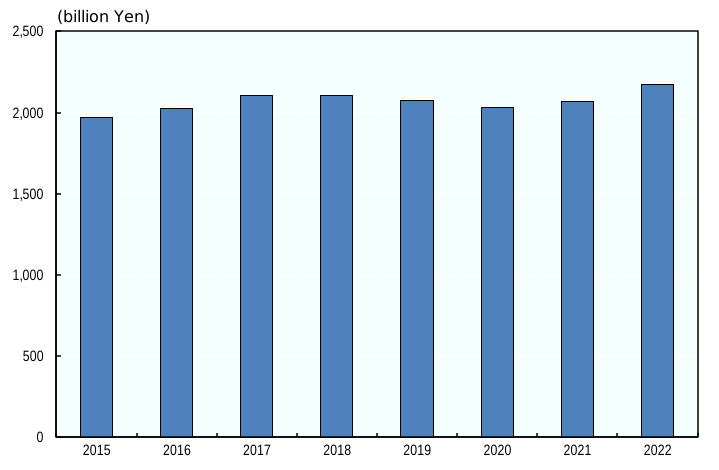
Source: MAFF (2024[3]) General survey of sixth industry FY 2022 (in Japanese)
Digitalisation in rural regions
Digitalisation is a driver to boost linkages across sectors and territories and is a key infrastructure to overcome the penalty of distance. The Vision for a Digital Garden City Nation aims to achieve rural-urban digital integration, transformation to maintain future prosperity in the outlying regions of Japan and give foreign citizens a chance to connect to rural areas in Japan (The Government of Japan, 2021[12]). This vision sets out new initiative called Digital Action in Hilly and Mountainous Areas to mitigate the disadvantaged condition of these area with the help of digital technology. The initiative attempts to mitigate labour shortage by the introduction of artificial intelligence and ICT which could offset labour shortages and increase labour productivity in Japan’s hilly and mountainous areas. Since primary sectors are the key industries in hilly and mountainous areas in terms of economic profit as well as environmental values, the initiative plans to work on social problems and to revitalise rural areas by linking primary sectors with other sectors, with the help of digital technology.
While digitalisation is a necessary infrastructure condition to trigger innovation, digital literacy is another issue to be considered. Japan has an opportunity to make more use of a well-developed digital infrastructure to improve productivity growth and sustainability in agriculture (OECD, 2019[13]). Taking forestry as an example, innovations to use automation and ICT technologies in forestry can cut administrative costs, improve productivity and safety (OECD, 2021[14]). The share of people using the internet in Japan is well above the OECD average, at 95%. Digital skills in Japan are relatively high, with 35% of people scoring at an intermediate level of skills, compared to 30% on average in the OECD (OECD, 2019[15]).
Despite the high rates of internet usage and literacy in Japan, challenges remain in digital literacy and access, especially for the ageing populations. Mobilisation of the older generation is crucial for rural areas in Japan to drive innovative initiatives (Haga, 2018[16]). According to the survey conducted by CAO (2021[17]), the share who do not use smart phone nor digital tablet accounts for 25.7% of the elder generation between the age of 60 to 69 and 57.8% for those who are over 70 years old (Figure 3.3). In addition, the percentage who do not use digital devices goes up in rural areas. While the percentage of non-digital users in big cities is 17.3%, this figure goes up to 22.9% in small city and 37.5% in towns and village. Since, in general terms, small city and town/village will most liked locate in rural areas, rather than urban areas, the digital divide is not only observed among different age groups but also between cities and rural areas. These trends have helped spur the development of the Digital Garden City Nation digital support programme for elderly people as well as for people with disability to alleviate their anxiety for the use of digital technology. The senior smartphone ambassador initiative taken at Kaga city, Ishikawa Prefecture, is a good practices where volunteers support elderly people in using digital devices by offering classes and consultation on matters related to smartphones (The Cabinet Secretariat's Office, 2022[18]).
Capacity building programmes for older generations that focus on digital capability is critical for supporting innovation in rural areas. By putting local resources to work, technology is a crucial element along with entrepreneurs to enhance innovation. On the one hand, developing digital infrastructure is a prerequisite condition to trigger innovative action to make up for the labour shortage which demographic change brings, and Japan has an opportunity to exploit its well-developed digital infrastructure to its full extent to improve productivity. On the other hand, linkages and networking are additional essential factors for to enhance innovation and exploit local resources. Depopulation and ageing of rural community are ongoing trends that will stay abreast. Although attracting young talents can help mitigate this trend, it must be supplemented by building the capacity of elderly people who make up the majority of local labour. Local culture and wisdoms to manage natural environment are embedded in those people who have been living in the same place for a long period of time. Improving their digital capability is necessary to bring out the potential of ageing people.
“The Vision for a Digital Garden City Nation” aims to solve rural issues and improve rural attractiveness while utilising strength of each region through digital technologies, and to realise a society where everyone can live conveniently and comfortably wherever they live in Japan. Under this vision, it is expected that the use of digital technology solves rural issues such as population decline, declining birth-rate, and ageing population, and hollowing out of regional industries for example by promoting remote work and relocation to rural areas, establishing satellite offices and implementing remote medicine, distance education, automated driving and drones. In December 2022, the Japanese Government formulated the comprehensive strategy to realise this vision and has make a concerted effort to support the local governments in implementing measures to achieve their respective regional visions. Some examples of regional visions include:
Digitalisation in hilly and mountainous areas
An attempt to register areas that are working to solve social issues and revitalise local communities as digitalisation in hilly and mountainous areas. Those registered areas are to receive public supports across various ministries. Eligible areas for the registration are those working for job-creation in the agriculture, forestry and fisheries industries and collaborating with various industrial fields such as education, medical care/welfare, and logistics, and utilising local resources and digital technologies. Digitalisation in hilly and mountainous areas are expected to reach over 150 areas by 2027.
Industry-academia-government collaboration based on local universities
Comprehensive initiatives to encourage regional revitalisation having universities as its core component, while strengthening the inter-policy cooperation of related ministries and agencies and promoting the effective use of policies. This is promoted by industry-academia-government collaboration based on local universities and encourages the creation of university-originated innovations and social implementation. The university-oriented initiative has dual objectives that universities will change, and at the same time, society will change. Universities will dramatically strengthen their potential by developing strategic management that expands their strengths and characteristics. Universities will maximise their expanded potential through collaboration with society and proactively contribute to society to transform society.
Source: The Cabinet Secretariat's Office (2022[18]) Comprehensive Strategy for the Vision for a Digital Garden City Nation (DIGIDEN)
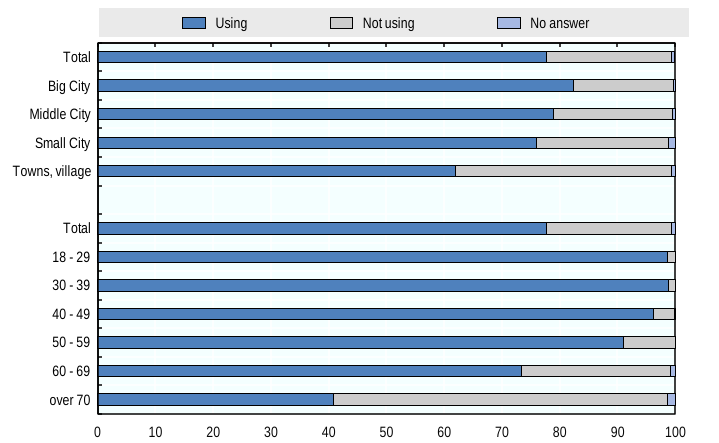
Note: Big city refers to the Tokyo metropolitan areas and a city with the population size of over 500 thousand; Middle city to a city with the population size of over 100 thousand; Small city to a city with the population size of less than 100 thousand, and Towns and village to municipalities.
Source: CAO (2021[17]) General survey on public opinion (in Japanese)
Policy complementarity and coherence across rural development programmes
Rural policy could benefit from more institutional co-ordination and coherence to bring policy complementarity.2 MAFF’s innovation initiative, aims to diversify economic activities in rural areas through the exploitation of local resources. Local resources can be better utilised if land-use is managed sustainably and local communities are maintained. Rural areas, due to the relative lack of density, often need to pool resources, including land, to create the ability to collectively accomplish what individuals or communities themselves may have more difficulties achieving independently (OECD, 2016[19]). In rural areas where demographic change prevails, local resources will not be utilised if communities disappear and lands are abandoned.
Sustainable land-use management and community management are, therefore, preconditions for innovation initiatives in rural areas. The focus on the Yamagata Prefecture, undertaken by this report sheds light to practical examples. While MAFF places its innovation initiative and sustainable land-use management around pillars of rural policy, the types of innovation can be different according to regions and its initiative needs to take a place-based approach. How land is used affects individual and collective well-being and is a critical factor in meeting the overarching goals of environmental sustainability, economic growth and social inclusion (OECD, 2017[20]).
In the same token, community management and individual capacity, of which development are objectives of rural policy, can also affect how land is used. Innovation initiatives in rural areas where its low-density economy is more linked with natural resource exploitation need to be driven by involving multiple stakeholders working in a collective manner. Policy support for innovation initiatives shall not be implemented in isolation. They need to be administered in a holistic manner so as to achieve policy complementarity. Policies – territorial and sectoral – are more effective when they are co-ordinated and aligned along similar goals and objectives (OECD, 2016[19]).
Policies can be complementary because they support the achievement of a given target from different angles (OECD, 2016[19]). While rural policy is administered as a part of agricultural agenda, rural policy admits itself to be implemented in a more comprehensive and holistic manner so as to warrant institutional co-ordination and coherence. Linking different policies and different policy agenda could produce policy complementarity.
As documented in the previous chapter, although population decline in Japan prevails in rural areas, it also started to decline in urban areas and in total population more than a decade ago, despite the population growth in large metropolitan areas. This calls for the need to address new challenges related to land-use abandonment, while sustaining multi-dimensional uses of rural land. To encourage innovation in rural regions, sustainable land-use management is an essential condition where first-nature geography (natural resources, topography, transport network and climate) is more important. Land-use affects the individual and collective well-being and is a critical factor in meeting the overarching goals of environmental sustainability, economic growth and social inclusion (OECD, 2017[21]; The Royal Society, 2023[22]). Land-use management is not simply a way to preserve the physical condition of natural environment but is also a strategy for rural innovation. Ongoing demographic change in Japan jeopardises a sustainable land-use management in environment and social dimensions. This section suggests the need to introduce innovation in land-use management to address these demands.
Depopulation and land-use abandonment in rural areas
Some 20% of areas will become uninhabited in 2050
Depopulation is a challenge for many rural areas in OECD countries (OECD, 2021[23]; OECD, 2022[24]; OECD, 2022[25]). In Japan, while depopulation occurs nationally, its demographic impact primarily affects rural areas (see Chapter 2), and population decline represents a risk to the survival of communities. Around 140 communities have already disappeared during the period 2015 and 2019 (MIC, 2019[26]). This will be further accelerated in the medium and long-run as depopulation is projected to continue. According to the survey conducted by MLIT (Figure 3.4. ), 51% of the national landmass, estimated by grids, will lose more than half of their population between 2015 and 2050, and around 20% of grids in 2015 will be uninhabited by 2050. This survey covers the national landmass with the grid of the scale of 1km2 and predicts the population change of each grid.
Against this backdrop, there are several regions that will experience population increase by 2050, several metropolitan areas and parts of the Okinawa Prefecture. At the municipality level, a number of cities (within municipalities) are still experiencing a decline, although not as fast of a rate as smaller municipalities (Figure 3.5). Furthermore, the rate of population decline in smaller municipalities is faster than in larger municipalities, although this is also in part due to its statistical characteristics. The survey projects that, on average, municipalities with the population size of less than 10 thousand will lose half of their population by 2050. Given the low density of rural places, coupled with the uneven distribution of population, demographic change will more severely impact rural regions that contain municipalities with lower populations.
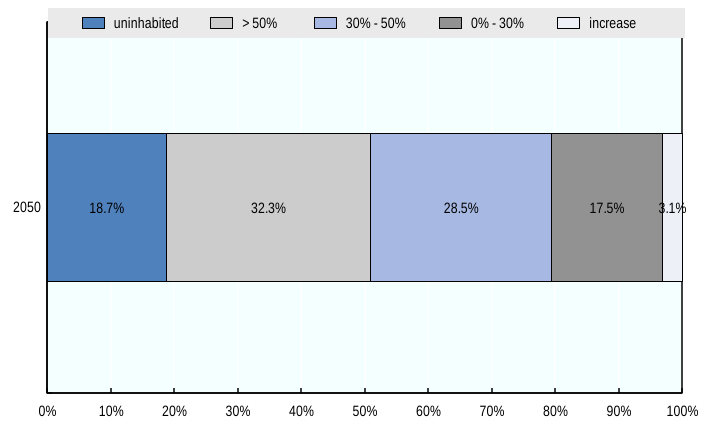
Note: Unit of calculation is grid (1km2) and the estimation is made on inhabited grid as of 2015
Source: MLIT (2023[27]) National Spatial Strategy, data collection (in Japanese)
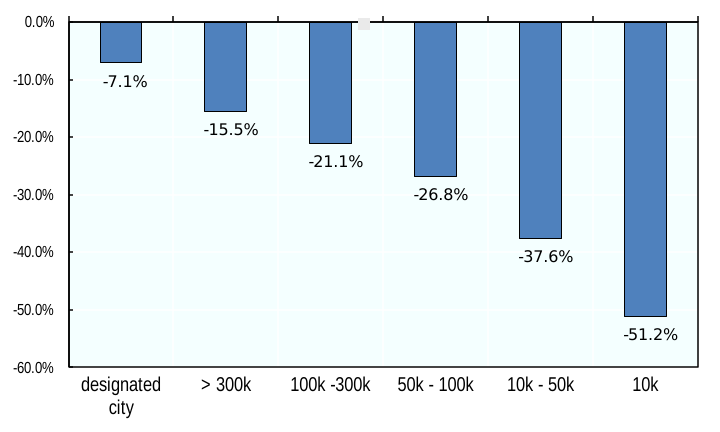
Note: A designated city is a city designated by government ordinance, that must have a population in excess of 500 000 and must have been grated designated city status by an order of the central government under Article 252 of the Law on Local Autonomy.
Source: MLIT (2023[27]) National Spatial Strategy, data collection (in Japanese)
Farmland abandonment is in progress.
While many rural communities have already disappeared, due to demographic trends, it also changing land-use demands, especially in agricultural land-use. Although there are several factors that cause land-use change, the survey MAFF (2007[28]) conducted reveals that the leading factor for the farmland abandonment is the labour shortage of agricultural sector, which is due to the ageing of farming population. The annual area of dilapidated farmland is shown in Figure 3.6. The annual abandoned area reached its peak in 2017; around 20,000 hectors of farmland were abandoned. Recent figures show that the annual sum of abandoned farmland remains as high as around 15,000 hectors. Total abandoned farmland so far has amounted to around 282,000 ha (as of 2020) which accounts for around 0.7% of the total national land.
The effect of land-use change is considerable especially in remote rural areas, that is generally topologically more difficult to manage. If land is abandoned and is not well-managed, it brings negative impacts in multiple dimensions including loss of economic opportunities, rural amenities, and national resilience.
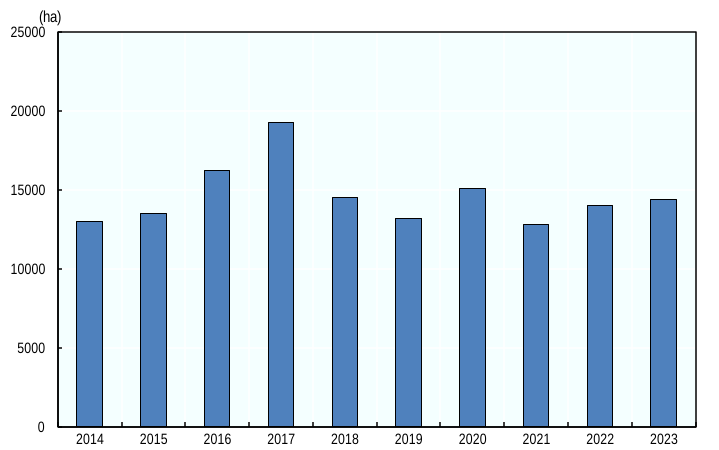
Source: MAFF (2024[29]) Current status and issues of dilapidated farmland (in Japanese)
Observing rural differences with land-use typology and FUA boundaries
Rural areas account for 68% of national land mass in Japan
In Japan, for international comparisons, rural areas refer to non-urban areas. For policymaking purposes, urban areas are defined based on population density and the percentage of densely inhabited districts (DID). Although this rural definition does not categorise the different types of rural, the Ministry of Agriculture, Forestry and Fisheries (MAFF) has elaborated a land-use typology that demarcates rural areas into three categories: flat farming area, hilly farming area, and mountainous farming area. Although these categories are prepared for the agricultural policy making purposes, their definition is made based on population and land-use type. They are understood to be a general rural typology that serve to depict rural differences (Table 3.2). In addition to the land-use typology, the OECD defines FUA (Functional Urban Area) boundaries which demarcate urban areas and their areas of influence based on commuting patterns which also incorporates rural areas with close proximity and/or strong linkages (OECD, 2020[30]). Using MAFF land-use typology and OECD FUA boundary, this paper intends to examine how rural areas (areas outside of functional urban areas within each of the land-use categories) are different in terms of population and land area (for the full discussion of the examination, see Annex 3.A).
To begin with the land-use typology, the work is made to examine how population distribution and land area can be different across different categories (Table 3.2). While around 80% of total population concentrates in urban areas, nearly 90% of total land locates in rural areas. Across rural categories, population distribution among flat farming areas and hill farming areas are almost the same, but that of mountainous farming areas is significantly lower. Urban areas cover 11.8% of the land mass and flat areas cover 14% in Japan, thus differences across them are not significant. In contrast, mountainous farming areas cover 41.3% of the land mass and hilly farming areas 32.8%. When combined, they cover around 75% of landmass.
Note: The land-use categories is first demarcated for urban areas, followed by mountainous farming areas. The remaining areas are demarcated between flat farming areas and hilly farming areas. The demarcation of land-use category is made according to municipality boundary where population and land area data are collected. The area of municipality is calculated from the boundary data
Source: Land-use typology: MAFF (no date[31]): Agricultural area typology (in Japanese). The municipality boundary data is derived from MAFF (2020[32]) Agricultural census 2020 (in Japanese)
In addition, implementing a method of measuring shares of functional urban areas within land-use typology can help identify rural areas more clearly than a simple land-use typology. Areas that are located inside FUAs account for 28.7% of total landmass and that of non-FUAs accounts for 71.3% (Figure 3.7., Panel A.). Examining FUA boundary across rural categories reveal that rural areas located inside FUAs account for 20.1% of total landmass, and rural areas in non-FUAs account for 68%. Looking more specifically at rural categories, mountainous farming areas in non-FUAs account for 33.5% of total landmass, and hilly farming areas in non-FUAs accounts for 24.8%; they cover 58.3% of total landmass. In addition, 76.7% of total population distribute inside FUAs and 21.4% of total population distribute in non-FUAs (Figure 3.7., Panel B.).
Likewise, looking more specific at rural categories in Japan, 7.2% of total population is distributed in rural areas inside FUAs and 11.7% of total population is in rural areas outside FUAs (non-FUAs). Hilly farming areas in non-FUAs have the largest population (5.3%) among all rural categories, followed by flat farming areas in non-FUAs (4.5%). Although FUA areas have 3.6 more population than non-FUA areas, when it comes to rural context, rural areas in non-FUAs have 1.6 time more population than rural areas in FUAs. Although a penalty of distance is imposed in terms of population density, there is a higher share of individuals living in rural areas outside FUA's than rural areas close to functional urban areas. Even if population density is lower in remote rural, the wider landmass means that policies involving rural land-use regulations impacts a larger share of residents.

Note: Data summarised in Table 3.A.2 (total population and surface land) is split between FUAs (left wing) and non-FUAs (right wing)
Source: Own calculation
Rural assessment with social-service data
Data can strengthen the design, implementation, monitoring and enforcement of land use management. However, its availability is often challenging, especially in rural places (OECD, 2021[33]). Amid the population decline, the role of service delivery becomes critically important for community management. For rural communities to strive and reach their potential, it is important to have access to good quality data on services (OECD, 2016[19]). The decline of public service provision could bring negative effects in the local community and thus, could further advance the land abandonment in rural areas. This chapter delivers a provisional assessment of rurality, using geo-demographical data (land-use and population), and identifies differences between rural areas within FUA and rural areas out of FUA (see Annex 3.A for more information).
The assessment of current and future rural conditions in Japan requires to realise possible policy complementarity across different sets of policy agendas. This calls for better availability of data on service provision: e.g., access to medical care, educational opportunities, and shopping availability. Land-use management is closely linked with the community management and bottom-up inclusion. Thus, it is necessary for rural assessments to link geo-demographic lens with social-service provision. Thus, policy complementarity and coherence across rural development programmes can be achieved if rural condition is assessed with economic, environmental, and social aspects. The provisional rural assessments elaborated in this paper should be further expanded by incorporating data and analysis that assess the quality of services provision in rural regions for Japan.
Structure and objectives of national land planning
While rural policy is administered by the agricultural constituency in Japan (e.g. MAFF), the National Spatial Strategy (NSS) National Plan is the comprehensive and long-term strategy that works on issues regarding regional development (OECD, 2016[19]). Its national plan is discussed and designed at central government, and the greater regional plans are established across eight broad regions by the Minister of Land, Infrastructure, Transport and Tourism (MLIT), in line with relevant national and subnational government sectors. The National Spatial Strategy (NSS) adopted in 2023 focuses on depopulation and regional revitalisation, as well as disaster resilience and environmental sustainability.
While the NSS places national land-management high on its agenda, the actual policy planning for land management is formulated at the National Land Use Planning (NLUP) (MLIT, 2006[34]) which is further elaborated in Figure 3.8. However, they are concurrently revised and enacted; formulated in an integrated manner. The NLUP, adopted in 2023, works on the same challenges with NSS: demographic change, natural disaster, and ecosystem. Considering the imminent challenge imposed by the demographic change, NLUP comprises five basic principles for the appropriate national-land management:
1. considering population decline;
2. considering natural-disaster risk;
3. preserving regional eco-system;
4. mobilising digital technology; and
5. encouraging multi-stakeholder involvement and promoting public-private partnership.
NLUP is the highest-level plan for the national land-use planning and delivers a basic concept for national land-use strategy. With the progress of depopulation and financial constrains under the demographic change, land management in rural areas are anticipated to be more difficult, especially for those areas locating in hilly and mountainous areas. NLUP has a layered structure, and land-use plans are established at national and sub-national government: central government, prefectures, and municipalities. The NLUP is a plan to addresses the basic strategy and visions, however actual land-use planning is commissioned to the Land Use Master Plan, which is formulated by prefectures in accordance with NLUP.
In Land Use Master Plan (MLIT, 2006[34]), of which geographical extension is within prefectural territory, its area is classified into five categories according to specific purposes of land-use: urban areas, agricultural areas, forest areas, nature park areas, and nature conservation areas (Table 3.3). Those areas are enclosed exclusively for the development of the specific purposes and are subject to the different sets of the legislation from the group of NSS and NLUP. However, boundaries are not exclusively drawn each other, creating considerable overlapping areas across categories; nearly half of landmass is overlapped.

Note: Under the National Spatial Strategy it is a comprehensive basic pan to promote the use, development and maintenance of the national land (“spatial planning”) based on the National Spatial Planning Act; within this, the National Plan refers to the presentation of defined vision of national land and people’s lives by the national government and within this the Greater Regional Plan refers to the establishment of a greater regional plan for each block region by the Minister of Land, Infrastructure, Transport and Tourism undergo the deliberation by the national and local governments (etc.). Under the National Land Use Plans, it is the nation’s highest-level plan for the use of national land, and it defines the basic concept of the use of national land and the scale goad for each category according to the purpose of the use of national land. Under the Land Use Master Plan it is formulated by prefectures base on National Land Use Plans (National Plans and Prefecture Plans) and the comprehensive coordination of plans and regulations based on the individual Regulatory Act through land use master plan. The Specific development is regulated through the individual Regulatory Act.
Source: Courtesy of MLIT
Note: Overlapped areas between categories (1,000 ha) are as follows: Urban/Agriculture, 4,116; Urban/Forest, 1,396; Agriculture/Forest, 6,047; Urban/Agriculture/Forest, 1,600; Forestry/Nature parks, 3,535
Source: MLIT (2016[35]) About the land-use planning policy (in Japanese)
National Land Management Concept (NLMC) with bottom-up approach
MLIT formulated the National Land Management Concept in 2021 to address land-use practices under several constrains with demographic change. NLMC intends to develop a set of land-use management practices that can be feasible under the condition of population decline, and to deliver an execution plan for the National Land Use Plan (NLUP). NLMC directs a particular focus to hilly and mountainous areas where depopulation coupled with ageing population puts added pressure to land-use management.
The NLMC formulates its land management concept at each level of public sectors: national government, prefectural government, and municipality. The national land management concept addresses the national strategy on the land-use management and delivers guidelines for the formulation of the concept at subnational level. Prefectural government formulates prefectural land management concept, examining current condition and making a forecast of the future status of the region, and addresses regional strategy based on the estimation.
The prefectural land management concept aims to address challenges faced by municipalities in the region and aims to support holistic arrangements and better coordination across municipalities. Likewise, municipalities formulate municipal level land management concept in as much the same manner as the regional management concept, through visualising the concept in a map. In addition, a management concept is further anticipated to be formulated at a community level. Based on the prefectural and municipal land management concept, local stakeholders are expected to take their initiative to discuss a future vision of the community and envisage local land management concept, visualising the concept in a map. The geographical coverage of community level management concept is mainly targeted at hilly and mountainous areas that NLMC places special consideration.

Source: Courtesy of MLIT
Sustainable land-use management for the future of rural places
While the National Land Use Plans (NLUP) envision its land-use strategy in National Land Use Concept, the NLUP lacks policy tools to deliver its strategy. When it comes to actual land-use regulation, lands are sub-demarcated for the specific purpose with individual act. Thus, they lack a coordinated and comprehensive governance system to optimise land-use in a regional level. Areas designated for a specific purpose is exclusively demarcated and developed for the specific sector. Both weak institutional co-ordination and overly complex institutional arrangements contribute to policy misalignments. The split of land-use nexus among different sectors complicates the implementation of policies through poor horizontal and vertical co-ordination and differing institutional priorities and capacities (OECD, 2020[36]).
As demographic change decreases demand for land-use and compels government sector to alter governing system for land-use, integrated and co-ordinated governance system that would not demarcate area for a single land-use objective is suggested (Japan association of city mayors, 2017[37]; GRIPS, 2021[38]). Besides, rural and urban areas are becoming increasingly interdependent in many domains. Thus, drawing a clear line between urban and rural territory is becoming increasingly difficult (OECD, 2013[39]). Land-use governance system should change from a sector-specific demarcation governance to a coordinated and comprehensive one which allows different institutional coordination.
Similarly, the governance structure to manage the forest-agriculture frontier needs to be adapted to the changing structure of rural places. Agriculture-forest landscapes are contested areas with conflicting policies, values, and ideas on how to manage or utilise water and land resources (Seijger et al., 2021[40]). Furthermore, while forests and agriculture are contesting over land-use, forests do not demarcate themselves clearly from industry sectors. For instance, around 40 percent of all agricultural lands have more than 10 percent tree cover (Zomer et al., 2014[41]).
If agriculture cannot be sustained, then land will revert to a less intensively managed use, such as forests or native ground cover for hunting and recreational activities. But farmland can be brought back to farming if returns from farming warrant this, except if permanent vegetation has begun to grow as reconversion can become too expensive (OECD, 2009[42]). While agriculture and forest are dominant sources for land-use, forests cover around six times more land than agriculture. Thus, environmental and social values that forest can provides can be more diverse than agriculture.
While conversion of farmland into forestry could provide valuable amenities, the agricultural sector generates more economic outputs than forestry: around 17.7 times more GDP and 29.4 times more employment (Table 3.4). The conversion of farmland into forest could increase amenity value but it also decreases the economic opportunity of rural areas. Besides, the demarcation between farmland and forest will be more blurred if farmland is managed in less intensive way. As the effect of land-use change in rural areas covers a wider area of a region either in a positive or a negative way, rural policy should make use of effective strategies in the boundaries between agriculture and forestry. Under the current land-use legislation, agricultural areas and forest areas are operated in silos, demarcated between different legislative acts (Table 3.3). This warrants for developing a more coordinated land-use governance system.
Multifunctionality of land uses and its effects on rural regions
Land-use can determine important environmental, social, and economic outcomes (OECD, 2017[20]). While the pattern of land-use is varied among OECD countries (Figure 3.10), forestry and agriculture are the dominant sectors which cover the majority of land. In terms of total landmass of all OECD countries, forests account for 32.8% and agriculture (Arable and Cropland plus Meadow and Pasture) 33.9% of total landmass. In Japan, 67% of landmass is covered with forest, and 12% with arable and crop land. In comparison, Japan has a high rate of forest-coverage, similar to other OECD countries where forest covers more than half of their landmass. In terms of arable and crop land, there are many more countries where the rate of land cover is higher than that of Japan. However, forest and farmland are the dominant source for land-use of rural areas in Japan -- forest covering 67% and farmland covering 11.2% of national land respectively.
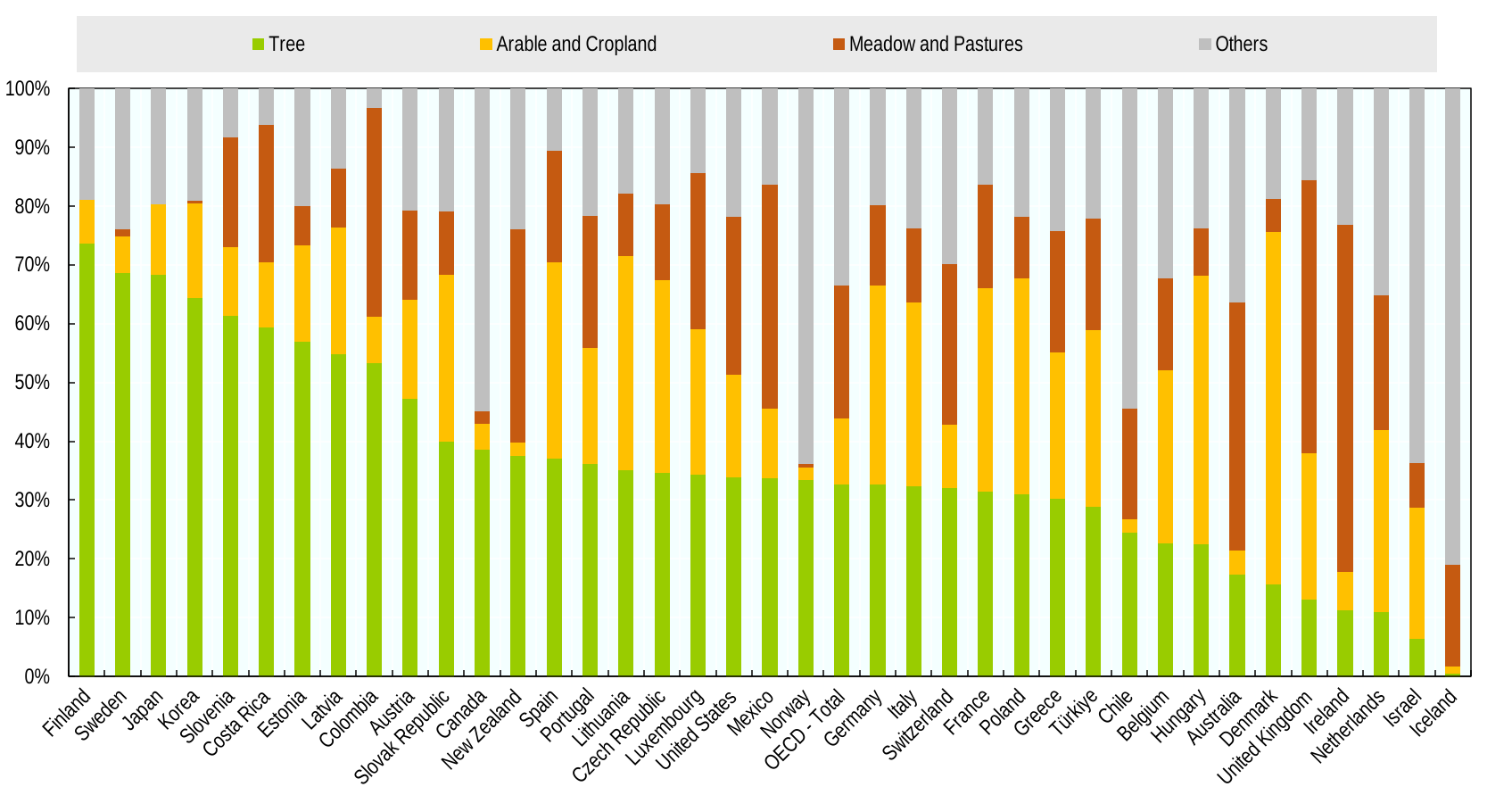
Notes: “Others” includes built-up and related land, wet open land, and dry open land, with or without vegetation cover. Areas under inland water bodies (rivers and lakes) are excluded.
Source: OECD (2020[43]) “Environment at a Glance 2020” OECD Environment Statistics (database)
Forest multifunctionality gained political momentum in 1992, when the United Nations Conference on Environment and Development placed it at the core of the definition of the Principles of Sustainable Forest Management (United Nations, 1993[44]). Forest multifunctionality can be defined as the capacity of forests to provide a large array of goods and services – private and public, market and non-market – at the same time (Cesaro, Gatto and Pettenella, 2008[45]). The Science Council of Japan (2001[46]) carried out a comprehensive study to evaluate multifunctional role of primary sectors in Japan.3 Its inventory is summarised in Table 3.4. While multifunctionality of agriculture is coupled with food production, that of forest is not necessarily jointly produced with timber production.
In other word, agriculture can either protect or destroy the environment depending on the farming practices employed. Although the extent of multifunctionality might be varied depending on the type of forest, forest shows a wider variety of amenities than agriculture. Given that land covered with forest is around 6 times larger than farmland in Japan, sustainable forest management is more critical in amenity provision as well as in national resilience.
Source: GDP: MAFF (2024[47]) Basic data of agriculture, forestry, and fisheries (in Japanese); ) employment: MIC (2020[48]) Population census 2020 (in Japanese); multifunctionality: Science Council of Japan (2001[46]) An evaluation of multiple functions of agriculture and forestry for global environment and human lives (in Japanese)
Systemic approach for landscape management through place-based policy
Land is a critical factor in meeting the overreaching goals of environmental sustainability, economic growth and social inclusion, since land-use affects individual and collective well-being (OECD, 2017[21]; The Royal Society, 2023[22]). In considering this multi-dimensional aspect of rural land-use, sustainable land-use management can be better facilitated by introducing a landscape approach (OECD, 2021[33]). Given that sustainable development includes the social, economic and environmental pillar (O’Hara, 1997[49]; Strange and Bayley, 2008[50]), sustainable multifunctional landscapes can be defined as landscapes created and managed to integrate human production and land use into the ecological fabric of a landscape maintaining critical ecosystem function, service flows and biodiversity retention (O’Farrell and Anderson, 2010[51]).
This requires policy makers to go beyond the scope of a single sector and specific stakeholder group to meet the needs of diverse stakeholders and sectors while balancing the social, environmental, and economic goals in their regions (Denier et al., 2015[52]). Coordination and adjustment among different objectives of multi-stakeholders requires a systemic approach which considers simultaneously market/non-market products and services provided by the land (Figure 3.11). Multifunctional landscape considers trade-offs and synergies between different outputs and suggests how landscapes can be designed to increase benefits to multiple stakeholders, from individual landowners to society (The Royal Society, 2023[22]). Furthermore, the values associated with the amenities have a strong territorial dimension, that varies across regions (OECD, 1999[53]). In some cases, the value of the amenity is international, and in others, the amenity is valued primarily by the people of the country or of the region. Biodiversity can provide valuable – but often invisible – benefits. These include services such as nutrient cycling, habitat provisioning, pollination, erosion control and climate regulation (OECD, 2018[54]). These benefits can in some cases transcend the region and in others they remain in the region. For example, the effects, such as water and air pollution, or impacts related to bird and wildlife habitat, can transcend country borders (OECD, 2001[55]). Its amenity value can go over regional or national border, but with diminishing degree of intensity.
Multifunctional landscape concept also brings the flexibility to combine top-down initiatives with bottom-up engagement targeting collective action approaches. Community involvement in forest, woodland and tree management, for example, can make important contributions to sustainably evolving economic, environmental, and social dimensions in rural regions (Jeanrenaud, 2001[56]). Typical strategies intended to encourage collective action are generally aimed at creating favourable institutional conditions, empowering local community members to make decisions affecting their own communities, providing incentives to initiate collective action, and providing various kinds of support including both facilitation and funding (OECD, 1999[53]; OECD, 2024[57]). This can encourage a more holistic approach to landscape management that involves local communities in the management of their own specific ecosystems.
In the context of Japan, 54.3% of Japan’s farmland is used for rice cultivation (MAFF, 2023[58]). In 2019, the Japanese agricultural sector used 67.9% of water of which over 90% was directed for paddy field irrigation (MLIT, 2022[59]). Forest covers 67% of landmass in Japan (Figure 3.11) and plays an irreplaceable role in linking the water cycle, benefiting urban areas as well. Water is irrigated and managed by the collective actions of local stakeholders (OECD, 2013[60]) and the collective style of water management creates social fabric of land-use management in rural areas. These multiples uses of land are example of the landscape approach in Japan which require bottom-up engagement and integration with the different sectors that constitute the landscape.
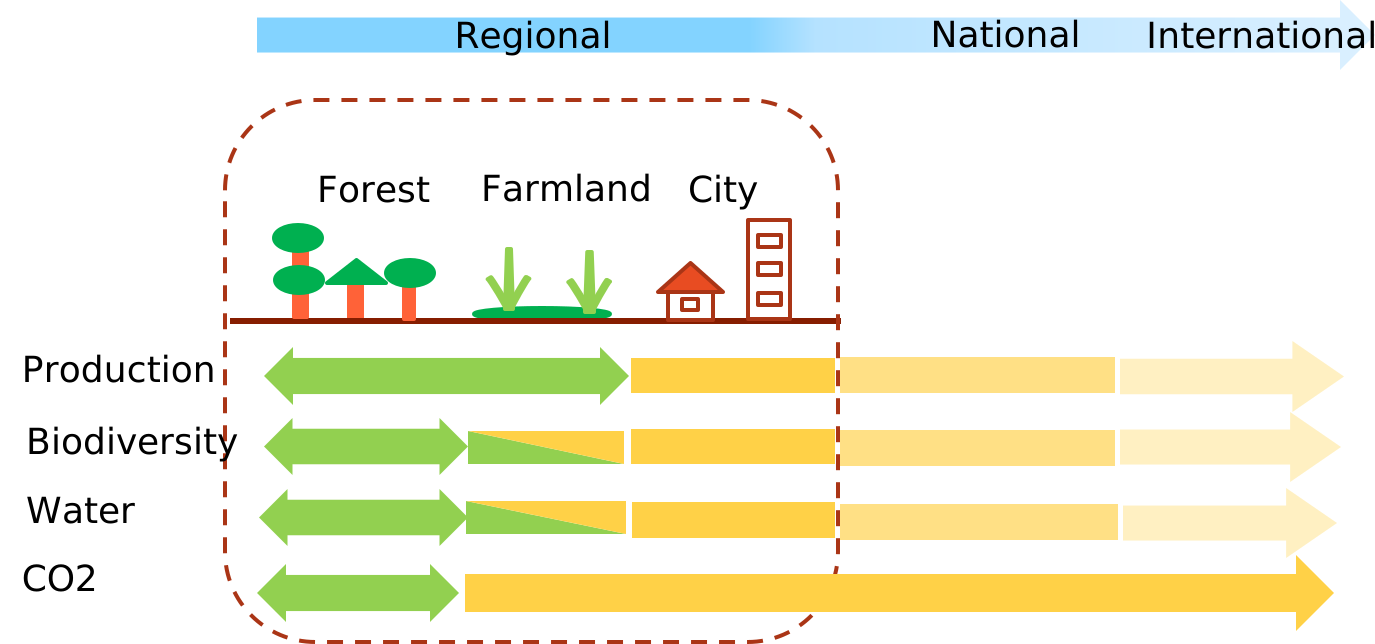
Note: Allows of the figure indicate the geographic extension of multifunctional landscape
Source: Author’s own elaboration
Bottom-up approach for landscape management with multi-level governance
Multi-level governance involves co-ordination among national, regional and local institutions. A multi-level governance framework encourages different levels of government to engage in vertical (across different levels of government), horizontal (among the same levels of government) or networked co-operation in order to design and implement better policies (OECD, 2010[61]). Also, integrating different sectoral policies across all levels of government with a bottom-up approach is recognised as a cornerstone to unlock policy complementarities and attain sustainable outcomes in policy implementation. The multi-level governance approach thus aims to address the former challenges and leverage on the relevance of local governments to ensure a sound policy implementation by translating national policy design and implementation at the local level, promoting bottom-up solutions and increasing national policy effectiveness (OECD, 2020[62]).
In translating a government policy into local level, multi-level governance needs to incorporate bottom-up approach at a community level, which are well equipped to identify their local development opportunities and closely support and complement national policies and strategies. A bottom-up approach for rural policy allows rural dwellers to decide and collaborate to implement their own development future. Rural communities should have the right to identify their own strengths and potential and be authorised to encourage local innovation.
Empowering local people and helping them develop current and future visions and plans is paramount as well as developing strategies and for their implementation. Policy makers need to provide the space for innovation and capitalise on the willingness of rural communities to play a role (OECD, 2014[63]). The multifunctional landscape concept brings flexibility to combine top-down initiatives with bottom-up engagement, targeting collective action approaches. For example, most irrigation systems, forests, rangelands, and fisheries cannot be managed at the individual or household level because of their spatial scale (McCulloch, Meinzen-Dick and Hazell, 1998[64]). Amenities also involve a large number of providers and beneficiaries. Protection of amenities may occur as part of broader collective action for economic development at the local or regional level (OECD, 1999[53]).
Place-based considerations to foment complementarity for landscape management
Rural policy across OECD countries is currently undergoing a paradigm shift from a sectoral focus to a more place-based approach, underpinned by the recognition that rural places are diverse and structural changes that need to be addressed through a multidimensional multi-stakeholder approach (OECD, 2020[62]). A place-based approach can be a step to recognise the inefficiency of non-coordinated policy actions. In Japan, rural areas are roughly defined as non-density inhabited areas, or non-urban areas (see Chapter 2 for further information) and sustainable land-use management needs to be more place-specific. Given that regional and rural policy in Japan give territorial considerations to hilly and mountainous areas, they in contrast have different priorities and policy complementarity that vary according to the challenges and opportunities of each region. Land-use management should also take into account these regional specificities to better adapt to their needs and realities.
In terms of the multi-level governance structure, in Japan, a unitary system gives limited autonomy to sub-national governments. Regional policy and rural policy are discussed and enacted by national government and implemented in top-down manner. Sub-national governments create their own policies in accordance with national policy and a significant portion of policy support are financed by national government. However, place-based consideration calls for a more granular lens to take regional differences into account and that policies are better implemented at local level with bottom-up approach. Furthermore, the municipality is too granular to implement policies in a way to obtain complementarities.
Against this backdrop, a place-based policy design must be conducted with specific places in mind, considering the assets and challenges that make each place unique (OECD, 2020[62]). Since each place is unique, this approach needs to include bottom-up engagement. As discussed, bottom-up engagement for the sustainable land-use management stands on the collective action on local stakeholders, on the premises on the consensus among them. Consensus building opportunities allow for local community self-determination, based on local assets and opportunities, but the current arrangement still depends on a top-down approach.
This top-down approach is often delivered in a uniformed format at a broader national level. However, more flexibility in how local communities can engage in the policy-making process can facilitate more local commitment and solutions to combat local challenges. A place-based land-use policy must depend on bottom-up approach in which local stakeholders take their own initiatives to discuss and decide how they want to manage their community and land-use. The National Land Management Concept (NLMC), for instance, takes bottom-up approach in this manner, encouraging local stakeholders to take their own initiative. Bottom-up approach for the sustainable land-use management is assembled with consensus-making and collective actions at local level, and local resource assessment is the starting point for that. This bottom-up approach that is based on the uniqueness of each action unit will be bundled at regional level to coordinate policy complementarity.
While collective action with bottom-up engagement works for the sustainable land-use management, endogenous development by the hands of local stakeholders can be well navigated if they work with an expert who assists their activities. Capacity-building programme to develop public entrepreneurs working for public interests can be initiated at multi-level of public sectors and they can create synergy, or policy complementarity, by linking those initiatives implemented at different levels. MAFF’s new initiative of rural area producers training course (MAFF, 2023[2]), a key policy driver of rural policy, has been launched as a capacity-building programme to share implicit skills of public entrepreneurs with those who are willing to support bottom-up engagement of local community, building on synergies and lessons learnt across administrative boundaries. This initiative could be furthermore reinforced through more vertical and horizontal integration within the public sector. Moreover, this type of capacity-building programme is feasible at subnational-government level; this is discussed at the following section.
Despite the fact that Japan’s innovation system is dominated by high-tech innovation (see Chapter 2), collaboration between public and private actors and across sectors is relatively weak (OECD, 2019[13]). The number of industry-academia collaborative activities also remains small, and the mobility of personnel between organisations or across sectors is limited. Private companies prefer producing their own technology without collaborating with other private or public actors (OECD, 2016[65]).
As previously discussed, (see Box 3.20), MAFF’s innovation initiative is to drive endogenous development with bottom-up approach. Its innovative framework is built around the linkage to drive a new combination across different sectors as well as around involving multi-stakeholders to drive collective actions at community level. Economic activities in rural regions are closely linked to primary sectors that are strongly integrated with land-use. Innovation strategy in rural regions need to be discussed more to break through existing silos, that is also essential for sustainable land-use management. This section focuses on examples at regional level collected through the field work of this study in the Yamagata Prefecture. The Yamagata Prefecture is located at northern part of main Island of Japan, about 300 km distance from Tokyo. It contains a land mass of 9,323 km2, of which 72% is covered by forest. This section, drawing lessons based on the field work undertaken during the mission, examines three case studies that can reveal important lessons on rural innovation and land-use management.
The sub-national approach to sustainable land-use management for rural innovation
Bottom-up approach at sub-municipality level: Paddy terrace renaissance
The first case study is Kunugidaira initiative of paddy terrace renaissance. The tanada (paddy terrace) developed at Kunugidaira community has been well reputed as an aesthetic landscape and was selected as one of the top 100 paddy terraces of the country in 1999. However, already at the time of the selection, there were some farmers who stopped rice cultivation due to the unfavourable condition of paddy terrace as well as to the drop of rice price; paddy-field abandonment had been clearly recognised visually. Concerns were raised among local residents of Kunugidaira over the sustainable management of paddy field. Driven by this, a local conservation group was set up to preserve paddy terrace with the initiative of Kunugidaira local community in 2003 (Figure 3.12).
The local group started a workshop to discuss the future vision of the community, with the support of a professional staff from the Yamagata Prefecture and started to sell the premium tanada rice. To exploit the landscape value, local famers have switched their farming practice from the one with modern technology to the classical one, by reducing the use of chemically-compound pesticides and reviving the sun drying of harvested rice in the open field. This is a labour-intensive practice, and the local group turned to volunteers willing to supply their labour with the exchange of tanada rice. The local group also worked with a tanada network, a national level NPO, to exploit new market opportunities. With those innovative actions, the tanada rice cultivated with classical farming practices sold at 50% higher price than the average market price.
Furthermore, the topology of paddy terraces brings another challenge in terms of favourable rice cultivation, and the public investment requires constantly to keep the infrastructure functioning for the paddy terrace. The Yamagata Prefecture government, aligned with the town of Asahi (municipality) to support the rehabilitation projects of irrigation and drainage facilities without damaging the aesthetic value of the landscape. The local group also constructed a new observatory spot so that visitors can enjoy a whole picture of landscape. In addition to the initiatives of local groups, public supports from sub-national government worked considerably to increase the landscape-value, which could not have been possible by single efforts of local group. With those local initiatives and public supports together, rice production in paddy terrace turned profitable and some abandoned paddy terraces have come back to the cultivation again: bringing back the aesthetic value of paddy terrace. While this initiative indicates that bottom-up approach is a corner stone for the sustainable land-use management, as the National Land Management Concept (NLMC) envisages, it also suggests that bottom-up approach can work effectively if it is coupled with linkages and public supports.
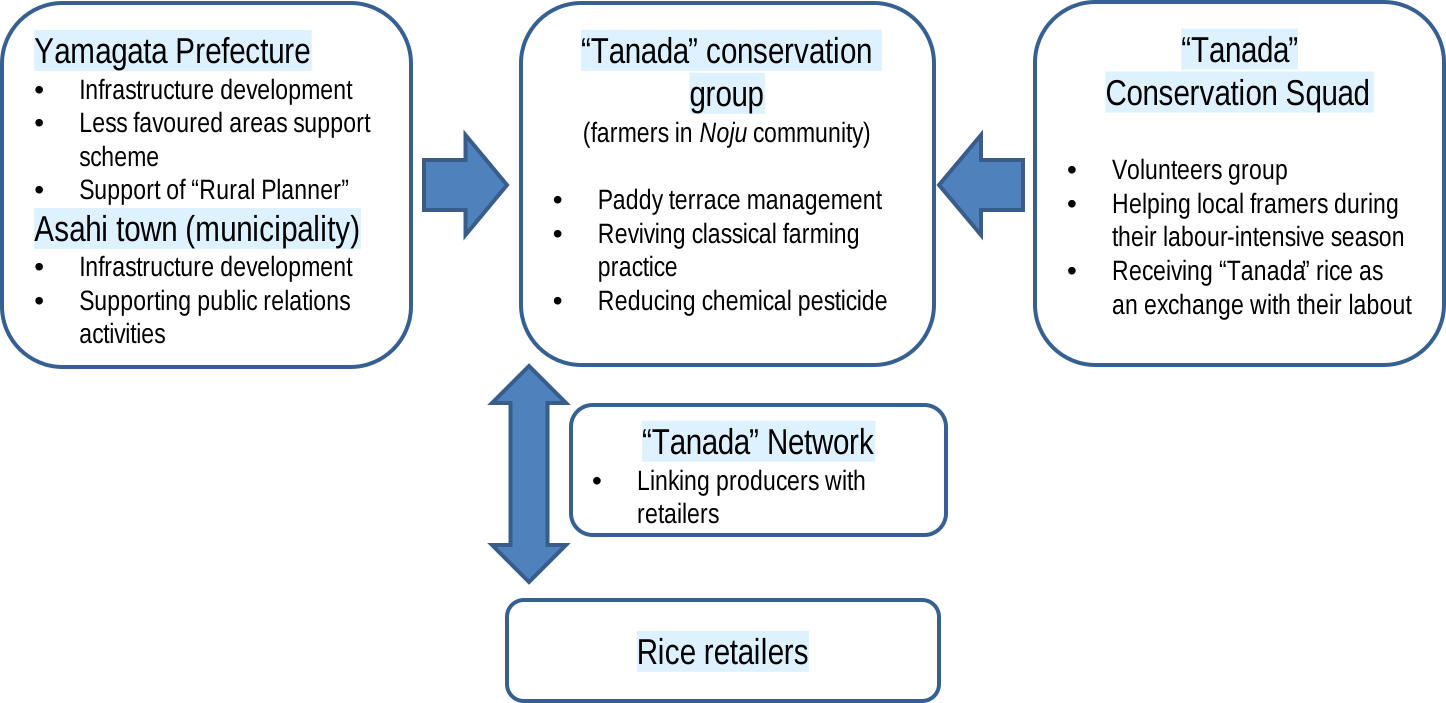
Source: Author’s drafting based on the interviews made at physical mission
Public-Private partnership at regional scale: Sake industry
The second case study introduces the public-private partnership to revive the sake industry of Yamagata, initiated by an association of local sake breweries (private sector) and the Yamagata Research Institute of Technology (public sector). They established the Yamagata Sake Brewing Research Society called Yamagataken Kenjokai (hereafter, Research Society) to valorise the terroir4 of the Yamagata landscape. Since sake is made of rice and water that are produced in a local terrain of landscape, the revival of sake production can help manage land in a sustainable manner. The initiative started due to the declining consumption of sake at the national scale dropping to less than 30% of its maximum consumption (National Tax Agency, 2022[66]). The Research Society thus developed a new type of quality sake to exploit new market opportunities. The Research Society was motivated to produce authentic local sake by mobilising a whole asset of terroir and encouraged member breweries to switch their production practices in a way to fully mobilise local assets. In addition to the production innovation, the Research Society also studied market strategy and encouraged member breweries to be more specialised on the production of special type of sake, called Ginzyo-shu with rich-flavoured and dry-tasted that is suitable to express local terroir with their products.
Exploring terroir assets is not a challenge that any single brewery can achieve, calling for collective actions of stakeholders, including in terms of innovation. Member breweries of the Research Society have shared their family-secret recipes with peer breweries to develop their brewing skills. Meanwhile, an indispensable piece for the initiative was R&D investment to develop original rice and yeast that are favourable for the terroir’s valorisation. The R&D investment was initiated by the Yamagata Research Institute of Technology, an internal institute of Yamagata Prefecture government. The initiative received significant commitments from a professional expert of the Research Institute, who are engaged in engineering works as well as aligning local stakeholders. These efforts of peer-peer linkage and public-private partnership have given Yamagata’s sake an outstanding achievement at sake competitions both at national and international levels. Yamagata’s sake has also been certificated to label them with Geographical Indicator (GI) to distinguish their products from other regions. Yamagata’s sake is the first of its kind to receive GI in the sake industry in Japan and is given to all sake product brewed in the Yamagata region. The Yamagata sake experienced a remarkable increase on exports: growing 24 times in two decades between 2001 and 2021. Besides, the new variety of rice developed by the research institute has replaced non-local rice which had accounted for around 80% of rice used for Ginzyo-shu production.
Capacity development programmes with holistic approach: Yamagata prefectural government
The third case study focuses on an initiative Yamagata rural community development planner (e.g. rural planner) developed by the Yamagata Prefecture government. It is a capacity development programme for its staff to enable them to organise and manage workshop programmes that could facilitate discussions and consensus among rural stakeholders. Given that the rural policy in the region is being more focused on endogenous development; self-initiated actions by local stakeholders are indispensable for the action to take place. The government sector can foster bottom-up activity by acting as a facilitator, co-ordinating partnership creation and providing a good institutional environment (OECD, 2014[63]), and the main motivation to launch the rural planner initiative can be found in this. The curriculum of the rural planner initiative has been developed based on the expertise gained through infrastructure projects for agricultural development, where a consensus among stakeholders needs to be made before a project starts. A prominent expert among the professional group, who’s been worked for around 1,000 communities, was committed to the generalisation of his on-site experiences for the launching of the rural planner initiative. The programmes are composed of classroom lectures and field training, where trainees visit a local community and have a practical experience to organise workshop and learn a process toward consensus making.
In line with this programme, the Yamagata Prefecture also initiated the horizontal linkage to promote dialogue amongst different departments of the prefecture. This horizontal co-operation among the same level of government is encouraged by a multi-level government framework (OECD, 2010[61]). Rural planners need to cover a wide range of policy support programme since rural issues and challenges stretch over a wide range of policy agenda. Local stakeholders expect rural planners to provide them with necessary policy support scheme. The first phase of the dialogue among departments was to establish a cross-sectional study group in the prefecture, so that the prefecture staff can learn from policy support of other departments. This study group has now developed into the more official form of policy dialogue, where policy makers exchange and share good practices from each department (Table 3.5). This silo-breaking dialogue works as a platform for the rural planner to share practical experiences and to find a necessary policy programme. So far, 27 prefecture staffs have been completed the course and certified as rural planner, and number of communities supported by rural planners amounts to 131. The case of Kunugidaira paddy terrace is one of such good examples supported by the rural planner. This Yamagata initiative has been recognised nationwide, and several other prefectures started to follow suit. Furthermore, the MAFF launched the rural area producers training course (MAFF, 2023[2]), adopting from the Yamagata method.
Source: Author’s drafting based on the interviews made at physical mission
Findings from the case study approach to understanding rural innovation and land-use management
Given that innovation initiative in rural areas being more motivated for economic principles, the lessons and implications learnt from the case studies show how innovative actions can be profitable enough to run as a business. However, business operation is not necessarily synonymous with profit maximisation of individual firms, rather, there exists a business model that can work for social or public interest as well. The lessons and implications learnt from case study are summarised below.
Market strategy
Less profitable land use activities will result in land abandonment which brings negative effects through multiple ways (Leal Filho et al., 2016[67]; Quintas-Soriano, Buerkert and Plieninger, 2022[68]), and profitability is the essential condition to keep economic activities running on the lands. Meanwhile, the vast majority of firms in rural regions are SMEs, that may need a larger market than is available locally to reach minimum efficient scale, so as to be able to pass high production costs onto a captive market (OECD, 2014[63]). Furthermore, they need to find a market where their market price could offset the high production cost that would enable them to avoid price competition against large enterprises as well as to earn profit with their economic activities.
In such cases, a niche market strategy can be essential for rural SMEs if they intend to continue their businesses. In a domain of marketing, a niche market is often discussed in terms of strategies of product differentiation and market segmentation (OECD, 1995[69]). The case studies confirmed that niche market strategy is indispensable to keep economic activities running on the land while avoiding price competition and the penalty of distance. As seen, there are several studies that point out the stagnation of sixth industry and the rural tourism initiatives being due to the lack of market strategy. On the other hand, the case studies reveal that the market strategies adopted is oriented at a niche market. The tanada rice changed its cultivation practice towards an environmentally and labour-intensive practices by targeting at a market where its production can be sold at a higher price that can offset the costs. Likewise, terroir sake exploited new market opportunity by shifting its brewing to produce more Ginzyo-shu, a type of rich flavour and dry taste.
The OECD (1995[69]) carried out a niche market study as a rural development strategy and identified several elements for the success of niche market summarised below:
Identifications of resources: identification and assessment of resources for economic development should be a starting point for niche market strategies. After the identification of key resources, the most important factors are initiative, entrepreneurship and partnership.
Organisational structure: focusing on shared interests in developing niche market activities. They are designed to help local entrepreneurs overcome handicaps and develop their advantages, both in starting up the business and maintaining the market.
Territorial linkage: territorial image can have a powerful appeal to consumers. One common strategy for marketing goods and services is to link them to such images as specific landscapes, cultural traditions or historic monuments.
Information, communication and transport networks: they are important aspects of successful niche market activities. They can help to improve the quality of products, reduce costs, and advert some of the risks changes in market demand.
Technical and financial assistance: Government provided technical or financial assistance can help establish economically feasible niche market projects that would otherwise probably not be possible. However, such aid should be adapted to local resources and supportive of project goals that are oriented to the market.
Applying the niche market strategy in the context of sustainable land-use management reveal some lessons based on the case studies summarised in three parts: local resource assessment, community and linkage, and public support.
Local resource assessment
The identification and assessment of local resources should be a starting point for niche market strategies (OECD, 1995[69]), and this is well confirmed through the case studies as well as national policy. The National Land Management Concept (NLMC), formulating its plans at national as well as sub-national level, takes a bottom-up approach to have local stakeholders discuss and decide the vision of land-use management at local level. Assessment of present condition of local area are included in NLMC plans at municipality and local level to serves as a source of discussion for local stakeholders to take their own initiative. MAFF’s innovation initiative, which is meant to be achieved by the mobilisation of resource, also starts from the assessment of local resources. In the regional level as well, the motivation of the tanada rice initiative can be found in the preservation of paddy terrace, and that the landscape is evaluated as more than just aesthetic values but as the iconic symbol to unite the community. The terroir sake initiative also places its values on its landscape, while attempting to internalise its non-market values. This reveals that those initiatives started their innovative actions by setting clear and well-expressed identification of local resources, and the clear resources identification is made possible with territorial boundaries. Territorial image can have a powerful appeal to consumers (OECD, 1995[69]), and a market strategy is facilitated when local assets are identified with territorial boundaries. A good example where the use of bottom-up initiative provides opportunities is found in the Community Futures program in Canada (OECD, 2024[57]). For its full discussion, see Box 3.4.
Although rural communities are well equipped to identify their local development opportunities (OECD, 2020[62]) and they should have the right to identify their own strengths and potential, they are embedded in rural settings and are parts of the local resources, in a sense, and it is difficult for stakeholders themselves to evaluate their own surroundings and identify their assets. The government sector can foster bottom-up activity by acting as a facilitator, co-ordinating partnership creation and providing a good institutional environment (OECD, 2014[63]). This is the significant point that Yamagata case studies reveal. At national-level as well, NLMC acknowledges the role of public sector at municipal level to support the inclusive and bottom-up approach at local level. The rural planner initiative at Yamagata as well as the rural area producers training course (MAFF, 2023[2]) of MAFF also places resource-assessments lectures at the beginning of the curriculum.
The Canadian national government created the Community Futures Program (CFP) in 1985 as a new initiative to address chronic levels of unemployment and underemployment in rural parts of the country. Because the CFP focused on strengthening economic development, it used local labour markets to identify a “community” and this meant that smaller places had to apply jointly, while larger places could apply individually. The programme required applicants to demonstrate that all parts of the community (local governments, business organisations and civil society) were involved in developing an economic strategy that would guide how support provided by the federal government would be used. If successful, applicants would receive support for five years, with the potential for renewal. To implement the strategy, each successful applicant had to create a local Community Futures Development Corporation (CFDC). While a rigid evaluation process was not established, each recipient was assigned a civil service case officer who provided technical support and monitored progress. Five support mechanisms were established that applicants could choose among depending on their specific strategy (Andison, 1990[70]):
1. Assistance for workers to become self-employed, providing income support for new establishments.
2. Funding for a BDC that operates as a subsidiary of the CFDC. The centre receives money for operations, including providing technical support to local businesses and CAD 1 million to establish a revolving loan fund to support local businesses.
3. Funding to provide relocation assistance for people to leave the community and seek employment elsewhere.
4. Support for a Community Initiative Fund (CIF) to invest in a single project intended to have a major impact on the community. Up to CAD 1 million is provided to the CIF through cost-sharing by the community is required.
5. Funding to offer training to increase local people’s skills and improve their employment prospects.
Most funded communities chose support from BDCs and CIFs since these provided the greatest medium-term support and had the greatest local impact (Freshwater and Ehrensaft, 1993[71]). But these two options also placed greater requirements on members of the community to come together around a single agreed-upon investment project in the case of a CIF and to make a long-term commitment to creating and operating a local financial intermediary in the case of a BDC. While the CFP is described as an economic development programme, it initially encouraged the formation of a strong core of local capacity. It enhanced local cohesion by ensuring a broad spectrum of community interests was involved, starting with the initial application, and that government, businesses and civil society were all represented in the CFDC (Ehrensaft and Freshwater, 1992[72]). The way the CFP was designed required participants to work collaboratively through all stages of the process, from first applying for support to creating and implementing their strategy. Communities had to choose to apply and make a significant commitment of residents’ time and resources. This process only took place in communities prepared to build local social capital as a precursor to receiving support for local economic development.
The CFP continues to operate in most rural areas of Canada but in a significantly different way: its main function today is to support business development (Larsson, Fuller and Pletsch, 2012[73]). Over time, the majority of the revolving loan funds have expanded the size of their investment portfolio by making profitable loans, which has increased the availability of support for local businesses.
Source: Andison, M. (1990[70]), “Community futures: An evaluation of a top-down approach to community economic development”, https://doi.org/10.14288/1.0098506; Freshwater, D. and P. Ehrensaft (1993[71]), “Initial results from the implementation of Canada’s Community Futures Program”, Agricultural Experiment Station, College of Agriculture, University of Kentucky; Ehrensaft, P. and D. Freshwater (1992[72]), “Rural development strategies that work (working title)”, Nelson-Hall; Larsson, L., T. Fuller and C. Pletsch (2012[73]), “Business and community approaches to rural development: Comparing government-to-local approaches”, Journal of Rural and Community Development, Vol. 7/2.
Community and linkage
After the identification of key resources, the most important factors are initiative, entrepreneurship and partnership (OECD, 1995[69]). Meanwhile, in the rural setting, especially when it comes to local resource assessment which has a strong connotation with amenities, protection of amenities may occur as part of broader collective action for economic development at the local or regional level (OECD, 1999[53]). Collective action is an action taken by a group to achieve common interests (OECD, 2013[60]). Comparing to the scale of nature, activity made by each individual human is too small to work and change the environment. A bottom-up approach calls for the collective actions of local stakeholders and the collective action can be made on the premises that consensus is made among local stakeholders, and they are working for the same objectives. The case studies of Yamagata regions demonstrate the collective actions of local stakeholders working for the common interests: paddy terrace preservation and revitalisation of local breweries. The typical strategies intended to encourage collective action are generally aimed at creating favourable institutional conditions, empowering local community members to make decisions affecting their own communities, providing incentives to initiate collective action, and providing various kinds of support including both facilitation and funding (OECD, 1999[53]). At the national government level, MAFF is advancing rural RMO (Region Management Organisation) initiative to create an alternative platform to compliment local communities in those areas where basic support provision is diminishing. Although community empowerment is a critical issue, how we can define the range of community is another issue to consider.
A community can go beyond an administrative boundary, and new type of community can even be formed via on-line network (Ohe, 2020[9]). While the resource assessments may demarcate boundaries of communities, linkage is an indispensable factor for a community to break the penalty of distance. Tanada rice initiative covers up labour shortage by linking with volunteers and explored new market opportunities with the help of NPO. Linkage is not only referring to a simple connection of different sectors. A multi-level governance encourages public sectors to engage in co-ordination across different level of government as well as among the same levels of government (OECD, 2010[61]). The rural planner initiative at Yamagata Prefecture is a holistic approach and linking different departments in the prefecture government. The SMEs in rural regions can benefit from policies that improve various types of networks – transportation, business, professional and telecommunications (Freshwater et al., 2019[74]). Better networked firms have access to a variety of resources – financial, technological and human (Moreno and Casillas, 2007[75]). Besides, individual SMEs in a rural region have few local peers in the same industry, it is important for local governments to support opportunities for firms in specific industries to build professional networks through meetings and electronic means (Freshwater et al., 2019[74]). Information, Communication and Transport Networks are important aspects of successful niche market activities (OECD, 1995[69]).
Public support
Government can, by providing technical or financial assistance, establish economically feasible project targeted at the niche market that would, otherwise, not be possible (OECD, 2018[76]). A type of natural-resource exploitation calling for R&D investment and infrastructure development are not feasible option for local community and SMEs. As discussed, the successful achievement of the terroir sake is more owing to the R&D investment by the Yamagata Research Institute for Technology. This type of production innovation with R&D investment would not have been achieved solely by the efforts of local breweries. tanada rice initiative is also owing its achievement to infrastructure development projects supported by local governments. Information, communication and transport networks are important aspects of successful niche market activities (OECD, 1995[69]). Advancing digitalisation is also a task for public sectors to play a role. Given that demographic change brings labour shortage to less-favoured areas, digital action in hilly and mountainous areas is set in place to manage national land in sustainable and cost-effective manner. Digitalisation is achieved through developing physical infrastructure as well as improving digital literacy of rural stakeholders.
While R&D and infrastructure development are investments that rural SMEs cannot make on their own and that public support is most needed, the most significant takeaway from case studies is the role of public entrepreneur. Public entrepreneurs are individuals within government institutions that can identify opportunities, leading to the development of new business ideas that could help achieve socio-political objectives by harnessing resources to help achieve the identified objectives (Ramamurti, 1986[77]). While an entrepreneur is a person who seeks to earn profits within the context of a market economy, in non-market economies, its role is played by bureaucrats and other decision makers who respond to incentives other than profit to guide their choices about resource allocation decisions (The University of Minnesota, 2011[78]). Although profitability is the fundamental factor to keep running economic activities on the lands and a niche market strategy is an essential policy for small-scale rural enterprises to survive in market economy, case studies reviewed so far are initiatives to internalise non-market values, comprising social objectives to bundle collective actions. Market strategy, resource assessments, linkage, all those elements are necessary conditions for sustaining economic activities, but all those tasks are set in place with the help of a public entrepreneur who works for social interests. The tanada rice and terroir sake were navigated with the strong commitments of engineering staffs working for Yamagata Prefecture government. Their full details are summarised in Box 3.5.
An agricultural development engineer
The paddy terrace renaissance initiative is one of the most successful examples of the Yamagata rural community development planner. This initiative was mainly supported by Nobuhiro Takahashi, an engineer for agricultural development at Yamagata Prefecture, whose professional experiences has served as a template in developing training programmes of rural planner. Takahashi, now a retired engineer from the prefecture, started his career as a rural planner. Initially, he had worked in the farmland consolidation projects, in which crooked shape farmlands are reshaped to rectangle one to improve labour productivity. The project entails the exchange of farmland ownership with consensus building among stakeholders as the starting point for the project, ones of the most challenging tasks of the project. Takahashi, throughout his professional experiences in the field, has acquired a heuristic method to facilitate discussion among stakeholders to reach a consensus on the project planification. He also realised that the expertise acquired through agricultural development could apply to other types of community-related projects and had come to work for other types of projects as well; having worked for over 1,000 cases. Even after his retirement from the prefectural office, Yamagata Prefecture government assigns him to be a principle lecturer to share his experiences with other young professionals. MAFF has started a rural area producers training course, derived from the rural planner” course of the Yamagata Prefecture. Takahashi is also delivering his lectures at MAFF’s programme.
A brewing engineer at Yamagata Research Institute of Technology
While Yamagata’s sake initiative places the value of its terroir at the principal concept for its market strategy, the most difficult challenge faced by the initiative was an internalising the non-market value of terroir. Although terroir can describe amenity values of the landscape in a single word, the terroir initiative would not have achieved as much success as it deserves now if Yamagata’s sake has not been as successful for consumers. Besides the branding strategy of the terroir demands individual breweries to follow a coordinated format of production, and, for the case of sake, a geographical indicator is only admitted if it is produced with locally grown ingredients by local engineers. Those challenges were only possible for local breweries to go over by working collectively, and this was navigated by Toshihiko Koseki, a brewing engineer working for the Yamagata Research Institute of Technology. Koseki, after working at the private sector for several years, started his professional career at the Yamagata Prefecture government, and devoted himself to secure the R&D investment needed for the valorisation of terroir for the development of new rice variety and new type of yeast, as well as new recipes. All of those developments were eventually patented. In addition to his commitment to technological development, it was his passion to revive the Yamagata sake industry through improved collective work across 50 breweries in the Yamagata Prefecture.
Source: Author’s drafting based on the interviews made at physical mission
Whereas Japanese rural definition is given roughly as non-urban areas, there are two types of typologies that account for rural differences made available for public use. These include the land-use typology by MAFF and the FUA boundary by OECD (Annex Box 3.A.1). The land-use typology is developed at municipality level and classifies every municipality into one of four categories. In contrast the FUA boundaries demarcates every municipality, based on distance and population density, into either FUA or non-FUA area. Applying these two types of typologies enables to examine Japanese rural regions at municipality level with geo-demographic data: land area, distance, and population. With these rural categories, this annex examines the differences across rural categories in terms of land allocation, population density and population distribution. While analysis is made on municipality level, its results are summarised at 10 regional block level (Annex Table 3.A.1) to grasp the general trend across regional blocks.
Note: The classification of the regional block corresponds to the administrative boundary of regional office of MAFF. Note Chugoku and shikoku are divided as they are geographically separated.
Source: Author’s elaboration.
Functional urban areas (FUAs) follow a functional criterion by grouping local areas according to work commuting flows. This makes the definition of FUAs a people-based approach, as it relies on people's work-related behavioural mobility patterns rather than administrative boundaries or morphological approaches like built-up space. A FUA consists of a densely inhabited city and of a surrounding area whose labour market is highly integrated with the city (OECD, 2012[79])
The EU-OECD framework defines FUAs using the following four-step procedure (Dijkstra, Poelman and Veneri, 2019[80]):
1. Identify an urban centre: a set of contiguous, high density (1,500 residents per square kilometre) grid cells with a population of 50,000 in the contiguous cells.
2. Identify a city: one or more local units that have at least 50% of their residents inside an urban centre.
Identify a commuting zone: a set of contiguous local units that have at least 15% of their employed residents working in the city.
Source: OECD (2012[79]) Redefining "Urban": A New Way to Measure Metropolitan Areas, Dijkstra, Poelman and Veneri (2019[80]): The EU-OECD definition of a functional urban area
MAFF develops land-use typology to collect data mainly for policy purpose of agricultural sector and categorises that cover rural areas are labelled as farming areas. However, demarcations are given based on population density and land-use data, and MAFF classification can well serve to be a general land-use typology, not only exclusively developed for agricultural purpose (Annex Table 3.A.2). Applying this typology, land allocation (Annex Figure 3.A.1), population density (Annex Table 3.A.3), and population distribution (Annex Figure 3.A.2) are first examined across regional blocks.
At national level, Annex Figure 3.A.1 reveals that 41.3% of total landmass locates in Mountainous farming areas, following 32.8% to Hilly farming areas, 14.0% to Flat farming areas and 11.8% to Urban areas. At regional block, some exceptions are observed, for example, in Kanto, Tokai, Kinki, Chugoku, Shikoku block, Urban areas are wider than Flat farming areas. Hilly farming area of Kyuhsu is wider than Mountainous farming area. On the other hand, population is more concentrated in Urban areas and Mountainous farming areas have the lowest density (Annex Table 3.A.3). Unlike the land allocation, population density gives no exception for the inverse proportion of distance and density. When it comes to absolute figures of population (Annex Figure 3.A.2), 81.2% of total population concentrates in Urban areas, and Flat farming areas and Hilly farming areas account for almost the same proportion: 8.2% and 8.1%, respectively. Looking at regional block level, Kinki, Chugoku, Shikoku, and Kyushu block have more proportion in Hilly farming areas than in Flat farming areas. This is partly due to the wider land allocation in Hilly farming areas of these regions.
Note: The typology first defines Urban areas followed by mountainous farming areas, and the remaining areas are split into Flat and Hilly. Housing rate = housing areas / total areas; farming rate = farm areas/ total areas; forest rate = forest areas / total areas. Hamlet is municipality boundary as of 1950
Source: MAFF (2020[32]) Agricultural area typology (in Japanese)
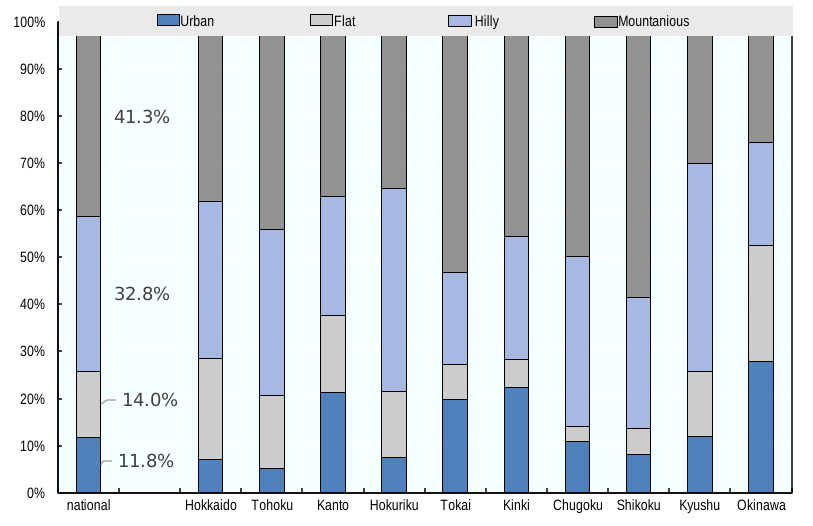
Note: Area of municipality is calculated from the boundary data
Source: municipality boundary data is derived from MAFF (2020[32]) Agricultural census 2020 (in Japanese)
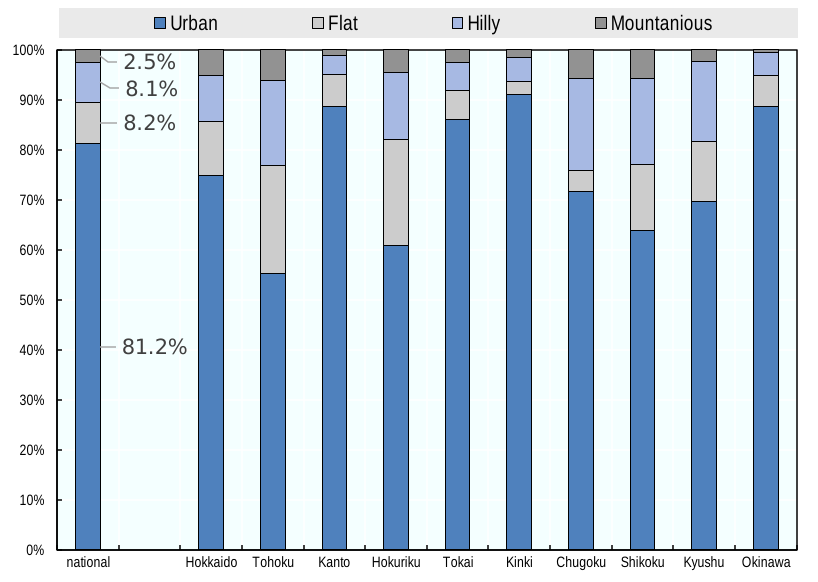
Source: Author’s own calculation; population data is derived from Population census (MIC, 2020[48])
Japanese population density is higher than OECD average: 334.5 /km2 against 38.54/km2. This is due to the geo-demographic condition of Japan: large population in comparatively narrow landmass. Besides, as around 70% of its landmass is covered with forests, inhabited rural areas locate closer to urban areas: rural-urban linkage needs to be considered in rural analysis. OECD’s FUA classification that conceptualises rural-urban continuum in its boundaries setting gives 61 FUAs in Japan against 47 prefectures (OECD, 2020[30]), warranting the analysis with FUA demarcations.
At national level, Annex Figure 3.A.3 reveals that FUA areas cover around 30% of national landmass and non-FUA areas cover the remaining portion. Whereas proportion of non-FUA in Hokkaido goes beyond 80%, those of Kanto and Kinki remained around 50%. On the other hand, population density of FUAs (Annex Table 3.A.4) at national level is around 9 times higher than non-FUAs. Yet, population density also reveals significant regional differences. Looking at the population distribution in absolute figure (Annex Figure 3.A.4), FUAs account for around 80% of total population and non-FUA around 20%. In Kanto, Tokai, and Kinki blocks where FUAs accounts for comparatively higher proportion of land mass, around 90% of the population resides in FUAs.
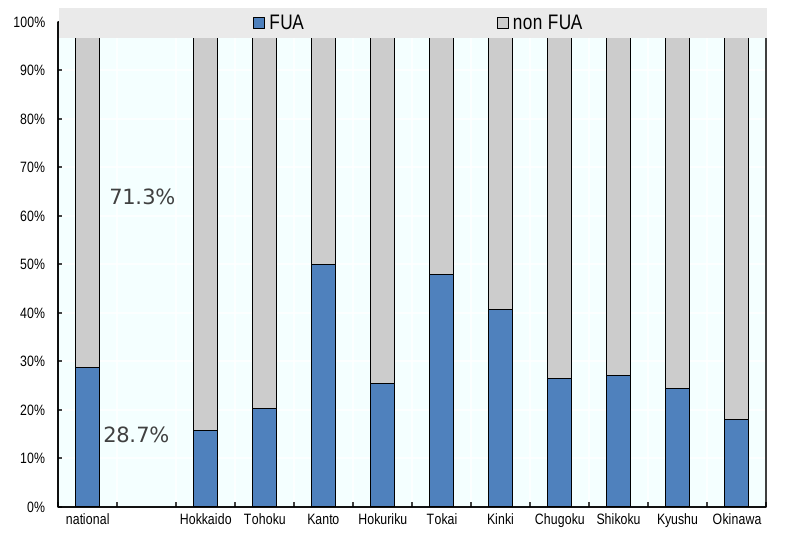
Note: FUA boundary corresponds to municipality boundary, and non-FUAs are municipalities that are not demarcated as FUA. OECD releases FUA boundary in shapefile format.
Source: OECD (2020[30]) Functional Urban Areas Japan
Note: population density is calculated by population and land-area data
Source: Population data: MIC (2020[48]) Population census 2020; FUA boundary: OECD (2020[30]) Functional Urban Areas Japan
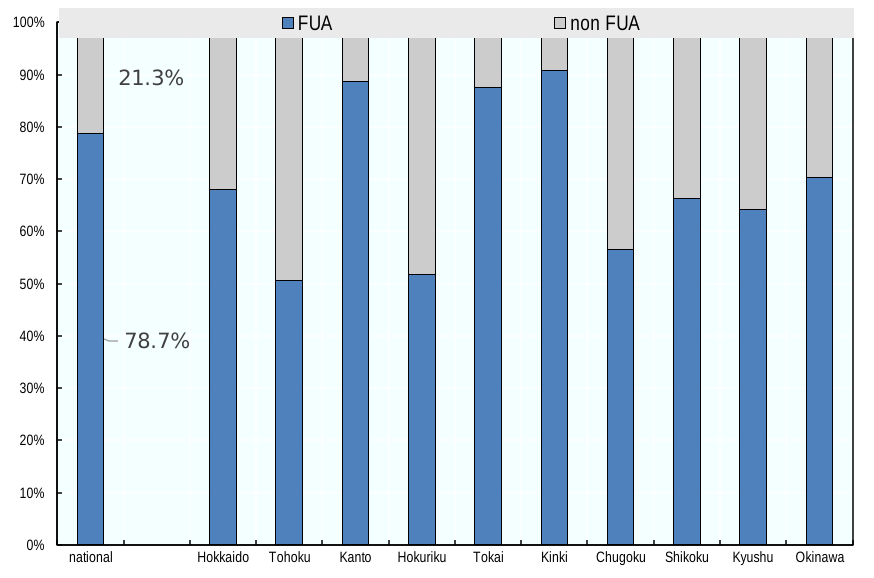
Source: Population data: MIC (2020[48]) Population census 2020; FUA boundary: OECD (2020[30]) Functional Urban Areas Japan
Whereas FUA boundaries is a powerful tool to examine the effect of distance over land allocation and population distribution, its demarcation is simply cutting between FUAs and non-FUAs. By conflating land-use typology over FUA boundaries, it creates 8 rural categories that give us more granular picture to observe rural differences. This synthesis is made possible, as both data sets are developed on municipality level, by simply linking both data set at the same municipality. Annex Figure 3.A.5 reveals that hilly and mountainous areas in non-FUAs account for 58.3% of national landmass. Even among categories that locate inside FUAs, hilly and mountainous areas cover more than half of FUAs. Regarding population density (Annex Table 3.A.5), in comparison to the same land-use categories between FUAs and non-FUAs, all land-use categories in FUAs show higher density than their counterparts in non-FUAs. This reveals that, regardless of the type of land-use, closeness to a city is a factor to bring more people. On the other hand, regarding the absolute figure of population (Annex Figure 3.A.6). Hilly areas in non-FUAs have the largest size of population among other categories, except for urban areas, following Flat areas in non-FUAs. In terms of the comparison of the same land-use categories between FUAs and non-FUAs, categories in non-FUAs have larger size of population than their counterparts in FUAs. This reveals the sharp contrast with population density, where land-use categories in FUAs have more density than their counterparts in non-FUAs. This is due to the wider extension of landmass of non-FUAs, and even if the population density of non-FUAs is lower than in FUAs, larger landmass can bring more people to non-FUA sides. If rural definition is simply approached by density and distance, this evidence would have been left latent. Land-use perspective is therefore another important lens to observe rural condition.
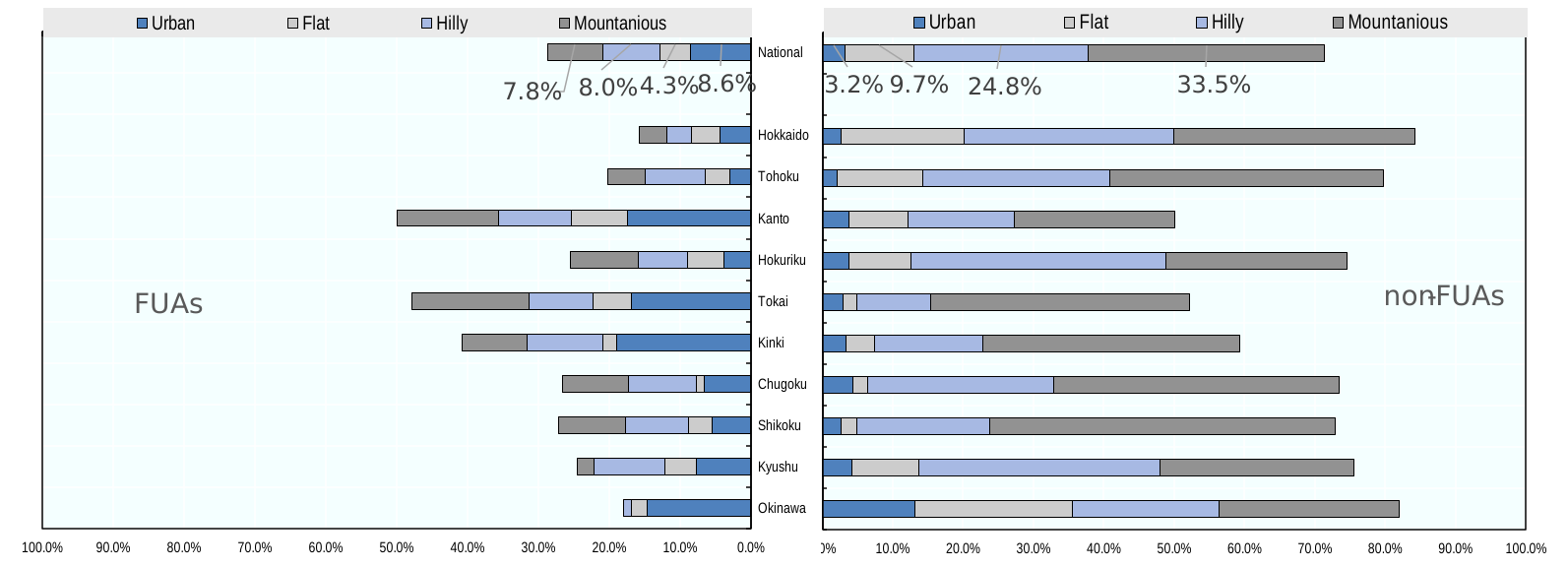
Note: Data of Figure 3.A.1 is split between FUAs (left wing) and non-FUAs (right wing).
Source: Population data: MIC (2020[48]) Population census 2020; FUA boundary: OECD (2020[30]) Functional Urban Areas Japan
Note: Data of Table 3.A.3 is split between FUAs and non-FUAs
Source: Population data: MIC (2020[48]) Population census 2020; FUA boundary: OECD (2020[30]) Functional Urban Areas Japan
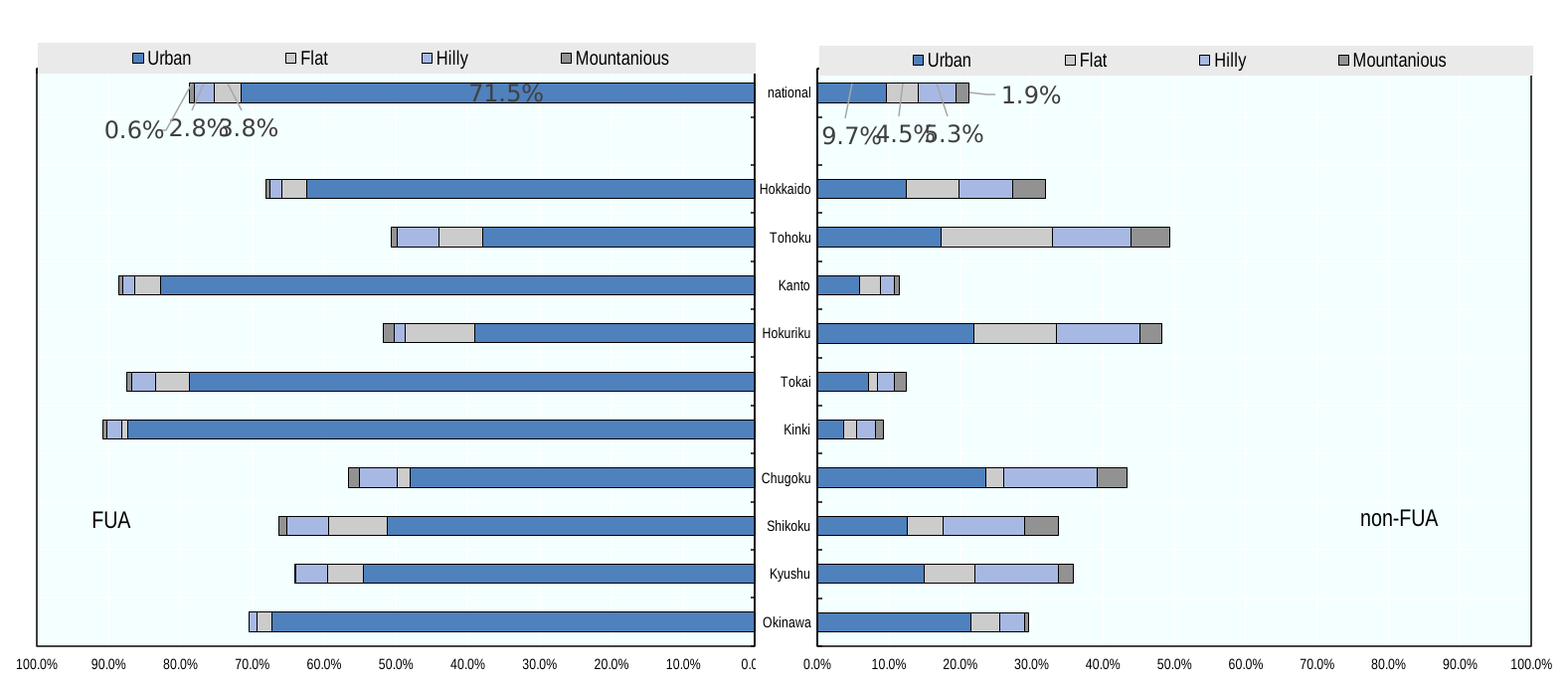
Note: Data of Figure 3.A.2 is split between FUAs (left wing) and non-FUAs (right wing).
Source: Population data: MIC (2020[48]) Population census 2020; FUA boundary: OECD (2020[30]) Functional Urban Areas Japan
In addition to land and population data, remoteness of rural community is measured by the driving distance from the centre of hamlet (municipality boundary as of 1950) to the nearest DID (MAFF, 2020[32]). The data set classifies hamlets into 5 groups according to driving time (Annex Table 3.A.6). As hamlets is a sub-demarcation of current municipality, every hamlet falls in either FUA or non-FUA boundary, a comparison between inside and outside the boundary can be made possible. The data reveals that, regardless of FUA boundary, group of 15-30 mins have the largest proportion of hamlets, followed by the group of less than 15 mins group. Then, looking with FUA boundary, the largest proportion is found in the group of 15-30 mins in non-FUA, followed by the group of less than 15mins in FUA; the third largest is found in the group of 30-60 mins in non-FUA. In terms of the total number of hamlets, hamlets in non-FUAs are larger than in FUAs: 60% against 40%, locating more hamlets in non-FUA. However, even without applying FUA boundary, group of 15-30 mins has the largest share than the group of less than 15 mins. This data is expressed in the number of hamlets and does not show the volume of population. However, when it comes to consider community level initiative, the distribution of hamlets should be considered since hamlet is the smallest administrative boundary.
References
[70] Andison, M. (1990), Community futures: An evaluation of a top-down approach to community, https://doi.org/10.14288/1.0098506.
[17] CAO (2021), General survey on public opinion (in Japanese), https://survey.gov-online.go.jp/hutai/r02/r02-it_kiki.html (accessed on 12 June 2024).
[45] Cesaro, L., P. Gatto and D. Pettenella (eds.) (2008), The Multifunctional Role of Forests - Policies, Methods and Case Studies, European Forest Institute.
[52] Denier, L. et al. (2015), The Little Sustainable Landscapes Book, Global Canopy Programme.
[80] Dijkstra, L., H. Poelman and P. Veneri (2019), “The EU-OECD definition of a functional urban area”, OECD Regional Development Working Papers, No. 2019/11, OECD Publishing, Paris, https://doi.org/10.1787/d58cb34d-en.
[72] Ehrensaft, P. and D. Freshwater (1992), Rural Development Strategies That Work (working title), Nelson-Hall.
[71] Freshwater, D. and P. Ehrensaft (1993), Initial results from the implementation of Canada’s Community Futures Program.
[74] Freshwater, D. et al. (2019), “Business development and the growth of rural SMEs”, OECD Regional Development Working Papers, No. 2019/07, OECD Publishing, Paris, https://doi.org/10.1787/74256611-en.
[38] GRIPS (2021), A provisional report on appropriate governance system for land-use policy in rural areas (in Japanese), https://www.grips.ac.jp/cms/wp-content/uploads/2021/09/RSG21-7%20InterimReport%EF%BC%9Anouson-jp.pdf (accessed on 22 July 2024).
[16] Haga, K. (2018), “Innovation in Rural Japan: Entrepreneurs and Residents Meeting the Challenges of Aging and Shrinking Agricultural Communities”, Journal of Innovation Economics & Management, Vol. n° 25/1, pp. 87-117, https://doi.org/10.3917/jie.pr1.0023.
[37] Japan association of city mayors (2017), A study report on appropriate land-use goverenace (in Japanese), https://www.mayors.or.jp/p_action/documents/290525tochiriyou_houkokusho.pdf (accessed on 22 July 2024).
[56] Jeanrenaud, S. (2001), Communities and forest management in Western Europe : a regional profile of WG-CIFM the Working Group on Community Involvement in Forest Management, IUCN, Switzerland, https://portals.iucn.org/library/efiles/documents/2001-061.pdf.
[73] Larsson, L., T. Fuller and C. Pletsch (2012), “Business and community approaches to rural Rural Development: Comparing Government-to-Local Approaches”, Journal of Rural and Community Development, Vol. 7/2.
[67] Leal Filho, W. et al. (2016), “An assessment of the causes and consequences of agricultural land abandonment in Europe”, International Journal of Sustainable Development & World Ecology, Vol. 24/6, pp. 554-560, https://doi.org/10.1080/13504509.2016.1240113.
[5] MAFF (2024), A pamphlet of policy support for regional development (in Japanese), https://www.maff.go.jp/j/nousin/hotline/attach/pdf/index-98.pdf (accessed on 5 June 2024).
[47] MAFF (2024), Basic data of agriculture, forestry, and fisheries (in Japanese), https://www.maff.go.jp/j/tokei/sihyo/index.html (accessed on 12 June 2024).
[29] MAFF (2024), Current status and issues of dilapidated farmland (in Japanese), https://www.maff.go.jp/j/nousin/tikei/houkiti/attach/pdf/index-27.pdf (accessed on 7 June 2024).
[3] MAFF (2024), General survey of sixth industry FY 2022 (in Japanese), https://www.maff.go.jp/j/tokei/kekka_gaiyou/rokujika/r4/index.html (accessed on 12 June 2024).
[58] MAFF (2023), Crop survey 2023 (in Japanese), https://www.maff.go.jp/j/tokei/kekka_gaiyou/sakumotu/menseki/r5/kouti/index.html (accessed on 14 June 2024).
[2] MAFF (2023), Summary of the Annual Report on Food, Agriculture and Rural Areas in Japan FY2022, https://www.maff.go.jp/e/data/publish/attach/pdf/index-224.pdf (accessed on 12 June 2024).
[32] MAFF (2020), Agricultural census 2020 (in Japanese), https://www.maff.go.jp/j/tokei/census/shuraku_data/2020/sa/sa_2020.html (accessed on 13 June 2024).
[11] MAFF (2019), A tentetive sumary of working goupr for rural tourism (in Japanese), https://www.maff.go.jp/j/nousin/kouryu/nouhaku/attach/pdf/arikata-20.pdf (accessed on 8 July 2024).
[28] MAFF (2007), Current status and issues of farmland abandonment (in Japanese), https://www.maff.go.jp/j/study/nouti_seisaku/senmon_04/pdf/data6.pdf (accessed on 19 July 2023).
[31] MAFF (no date), Agricultural area typology (in Japanese), https://www.maff.go.jp/j/tokei/chiiki_ruikei/setsumei.html (accessed on 11 June 2024).
[64] McCulloch, A., R. Meinzen-Dick and P. Hazell (1998), Property rights, collective action, and technologies for natural resource management: A conceptual framework.
[48] MIC (2020), National census 2020 (in Japanese), https://www.e-stat.go.jp/stat-search/file-download?statInfId=000032201208&fileKind=0 (accessed on 12 June 2024).
[26] MIC (2019), A Study of curret cnditions of communities in depopulated areas (in Japanese).
[27] MLIT (2023), National Spatial Strategy, data collection (in Japanese), https://www.mlit.go.jp/policy/shingikai/content/001611639.pdf (Accessed 14 May 2024) (accessed on 12 June 2024).
[59] MLIT (2022), Water resource in Japan (in Japanese), https://www.mlit.go.jp/mizukokudo/mizsei/mizukokudo_mizsei_tk2_000014.html (accessed on 14 June 2024).
[35] MLIT (2016), About the land-use planning policy (in Japanese), https://www.mlit.go.jp/common/001118983.pdf (accessed on 12 June 2024).
[34] MLIT (2006), What are natonal land use plans?, https://www.mlit.go.jp/english/2006/b_n_and_r_planning_bureau/02_useplans/ (accessed on 7 June 2024).
[75] Moreno, A. and J. Casillas (2007), “High-growth SMEs versus non-high-growth SMEs: a discriminant analysis”, Entrepreneurship & Regional Development, Vol. 19/1, pp. 69-88, https://doi.org/10.1080/08985620601002162.
[7] Nakano, K. (2014), “The “Sixth Industrialization” for Japanese Agricultural Development”, THE RITSUMEIKAN ECONOMIC REVIEW, Vol. 63/No.3,4, http://ritsumeikeizai.koj.jp/koj_pdfs/63304.pdf.
[66] National Tax Agency (2022), Sake report, https://www.nta.go.jp/taxes/sake/shiori-gaikyo/shiori/2022/pdf/001.pdf (accessed on 22 July 2024).
[51] O’Farrell, P. and P. Anderson (2010), “Sustainable multifunctional landscapes: a review to implementation”, Current Opinion in Environmental Sustainability, Vol. 2/1-2, pp. 59-65, https://doi.org/10.1016/j.cosust.2010.02.005.
[4] Odagiri, T. (2011), Rural Regeneration in Japan, https://www.ncl.ac.uk/media/wwwnclacuk/centreforruraleconomy/files/regeneration-japan.pdf (accessed on 22 July 2024).
[57] OECD (2024), Enhancing Rural Innovation in Canada, OECD Rural Studies, OECD Publishing, Paris, https://doi.org/10.1787/a9919c66-en.
[25] OECD (2022), Adapting Regional Policy in Korea: Preparing Regions for Demographic Change, OECD Rural Studies, OECD Publishing, Paris, https://doi.org/10.1787/6108b2a1-en.
[10] OECD (2022), Enhancing Innovation in Rural Regions of Switzerland, OECD Rural Studies, OECD Publishing, Paris, https://doi.org/10.1787/307886ff-en.
[24] OECD (2022), Shrinking Smartly in Estonia: Preparing Regions for Demographic Change, OECD Rural Studies, OECD Publishing, Paris, https://doi.org/10.1787/77cfe25e-en.
[23] OECD (2021), Delivering Quality Education and Health Care to All: Preparing Regions for Demographic Change, OECD Rural Studies, OECD Publishing, Paris, https://doi.org/10.1787/83025c02-en.
[14] OECD (2021), OECD Economic Surveys: Japan 2021, OECD Publishing, Paris, https://doi.org/10.1787/6b749602-en.
[33] OECD (2021), OECD Regional Outlook 2021: Addressing COVID-19 and Moving to Net Zero Greenhouse Gas Emissions, OECD Publishing, Paris, https://doi.org/10.1787/17017efe-en.
[43] OECD (2020), Environment at a Glance 2020, OECD Publishing, Paris, https://doi.org/10.1787/4ea7d35f-en.
[30] OECD (2020), Functional Urban Areas Japan, https://www.oecd.org/cfe/regionaldevelopment/Japan-fua.pdf (accessed on 13 June 2024).
[62] OECD (2020), Rural Well-being: Geography of Opportunities, OECD Rural Studies, OECD Publishing, Paris, https://doi.org/10.1787/d25cef80-en.
[36] OECD (2020), Towards Sustainable Land Use: Aligning Biodiversity, Climate and Food Policies, OECD Publishing, Paris, https://doi.org/10.1787/3809b6a1-en.
[15] OECD (2019), “How’s life in the digital age in Japan?”, in How’s Life in the Digital Age?: Opportunities and Risks of the Digital Transformation for People’s Well-being, OECD Publishing, Paris, https://doi.org/10.1787/9789264311800-23-en.
[13] OECD (2019), Innovation, Agricultural Productivity and Sustainability in Japan, OECD Food and Agricultural Reviews, OECD Publishing, Paris, https://doi.org/10.1787/92b8dff7-en.
[76] OECD (2018), “Enhancing Rural Innovation - 11th OECD Rural Development Conference”.
[54] OECD (2018), Mainstreaming Biodiversity for Sustainable Development, OECD Publishing, Paris, https://doi.org/10.1787/9789264303201-en.
[20] OECD (2017), Land-use Planning Systems in the OECD: Country Fact Sheets, OECD Regional Development Studies, OECD Publishing, Paris, https://doi.org/10.1787/9789264268579-en.
[21] OECD (2017), The Governance of Land Use in OECD Countries: Policy Analysis and Recommendations, OECD Regional Development Studies, OECD Publishing, Paris, https://doi.org/10.1787/9789264268609-en.
[65] OECD (2016), “Japan”, in OECD Science, Technology and Innovation Outlook 2016, OECD Publishing, Paris, https://doi.org/10.1787/sti_in_outlook-2016-70-en.
[19] OECD (2016), OECD Regional Outlook 2016: Productive Regions for Inclusive Societies, OECD Publishing, Paris, https://doi.org/10.1787/9789264260245-en.
[1] OECD (2016), OECD Territorial Reviews: Japan 2016, OECD Territorial Reviews, OECD Publishing, Paris, https://doi.org/10.1787/9789264250543-en.
[63] OECD (2014), Innovation and Modernising the Rural Economy, OECD Rural Policy Reviews, OECD Publishing, Paris, https://doi.org/10.1787/9789264205390-en.
[60] OECD (2013), Providing Agri-environmental Public Goods through Collective Action, OECD Publishing, Paris, https://doi.org/10.1787/9789264197213-en.
[39] OECD (2013), Rural-Urban Partnerships: An Integrated Approach to Economic Development, OECD Rural Policy Reviews, OECD Publishing, Paris, https://doi.org/10.1787/9789264204812-en.
[79] OECD (2012), Redefining “Urban”: A New Way to Measure Metropolitan Areas, OECD Publishing, Paris, https://doi.org/10.1787/9789264174108-en.
[61] OECD (2010), “Multi-level Governance: A Conceptual Framework”, in Cities and Climate Change, OECD Publishing, Paris, https://doi.org/10.1787/9789264091375-11-en.
[42] OECD (2009), Farmland Conversion: The Spatial Dimension of Agricultural and Land Use Policies, OECD Publishing, Paris, https://doi.org/10.1787/ae50672e-en.
[55] OECD (2001), Multifunctionality: Towards an Analytical Framework, OECD Publishing, Paris, https://doi.org/10.1787/9789264192171-en.
[53] OECD (1999), Cultivating Rural Amenities: An Economic Development Perspective, OECD Publishing, Paris, https://doi.org/10.1787/9789264173941-en.
[69] OECD (1995), Nichek Markets as a Rural Development Strategy.
[49] O’Hara, S. (1997), “Toward a sustaining production theory”, Ecological Economics, Vol. 20/2, pp. 141-154, https://doi.org/10.1016/s0921-8009(96)00024-9.
[9] Ohe, Y. (2020), Community-based Rural Tourism and Entrepreneurship, Springer Singapore, Singapore, https://doi.org/10.1007/978-981-15-0383-2.
[8] Onishi, C., K. Kato and T. Morishima (2022), “Support Measures for Solving Sixth Industry Issues: Text Mining and Self-Organization Maps”, Nogyo Keiei Kenkyu (Journal of agricultural business in Japan), (in Japanese), https://doi.org/10.11300/fmsj.60.2_1.
[68] Quintas-Soriano, C., A. Buerkert and T. Plieninger (2022), “Effects of land abandonment on nature contributions to people and good quality of life components in the Mediterranean region: A review”, Land Use Policy, Vol. 116, p. 106053, https://doi.org/10.1016/j.landusepol.2022.106053.
[77] Ramamurti, R. (1986), “Public Entrepreneurs: Who They are and How They Operate”, California Management Review, Vol. 28/3, pp. 142-158, https://doi.org/10.2307/41165207.
[46] Science Council of Japan (2001), An evaluation of multiple functions of agriculture and forestry for global environment and human lives (in Japanese), https://www.scj.go.jp/ja/info/kohyo/pdf/shimon-18-1.pdf (accessed on 12 June 2024).
[40] Seijger, C. et al. (2021), “Water and sectoral policies in agriculture–forest frontiers: An expanded interdisciplinary research approach”, Ambio, Vol. 50/12, pp. 2311-2321, https://doi.org/10.1007/s13280-021-01555-5.
[50] Strange, T. and A. Bayley (2008), Sustainable Development: Linking Economy, Society, Environment, OECD Insights, OECD Publishing, Paris, https://doi.org/10.1787/9789264055742-en.
[18] The Cabinet Secretariat’s Office (2022), Comprehensive Strategy for the Vision for a Digital Garden City Nation (DIGIDEN), https://www.cas.go.jp/jp/seisaku/digital_denen/pdf/20221223_gaiyou-e.pdf (accessed on 12 June 2024).
[12] The Government of Japan (2021), Vision for a Digital Garden City Nation, https://www.japan.go.jp/kizuna/_userdata/pdf/2022/spring2022/vision_for_a_digital_garden_city_nation.pdf (accessed on 22 July 2024).
[22] The Royal Society (2023), Multifunctional landscapes: Informing a long-term vision for managing the UK’s land.
[78] The University of Minnesota (2011), Principle of Economics, https://open.lib.umn.edu/principleseconomics/front-matter/publisher-information/.
[6] Uehara, K. (2019), “Policy issues and problems for the sixth-industrialization of primary sectors (in Japanese)”, Rippou to Chosa (legislation and investigation), Vol. 416, https://www.sangiin.go.jp/japanese/annai/chousa/rippou_chousa/backnumber/2019pdf/20191001108.pdf.
[44] United Nations (1993), Report of the the UnitedNations Conference on Environment and Development, Rio de Janeiro, 3-14 June 1992 Volume I.
[41] Zomer, R. et al. (2014), Trees on Farm: an update and reanalysis of agroforestry’s global extent and socio ecological characteristics, https://doi.org/10.5716/WP14064.PDF.
← 1. CAO: Cabinet office, MIC: Ministry of Internal Affairs and Communications, MAFF: Ministry of Agriculture, Forestry and Fisheries, MLIT: Ministry of Land, Infrastructure, Transport and Tourism, MEXT: Ministry of Education, Culture, Sports, Science and Technology, MHLW: Ministry of Health, Labour and Welfare, METI: Ministry of Economy, Trade and Industry, MOE: Ministry of Environment
← 2. the concept of policy complementarity refers to the mutually reinforcing impact of different actions on a given policy outcome.
← 3. In addition to agriculture and forestry, the study covers fisheries as well.
← 4. The term terroir has been adopted from wine production, referring to a broad range of elements that landscape connotates: natural environment, culture, and history.