The Africa’s Development Dynamics 2025 report addresses the question of how African policymakers can accelerate infrastructure development to transform the economies of the continent and its five regions. In 2025, Africa’s real gross domestic product (GDP) is projected to grow at 3.9%, outpacing the GDP growth of Latin America and the Caribbean (2.0%) but below that of developing Asia (4.4%). Investing in quality infrastructure can further boost economic growth, regional integration and employment. Integrated infrastructure networks can enhance firm productivity and connect trade networks, contributing to fulfilling the African Union’s Agenda 2063 vision of “world-class infrastructure crisscrossing Africa” (AUC/OECD, 2019[1]; AU, 2015[2]). Infrastructure is also a precondition for productive transformation – the reallocation of capital and labour towards the more productive segments of an economy (AUC/OECD, 2019[1]). The report assesses investment and financing opportunities for Africa’s infrastructure and offers policy options to improve the strategic prioritisation and effective governance of infrastructure projects.
Africa's Development Dynamics 2025

Infrastructure investments of USD 155 billion per year until 2040 will allow African economies to grow faster and achieve productive transformation. This report uses a novel methodology to estimate the investments needed for African countries to match the infrastructure of benchmark developing countries that achieved the highest levels of productive transformation.1 Focusing on productive transformation – and the related infrastructure investment needs – is strategic to achieve Agenda 2063 and the United Nations (UN) Sustainable Development Goals (SDGs) (AUC/OECD, 2018[3]; 2023[4]). The results of the report’s methodology suggest an average annual investment need of USD 155 billion until 2040. This annual need is equivalent to 5.6% of the continent’s GDP in 2024. This figure is more than three times larger than that of Latin America and the Caribbean (1.7%) and five times larger than that of developing Asia (1.0%). East and Central Africa are the African regions with the largest infrastructure investment needs relative to their GDP, at 9% and 8%, respectively (Figure 1). Fifty-eight per cent of the investment needed to accelerate the continent’s productive transformation is necessary for building new infrastructure, while 42% is essential for maintenance. This report’s projections of Africa’s infrastructure investment needs are comparable to those of other studies, though the underlying methodologies and research objectives vary.2
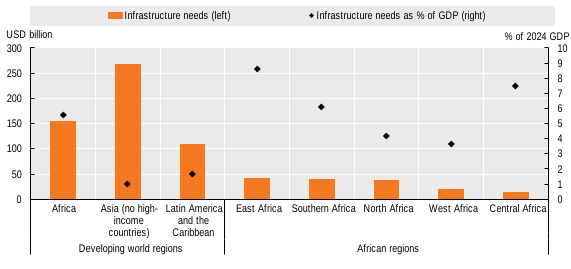
Note: Infrastructure investment needs refer to modelled estimates of the total expenditures required to build new infrastructure to match the infrastructure levels of peer countries that perform well in productive transformation, while also maintaining existing infrastructure. See Annex 1.A for details. GDP = gross domestic product.
Source: Data sources for the investment needs estimations are listed in Annex 1.A.
If Africa could reach these investment levels, it would reap larger gains than other world regions, doubling its GDP by 2040. Filling estimated investment needs could raise Africa’s average annual GDP growth by 4.5 percentage points by 2040, compared to 1.5 percentage points in Latin America and the Caribbean and 0.3 percentage points in developing Asia. Central Africa is the African region projected to experience the largest GDP increase (6.2 percentage points), followed by East Africa (6.0 percentage points), West Africa (5.4 percentage points), Southern Africa (4.2 percentage points) and North Africa (3.5 percentage points). Investing USD 155 billion per year would grow Africa’s total GDP by an additional USD 2.83 trillion by 2040, more than double the USD 2.80 trillion in 2024. This big push from infrastructure would also help the continent surpass the Agenda 2063 objective of 7% annual GDP growth per year.
African governments spend less on infrastructure than other governments pursuing infrastructure-led development. According to the most recent comparable data, investments in Africa’s infrastructure, from government, development partners and private sector, averaged USD 83 billion per year between 2016 and 2020, amounting to just over half of the investment need estimated in this report (ICA, 2022[5]). Forty-one per cent of this spending came from African governments, 48% from development funders and 11% from private investors. Over this period, African governments spent an average of 1.3% of their GDP (USD 34 billion) on infrastructure per year, far below the rates pursued by countries that have adopted an infrastructure-led approach to development, such as the People’s Republic of China (hereafter “China”) (6.7%) or Viet Nam (5.1%). By 2019-20, four African governments3 had allocated more than 5% of their GDP to infrastructure. More countries can do so.
Limited fiscal space and growing sovereign debt burdens constrain African government spending on infrastructure. Between 2009-13 and 2019-23, the time it would take to repay the public debt using tax revenues increased from 2.8 years to nearly 5 years, rising faster than in developing Asia (+1.3 years) and in Latin America and the Caribbean (+1.2 years) (Kose et al., 2022[6]). African countries with low scores in the UNDP Human Development Index (HDI) face the tightest conditions. They would need over five years to repay their debts from 2019-23. In 2019-23, African governments spent on average seven times more on debt service than on infrastructure. The significant increase in debt service can be partly attributed to the high interest rates applied to sovereign debt. Africa’s top infrastructure financiers, such as the World Bank, China, the AfDB and bilateral creditors, apply vastly different interest rates to different countries, ranging from 0.2% to 7.7% (World Bank, 2024[7]). As a result, government spending on interest payments surpasses spending on infrastructure in 15 African countries.
Private investment in infrastructure remains limited, partly due to risk perceptions and macroeconomic conditions, which increase the cost of capital. Global private infrastructure investment tripled between 2013 and 2022; however, most African countries did not benefit. During this boom, Africa attracted only 6-8% of global annual investment (Auriol and Saussier, 2025[8]). The present report estimates the weighted average cost of capital for infrastructure projects to be 13% in Africa, compared to 10% in developing Asia and 8% in OECD countries. On average, the cost of equity is 1.6 times higher in Africa than in OECD countries, while the cost of debt is 2.5 times higher (Annex 1.B). The latter, measured by commercial lending rates, averaged 18.6% in Africa, compared to 11.4% in developing Asia and 7.2% in OECD countries.
Returns on infrastructure and reforms of regulatory frameworks can appeal to private investors. While infrastructure project costs and timelines can be up to 60% higher in Africa than in developed countries, expected returns on investment on infrastructure projects can reach up to 20%, some of the highest in the world (MiDA, 2018[9]). Infrastructure-related investments in Africa in energy, water and communications exhibit default rates of about 4-5% – the lowest value of all sectors – reflecting investors’ cautious and highly selective approach to infrastructure projects. However, average default rates in the three sectors were higher in Africa, excluding North Africa, than in other world regions between 2013-23 (GEMs, 2024[10]). South Africa and Egypt managed to attract large shares of private infrastructure investment over 2013-23, accounting for 21% and 15%, respectively, of Africa’s total.4 Robust regulatory frameworks and active investment promotion supported initiatives such as South Africa’s Renewable Energy Independent Power Producer Procurement Programme (REIPPP) and Egypt’s issuance of Africa’s first sovereign green bond.
The recent decline in development finance flows to infrastructure disproportionately affects countries with lower development levels. Despite notable growth in annual development finance for infrastructure, increasing by approximately USD 5 billion between 2010 and 2023, current geopolitical and macroeconomic conditions are placing increasing pressure on development co-operation. Overall disbursements already decreased from USD 16.6 billion in 2022 to USD 14.8 billion in 2023 (OECD, 2025[11]). Furthermore, preliminary estimates for 2024 suggest that net bilateral official development assistance (ODA) flows from members of the OECD Development Assistance Committee (DAC) to all sectors in Africa fell by 1% in real terms compared to 2023 (OECD, 2025[12]). African countries could face a projected 16-28% decline in ODA between 2023 and 2025 (OECD, 2025[13]). This decline primarily affects countries with lower development levels. In 2023, only ten African countries5 (including four medium and high-HDI countries) captured 59% of official development finance for infrastructure.
Meeting Africa’s infrastructure investment need requires improving sovereign debt conditions, addressing risk perceptions that deter private and public investors, increasing development finance, and expanding the role of large development funders. The priorities discussed at the Fourth International Conference on Financing for Development in Sevilla (FfD4), 30 June-3 July 2025, can serve as a concrete roadmap (UN, 2025[14]). Table 1 illustrates potential pathways to scale up infrastructure-related funding in Africa and mobilise USD 155 billion per year. Under current trends, around USD 90 billion per year would be mobilised for infrastructure development by 2040.
First, governments need better sovereign debt conditions and improved revenue collection to expand their fiscal space. An additional USD 51 billion could be unlocked each year by: i) raising tax revenues from the current average of 16% of GDP to the average level of Latin America and the Caribbean (21.5%); ii) reducing debt servicing to the levels that African countries faced following the major debt relief initiatives of 2010; and iii) increasing the average allocation of public spending on infrastructure by a mere 0.7 percentage points. Using the most recent data, from 2022, 6 of the 36 countries included in Revenue Statistics in Africa 2024 recorded a tax-to-GDP ratio above 21.5%, while 19 had a ratio below 15% (OECD/AUC/ATAF, 2024[15]). FfD4 recommends doubling capacity support by 2030 to countries that aim to increase their tax-to-GDP ratio to at least 15%.
Second, transparent information on risks is key to reducing the cost of capital and boosting private investment. Information on risks at the country and sectoral levels is often too limited to enable private investors to accurately identify opportunities and assess risks. As of 2024, only 33 African countries had ever received a credit rating (UNDP, 2024[16]). Even when available, data quality and methodologies raise concerns. A cost of capital commission, as proposed by the South African Presidency of the G20, or the African Union’s forthcoming credit rating agency, could help address some of these issues. Joint initiatives, such as the African Virtual Investment Platform launched by the African Union and the OECD in 2025, could also help fill information gaps. If such efforts could double private investments as a share of GDP from 0.3% to 0.6% by 2040, an additional USD 8 billion per year would be mobilised.
Third, renewed international co-operation is needed to reverse the decline in bilateral official development assistance. FfD4 highlighted the importance of international co-operation for infrastructure development. Notable commitments include: i) reversing reductions in official development assistance (ODA) to reach existing targets of 0.7% gross national income (GNI); ii) supporting the development of trade-related infrastructure and transport corridors; and iii) doubling Aid for Trade to least-developed countries by 2031, including a minimum allocation of 50% for trade-related infrastructure. Reversing the drop in ODA from members of the OECD DAC to reach the existing target of 0.7% of GNI by 2040 would unlock at least an additional USD 4 billion for infrastructure per year.
Fourth, the role of multilateral development banks and other large funders should be expanded. Development banks had already doubled infrastructure-related disbursements from USD 4.2 billion in 2010 to USD 8.2 billion in 2023 (OECD, 2025[11]). While still reliant on bilateral contributions, as illustrated by the funding cuts to the African Development Bank in 2026 recommended by the United States (US),6 development finance institutions could accelerate reforms to better leverage capital markets, ensuring more sustainable operations and greater development impact. Reallocation of special drawing rights through development finance institutions, as suggested by the South African Presidency of the G20, could also help. Initiatives such as the European Union’s Global Gateway and the G7’s Partnership for Global Infrastructure and Investment are supporting such efforts through direct project financing and de-risking of private investments from within and outside the continent. Overall, doubling multilateral finance to 1.1% of GDP until 2040 could raise an additional USD 6 billion per year.
Note: The table presents three scenarios to estimate how Africa could meet its USD 155 billion annual infrastructure investment need by 2040. All scenarios rely on gross domestic product (GDP) projections from the International Monetary Fund (until 2029) and linear extrapolations through 2040. In the first scenario, the shares of GDP allocated to infrastructure by governments, the private sector and development finance remain constant at pre-2024 levels. In the second scenario, while governments maintain infrastructure spending at 1.3% of GDP, they gradually increase their tax-to-GDP ratios from 16% in 2022 to 21.5% by 2040 (average for Latin America and the Caribbean). At the same time, debt servicing gradually drops from 25% of tax revenue in 2023 to 2010s levels of 9% by 2040. Private investment in infrastructure and multilateral finance as a share of GDP double by 2040, and bilateral official development assistance from members of the OECD Development Assistance Committee rises progressively to meet the United Nations target of 0.7% of gross national income by 2040. In the third scenario, governments progressively increase their infrastructure allocation from 1.3% to 2% of GDP by 2040; resource mobilisation, debt reduction, private investment and development finance increase as in Scenario 2.
Source: OECD (2025[11]), Creditor Reporting System (database), https://www.oecd.org/en/data/datasets/development-finance-statistics-data-on-flows-to-developing-countries.html; OECD/AUC/ATAF (2024[15]), Revenue Statistics in Africa 2024; ICA (2022[5]), Infrastructure Financing Trends in Africa 2019-2020; IMF (2025[17]), World Economic Outlook Database, https://www.imf.org/en/Publications/WEO/weo-database/2025/April.
Policies need to ensure that infrastructure development generates significant social returns, beyond economic growth. A systematic review of 110 studies conducted for this report7 highlights that, in aggregate, infrastructure in African countries has had significant positive effects on human development, poverty reduction, and access to and quality of employment. For instance, every US dollar invested in climate-resilient water and sanitation infrastructure returns at least USD 7 in socio-economic gains through improvements in health and education, food security, and progress towards the SDGs (AU, 2023[18]). Evidence from 29 African countries suggests that the lack of reliable energy access, affecting 68% of African manufacturing firms, leads to a significant reduction in employment in non-agricultural occupations and skilled jobs (Mensah, 2024[19]).
Given limited available financing, targeting infrastructure investment can help maximise gains. The magnitude of the benefits of infrastructure development varies within and across countries and over time, depending on initial endowments and the types of infrastructure targeted (Das, Stern and Timilsina, 2024[20]). Integrating complementary infrastructures may unlock larger gains. In East Africa, for instance, combining transport corridors with investments in energy infrastructure has increased the shift from low-productivity agriculture to manufacturing and services: the combination has reduced the share of agricultural employment by a factor of 2.5 compared to road investments alone (Dappe and Lebrand, 2021[21]).
The cost-effectiveness of different infrastructure types has varying impacts on productive transformation
Investments in specific types of infrastructure can be more cost-effective than others for achieving productive transformation. The results of the economic modelling conducted for this report (see Annex 1.A) suggest that only certain types of infrastructure have a direct, statistically significant relationship with productive transformation. This does not diminish the importance of other infrastructure types, which may yield other substantial socio-economic benefits, such as improved water and sanitation infrastructure resulting in a healthier population (Banerjee and Morella, 2011[22]). Still, to accelerate productive transformation, the estimated investment needs are especially large for roads (32% of the total), railways (24%), fibre-optic cables (23%) and solar panels (17%) (Figure 2).8

Note: Lines show fitted values from regressions estimating the relationship between each type of infrastructure and the index of productive transformation. Bars show confidence intervals. Dots represent the raw data points. Details are in Annex 1.A.
Source: Data sources are listed in Annex 1.A.
The cost-effectiveness of infrastructure investments depends on a country’s initial infrastructure endowment, with different types of infrastructure offering varying returns.9 This report compiles unique infrastructure cost data (USD per additional kilometre or megawatt) to determine cost-effectiveness (Table 2; Annex 1.A). Road infrastructure is highly cost-effective in low-transport-density countries, where expanding road stocks yields strong returns. However, as road density increases, the marginal benefits decline, making further investments less cost-effective. On average, building railways and installing fibre-optic cables are cost-effective options for productive transformation. While railways have the highest unit costs, they also deliver substantial returns (they have the highest marginal effects) and pollute less than road transport. In contrast, fibre-optic cables offer lower returns but are also the least expensive infrastructure type per unit. Solar energy also provides substantial benefits, especially in countries with high transport density.
Note: The detailed methodology is explained in Annex 1.A.
Source: Data sources are listed in Annex 1.A.
Well-targeted infrastructure investments can boost regional value chains and narrow rural-urban divides
Better transport, digital and energy infrastructure would improve Africa’s value chain integration and productivity. Integrating Africa’s continental infrastructure across national borders could yield vast economic returns. Operationalising regional transport networks laid out in the Programme for Infrastructure Development in Africa (PIDA) is estimated to augment exports by 11.5% and the overall GDP growth rate by up to 2% (Fontagné et al., 2022[23]). In recent years, African countries that benefited from larger infrastructure loans towards transport, digital and energy infrastructure experienced an increase in their participation in global value chains in subsequent years, especially in downstream segments (Amendolagine, Presbitero and Rabellotti, 2024[24]).10
Strengthening infrastructure within and between cities is key for achieving productive transformation and narrowing rural-urban divides. By 2050, two out of three Africans will reside in an urban agglomeration, and the total urban land area is expected to more than double, accelerating the demand for urban infrastructure (OECD et al., 2025[25]). For instance, a 10% increase in urbanisation can raise electricity consumption by almost 4% (El-Bouayady et al., 2024[26]). At the same time, Africa is the only continent where the rural population will continue growing in absolute terms in parallel to increasing urbanisation. Therefore, additional infrastructure will also be necessary in rural areas. This was already the case in 2021, when less than 20% of rural households had access to electricity, compared to 80% in cities with over 1 million inhabitants (OECD/UN ECA/AfDB, 2022[27]). While reducing rural-urban inequality remains a key objective of African governments, infrastructure development is expected to benefit more individuals and firms in larger cities, due to higher population density and economic clustering, compared to smaller cities and rural areas. Strategic investment in intermediary cities11 could be instrumental to strengthen inclusive rural-urban linkages, support the growth of productive activities, and boost local value chains and job creation.
Better integrating environmental and social risk management into infrastructure planning can help mitigate costs and improve sustainability
As climate change and population growth accelerate, infrastructure’s environmental and social sustainability risks should be more actively managed. Achieving productive transformation requires balancing productivity growth with environmental and social sustainability outcomes. Climate change and population growth can exacerbate vulnerabilities and risks associated with infrastructure development, including pollution, biodiversity loss, and the exclusion of rural populations and women. The ability to mitigate these risks varies across countries, depending on available resources and capacities. Countries with low development levels often face the most significant risks and require policy attention.
With additional policy and financial support, green infrastructure addressing climate resilience and environmental and social sustainability risks can minimise economic losses and harm. Africa’s infrastructure faces climate risks twice as high as those of Latin America and five times higher than those of Europe (OECD, 2024[28]). Extreme weather events have wide-ranging negative effects on infrastructure: they undermine infrastructure reliability, disrupt critical supply chains and inflate maintenance costs. Recent estimates show that African countries would need to set aside USD 10.2-11.4 billion each year to recover asset loss and damages due to climate change, mostly in energy (36%) and transport (25%) (CRDI, 2023[29]). Further expanding the reach of climate-related insurance could help limit these costs: in 2022, about 80% of all economic losses from natural catastrophes were uninsured. International initiatives, such as the Alliance for Green Infrastructure in Africa (AGIA), have contributed to the growing number of projects and funding allocated to green infrastructure and nature-based solutions. Between 2012 and 2023, 297 new projects were launched in 48 African countries, securing over USD 21 billion (Collins et al., 2025[30]).
Infrastructure development should also aim for better outcomes in terms of employment for informal workers and women. Population growth is causing growing pressures on the development of infrastructure in African countries. Between 2024 and 2050, Africa’s population will grow by 63%, from about 1.50 billion to 2.45 billion inhabitants (UN DESA, 2025[31]). Infrastructure that provides new access to jobs, information, utilities and services can help increase human development. However, infrastructure investments can inadvertently increase inequality and fragmentation, for example, when they focus on populations and locations with prior economic advantages. Infrastructure requires careful planning and risk management to avoid widening these gaps. Affordable but effective gender-responsive measures include safe washing facilities along transport routes, inclusive land use planning, clear sightlines in public areas, and adequate lighting and security cameras. Between 2010 and 2023, the share of infrastructure projects in Africa financed by members of the OECD DAC integrating gender equality objectives increased from 18% to 25% (OECD, 2025[32]).
Careful strategic prioritisation in support of productive transformation and effective governance of infrastructure projects are vital to make the most of scarce resources and meet growing demands. Infrastructure development faces several challenges, such as population growth, low-productivity urbanisation, climate change, fragmented cross-border infrastructure networks and stagnating international financing. Focusing on productive transformation can guide the prioritisation of projects in view of scarce resources. For instance, well-planned urban infrastructure can help translate urbanisation into sustained economic growth (AfDB/OECD/UNDP, 2016[33]). Specific investments in transport and energy infrastructure can drive transformation by developing rural-urban linkages, such as giving farm workers access to the service sector (Castells-Quintana, 2017[34]; Moneke, 2020[35]; UNECA, 2017[36]). Once selected, infrastructure projects require effective governance structures that emphasise decision making by the most relevant stakeholders and that acknowledge diverging interests and limited capacities.
Infrastructure strategies and planning can be better aligned with productive transformation goals at all levels
Africa’s agenda to achieve productive transformation can more directly guide policymakers in prioritising infrastructure projects at the continental, regional, national and subnational levels. Many experiences, including from China, Europe, Korea, Mexico and Türkiye, highlight the importance of planning infrastructure investments in alignment with sectoral and industrial needs to achieve better productive transformation outcomes. In this vein, African policymakers can prioritise infrastructure projects that facilitate highly productive sectors and value chains based on continental agendas such as the African Union’s (AU) plan for the Accelerated Industrial Development in Africa (AIDA). Once selected, infrastructure projects require institutional backing at all levels, especially at the national level, where political and budget decisions have direct impacts on project implementation. Bilateral co-operation frameworks between Africa and its development and trade partners, as well as international and region-to-region policy platforms such as the UN/AU Partnership on Africa’s Integration and Development Agenda or the AU-EU Partnership, can ensure alignment of funding with African priorities.
Source: Authors’ compilation based on UEMOA/JICA (2018[37]), The Project on the Corridor Development for West Africa Growth Ring Master Plan: Final Report Summary; (EAC, 2012[38]), East African Community Industrialisation Policy 2012-2032: Structural Transformation of the Manufacturing Sector through High Value Addition and Product Diversification based on Comparative and Competitive Advantages of the Region; APRI (2024[39]), Lobito Corridor – A Reality Check; AfDB (2023[40]), Cross-Border Road Corridors: Expanding Market Access in Africa and Nurturing Continental Integration; EU (2022[41]), “Strategic corridors to improve Europe-Africa connectivity”; and UNECA (2021[42]), Economic Opportunities Along the Central African Road-Corridor.
Prioritising development corridor projects can support regional integration and productive transformation. As of 2025, at least 80 development corridors have either been planned, are under construction or are fully operational across Africa. Development corridors aim to stimulate economic integration, investment and development through complementary infrastructure, trade facilitation and sectoral development (e.g. agriculture, mining, manufacturing) across borders (Table 3). PIDA provides an African-wide framework to prioritise development corridor projects and accelerate continental integration. The second phase (2021-30) focuses on 69 priority projects based on regional and cross-border relevance. Expanding access to reliable impact data can facilitate the planning and monitoring of their developmental outcomes.
Co-ordinated planning and greater capacity at all levels can make infrastructure development more impactful. Cross-sectoral co-ordination across geographic levels (e.g. through master plans) can help overcome silos, lack of policy coherence and misaligned incentives. For instance, effective planning can ensure that regional development corridors extend their benefits to peripheral urban settlements. Strategic early investments, such as basic road grids or serviced plots, can save up to 99% of the cost associated with retrofitting infrastructure after unplanned growth (Collier et al., 2019[43]). Ensuring sufficient institutional, financial and human capacity is also essential to enable institutions, especially at the subnational level, to implement policies and plan infrastructure investments. Only 7 out of 36 African countries reported collecting subnational revenues in 2022 (OECD/AUC/ATAF, 2024[15]), while many cities face a shortage of skilled urban planners, with just 0.4 technical staff per 1 000 people compared to 8 in India and 36 in high-income countries (Cities Alliance, 2017[44]).
Effective infrastructure governance can accelerate projects and improve their operational sustainability
Efficient management and localised approaches are key to establishing effective infrastructure governance, especially in low-income countries. Recent evidence from 37 low-income countries globally suggests that up to 53% of investment resources may be wasted due to inefficient management of public investments (including in infrastructure); this results mainly from shortcomings in monitoring, maintenance funding, project selection and appraisal, and multi-year budgeting (Eltokhy et al., 2024[45]). International infrastructure governance standards take into account best practices such as detailed strategic plans, the establishment of separate governance bodies, and ample financing and management capacities (GI Hub, n.d.[46]; OECD, 2020[47]; OECD, 2024[48]). Yet, in African countries, these standards may need to be adapted to acknowledge capacity constraints, adverse incentives and power imbalances. Especially in low-income countries, a thorough understanding of local project stakeholders and implementation conditions can facilitate effective project governance and foster stakeholder coalitions that support projects throughout their duration (OECD/ACET/AUDA-NEPAD, forthcoming[49]).
Public-private partnership (PPP) units and project preparation facilities (PPFs) lack the resources necessary to carry out large infrastructure projects. Limited resources hinder African PPP units and PPFs from providing consistent technical support, project prioritisation and effective co-ordination. In 2021, Africa hosted 44% of PPFs globally; yet African PPFs supported fewer and lower-value projects than in other world regions (GI Hub, 2021[50]). Similarly, while 42 African countries have enacted PPP legislation, only a few attract private investments. Among the 36 African governments with designated PPP units, only 13% revise the fiscal risk of projects, 9% conduct post-project appraisals and audits, and none consult with affected communities about the impact of PPP projects (World Bank, 2025[51]).
Improving advanced planning of maintenance would increase operational sustainability. Maintenance remains under-prioritised in Africa, ranking the lowest among the International Monetary Fund’s infrastructure governance project scores. Across developing countries, only about 14% of road capital expenditure goes to maintenance (Gorgulu, Foster and Rana, 2022[52]), far below the estimated needs across African countries – excluding North Africa – of 31% for transport, 37% for water and sanitation, and 23% for energy and electricity (Rozenberg and Fay, 2019[53]).
Africa can augment its reliance on user fees to fund infrastructure. Under the right conditions, user fees can ensure sustainable funding for constructing and maintaining infrastructure. Yet, in Africa, only 15% of PPP infrastructure projects rely on user fees, while 40% depend on some form of public payments. In Latin America and the Caribbean, the corresponding figures are 29% and 24%, respectively (World Bank, 2025[54]). Public consultations with future paying users and discounts for commuters and local residents can be important levers to increase public acceptance (Osei-Kyei and Chan, 2015[55]).
African quality labels for infrastructure can be more widely adopted to communicate quality standards to investors. Credible and recognised certifications help improve project quality and bankability, especially at the preparation stage. However, complex certification processes may slow down implementation. The PIDA Quality Label (PQL), assigned by the African Union Development Agency – New Partnership for Africa’s Development (AUDA-NEPAD) Service Delivery Mechanism, serves as a recognition of quality for prioritised PIDA projects. As of 2025, up to 15 projects have been awarded the label, and there is potential for its broader application across the 69 projects in the PIDA Priority Action Plan 2 pipeline. By expanding the scope of African-led labels like the PQL, countries can better communicate implementation standards to investors, facilitate access to resources and establish minimum quality benchmarks for infrastructure in alignment with local contexts. Additionally, global initiatives like the Blue Dot Network, launched in April 2024, can complement quality labels by applying the G20 Principles on Quality Infrastructure. They can also extend standards from the preparation to the implementation phase, thereby enhancing the overall credibility and funding potential of infrastructure projects.
Skills development in infrastructure requires prioritising. Less than 1% of official development finance disbursed for infrastructure in Africa was allocated to education and training in 2023. According to the survey conducted by the OECD and the Africa Infrastructure Development Association for this report, skill shortages are most often reported in the early phases of the infrastructure life cycle, hindering project preparation, making projects less bankable and increasing their costs. Gaps in managerial skills are among the most salient across the life cycle of infrastructure projects. However, many promising skills development initiatives already exist, offering an opportunity that private firms, policymakers and international partners can collaboratively build on. Communities of practice can also offer valuable access to policy lessons at the project level, including those related to skills.
References
[58] AfDB (2024), African Economic Outlook 2024: Driving Africa’s Transformation - The Reform of the Global Financial Architecture, http://african_economic_outlook_aeo_2024_0.pdf.
[40] AfDB (2023), Cross-Border Road Corridors: Expanding Market Access in Africa and Nurturing Continental Integration, African Development Bank, Abidjan, https://www.afdb.org/en/documents/cross-border-road-corridors-expanding-market-access-africa-and-nurturing-continental-integration.
[57] AfDB (2018), African Economic Outlook 2018, https://www.afdb.org/en/documents/document/african-economic-outlook-aoe-2018-99877.
[33] AfDB/OECD/UNDP (2016), African Economic Outlook 2016: Sustainable Cities and Structural Transformation, OECD Publishing, Paris, https://doi.org/10.1787/aeo-2016-en.
[24] Amendolagine, V., A. Presbitero and R. Rabellotti (2024), “Chinese infrastructure lending in Africa and participation in global value chains”, Review of World Economics, Vol. 161/1, https://doi.org/10.1007/s10290-024-00566-0.
[39] APRI (2024), “Lobito Corridor – A Reality Check”, afripoli.org (website), https://afripoli.org/lobito-corridor-a-reality-check (accessed on 24 April 2025).
[18] AU (2023), International High Level Panel on Water Investments for Africa, African Union, Addis-Ababa, https://aipwater.org/wp-content/uploads/2023/03/How-to-Mobilise-US%EF%BF%BD30-Billion-Annually-to-Achieve-Water-Security-and-Sustainable-Sanitation-in-Africa-New-York-Version-21-March-2023.pdf.
[2] AU (2015), Agenda 2063: The Africa We Want, African Union, Addis-Ababa, https://www.afdb.org/fileadmin/uploads/afdb/Documents/Policy-Documents/Agenda2063_Popular_Version_English.pdf.
[4] AUC/OECD (2023), Africa’s Development Dynamics 2023: Investing in Sustainable Development, AUC, Addis Ababa/OECD Publishing, Paris, https://doi.org/10.1787/3269532b-en.
[1] AUC/OECD (2019), Africa’s Development Dynamics 2019: Achieving Productive Transformation, AUC, Addis Ababa/OECD Publishing, Paris, https://doi.org/10.1787/c1cd7de0-en.
[3] AUC/OECD (2018), Africa’s Development Dynamics 2018: Growth, Jobs and Inequalities, AUC, Addis Ababa/OECD Publishing, Paris, https://doi.org/10.1787/9789264302501-en.
[8] Auriol, E. and S. Saussier (2025), Private Participation in Infrastructure: What Role for Public-Private Partnerships?, https://cepr.org/system/files/publication-files/245788-private_participation_in_infrastructure_what_role_for_public_private_partnerships_.pdf.
[22] Banerjee, S. and E. Morella (2011), Africa’s Water and Sanitation Infrastructure: Access, Affordability, and Alternatives, The World Bank Group, Washington, DC.
[34] Castells-Quintana, D. (2017), “Malthus living in slum: Urban concentration, infrastructure and economic growth”, Journal of Urban Economics, Vol. 98, pp. 158-173, https://doi.org/10.1016/j.jue.2016.02.003.
[44] Cities Alliance (2017), Human Resources Capacity Benchmarking: A Preliminary Toolkit for Planning and Management in Africa, Cities Alliance, Brussels, https://www.citiesalliance.org/sites/default/files/Final%20Report%20on%20Municipal%20Staffing%20Toolkit_0.pdf.
[43] Collier, P. et al. (2019), “Informal settlements and housing markets”, International Growth Centre Policy Brief, https://www.theigc.org/sites/default/files/2019/01/informal-settlements-policy-brief.pdf.
[30] Collins, N. et al. (2025), Growing Resilience: Unlocking the Potential of Nature-based Solutions for Climate Resilience in Sub-Saharan Africa, World Bank, Washington, DC, https://openknowledge.worldbank.org/entities/publication/ed023e93-3872-474c-b67b-4a19f6f857e8.
[29] CRDI (2023), “Global Infrastructure Risk Model and Resilience Index (GIRI)”, giri.unepgrid.ch (website), Coalition for Disaster Resilient Infrastructure, https://giri.unepgrid.ch/ (accessed on 10 April 2025).
[21] Dappe, M. and M. Lebrand (2021), “Infrastructure and structural change in the Horn of Africa”, Policy Research Working Paper 9870, https://documents1.worldbank.org/curated/en/243731638286142370/pdf/Infrastructure-and-Structural-Change-in-the-Horn-of-Africa.pdf.
[20] Das, D., D. Stern and G. Timilsina (2024), “Physical infrastructure and economic growth”, Applied Economics, Vol. 56/18, https://doi.org/10.1080/00036846.2023.2184461.
[38] EAC (2012), East African Community Industrialisation Policy 2012-2032: Structural Transformation of the Manufacturing Sector through High Value Addition and Product Diversification based on Comparative and Competitive Advantages of the Region, East African Community, https://www.eac.int/index.php?option=com_documentmananger&task=download.document&file=bWFpbl9kb2N1bWVudHNfcGRmX1V4Tk5ZUmFBVHlSZll4VXhOZnpWVkRNRmluYWwgRUFDIEluZHVzdHJpYWxpemF0aW9uIFBvbGljeV9lZGl0ZWQgRmluYWwgKDIp&counter=886.
[26] El-Bouayady, R. et al. (2024), “Assessing and modeling the impact of urbanization on infrastructure development in Africa: A data-driven approach”, Cities, Vol. 155, p. 105486, https://doi.org/10.1016/j.cities.2024.105486.
[45] Eltokhy, K. et al. (2024), “Public investment management bottlenecks in low-income countries”, IMF Working Papers 2024, No. 232, https://doi.org/10.5089/9798400289231.001.
[41] EU (2022), “Strategic corridors to improve Europe-Africa connectivity”, JRC Digital Media Hub European Commission (website), https://visitors-centre.jrc.ec.europa.eu/en/media/leaflets/strategic-corridors-improve-europe-africa-connectivity (accessed on 1 March 2025).
[23] Fontagné, L. et al. (2022), “Trade and infrastructure integration in Africa”, CEPII Working Paper, https://www.cepii.fr/PDF_PUB/wp/2023/wp2023-14.pdf.
[59] Foster, V. et al. (2023), “The Impact of Infrastructure on Development Outcomes: A Meta-Analysis”, Policy Research Working Paper, No. 10350, http://documents.worldbank.org/curated/en/099510203092318515.
[10] GEMs (2024), Default and Recovery Statistics for private and public lending for the period 1994-2023, Global Emerging Markets, https://www.gemsriskdatabase.org/#Default%20and%20recovery%20statistics-%20Private%20and%20public%20lending.
[50] GI Hub (2021), Infrastructure Monitor 2021, Global Infrastructure Hub, https://cdn.gihub.org/umbraco/media/4306/gihub_infrastructuremonitor2021.pdf.
[56] GI Hub (2018), Global Infrastructure Outlook: Infrastructure Investment Needs – 56 Countries, 7 Sectors to 2040, Global Infrastructure Hub, https://cdn.gihub.org/outlook/live/methodology/Global+Infrastructure+Outlook+factsheet+-+June+2018.pdf.
[46] GI Hub (n.d.), Establishing Effective Governance Structures, Global Infrastructure Hub, https://cdn.gihub.org/umbraco/media/3562/44-establishing-effective-governance-structures.pdf.
[52] Gorgulu, N., V. Foster and A. Rana (2022), “Understanding public spending trends for infrastructure in developing countries”, Policy Research Working Paper, No. 9903, http://hdl.handle.net/10986/36849.
[5] ICA (2022), Infrastructure Financing Trends in Africa 2019-2020, The Infrastructure Consortium for Africa Secretariat c/o African Development Bank, Abidjan, https://www.afdb.org/sites/default/files/documents/publications/04112022ift_africa_report_2019-2020-2_english.pdf.
[17] IMF (2025), World Economic Outlook Database, https://www.imf.org/en/Publications/WEO/weo-database/2025/April (accessed on 5 May 2025).
[6] Kose, M. et al. (2022), A Cross-Country Database of Fiscal Space (database), https://www.worldbank.org/en/research/brief/fiscal-space (accessed on 20 November 2024).
[19] Mensah, J. (2024), “Jobs! Electricity shortages and unemployment in Africa”, Policy Research Working Paper No. 8415, https://documents1.worldbank.org/curated/en/659751524142624281/pdf/Jobs-electricity-shortages-and-unemployment-in-Africa.pdf.
[9] MiDA (2018), Investment in African Infrastructure: Challenges and Opportunities, https://www.marshmclennan.com/web-assets/insights/publications/2018/dec/innovations-in-infrastructure/Investment-in-African-Infrastructure/gl-2018-wealth-investment-opportunities-in-african-infrastructure-full-report-mercer.pdf.
[35] Moneke, N. (2020), “Infrastructure and structural transformation: Evidence from Ethiopia”, (PhD thesis), London School of Economics and Political Science, https://etheses.lse.ac.uk/4187/.
[11] OECD (2025), Creditor Reporting System (database), https://www.oecd.org/en/data/datasets/development-finance-statistics-data-on-flows-to-developing-countries.html (accessed on 15 March 2025).
[13] OECD (2025), “Cuts in official development assistance: OECD projections for 2025”, Policy Brief, https://www.oecd.org/content/dam/oecd/en/publications/reports/2025/06/cuts-in-official-development-assistance_e161f0c5/8c530629-en.pdf.
[32] OECD (2025), GenderMarkers: Aid (ODA) activities targeting gender equality and women’s empowerment (database), https://data-explorer.oecd.org/vis?lc=en&df%5bds%5d=DcdDisseminateFinalDMZ&df%5bid%5d=DSD_GNDR%40DF_GENDER&df%5bag%5d=OECD.DCD.FSD&av=true&dq=DAC_EC..1000..2.0%2B1%2B2%2B10%2B99.C.Q._T..&lom=LASTNPERIODS&lo=2&to%5bTIME_PERIOD%5d=false (accessed on 14 February 2025).
[12] OECD (2025), “Preliminary official development assistance levels in 2024”, OECD Development Co-operation Directorate Detailed Summary Note, https://one.oecd.org/document/DCD(2025)6/en/pdf.
[48] OECD (2024), Compendium of Good Practices on Quality Infrastructure 2024: Building Resilience to Natural Disasters, OECD Publishing, Paris, https://doi.org/10.1787/54d26e88-en.
[28] OECD (2024), Infrastructure for a Climate-Resilient Future, OECD Publishing, Paris, https://doi.org/10.1787/a74a45b0-en.
[47] OECD (2020), “Recommendation of the Council on the Governance of Infrastructure”, OECD Legal Instruments (website), https://legalinstruments.oecd.org/en/instruments/OECD-LEGAL-0460/ (accessed on 15 March 2025).
[49] OECD/ACET/AUDA-NEPAD (forthcoming), Africa’s Infrastructure Ecosystems, OECD Publishing, Paris.
[25] OECD et al. (2025), Africa’s Urbanisation Dynamics 2025: Planning for Urban Expansion, West African Studies, OECD Publishing, Paris, https://doi.org/10.1787/2a47845c-en.
[15] OECD/AUC/ATAF (2024), Revenue Statistics in Africa 2024: Facilitation and Trust as Drivers of Voluntary Tax Compliance in Selected African Tax Administrations, OECD Publishing, Paris, https://doi.org/10.1787/78e9af3a-en.
[60] OECD/PSI (2020), Rural Development Strategy Review of Ethiopia: Reaping the Benefits of Urbanisation, OECD Development Pathways, OECD Publishing, Paris, https://doi.org/10.1787/a325a658-en.
[27] OECD/UN ECA/AfDB (2022), Africa’s Urbanisation Dynamics 2022: The Economic Power of Africa’s Cities, West African Studies, OECD Publishing, Paris, https://doi.org/10.1787/3834ed5b-en.
[55] Osei-Kyei, R. and A. Chan (2015), “Developing transport infrastructure in sub-Saharan Africa through public-private partnerships: Policy practice and implications”, Transport Reviews, Vol. 36/2, pp. 170-186, https://doi.org/10.1080/01441647.2015.1077288.
[53] Rozenberg, J. and M. Fay (2019), Beyond the Gap: How Countries Can Afford the Infrastructure They Need while Protecting the Planet, World Bank, Sustainable Infrastructure Series, http://hdl.handle.net/10986/31291.
[37] UEMOA/JICA (2018), The Project on the Corridor Development for West Africa Growth Ring Master Plan: Final Report Summary, Japan international Cooperation Agency, https://ndpc.gov.gh/media/WAGRIC-CACAO_Summary_Report_2018.pdf.
[14] UN (2025), Fourth International Conference on Financing for Development, United Nations, https://docs.un.org/en/A/CONF.227/2025/L.1.
[31] UN DESA (2025), “World Population Prospects 2024”, The 2024 Revision of World Population Prospects (database), https://population.un.org/wpp/ (accessed on 20 December 2024).
[16] UNDP (2024), Reducing the Cost of Borrowing in Africa, United Nations Development Programme, New York, https://www.undp.org/sites/g/files/zskgke326/files/2024-05/cra-inititative.pdf.
[42] UNECA (2021), Economic Opportunities Along the Central African Road-Corridor, United Nations Economic Commission for Africa, https://www.uneca.org/sites/default/files/SROs/Central-Africa/Economic-opportunities-CA-road-corridor/Economic-Opportunities-Along-the-Central-African-Road-Corridor_21April2021.pdf.
[36] UNECA (2017), Leveraging Urbanization for Africa’s Structural Transformation: ECA’s Contribution, United Nations Economic Commission for Africa, Addis Ababa, https://repository.uneca.org/handle/10855/24092.
[54] World Bank (2025), Private Participation in Infrastructure (PPI) (database), https://ppi.worldbank.org/en/ppi (accessed on 14 March 2025).
[51] World Bank (2025), The World Bank Benchmarking Infrastructure Development (BID) (database), https://bpp.worldbank.org/en/global (accessed on 6 March 2025).
[7] World Bank (2024), “International Debt Statistics (IDS)”, worldbank.org (website), https://www.worldbank.org/en/programs/debt-statistics/ids (accessed on 23 January 2025).
← 1. The detailed methodology is explained in Annex 1.A.
← 2. The Global Infrastructure Hub (GI Hub, 2018[56]) projects USD 192 billion annually for 2025-40, while the African Development Bank (2018[57]) estimates USD 130-170 billion annually for 2018-30. Larger investments may be required to meet specific policy and climate goals: the African Development Bank (2024[58]) foresees the need for USD 410 billion for roads and energy by 2030 to meet infrastructure and energy-related SDGs and USD 72 billion by 2063. Rozenberg and Fay (2019[53]) estimate that achieving the SDGs and limiting climate change to an increase of 2° Celsius would require annual spending of 9.2% of GDP between 2015 and 2030 in Africa, excluding North Africa, which in 2024 was equivalent to USD 257 billion.
← 3. Tanzania (5%), Zambia (5.6%), Lesotho (5.7%) and Comoros (7%).
← 4. Private investments account for about 70% and 20% of total infrastructure investments in South Africa and Egypt, respectively, well above the African average of 11%.
← 5. Côte d’Ivoire, Egypt, Ethiopia, Kenya, Mozambique, Morocco, Nigeria, Senegal, Tanzania and Tunisia.
← 6. In May 2025, the United States government proposed reducing its contribution to the African Development Fund (the concessional lending arm of the African Development Bank) by approximately USD 555 million, equivalent to about 6-7% of the current funding cycle.
← 7. From September 2024 to January 2025, a systematic literature review was conducted to address the research question “What are the positive and negative environmental, social and governance sustainability effects of economic infrastructure?” The review identified a total of 110 studies published since 2010, with 65 studies offering results that were relevant to the research question. Ninety-four studies were identified through a systematic keyword search on Google Scholar, 13 from Foster et al. (2023[59]), and 3 from ad hoc follow-up searches.
← 8. The infrastructure types whose (capacity) densities were not found to be correlated with productive transformation are container ports, wastewater treatment plants, wind energy infrastructure, hydroelectric infrastructure and other renewable energy infrastructure.
← 9. The magnitude of the effect of additional investments depends on how much of a certain infrastructure type a country already has, i.e. its level of density. The modelling defined the infrastructure densities as i) the length (in kilometres [km]) of roads, railways and fibre optic cables, and ii) the installed capacity in megawatts for solar and fossil fuel-based power generation, per 100 km² of non-desert land area.
← 10. According to this study, which focuses on Chinese infrastructure lending in Africa and participation in global value chains, a one standard deviation increase in infrastructure lending was associated with a 0.11 standard deviation increase in global value chain participation after four years.
← 11. Many varying definitions of intermediary cities exist. For more information, see OECD/PSI (2020[60]), which offers this definition: “Intermediary cities are agglomerations which – for geographic, historical and economic reasons – act as bridges between metropolitan and rural areas. They represent strategic nodes within urban networks at the national or international level. Their population can range from 50 000 to 1 million inhabitants.”