Procurement officials are on the front line of detection and can be prepared to spot and report bid-rigging red flags to competition authorities. This chapter contains a “Checklist for Detecting Bid Rigging in Public Procurement” (Bid-Rigging Detection List) which sets forth red flags that can help identify and report bid-rigging schemes. The red flags include unusual bidding and pricing patterns, and suspicious bidder conduct and statements. It is recommended to report suspicions of bid-rigging to the relevant competition authority.
OECD Guidelines for Fighting Bid Rigging in Public Procurement (2025 Update)

Abstract
Bid-rigging agreements are difficult to detect as they are typically negotiated in secret. It is necessary to look for clues such as unusual bidding or pricing patterns, or something that the bidder says or does. It is important to be on guard throughout the entire procurement process, as well as during market research.
The OECD Recommendation on Fighting Bid Rigging in Public Procurement [OECD/LEGAL/0396] provides that competition authorities should partner with procurement and other relevant authorities to raise awareness of red flags for bid rigging.
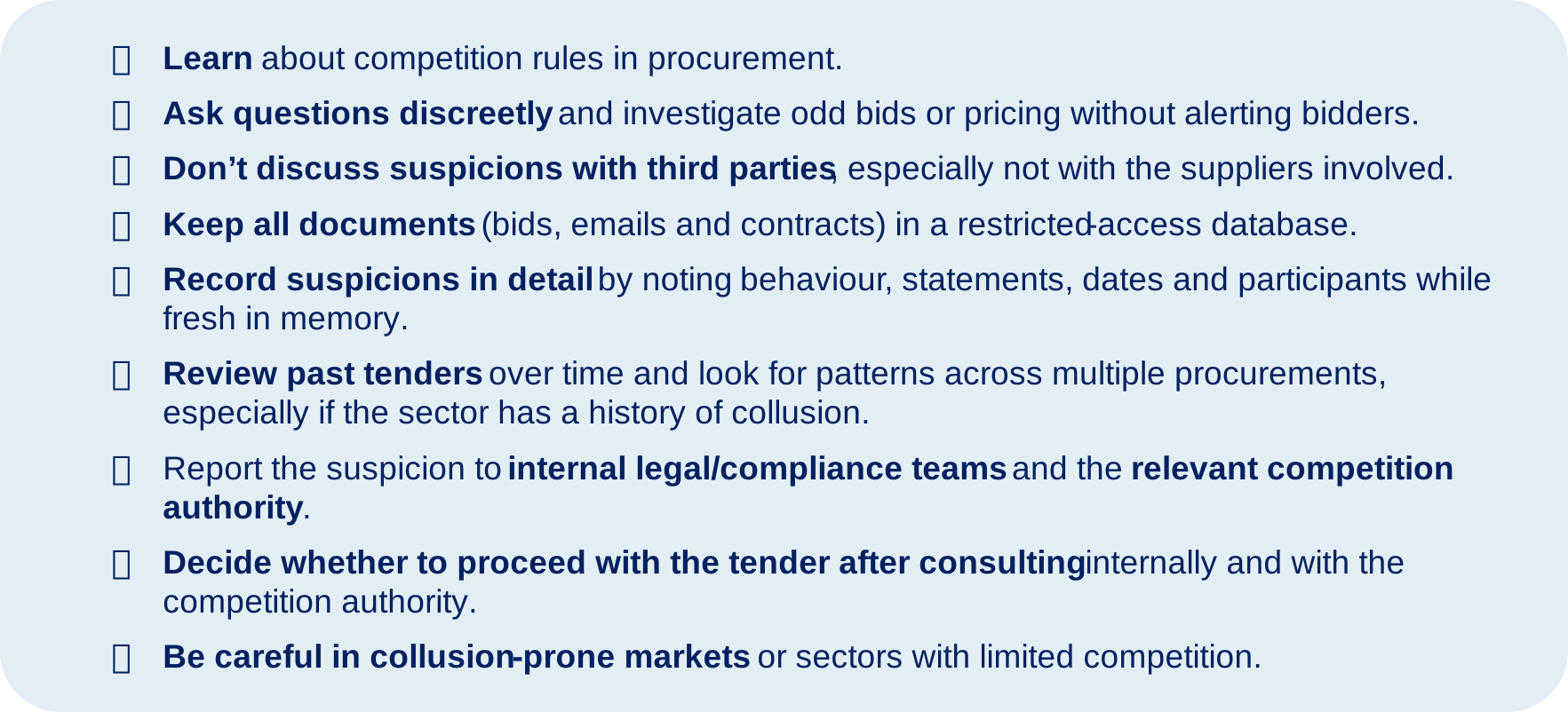
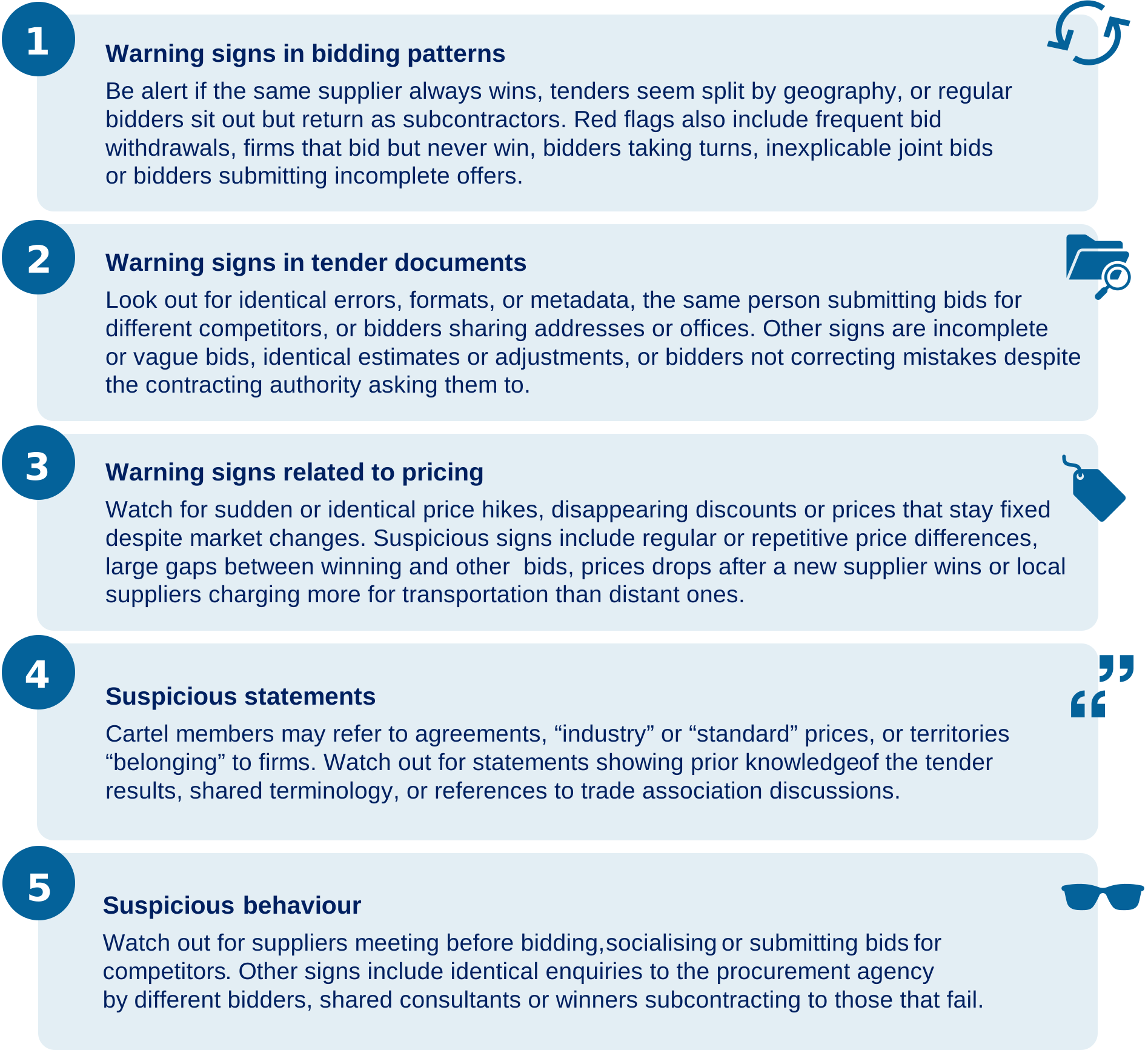
Red flags can include those mentioned in sections 3.1 to 3.5 below, also summarised in Figure 3.1. Figure 3.2 summarises steps that procurement officials can take if they suspect bid rigging.
Certain bidding patterns and practices suggest the possibility of bid rigging. Bidding patterns and the frequency with which firms win or lose tender offers can indicate bid rigging. Subcontracting and joint bids can also raise competition concerns. The following are examples of warning signs:
The same supplier is often the successful bidder.
There is a geographic allocation of winning tenders. Some bidders win in only certain geographic areas.
Regular suppliers fail to bid on a tender they would normally be expected to bid for but become subcontractors or continue to bid for other tenders.
Some suppliers unexpectedly or frequently choose to withdraw submitted bids.
Certain companies always submit bids but never win.
Companies seem to take turns at winning.
Two or more companies submit a joint bid even though in the past they have bid in similar tenders independently and/or in practice the contract is fulfilled by one of them.
A consistent group of bidders submits incomplete or non-responsive bids.
Bidding documents of competitors should be checked for indications that they were prepared by the same person or were prepared jointly. The following are examples of warning signs:
Identical mistakes in bids submitted by different companies, such as spelling and/or grammar errors or miscalculations, sorting documents or items in the wrong order or incorrect numbering of pages. Also, the bidders fail to correct mistakes when requested by the contracting authority.
Identical bids, bids with similar format or metadata. Authorities should be able to access digital versions of bids. Warning signs may include bids from the same IP address, documents from different bidders created by the same author, and/or documents from different bidders created at or near the same time.
The same person submits bids for competitors.
Bid documents from one company make express reference to competitors’ bids or use another bidder’s details, such as mailing or e-mail address, letterhead, or telephone number.
Bids from certain bidders are incomplete (such as missing a bank guarantee) or erroneous despite the fact that they submitted a complete bid in similar previous tenders.
Different bids contain identical estimates of the cost of certain items or offer identical ancillary terms, like insurance and warranties.
Bids indicate matching adjustments.
Bids contain less detail than would be necessary or expected, or give other indications of not being genuine.
Competing bids are submitted together or within a very short time frame.
The sequence in which competitors submit bids is always the same in different tenders.
Bidders share the same address and/or office space, have the same insurance intermediary and/or undertake financial obligations on behalf of each other.
Bid prices can be used to help uncover collusion, if they suggest that companies may be co-ordinating. The following are examples of warning signs:
Sudden and/or identical bid price increases that cannot be explained by cost or market price increases.
Anticipated price discounts disappear unexpectedly or are significantly reduced.
Price discounts are below those usually offered in other bids in the same market.
Prices remain the same over a long period of time, though the market or the tender terms have changed.
Identical pricing when prices were previously different.
The differences in the prices submitted by bidders are regular and repetitive across different tenders, or there are indications of a mathematical formula to calculate different bid prices.
A large difference between the price of a winning bid and other bids, or the second and subsequent bids are close in value.
A supplier’s bid is much higher for a particular contract than that supplier’s bid for another similar contract.
The winning bid far exceeds the estimated value of the project.
There are significant reductions from past price levels after a bid from a new or infrequent supplier (i.e. the new supplier may have disrupted an existing bidding cartel).
Local suppliers are bidding higher prices for local delivery than for delivery to destinations farther away.
Similar transportation costs are specified by local and non-local companies.
Only one bidder contacts wholesalers for pricing information prior to a bid submission.
Some statements may suggest that companies may be colluding. Such statements include:
Spoken or written references to an agreement among bidders.
References to “industry suggested prices”, “standard market prices”, “industry price schedules” or “fair competition”.
Statements indicating that certain companies do not sell in a particular area or to particular customers.
Statements indicating that an area or customer “belongs to” another supplier.
Statements indicating advance non-public knowledge of competitors’ pricing or bid details or foreknowledge of a company’s success or failure in a tender for which the results have yet to be published.
Statements indicating cover bidding.
Use of the same terminology by various suppliers when explaining price increases.
Bidders ask questions or express concerns about certificates of independent bid determination, or indications that, although submitted, they are not taken seriously.
References to discussions within a trade association.
Forms of suspicious behaviour indicating that suppliers may be co-ordinating could include the following:
Suppliers meet before submitting bids.
Suppliers regularly socialise together or appear to hold regular meetings.
A company requests tender documents or information for itself and a competitor or competitors.
A company submits both its own and a competitor’s bid.
A bid is submitted by a company that is incapable of delivering the contract.
A company tries to determine who else is bidding.
Several bidders make similar enquiries to the procurement agency.
Several bidders use the same consultants to help prepare their bids.
The winning bidder subcontracts work to unsuccessful bidders.
The winning bidder does not accept the contract and is later found to be a subcontractor.
The indicators of possible bid rigging described above identify suspicious bid and pricing patterns as well as suspicious statements and behaviours. They should not however be taken as proof that companies are engaging in bid rigging as in some cases the suspicious statements and behaviours may not result from collusive behaviour. For example, a company may have not bid on a particular tender offer because it was too busy to handle the work. High bids may simply reflect a different assessment of the cost of a project.
Nevertheless, when suspicious patterns in bids and pricing are detected or when procurement agents hear odd statements or observe peculiar behaviour, it is good practice to check serious suspicions of bid-rigging with the relevant competition authority.
There are a number of steps that staff in contracting authorities can take in order to help uncover bid rigging or if bid-rigging is suspected. These include:
Have a working understanding of competition law requirements on bid rigging, as well as of broader competition law concepts and restrictions.
Make inquiries if prices or bids do not make sense, making sure that inquiries do not alert bidders that they are being suspected of bid rigging, to preserve secrecy and prevent the destruction of evidence.
Do not discuss any bid-rigging concerns with third parties, and particularly with suspected suppliers (e.g. in the hope of getting a better offer).
Keep all documents, including bid documents (both winning and losing bids), correspondence, contracts etc, in a database with access rights for designated public sector officials only.
Keep a detailed record of all suspicious behaviour, statements and bidding patterns, including dates, who was involved, and who was present and what precisely occurred or was said. Notes should be made during the event or while they are fresh in the public procurement official’s memory to provide an accurate description of what happened.
Periodically review the history of tenders for particular goods, works or services over time, to discern suspicious patterns, especially in industries susceptible to collusion. A pattern of suspicious behaviour over a period of time is a better indicator of possible bid rigging than suspicions about a single tender process.
In case of any bid-rigging concerns, contact the relevant competition authority, potentially after consulting with the internal legal and/or compliance department(s).
After consulting with the internal legal staff and possibly the competition authority, consider whether it is appropriate to proceed with the tender.
Be especially vigilant while procuring items in markets particularly prone to collusion.