Water is a key factor for resilient economic growth and sustainable development in Mongolia. Approximately 40% of Mongolia's economy relies on water-intensive sectors. Groundwater is a critical resource for sustaining economic activities. Demand for water is growing in Mongolia and water demand is projected to exceed current water supply by 2040 or even sooner. At the same time, water resources are under pressure due to aquifer depletion, climate change, and pollution.
Water Demand Management in Mongolia
Highlights of a National Dialogue on Water

Abstract
Mongolia has undergone significant economic and social transformation since its democratic revolution in 1990. It has transitioned from a centrally planned economy to a market-oriented one. The mining sector, particularly copper and gold, became a major driver of economic growth, contributing significantly to GDP and exports.
The country’s GDP per capita has tripled since 1991 (World Bank Group, 2023[1]). From 1990 to 2020, Mongolia's population grew by 51%, from 2.18 million to 3.29 million (Table 1.1). In the same period, Ulaanbaatar's population increased by 142%, from 600,000 to 1.45 million hosting almost half of the country’s population. (Nguyen and Freije-Rodríguez, 2018[2]; Betcherman, Yang and Norjinlkham, 2022[3]).
Water is a key factor for resilient economic growth and sustainable development in Mongolia. Approximately 40% of Mongolia's economy relies on water-intensive sectors such as mining, textile manufacturing, and agriculture. Groundwater is a critical resource for sustaining economic activities (Zaveri and Khemka, 2022[5]; Fan, 2023[6]). As of 2020, 82.5% of the population uses safely managed drinking water services and 69% of the population uses safely managed sanitation services (Government of Mongolia, 2020[7]).
Demand for water is growing in Mongolia and is projected to exceed current water supply by 2040 or even sooner. At the same time, water resources are under pressure due to aquifer depletion, climate change, and increasing pollution. Water scarcity is likely to worsen in high-demand areas, including in urbanised areas such as Ulaanbaatar, industrialised areas such as the Southern Gobi Desert, livestock grazing areas, and in areas with planned agricultural, industrial and energy developments. The country has a strong legal and policy framework in place that effectively support water security, though the institutional landscape is relatively fragmented.
To provide context for the rest of the report, this chapter covers all key aspects of water in Mongolia, ranging from physical features, climatic conditions, factors of demand and supply of water, funding arrangements, legal and policy frameworks and institutional arrangements.
1.2.1. Available water resources
Water resources are unevenly distributed in Mongolia. More than 78% of water sources are found in the northern and western regions, which are home to the country’s largest freshwater lakes and rivers. The average rainfall in the northern region exceeds 400 millimetres (mm) per year whereas in the southern desert regions it averages 40 mm per year. Most precipitation occurs between April and September accounting for 85% of the total annual rainfall (ADB and The World Bank Group, 2021[8]).
Mongolia traditionally relies on groundwater resources for water consumption despite ground water accounting for only approximately 2% of water resources in the country. Various sources estimate that between 70 to 90% of water consumption depends on groundwater resources (Chandmani, 2018[9]; Zaveri and Khemka, 2022[5]; Myagmarjav, 2023[10]; Fan, 2023[6]). Most water resources are stored in rivers (6%), lakes (89%), and glaciers (3%). However, during Mongolia’s harsh winters, when temperatures range from -28 to -40° Celsius, surface water is largely frozen and inaccessible until spring.
Mongolia counts over 5 100 rivers, 3 700 lakes, and 260 glaciers, according to 2024 statistics. There are 29 river basins in Mongolia (Figure 1.1). On average, 608.4 million cubic meters (m3) of water resources are available across the national territory. However, this had decreased to 564.8 million m3 according to the latest survey conducted in 2016 (Ministry of Environment and Climate Change, 2024[11]). This decline is attributed to global warming and climate change, which have reduced the area and thickness of permafrost and glaciers. Research findings indicate that lake water accounts for 500 million m3, rivers for 34.6 million m3, whereas ice, glaciers and snow account for 19.4 million m3, and groundwater for 10.8 million m3 (Ministry of Environment and Climate Change, 2024[12]).

Source: Ministry of Environment and Climate Change of Mongolia.
Transboundary agreements create another limitation for abstracting surface water for use and consumption, notably on the river Selenge which flows into Lake Baikal, in the Russian Federation, and the Kherlen river which flows into Lake Buir, which is shared with China (Fan, 2020[13]).
Water available for use and consumption at national level is estimated at 1 917.5 million m3, including 1 294.1 million m3 of surface water and 623.4 million m3 of groundwater per year, based on data for each river basin (Government of Mongolia, 2012[14]).
1.2.2. Freshwater ecosystems
Mongolia has rich ecosystems. There are 11 designated Ramsar Sites for freshwater-related ecosystems across the country, including freshwater, brackish and saline lakes (ranging from shallow to large), wetlands and rivers (Table 1.2) (Ramsar Convention, n.d.[15]). Complexes of salt lakes, freshwater lakes and wetlands, such as the Great Lakes Depression, Gobi Valley Lakes and the Hangay and Altay Mountain ranges, provide ideal circumstances for unique biodiversity in Altay-Sayan eco-region in southern Siberia (Chimed-Ochir et al., 2010[16]). The Onon river, flowing through north-east Mongolia and Russia, supports high conservation value fish species, such as the Khadary White fish, Amur bitterling, Amur Pike, Amur Ide, and Amur Sturgeon (Chimed-Ochir et al., 2010[16]).
Many freshwater ecosystems are under threat. Lakes are rapidly shrinking due to precipitation changes and groundwater abstractions (Tao et al., 2015[17]). Lake basins in western Mongolia have been identified as some of the largest contributors to the global net loss in natural lake water storage, though this fits into an overall trend of global lake decline (Yao et al., 2023[18]). The rate of lake decline in Mongolia was recorded at 17.6% between the late 1980s and 2010 (Figure 1.2). Aquatic biodiversity is under pressure in several lake ecosystems as a consequence of climate change, with increasing drought conditions and salinisation, environmental conditions and human-induced pressures such as overgrazing, land degradation and nutrient discharge (Shinneman et al., 2010[19]; Yadamsuren et al., 2020[20]).
Lakes with a water surface area of more than 1 km2

Note: The map displays the Mongolian plateau comprising Inner Mongolia in China and Mongolia. The study (Tao et al., 2015[21]) found that the rate of lake decline is greater in Inner Mongolia (34.0 %) than in Mongolia (17.6%) between the late 1980s and 2010.
Source: (Tao et al., 2015[21]).
1.2.3. Climate change and climate-related hazards
Temperatures in Mongolia are foreseen to increase across all seasons. According to the International Panel on Climate Change (IPCC) Sixth Assessment Report (AR6) under low, medium, and high greenhouse gas (GHG) emission scenarios, seasonal temperatures are projected to rise by 0.7 to 1.4°C by 2030, 1.1 to 2.9°C by 2050, and 1.2 to 6.5°C by 2080. This warming trend is expected to continue accelerating until the end of the century (Ministry of Environment and Tourism, GEF and UNEP, 2024[21]). By 2080, maximum summer temperatures are expected to rise by 1.6 to 5.3°C, while winter minimum temperatures will increase by 1.4 to 5.3°C. This warming trend will result in a reduction in frost days by 8.8 to 36.9 days annually. Additionally, the duration of heat waves in summer will extend by up to 2.8 days, whereas the duration of cold waves in winter will decrease by up to 2.6 days.
In addition, climate projections indicate varied changes in precipitation patterns. There will be a relatively high increase in winter precipitation (8.7 to 55.4%) and a moderate increase in spring and autumn precipitation, and summer rainfall is projected to remain stable. The intensity of daily precipitation is not expected to change. However, consecutive dry days in summer and consecutive wet/snow days in winter are projected to slightly increase. Additionally, the maximum precipitation over 1 to 5 days is expected to increase (Ministry of Environment and Tourism, GEF and UNEP, 2024[21]).
Regions of Mongolia will be affected differently. The most significant warming is anticipated in the northeastern region of Mongolia during autumn and winter, and in the western part of the country during spring and summer. (Ministry of Environment and Tourism, GEF and UNEP, 2024[21]). At the same time, the north-western and northern central regions will experience a decrease in summer precipitation by 10 to 20% (Ministry of Environment and Tourism, GEF and UNEP, 2024[21]).
Higher temperatures in Mongolia driven by climate change are projected to lead to a reduction in glacier size and impact river flows (World Bank, 2024[22]). The water level and runoff of lakes and rivers originating from glaciers in the western part of Mongolia, as well as those from forest regions with permafrost such as Khuvsgul Lake, are expected to increase (Ministry of Environment and Tourism, GEF and UNEP, 2024[21]). It was demonstrated that the area of glaciers decreased by 12.1% from the 1940s to 1990, by 15.7% by 2000, and by 36.8% by 2019, resulting in a total reduction of approximately 37.0% over the past 70 years (Ministry of Environment and Tourism, GEF and UNEP, 2024[21]).
Water resources in Mongolia primarily depend on precipitation. Since 1972, the river flow regime has shown a decrease from 34.6 km3/year to 30.6 km3/year as of 2020, with fluctuations corresponding to the rainfall in respective years (Ministry of Environment and Climate Change, 2024[12]). Although climate change projections show an increase in precipitation at the national level, models indicate significant uncertainty regarding the effects of climate change on water availability, with anticipated spatial and temporal mismatches at the subnational level (World Bank, 2024[22]). Nevertheless, increased temperatures are predicted to intensify evaporation, which may result in decreased river runoff, particularly in the central and eastern parts of Mongolia, which are already amongst the country’s drier regions (Ministry of Environment and Tourism, GEF and UNEP, 2024[21]).

At the same time, Mongolia is subject to climate-related hazards such as dzuds (harsh winters), floods, and droughts (Figure 1.4). Natural disasters have occurred with increasing frequency over the last three decades. There were 29 natural disasters between 1989 and 1998, 53 between 1999-2008, and 80 in the last decade. From 2001 to 2021, 539 people lost their lives due to extreme weather and disasters and almost 30 million animals were killed, costing 681.8 billion MNT. The estimation based on future projections up to 2050 have shown that frequency of drought will increase by 5% to 45%, and the frequency of dzud1 will increase by 5% to 40% (Ministry of Environment and Tourism, GEF and UNEP, 2024[21]).
Floods pose another frequent and serious hazard. These can be categorised as spring floods, caused by snow and ice melt, heavy rain floods which typically occur in summer, and flash floods (Oyunbaatar, 2009[23]). Floods cause significant human, animal, and property losses, averaging USD 24 million annually (ADB, 2022[24]). Peak rainfall and melting glaciers may worsen flood hazards in summer (Serdyanjiv et al., 2024[25]).
Reoccurring natural hazards in Mongolia adversely impact the economy, agriculture, livestock, and poverty alleviation efforts, and contribute to urban migration.

Source: Climate Change Knowledge Portal (World Bank, 2024[26]). (Dzud reported in the Extreme temperature category).
1.2.4. Water quality
Around 90% of Mongolia’s monitored surface water sub catchments are “clean” to “very clean”, with a small increase in slightly polluted and polluted water bodies, and a decline in very polluted bodies between 2013-2018 (Figure 1.5).
Pollution is very localised. Sub catchments that are the most polluted include the Tuul and Khangal (due to insufficient wastewater treatment) and Khuder (due to gold mining) (Ministry of Environment and Climate Change, 2019[27]). As of 2023, urban pollution was highlighted as a concern in the river quality monitoring programme, with high levels of biotic indexes around cities and settlements.
Pollution peaks are noted after flood events in settlements near to the rivers Tuul, Orkhon, Kherlen. Mining pollution was noted in June and August with increased silt and sediments that affected the reduction of the biota of rivers Shivert, Namir, Zegestei, Durgun, Zavkhan. The Boroo River consistently suffers from mercury pollution. With the anticipated increase in the exploitation of major gold deposits, it is expected that the river basin will become contaminated with cyanide, sulfuric acid, and other toxic substances from mining activities, leading to persistent sources of pollution (Ministry of Environment and Climate Change, 2024[11]).

Source: (Ministry of Environment and Climate Change, 2019[27]) based on State of the Mongolian Environment, 2015-2016 & 2017-2018.
Pressures on drinking water quality can be anthropogenic (e.g., bacterial water quality parameters) or due to natural causes, such as the presence of arsenic, fluoride, or uranium. High concentration of arsenic, uranium and phosphorus were observed in the south-eastern part of the country whereas the concentration of minerals and hardness increases from north to south generally, high concentration of magnesium were highlighted in the western part (Institute of Geography and Geoecology, MAS and Water Service Regulatory Commission of Mongolia, 2022[28]). In a national-level study conducted between 2019 and 2023, it was found that 62% of the 3,582 water points used for drinking water met the chemical, bacterial, and radiation parameters of the national standard for drinking water quality (Figure 1.6) (Government of Mongolia, 2023[29]). Though substantial regional disparities are at play. For instance, in Khuvsgul province, out of 55 water points, only one meets the national drinking water standards, compared to 77.7% in Ulaanbaatar.
Tanneries are also of increasing concern, with 22 establishments in the capital city area. In Ulaanbaatar, domestic wastewater treatment plants receive industrial wastewater without primary treatment, and the facilities are not designed to remove industrial pollutants. Overall, pollution in Ulaanbaatar region has been one of the key drivers for water scarcity in the Tuul river downstream area (WWF et al., 2019[30]).

Source: (Government of Mongolia, 2023[29]).
Mongolia has a strong legal framework dedicated to ensuring water security. Water is enshrined in legislation, including in the Constitution of Mongolia (initially adopted in 1992, with the last amendment in 2023). The Constitution underscores the importance of natural resources, particularly water. It mandates the state's responsibility to ensure their proper use and protection. In particular, Article 6 of the Constitution states that land, its subsoil, forests, water, fauna, flora, and other natural resources shall be subject to national sovereignty and state protection. The state is tasked with advancing the sustainable use and conservation of these resources to benefit the people of Mongolia and with ensuring that their management aligns with ecological and environmental principles to maintain a healthy and balanced environment for current and future generations (The Government of Mongolia, 1992[31]).
1.3.1. Laws and regulations relevant to water
Two key pieces of legislation define water as a strategic natural resource and prioritise its conservation and sustainable use, namely the “Law on Water” (1994) and the “Law on Environmental Protection” (1995).
Mongolia’s Law on Water, (1994, last amendment in 2023), recognises water as a natural resource and outlines the requirements for its proper use, protection, restoration, and pollution prevention. The law provides the overarching framework for water resource protection, sustainable use and pollution control. It also defines the roles and mandates of stakeholders, including private sector and private water companies. The scope of the Water Law, and its regulatory mechanisms have been updated several times since its inception, notably to improve governance in 2004 and to introduce “Integrated Water Resources Management” (IWRM) principles in 2012 (Ministry of Environment and Green Development, 2013[32]).
Other laws relevant to water resources management are:
the Law on Environmental Protection (1995, last amendment in 2024)
the Law on Hydrology, Meteorology and Environmental Monitoring (1997, last amended in 2022)
the Law to Prohibit Mineral Exploration and Mining Operations at Headwaters of Rivers (2009, last amendment in 2015)
the Law on Water Supply and Sewerage Systems (2011, last amendment in 2023)
the Law on Fees for Natural Resources Use (2012, last amendment in 2023)
the Law on Water Pollution Fees (2012, last amendment in 2022)
Water also appears prominently across national policies in Mongolia. Water security has been recognised as a national priority, notably under the National Security Concept, approved by Parliament in 2010 (revised in 2024). The Concept provides guidelines and priorities for national policies on national security and emphasised the need for sustainable and equitable management of water resources to prevent shortages and conflicts (State Parliament, 2010[33]). Mongolia has laid out its ambitions under a long-term development policy document, Vision 2050, to become a leading Asian country in terms of social development, economic growth and citizens' quality of life by 2050 (Parliament of Mongolia, 2020[34]). In the water sector, it aims to address likely impacts of climate change by developing resilient water systems and encouraging the use of technological innovation in water management practice (The Government of Mongolia, 2020[35]).
The national Integrated Water Resources Management (IWRM) plan for 2012-2021 achieved a 61% implementation rate. The Government concluded that while planning was effective, implementation, particularly of large infrastructure projects, was inadequate. Most tasks such as establishing River Basin Multi-Stakeholder Platforms, monitoring stations, and protection zone delineation were largely completed. It was also concluded that future planning should better address local cross-sectoral coordination.
1.3.2. Institutional arrangements for water management
The water sector in Mongolia is institutionally complex. At least six ministries and several authorities are involved in the management of the water sector in one way or the other. Their roles have evolved historically over a long period of time including some major institutional restructuring with the revisions of the Water Law.
National institutional arrangement
Mongolia's central governance operates under a semi-presidential system, where the President, Parliament (State Great Khural), Government (Cabinet), and Prime Minister each play distinct roles. Mongolia's governance structure includes a central government and three levels of local governance: 21 aimags (provinces) and the capital city Ulaanbaatar, which are further divided into soums (districts in Ulaanbaatar) and bags (khoroos in Ulaabaatar) (Figure 1.7).
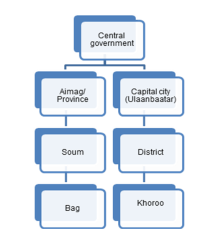
Source: Authors based on (Constitution of Mongolia, 1992[36]).
Allocation of roles and responsibilities
The Parliament sets national and sectoral development laws and policy programs. The Cabinet submits the national policy for approval to the Parliament. It also has a mandate to approve the national integrated water resources management plan and sectoral regulatory documents. Sectoral ministries are responsible for implementing their respective sectoral policy programs. The Ministry of Environment and Climate Change, the central executive branch responsible for water policy, delegates the implementation of water policies and strategies to the Water Agency.
Coordination at the central government level is handled by the National Water Council (including cross-sector coordination). The Council is chaired by the Prime Minister with the Minister of Environment and Climate Change as Deputy Chairman. As of 2023, the Cabinet approved its members as follows2:
Minister of Construction and Urban Development
Minister of Food, Agriculture and Light Industry
Minister of Mining and Heavy Industry
Deputy Minister of Health
Governor of the Capital City and Mayor of Ulaanbaatar
Secretary of the National Security Council
Advisor to the Chief Cabinet Secretariat
Director-General of the Water Agency (Government implementing agency)
Director of the Water Department, Institute of Geography and Geology, Mongolian Academy of Sciences
Director-General of the Water Policy Coordination Department, Ministry of Environment and Climate Change (secretariat of the National Water Council)
The Water Resource Council, which functions like a government “think-tank”, is established by the Minister of the Environment and Climate Change (MECC). Its main role is to approve groundwater resources that have been surveyed and to give recommendations for water related infrastructure, large-scale projects among others (review and approvals of the water resources research, exploration survey and assessments) (Figure 1.8).

Notes: General Inspection Agency (GIA, now the Water Agency), Government Regulatory Agency National Agency for Meteorology and Environmental Monitoring (GRA NAMEM), Information and Research Institute of Meteorology, Hydrology and Environment (IRIMHE), Citizen's Representative Khural (CRkh), Ministry of Food, Agriculture and Light Industry (MOFALI), Ministry of Urban Development, Construction and Housing (MUDCH) Ministry of Mineral Resources (MIMR) Ministry of Health (MOH) Ministry of Environment and Climate Change (MECC), River Basin Authorities (RBA).
Source: Author’s elaboration.
The Ministry of Environment and Climate Change is the lead ministry in charge of initiating environmental policies with respect to water resources. The MECC defines the national water policy goals, submits for approval and ensures cross sectoral coordination of the national IWRM plan. Two government implementing agencies operate under the Ministry of Environment and Climate Change: the Water Agency and the National Agency for Meteorology and Environmental Management. The Water Agency is responsible for implementation of the policy, oversight of water usage, and the establishment of a water database, amongst other tasks.
As shown in Figure 1.1, Mongolia's territory is divided into 29 river basins, managed by 21 River Basin Authorities and 24 River Basin Councils. The primary role of these river basin organisations is to implement IWRM plans for the river basins, ensuring they align with local development programs in an integrated and inclusive manner. The River Basin Multi-Stakeholder Platforms are responsible for stakeholder involvement, participatory decision-making, monitoring implementation, and reviewing the river basin IWRM plan. River Basin Multi-Stakeholder Platforms include representatives from various stakeholder groups. However, chronic financial and political support shortages have hindered the effective operation of this governance system (Schmidt, 2017[37]).
The Aimag governor’s offices play a crucial role in water management at the provincial level by developing provincial development work plans and budgets for approval by local Parliament. Soum, bag, khoroo and capital city governors and citizen representative khurals (local parliaments) have similar roles in terms of budget and annual work plan drafting and approvals, but the difference is that they work within their respective administrative units. All annual workplans and budget drafts get consolidated at aimag level and are submitted to local Parliament and Ministry of Finance for further approval (Law on Budget, 2011[38]).
In addition, specific line ministries have responsibility for coordinating water supply for different users. With respect to rural water management, the Ministry of Food, Agriculture and Light Industry is responsible for enabling water supply sources for agricultural and livestock activities as well as for the protection, restoration and management of pastureland. Specifically, the Ministry approves water source augmentation plans that comprise increment of the number of groundwater wells for livestock water supply and retention ponds, small scale reservoirs and channels for irrigation purpose using surface water.
Given the importance of the extractives sector in Mongolia’s economy, its water demand, and the need for mitigating environmental impacts, the Ministry of Mining and Heavy Industry has an important responsibility in water source exploration. It is responsible for conducting geological surveys and exploration work and groundwater aquifers are reported if found.
In terms of urban water supply and sanitation, responsibilities are shared between ministries, the regulator and various authorities. The Ministry of Construction and Urban Development is responsible for implementing policies and plans for the development of public utilities and engineering infrastructure, including for water supply and sanitation infrastructure and utilities.
The Water Service Regulatory Commission (WSRC), established in 2012, is the economic regulator for the water sector and is assigned with setting wholesale and retail tariffs for water and sanitation services. WSRC also issues licenses for services of water source operations; operation and management of networks for water supply and wastewater management.
1.4.1. Water-dependent economic sectors and their water demand
Mongolia’s economy is highly dependent on the mining sector, which represents almost 24% of GDP, though it employs only 2% of its workforce (OECD, 2019[39]). Mining is a key driver of economic growth, particularly the Oyu Tolgoi mine, which is expected to increase copper concentrate production (ADB, 2024[40]). In addition, the Mongolia’s long-term development strategy “Vision 2050” emphasises the critical role of the mining sector to achieve its ambition to become a leading Asian country in terms of social development, economic growth and quality of life (Government of Mongolia, 2020[7]). Notably, mining is expected to intensify in the Southern Gobi region, which is endowed with copper, gold, coal and includes the country’s largest coal reserve found at Tavan, Tolgoi, and one of the world’s largest known copper and gold deposit at Oyu Tolgoi.
Local water risks are projected to intensify due to pressures from mining and industry on water quality as well as quantity (2030 Water Resources Group, 2016[41]). Competing water demand may give rise to conflicts between mining companies, herders, and local communities (2030 Water Resources Group, 2016[41]). Mongolia has ample coal reserves, which is the main source of energy for the country and an important export product (Namkhainyam and Senshaw, 2020[42]). 90% of generated energy is used for heating purposes. The largest part (57%) is used for space heating and water heating for residential purposes (Namkhainyam and Senshaw, 2020[42]).
In 2022, the agricultural sector contributed an average of 13% to Mongolia's GDP, with animal husbandry covering around 80% of the sector output and provided employment for 26% of the country's workforce (World Development Indicators, 2022[43]). The agriculture sector includes livestock production, crop production, forestry and fishing. Global demand for Mongolian textiles, particularly luxury cashmere, has risen recently. Despite national green goals not focusing on increasing production, the sector prioritises enhancing quality and boosting exports. Growth in the textile industry is expected to use 1.7-4.8 million cubic meters of water yearly, further straining the overburdened Central Wastewater Treatment Plant ((AVSF), 2020[44]). However, highly variable agro-climatic conditions, deteriorating soil quality and managing risks related to climate change led to uneven growth of the sector (FAO, 2022[45]). Almost 40% of the economic losses in the period of 1996- 2013 were caused by dzuds causing losses in livestock and agriculture outputs. The dzud event in 2009-2010 alone led to a 4% loss of annual GDP (UNDRR, 2019[46]).
Figure 1.9 shows that water use in various sectors experienced notable changes from 2018 to 2023. Overall, total water use across all sectors increased by approximately 19.14%. In 2023, the agriculture sector was the largest water user in Mongolia (50%), followed by the mining industry (25%), domestic water supply (13%), energy (7%) and industry (5%) (MECC, 2024[47]; MECC, 2025[48]). The domestic sector saw a 10% increase in water use. In contrast, the industry and service sector experienced a significant decrease of approximately 43.02% which is most likely related to data collection methodology inconsistency. The agriculture sector had a modest increase in water use, at about 10.66%. The energy sector's water use rose by approximately 45.63%, while the mining sector saw the most substantial increase, with water use rising by around 90.11%.

Source: Water Agency, 2024.
By 2030, water demand is projected to increase by 30% under the low-development scenario and by 83% under the high-development scenario, compared to the 2019 baseline of 578.5 million cubic meters (Figure 1.10).

Source: Ministry of Environment and Climate Change of Mongolia.
Demand is also rising due to climate change adaptation and mitigation measures such as the “Billion tree” national campaign, water storage ponds for irrigation purpose, multi-purpose water complexes including large scale reservoirs, and urban water infrastructure associated with Government’s social decentralisation programmes such as the new Kharkhorum City, the satellite city “Zuunmod” and others (Government of Mongolia, 2020[7]), (Government of Mongolia, 2021[49]).
1.4.2. Water supply and sanitation services
Access to improved water supply and sanitation services has moderately improved since 2000. As of 2020, 82.5% of the population uses a safely managed drinking water service; 69% of the population uses a safely managed sanitation services (Government of Mongolia, 2020[7]). However, there are variations in these statistics across institutions. Notably, the UN estimates that just 39% of the population is supplied from safe drinking water sources and 66% do not have access to safely managed sanitation services. The UN also reports that only 26% of domestic wastewater is safely treated (UN Water, 2024[50])
There are large rural-urban discrepancies in access to water supply and sanitation services. Approximately 52% of urban households have access to safely managed drinking water compared to only 13% of rural households; and 70% of urban households have access to safely managed sanitation services compared to 56% of rural households (UN Water, 2024[50]).
In the capital city, per capita water usage amounts to 188 to 193 litres per person (capita) per day (lpcd). This average number hides substantial discrepancies. The average water consumption of residents of the Ger district3 using water from kiosks is estimated at 17 lpcd, which is below the minimum consumption levels recommended by the World Health Organization which stands at 50 to 100 litres per capita per day to meet basic needs including drinking, sanitation, hygiene and cooking (Howard et al., 2020[51]) (Millennium Challenge Account - Mongolia, 2021[52]) .
In Mongolia, the Ministry of Construction and Urban Development and Housing leads policy formulation, planning, funding and implementation of public investments (including public housing and services) in urban areas (Figure 1.11).

Source: authors adapted from (WRG, 2019[53]).
Notes: Water Authorities (WA), Ministry of Urban Development, Construction and Housing (MUDCH), Water Services Regulatory Commission (WSRC), Water Supply and Sewerage Authority of Ulaanbaatar “USUG”, the Housing and Communal Service Authority, “OSNAAUG”, Private Water Companies (PWC), Water Use Fees (WUF).
For example, in Ulaanbaatar, the Ministry of Construction and Urban Development is responsible for the planning and construction of major capital projects, including water supply and sanitation infrastructure projects, providing oversight of planning, budgeting and construction. Projects are subsequently handed over to the local government for operations and maintenance through utilities. However, in Ulaanbaatar particularly, planning and funding also takes places at the local government level independent from but still aligning with the ministry agenda.
Local governments are largely responsible for water supply and sanitation service provision. Most water supply and sanitation services are provided by entities under service agreements with province (aimag) or district (or soum) governments. The national government owns water and wastewater infrastructure, but the local government or the public utility is responsible for raising funds to cover capital, operation and maintenance, and repair costs.
The landscape for service provision varies significantly depending on the level of urbanisation. In Ulaanbaatar, which is highly urbanised, service provision is entirely managed by public utilities and private water companies. In satellite cities, districts often only manage bulk water distribution only, and public utilities deliver water to end users. In rural areas, which can be very sparsely populated, districts typically manage all aspects of water supply. Similarly, responsibility for sanitation service delivery varies with the level of urbanisation, with districts in satellite cities collecting sewage and emptying septic tanks as a fee-based service.
All public utilities, as well as private water companies in Mongolia are license holders of WSRC (WRG, 2019[53]). In 2023, 207 entities were licensed to operate in the field of water supply and sanitation across the country (Table 1.3. ). Ulaanbaatar, home to more than half of the country’s population, is home to the largest number of service providers. 75 % (or 156) operators are located in Ulaanbaatar, including 72 private and public sector organisations working under housing service licenses to supply water. Across the rest of the country, 51 entities ensured provincial and local public utility services (WSRC, 2024[54]).
In the capital city, Ulaanbaatar Water Supply and Sewerage Authority, “USUG”, a public utility owned by the municipality, plays a leading role. USUG is mandated to deliver water supply and sewerage services and has end-to-end responsibility for water supply functions, including abstracting, treatment and distribution to both retail and wholesale customers. The mandate for retail distribution to consumers through the central network is shared with the Housing and Communal Service Authority, “OSNAAUG”, another public utility, and some 70 private water companies. These private companies are typically associated with construction companies and have entered the water supply market by extending distribution lines from the central network to new apartment developments, mostly at the fringes of the city. USUG obtains license to abstract, treat, distribute and treat wastewater from WSRC. OSNAAUG and private water companies obtain water supply distribution licenses from WSRC. OSNAAUG and USUG operate as state owned enterprises under the Municipality of Ulaanbaatar, while private water companies operate as private limited liability companies.
Source: (WSRC, 2024[54]) Annual report 2023 of business entities entitled to use and services of water supply and sanitation.
1.4.3. Funding arrangements and investment planning
UNDP estimated4 total spending needs in Mongolia of USD 1.8 billion between 2021 and 2030 to meet basic safely managed water and sanitation standards defined in SDG indicators. Yet, as seen in Table 1.4, current investment levels are well below identified needs. According to UNDP estimates, projected government spending on Water, Sanitation and Hygiene (WASH) between 2020 and 2030 represents roughly 5% of identified needs (UNDP, 2022[55]).
Note: (USD 1 = 3 459.6 tugriks); Spending needs for water supply, sanitation and hygiene only (SDG 6.1 and SDG 6.2).
Source: (UNDP, 2022[55]) Needs for Reaching the Sustainable Development Goals.
While the central government is not officially tasked with investing in water supply and sanitation assets, it plays a significant role in developing bulk water supply and sewerage systems. Mongolia has undertaken decentralisation reforms that have led to the transfer of power, authority, responsibilities, and resources from higher to lower levels of government. Under the Budget Law (2012), a degree of expenditure responsibility is assigned to sub-national governments. Under Article 58, the responsibility for service delivery for water supply, sewerage, drainage, waste removal, and public hygiene is devolved to Aimags and capital cities (Government of Mongolia, 2011[56]).
Under the overall oversight from the Ministry of Finance and line ministries, aimag administrations allocate funds to soums through a system of funds. Aimags manage the allocation of funding from a General Local Development Fund (GLDF) which draws on various national revenue sources, including 5% from value-added tax, and 30% from petroleum royalties. A share of these funds is transferred down to a Soum level fund, known as a Local Development Fund (LDF), with the budget partially earmarked for certain base expenditures (ADB, 2021[57]). The Ministry of Finance, with support of other line ministries, oversees this process by anticipating LDF budgetary needs for infrastructure investments, which should be transferred from the GLDF. In practice, the budget for capital investments is therefore still controlled by the Ministry of Construction for water supply and sanitation in urban areas and the Ministry of Agriculture and Light Industries for rural zones who determine local level infrastructure investment needs.
Beyond WASH activities, the government approved budget for the financial year of 2024 provides for water infrastructure including flood protection facilities, lake water level restoration measures, public bath houses, agriculture ponds, and livestock water supply wells. Recent reports of public spending show higher levels of public capital expenditure for water-related investments more broadly. Key ministries that are involved in water management received USD 36.5 million5 for water infrastructure and management activities in 2024: the Ministry of Environment and Climate Change received USD 1 million, the Ministry of Construction and Urban Development and Housing received USD 29 million, the Ministry of Food, Agriculture, and Light Industry received USD 5.5 million. Approximately 22% of the state budget allocated to these ministries, who are in charge of large water user sectors, was dedicated to water related investments for 2024 (Ministry of Finance, 2023[58]) (Ministry of Finance, 2023[59]). Despite these substantial allocations, the total final approved allocation to MET was still seven times less than what was requested (Ministry of Environment and Climate Change, 2024[60]).
The Parliament approved a state budget for 2024 with USD 900 million earmarked for public investment (out of a total public expenditure of USD 7.5 billion). This public investment is primarily foreseen for transport investments, in line with the New Revival Policy aimed at boosting the country's infrastructure and attracting foreign investments (The Economist, 2023[61]).
Nevertheless, water-related infrastructure is a priority for the long-term perspective in mining. Activity is expected to accelerate in the Southern Gobi region, which is endowed with copper, gold, coal and includes the country’s largest coal reserves found at Tavan, Tolgoi, and the world’s largest known copper and gold deposit at Oyu Tolgoi. The Blue Horse programme was designed to support these ambitions: the draft programme includes 33 multipurpose dams and hydropower reservoirs over 12-13 rivers. Just two of these projects are reflected in the Government action plan for 2024-2028 (Government of Mongolia, 2024[62]) and have an estimated implementation investment cost of USD 800 million (Shar, 2022[63]).
In addition, the IWRM National Plan set a preliminary plan for water investments with associated estimated investment needs. For instance, in the current draft of the 5-year national IWRM plan, the total cost for industrial water supply infrastructure in the Southern Gobi region, flood protection infrastructure in residential areas and hydropower development amounts to nearly USD 4 billion6.
Climate change adaptation measures will also require investment. Climate change will affect surface water availability more than groundwater resources. This calls for adaptation measures related to surface water accumulation and use, river flow regulation and transfer, managed aquifer recharge, and flood protection. According to the National Adaptation Plan, USD 3.9 billion is required to implement climate change adaptation measures for the water resources until 2030 (Ministry of Environment and Climate Change, 2021[64]) The flood risk prevention and mitigation measures in Ulaanbaatar city (UB) would require total investment of USD 1.4 Billion7 (Ministry of Environment and Climate Change, 2021[64]).
In 2020, a broader water security assessment estimated USD 6.5 billion in investment needs from 2018 to 2030 (Fan, 2020[13]). While this estimate does not capture investment needs for more recent plans for large infrastructure projects or adaptation, it provides a broad assessment of investment needs for rural household water security, economic water security, urban water security, environmental water security, and resilience to water-related disasters. This study was undertaken by the Government of Mongolia’s Ministry of Environment and Climate Change and the Asian Development Bank (ADB) based on the 2016 iteration of the long-term development policy, the “Vision 2030”. The investment plan, while not including the full Blue Horse Programme, did include research and deployment of sustainable bulk water supplies to foster economic growth in the southern Gobi Desert region. Out of the USD 6.5 billion investment needs identified from 2018 to 2030, only USD 1.76 billion (27%) is foreseen to come from the government, and USD 1.07 billion (16%) from the beneficiaries. This means that more than half (USD 3.67 billion or 56%) would need to come from the private sector.
References
[44] (AVSF), A. (2020), Sectorial Roadmap: Sustainable Textile Production and Eco-Labelling project in Mongolia, EU SWITCH-Asia programme.
[74] 2030 Water Resources Group (2021), Analysis of Water Governance and Stakeholders in Mongolia.
[41] 2030 Water Resources Group (2016), Hydro-economic Analysis on Cost-Effective Solutions to Close Ulaanbaatar’s Future Water Gap. Mongolia, Ulaanbaatar, 2030 Water Resources Group, Washington, https://www.2030wrg.org/wp-content/uploads/2016/09/2030-WRG-Hydroeconomic-Analysis_Ulaanbaatar_Aug16_final.pdf.
[40] ADB (2024), Asian Development Outlook April, Asian Development Bank, Metro Manila, https://doi.org/10.22617/FLS240221-3.
[57] ADB (2021), Decentralization, Local Governance, and Local Economic Development in Mongolia, Asian Development Bank, Manila, Philippines, https://doi.org/10.22617/TCS210319-2.
[75] ADB (2020), A COUNTRY WATER SECURITY ASSESSMENT: Mongolia, https://www.adb.org/sites/default/files/institutional-document/618776/mongolia-country-water-security-assessment_0.pdf.
[24] ADB, C. (2022), TA-9878 REG: COUNTRY RISK PROFILE MONGOLIA, ADB, https://www.carecprogram.org/uploads/CAREC-Risk-Profiles_Mongolia.pdf.
[8] ADB and The World Bank Group (2021), Climate Risk Country Profile: Mongolia, World Bank Group, Asian Development Bank, https://climateknowledgeportal.worldbank.org/sites/default/files/2021-06/15813-Mongolia%20Country%20Profile-WEB.pdf.
[89] Annabelle, H., I. Dombrowsky and L. Horlemann (2013), “The institutionalization of River Basin Management as politics of scale – Insights from Mongolia”, Journal of Hydrology, p. 13, https://doi.org/10.1016/j.jhydrol.2013.11.037.
[3] Betcherman, G., H. Yang and M. Norjinlkham (2022), Mongolia Jobs Diagnostic : More Vibrant and Inclusive Labor Markets for Economic Recovery and Diversification - Synthesis Report, World Bank Group.
[81] Boldbaatar, Y. (2023), Presentation on groundwater management in Mongolia for the World Water Day, Ministry of Environment and Tourism.
[9] Chandmani, D. (2018), Alarming prospect of water shortage in the Gobi, https://www.mongolianminingjournal.com/a/65955.
[16] Chimed-Ochir, B. et al. (2010), Filling the Gaps to Protect the Biodiversity of Mongolia, WWF Mongolia Programme Office.
[36] Constitution of Mongolia (1992), Constitution of Mongolia, 2019 amendment.
[86] Dechinlkhundev, D. (2024), State of the national water policy and implementation of IWRM.
[78] Dombrowsky, I., A. Lkhagvadorj and M. Schoderer (2018), River basin management and fiscal decentralisation: Mutually supportive or, German Development Institute / Deutsches Institut für Entwicklungspolitik.
[6] Fan, M. (2023), Managed Aquifer Recharge in Mongolia: Policy Recommendations and Lessons Learned from Pilot, ADB, https://doi.org/10.22617/BRF230405-2.
[13] Fan, M. (2020), Making Water in Mongolia Available at the Right Time, at the Right Place, and in the Right Quality. ADB Briefs., Asian Development Bank, Metro Manila.
[45] FAO (2022), Food Systems Profile - Mongolia, FAO; European Union ; CIRAD;, https://doi.org/10.4060/cb8153en.
[62] Government of Mongolia (2024), Government action plan for 2024-2028, https://legalinfo-mn.translate.goog/mn/detail?lawId=17141368141311&_x_tr_sl=mn&_x_tr_tl=en&_x_tr_hl=en&_x_tr_pto=sc.
[29] Government of Mongolia (2023), “Monitoring the quality of drinking water, establishing an online database, and installing equipment to improve drinking water quality” project (2019-2023), Water Service Regulatory Commission, Institute of Geography and Geoecology, Institute of Chemistry and Chemical Technology.
[49] Government of Mongolia (2021), Parliament Resolution #106 New Recovery Policy, https://legalinfo.mn/mn/detail?lawId=16390082576201&showType=1.
[7] Government of Mongolia (2020), “Vision-2050” Long-term Development Policy Of Mongolia, Annex 1 to Resolution 52, 2020, State Great Hural, https://cabinet.gov.mn/wp-content/uploads/2050_VISION_LONG-TERM-DEVELOPMENT-POLICY.pdf.
[80] Government of Mongolia (2015), Methodological guideline on approving groundwater reserve classification.
[82] Government of Mongolia (2013), ACHIEVING THE MILLENNIUM DEVELOPMENT GOALS: Fifth national progress report, https://www.undp.org/sites/g/files/zskgke326/files/migration/mn/4b725ff044558d23d59379cbb5601673ddd61f3c1c9b8e171cc7128a01605537.pdf.
[14] Government of Mongolia (2012), Integrated Water Management Plan of Mongolia, Ministry of Environment and Green Development.
[56] Government of Mongolia (2011), Law on Budget.
[83] Government of Mongolia (1992), The Constitution of Mongolia, article 59.1.
[51] Howard, G. et al. (2020), Domestic water quantity, service level and health, second edition, World Health Organization.
[76] ICEM et al. (2021), TA9440-Mongolia: Policy recommendation for water database improvement, ADB, MET.
[28] Institute of Geography and Geoecology, MAS and Water Service Regulatory Commission of Mongolia (2022), Multistakeholder Forum on Sustainable Development Goals, https://unescap.org/sites/default/d8files/event-documents/SDG6_4%20Water%20Quality%20of%20Mongolia%20PPT_20220907_Final.pdf.
[77] KORUMO (2022), 2030 WRG Mongolia Engagement - Key Lessons Learned on Multi-Stakeholder Governance, 2030 WRG.
[84] Law on Administrative Unit (2020), Law on Administrative Unit.
[38] Law on Budget (2011), Law on Budget.
[85] Law on Water (2023), Law on Water 2012, Parliament.
[48] MECC (2025), Forthcoming - Environmental Baseline Report 2021-2023, Ministry of environment and Climate Change , Ulaanbaatar.
[47] MECC (2024), Implementation of the Law on Water Pollution Charges, Ministry of Environment and Climate Change Statistics.
[52] Millennium Challenge Account - Mongolia (2021), Willingness to Pay Study Report: Cost Recovery Technical Assistance for Sustainability of Ulaanbaatar’s Water Supply System, MCA-M.
[79] Minister of Environment and Tourism and Minister of Construction and Urban Development (2015), Joint Ministerial Order A-230/127, Government of Mongolia, https://legalinfo.mn/mn/detail?lawId=11118.
[12] Ministry of Environment and Climate Change (2024), Environmental Baseline Report 2021-2023, MECC.
[11] Ministry of Environment and Climate Change (2024), Environmental Baseline Study Report 2021-2023, MET, https://mecc.gov.mn/documents/mongol-orny-bajgal-orchny-t-l-v-bajdlyn-tajlan?sort=date&order=desc.
[60] Ministry of Environment and Climate Change (2024), Ministerial Order A/47.
[64] Ministry of Environment and Climate Change (2021), “Mongolia NDC Action Plan-English”.
[27] Ministry of Environment and Climate Change (2019), Sixth National Report to the Convention on Biological Diversity (2015-2018), Ministry of Environment and Tourism of Mongolia, Ulaanbaatar, https://www.cbd.int/doc/nr/nr-06/mn-nr-06-en.pdf (accessed on 5 August 2024).
[32] Ministry of Environment and Green Development (2013), Integrated Water Management Plan Mongolia.
[70] Ministry of Environment and Tourism (2023), River basin Integrate Water Resources Management guideline, Ministry of Environment and Tourism.
[21] Ministry of Environment and Tourism, GEF and UNEP (2024), FOURTH NATIONAL COMMINICATION OF MONGOLIA (FNC), UNFCCC, https://unfccc.int/sites/default/files/resource/MONGOLIA%20FOURTH%20NC%202024.pdf.
[59] Ministry of Finance (2023), Mongolia: State Budget Final Draft for 2024, https://online.flippingbook.com/view/335388417/.
[58] Ministry of Finance (2023), Mongolia: State Budget for 2024, https://legalinfo.mn/mn/detail?lawId=16960457247471.
[10] Myagmarjav, K. (2023), Sixty-Eight Percent of Surface Water Flows Out of Mongolia (Mongolian), https://ikon.mn/opinion/2u7r.
[42] Namkhainyam, T. and D. Senshaw (2020), Development of Green Systems and Energy Efficiency in Mongolia, Global Green Growth Institute, Seoul.
[2] Nguyen, T. and S. Freije-Rodríguez (2018), MONGOLIA: Systematic Country Diagnostic, World Bank Group.
[39] OECD (2019), Sustainable Infrastructure for Low-Carbon Development in Central Asia and the Caucasus: Hotspot Analysis and Needs Assessment, Green Finance and Investment, OECD Publishing, Paris, https://doi.org/10.1787/d1aa6ae9-en.
[23] Oyunbaatar, D. (2009), Floods in Mongolia, Hydrology section, Institute of Meteorology and Hydrology, https://www.restec.or.jp/geoss_ap3/pdf/day2/WG/WG2/Short_Country_Reports/08_Mongolia.pdf (accessed on 5 August 2024).
[34] Parliament of Mongolia (2020), “Vision-2050” Long-term Development Policy of Mongolia, https://cabinet.gov.mn/wp-content/uploads/2050_VISION_LONG-TERM-DEVELOPMENT-POLICY.pdf.
[15] Ramsar Convention (n.d.), Ramsar Convention: Country Profile of Mongolia, https://www.ramsar.org/country-profile/mongolia (accessed on 1 August 2024).
[37] Schmidt, G. (2017), Mongolia: Improvement of Guideline on River Basin Council establishment, Fresh Thoughts Consulting;.
[25] Serdyanjiv, N. et al. (2024), Flood hazard mapping and disaster prevention recommendations based on detailed topographical analysis in Khovd City, Western Mongolia, Copernicus GmbH, https://doi.org/10.5194/nhess-2024-91.
[63] Shar, M. (2022), Green Development Revival Policy: “Blue Horse” project overview.
[19] Shinneman, A. et al. (2010), “Late-Holocene moisture balance inferred from diatom and lake sediment records in western Mongolia”, The Holocene, Vol. 20/1, pp. 123-138, https://doi.org/10.1177/0959683609348861.
[88] Soppe, G., N. Janson and S. Piantini (2018), Water Utility Turnaround Framework - A Guide for Improving Performance, Water Global Practice World Bank Group, Washington.
[73] Standing Committee on Climate Change (2024), National Adaptation Plan.
[33] State Parliament (2010), Natinoal Security Concept of Mongolia, https://legalinfo.mn/mn/detail?lawId=6163.
[17] Tao, S. et al. (2015), “Rapid loss of lakes on the Mongolian Plateau”, Proceedings of the National Academy of Sciences, Vol. 112/7, pp. 2281-2286, https://doi.org/10.1073/pnas.1411748112.
[61] The Economist (2023), Mongolia’s 2024 budget: election outweighs fiscal discipline, Economist Intelligence, London.
[71] The Government of Mongolia (2024), Law on Water Pollution Fee 2012 (ammendment), https://legalinfo.mn/mn/detail/8684.
[35] The Government of Mongolia (2020), Vision 2050, https://vision2050.gov.mn/eng/index.html.
[69] The Government of Mongolia (2012), , https://legalinfo.mn/mn/detail?lawId=8663.
[67] The Government of Mongolia (2011), Law of MOngolia on the utilization of urban and rural settlement’s water supply and sewage, https://legalinfo.mn/mn/detail/531.
[66] The Government of Mongolia (2009), Law of Mongolia on prohibition of Mineral exploration and mineral mining at headwaters of rivers, protected zones of water reservoirs and forest fund areas, https://legalinfo.mn/mn/detail/223.
[68] The Government of Mongolia (1997), Law of Mongolia on Hydrology, Meteorology and Environmental Monitoring, https://legalinfo.mn/mn/detail/518.
[65] The Government of Mongolia (1995), Law of Mongolia on Environmental Protection, https://legalinfo.mn/en/edtl/16532496705481.
[31] The Government of Mongolia (1992), The Constitution of Mongolia, https://legalinfo.mn/mn/detail?lawId=367.
[50] UN Water (2024), SDG 6 snapshot in Mongolia, https://www.sdg6data.org/en/country-or-area/Mongolia (accessed on 5 August 2024).
[55] UNDP (2022), Mongolia. Spending Needs for Reaching the Sustainable Development Goals, United Nations Development Programme and United Nations in Mongolia, Ulaanbaatar.
[46] UNDRR (2019), Disaster risk reduction in Mongolia: Status report, United Nations Office for Disaster Risk Reduction.
[72] UNEP, GWP and UNEP-DHI CENTRE (2023), IWRM Data Portal, https://iwrmdataportal.unepdhi.org/country-reports.
[87] UNICEF (2016), Equity in Public Financing of Water, Sanitation and Hygiene (WASH) MONGOLIA unite for children UNICEF East Asia and Pacific Regional Office, http://www.unicef.org/eapro.
[26] World Bank (2024), Climate Change Knowledge Portal For Development Practitioners and Policy Makers. Country: Mongolia., https://climateknowledgeportal.worldbank.org/country/mongolia/vulnerability (accessed on 5 August 2024).
[22] World Bank (2024), Mongolia - Country Climate and Development Report: Overview (English), World Bank Group, https://documents1.worldbank.org/curated/en/099101624054513645/pdf/P5005041b4ccef0d218575140014314d1e5.pdf.
[4] World Bank (n.d.), DataBank. Mongolia, https://data.worldbank.org/country/MN (accessed on 30 July 2024).
[1] World Bank Group (2023), Mongolia Economic update, https://documents.worldbank.org/en/publication/documents-reports/documentdetail/099820111282316793/idu0cbbd58f20b3df0482d0bded0cb21cf3f8b2a (accessed on 12 February 2024).
[43] World Development Indicators (2022), World Bank DataBank: Mongolia.
[53] WRG (2019), Urban Water Tariff Assessment: Integrating Social Equity, Financial Sustainability, Resource Conservation, Water Resource Group, Ulaanbaatar.
[54] WSRC (2024), “Annual report 2023 of business entities entitled to use and services of water supply and sanitation”, Water Service Regulatory Commission of Mongolia.
[30] WWF et al. (2019), Tuul River Basin Health Report Card, WWF, https://files.worldwildlife.org/wwfcmsprod/files/Publication/file/5w8xcy6t4_TRB_Report_Card_v7_English.pdf.
[20] Yadamsuren, O. et al. (2020), “Macroinvertebrate community responses to land use: a trait-based approach for freshwater biomonitoring in Mongolia”, Hydrobiologia, Vol. 847/8, pp. 1887-1902, https://doi.org/10.1007/s10750-020-04220-2.
[18] Yao, F. et al. (2023), “Satellites reveal widespread decline in global lake water storage”, Science, Vol. 380/6646, pp. 743-749, https://doi.org/10.1126/science.abo2812.
[5] Zaveri, E. and R. Khemka (2022), Seeing the invisible: Disrupting groundwater monitoring in Mongolia, https://blogs.worldbank.org/en/water/seeing-invisible-disrupting-groundwater-monitoring-mongolia.
← 1. Dzud – extreme cold weather
← 2. Titles of ministries are listed as of 2023. Some titles of the ministries changed after Parliamentary election in 2024
← 3. Peri-urban informal settlements for the most part consisting of traditional homes.
← 4. This figure was determined using UNICEF’s WASH SDG Costing Tool 2020 model which estimates costs associated with the basic WASH standards and the safely managed standards defined in the SDG indicators 6.1.1 and 6.2.1.
← 5. Currency rate as of February 2024, 1 USD = 3450 MNT
← 6. MNT 13,385,546,870,000, currency rate as of December 2024, 1 USD = 3,416.57 MNT
← 7. Ulaanbaatar city engineering preparatory work master plan till 2040, 2023