Intermediary cities are highly heterogeneous across and within countries and fulfil diverse roles shaped by their geographical, institutional and governance contexts. This chapter analyses the potential of intermediary cities in driving regional development through the lens of these different contextual conditions. First, it examines the opportunities and challenges associated with global megatrends for intermediary cities, with a focus on how these trends affect the eight key functions defined in Chapter 2. Illustrative examples and policy references from the European Union context are included where relevant. Second, it analyses how geographical contexts influence the roles and performance of intermediary cities. Third, it explores how institutional and governance contexts shape their capacity to fulfil these roles, with particular attention to multi-level governance arrangements, fiscal capacities, and co-ordination mechanisms. Overall, the chapter highlights that the potential of intermediary cities is context-specific, and that policy interventions need to be tailored to these contexts in order to fully realise this potential.
Unlocking the Potential of Intermediary Cities for Regional Development

Abstract
3.1.1. Demographic change and evolving settlement patterns
Demographic change is reshaping the development trajectories and urban functions of intermediary cities across OECD and EU countries. In the EU, for example, more than 40% of mid-sized settlements1 have experienced population decline over the past decade, particularly in Hungary, Latvia, Lithuania, and Poland (OECD, 2024[1]). Those trends are closely tied with out-migration, since many of these settlements struggle to retain jobs and face brain drain as younger populations migrate to larger cities in search for better economic opportunities. As a result, they are left with ageing populations, a shrinking share of working-age residents, and declining birth rates (OECD, 2024[1]). Severe population shrinkage and ageing undermine the quality and cost effectiveness of services (e.g. public transportation, healthcare, education), diminish a city’s attractiveness and competitiveness for residents and investors, and hinder economic development and innovation.
At the same time, migration trends offer a counterweight to mitigate the effects of demographic change in intermediary cities. In many OECD and EU countries, migration flows have increased significantly in recent years. For example, in 2022, the EU welcomed 5.1 million non-EU nationals, many of whom settled in these cities. Intermediary cities can serve as entry points due to more affordable living and housing costs, and migration can enhance their diversity and potentially generate economic and social benefits (European Union, 2023[2]).
While migration may help mitigate depopulation challenges and rejuvenate the labour force of intermediary cities, it also causes challenges with the increasing size and internationalisation of their populations. In the Netherlands, Maastricht hosts a university with a growing student population: international students rose by about 30% in the last decade (Maastricht University, 2024[3]). These rises also caused tensions in the housing market, leaving many students, in particular international ones, in improper housing conditions (Vallet, 2022[4]). It is therefore crucial for such cities to develop robust support systems and efforts to prevent social isolation of immigrant communities and insularity of existing communities, addressing the differences and needs of a variety of types of migration while reaping the benefits from this diversity. For instance, the EU Blue Card directive was designed to attract highly skilled third-country national workers to address key labour and skills shortages and strengthen the EU’s economic competitiveness (European Commission, 2016[5]; European Commission, 2016[5]). More broadly, the EU has put in place funding structures for successful migrant integration which can provide opportunities for intermediary cities. The Asylum, Migration and Integration Fund specifically targets the successful integration of foreign-born from a third country by developing legal migration in line with EU countries’ economic and social needs, while the European Social Fund Plus focuses on long term integration initiatives which support employment and contribute to social inclusion (European Commission, 2025[6]).
Digitalisation and the rise of remote and hybrid work can also have impacts on demographic trends, namely by influencing residential choices and settlements patterns, with related opportunities for intermediary cities across OECD and EU countries. The COVID-19 pandemic has accelerated this transformation, and access to fast internet has significantly improved in smaller cities (OECD, 2024[7]). Remote workers increasingly seek better quality of life and affordable living, making some intermediary cities more attractive relocation options as compared with large cities. However, the benefits are uneven across space: relocations often favour cities with strong transport links to large cities and their amenities, while cities less connected risk being bypassed. Furthermore, smaller cities may only be attractive as temporary or secondary living solutions, with limited long-term impact on economic performance. This can place additional burdens on municipal services by increasing the prevalence of underoccupied or vacant housing, which raises maintenance costs and makes infrastructure and service provision more expensive per capita as fewer permanent residents share these costs. It may also contribute to displacement effects, with second homes reducing the availability of housing for primary residents (OECD, 2025[8]).
3.1.2. Economic transformation and competitiveness challenges
Over the past decades, many advanced economies have experienced slowing productivity growth and tightening fiscal space, intensifying the need to strengthen economic performance across all territorial levels, including intermediary cities.
Unlike large cities, intermediary cities typically do not benefit from urbanisation economies – economic advantages derived from larger market size, expanded labour markets, and enhanced knowledge exchange across the entire urban area – since they operate at a different economic scale (Hildreth, 2007[9]). Nonetheless, evidence increasingly points to the important economic functions and growth potential of intermediary cities, particularly through their capacity to connect firms, workers and institutions across urban and rural areas. While intermediary cities may face competitiveness challenges, such as lower wages and limited public revenue, they play a crucial role in balanced economic development within countries, maintaining strong connections to regional economies (Hildreth, 2007[9]).
Intermediary cities often act as important anchors of regional economies, by concentrating jobs, services and economic activities that serve wider catchment areas. In aggregate, their provision of jobs and services can match or even surpass that of larger cities (UCLG, n.d.[10]). For instance, in France, where the share of intermediary cities in the total number of cities is not significantly high (Table 2.2), intermediary cities account for more than a quarter of jobs, a third of health facilities, a quarter of high schools, and a quarter of students, while also ensuring that over 80% of their residents have access to 12 mid-range facilities2 within 15 minutes (General Commission for Territorial Equality, 2017[11]). In Czechia and Italy, the share of employment in intermediary cities (out of all cities) is also over a quarter, although the contribution of intermediary cities in providing jobs may not be as significant, as the share of intermediary cities in the total number of cities are very high (73.3% and 71.1%, respectively) (Table 2.2). Beyond these direct contributions, intermediary cities can also generate wider benefits for surrounding territories. They can contribute to inter-urban and rural development through “spread effects” or “urban network externalities”, defined as the spread of positive urbanisation economies through connectivity in networks (Burger and Meijers, 2016[12]).
Besides, intermediary cities play a critical role in enhancing the operational environment for firms, including small and medium-sized enterprises (SMEs), which form the backbone of many national economies.3 By supporting firms and economic activity, intermediary cities contribute to strengthening regional economies by providing services linked to strategic sectors like agribusiness, promoting shorter supply chains and bolstering economic self-sufficiency and resilience. They also play an important role in supporting the retail sector, which represents a major source of employment and economic activity in many OECD countries. In the EU, for example, the retail sector is the largest industrial ecosystem, contributing 11.5% of value added, employing nearly 30 million people, and serving 450 million consumers daily (European Commission, 2024[13]). On average, one-third of household spending in the EU is allocated to retail purchases. The 9th Cohesion Report highlights the need to expand retail services beyond large cities, ensuring that access to commerce is not limited by geographical distance to large cities (European Commission, 2024[14]).
Beyond their traditional role in supporting firms and regional economies, intermediary cities are increasingly expected to contribute to innovation, skills development and knowledge diffusion. In the EU context, for example, intermediary cities are also expected to contribute to the territorialisation of the “fifth freedom” (Letta, 2024[15]),4 which aims to enhance research, innovation, and education within the Single Market, driving economic vitality, societal advancement, and cultural enlightenment, while bolstering local resilience and adaptability. The Political Guidelines for the EU Commission 2024-2029 emphasise the importance of addressing skills shortages and expanding access to education and training opportunities. Similarly, intermediary cities can contribute to the EU’s digital transition by supporting the development of digital skills through higher education institutions, vocational training providers and innovation networks, thereby helping advance the EU’s 2030 target of ensuring that at least 80% of adults possess basic digital skills.
Nonetheless, evidence suggests that the economic potential of intermediary cities remains largely untapped in many countries. For example, the United Kingdom estimates that addressing their underperformance could add GBP 50 billion annually to the national economy (Centre for Cities, 2020[16]),5 highlighting the scale of unrealised growth potential. In France, nearly half of mid-sized cities6 have a share of industrial establishments above the national average of 5.3%, yet these industries are often concentrated in low value-added sectors (CGET, 2017[17]), suggesting a structural concentration in lower productivity activities and limited upgrading capacity. This may reflect structural constraints of intermediary cities that limit their ability to fully respond to broader economic transformations. While larger cities tend to offer more high value-added service activities, intermediary cities generally have a larger manufacturing sector (Chapter 4.1). Intermediary cities are additionally constrained by their smaller size, which can limit their ability to support a broad range of economic activities. As a result, they tend to be more specialised, with a more concentrated industrial structure than larger cities.
Given these structural characteristics, improving economic performance of intermediary cities depends strongly on their ability to leverage local assets, including proximity to metropolitan centres, transport connectivity, institutional capacity, innovation ecosystems and entrepreneurial activity. Innovation and skills development are key to enhancing their competitiveness and unlocking their economic potential (ESPON, 2024[18]). For intermediary cities that are remote from metropolitan centres in particular, place-based innovation strategies can help promote economic transformation by building on local strengths and competitive advantages. In the EU context, this approach is reflected in the concept of smart specialisation, which seeks to identify strongest research, innovation and entrepreneurial assets and selecting a limited number of priorities to build a critical mass in areas of competitive advantage, as promoted in the EU’s Regional policy and the New European Innovation Agenda (Interreg Europe, 2020[19]).
3.1.3. Housing affordability pressures and spatial imbalances
Access to affordable and quality housing is one of the major challenges for cities, and intermediary cities can have a strong potential role in providing affordable and quality housing, counterbalancing the rising cost of housing in large urban areas (OECD, 2023[20]). Across OECD and EU cities (based on FUAs) where data are available, average yearly house price changes range from -1.02% in Finland to 9.45% in Germany, in 2013-2023 decade (OECD, 2024[7]) (Figure 3.1). House prices in OECD countries have increased by over 40% in the past decade, which translates to an average annual growth rate of about 3.4% (OECD, 2024[7]).
Over a third of EU households in the lower 40% income bracket experience housing stress, which identifies poverty resulting from meeting residential needs (Economic and Social Council, United Nations, 2024[21]). In 2022, around 9% of the EU population, and 11% of those living in EU cities, were overburdened by housing costs. Many EU households have also struggled with housing related expenses due to inflation (9.6% average in OECD countries in 2022), as wage growth has not kept pace, reducing purchasing power (OECD, 2023[20]). An estimated 40 million people in the EU were unable to afford to heat their homes properly in 2022 (European Commission, 2020[22]).
Average annual housing price growth rate in cities (%), 2013-23 or most recent year

Note: Housing prices refer to the average (or median) price per square metre of residential dwellings purchases. Exceptions are the United Kingdom, where prices consider other observable characteristics of dwellings; and Australia, the Netherlands and the United States, where prices refer to total area. Housing prices in cities are aggregated to the national level using population weights for each city. Housing price growth is calculated as the annualised growth rate in nominal prices, expressed in local currency. The period considered is 2013 to 2023 whenever available. The latest year is 2022 for Belgium, Spain and Poland. The initial year is 2018 for Australia, 2014 for France, 2018 for Korea and 2015 for Sweden.
Source: OECD Database on Regions, cities and local areas, http://oe.cd/geostats.
The challenge for intermediary cities is to keep housing affordability amid the current trends of rising housing prices. Although they generally have higher homeownership rates and lower poverty rates than large metropolitan areas (NYU Furman Centre, 2021[23]), which can help ease population over-concentration in major urban centres – they are nonetheless experiencing growing housing stress. In cities with populations up to 250 000 inhabitants, the share of residents who consider housing affordable dropped from 51% in 2019 to 43% in 2023 (European Union, 2023[2]).
Recognising the central role of the housing affordability in ensuring quality of life – contributing to better health, employment outcomes, and financial stability – the European Green Deal includes investments in affordable and sustainable housing, which can help intermediary cities in keeping their “housing” function. Addressing the housing crisis and ensuring regional access to affordable housing have become priorities in EU countries, as observed in the Political guidelines for the EU Commission 2024-2029 (Leyen, 2024[24]). The appointment of the first EU Commissioner for Energy and Housing in 2024 further underscores strong political momentum behind a new European Affordable Housing Plan and a pan-European investment platform for affordable and sustainable housing. However, since housing policy remains primarily a national competence, successful implementation of plans for sustainable and affordable housing requires co-ordinated action at national and local level, which should be particularly tailored to the distinct needs of intermediary cities.
3.1.4. Environmental risks and urban resilience challenges
Demographic change, as well as migration and relocation trend across OECD countries, are also altering land use patterns, which in turn may exacerbate exposure to natural hazards and increase environmental pressures on resources such as clean air and water, not only in large cities but also in intermediary cities. Globally, between 2010 and 2020, built-up areas expanded by an area equivalent to Austria. Large-scale land take may harm the environment, biodiversity and many dimensions of well-being. OECD regions have lost 10% of their forests over the last two decades and many OECD cities – and especially small ones – have seen built-up area growth outpace population growth. Even remote regions experiencing population decline saw an 11% increase in built-up area between 2010 and 2020 (OECD, 2024[7]).
In the EU context, given that heating and cooling of buildings account for 13% of EU emissions and that 85-95% of Europe's 250 million existing buildings will still be in use in 2050, and new building construction is low, energy-efficient building renovation offers the greatest potential for greenhouse gas emission reduction (EASAC, 2021[25]). Through the Renovation Wave initiative, the European Green Deal foresees the creation of over 160 000 green jobs in the construction sector and the renovation of 35 million buildings by 2030, doubling the annual rate of energy renovations in the EU (European Commission, 2020[22]). The older housing stock in small and medium-sized cities is a prime target for such renovations (URBACT, 2024[26]), which could significantly reduce housing-related emissions in the EU.
Addressing environmental protection and exposure to natural hazards requires quality, sustainable urbanisation in intermediary cities. A high-quality built environment in a relatively small land area can be a key advantage for intermediary cities compared to large cities. As smaller settlements, intermediary cities may benefit from a more integrated view of their urban development, allowing them to strategically plan growth and optimise land use. Their ability to promote higher-density development can generate a range of potential benefits. Higher density can enable more efficient provision of public services, such as waste management and energy distribution, reduce greenhouse gas emissions, and lower per capita infrastructure costs. It can also support the expansion of public transport networks and foster vibrant and accessible urban cores with strong economic opportunities, increasing residents' quality of life and attracting firms and businesses.
However, these benefits are not automatic and may involve trade-offs depending on local conditions. Higher-density development can place pressure on housing markets, potentially affecting affordability if housing supply does not keep pace with demand or if appropriate policies are lacking. If not carefully managed, it may also create challenges related to congestion, livability, or access to green space. The extent to which compact development delivers positive outcomes therefore depends on local market dynamics, governance capacity, and the design of complementary policies, particularly in the areas of land use and housing.
For example, Turku, an intermediary city in Finland, has set ambitious climate goals and is working towards carbon neutrality by 2029. The city has implemented various climate adaptation measures, such as enhancing green infrastructure, improving energy efficiency in buildings, and promoting sustainable transportation (Harding and Nauwelaers, 2024[27]). While these efforts help reduce the city's vulnerability to climate change, cities – and especially small ones – face multifaceted challenges such as financing gaps and insufficient technical capacity (Euro Cities, 2024[28]). Moreover, policy approaches to compact urban development vary across national and geographical contexts, reflecting differences in planning systems, institutional frameworks, and socio-economic conditions.
3.2.1. The bridging role of intermediary cities across geographical contexts
The geographical contexts, namely where intermediary cities are located in relation to other settlements within a region, significantly affect the role of intermediary cities (Figure 3.2):
In urbanised regions with large urban centres, intermediary cities can help mitigate agglomeration challenges stemming from overconcentration, such as high housing costs and congestion. They offer more affordable housing options, accessible services, and access to job opportunities, reducing the need for residents to travel to large cities, and provide urban amenities (e.g. culture, commercial services) that can complement the offer of larger cities, easing pressure on the latter. An additional consideration is whether an intermediary city is located near other intermediary cities, as such proximity can shape the intensity of collaboration and the potential for shared service provision. For example, in polycentric regions comprised of multiple small and medium-sized cities without a dominating urban centre, intermediary cities can facilitate inter-city linkages, which in turn can share metropolitan functions (e.g. transport infrastructure like airports, healthcare, education, innovation), share knowledge and skills across cities, and promote economic synergies and complementarities that stimulate productivity and innovation.
In rural regions, intermediary cities serve as connectors between rural regions and large urban centres. Strategically positioned on the urban-rural continuum, intermediary cities link rural regions to global and national economies, enhancing economic opportunities and improving quality of life for their residents. Intermediary cities provide business, education, healthcare, governance, transportation, and cultural services in a more cost-effective way than dispersed provision in sparsely populated settlements (OECD, 2022[29]; OECD/EC-JRC, 2021[30]), striking a balance between the more advanced opportunities of larger cities and the accessibility of essential services of smaller towns. Additionally, intermediary cities can play a vital role in slowing rural youth migration to large urban centres by providing employment and social services closer to rural populations. They can also help preserve local cultures and traditions, while promoting inclusive and less disruptive modernisation. Finally, as collection and distribution points for food and agricultural products, they can contribute to food security by strengthening regional supply chains (OECD, 2013[31]).
These contrasting geographical contexts reflect two dimensions of intermediary cities’ “bridging” role: complementing larger cities and one another, and supporting smaller cities, towns and surrounding rural areas (Figure 3.2). This is why the EU Ninth Report on Economic, Social and Territorial Cohesion7 calls for a polycentric development model building on small and medium-sized cities and promoting access to public services, particularly in remote areas. Such a polycentric model is particularly relevant for regions adapting to demographic change (e.g. population shrinkage and ageing, talent loss) (OECD/EC-JRC, 2021[30]; OECD, 2024[1]), supporting the concept of the “right to stay” highlighted in the European Commission’s “Right to Stay Strategy”. The Strategy aims to ensure that people can build their future in the places they call home, rather than being compelled to relocate due to economic decline or limited access to opportunities and services (European Commission, 2026[32]).

Source: Authors’ own elaboration
3.2.2. The influence of geographical context on intermediary city functions
The geographical context significantly influences the role and potential of intermediary cities differently across the key functions identified in Chapter 2. The following table summarises key considerations of these impacts, distinguishing between intermediary cities in urban and rural regions (Table 3.1). In addition to the characteristics elaborated by this urban-rural dichotomy, strong urban-rural connections are key to enhancing functions in intermediary cities, such as business. While larger metropolises typically exhibit strong inward-commuting flows, intermediary cities can also experience reverse commuting, particularly in areas reliant on primary activities like agriculture. In these regions, intermediary cities are often seen as attractive places to live in by workers commuting to rural hinterlands, where such activities take place. Urban-rural connections also add value to primary activities, especially when supported by knowledge institutions like technical universities and research institutions, or support services that enhance rural SMEs and entrepreneurs.
Source: Author’s elaboration.
3.3.1. Overview
A country's institutional and governance context, particularly its decentralisation framework, may also have significant influence on the role of intermediary cities. The extent and form of decentralisation vary significantly across countries, depending on the state structures (e.g. federal vs. unitary), the number of subnational levels (such as states or regions, provinces, municipalities) and the mix of political, administrative and fiscal competences that have been devolved to subnational governments. Table 3.2 presents the classification of OECD and EU countries by state structures, the number of subnational levels, and degree of fiscal decentralisation9.
Note: Countries in blue have high levels of fiscal decentralisation, those in green have medium levels of fiscal decentralisation, and those in purple have low levels of fiscal decentralisation.
Source: OECD elaboration based on 2024 Subnational government structure and finance database
Below is a brief description of how the institutional and governance context of a country can affect the role and performance of intermediary cities:
Subnational government tiers: The number of subnational levels (regional, intermediate, local) shapes the functions of intermediary cities. In countries with multiple levels, responsibilities may be shared or fragmented, affecting cities' authority over areas like infrastructure, education, or economic planning. In countries with only one level of subnational government (i.e. the municipal one), municipalities may carry out more delegated or devolved functions than in two or three-tier countries, especially when they occupy the highest level in the urban hierarchy.
Federal vs. unitary states: In federal systems, intermediary cities often have greater autonomy and responsibilities in policymaking, service delivery, and economic development. For instance, small and medium-sized regional capitals in Austria, Germany, Spain and Switzerland often serve as administrative and economic hubs, with government institutions, infrastructure investment, and economic clusters. In unitary states, the role of intermediary cities is more subject to national government policies.
Decentralisation: The degree and type of political, administrative, and fiscal decentralisation affect intermediary cities’ political leadership and their capacity to design and implement policies. Centralised countries often grant limited powers to subnational governments, while decentralised countries offer greater control over key policy domains (e.g. transport, education, social protection environment, economic development) and enhanced fiscal autonomy. The allocation of power across subnational government tiers varies: some countries favour to delegate more responsibilities to the regional level, while others favour to empower the municipal ones, including intermediary cities. The specific responsibilities assigned to the local level, especially whether devolved responsibilities primarily encompass regulatory, strategic, service provision or infrastructure investment, also influence the role of intermediary cities.
Similar to the geographical contexts, the institutional and governance contexts significantly influences the roles and potentials of intermediary cities differently across the key functions identified in Chapter 2. The following table summarises key considerations of these impacts (Table 3.3).
Source: Author’s elaboration.
3.3.2. Funding and financing
Intermediary cities tend to have less fiscal flexibility than large cities. This is often due to a higher reliance on grants and subsidies and a lower share of own-source revenues, which in turn it is magnified by their stronger exposure to depopulation compared to large cities. In 2024, grants and subsidies accounted for 56.3% of total revenue in intermediary cities across the EU12, compared to an average of 51.9% in large cities. However, the degree of dependence on grants and subsidies varies significantly across countries (Figure 3.3). A high reliance on grants and subsidies means that intermediary cities have less fiscal flexibility than larger centres. This dependence can constrain intermediary cities’ capacity to allocate spending according to local priorities, because a substantial share of their revenues is often earmarked for specific competences.
Revenue by category as a share of total revenue for intermediary and large cities (2024)
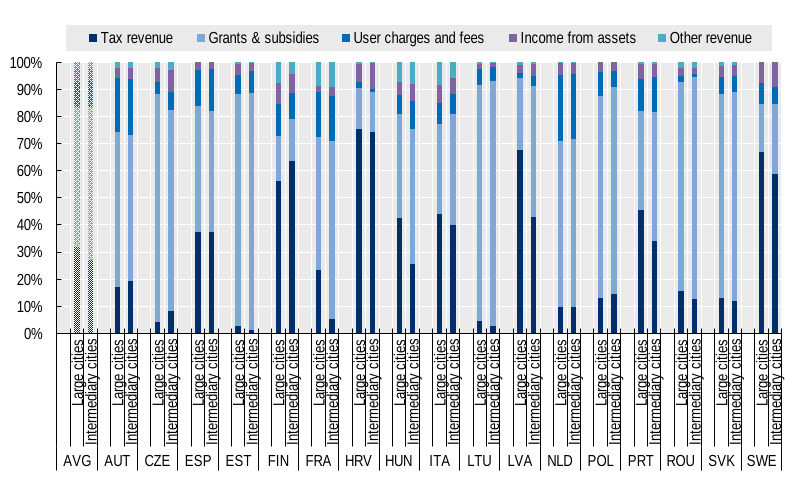
Note: Data refer to 2024 for all countries except the Slovak Republic, for which 2023 data are used. Large cities are FUAs with more than 250 000 inhabitants, while an intermediary city is a FUA with between 50 000 and 250 000 inhabitants. The average for large FUAs and intermediary city FUAs was calculated by taking the population weighted average for all municipalities that make up a given FUA. Following the 2008 System of National Accounts (SNA) classification, most shared-tax revenues are classified as grants for Austria, Czechia, Estonia, Lithuania, Poland, and the Slovak Republic. For Slovenia, all personal income tax revenues are classified as grants, including the portion normally recorded as tax revenues under the SNA, due to the absence of a separate classification in municipal accounts.
Source: OECD MUNIFI Database
Beyond national grants and subsidies, intermediary cities often face greater difficulties in accessing international and EU funds. They have to compete with larger cities that typically have higher administrative capacity to apply for funding opportunities. These challenges further constrain the financial resources of intermediary cities and can hinder the fulfilment of their functions (ESPON, 2023[53]).
The fiscal flexibility of intermediary cities is further reduced due to lower own-source revenue than larger cities. On average, large cities across the OECD derive 31.7% of their total revenue from taxes, compared to 27.2% for intermediary cities (Figure 3.3). This difference reflects a smaller tax base in intermediary cities, stemming from the presence of fewer businesses and fewer high-income residents relative to larger cities.
In many cases, intermediary cities are composed of a core municipality and surrounding municipalities, which can give rise to further fiscal disparities within the functional urban area. Within intermediary cities, tax disparities also exist between core municipalities and surrounding municipalities. For example, core municipalities often collect less revenue than needed to cover their expenditures, as many taxpayers – both individuals and enterprises – are located outside their administrative boundaries. This is particularly relevant given that, in the EU, only 4% of intermediary cities (24 out of 606) are composed of a single municipality, making this multi-municipal structure the norm rather than the exception (OECD, 2024[54]). While beyond the scope of this report, this evidence calls for further analysis at a granular scale within FUAs.
Beyond taxes, the ability of intermediary cities to generate revenue from other sources such as user charges, asset income, and land value capture13 mechanisms is also often more limited than in larger cities. Charging user fees can be challenging for intermediary cities, as reflected in their lower per capita revenue from this source: EUR 2 841 per capita in 2024, compared to EUR 2 917 in larger cities (OECD, Forthcoming[55]). This low revenue collection in intermediary cities suggests they can face limitations in either the scope or the quality of the services for which fees are charged, which could be due to several factors, including limited service provision, lower perceived quality and lower willingness to pay due to income constraints compared to larger cities. Additionally, intermediary cities may have a weaker institutional and technical capacity to manage complex user fee, asset management systems and land value capture mechanisms (e.g. tariffs setting, billing systems, enforcement).
In addition to lower revenue autonomy, intermediary cities, like large cities, often face internal fiscal tensions, particularly where they comprise multiple municipalities. These tensions are particularly acute in many intermediary cities due to their more limited fiscal capacity and administrative resources. Central municipalities in intermediary cities (those that provide a disproportionate number of services to the surrounding area) can face a mismatch between revenues and expenditure needs. This is because they provide essential infrastructure and services not only for their own residents but also for their broader catchment area in a region. This mismatch between revenue earned by a core municipality, typically based on the municipal population, and expenditures that benefit residents beyond their border are often known as “centrality charges” or “centrality costs” (Vaquero García and Cadaval Sampedro, 2022[56]). These charges, without proper compensation through equalisation or support to cities from the surrounding municipalities within their FUAs, place extra budgetary pressures on core municipalities. This limited fiscal capacity may hinder investment in strategic infrastructure and projects that capitalise on the cities’ comparative advantages. This may also affect other municipalities and ultimately reduce the ability of intermediary cities to drive regional development.
Centrality charges represent an important cost for municipalities in France and Switzerland. Although data on centrality charges is limited, a study in Switzerland found that net costs per capita for core municipalities are 40% higher in medium-sized agglomerations than for peripheral municipalities (Office fédéral du développement territorial, 2013[57]).14 Conversely net costs in large agglomerations were 71% higher in core municipalities. Despite lower centrality charges in intermediary cities than larger ones, they still add an extra financial burden to already constrained budgets. A more recent study in France found that for municipalities between 15 000 and 100 000 inhabitants, centrality-related spending represents the second-largest category of investment expenditure, accounting for 21% of total investment (Villes de France & Banque Postale, 2022[58]). The main challenge posed by centrality charges is that these additional expenditures are often not compensated by additional revenue sources.
Beyond differences in the level and composition of revenues, the structure of subnational expenditure also varies between large and intermediary cities, reflecting distinct service delivery responsibilities and local priorities. At the EU level15, the most significant gap is found in economic affairs, where large cities allocate a share of spending approximately 1.8 percentage points (pp) higher than intermediary cities, potentially reflecting greater investment needs in transport, infrastructure or local economic development (Figure 3.4). Intermediary cities, by contrast, tend to devote a relatively greater share of their budgets to general public services (+1.5 pp) and recreation, culture and religion (+1.1 pp)16. While differences in other spending categories remain modest at the aggregate level, country-level patterns reveal more pronounced variation. Austria stands out as a case where large cities spend comparatively more on social protection (+5.8 pp) while in Estonia, education spending in large cities falls 6.6 pp below that of intermediary cities. These examples illustrate that, while EU-wide averages suggest a broadly comparable spending structure across city types, national institutional arrangements and the allocation of competences can produce substantial differences in how expenditure responsibilities are distributed.
Spending share differences by COFOG function: intermediary vs large cities (2024)

Note: Data refer to 2024 for all countries except the Slovak Republic, for which 2023 data are used. Large cities are FUAs with more than 250 000 inhabitants, while an intermediary city is a FUA with between 50 000 and 250 000 inhabitants. The average for large FUAs and intermediary city FUAs was calculated by taking the population weighted average for all municipalities that make up a given FUA. The percentage‑point difference is calculated as the share of total expenditure allocated to a given COFOG function in intermediary cities minus the corresponding share in large cities
Source: OECD MUNIFI Database
Finally, access to external financing, especially bond markets and private sector financing, already challenging for larger cities, is even more difficult for intermediary cities due to administrative and credit-related barriers, including smaller project sizes, complex issuance processes, higher borrowing costs, lower creditworthiness, and a lack of market expertise (Windisch, 2019[59]). In the same vein, subnational public-private partnerships tend to be concentrated in larger cities, which generally have greater financial capacity, larger projects with higher returns for investors, fewer technical capacity constraints, and a lower level of perceived risk by the private sector (OECD, 2018[60]). Foreign direct investment (FDI) is also constrained in intermediary cities compared to larger cities, as population size is a key factor in FDI attractiveness (Bono, David and Desbordes, 2023[61]), further limiting potential strategic investments.
3.3.3. Administrative capacity
In addition to fiscal constraints intermediary cities also face limitations in administrative and technical capacity. Many intermediary cities struggle to attract and retain skilled personnel due to lower salaries and fewer career advancement opportunities (Narang Suri and Bonaglia, 2021[62]). These constraints often translate into a lack of technical expertise in key areas such as project preparation, access to finance and strategic urban planning (Windisch, 2019[59]). Similarly, small urban areas face challenges caused by insufficient administrative capacity and knowledge to address megatrends such as demographic change (European Committee of the Regions, 2023[63]). These challenges may lead to suboptimal outcomes in infrastructure investment and service delivery, including fiscal inefficiencies, urban sprawl, environmental degradation, and misaligned zoning decisions. As a result, many intermediary cities are unable to fully leverage the opportunities offered by decentralisation, further widening the development gap between them and larger cities.
Additionally, intermediary cities are often overlooked in national policy frameworks, which tend to prioritise either large urban areas or rural or remote areas. This can result in limited access to targeted policy support, funding programmes, or strategic planning initiatives from national and regional governments (Narang Suri and Bonaglia, 2021[62]). First-tier cities or capitals may take political precedent and monopolise the dialogue with higher levels of government (Meijers, 2017[64]). However, despite this historic lack of recognition, intermediary cities have featured more in recent policy debates – especially since the COVID-19 pandemic. Their inclusion in initiatives such as, the Territorial Agenda 2030 reflects a growing recognition of their potential to drive regional development (EU Ministers responsible for spatial planning, 2020[65]).
3.3.4. Cross-jurisdictional co-ordination
Like larger cities, intermediary cities typically comprise multiple municipalities, implying that effective co-operation and co‑ordination among them are needed for successful performance. The more fragmented an intermediary city is, i.e. the greater the number of municipalities within an intermediary city's functional area, the more challenging governance and management become. A high degree of municipal fragmentation can weaken the administrative, strategic, and fiscal capacity of intermediary cities, particularly given their generally more limited resources compared to larger cities. If no measures are taken to mitigate its adverse effects, such as strengthening inter-municipal co-operation or encouraging agglomeration to reach critical mass and economies of scale, fragmentation can undermine the ability of intermediary cities to fully play their role in national and regional development.
Large cities tend to encompass more municipalities than intermediary cities within the same country. Urban areas with more than 250 000 inhabitants in OECD and EU countries included, on average, 54 municipalities in 2022, while those with 50 000 to 250 000 inhabitants included 18 (Figure 3.5). Large differences exist across countries., For example, large urban areas in Czechia include 281 municipalities on average, compared to 57 municipalities in intermediary areas. Conversely, in New Zealand, large urban areas included only 3 municipalities, while intermediary ones included 1 on average.
Average number of municipal level governments by population size category (2022)

Note: Data for the Netherlands is for 2023. Data for Austria, Belgium, Czechia, Germany, Finland, France, Italy, and Latvia are for 2022. Data for Spain, Poland, Portugal, the Slovak Republic, and Sweden are for 2021.
Source: OECD Regions, Cities and Local Areas database http://oe.cd/geostats.
While larger urban areas include more municipalities in absolute terms, intermediary cities tend to have a higher level of municipal fragmentation than larger cities in the same country relative to their population size. On average across OECD countries in 2022, intermediary cities included 1.1 municipalities per 100 000 inhabitants within the functional urban area, compared to 0.7 in larger urban areas (Figure 3.6). The countries with the highest number of municipalities on average per 10 000 inhabitants in intermediary cities were Greece (4.7), France (4.2), Czechia (3.9), the Slovak Republic (3.8) and Hungary (3.4), while the countries with the fewest were Korea (0.06), Chile (0.09), Mexico (0.09), Colombia (0.1), and Ireland (0.11).
Number of municipal level governments per 100 000 inhabitants within the functional urban area

Note: In this figure, cities refer to functional urban areas. Data for the Netherlands is for 2023. Data for Austria, Belgium, Czechia, Germany, Finland, France, Italy, and Latvia are for 2022. Data for Spain, Poland, Portugal, the Slovak Republic, and Sweden are for 2021.
Source: OECD Regions, Cities and Local Areas database http://oe.cd/geostats.
Policy co-ordination is critical to improving economic performance in intermediary cities, yet municipal fragmentation remains a significant barrier (Meijers, 2017[64]). Most Intermediary cities with populations over 50 000 comprise more than one municipality and in smaller urban areas core municipalities also provide services to surrounding areas. This means that to successfully fulfil their role in regional development intermediary cities must co-ordinate across administrative boundaries. However, given the constrained fiscal space outlined above, combined with low capacity and inclusion in national policies this remains a significant challenge.
References
[52] Allain-Dupré, D., I. Chatry and A. Moisio (2020), “Asymmetric decentralisation: Trends, challenges and policy Implications”, OECD Regional Development Papers, No. 10, OECD Publishing, Paris, https://doi.org/10.1787/0898887a-en.
[61] Bono, P., Q. David and R. Desbordes (2023), “International attractiveness of cities: The drivers of urban FDI”, https://onlinelibrary.wiley.com/doi/pdf/10.1111/roie.12774.
[44] Brian, R. (2014), Managing Systems of Secondary Cities, Cities Alliance, https://www.citiesalliance.org/sites/default/files/1d%20%28i%29%20-%20Managing%20Systems%20of%20Secondary%20Cities%20Book_low_res.pdf.
[12] Burger, M. and E. Meijers (2016), “Agglomerations and the rise of urban network externalities”, Regional Science, Vol. 95/1, pp. 5-16, https://doi.org/10.1111/pirs.12223.
[16] Centre for Cities (2020), Why big cities are crucial to ‘levelling up’, https://www.centreforcities.org/reader/why-big-cities-are-crucial-to-levelling-up/big-cities-are-crucial-to-levelling-up/.
[17] CGET (2017), Mid-sized cities in France: Vulnerability, potential and territorial cofigurations.
[25] EASAC (2021), “Decarbonisation of Buildings: for Climate, Health and Jobs.”, EASAC Secretariat Deutsche Akademie der Naturforscher Leopoldina.
[21] Economic and Social Council, United Nations (2024), Challenges and priorities for improving housing affordability in the region of the United Nations Economic Commission for Europe.
[18] ESPON (2024), Small and medium- sized towns and cities: policies strengthening their role in achieving active, inclusive, and functional territories.
[53] ESPON (2023), “https://www.espon.eu/sites/default/files/publications/files/2024-12/espon-small-medium-sized-towns-and-cities-in-europe.pdf”, How small and medium-sized towns and cities (SMSTCS) are considered in Europe and in EU policies, https://www.espon.eu/sites/default/files/publications/files/2024-12/espon-small-medium-sized-towns-and-cities-in-europe.pdf (accessed on 26 February 2025).
[65] EU Ministers responsible for spatial planning (2020), Territorial Agenda 2030: A future for all places, https://territorialagenda.eu/wp-content/uploads/TA2030_jun2021_en.pdf.
[28] Euro Cities (2024), Cities show commitment to climate adaptation, https://eurocities.eu/latest/cities-show-commitment-to-climate-adaptation/ (accessed on 30 April 2025).
[32] European Commission (2026), European Commission Launches landmark ‘Right to Stay’ Strategy, https://ec.europa.eu/regional_policy/whats-new/newsroom/05-05-2026-european-commission-launches-landmark-right-to-stay-strategy_en (accessed on 3 June 2026).
[6] European Commission (2025), EU funds for migrant integration 2021-2027., https://migrant-integration.ec.europa.eu/funding/eu-funds-2021-2027-period_en (accessed on 6 May 2025).
[13] European Commission (2024), Forging a sustainable future together: Cohesion for a competitive and inclusive Europe, the High-Level Group on the Future of Cohesion Policy, https://op.europa.eu/en/publication-detail/-/publication/c6e97287-cee3-11ee-b9d9-01aa75ed71a1/language-en.
[14] European Commission (2024), Ninth Report on Economic, Social and Territorial Cohesion, https://ec.europa.eu/regional_policy/sources/reports/cohesion9/9CR_Report_FINAL.pdf.
[22] European Commission (2020), Renovation Wave. The European Green Deal.
[5] European Commission (2016), Questions and Answers: An improved EU BLue Card scheme and the Action Plan on Integration, http://ec.europa.eu/commission/presscorner/detail/it/memo_16_2071 (accessed on 6 May 2025).
[63] European Committee of the Regions (2023), Opinion of the European Committee of the Regions on small urban areas as key actors to manage a just transition, https://eur-lex.europa.eu/legal-content/EN/TXT/PDF/?uri=CELEX:52022IR0136 (accessed on 24 April 2025).
[2] European Union (2023), Report on the Quality of Life in European Cities.
[11] General Commission for Territorial Equality (2017), Mid-sized cities in France: Vulenrability, Portential and Territorial Configurations, https://anct-site-prod.s3.fr-par.scw.cloud/s3fs-public/2020-09/en_bref_45_englishversion.pdf.
[27] Harding, R. and C. Nauwelaers (2024), Transformative innovation for better Climate Change Adaptation – Case study: Turku, Southwest Finland, European Commission, Joint Research Centre, https://publications.jrc.ec.europa.eu/repository/bitstream/JRC137315/JRC137315_01.pdf (accessed on 30 April 2025).
[9] Hildreth, P. (2007), “Understanding medium-sized cities”, Town & Country Planning, pp. 163-167, https://salford-repository.worktribe.com/previewfile/1499818/TCP_-_medium-sized_cities_May_2007.pdf.
[19] Interreg Europe (2020), Smart Specialisation Strategy (S3). A Policy Brief from the Policy Learning Platform on Research and Innovation, https://www.interregeurope.eu/sites/default/files/inline/Smart_Specialisation_Strategy__S3__-_Policy_Brief.pdf.
[15] Letta, E. (2024), Much more than a market. Speed, security, solidarity. Empowering the Single Market to deliver a sustainable future and prosperity for all EU Citizens, https://www.consilium.europa.eu/media/ny3j24sm/much-more-than-a-market-report-by-enrico-letta.pdf.
[24] Leyen, U. (2024), Political guidelines for the EU Commission 2024-2029.
[3] Maastricht University (2024), Maastricht University student numbers stabilise, http://www.maastrichtuniversity.nl/news/maastricht-university-student-numbers-stabilise (accessed on 6 May 2025).
[64] Meijers, R. (2017), “Secondary Yet Metropolitan? The Challenges of Metropolitan Integration for Second-Tier Cities”, Planning Theory & Practice, Vol. 18/4, pp. 616-635, https://doi.org/10.1080/14649357.2017.1371789.
[36] Ministry of Local Government and Modernisation (2021), The role and function of smaller cities and regional centres in regions and regional development, https://www.regjeringen.no/no/dokumenter/mindre-byer-og-regionsentres-rolle-og-funksjon-i-regioner-og-regional-utvikling/id2865792/.
[51] Ministry of Regional Development Czechia (2020), Regional Development Strategy of the Czech Republic 2021+.
[62] Narang Suri, S. and F. Bonaglia (2021), Why local? Why now? Strengthening intermediary cities to achieve the SDGs, https://oecd-development-matters.org/2021/07/06/why-local-why-now-strengthening-intermediary-cities-to-achieve-the-sdgs/.
[23] NYU Furman Centre (2021), “Housing Characteristics of Small and Mid-Sized Cities”.
[38] OECD (2026), Local Retail, Global Trends: How Digital, Green and Skills Shifts in the EU are Reshaping SMEs in Towns and Cities, OECD Studies on SMEs and Entrepreneurship, OECD Publishing, Paris, https://doi.org/10.1787/55e2edec-en.
[68] OECD (2026), OECD MUNIFI Database, https://data-explorer.oecd.org/vis?lc=en&df%5bds%5d=DisseminateFinalDMZ&df%5bid%5d=DSD_SNGF_AGG%40DF_MUNIFI&df%5bag%5d=OECD.CFE.RDG&df%5bvs%5d=1.0&dq=AUS..._Z.XDC&pd=2020%2C2020&to%5bTIME_PERIOD%5d=false (accessed on 9 June 2026).
[8] OECD (2025), Shrinking Smartly and Sustainably: Strategies for Action, OECD Rural Studies, OECD Publishing, Paris, https://doi.org/10.1787/f91693e3-en (accessed on 5 August 2025).
[49] OECD (2024), An Agenda for Housing Policy Reform, https://www.oecd.org/en/publications/an-agenda-for-housing-policy-reform_ddb57031-en.html.
[45] OECD (2024), Education at a Glance 2024: OECD Indicators, OECD Publishing, Paris, https://doi.org/10.1787/c00cad36-en.
[1] OECD (2024), Getting to Services in Towns and Villages: Preparing Regions for Demographic Change, OECD Rural Studies, OECD Publishing, Paris, https://doi.org/10.1787/df1e9b88-en.
[7] OECD (2024), OECD Regions and Cities at a Glance 2024, OECD Publishing, Paris, https://doi.org/10.1787/f42db3bf-en.
[54] OECD (2024), Regions, cities and local statistics, https://www.oecd.org/en/topics/regions-cities-and-local-statistics.html.
[42] OECD (2024), Subnational governments structure and finance: key data, OECD Publishing.
[20] OECD (2023), Confronting the cost-of-living and housing crisis in cities, OECD Publishing, https://doi.org/10.1787/7a6008af-en.
[41] OECD (2023), OECD Regional Outlook 2023: The Longstanding Geography of Inequalities, OECD Publishing, Paris, https://doi.org/10.1787/92cd40a0-en.
[37] OECD (2023), Rethinking Regional Attractiveness in the New Global Environment, OECD Regional Development Studies, OECD Publishing, Paris, https://doi.org/10.1787/a9448db4-en.
[29] OECD (2022), Urban-Rural Linkages in Poland, OECD Regional Development Studies, OECD Publishing, Paris, https://doi.org/10.1787/94b5c782-en.
[33] OECD (2021), Delivering Quality Education and Health Care to All: Preparing Regions for Demographic Change, OECD Rural Studies, OECD Publishing, Paris, https://doi.org/10.1787/83025c02-en.
[50] OECD (2021), “Economic and social impact of cultural and creative sectors: Note for Italy G20 Presidency Culture Working Group”, OECD Local Economic and Employment Development (LEED) Papers, No. 2021/11, OECD Publishing, Paris, https://doi.org/10.1787/4d4e760f-en.
[47] OECD (2021), Unlocking infrastructure investment: Innovative funding and financing in regions and cities, OECD Publishing, Paris, https://doi.org/10.1787/9152902b-en.
[43] OECD (2019), Regions in Industrial Transition: Policies for People and Places, OECD Regional Development Studies, OECD Publishing, Paris, https://doi.org/10.1787/c76ec2a1-en.
[46] OECD (2015), Local Economic Leadership, OECD Publishing, Paris, https://doi.org/10.1787/adf51caf-en.
[31] OECD (2013), Rural-Urban Partnerships: An Integrated Approach to Economic Development, OECD Rural Policy Reviews, OECD Publishing, Paris, https://doi.org/10.1787/9789264204812-en.
[34] OECD (2012), Promoting Growth in All Regions, OECD Regional Development Studies, OECD Publishing, Paris, https://doi.org/10.1787/9789264174634-en.
[55] OECD (Forthcoming), Regional and Municipal Finance (REGOFI-MUNIFI) Database.
[60] OECD Multi-level Governance Studies, O. (ed.) (2018), Subnational Public-Private Partnerships: Meeting Infrastructure Challenges, https://doi.org/10.1787/9789264304864-en.
[30] OECD/EC-JRC (2021), Access and Cost of Education and Health Services: Preparing Regions for Demographic Change, OECD Rural Studies, OECD Publishing, Paris, https://doi.org/10.1787/4ab69cf3-en.
[67] OECD/Lincoln Institute of Land Policy, PKU-Lincoln Institute Center (2022), Global Compendium of Land Value Capture Policies, OECD Regional Development Studies, OECD Publishing, Paris, https://doi.org/10.1787/4f9559ee-en.
[39] OECD/PSI (2020), Rural Development Strategy Review of Ethiopia: Reaping the Benefits of Urbanisation, OECD Development Pathways, OECD Publishing, Paris, https://doi.org/10.1787/a325a658-en.
[57] Office fédéral du développement territorial (2013), Charges des centres urbains et charges particulières dans les agglomérations, https://www.are.admin.ch/are/fr/home/media-et-publications/publications/villes-et-agglomerations/zentrumslasten-und-sonderlasten-in-agglomerationen.html (accessed on 13 February 2025).
[48] Phillips, L. (2020), “Decentralisation and inter-governmental relations in the housing sector”, OECD Working Papers on Fiscal Federalism, No. 32, OECD Publishing, Paris, https://doi.org/10.1787/2d3c3241-en.
[66] Regling, K. (2022), Europe’s growing resilience to crises.
[40] Torné, J. and S. Duque (2016), “Planning and management of sustainable urban development of Intermediary Cities”, United Cities and Local Government Frame Document, https://www.uclg.org/sites/default/files/uclg_frame_document_ic.pdf (accessed on 17 February 2025).
[10] UCLG (n.d.), UCLG frame document for Intermediary Cities: Planning and management of sustainable urban development.
[26] URBACT (2024), Housing Challenges in Shrinking Cities, https://urbact.eu/housing-challenges-shrinking-cities.
[4] Vallet, C. (2022), Aux Pays-Bas, tensions et arnaques sur le marché des logements étudiants, http://www.lemonde.fr/campus/article/2022/02/19/aux-pays-bas-tensions-et-arnaques-sur-le-marche-des-logements-etudiants_6114365_4401467.html (accessed on 6 May 2025).
[56] Vaquero García, A. and M. Cadaval Sampedro (2022), Centrality and Capital Costs in Urban Areas: Policy Watch for Spain, https://doi.org/10.7866/HPE-RPE.23.1.3.
[58] Villes de France & Banque Postale (2022), Zoom sur le patrimoine des villes moyennes et intercommunalités, https://www.labanquepostale.com/content/dam/lbp/documents/etudes/finances-locales/2022/etude-patrimoine-villes-de-france-juin2022.pdf.
[35] Wiesława Kozek, J. (n.d.), Local report: Radom, Poland.
[59] Windisch, S. (2019), Smaller cities’ access to external finance, https://ec.europa.eu/futurium/en/system/files/ged/greencrowding_23042019_smallercitiesaccesstoexternal_finance.pdf (accessed on 10 February 2025).
Notes
← 1. Mid-sized settlements are defined as “towns of all sizes and small cities (i.e. cities with fewer than 250 000 residents), minus any cities that are the largest in their country” (OECD, 2024[1]).
← 2. The 12 mid-range facilities (12 équipements intermédiaires) are a concept used by the French National Agency for Territorial Cohesion (ANCT) which identifies key public and private services or facilities that define a city’s capacity to serve its wider territory. They include: a sub-prefecture (sous-préfecture), high school (lycée), hospital with maternity services (hôpital avec maternité), court of first instance (tribunal judiciaire), train station (gare SNCF), fire station (centre de secours), employment centre (Pôle emploi), tax office (centre des finances publiques), cultural centre or cinema (centre culturel ou cinéma), sports complex or stadium (complexe sportif ou stade), retail hub (zone commerciale ou supermarché), and a social welfare office (CAF ou service d’action sociale).
← 3. In the European economy, SMEs account for two-thirds of total employment and generate over 50% of the EU value-added (Letta, 2024[15]).
← 4. The “fifth freedom” is the freedom of knowledge, which is a proposed expansion of the EU’s existing four freedoms (free movement of goods, services, capital, and people).
← 5. Based on the response from the United Kingdom to the OECD Survey on Intermediary Cities.
← 6. Mid-sized cities defined as urban units with more than 20 000 inhabitants, being a "large urban centre" type according to INSEE's urban area delimitation, and not included in one of the 22 largest urban areas encompassing the institutional metropolises. An urban unit is a municipality or group of municipalities presenting a continuous built area (no interruption of more than 200m between two buildings) and with at least 2 000 inhabitants. A "large urban area" is a group of touching municipalities, without pockets of clear land, encompassing an "urban centre" (urban unit) providing at least 10 000 jobs, and a peri-urban periphery composed of rural municipalities or urban units in which at least 40% of the employed resident population works in the centre or in the municipalities attracted by this centre. 22 urban areas whose centre is a metropolis in the institutional meaning of the term (perimeters on 1 January 2017, General Directorate for Local Authorities/ DGCL), i.e. 18 metropolises and 4 urban communities or urban area communities in the process of becoming a metropolis, whilst retaining the same municipal compositions (CGET, 2017[17]).
← 7. “Territorial imbalances could be mitigated by a more polycentric development model: building on small and medium-sized cities and promoting accessibility of public services in areas far from large urban centres” (p. xxxv).
← 8. Capital metropolitan regions in the EU consistently outperform other regions in economic growth, innovation and investment (European Commission, 2024[14]), resulting in about a quarter of small regions in the old EU member states to fall behind (Regling, 2022[66]).
← 9. The OECD measure of degree of fiscal decentralisation is based on expenditure and tax revenue of subnational governments in OECD and EU countries. More specifically, the methodology combines five indicators: subnational government expenditure as a percentage of GDP and as a percentage of general government expenditure and tax revenues as a percentage of GDP, as a percentage of general government tax revenues and as a percentage of subnational government revenues.
← 10. Excluding state governments and related entities.
← 11. Excluding state governments and related entities.
← 12. The EU average is based on data available for 17 countries: Austria, Croatia, Czechia, Estonia, Finland, France, Hungary, Italy, Latvia, Lithuania, the Netherlands, Poland, Portugal, Romania, the Slovak Republic, Spain, and Sweden.
← 13. Land value capture refers to policies that allow public authorities to recover increases in land values which result from government actions. This could include mechanisms such as an infrastructure levy where landowners pay a tax or fee for public infrastructure from which they specifically benefit (OECD/Lincoln Institute of Land Policy, PKU-Lincoln Institute Center, 2022[67]).
← 14. Similarly, net costs per capita are 70% higher in the largest centres and 14% higher in the smallest agglomerations. To account for variations in equalisation arrangements across cantons, municipalities were benchmarked against the average municipality within their respective canton, underlining that core municipalities consistently face centrality charges across different fiscal systems (Office fédéral du développement territorial, 2013[57]).
← 15. The EU average is based on data available for 10 countries: Austria, Croatia, Estonia, Finland, Italy, Lithuania, the Netherlands, Poland, Romania, and the Slovak Republic.
← 16. Note that this COFOG category includes support for recreation and religious services, beyond culture. Moreover, this data has some limitations in capturing government funding for cultural and creative sectors. For example, government expenditure may be used to support cultural or creative businesses, and this expenditure may therefore be counted as economic affairs, rather than culture.