The teacher workforce in any education system is usually as diverse as the total workforce. This means different ages, experiences, and life-phases shape how teachers work and think. It also means that teachers might think very differently about their work, now and in the future. In addition, it is important for policymakers to ask how proposed policy changes influence a diverse teacher workforce in different ways? This chapter presents constructed data-informed Flemish teacher personas. Based on both international and Flemish research and data, an overview of six sets of teacher personas are introduced, each with a different background, ages, experiences, motivations and other traits that shape the teacher workforce in Flanders.
Constructing Scenarios for the Future of Teaching in Flanders

Abstract

Note: Text in bold is supported by highlighted categories and other key indicators in Annex A.
Highlighted categories
Teachers experience autonomy
Overall, most employees in the Flemish education sector indicate they experience sufficient autonomy. While this has decreased somewhat since 2004, the education sector is among those sectors in Flanders where employees feel they have the most influence in planning and organising their own work (SERV, 2023[1]). In international comparison, they indicate a significant degree of autonomy. For example, Flemish teachers indicate a relatively high degree of autonomy in teaching and lesson planning when compared to other OECD education systems (Van Droogenbroeck et al., 2020[2]; OECD, 2020[3]). Research suggests that having autonomy is a reason to stay in the profession (Mombaers, Vanlommel and Van Petegem, 2020[4]; Mombaers et al., 2023[5]).

Note: Autonomy was defined as ‘the extent to which employees have influence over the planning and organisation of their own work – ‘control options’. Number of respondents varies from a minimum of 892 (2007) to a maximum 1739 (2013).
Source: SERV (2023), Hoe werkbaar is je job? Werktevredenheidsmeting werknemers 2023 [How workable is your job? Employee job satisfaction survey 2023], https://www.serv.be/sites/default/files/documenten/SERV_DB_20231004_WBM2023_Werknemers_RAP_StIA.pdf, table 38 (‘autonomy by sector’)
Psychosocial illnesses reason for early retirement
Data from 2022 shows that psychosocial reasons are the main reason for absence for teachers (AGODI, 2023[6]). Tuytens et al. (2021[7]) highlight that although psychosocial illnesses are often personal and not related or traceable to work, there are risks that work factors can damage both the mental and physical state of teachers, of which stress and burn-out are the most commonly mentioned examples. Among staff aged 56 to 65, psychosocial illnesses are responsible for more than half of absenteeism in male staff and almost half for female staff.

Note: The figure depicts the percentage of absenteeism explained by psychosocial reasons per age group. Psychosocial reasons are listed as all mental illnesses, disorders, and their consequential effects on staff, hindering them from working.
Source: AGODI (2023), Rapport afwezigheden naar aanleiding van ziekte 2022 [Report of absences due to illness 2022], https://data-onderwijs.vlaanderen.be/documenten/bestanden/Rapport%20ziekte%202022.pdf (based on table 6.3.1.)
Mental health issues and emotional exhaustion are a reason for early retirement among older teachers (Van Droogenbroeck and Spruyt, 2014[8]; Van Droogenbroeck, Spruyt and Vanroelen, 2014[9]). Research suggests female teachers experience more stress and workload then male teachers (Van Droogenbroeck et al., 2020[2]; Van Droogenbroeck, Spruyt and Vanroelen, 2014[9]). Research also suggests that investment in engagement, career perspectives/diversification and vitality can alleviate both the mental and physical strain for older teachers (Bogaerts, Borzée and Vancraeyveldt, 2021[10]; Tuytens et al., 2021[7])
Voice and status declining, high trust from society
Overall, Flemish teachers do not feel they have a significant voice in education. (Van Droogenbroeck et al., 2019[11]). TALIS 2018 highlighted that only 1 in 5 primary school teachers (20%) feel their opinion is valued by policy makers, 27% of teachers felt they can influence education policy in Flanders (Van Droogenbroeck et al., 2019[11]; Van Droogenbroeck et al., 2020[2]). TALIS 2018 also highlighted that only 31% of Flemish primary teachers believe that teaching is valued by society, down from 45% in 2013. Roughly a third (35%) of primary school teachers feel their profession is appreciated by local media (Van Droogenbroeck et al., 2020[2]). Fewer teachers reported feeling the profession is appreciated by society in 2018 compared with 2013 (Flemish Ministry of Education and Training, 2023[12]; OECD, 2021[13]; Van Droogenbroeck et al., 2019[11]; Van Droogenbroeck et al., 2020[2]). Earlier OECD work in Flanders highlighted that the status of teaching is one of the elements identified by teachers as a risk of further amplifying already existing teacher shortages (OECD, 2021[13])
However, education is the most trusted institution in by the population (Figure 3.3). Research shows that 58% of the Flemish population aged 18 and over indicated they have trust in the education sector. The percentage rises to 65% among the age-group 35-49 years, which is the age group that hosts many parents with children of school age. While this can be interpreted as reassuring for the education sector, it also means that a sizable part of the population indicates a lack of trust in institutions, including education (Statistics Flanders, 2023[14]).

Note: survey was conducted at the end of 2022. The SV (Statistic Flanders) survey is conducted several times a year among a sample of 6,000 inhabitants of the Flemish Region aged 18 and over and is a source for several public statistics. The depicted percentage is the number of respondents who indicated they trust the institution.
Source: Statistiek Vlaanderen (2023), Vertrouwen in instellingen [Statistics Flanders (2023) Trust in institutions], https://www.vlaanderen.be/statistiek-vlaanderen/relatie-overheid-en-burger/vertrouwen-in-instellingen

Note: Text in bold is supported by highlighted categories and other key indicators in Annex A.
Highlighted categories
Simpler forms of collaboration
Compared to the EU-5 counterparts1, Flemish primary education teachers engage less in simpler forms of collaboration, such as exchanging materials with colleagues, discuss pupils’ learning progress or collaborate with other teacher to ensure common assessment standards. However, primary education teachers do tend to collaborate more than their secondary education colleagues (Van Droogenbroeck et al., 2020[2]). Female teachers tend to engage more in these simpler collaboration forms than their male counterparts (Van Droogenbroeck et al., 2020[2]).
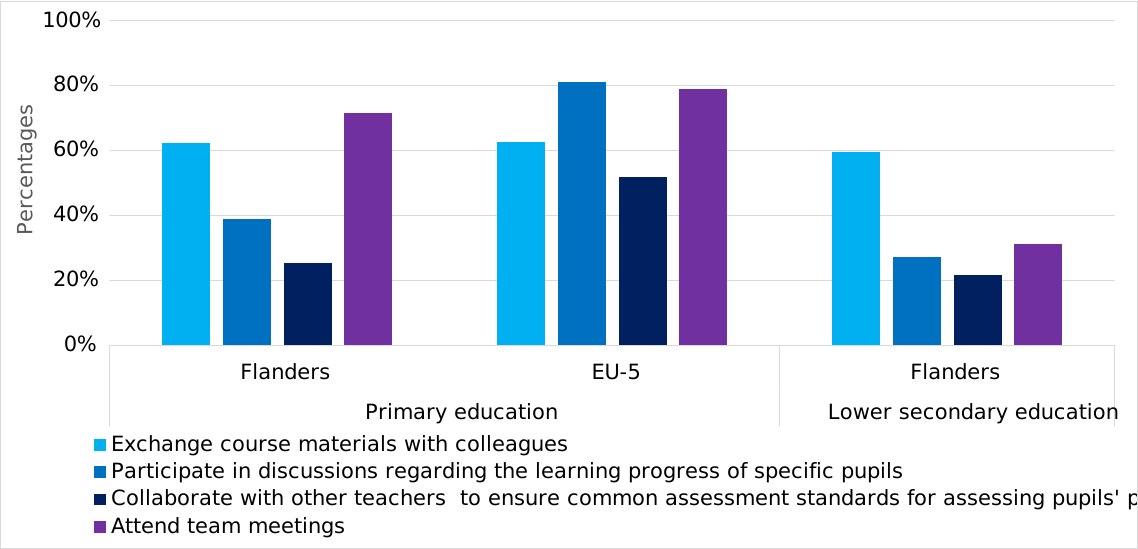
Source: OECD (2020), TALIS 2018 Results (Volume II): Teachers and School Leaders as Valued Professionals, TALIS, OECD Publishing, Paris, https://doi.org/10.1787/19cf08df-en (tables II.4.1 & II.4.2)
More complex forms of collaboration
When looking at more complex forms of collaboration such as team teaching, collaborative professional learning or observing other teachers’ lessons, Flemish primary education teachers engage less in three of the four more complex forms of collaboration identified by TALIS 2018 than their colleagues in other European Union countries. Similar to more simpler forms of collaboration, Flemish primary education teachers participate in more complex forms of collaboration more often than lower secondary education teachers (Van Droogenbroeck et al., 2020[2]). TALIS 2018 results report that a collaborative school culture is associated with higher job satisfaction and lower stress levels (OECD, 2020[3]). It is interesting to note that TALIS 2018 reveals that novice teachers engage more frequently in both simple and complex collaborative activities (Van Droogenbroeck et al., 2020[2]). Increasing (more complex forms of) collaboration within schools is a recommendation coming from the OECD review on teachers ‘professional learning in Flanders (OECD, 2021[13]).

Source: OECD (2020), TALIS 2018 Results (Volume II): Teachers and School Leaders as Valued Professionals, TALIS, OECD Publishing, Paris, https://doi.org/10.1787/19cf08df-en (table II.4.1 & II.4.2)
Temporary contracts are common for younger teachers
Very few teachers under 25 have a fixed contract in Flanders (Flemish Ministry of Education and Training, 2023[15]). For novice teachers job security can be an ongoing challenge as it can take long before tenure is provided. This can be a big obstacle for starting teachers who would like to remain in the profession (Marent et al., 2020[16]; Amitai and Van Houtte, 2022[17]). It is also identified as a possible reason to leave the profession (Amitai and Van Houtte, 2022[17]; Struyven et al., 2012[18]; Mombaers, Vanlommel and Van Petegem, 2020[4]; De Witte et al., 2024[19]).

Note: ‘Education personnel’ consists of teaching staff, school leaders, and deputy school leaders
Source: Source: Flemish Ministry of Education and Training (2023), Statistisch jaarboek van het Vlaams onderwijs – Personeel 2022-2023 – overzichtstabellen [Statistical yearbook of Flemish education - Staff 2022-2023 - summary tables], https://onderwijs.vlaanderen.be/nl/onderwijsstatistieken/statistisch-jaarboek/statistisch-jaarboek-van-het-vlaams-onderwijs-2022-2023

Note: Text in bold is supported by highlighted categories and other key indicators in Annex A.
Highlighted categories
Many teachers retire early
A significant number of 60+ education staff stop working early in Flanders (Flemish Ministry of Education and Training, 2023[15]; Van Droogenbroeck et al., 2013[20]). Although the current official retirement age is 65, a 60% drop in education staff working after 62 is visible in the most recent data (2275 education staff aged 62, 899 education staff aged 63). This is found in earlier research as well and has been linked to early retirement options available, as well as emotional exhaustion and unsatisfactory working conditions, mainly due to high administrative pressures (Van Droogenbroeck et al., 2013[20]). The decision to retire is also influenced by environmental factors such as social norms regarding retirement, family, marital status, and financial dependency (Van Droogenbroeck and Spruyt, 2014[8]). Research suggests that while induction policies for starting teachers are already being developed, extra attention on the personal and professional aspects of their work is considered valuable for teachers at the end of their careers (Bogaerts, Borzée and Vancraeyveldt, 2021[10]). In general both men and women in Belgium leave the labour market at a relatively early age, around 61 years, compared to 64.4 (men) and 63.1 (women) years on average across the OECD (OECD, 2023[21]), indicating that early retirement should be considered a general trend in the Belgian labour market.

Note: ‘Education personnel’ consists of teaching staff, school leaders and deputy school leaders.
Source: Flemish Ministry of Education and Training (2023), Statistisch jaarboek van het Vlaams onderwijs – Personeel 2022-2023 – overzichtstabellen [Statistical yearbook of Flemish education - Staff 2022-2023 - summary tables], https://onderwijs.vlaanderen.be/nl/onderwijsstatistieken/statistisch-jaarboek/statistisch-jaarboek-van-het-vlaams-onderwijs-2022-2023.
Teachers report high administrative burden
Administrative pressure has been a recurring and particularly persistent theme in Flemish education (Brinckman and Versluys, 2021[22]; Flemish Ministry of Education and Training, 2016[23]; Tuytens et al., 2021[7]). Recent research highlighted that 83% of Flemish educational staff report experiencing a lot of administrative burden (Flemish Inspectorate of Education, 2023[24]). Teachers have indicated that administrative burden moves away from the feeling of working on the core tasks of education, an experience of limiting teacher autonomy, and the feeling of only being implementers while not understanding the added value of the administrative tasks for their work. This, in short, leads to feelings of stress and having a heavy workload (Flemish Ministry of Education and Training, 2016[23]). New working practices can also lead to an increase in the sense of administrative burden. Moving to new digital tools for example, has shown to result in more negative HR-outcomes for teachers (Muylaert, Decramer and Audenaert, 2022[25]). TALIS 2018 highlighted that Flemish teachers spend 2.5 hours on average per week on administrative tasks (Van Droogenbroeck et al., 2019[11]). It is important to note that administrative burden is often used as an ‘umbrella term’ for a broad range of practices that teachers feel are not associated with the core tasks of teaching (Brinckman and Versluys, 2021[22]; Flemish Ministry of Education and Training, 2016[23]). A ‘teacher tap’ survey among 1481 teachers in 2020 showed that 32% of teachers felt that less administrative tasks would bring more peace of mind (De Bruyckere, De Meyer and Vanassche, 2021[26]). Figure 3.8 represents what teachers identified as administrative tasks.

Note: N= 1481 teachers, data was collected on 27-05-2021. Participating teachers could give multiple answers.
Source: De Bruyckere, P., G. De Meyer and S. Vanassche (2021), Teacher Tapp Vlaanderen: Wat heeft onderwijs nu nodig [Teacher Tapp Flanders: What does education need now] , https://xyofeinstein.files.wordpress.com/2021/08/wat-heeft-onderwijs-nu-nodig-embargo-tot-26-8.pdf (p. 5)
Although often deemed excessive, administrative tasks play a role in internal and external quality assurance, and teachers agree with this to some extent (Flemish Ministry of Education and Training, 2016[23]). However, it is argued that the amount of time spent on administrative tasks is excessive (Commissie van Wijzen, 2023[27]; Flemish Inspectorate of Education, 2023[24]), and should be evaluated regularly to prevent tasks from not having a clear role (Flemish Ministry of Education and Training, 2016[23]).
Motivated teachers, but high stress levels
On average, research has shown quite persistently that Flemish teachers are very motivated and satisfied in their job. TALIS 2018 highlights that 93% of secondary education teachers are generally satisfied with their jobs (Van Droogenbroeck et al., 2019[11]), more recent research points to 88% of employees in the education sector indicating that they are motivated for their sector (SERV, 2023[1]). Simultaneously, teachers experience significant stress. TALIS 2018 highlighted that more than a quarter (27%) of teachers in lower secondary education experience significant stress in their job, which is more than in other OECD systems (Van Droogenbroeck et al., 2020[2]). Recent research indicated that a third of employees in education experience their work as emotionally stressful and 17% experienced symptoms of burn-out (SERV, 2023[1]).

Note: Text in bold is supported by highlighted categories and other key indicators in Annex A
Highlighted categories
Wish to change schools
Teachers who work in schools with higher concentations of socio-economically disadvantaged pupils (>30%), more often report wanting to change schools than teachers in other schools. In Flanders, this percentage is generally lower than the OECD average, however (see Figure 3.9) (Van Droogenbroeck et al., 2019[11]). Recent research however, has shown that in schools with more disadvantaged students or with more students who speak a different language at home, teacher retention is slightly higher than average, which could be related to high motivational factors for teachers working in these schools (De Witte et al., 2024[19]) Teachers tend to report higher levels of emotional exhaustion because of the high workload (Van Eycken, Amitai and Van Houtte, 2022[28]). Piot, Kelchtermans and Ballet (2010[29]) also find that teachers can experience a higher workload in schools with a more diverse student population, which was also observed by Backers, Tuytens and Devos, (2020[30]). A similar observation holds for school leaders working in these schools. Note that in the case of school leaders, this is higher than the OECD average.
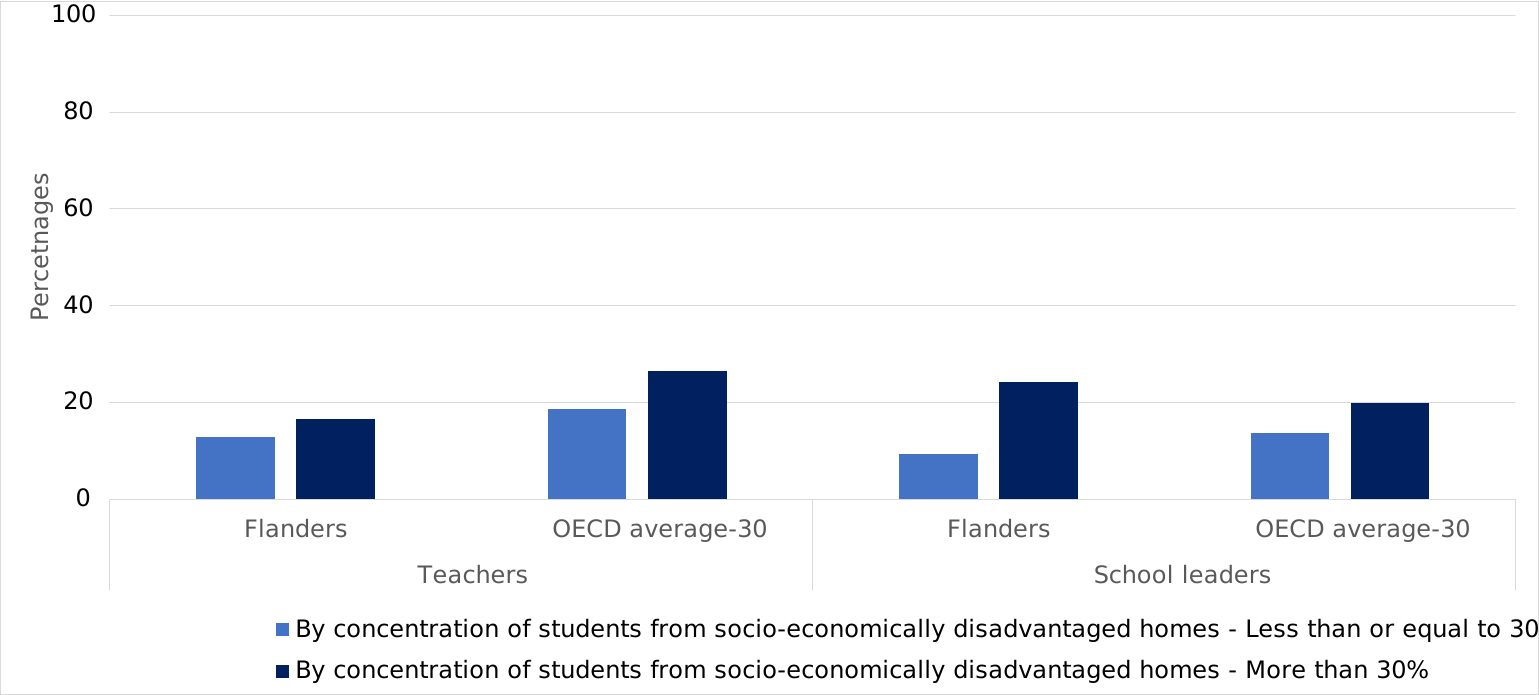
Note: Percentage of teachers and school leaders in lower secondary education who “agree” or “strongly agree” with the statement “I would like to change to another school if that was possible.”
Source: OECD (2020), TALIS 2018 Results (Volume II): Teachers and School Leaders as Valued Professionals, OECD Publishing, Paris, https://doi.org/10.1787/19cf08df-en (table II.2.20)
Differences in student outcomes
When looking at the cultural and ethnical diversity, PISA 2022 reveals that almost 40% of students with a migration background in Flanders do not achieve a basic level in mathematics (De Meyer et al., 2023[31]). Reading and science scores among migrant students are also lower, especially among students who speak a language other than Dutch at home (De Meyer et al., 2023[31]).
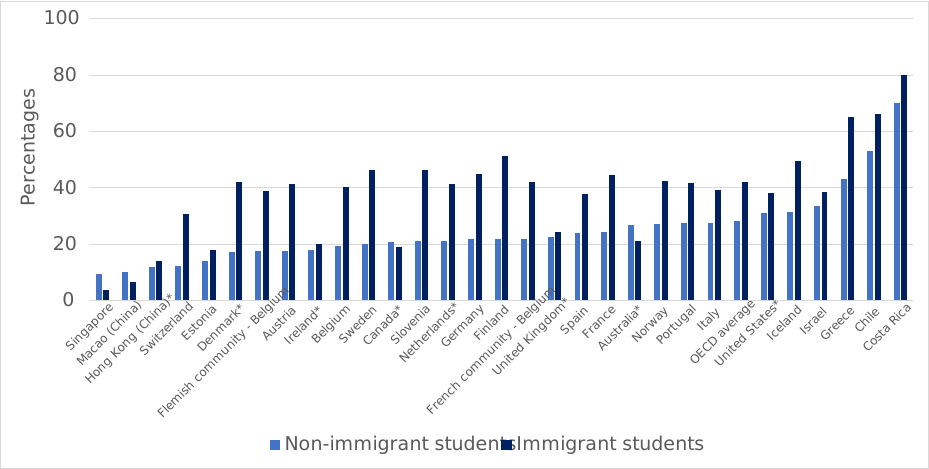
Note: PISA defines immigrant students as students whose mother and father were both born in a country/economy other than that where the student took the PISA test. Non-immigrant students are students who have at least one parent born in the country of assessment.
* Caution is required when interpreting estimates because one or more PISA sampling standards were not met (see Reader’s Guide, Annexes A2 and A4).
Source: OECD (2023), PISA 2022 Results (Volume I): The State of Learning and Equity in Education, OECD Publishing, Paris, https://doi.org/10.1787/19963777 (Tables I. I.B2.42 & I.B1.7.37, Low performance in mathematics by migration status)
Differences in classroom management
Data from TALIS 2018 shows that self-reported teacher behavior in the classroom can vary slightly depending on the student composition of the school they work in (Siongers et al., 2020[32]). This suggests teaching in more diverse settings are observed to be more challenging for Flemish teachers, which is highlighted as well by other research from Flanders (Piot, Kelchtermans and Ballet, 2010[29]; Backers, Tuytens and Devos, 2020[30]; Van Eycken, Amitai and Van Houtte, 2022[28]). On average, teachers who work in schools with more pupils who do not have Dutch as their language at home often have less teaching experience (Siongers et al., 2020[32]; Van Droogenbroeck et al., 2019[11]).

Source: Siongers, J. et al. (2020), TALIS 2018 Vlaanderen – Verdiepend rapport – luik diversiteit [TALIS 2018 Flanders - In-depth report - diversity section], http://talis2018.be/wp-content/uploads/2021/03/TALIS-2018-Verdiepend-rapport-Diversiteit.pdf (based on table 15)

Note: Text in bold is supported by highlighted categories and other key indicators in Annex A
Highlighted categories
Experience outside teaching
Second career teachers have significant potential to alleviate existing and future teacher shortages (De Witte and Iterbeke, 2022[33]; Spruyt et al., 2021[34]; Spruyt et al., 2023[35]; De Witte et al., 2024[19]). TALIS 2018 showed that only 19% of the lower secondary teachers in Flanders indicated having more than 2 years of experience outside education, which is very low compared to other European Union countries (Spruyt et al., 2021[34]; Spruyt et al., 2023[35]; OECD, 2019[36]).

Note: Figure 3.12 is based on secondary analysis of TALIS 2018 data.
Source : Spruyt, B. et al. (2023), Het lerarentekort kritisch bekeken vanuit internationaal vergelijkend perspectief, Tijdschrift voor Onderwijsrecht en Onderwijsbeleid [Teacher shortage critically examined from international comparative perspective], Vol. 79, pp. 19-27, https://torvub.be/torwebdat/publications/t2023_1.pdf
Number of older teacher education students increasing
The number of older teacher education students has been increasing, suggesting more people choose a teacher career later in life. In 2016-2017, 11% of students following an educative bachelor in secondary education were older than 26 years. This percentage has increased to 32% in 2021-2022 (Flemish Ministry of Education and Training, 2022[37]). The total amount of second career teachers has increased by 118% in primary education and 85% in secondary education between 2019-2020 and 2021-2022, amounting to 4.279 second career teachers (Flemish Ministry of Education and Training, 2023[12]). From 23 and up to the age of 30, starting teachers are more likely to quit sooner than teachers who start before or after having reached this age (Tierens et al., 2019[38]).

Note: Depicted is the percentage of students who are either younger or older than 26 years of age in Flemish bachelor’s programmes for primary (left) and secondary (right) education.
Source: Flemish Ministry of Education and Training (2022), Monitor lerarenopleiding 2021-2022 [Monitor teacher training 2021-2022], https://data-onderwijs.vlaanderen.be/documenten/bestanden/Monitor%20voor%20Lerarenopleiding.pdf, based on figure 14, page 14.
Intrinsic and extrinsic motivation
As in other participating systems, TALIS 2018 indicated that Flemish teachers are especially strongly intrinsically motivated to enter the profession in. Lower secondary education teachers draw the greatest motivation from the opportunity to influence the development of children and young people (97%) followed by the opportunity to contribute to society (92%) (OECD, 2019[36]). Research into second career teachers revealed that strong intrinsic motivation is also present in this specific group (Baeten and Meeus, 2016[39]). Additionally, second career teachers are motivated to pass on subject knowledge (Ruitenburg and Tigchelaar, 2021[40]). Other identified items among second career teachers are the desire to work with children/adolescents and the engagement in teaching (Vanslambrouck, 2014[41]).

Note: The percentage of Flemish lower secondary teachers for whom the following aspects were of ‘moderate’ or ‘high’ importance for becoming a teacher.
Source: OECD (2019), TALIS 2018 Results (Volume I): Teachers and School Leaders as Lifelong Learners, TALIS, OECD Publishing, Paris, https://doi.org/10.1787/1d0bc92a-en, table I.4.1
Extrinsic motivations can also be identified in TALIS 2018 and include income, as well as working conditions within the teaching profession. Of the extrinsic motivations a reliable income (75%), followed by a stable career (69%), are the main reasons for Flemish teachers to choose the teaching profession (OECD, 2019[36]).

Note: Text in bold is supported by highlighted categories and other key indicators in Annex A
Highlighted categories
Possible consequences for teaching and learning in a world of AI
The exponential rise in research looking at Artificial Intelligence in Education (AIED) shows “a clear revolution in how the integration of AI in teaching and learning takes place and the aspects that educators must consider” (Prahani et al., 2022, p. 172[42]). AI will also influence educational practices. Some education systems are already implementing AI-tools to support teachers and students in tailor-made learning, as well as evaluating students ‘work, albeit at a slow pace (OECD, 2023[43]). The Korean government, for example, is planning to introduce AI Digital Textbooks from 2025 on, whereby teachers and AI technology cooperate to develop customised lessons for individual students. Additionally, coding classes will become a part of compulsory education for primary and lower secondary education students by 2025 (OECD, 2023[44]). While Flanders explicitly encourages students to use generative AI as part of their schooling activities, schools are free to choose which learning tools they offer students with this aim (OECD, 2023[43]).

Note: Interactive features are digital tools that require interaction, such as adaptive assessment or game-based features. By opposition, static features are digitised version of analogue resources, such as text, but also video or audio.
Source: OECD (2023), OECD Digital Education Outlook 2023: Towards an Effective Digital Education Ecosystem, OECD Publishing, Paris, https://doi.org/10.1787/c74f03de-en, figure 1.4
Pre-service teachers envisioning their future profession
How might future professionals envisage the work of a teacher compared to other professions, particularly in a tight labour market with ample career choices? What are they looking for in teaching as an attractive profession? Finnish research has looked at the way future teachers view their profession by asking pre-service language teachers to draw-up their identity as future professionals. “The first image, titled ‘dream job’, depicts a playful scene involving adults and children in a cosy and spacious classroom. The space also includes symbols related to music, art, drama, and internationality. In contrast, the undesirable professional future titled ‘nightmare job’ is represented by a person enclosed within a cubicle and pressed down by external pressures represented by the words ‘rules’, ‘requirements’, ‘work’, ‘extra work’, ‘extra extra work’, ‘deadlines’ and ‘pressure from the community’ written in Finnish on top of the box. The room is filled with piles of papers and the person is chained to a book labelled ‘textbook’” (Ruohotie-Lyhty and Pitkänen-Huhta, 2022, pp. 200-201[45]).

Note: Pre-service language teachers in Finland created a visual of their ‘dream job’ (left) and ‘nightmare job’ (right).
Source: Ruohotie-Lyhty, M. and A. Pitkänen-Huhta (2022), “Status versus nature of work: pre-service language teachers envisioning their future profession”, European Journal of Teacher Education, Vol. 45/2, pp. 193-212, https://doi.org/10.1080/02619768.2020.1788535.
Does the teaching profession feel valued by the society it serves?
Research indicates that social status of teaching matters to possible future teachers (Park and Byun, 2015[46]; Han, Borgonovi and Guerriero, 2017[47]). In TALIS 2018, a quarter of teachers across Flanders “disagreed” or “strongly disagreed” that the teaching profession is valued by society, which is similar to the OECD average (Van Droogenbroeck et al., 2020[2]). A lower percentage of teachers in Flanders who were under 30 believed the teaching profession was valued by society, compared to the OECD and European Union averages for the same age group (OECD, 2020[3]). A slightly higher percentage of teachers aged 50 or above believed the teaching profession was valued by society, compared to the OECD and European Union average of participating systems for the same age group (OECD, 2020[3]). Research from the Netherlands among secondary school students highlighted that they feel the image of the teacher can be improved by increasing salaries, reducing class size, and increasing career opportunities and more intellectually challenging work (Bahlmann, Eustatia and Pillen-Warmerdam, 2018[48]).

Source: OECD (2020), TALIS 2018 Results (Volume II): Teachers and School Leaders as Valued Professionals, TALIS, OECD Publishing, Paris, https://doi.org/10.1787/19cf08df-en, table II.2.1
References
[6] AGODI (2023), Rapport afwezigheden naar aanleiding van ziekte 2022 [Report of absences due to illness 2022], https://data-onderwijs.vlaanderen.be/documenten/bestanden/Rapport%20ziekte%202022.pdf.
[17] Amitai, A. and M. Van Houtte (2022), “Being pushed out of the career: Former teachers’ reasons for leaving the profession”, Teaching and Teacher Education, Vol. 110, p. 103540, https://doi.org/10.1016/j.tate.2021.103540.
[30] Backers, L., M. Tuytens and G. Devos (2020), Het aantrekken en behouden van leraren in een grootstedelijke context [Attracting and retaining teachers in a metropolitan context], https://data-onderwijs.vlaanderen.be/documenten/bestand.ashx?nr=12917.
[39] Baeten, M. and W. Meeus (2016), “Training Second-Career Teachers: A Different Student Profile, A Different Training Approach?”, Educational Process: International Journal, Vol. 5/3, pp. 173-201, https://doi.org/10.12973/edupij.2016.53.1.
[48] Bahlmann, M., B. Eustatia and D. Pillen-Warmerdam (2018), Optimale inrichting van lerarenopleidingen: resultaten van een vignetten -en motievenonderzoek onder havisten, vwo’ers en mbo-4 studenten [Optimal design of teacher education: results of a vignette and motives survey among havists, vwo students and mbo-4], https://media.qompas.nl/media/vsdg0d00/optimale-inrichting-van-lerarenopleidingen-qompas-2018.pdf.
[10] Bogaerts, I., M. Borzée and C. Vancraeyveldt (2021), Bevlogen blijven in het onderwijs als senior-leraar [Staying inspired in teaching as a senior teacher], UCLL Research & Expertise: Education & Development, https://www.ucll.be/sites/default/files/documents/expertisecellen/Education_Development/bevlogen_senior-leraren.pdf.
[22] Brinckman, P. and K. Versluys (2021), Naar de kern: de leerlingen en hun leer-kracht: Rapport van de Commissie Beter Onderwijs [To the core: students and their learning power: Report of the Better Education Committee], https://www.vlaanderen.be/publicaties/naar-de-kern-de-leerlingen-en-hun-leer-kracht-rapport-van-de-commissie-beter-onderwijs.
[27] Commissie van Wijzen (2023), Prioriteit voor professionaliteit: competente leraren, sterke scholen, hoge onderwijskwaliteit [Priority for professionalism: competent teachers, strong schools, high teaching quality], https://data-onderwijs.vlaanderen.be/documenten/bestanden/rapport-commissie-van-wijzen.pdf.
[26] De Bruyckere, P., G. De Meyer and S. Vanassche (2021), Teacher Tapp Vlaanderen: Wat heeft onderwijs nu nodig [Teacher Tapp Flanders: What does education need now], https://xyofeinstein.files.wordpress.com/2021/08/wat-heeft-onderwijs-nu-nodig-embargo-tot-26-8.pdf.
[31] De Meyer, I. et al. (2023), Vlaams Rapport PISA 2022 [Flemish PISA Report 2022], Universiteit Gent, Ghent, https://www.pisa.ugent.be/uploads/files/Vlaams-Rapport_PISA2022.pdf.
[19] De Witte, K. et al. (2024), De in- en uitstroom in het lerarenberoep vanuit vergelijkend perspectief [Entry and exit in the teaching profession from a comparative perspective], https://data-onderwijs.vlaanderen.be/documenten/bestanden/Instroom_uitstroom_Lerarenberoep.pdf.
[33] De Witte, K. and K. Iterbeke (2022), “Het lerarentekort als katalysator voor onderwijshervormingen [Teacher shortage as catalyst for education reforms]”, Leuvense Economische Standpunten Vol. 191, https://feb.kuleuven.be/research/les/pdf/LES%202022%20-%20191%20lerarentekort.pdf.
[24] Flemish Inspectorate of Education (2023), Planlast in het Vlaamse onderwijs [Administrative burden in Flemish education], https://onderwijsinspectie.be/sites/default/files/2024-03/Planlastrapport%20%28december%202023%29.pdf.
[12] Flemish Ministry of Education and Training (2023), Omgevingsanalyse van het beleidsdomein onderwijs en vorming 2024-2029 [Contextual analysis of the education and training policy area 2024-2029], https://publicaties.vlaanderen.be/view-file/59107.
[15] Flemish Ministry of Education and Training (2023), Statistisch jaarboek van het Vlaams onderwijs - Personeel 2022-2023 - overzichtstabellen [Statistical yearbook of Flemish education - Staff 2022-2023 - summary tables], https://onderwijs.vlaanderen.be/nl/onderwijsstatistieken/statistisch-jaarboek/statistisch-jaarboek-van-het-vlaams-onderwijs-2022-2023.
[37] Flemish Ministry of Education and Training (2022), Monitor lerarenopleiding 2021-2022 [Monitor teacher training 2021-2022], https://data-onderwijs.vlaanderen.be/documenten/bestanden/Monitor%20voor%20Lerarenopleiding.pdf.
[23] Flemish Ministry of Education and Training (2016), Operatie Tarra: Onderzoek naar planlast - Eindrapport [Operation Tarra: Administrative burden study - Final report], https://onderwijs.vlaanderen.be/sites/default/files/2021-07/20160120-eindrapport-OperatieTarra.pdf.
[47] Han, S., F. Borgonovi and S. Guerriero (2017), “What Motivates High School Students to Want to Be Teachers? The Role of Salary, Working Conditions, and Societal Evaluations About Occupations in a Comparative Perspective”, American Educational Research Journal, Vol. 55/1, pp. 3-39, https://doi.org/10.3102/0002831217729875.
[16] Marent, S. et al. (2020), “Short interims, long impact? A follow-up study on early career teachers’ induction”, Teaching and Teacher Education, Vol. 88, p. 102962, https://doi.org/10.1016/j.tate.2019.102962.
[5] Mombaers, T. et al. (2023), “‘To teach or not to teach?’ An exploration of the career choices of educational professionals”, Theory and Practice, https://doi.org/10.1080/13540602.2023.2201425.
[4] Mombaers, T., K. Vanlommel and P. Van Petegem (2020), De Loopbaan van Onderwijsprofessionals [The Careers of Education Professionals], https://data-onderwijs.vlaanderen.be/documenten/bestand.ashx?nr=12911.
[25] Muylaert, J., A. Decramer and M. Audenaert (2022), “How Leader’s Red Tape Interacts With Employees’ Red Tape From the Lens of the Job Demands-Resources Model”, Review of Public Personnel Administration, Vol. 43/3, pp. 430-455, https://doi.org/10.1177/0734371x221087420.
[44] OECD (2023), “Korea”, in Country Digital Education Ecosystems and Governance: A Companion to Digital Education Outlook 2023, OECD Publishing, Paris, https://doi.org/10.1787/9bc3603b-en.
[43] OECD (2023), OECD Digital Education Outlook 2023: Towards an Effective Digital Education Ecosystem, OECD Publishing, Paris, https://doi.org/10.1787/c74f03de-en.
[21] OECD (2023), Pensions at a Glance 2023: OECD and G20 Indicators, OECD Publishing, Paris, https://doi.org/10.1787/678055dd-en.
[13] OECD (2021), “Teachers’ professional learning study: Diagnostic report for the Flemish Community of Belgium”, OECD Education Policy Perspectives, No. 31, OECD Publishing, Paris, https://doi.org/10.1787/7a6d6736-en.
[3] OECD (2020), TALIS 2018 Results (Volume II): Teachers and School Leaders as Valued Professionals, TALIS, OECD Publishing, Paris, https://doi.org/10.1787/19cf08df-en.
[36] OECD (2019), TALIS 2018 Results (Volume I): Teachers and School Leaders as Lifelong Learners, TALIS, OECD Publishing, Paris, https://doi.org/10.1787/1d0bc92a-en.
[46] Park, H. and S. Byun (2015), “Why Some Countries Attract More High-Ability Young Students to Teaching: Cross-National Comparisons of Students’ Expectation of Becoming a Teacher”, Comparative Education Review, Vol. 59/3, pp. 523-549, https://doi.org/10.1086/681930.
[29] Piot, L., G. Kelchtermans and K. Ballet (2010), “Beginning teachers’ job experiences in multi‐ethnic schools”, Teachers and Teaching, Vol. 16/2, pp. 259-276, https://doi.org/10.1080/13540600903478524.
[42] Prahani, B. et al. (2022), “Artificial Intelligence in Education Research During The Last Ten Years: A Review and Bibliometric Study”, International Journal of Emerging Technologies in Learning, Vol. 17/8, pp. 169-188, https://doi.org/10.3991/ijet.v17i08.29833.
[40] Ruitenburg, S. and A. Tigchelaar (2021), “Longing for recognition: A literature review of second-career teachers’ induction experiences in secondary education”, Educational Research Review, Vol. 33, p. 100389, https://doi.org/10.1016/j.edurev.2021.100389.
[45] Ruohotie-Lyhty, M. and A. Pitkänen-Huhta (2022), “Status versus nature of work: pre-service language teachers envisioning their future profession”, European Journal of Teacher Education, Vol. 45/2, pp. 193-212, https://doi.org/10.1080/02619768.2020.1788535.
[1] SERV (2023), Hoe werkbaar is je job? Werktevredenheidsmeting werknemers 2023 [How workable is your job? Employee job satisfaction survey 2023], https://www.serv.be/sites/default/files/documenten/SERV_DB_20231004_WBM2023_Werknemers_RAP_StIA.pdf.
[32] Siongers, J. et al. (2020), TALIS 2018 Vlaanderen - Verdiepend rapport - luik diversiteit [TALIS 2018 Flanders - In-depth report - diversity section], http://talis2018.be/wp-content/uploads/2021/03/TALIS-2018-Verdiepend-rapport-Diversiteit.pdf.
[34] Spruyt, B. et al. (2021), TALIS 2018 Vlaanderen - Verdiepend rapport loopbanen [TALIS 2018 Flanders - In-depth report - careers], Vrije Universiteit Brussel, Brussels, https://researchportal.vub.be/en/publications/talis-2018-vlaanderen-verdiepend-rapport-loopbanen.
[35] Spruyt, B. et al. (2023), “Het lerarentekort kritisch bekeken vanuit internationaal vergelijkend perspectief [Teacher shortage critically examined from international comparative perspective]”, Tijdschrift voor Onderwijsrecht en Onderwijsbeleid, Vol. 79, pp. 19-27, https://torvub.be/torwebdat/publications/t2023_1.pdf.
[14] Statistics Flanders (2023), Vertrouwen in instellingen [Trust in institutions], https://www.vlaanderen.be/statistiek-vlaanderen/relatie-overheid-en-burger/vertrouwen-in-instellingen.
[18] Struyven, K. et al. (2012), “Leerkracht zijn met mijn lerarendiploma? Neen, dank u. Een onderzoek naar de redenen van gekwalificeerde leraren om niet te starten in het onderwijs na afstuderen of na korte tijd eruit te stappen [Being a teacher with my teaching certificate? No thanks]”, Pedagogische Studien, Vol. 89, pp. 3-19, https://pedagogischestudien.nl/article/download/14278/15754.
[38] Tierens, H. et al. (2019), “Multiple-Membership Survival Analysis and Its Applications in Organizational Behavior and Management Research”, Organizational Research Methods, Vol. 24/2, pp. 412-442, https://doi.org/10.1177/1094428119877452.
[7] Tuytens, M. et al. (2021), Psychosociaal welzijnsbeleid als onderdeel van strategisch personeelsbeleid in scholen: wetenschappelijk rapport [Psychosocial wellbeing policy as part of strategic human resources policy in schools: scientific report], https://data-onderwijs.vlaanderen.be/documenten/bestanden/RapportWelzijnsbeleid.pdf.
[20] Van Droogenbroeck, F. et al. (2013), “Attritie bij senior leerkrachten: oorzaken en motieven van hun (vroegtijdige) uittrede [Attrition among senior teachers: causes and motives of their (early) retirement]”, Tijdschrift voor Arbeidsvraagstukken, Vol. 29/1, https://doi.org/10.5117/2013.029.001.007.
[11] Van Droogenbroeck, F. et al. (2019), TALIS 2018 Vlaanderen - Volume I, Vrije Universiteit Brussel, Brussels, http://talis2018.be/wp-content/uploads/2019/06/TALIS-2018-Vlaanderen-Volume-I.pdf.
[2] Van Droogenbroeck, F. et al. (2020), TALIS 2018 Vlaanderen - Volume II, Vrije Universiteit Brussel, Brussels, http://talis2018.be/wp-content/uploads/2020/03/TALIS-2018-Vlaanderen-Volume-II.pdf.
[8] Van Droogenbroeck, F. and B. Spruyt (2014), “To Stop or Not to Stop”, Research on Aging, Vol. 36/6, pp. 753-777, https://doi.org/10.1177/0164027513519449.
[9] Van Droogenbroeck, F., B. Spruyt and C. Vanroelen (2014), “Burnout among senior teachers: Investigating the role of workload and interpersonal relationships at work”, Teaching and Teacher Education, Vol. 43, pp. 99-109, https://doi.org/10.1016/j.tate.2014.07.005.
[28] Van Eycken, L., A. Amitai and M. Van Houtte (2022), “Be true to your school? Teachers’ turnover intentions: the role of socioeconomic composition, teachability perceptions, emotional exhaustion and teacher efficacy”, Research Papers in Education, pp. 1-26, https://doi.org/10.1080/02671522.2022.2089208.
[41] Vanslambrouck, S. (2014), Een Onderzoek naar het Profiel en de Motieven van zij-Instromers in de Specifieke Lerarenopleiding in Centra voor Volwassenenonderwijs in Vlaanderen [A Study of the Profile and Motives of Side-Enrants in Specific Teacher Education in Adult Education], Ugent, https://libstore.ugent.be/fulltxt/RUG01/002/165/856/RUG01-002165856_2014_0001_AC.pdf.
← 1. The EU-5 constitutes of Denmark, England, France, Spain and Sweden. Teachers in primary education in these countries participated in TALIS 2018.