This chapter examines in detail the role of advocacy in fighting bid rigging. It explains that advocacy can help design tenders that limit collusion in the first place. Advocacy can also support the reporting of potential law violations. The chapter identifies the main target audiences for advocacy. They are procurement officials, auditors who review procurement procedures, bodies investigating fraud and corruption, judges and the private sector. The chapter describes the most important advocacy forms and topics that can support and encourage national advocacy initiatives. Advocacy should cover core aspects of bid rigging, like red flags, as well as broader aspects of competition enforcement, like leniency, whistleblowing and the right to seek compensation for harm caused by bid-rigging cartels.
Fighting Bid Rigging in Public Procurement in Austria, Bulgaria, Croatia, Cyprus, Greece and Romania

Abstract
The first section of this chapter introduces the concept of competition advocacy and its interaction with enforcement. It then focusses on advocacy in the context of bid rigging, identifying the most relevant forms and target audiences.
Advocacy is central to fighting bid rigging, both by preventing collusion and facilitating its detection. First, advocacy can prevent collusive behaviour by promoting measures to design tenders that reduce the risk of cartels. This requires awareness of the characteristics of bid rigging, market conditions that facilitate collusion and tender design strategies that promote bidder participation. Second, advocacy supports detection by enabling public officials (including procurers, auditors, prosecutors, financial and economic police) to recognise signs of collusion in the course of their work and report them to the competent competition authority. In jurisdictions where leniency applications are rare, the detection of collusion depends heavily on the vigilance of public officials and the reporting of suspicions to the competent authority.
Competition advocacy is commonly defined as “those activities conducted by the competition authority related to the promotion of a competitive environment for economic activities by means of non-enforcement mechanisms, mainly through its relationships with other governmental entities and by increasing public awareness of the benefits of competition” (ICN, 2002[1]).
This definition points at two complementary dimensions of competition advocacy. On the one hand, intra-governmental advocacy targets other branches and levels of government. On the other, competition culture advocacy seeks to build a broader societal understanding and support for competitive markets (OECD, 2010[2]).
Competition culture advocacy aims to increase awareness among the public, consumers, academia, civil society and the business community about the benefits of competition and the need to comply with competition rules. In particular, advocacy directed at businesses seeks to educate firms on the correct application of, and compliance with, competition law. These initiatives typically involve communication tools such as public campaigns, media outreach, published guidance or open seminars. In contrast, intra-governmental advocacy focusses on advising public institutions (across executive, legislative and judicial branches, as well as local and regional levels) on how policies and procedures may negatively affect competition and how such impacts can be minimised (OECD, 2010[2]). This type of advocacy tends to be more complex, given diverging institutional mandates, budgetary constraints and the need for sustained inter-agency co‑operation. It may involve confidential exchanges or sensitive advice, such as tips on detecting bid rigging that draw on past enforcement experience.
Intra-governmental advocacy can be carried out in both public and private forms, such as published guidelines for contracting authorities (public) or confidential opinions on the design of a specific tender (private). By contrast, competition culture advocacy is almost always public since it aims to reach society at large through communication tools such as campaigns, videos or seminars. Table 2.1 sets out the different advocacy tools. It shows how instruments such as guidelines, opinions, workshops, co‑operation agreements and campaigns fall under both intra-governmental and competition culture advocacy, depending on whether they are public or private in nature.
Note: Competition culture advocacy is almost always public, as it targets society at large. The “private” dimension is therefore limited.
Source: OECD elaboration based on project findings and international examples.
This report, and the broader project on which it is based, involves all types of advocacy mentioned above. The project included workshops for the private sector on preventing and reporting bid rigging, and the importance of competition law compliance. Still, the primary focus of the project is intra-governmental advocacy, particularly in relation to public procurers, judges and non-competition enforcers. These actors play a decisive role in the design, execution and scrutiny of public procurement procedures, and are thus essential to combat bid rigging.
Advocacy and enforcement are complementary. Enforcement outcomes can inform advocacy messages, and advocacy initiatives can pave the way for investigations. In bid rigging, advocacy to public bodies often aims at encouraging pro-competitive tenders and improving co‑operation, areas not directly tied to enforcement. However, it can also increase detection and the reporting of red flags to competition authorities. At the same time, a credible record of enforcement can strengthen advocacy messages directed at the private sector. To that end, it makes the risks of collusion tangible and stresses the sanctions for non-compliance (OECD, 2010[2]).
There is no universally optimal balance between advocacy and enforcement activities. Competition authorities decide the right mix of advocacy and enforcement, and the advocacy measures that fit their society and economy, their availability, priority and resources.1 Several studies show that the balance may evolve over time and be calibrated according to the maturity of the competition authority and the degree of competition culture in the jurisdiction (OECD, 2005[3]).
For this reason, there is no simple formula for determining the optimal extent of advocacy initiatives. Competition authorities are encouraged to prioritise advocacy interventions that have impact, are economically significant, are politically visible and are achievable with available resources (OECD, 2005[3]).
The OECD has identified several principles that underpin successful advocacy efforts within the public sector (OECD, 2010[2]):
High-quality advice: this requires that the competition authority has sufficient technical expertise, credibility and sector-specific knowledge.
Timing: advice is most effective when delivered early in the policy or project (in this case, procurement) cycle, before key decisions are made.
Impartiality and objectivity: the authority must be understood to be offering guidance based on evidence and legal principles rather than institutional interests.
Value added: new insights, data or analytical perspectives can enrich the policymaking process.
By following these principles, advocacy can become an enabler of and key complement to enforcement.
Bid rigging is an especially relevant topic for advocacy efforts. As explained in Chapter 1, cartels in public procurement inflict a high cost and undermine the use of public funds. This makes fighting bid rigging a politically visible field of action, which can raise institutional credibility (for the competition authority and procurement bodies) and create public trust. Moreover, advocacy in this area can be efficient, as key actors (such as contracting authorities, oversight bodies and the judiciary) are well identified.
In 2025, the Senate of France established a parliamentary commission of inquiry on the effective costs and modalities of public procurement and their impact on the French economy. While initially focussed on broader issues of economic sovereignty and support for European enterprises, the inquiry integrated specific competition law concerns following input from the French Competition Authority (ADLC) and the Directorate-General for Competition, Consumer Affairs and Fraud Control. These institutions, notably through an oral intervention by the ADLC President and written contributions, ensured the final Senate report included a dedicated section on combatting bid rigging.
The Commission’s final report, adopted unanimously in July 2025, comprises 67 recommendations, several of which directly address anti-competitive practices in public procurement. Recommendations 1‑3 focus on strengthening investigatory powers in the context of anti-competitive practices, while recommendations 61‑65 address enhanced access to procurement data. These measures aim to improve the detection, prevention and punishment of bid rigging, underscoring the high-level political commitment in France to maintaining integrity and competition in public procurement. This reflects the growing visibility of bid rigging as a political issue in France and illustrates how parliamentary initiatives can drive the integration of competition law considerations into national procurement policy.
Sources: Le Sénat de France (2025[4]), Commission d’enquête sur les coûts et les modalités effectifs de la commande publique et la mesure de leur effet d’entraînement sur l’économie française, www.senat.fr/travaux-parlementaires/structures-temporaires/commissions-denquete/commission-denquete-sur-les-couts-et-les-modalites-effectifs-de-la-commande-publique-et-la-mesure-de-leur-effet-dentrainement-sur-leconomie-francaise.html.
The potential return on investment in advocacy is therefore high in bid rigging. Importantly, the benefits of advocacy are not unidirectional. Competition authorities can share knowledge with other public bodies. However, they also gain insights into procurement, understand the challenges that contracting authorities face and learn how to reach out to other law enforcers. These bi-directional benefits make advocacy a mutual learning exercise that enhances institutional capacity on all sides.
All six competition authorities participating in this project have undertaken advocacy initiatives targeting various audiences and using diverse channels. They also have some kind of formal or informal co‑operation with procurers and other public bodies, which can help deliver advocacy initiatives with a likelihood of success. This project seeks to build on those efforts, addressing potential gaps and proposing improvements where necessary. The following sections outline the most relevant forms and channels of bid-rigging advocacy, as well as the primary audiences such efforts should aim to reach.
In addition to selecting appropriate advocacy tools and channels, competition authorities must also identify the relevant target audiences for their initiatives. In the case of bid rigging, the range of stakeholders encompasses public and private actors involved at different stages of the procurement cycle. These include procurement officials who design tenders and award contracts; businesses participating in tenders; auditors who review procurement procedures and public expenditure; bodies investigating potential fraud and corruption; procurement-oversight agencies that issue guidance (e.g. on the exclusion from tenders); and judges, both those reviewing decisions of competition authorities and those hearing damages claims by injured contracting authorities. This section examines each of these audiences and outlines why they are key targets for competition advocacy efforts.
2.2.1. Public procurement officials
Public procurement officials are the main target audience for competition advocacy on bid rigging. They know market conditions and dynamics, procurement patterns (or bidding anomalies), the identity of potential and actual bidders, bid prices and technical offers. Procurement officials are usually well versed in procurement law. However, they may have limited knowledge of competition law, or the risks and red flags of collusion in public tenders.
Consequently, training procurement officials to identify red flags and common forms of collusion, and to report suspicions to the competition authority, is essential for enforcement. It is equally important to resolve their doubts, questions and ways to proceed. For example, in the workshops held in the framework of this project, many officials expressed uncertainty regarding the consequences of reporting suspected collusion. In particular, they wondered whether actions would lead to the suspension or cancellation of ongoing tender procedures. Advocacy initiatives could clarify that competition investigations can be conducted ex post – after the award of a contract – and that co-operation with competition authorities may not necessarily stop tenders.
Advocacy efforts directed at procurement officials do more than build awareness: they also lay the groundwork for effective co-operation with competition authorities (examined in Chapter 3). Once procurers understand how to identify and report suspicions, structured co‑operation can ensure this information is transmitted.
Advocacy efforts targeting procurement officials should also address the design of procurement procedures. Procurement officials have some discretion in structuring tenders. They should be given the skills to understand how their tender design choices can influence collusion, and what to do and what to avoid.
2.2.2. Private sector
Businesses that take part in public tenders are a key target audience for bid-rigging advocacy, especially to ensure that collusive practices are not mistakenly regarded as legitimate business conduct. Advocacy efforts targeting the private sector can challenge these perceptions, clarifying that bid rigging has significant legal consequences. Such consequences include sanctions; possible exclusion from tenders; exposure to compensation claims by cartel victims (e.g. the contracting authorities who paid for inflated cartelised prices); and reputational damage. Through advocacy, businesses can also gain a clearer understanding of the authority’s enforcement powers and processes like unannounced inspections and information requests.
Advocacy aimed at the private sector can offer constructive guidance on how companies can ensure compliance and discuss programmes to help firms foster integrity, detect risky conduct internally and prevent infringements. Guidance should target small and medium-sized enterprises with limited to no capacity for full compliance programmes.
Advocacy can also inform market participants about the tools to exit collusive arrangements and co‑operate with competition enforcers. This includes educating companies on the benefits and requirements of immunity and leniency programmes, and the role of settlements in cartel enforcement. It also includes whistleblower channels allowing persons not involved in bid rigging to report their suspicions to the competition authority. Advocacy targeted at the private sector can also help firms detect potential bid rigging in adjacent or related markets, including conduct involving other companies operating in the same market or in upstream or downstream supply relationships, and encourage the reporting of suspected anti-competitive conduct to competition authorities. In smaller or more concentrated markets, where firms often maintain strong social or professional ties, the fear of damaging relationships can be a disincentive to apply for leniency; however, confidential whistleblower platforms for third parties may prove successful.
A useful advocacy topic is the boundary between legitimate business co‑operation and unlawful collusion. In many jurisdictions, procurement law permits forms of bidding collaboration (such as joint bidding or subcontracting) under certain conditions. These arrangements may raise competition concerns if they conceal co‑ordination between independent competitors. Advocacy efforts should offer guidance about when co‑operation is permitted and when it may infringe competition law.
The effectiveness of advocacy towards the private sector depends on both the content delivered and how this is conveyed. Experience from the workshops in this project shows that companies respond more favourably to practical and interactive formats than to legal or theoretical presentations. Real-case examples and role-playing exercises can improve understanding and engagement.
2.2.3. Judges
Judges play a pivotal role in competition law enforcement and are a key audience for advocacy efforts in the fight against bid rigging. In most OECD jurisdictions, competition authorities adopt decisions that are subject to judicial review by administrative or generalist courts (OECD, 2019[5]). In others, authorities must bring cases to either a specialised or standard court, which acts as the decision maker at first instance. These are respectively known as administrative and prosecutorial systems. Out of the six beneficiary countries of this project, Austria is the only one with a prosecutorial system, with the Austrian Federal Competition Authority (AFCA) bringing its cases before the Cartel Court.
Judicial oversight is essential to ensure the soundness and credibility of enforcement outcomes. Cartel cases, such as bid-rigging cases, often involve concepts that may fall outside the day-to-day experience of many judges. Advocacy can help build judicial familiarity with competition law standards, the types and treatment of evidence in cartel cases, and the investigation processes followed by competition authorities. This can improve judicial handling of cartel-related cases and ultimately foster stronger competition enforcement.
Judicial independence can limit the extent to which judges are open to be approached or trained by executive bodies (including competition authorities). Indeed, judges may be reluctant to be trained by the very authorities whose decisions they review. In such cases, peer-to-peer formats, like training through experienced national or EU judges, or through independent judicial academies, may be more acceptable.
Advocacy to judges sitting on damages claims should focus on the evidentiary effects of final infringement decisions, the quantification of harm, and the availability of both follow-on and standalone claims.
2.2.4. Non-competition enforcers
In addition to procurement officials, the private sector and the judiciary, advocacy on bid rigging can also target a broader category of public actors, referred to in this report as non-competition enforcers. While these public institutions do not enforce competition law, they may come across conduct or evidence relevant for detecting collusion in public procurement. Key examples include state auditors, financial and economic police units, prosecutors, tax authorities and anti-corruption bodies.
These entities often work upstream or in parallel to competition authorities. Auditors, for instance, may identify suspicious bidding patterns or pricing anomalies when reviewing the use of public funds. Prosecutors and financial police may uncover collusive conduct while investigating corruption and fraud. Collusion and corruption frequently co-occur and reinforce each other. This is especially true in procurement where public officials may tailor tenders to favour specific companies or help monitor defection from cartel agreements. For this reason, all relevant bodies must recognise bid rigging and know how to report their findings to the competent national competition authority and to the European Commission (hereafter “the Commission”) in parallel in a timely and legally compliant manner.
In this sense, advocacy towards non-competition enforcers is a first step towards co-operation. By equipping auditors, prosecutors or anti-corruption bodies with the knowledge to detect red flags, authorities create the conditions for information sharing and joint action, which are examined in Chapter 3.
The Exotic Fruit cartel investigation by the European Commission illustrates the importance of effective co-operation between competition authorities and non-competition enforcers. In this case, evidence used to initiate and support the Commission’s antitrust proceedings originated from a separate criminal investigation by Italian tax authorities. This evidence, obtained lawfully under national law and transmitted to the Commission, helped establish the cartel infringement.
The European Court of Justice (CJEU) confirmed the admissibility of such evidence. It held that under Article 12 of Regulation 1/2003, information exchanged among enforcement authorities (regardless of whether it was collected for other purposes) is valid for use in competition investigations, provided the transmission complies with national legal requirements. This precedent underscores the relevance of proactive engagement with other enforcement bodies that may encounter indicia of collusion in the course of their duties.
The European Court of Human Rights (ECHR) confirmed this in its 2025 Grand Chamber judgement in the case of Ships Waste Oil Collector B.V. and Others v. the Netherlands. The case concerned the transfer of telephone tap data obtained in criminal proceedings to the Dutch Competition Authority for use in unrelated price-fixing investigations. The applicants argued that the use of this “by-catch” data in administrative competition proceedings violated their rights under Article 8 (right to respect for correspondence) of the European Convention on Human Rights. The ECHR found no violation of the Convention, concluding that:
The transfers were lawful, pursued a legitimate aim (the economic well-being of the country) and were necessary.
The domestic legal framework (including ex post judicial review) provided sufficient safeguards.
The absence of prior judicial authorisation or detailed reasoning in the prosecutor’s transfer order did not render the procedure unlawful, given the availability of effective after-the-fact judicial oversight.
Source: EUR-Lex (2015[6]), Judgement of the General Court (Second Chamber) of 16 June 2015. FSL Holdings and Others v European Commission, https://eur-lex.europa.eu/legal-content/EN/TXT/?uri=CELEX:62011TJ0655.
ECHR (2025[7]), Ships Waste Oil Collector B.V. and Others v. the Netherlands [GC] – 2799/16, 2800/16, 3124/16 et al., https://hudoc.echr.coe.int/eng?i=002-14445.
Bid-rigging advocacy can take many forms that can build on each other. This section discusses some of the most relevant ones to fight bid rigging, the purposes for which they can be used and the required resources.
2.3.1. Guidelines and opinions
Guidelines and opinions are one of the most common forms of advocacy used by competition authorities (OECD, 2024[8]). Both documents aim to clarify legal standards and increase transparency by explaining how the competition authority interprets and applies the law (OECD, 2024[8]). They often refer to relevant legislation, case law or administrative decisions, and offer practical or hypothetical examples to illustrate enforcement criteria. Guidelines and opinions provide valuable orientation to public officials, businesses and other stakeholders on how to comply with competition rules (UNCTAD, 2012[9]).
In the context of bid rigging, guidelines are an effective advocacy tool that can serve multiple purposes. Guidelines typically set out how the authority interprets and applies competition law. In the context of bid rigging, guidelines can help public officials and market participants understand collusion risks. They can also clarify which forms of co‑operation between firms may be lawful or unlawful. In addition, they can support detection by highlighting suspicious bidding patterns and red flags in procurement. Finally, they can incentivise compliance by companies and bridge the gap between legal requirements and procurement practice. The process of drafting and consulting on guidelines also serves as advocacy, through engagement with external stakeholders.
All six competition authorities involved in this project have developed such instruments tailored to the needs of procurement officials and other relevant audiences. In Austria, the AFCA updated its leniency programme guidelines2 in 2022, presenting the procedure and benefits of the programme to interested undertakings. In Croatia, the Croatian Competition Agency (CCA) published a practical guide in 2016 to help contracting authorities identify and report bid-rigging cartels.3 In Bulgaria, the CPC adopted revised guidelines in 2020 to reflect changes in national and EU legislation, as well as OECD recommendations.4 The Commission on Protection of Competition (CPC) guidelines provide detailed indicators of anti-competitive behaviour, outline risk factors in tender design and emphasise the obligation (under national law) of contracting authorities to report suspected collusion. In Cyprus, the CPC issued a manual in 2017 for detecting and preventing collusion in public procurement, followed by dissemination seminars. In Greece, the Hellenic Competition Commission (HCC) updated its guide in 2022 to include examples, checklists and an overview of the applicable legal framework and sanctions.5 In Romania, the Romanian Competition Council (RCC) published guidelines on detection and deterrence of bid rigging,6 bidding under associations7 and division of tenders into lots.8
In Spain, the National Commission on Markets and Competition (CNMC) adopted guidelines on the preparation and design of public tenders to support contracting authorities in 2025. The guidelines set out how to structure tender procedures in a pro-competitive manner. They include recommendations on division of contracts into lots, use of market consultations, and criteria for participation of small and medium-sized enterprises. These guidelines reflect a growing recognition that the design of procurement processes can either deter or, conversely, facilitate collusion.
This example shows the relevance of guidelines as an advocacy tool useful for public officials to improve procurement design and reduce vulnerability to collusion.
Source: CNMC (2025[10]), Guía sobre la Preparación y Diseño de las Licitaciones Públicas (G-2023-01), https://www.cnmc.es/expedientes/g-2023-01.
Opinions issued by competition authorities complement guidelines by providing more targeted advice. In some cases, these opinions are published jointly with other public bodies (such as procurement agencies) to promote a coherent, whole-of-government approach to fighting bid rigging. The practice of bid rigging lies at the intersection of competition law and public procurement law. In this context, joint opinions can help clarify how competition law decisions (e.g. sanctions for collusion) interact with procurement measures (e.g. bidder exclusion, self-cleaning or transparency obligations).9 By reflecting a shared institutional understanding, joint opinions enhance legal certainty and can reduce the risk of conflicting interpretations, providing harmonised guidance on how to apply the relevant rules. Box 2.4 provides an example from Romania.
In August 2020, the Romanian Competition Council (RCC) and the National Agency for Public Procurement (ANAP) issued a joint opinion. It clarified how contracting authorities should assess exclusion and self-cleaning in public procurement procedures involving companies fined for competition infringements. Romanian public procurement law requires the exclusion of bidders who have committed serious professional misconduct, including cartel conduct such as bid rigging. However, operators may avoid exclusion if they can demonstrate effective self-cleaning measures that restore their credibility. The joint opinion provides guidance on the types of evidence that may be considered credible and sufficient for this purpose.
According to the opinion, operators can present decisions by the RCC from the past three years showing their co-operation in investigations. They can also demonstrate implementation of compliance programmes aligned with RCC guidelines. These programmes must include concrete measures to prevent future anti-competitive conduct.
The opinion also emphasises that exclusion decisions remain at the discretion of contracting authorities, which must assess proportionality in each case and may request support from the RCC. To facilitate this assessment, the RCC publishes an updated list of companies previously sanctioned for bid rigging. The list includes whether they co-operated with the authority or implemented compliance measures.
By jointly clarifying how competition and procurement rules intersect in the context of bidder exclusion, the RCC and the ANAP promote consistent, proportionate application of the law.
In addition, Romanian contracting authorities may, under Article 167(1) of the Public Procurement Law and Article 180(1) of the Sectoral Procurement Law, exclude bidders based on an RCC infringement decision, without having to await a final court ruling. The RCC can issue advisory opinions upon request, assessing whether collusion occurred and evaluating the credibility of any self-cleaning efforts. These opinions are not binding, but they guide procurement bodies in complying with competition and procurement rules while respecting proportionality.
In 2024, five of eight bid-rigging investigations opened by the RCC originated from advisory requests by contracting authorities.
Source: RCC and ANAP (2021[11]), Opinie Comună, https://www.consiliulconcurentei.ro/wp-content/uploads/2020/08/Opinie-comuna-CC-ANAP.pdf.
In jurisdictions where bid rigging is also a criminal offence, joint opinions may also involve public prosecutors. These can offer valuable clarification on issues such as the interplay between antitrust and criminal investigations, the application of the non bis in idem principle (i.e. the prohibition against double prosecution or punishment for the same offence, as enshrined in Article 50 of the EU Charter of Fundamental Rights),10 and the exchange of information between authorities. Such opinions can help ensure that parallel enforcement actions remain co‑ordinated.
Competition authorities also issue “pure” opinions on specific cases or questions raised by contracting authorities. These opinions can include, for example, advice on the design of a particular tender or the exclusion of a suspected bidder. These are typically non-public but constitute an important form of private intra-governmental advocacy. An example is provided in Box 2.5 below.
The National Commission on Markets and Competition (CNMC) in Spain offers non-binding advisory reviews of draft tender documents (borradores de pliegos) prepared by contracting authorities. This mechanism enables public bodies to consult the CNMC before launching large or complex tenders, helping them identify design features that may restrict competition or raise collusion risks.
A recent example is the CNMC’s 2024 report on the draft tender documents for the centralised procurement of telecommunications services for the General State Administration and other public entities. This procurement is part of a long-standing centralisation programme, with a high total estimated value. In its assessment, the CNMC issued detailed recommendations to improve competition, including:
strengthening market analysis before launching the procedure
increasing the number of lots to attract a broader pool of suppliers, especially for small and medium-sized enterprises
adjusting solvency and technical requirements to avoid unnecessary barriers to entry
ensuring transparency and equal access to information for all potential bidders
limiting the weight of subjective evaluation criteria and improving the use of objective scoring formulas
explicitly informing bidders of the legal consequences of anti-competitive behaviour
This case illustrates early engagement with a competition authority to enhance the pro-competitiveness of large-scale procurement procedures.
Sources: CNMC (n.d.[12]), Documentos de análisis sobre contratación pública, https://www.cnmc.es/impulsamos-la-competencia/contratacion-publica/informes-y-estudios-sobre-contratacion-publica.
CNMC (n.d.[13]), Informe sobre los Pliegos de Contratación de Servicios de Telecomunicaciones de la Administración General del Estado y Otras Entidades Públicas (Fase III), INF/CNMC/124/24, https://www.cnmc.es/sites/default/files/5678178.pdf.
2.3.2. Capacity building
Capacity-building activities such as trainings and workshops support the prevention and detection of bid rigging. These initiatives can target a wide range of audiences (explained in Section 2.2) with different learning objectives. Workshop content, format and delivery should be carefully tailored to the profile and needs of each group, as well as available resources. The next sections will provide specific guidance depending on the type of audience.
Workshop planning should begin with a clear understanding of the audience’s knowledge level, learning objectives and the preferred balance between theory and practice. For example, workshops for public procurement officials typically focus on increasing awareness of bid-rigging risks; providing tools to reduce those risks through better tender design; and enhancing the ability to detect collusion. For private companies, the emphasis may shift to legal risks, sanctions, benefits of co-operation with competition authorities and the role of compliance programmes in preventing unlawful co-ordination.
Workshops are particularly well suited to provide intensive training in a short timeframe, introduce concepts and foster the exchange of experiences. Workshops do more than transfer knowledge: they create a space for informal interaction and understanding between institutions that may otherwise operate in silos. These interactions can serve as a catalyst for inter-institutional co‑operation by helping participants put a face to a counterpart, understand each other’s roles and constraints, and build trust through direct exchange. Over time, the human relationships developed during workshops can evolve into lasting channels of communication, which are critical for teamwork in detecting, investigating and preventing bid rigging.
Insights gained through this project show that capacity building is rewarding. Organising workshops can, however, be resource intensive. In cases where staff time and availability are scarce, they may also divert resources from enforcement. A frequent challenge is attracting a sufficiently large and relevant audience. This may be partly overcome by identifying and establishing a good working relationship with the target audience in advance, taking care to ensure the quality of the sessions and the right speakers, and advertising the capacity-building opportunity through the right channels.
The capacity-building workshops and the dialogue in them showed it is important to translate complex competition concepts into accessible knowledge for diverse stakeholder groups and allow time for discussion. Across all six beneficiary countries, public officials reported benefits from in-person exchanges. Particularly in jurisdictions with limited bid-rigging enforcement, these sessions allowed for frank discussions of red flags, detection practices and the practical implications of specific tender design choices.
Participants mentioned that action-oriented tools such as checklists were helpful, especially when linked to specific procurement stages (e.g. tender design, review of bids) or reporting channels. In contrast, more generic advice (such as legal principles or general competition theory) was viewed as less relevant. Overall, public sector bodies expressed a strong preference for concrete, actionable guidance.
A further recurring message was that practical tools need to be integrated into day-to-day workflows or mandated through internal procedures. In addition, regular interaction between authorities, as well as regular trainings, remind officials what they should do. Stakeholders stressed the need for continuity and the value of clear contact points in each public body. Cross-agency collaboration in advocacy design and delivery was highlighted as a good practice.
National experiences illustrate the diversity of approaches to capacity building and highlight the importance of practical training as an advocacy tool. In Austria, the AFCA launched a joint workshop in April 2023 with the provincial Courts of Audit of Burgenland, Carinthia and Upper Austria.11 This initiative established a regular forum for knowledge exchange on bid-rigging detection, leveraging the courts’ role in reviewing public contracts at the regional level.
In Bulgaria, the CPC delivered three training sessions in 2023 on bid rigging: in February to the Social Assistance Agency; and in October and December within a programme led by the Ministry of Transport and Communications, targeting multiple institutions involved in managing EU funds. In addition, in November 2024, the CPC organised an in-house training for its own Public Procurement and Concessions Directorate on the detection and prevention of bid rigging.12 The session, led by the CPC’s Antitrust and Concentrations Directorate, focussed on key red flags, practical examples and the OECD Guidelines on Fighting Bid Rigging in Public Procurement (OECD, 2025[14]). The training aimed to enhance the directorate’s capacity to identify signs of collusion during procurement reviews, thereby reinforcing the CPC’s overall institutional response to bid rigging. In Croatia, the CCA delivers training to public officials, including a 2023 session for the State Commission for Supervision of Public Procurement. In 2024, the Agency also partnered with the Commission and the Croatian Chamber of Economy to organise nationwide seminars. In 2016, the Cyprus CPC published a manual for contracting authorities on “Detecting and Preventing Collusive Practices in Public Procurement Procedures”, followed by a series of seminars to disseminate its content.
In addition to in-person workshops, digital training tools can provide a flexible and cost-effective complement to capacity building. E-learning modules allow participants to engage with the same content and methods used in workshops (such as case studies, detection tools and advice on tender design) at their own pace and across different locations. These resources can be particularly valuable where in-person participation is difficult due to budgetary or other constraints. They can also serve as introductory material ahead of face-to-face sessions and ideally would be linked to additional guidance material. However, online tools do not offer the direct interactions and personal connections between authorities that often help build trust and sustain long-term co‑operation.
The UK Competition and Markets Authority (CMA) developed a free online training module for procurement professionals to help identify and prevent anti-competitive conduct in tendering processes.
The 30-minute module raises awareness of the harm caused by bid rigging, outlines common warning signs and risk factors, and explains how to mitigate these risks. It also guides procurers on how to report suspected wrongdoing.
By making training available in a digital format, this tool grants access to practical guidance, enabling public officials to strengthen their capacity to detect and deter collusion without the need for dedicated in-person training sessions.
Source: CMA (2015[15]), Free e-learning on how to spot bid rigging, https://www.builtintelligence.com/pages/free-e-learning-on-how-to-spot-bid-rigging.
2.3.3. Working groups and exchanges of staff
Structured and sustained forms of engagement such as working groups and staff exchanges can play an important role in fostering co‑operation.
Working groups are typically established to ensure regular co‑ordination between authorities with complementary roles. These groups may be set up formally, through an inter-institutional agreement, or operate informally. Their added value lies in creating a dedicated platform to jointly identify risks, exchange information, discuss case or legislative developments, and agree on priorities for action or training. When active and well resourced, working groups can enhance alignment between institutions and avoid duplication of efforts.
Staff exchanges provide a more hands-on opportunity to build mutual understanding and technical capacity. For example, a public procurement official seconded to the competition authority may gain insight into how tenders are analysed from an enforcement perspective. Meanwhile, an antitrust case handler seconded to a contracting authority may better understand the operational constraints of procurement procedures. These exchanges promote a shared understanding, allowing each authority to build practical knowledge of the other’s tools and mandate.
Insights from the project’s fact-finding interviews across the six countries revealed a significant practical constraint: many authorities face persistent pressures on human resources. As a result, they are often unable to allocate personnel to secondment arrangements, even if the learning value is recognised. The challenge is the lack of sufficient personnel to maintain regular operations while releasing staff for external placements.
Both working groups and staff exchanges offer an opportunity to institutionalise co‑operation beyond personal contacts. Their success depends on several factors, including leadership support, clarity of learning objectives, and above all, adequate resourcing. Without these, working groups risk becoming inactive, and secondments may be seen as a burden rather than a strategic investment. When conditions allow, these mechanisms can help create lasting bridges between institutions, ultimately improving detection and enforcement against bid rigging.
2.3.4. Campaigns: Videos, press campaigns, ads
Public campaigns (through videos, media outreach or advertising) represent a powerful tool for competition culture advocacy (the strand of advocacy aimed at raising awareness of competition principles among society at large). Unlike intra-governmental advocacy, which targets public officials and institutions, a broader approach can familiarise non-expert audiences with the risks and consequences of anti-competitive practices such as bid rigging.
By making technical concepts more accessible, campaigns can promote general understanding of how collusion in public procurement undermines fair competition, increases costs to taxpayers and reduces the quality of public services. Videos or social media content, for example, can illustrate in simple terms what bid rigging looks like, why it is harmful and what warning signs might be observed. Press releases, infographics or testimonials can be designed to reach not only the business community but also civil society, journalists and local stakeholders.
Such outreach initiatives are particularly valuable in jurisdictions with limited awareness of competition law or low public trust in institutions. By disseminating clear, engaging messages, they help build a competition culture and generate public support for enforcement actions. In addition, campaigns can encourage whistleblowing by individuals who would not otherwise recognise or act upon signs of collusive conduct. While often resource intensive, especially using mainstream media, campaigns can be cost effective if they leverage existing communication platforms; build on previous awareness materials; or are co‑ordinated with other agencies, such as anti-corruption bodies, audit institutions or chambers of commerce. As with other advocacy tools, their effectiveness depends on tailoring the message to the target audience and ensuring credibility through consistency with the authority’s broader policy narrative.
In the project’s workshops, discussions around campaigns demonstrated their potential when properly targeted. However, stakeholders pointed out that the success of campaigns often hinges on complementary efforts in awareness raising like workshops. In this context, campaigns are most effective when used as an entry point, backed by the relevant institutions and complemented by follow-up tools such as e-learning modules or face-to-face training.
Video campaigns are a versatile and accessible tool for raising public awareness about the risks and consequences of bid rigging. Several competition authorities have developed short videos targeting different audiences – from contracting authorities and suppliers to the public.
In 2015, Competition Bureau Canada released one video called “Bid-rigging: Compete legally!” and in 2021 released another called “Compliance Case Files: Episode 1 – Bid-rigging”. The animated videos deliver clear and relatable messages about the illegality and consequences of bid rigging. Using everyday language and illustrative examples, they show the forms that bid rigging can take and warn that such practices can result in heavy fines or imprisonment under Canada’s Competition Act. The videos also inform businesses about the Competition Bureau’s immunity and leniency programmes, encouraging those involved in bid rigging to self-report and co-operate with authorities.
The United Kingdom’s Competition and Markets Authority (CMA) published a video called “Bid-rigging and discussing tenders” in 2015. Five years later, it launched a campaign called “Cheating or Competing” along with a self-assessing cartel quiz. It was designed to help businesses spot if they or their competitors may be at risk of breaking competition law. The video and campaign introduce the concept of bid rigging and its damaging effects on competition and taxpayers. They show the types of prohibited conduct, with an emphasis on the financial harm caused by collusion; the legal consequences of collusion; and reporting tools like leniency and whistleblowing.
In Austria, the Federal Competition Authority (BWB) launched a short, animated video in 2020 illustrating a typical bid-rigging scheme in construction procurement. The video explains how a contractor colludes with competitors to submit artificially high bids, ensuring he wins the contract at an inflated price. It highlights the legal consequences, including fines of up to 10% of turnover, and promotes the BWB’s leniency and anonymous whistleblower systems as key enforcement tools.
In Greece, the Hellenic Competition Commission (HCC) published a video in 2022 aimed at raising awareness among businesses and public bodies. The video, in Greek, outlines the legal definition of cartels, including bid rigging, and explains their harmful effects on taxpayers and market competition. It emphasises the HCC’s enforcement powers and calls on viewers to report suspected collusion. In so doing, it highlights the Commission’s online whistleblowing platform and the importance of maintaining fair and open competition in public procurement.
Lastly, in 2021, the OECD released its campaign “Bid rigging and competition policy explained in 7 minutes”. The video introduces the concept of bid rigging and its impact on procurement costs; highlights the benefits of prevention through advocacy; and presents detection tools such as leniency applications, digital screens and whistleblowing. Produced by the OECD-GVH Regional Centre for Competition in Budapest, the video is available with subtitles in 15 languages.
Sources: Competition Bureau Canada (2015[16]), “Bid-rigging: Compete Legally”, https://www.youtube.com/watch?v=Wu6PTbPYKfY; Competition Bureau Canada (2021[17]), “Compliance Case Files: Episode 1 – Bid-rigging”, https://www.youtube.com/watch?v=B5pyLluALzo;
CMA (2015[18]), “Bid-rigging and discussing tenders: UK’s Competition and Markets Authority”, https://www.youtube.com/watch?v=PjoQvDKW28U; CMA (2023[19]), “Cheating or competing campaign”, https://cheatingorcompeting.campaign.gov.uk/; AFCA (2020[20]), Bid rigging and its consequences, https://www.youtube.com/watch?v=DCj38PP-uss; HCC (2022[21]), “GB Ξεσκέπασε τα Καρτέλ - Ρίξε τις Τιμές (για Αναθέτουσες Αρχές”, https://www.youtube.com/watch?v=qu5GpJOv0O8; OECD (2021[22]), “Bid rigging and competition policy explained in 7 minutes”, https://youtu.be/JSPoHSqtVyY.
This section presents the key advocacy topics identified by OECD research; the project’s capacity-building activities; and fact-finding interviews with stakeholders as critical to promoting competition in public procurement. Where relevant, it mentions applicable international frameworks and guidance developed by the OECD and the European Union.
These topics reflect the issues that competition authorities most frequently need to explain or clarify when communicating with procurement officials, companies, judges or other stakeholders. They therefore provide useful indications on potential advocacy content. Some topics relate to core aspects of bid rigging, like bid-rigging red flags, pro-competitive tender design and the need to access procurement data. Others concern broader aspects of fighting cartels and competition enforcement more generally. These broader topics remain relevant for public procurement and therefore need to be explained, clarified or promoted. They include topics like leniency, whistleblowing or the right to seek compensation for harm. The project’s experience underlined the importance of receiving guidance on these broader matters, as uncertainty about them may deter reporting, undermine compliance efforts or limit enforcement outcomes.
The relevance of each topic depends on the target audience. For instance, red flags, reporting of suspicions and the availability of compensation claims for cartel harm, are especially pertinent for procurement officials. Meanwhile, whistleblowing, leniency and compliance programmes are more relevant for companies. However, most issues are cross-cutting and concern all audiences.
2.4.1. Provide guidance on identifying bid rigging (red flags)
As highlighted in this report, public procurement officials are uniquely positioned to observe anomalies that may indicate collusion in the bidding process. Other public sector officials may also come across signs of bid rigging in the course of their work, particularly those involved in oversight, investigation or auditing. Advocacy efforts should ensure these officials are adequately informed to recognise and respond to red flags of bid rigging.
A first step to recognising red flags is to understand the most common forms of collusion in public procurement. The OECD Guidelines for Fighting Bid Rigging in Public Procurement (OECD, 2025[14]) detail several typical strategies used by cartel members to manipulate tender outcomes:
Cover bidding: this is one of the most widespread forms of collusion. It occurs when companies agree to submit fake bids to create the illusion of genuine competition. This may involve submitting a bid that is higher than that of the designated winner, that contains terms known to be unacceptable to the procurer or that is otherwise designed to lose.
Bid suppression: in this form of collusion, one or more competitors agree to abstain from bidding or to withdraw a previously submitted bid, ensuring that a designated firm wins the contract. Bid suppression may also take the form of collective boycotts, where companies refrain from bidding altogether to pressure the procuring entity into changing tender conditions or awarding the contract directly.
Bid rotation: under bid-rotation schemes, conspirators take turns winning tenders. This can be done based on a predetermined sequence, the size of the tendered contract or any other split. Although all firms bid, only one is chosen to win each time, according to the agreement.
Market allocation: in market allocation agreements, companies divide markets geographically, by customer, product or contract type, agreeing not to compete in the areas allocated to their co-conspirators. This may involve refraining from bidding or submitting only cover bids in tenders outside their assigned domain.
These strategies, while distinct, are not mutually exclusive and can be used together within a single collusive arrangement. Their implementation can leave discernible patterns and indicators (“red flags”) that public procurement officials can monitor to detect and report potential bid rigging.
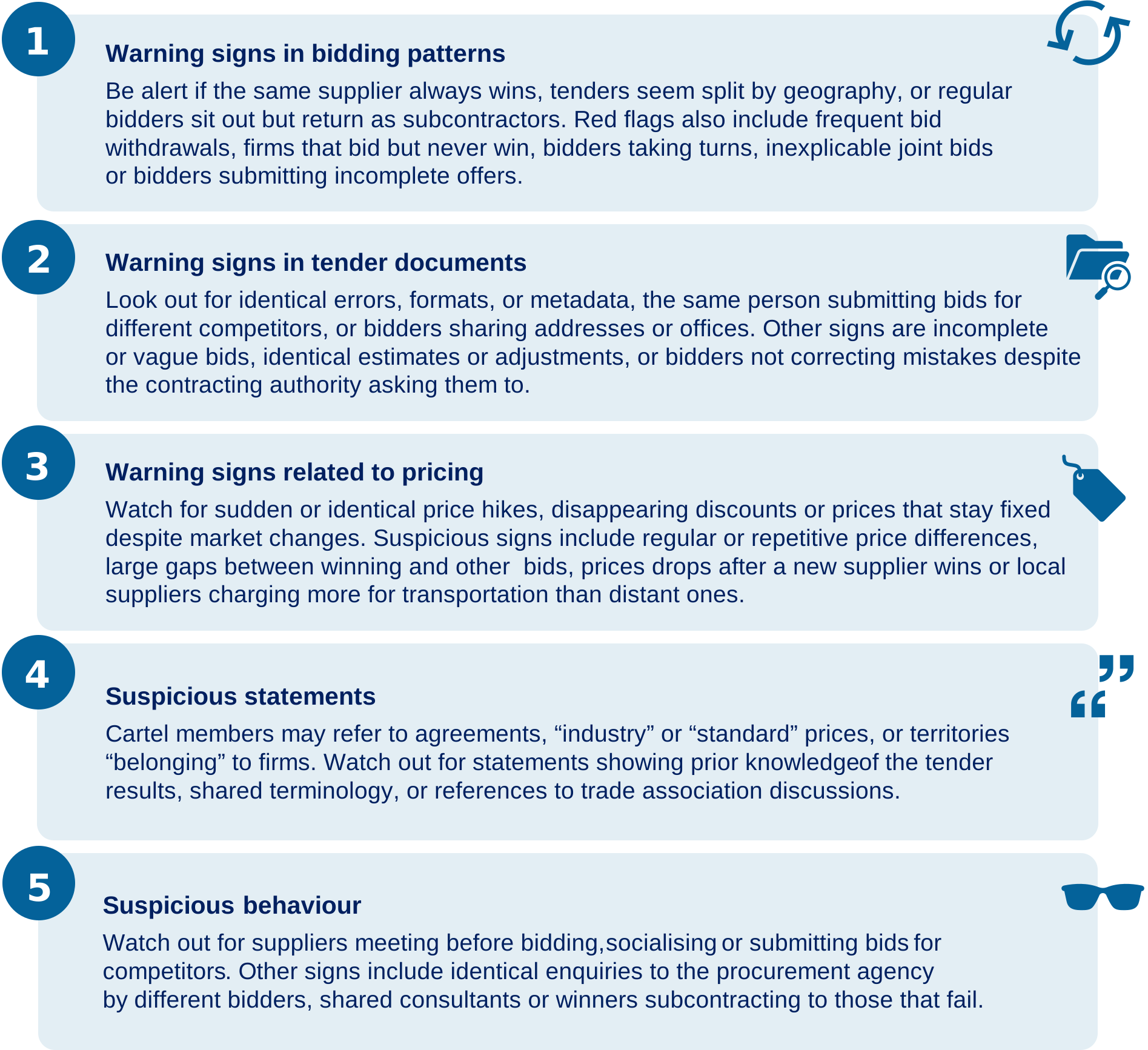
The OECD Bid-Rigging Detection List, summarised in Figure 2.1, lays out possible indicators of collusion across all stages of the tender process. The checklist sets out a range of warning signs grouped into five categories: suspicious bidding patterns (patterns and frequency with which firms win or lose tender offers, or subcontracting and joint bids between normally independent suppliers); anomalies in tender documents (e.g. identical mistakes, identical bids, shared contact details); pricing irregularities (e.g. uniform bids despite changing market conditions, sudden price increases or decreases without explanation); suspicious statements (e.g. statements indicating that certain companies do not sell in a particular area or to particular customers); and suspicious behaviour (e.g. frequent meetings between suppliers, or unexpected subcontracting to losing bidders).
None of these indicators alone constitutes proof of bid rigging. However, the consistent appearance of such signs (especially if more than one is visible and if they appear over time or across tenders) should prompt internal scrutiny. If warranted, the competition authority should be contacted. The Guidelines also advise procurement staff to maintain detailed records of suspicious activity, retain all relevant documentation securely and avoid any direct engagement with suppliers.
Several workshops under the project confirmed the practical relevance of the Guidelines, as well as national guidelines on this topic, and the need for their wider dissemination and use. Workshop participants noted that procurement officials might not know what to look for. They might also not be able to tell if a behaviour reflects a legitimate business decision or illegal activity (for example, lawful vs. unlawful subcontracting) or how to react when suspicions arise. Advocacy efforts can bridge this gap.
Importantly, experts in the workshops emphasised that contracting authorities are not expected to investigate suspected bid rigging themselves. Once red flags are identified, their responsibility is limited to reporting them to the competition authority. This important clarification will be further developed in the following subsection on the reporting of suspicions.
Source: OECD (2025[14]), OECD Guidelines for Fighting Bid Rigging in Public Procurement (2025 Update), https://doi.org/10.1787/cbe05a56-en.
2.4.2. Clarify how to report bid-rigging suspicions
Two issues were raised frequently during the project’s workshops. First, procurement officials do not know where and how to report suspicions. Second, reporting may be disruptive. Many expressed hesitations about alerting the competition authority out of fear that such action might lead to the suspension or cancellation of procurement procedures, and then significantly delay or jeopardise absorption of the procurement budget.
Advocacy initiatives should respond to both concerns. First, advocacy can clarify reporting channels. It should stress that competition law enforcement, and the investigation and punishment of cartels, occur ex post – after the tender is over. This includes after a contract has been executed. It is therefore always worthwhile to report suspicions and rarely “too late”. Second, advocacy should explain that reporting suspicions of bid rigging does not necessarily require procurement procedures to be paused or cancelled. However, contracting authorities have the discretion to pause or cancel procedures, ideally following consultation with the competition authority. It is important to guide officials on the options under national law, and the circumstances in which halting or going forward with the tender process may be justified. Importantly, advocacy must clarify that procurement officials should not attempt to clarify suspicions directly with bidders, as this may compromise the integrity of a future investigation and risk the destruction of potential evidence.
Advocacy should also distinguish reporting from investigating. Contracting authorities and non-competition enforcers are not mandated or expected (and, in the case of procurement officials, not equipped) to investigate or prove competition law infringements. Their role is to report, not to verify. Advocacy can clarify that not all reports will lead to an investigation. The competition authority will consider legal standards, and its own priorities and resource constraints, before deciding to initiate a case. The competition authority will also gather evidence to prove the case.
Where feasible and compliant with confidentiality obligations under national rules, officials should provide as much detail as possible. This includes records of suspicious behaviour or statements and all relevant documentation (e.g. bids, correspondence or procurement files). Competition authorities should clearly communicate the available reporting channels and provide reassurance about safeguards to protect confidentiality. Co‑operation agreements may include mechanisms for secure evidence sharing.
2.4.3. Underline how tender design can limit the risks of bid rigging
Advocacy initiatives should stress that tender design can determine whether they foster competition or inadvertently enable collusion. Throughout the project’s workshops and stakeholder meetings, tender design emerged as an area where small adjustments can bring significant benefits.
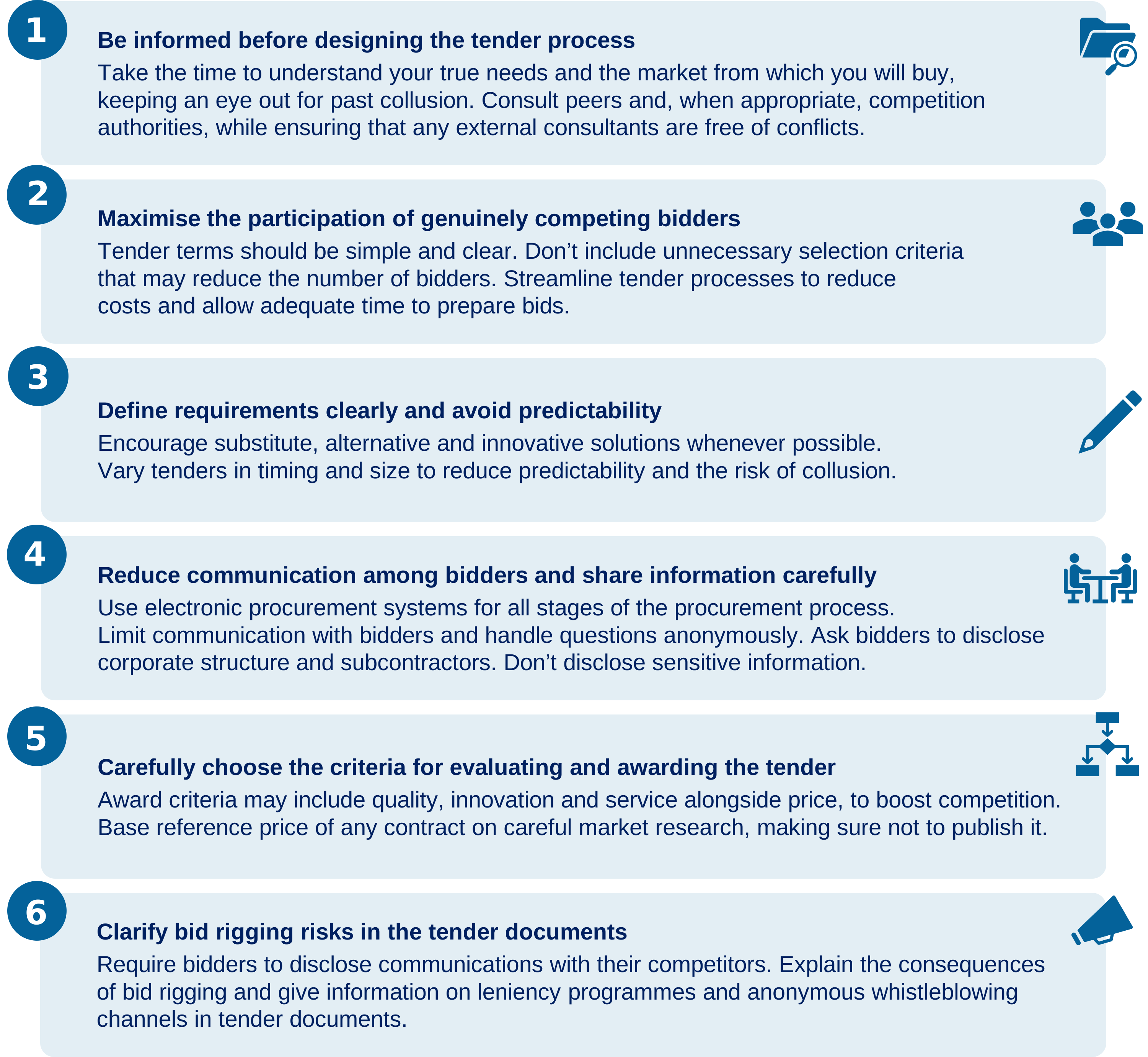
The OECD Tender Design List (see Figure 2.2) provides a comprehensive framework for designing procurement processes that can mitigate risks of collusion. The checklist sets out a range of pro-competitive measures, divided into six groups: be informed before designing the tender process; maximise the participation of genuinely competing bidders; define requirements clearly and avoid predictability; reduce communication among bidders and share information carefully; carefully choose the criteria for evaluating and awarding the tender; and clarify bid-rigging risks in the tender documents.
Advocacy should highlight the importance of understanding market dynamics and contestability, as well as assessing collusion risks before publishing a call for tenders.
Stress that design choices can either hinder or facilitate collusion. Practices such as excessive participation criteria that reduce the number of bidders, predictable procurement schedules and unchanging quantities, revealing the identity of bidders to each other or using only price-based award criteria can facilitate collusion. Conversely, rewarding innovation and quality, disaggregating tenders into lots attractive to small businesses, and reducing bid preparation costs can broaden participation and enhance competitive pressure. Several workshop participants noted the importance of cross-agency consultations during the design of large or complex tenders.
Source: OECD (2025[14]), OECD Guidelines for Fighting Bid Rigging in Public Procurement (2025 Update), https://doi.org/10.1787/cbe05a56-en.
2.4.4. Explain the risk of joint bids and subcontracts hiding bid-rigging conspiracies
Throughout the project workshops, stakeholders recognised the need for guidance to distinguish between legitimate joint bids (or consortia) and subcontracts, and unlawful collusion. Joint bids and subcontracts, where two or more firms team up to submit a single tender or where one bidder subcontracts part of the contract to others, can be necessary if firms cannot bid on their own, or can bid more efficiently together. However, joint bids can also disguise anti-competitive conduct, when the parties involved could have submitted bids independently.
As clarified in the EU Horizontal Guidelines (2023), joint bidding is not anti-competitive in principle (European Commission, 2023[23]). When parties lack the capacity to undertake a project alone, co‑operation can generate efficiencies, such as lower price, innovation or better service quality. For example, the parties of a bidding consortium may supply complementary services. As another example, parties active in the same market(s) may be unable to bid individually due to the size or complexity of the tender. However, joint bids between actual or potential competitors that could have realistically bid separately may infringe Article 101(1) TFEU and equivalent national provisions. Competition risks are heightened when joint bidding structures are recurrent, poorly documented or include more parties than necessary. In addition, the subcontracting of parties to each other in parallel tenders raises questions about the independence of their commercial behaviour.
The OECD Bid-Rigging Detection Checklist mentions instances that seem at odds with a competitive market and suggest the possibility of bid rigging. Among them, they refer to cases where
two or more companies submit a joint bid even though in the past they have bid in similar tenders independently and/or in practice the contract is fulfilled by one of them; regular suppliers fail to bid on a tender they would normally be expected to bid for but become subcontractors or continue to bid for other tenders; the winning bidder subcontracts work to unsuccessful bidders; the winning bidder does not accept the contract and is later found to be a subcontractor.
Advocacy can outline dos and don’ts for joint bids and subcontracts. Essentially, these can be pro-competitive and lawful when they give smaller or specialised companies opportunities to participate in public tenders by pooling their workforce, equipment and/or specialisation. This would be the case when suppliers join forces to provide a product or service that neither would have the individual capacity to deliver, potentially with better quality or price terms than by a single firm, or to produce new or innovative goods. Conversely, joint bids and subcontracts can be anti-competitive and unlawful when each firm has the financial and technical capacity to fulfil the contract on its own, or when the co‑operation does not generate new or better product, production or delivery efficiencies, or price reduction.
Advocacy efforts should encompass targeted training and guidelines (see Box 2.8), including a clear list of basic “Dos and don’ts”. For business, these may include:
Do: define the scope of co‑operation; limit information sharing to the bid at hand if the companies are competitors; and document the rationale for teaming up.
Do not: use the agreement to discuss unrelated tenders, agree on future bidding rotations, or form a joint bid when independent participation was possible.
For contracting authorities, “Dos and don’ts” may include:
Do: verify whether the companies would have had the capacity to bid independently; request documentation justifying the consortium; check whether they are direct competitors or operate in different markets; and assess whether the consortium structure matches the technical complexity of the contract.
Do not: accept vague justifications for co‑operation; ignore patterns of recurrent joint bids by the same firms; or overlook cross-subcontracting schemes that may hide collusion.
In 2018, the Danish Competition and Consumer Authority (DCCA) published guidelines on joint bidding to assist businesses and contracting authorities in assessing the legality of bidding consortia under competition law.
To assist contracting authorities, the guidelines include a step-by-step flowchart that asks key questions: Do the companies compete in the same market? Could they have submitted individual bids? Does the co‑operation result in efficiency gains? This tool helps identify situations that may require closer scrutiny or consultation with the competition authority. The DCCA also encourages contracting authorities to collect documentation justifying the necessity of the joint bid and to remain vigilant for red flags such as recurring consortia or unexplained subcontracting between frequent competitors.
By offering practical tools tailored to procurement officials, the Danish guidelines represent a good example of advocacy that promotes compliance while supporting public buyers in safeguarding competition.
Source: DCCA (2018[24]), Guidelines on Joint Bidding Under Competition Law, https://en.kfst.dk/media/50765/050718_joint-bidding-guidelines.pdf.
2.4.5. Discuss when and how colluding bidders can be excluded from procurement procedures (debarment)
Advocacy can play a key role in clarifying how bidders can be excluded from procurement procedures. Bidder exclusion refers to the prohibition of a company from participating in an ongoing tender or in future public procurement procedures, for a defined period (OECD, 2022[25]). It safeguards the integrity of public procurement against the damaging effects of bid rigging and pursues both preventive and deterrent objectives (OECD, 2022[25]). Regimes differ in terms of the authority empowered to impose the exclusion (procurement vs. competition authorities), whether exclusion is automatic or discretionary, and the applicable exclusion period (OECD, 2022[25]). The OECD Recommendation on Fighting Bid Rigging in Public Procurement [OECD-LEGAL-0396] advises considering the “debarment from ongoing or future public tenders of the firm as well as concerned individuals having engaged in bid rigging, with discretion to assess if debarment of the firm would lead to a significant reduction of competition, while considering debarment of individuals in all cases” and “keep[ing] a central debarment register”.
Under EU law,13 infringements of competition law, including bid rigging, constitute an optional ground for exclusion under Directive 2014/24/EU.14 Contracting authorities are entitled to apply this exclusion ground on a case-by-case basis and are granted discretion to determine whether there are “sufficiently plausible indications” of collusion that undermine the reliability of the tenderer (European Union, 2022[26]).
Throughout the project’s workshops, contracting authorities expressed uncertainty about how to interpret and apply their discretion in assessing exclusion decisions. A recurring concern was the potential legal and financial risks of excluding a bidder based on suspicions of collusion, particularly in the absence of a final infringement decision by a competition authority or court. The workshops explored the responsibilities of competition authorities and contracting authorities in exclusion decisions. Participants often queried which institution should have the final say in deciding whether a bidder should be excluded.
In this regard, the recent case law from the Court of Justice of the European Union (CJEU), notably the Infraestruturas de Portugal judgement,15 has brought helpful clarification. The Court ruled that, under the Public Procurement directives, the power to exclude companies from tenders on the grounds of a breach of competition rules cannot rest solely with the national competition authority. Rather, contracting authorities retain the competence to assess the reliability of bidders and may decide on exclusion. They should base their decision on sufficiently plausible indications of anti-competitive conduct, even in the absence of a final decision by a competition authority. However, the assessment of the (non-)reliability of the economic operator must be duly reasoned.
The European Commission issued a “Notice on tools to fight collusion in public procurement and on guidance on how to apply the related exclusion ground” in 2021.
The Notice clarifies that exclusion is not a penalty in itself but rather a measure to safeguard the integrity and reliability of the procurement process. Contracting authorities are granted a wide margin of discretion to assess, on a case-by-case basis, whether such indications exist, without needing a final decision by a competition authority or a court.
The document outlines:
the legal framework and the margin of appreciation granted to contracting authorities
the difference between “indications” and formal “evidence” of collusion
examples of facts that may constitute plausible indications (e.g. price anomalies, similar errors, pre-ordering of materials, etc.)
how to handle tenders from affiliated companies, joint bidders or subcontractors
the right of operators to demonstrate their reliability through self-cleaning measures
the need for exclusion decisions to be well documented and proportionate
the value of consulting competition authorities in complex cases.
The guidance ultimately seeks to empower contracting authorities to exercise their discretion with confidence, while maintaining procedural fairness and minimising legal risks.
Source: European Commission (2021[27]), Notice on tools to fight collusion in public procurement and on guidance on how to apply the related exclusion ground (2021/C 91/01), https://eur-lex.europa.eu/legal-content/EN/TXT/?uri=oj:JOC_2021_091_R_0001.
The discretion granted to contracting authorities means there is no uniform standard for sufficient evidence or adequate self-cleaning to justify exclusion. While this discretion enhances the capacity of contracting authorities to safeguard the integrity of procurement processes, it must be exercised consistently with the principle of proportionality (European Union, 2022[26]). Proportionality requires careful consideration of market conditions: in concentrated or oligopolistic markets, the exclusion of all participants in a collusive scheme may significantly reduce competition and impair procurement outcomes (OECD, 2022[25]). In such contexts, authorities may consider alternative approaches, such as excluding only the ringleader of the cartel, limiting the scope of exclusion to specific subsidiaries or contracts, or applying shorter exclusion periods (OECD, 2022[25]) (see Box 2.10).
Exclusion must also be weighed carefully against incentives to apply leniency. The OECD Recommendation on Fighting Bid Rigging [OECD/LEGAL/0396] calls to exempt successful first-in leniency applicants from debarment or to reduce the debarment period. This approach can preserve incentives for leniency while maintaining the sanction of exclusion.
Before they exclude companies, contracting authorities must give them the opportunity to submit remedial actions (self-cleaning measures) to demonstrate their reliability (European Union, 2022[26]). These measures may include the compensation of damages, co‑operation with investigative authorities and implementation of organisational, technical or personnel-related compliance reforms (OECD, 2022[25]). In cases of collusion, the company’s active co‑operation with the competition authority, including through leniency or settlement, is an important element of self-cleaning. Indeed, the active and voluntary co‑operation of the leniency applicant plays a crucial role in competition enforcement. Specifically, when the leniency applicant voluntarily comes forward to the competition authority (the Commission or a national competition authority), discloses its participation in the collusive agreement and provides all relevant evidence, it helps prove the competition infringement. Operators that have acknowledged their participation in a cartel, paid fines and taken effective corrective steps may be deemed to have sufficiently restored their reliability, and therefore not be excluded (European Union, 2022[26]).
Lastly, effective co‑operation between contracting authorities and competition authorities is critical to the sound application of bidder exclusion in collusion cases. EU Public Procurement directives do not require contracting authorities to consult competition authorities before taking exclusion decisions. However, such consultation is strongly encouraged to align actions, particularly in complex or sensitive cases (European Commission, 2021[27]). Guidance from competition authorities can help clarify whether suspicious patterns indicate collusion; assess the adequacy of self-cleaning measures; avoid penalising firms that have co‑operated with competition investigations; and reduce the risk of legal challenges. As emphasised throughout the workshops, enforcement of actions to fight bid rigging, including bidder exclusion, should be seen as a shared objective rather than a source of institutional tension.
The considerations in Box 2.10 are relevant when bidders might be excluded for having committed, or being suspected of, bid rigging.
Contracting authorities or other entities may consider the following when deciding to exclude a bidder that has been found guilty of collusion:
Are there any alternative sanctions to bidder exclusion that may be equally or more effective? These may include:
criminal sanctions
corporate or individual fines
director disqualification
If not, is the market oligopolistic? Is this market characterised by any following factors?
small number of suppliers
high barriers to entry (regulatory, strategic, behavioural) or high network effects
homogeneous products
closeness of competition
parallel or interdependent behaviour by players (intelligent adaptation to the commercial strategy of competitors)
presence of economic, contractual and structural links that enable parallel behaviour (including cross-shareholding and interlocking directorates)
high transparency on prices
If the market is oligopolistic, is any of the following a viable option:
Can only one of the participants (ringleader or instigator) to the bid-rigging scheme be excluded?
Is it possible and effective to limit the disqualification to a company subsidiary, a specific division or branch?
Is it possible and effective to limit the disqualification to only a specific contract value, specific market or specific contracting authority?
Is it possible and effective to shorten the duration of the disqualification?
What self-cleaning or other risk-management measures would make it possible to safely allow the relevant operator to access future bids?
Is it possible and effective to use alternative tools to address the infringement (e.g. reward systems)?
Source: OECD (2022[25]), Director Disqualification and Bidder Exclusion in Competition Enforcement, https://doi.org/10.1787/fe39ea1a-en.
The RCC maintains an online list of companies convicted of bid rigging, which includes the reference of the infringement decision, whether the company applied for leniency or admitted wrongdoing, and whether it implemented self-cleaning measures (e.g. a compliance programme). By making this information accessible, the RCC supports public buyers in their due diligence. At the same time, this initiative helps deter infringements by increasing reputational risks for companies (RCC, 2025[28]).
2.4.6. Encourage use of whistleblowing tools
Advocacy can play a central role in encouraging the use of whistleblowing channels by clarifying how they work and the protections in place. Anonymous whistleblowing tools have become a valuable mechanism to report anti-competitive conduct, including bid-rigging conspiracies. As such, they enable individuals (like employees of bidders or even procurement staff) to report suspicions of wrongdoing confidentially, without fear of retaliation. In so doing, they offer a pathway for those unwilling or unable to formally report an illegal activity.
The six competition authorities in this project have anonymous digital whistleblowing platforms in place.16 The Commission also has an anonymous reporting tool for competition infringements, launched in 2017 and recently enhanced to improve user accessibility and data security (OECD, 2023[29]). The EU Whistleblower Protection Directive17 requires that Member States establish secure reporting channels. It also requires the protection of reporting individuals from retaliation, keeping their identities confidential and providing safeguards against dismissal, demotion or other forms of professional retaliation.
Advocacy efforts around whistleblowing platforms can explain these are safe, anonymous tools for reporting suspected collusion in public procurement. Outreach materials and training should describe how individuals (whether public officials, employees or third parties) can submit a report, which authority to contact (e.g. national competition authority or the Commission) and what types of information should be included. They should also reassure potential whistleblowers that their identity will be protected and they will not face retaliation. Highlighting the legal safeguards in place under the EU Whistleblower Protection Directive can help reinforce this message and encourage more individuals to come forward.18
In 2022, to reinforce the detection of bid rigging in public procurement, the Hellenic Competition Commission (HCC) launched a specialised digital whistleblowing platform exclusively for contracting authorities (www.epant.gr/bidrigalert). This tool allows officials involved in tendering to report suspicions of collusive behaviour while preserving full confidentiality.
To promote use of this tool, the HCC launched a public awareness campaign, including radio broadcasts and targeted social media outreach. These efforts proved effective: the number of whistleblowing reports received by the authority rose by over 150% between 2021 and 2022, increasing from 42 to 147 reports.
The whistleblowing system is equipped with advanced technological safeguards to ensure confidentiality and prevent retaliation, thereby fostering trust among public officials and encouraging proactive co-operation in the fight against bid rigging.
Source: HCC (2023[30]), Annual Report on Competition Policy Developments in Greece – 2022, https://one.oecd.org/document/DAF/COMP/AR(2023)14/en/pdf.
2.4.7. Raise awareness about leniency and its conditions and benefits
Advocacy is essential to explain how leniency works, what benefits it provides and how it interacts with other enforcement tools. Leniency programmes incentivise companies to self-report their involvement in collusive conduct in exchange for full or partial immunity from fines. These programmes can bring otherwise undetectable conduct to light and facilitate investigations by providing access to evidence from within the cartel (OECD, 2023[29]). Leniency remains one of the most powerful tools available to competition authorities for detecting and dismantling cartels, including those operating in public procurement.
Across OECD Members, the use of leniency mechanisms has picked up in recent years (see Figure 2.3). However, leniency applications were limited in most of the countries participating in this project. This was possibly due to cultural barriers, close business ties or limited awareness of the benefits and protections offered.

Note: Data based on the 47 jurisdictions in the OECD CompStats database that provided data for leniency applications for nine years. This figure does not present information from the United States competition authorities.
Source: OECD CompStats database; OECD (2025[31]), OECD Competition Trends 2025, https://doi.org/10.1787/8c4bd00b-en.
This means that targeted advocacy around leniency in relation to the private sector is essential, so that companies understand the benefits and conditions for applying. Authorities should also explain how leniency interacts with other legal consequences. For example, can leniency applicants be exempted from debarment or criminal liability? Can liability for damages be limited?
In the project’s workshops, participants noted that leniency is perceived as risky in light of the potential exclusion from public tenders. Some authorities also reported tensions between protecting the confidentiality of leniency statements and meeting contracting authorities’ requests for information to support self-cleaning assessments or exclusion decisions. This highlights the importance of well-calibrated regulatory frameworks that protect leniency applicants. The OECD Recommendation on Fighting Bid Rigging in Public Procurement [OECD/LEGAL/0396] advises to consider the exemption of the successful first-in leniency applicant from debarment.
To incentivise applications, advocacy to the private sector should also explain the interaction between leniency and private enforcement by harmed parties seeking compensation for cartel-caused damages, including applicable limitations on liability. Immunity applicants disclose the cartel and their role in it. Since they do not appeal the competition authority’s infringement decision, their liability is confirmed earlier, making them earlier targets for damages claims (OECD, 2018[32]). Recognising this risk, the EU Damages Directive19 limits the civil liability of immunity recipients to the harm caused to their direct or indirect purchasers or suppliers; it also shields all leniency statements from disclosure. DG COMP has clarified and explained this during the project’s workshops.
Similarly, the interaction between leniency and criminal enforcement should be clarified through advocacy. Criminal sanctions (especially the threat of imprisonment for individuals) can enhance the effectiveness of leniency programmes, if leniency offers criminal immunity.
Among the six jurisdictions in this project, Austria, Greece, Croatia and Romania have criminal sanctions for bid rigging, although with different degrees of enforcement activity; three of them grant criminal immunity to successful leniency applicants. In Austria, individuals who co‑operate fully with authorities and courts in antitrust investigations can receive immunity from criminal prosecution, under Section 209b of the Code of Criminal Procedure.20 In Greece, when an undertaking has been granted full immunity, no criminal sanctions will be imposed on natural persons involved in the cartel, based on Article 44 (3A) of Law 3959/2011 on the Protection of Free Competition.21 In Romania, managers, directors, administrators and legal representatives of a company may be exempted from criminal liability under Article 65(1) of the Competition Law if the company applies for leniency before the criminal investigation begins and the person concerned co‑operates with the prosecution (OECD, 2023[33]).
In Croatia, a leniency application does not exempt firms or individuals from criminal prosecution22 (OECD, 2023[34]): the decision to initiate criminal proceedings rests with the State Attorney’s Office, in accordance with national criminal law. The State Attorney may decide not to initiate proceedings against current or former directors, managers or other members of staff of an undertaking applying for immunity from fines under the leniency programme. It may also refrain from seeking sanctions against those persons in administrative proceedings or related administrative disputes concerning their involvement in a cartel, provided that: (1) the undertaking’s application for immunity from fines fulfils the conditions laid down in the provisions governing immunity from, or reduction of, fines; and (2) the current or former directors, managers or other members of staff concerned actively co‑operate with the Agency. The State Attorney may also propose mitigation of penalties depending on the value of the co‑operation. Lastly, the State Attorney may decide not to initiate criminal proceedings, or may propose to the competent court a mitigation of sanctions in criminal proceedings, where the individual’s contribution to the detection and investigation of the cartel outweighs the public interest in prosecution and/or sanctioning.
In their advocacy work, competition authorities should also communicate whether immunity under leniency programmes extends to individuals and clarify the procedural safeguards. They should also work closely with prosecutors to ensure consistent treatment.
Finally, advocacy should stress that leniency works when other detection tools (such as screening methods explained in the following subsection) are used, increasing the perceived risk of detection and encouraging self-reporting. Firms are more likely to apply for leniency when they perceive that authorities can uncover cartels through ex officio means (OECD, 2018[32]).
The Austrian Federal Competition Authority (AFCA) has published guidelines on its leniency programme and encourages businesses to come forward with information about cartels, including bid rigging. These guidelines, last updated in 2022, are publicly available and designed to provide information for undertakings considering an application for leniency.
The guidelines explain that full immunity from fines is available to the first undertaking to provide decisive information and evidence enabling the AFCA to launch or support an investigation into a cartel. Companies applying later may benefit from fine reductions, depending on the added value of the information provided. The document also sets out the criteria for immunity and reduction, including termination of participation in the infringement, comprehensive co‑operation with the AFCA and non-coercion of other participants.
The guidelines outline how companies can apply for leniency, including through markers or summary applications. They also clarify the privileged status of leniency applicants in damages and criminal proceedings, including protections available under § 209b of the Austrian Code of Criminal Procedure.
The publication of these guidelines serves as a key advocacy tool. It enhances legal certainty, promotes self-reporting and reinforces the credibility of the leniency programme by setting out clear expectations, procedures and protections for applicants.
Source: AFCA (2022[35]), Leniency Programme Guidelines, https://www.bwb.gv.at/fileadmin/user_upload/Leitfaden_Kronzeugen_final_en-GBclean_04.11.2022.pdf.
2.4.8. Promote access to procurement data for cartel detection
Advocacy can help stakeholders understand why comprehensive, high-quality procurement data can help competition authorities detect collusion and how they should be collected, stored and shared. The OECD Recommendation on Fighting Bid Rigging in Public Procurement [OECD/LEGAL/0396] advises to “consider developing digital filters (screens) of procurement data to help detect bidding cartels”. This essentially encourages competition authorities to run software (screens) on procurement data to identify red flags. The results of bid-rigging screens can help initiate investigations and justify unannounced inspections. Essentially, screening outputs are valuable as red flags that may justify further inquiries but rarely constitute sufficient evidence on their own (OECD, 2022[36]).
For screens to work, authorities need access to comprehensive, granular and accurate procurement data. Inconsistent and poor-quality data, as well as fragmented sources, hinder screening efforts. Furthermore, when the competition authority lacks access to non-public procurement data, no screening can even be attempted.
In the project’s workshops and fact finding, the six competition authorities and international experts consistently stressed the importance of machine-readable procurement data and of their access to them. Access included through agreements with public sector bodies that manage the national procurement platforms. Authorities reported a range of obstacles, including decentralised procurement systems; limited data access rights; and formats that are not machine readable such as scanned documents.
The RCC has access to procurement data, although much of the data remain stored in unstructured PDF formats, which complicates large-scale analysis. The CCA also has access to the procurement database but faces limitations due to search functionalities and data formats (e.g. scanned JPG files). The HCC stressed it needs easy access to non-public procurement data (like non-winning bids or the results of the contracting authority’s pre-tender market research), to understand if a bidder’s conduct is problematic. Following an extensive consultation between authorities, an amendment to Law 3959/2011 (introduced in November 2025) expressly provides the HCC full access to the national procurement platform (ESIDIS) and interconnection with the information systems of other public sector bodies.23 The Cyprus CPC also referred to the need for easy and direct access to public procurement data (including non-winning bids, subcontracting or the results of the contracting authority’s pre-tender market research), to understand and identify red flags.
Still, and despite these challenges, all jurisdictions acknowledged a growing institutional commitment to data-driven enforcement and the need to prioritise digitalisation efforts in procurement.
For screening tools to be operational and effective, digital procurement systems must record and store in machine-readable, standardised formats information such as the number and identity of bidders, bid prices, submitted and withdrawn bids, submission times, award criteria, contract values, subcontractors and contract performance (OECD, 2022[36]). Advocacy can help explain what data matters and why, and, if needed, encourage law reform to enable appropriate data collection and sharing. The OECD Recommendation on Fighting Bid Rigging in Public Procurement [OECD/LEGAL/0396] asks to:
keep reliable and comprehensive procurement databases, which:
● are consistent across contracting authorities
● cover all procurement process stages to support pro-competitive tender design, as well as appropriate law enforcement
● include data about bids (both successful and unsuccessful) and contracts (including amendments and subcontracts) and key variables (such as firm identifiers) that facilitate evaluating whether bid rigging might have occurred
● are accessible to public procurement officials and relevant law enforcement authorities, including competition authorities
In sum, digital screening of procurement data is an essential tool in the enforcement arsenal of competition authorities, strengthening deterrence by raising the perceived likelihood of cartel discovery. It should thus be a key topic for advocacy initiatives in the fight against bid rigging. In previous in-country projects, the OECD has recommended ways to make procurement databases comprehensive and relevant for procurement and competition authorities. These recommendations include good practices for data collection, quality, storage and access, and suggested variables that allow analysing bid-rigging patterns.
The following guidance for data aims to ensure that procurement databases are useful for the enforcement of the law against bid rigging:
Targeting: the data should fit the purpose of any proposed analysis. Identifying this purpose in advance informs the type and format of the data collected. Procurement authorities should consult with competition authorities on building procurement databases that can be used to detect potential instances of collusion. Indicatively, all bids including firm-level data and file metadata should be recorded.
Quality: good-quality data are paramount to producing useful results that can be interpreted correctly. Data-input and validation methods should ensure that data are recorded in a standard, consistent and error-free manner. For example, data fields for pricing and units should be uniform; text fields and naming conventions should be set; and checks for discrepancies in coding should be built into the data-input stage.
Usability: information should be stored in a searchable format that allows easy handling and use (for example, in spreadsheets or databases rather than scanned images of contracts), enabling the necessary filters and analytical techniques to be easily applied. Databases kept across public authorities should be interoperable, in terms of formatting and cross referencing, to enable joining databases and screening across them for indicia of bid rigging.
Access: databases should have clear access rights, both in terms of inputs (centralised or decentralised databases) and outputs. Access should be granted to competition authorities for their law enforcement purposes.
Note: More information on OECD in-country work on fighting bid rigging in public procurement can be found at https://www.oecd.org/en/topics/sub-issues/competition-enforcement/fighting-bid-rigging-in-public-procurement.html.
Sources: OECD (2018[37]), Fighting Bid Rigging in IMSS Procurement: Impact of OECD Recommendations, https://doi.org/10.1787/6ce76ce1-en; OECD (2022[36]), Data Screening Tools for Competition Investigations, https://doi.org/10.1787/4c5bbb9d-en.
2.4.9. Inform contracting authorities about their right to seek damages
Advocacy can inform contracting authorities on their right to claim damages when harmed by bid-rigging cartels. The claims may be brought independently (“standalone”), or as follow-on actions after a public enforcement decision (OECD, 2015[38]). Private enforcement primarily serves the individual interest of injured parties to obtain redress. However, it also contributes to the broader objectives of competition policy by complementing public enforcement, ensuring compensation for harm and deterring future violations. Damages claims can ensure that competition law infringements are not profitable, particularly when administrative fines are capped24 and may fail to outweigh the long-term gains of unlawful conduct (ACCO, 2023[39]).
In the case of procurement, such claims are particularly relevant, as bid rigging can lead to significant overcharges (estimated at around 20% on average, as discussed in Chapter 1). The OECD Recommendation on Effective Action against Hard Core Cartels [OECD/LEGAL/0452] recommends to “provide a mechanism that gives anyone who has suffered harm caused by a hard core cartel the right to obtain redress or claim compensation for that harm from the persons or entities that caused it, carefully balancing the interaction of public and private enforcement, in particular to protect leniency programmes.”
The Recommendation calls for making standalone actions available, ensuring access to evidence (with appropriate protection for leniency and settlement documents) and introducing collective redress mechanisms. At the EU level, the Damages Directive (European Commission, 2014[40]) establishes a harmonised legal framework to facilitate damages claims. The directive sets EU-wide standards on disclosure of evidence to address the information asymmetry between claimants and infringers. The directive also sets limits to disclosure (e.g. for leniency and settlement submissions), and safeguards confidential information through redaction, confidentiality rings or expert summaries. The directive clearly sets out that disclosure must be sought first from defendants and third parties, and only from competition authorities as a last resort. The Commission has published non-binding clarification for national courts on three key aspects for the application of private enforcement: the protection of confidential information (European Commission, 2020[41]), the estimation of overcharges passed on to indirect purchasers (European Commission, 2019[42]) and the quantification of harm (European Commission, 2013[43]).
The project’s beneficiary countries have not reported any damages claims by contracting authorities. Throughout the workshops, participants mentioned barriers such as limited or no knowledge of the possibility to claim damages, uncertainty about procedural requirements, the complexity of proving overcharges and quantifying harm, asymmetry of information, concerns about legal costs and a general reluctance to initiate litigation. Many expressed doubts about whether claims could be pursued on a standalone basis or required a prior infringement decision by the competition authority.
Advocacy can help clarify the legal and procedural framework and encourage authorities to bring claims. For this topic, advocacy can include disseminating model claim templates, offering guidance on evidence gathering and showing successful cases (which, in the absence of domestic cases, can be cases of other EU countries).
In 2023, the Catalan Competition Authority (ACCO) published a policy paper titled “Strategies to promote damages claims for competition law infringements by public administrations”, recognising that such claims are underused. Contracting authorities in Spain (and across Europe) rarely seek compensation for damages, and competition authorities have historically placed limited emphasis on supporting such actions.
The ACCO explained that the principles of efficiency and sound management of public resources mean that administrations should pursue such claims, both to recover unjustified costs and to strengthen trust in public institutions. The report highlights several reasons behind the inaction of public entities, including:
a general lack of familiarity with competition law and the legal framework for damages claims
institutional fragmentation and the absence of dedicated units responsible for identifying and following up on anti-competitive harm
legal uncertainty regarding the procedures for initiating claims
until recently, the absence of a formal mechanism for public buyers to report suspected collusion (only introduced in January 2023 under Article 150.1 of Spain’s Public Procurement Law).
To address these barriers, the ACCO issued recommendations aimed at empowering public administrations to seek redress. These include:
launching communication and training campaigns to raise awareness and build capacity across public bodies
establishing a specialised damages unit within the Catalan administration
clarifying roles and responsibilities within public entities to facilitate follow-up
encouraging use of competition authority decisions as a legal basis for follow-on claims
supporting quantification of harm through estimates provided by the authority
enabling the authority’s participation in judicial proceedings as an expert body
including contract clauses that preserve the right to claim damages for anti-competitive harm.
The ACCO’s initiative is a concrete example of competition advocacy targeting public authorities and internal administrative processes. Its recommendations can be useful for other competition authorities seeking to activate private enforcement against cartels affecting public procurement.
Source: ACCO (2023[39]), Strategies to promote damages claims for antitrust infringements in public administrations, https://acco.gencat.cat/ca/detall/article/20241128-reclamacio-danys-illicits-competencia#googtrans(ca|en).
Advocacy around private enforcement may also be useful for the judiciary, to explain how, once the competition authority establishes a bid-rigging infringement, the right to seek damages is triggered. The OECD’s judicial training in this project confirmed the value of such initiatives. In the project’s workshops, judges discussed the legal basis for damages claims under the EU Directive and the national competition law, the evidentiary standards for proving harm, and the procedural rules and deadlines. Participants acknowledged the limited uptake of private enforcement in their jurisdictions and pointed to challenges such as litigation costs and limited familiarity with competition law among generalist courts. However, they also recognised the strategic importance of these claims for reinforcing compliance and holding cartelists accountable.
Overall, facilitating access to damages is a matter of institutional readiness and cultural change. Advocacy and capacity building can help contracting authorities to bring claims and ensure judges hear them, as well as help the private enforcement of competition law.
In Spain, the regional health authority of Catalonia (CatSalut) brought a landmark damages claim of EUR 526 million against Hartmann and Essity, the two companies condemned for participating in the “adult diapers” cartel. The cartel, uncovered by the Spanish Competition Authority (CNMC) in 2016 and sanctioned with fines of nearly EUR 128.8 million, involved eight producers controlling around 95% of the market and lasted from 1996 to 2014.
CatSalut’s claim, admitted in 2022 and before the Barcelona Commercial Court No. 9, is the first time a Spanish regional administration has sought compensation for harm caused by a competition infringement. While damages claims by private parties have increased in recent years, Spanish public administrations had not sought compensation previously.
Overall, the CNMC estimates that anti-competitive practices cause damages to the public sector amounting to around EUR 48 billion annually, mainly in the field of public procurement.
If successful, this case could set an important precedent, encouraging other regional and national authorities to seek redress for overcharges paid due to collusion.
Source: Cortés (2023[44]), Catalonia's claim against the “diaper cartel” (EUR 526 million) opens the floodgates at the national level, https://www.elconfidencial.com/juridico/2023-02-10/servicio-catalan-de-salud-reclama-526millones-panales_3572295/.
2.4.10. Highlight the value of competition compliance
Corporate compliance programmes are sets of rules, procedures and practices to enable companies and their employees to identify, prevent and respond to potential law violations. In competition, they are typically focussed on potential cartel infringements (OECD, 2021[45]). Advocacy can encourage companies to have in place competition compliance mechanisms, and use them to prevent, identify and report breaches. Advocacy can clarify whether such programmes are considered as fines, mitigating factors or understood within the context of self-cleaning.
Compliance programmes help businesses develop internal safeguards and respect competition principles. As discussed during the project’s private sector workshops, compliance programmes can signal: (1) prohibited practices such as cover bidding, bid rotation or market allocation; (2) potentially problematic practices such as unjustified joint bids or subcontracts; and (3) informal communications with competitors (e.g. at trade events or via e‑mail), which may be illegal.
Workshop participants discussed the integration of compliance into the company’s daily operations (such as through internal newsletters, manuals and Intranet platforms), high-risk scenarios and internal audits. Small businesses, which can typically not afford tailor-made comprehensive programmes, can use publicly available templates or guidance. Box 2.16 sets out what OECD Secretariat research has found on designing effective compliance programmes.
A compliance programme should reflect the specific characteristics (size, structure, specialisation) of the firm, the environment in which it operates and the risks that it faces. However, common elements for a well-designed programme can be identified, and are listed below.
Risk assessment: a firm should identify and assess its compliance risks, especially when entering new markets or hiring key staff. Companies should identify operations, units and personnel most at risk, and review whether remuneration schemes, especially for high-ranking officials, can trigger illegal behaviour; for example, assess if managers have incentives to engage in collusion to meet bonus-related profit thresholds.
Strong leadership and management commitment: compliance programmes must have the full, visible support of the firm’s leadership – President, Board and Chief Executive Officer. The resources committed to the programme, including (in larger firms) a dedicated and empowered compliance officer, demonstrate the commitment of senior management to compliance.
Transparency, communications and documentation: the company leadership should issue guidelines and public statements to increase accountability and contribute to awareness raising and education. Coherent and regular messages from management should make clear that competition violations will not be tolerated. In other words, the company will not defend or support violators, who will face negative consequences. Implementation of a compliance programme should be well documented to help improvement and attest to compliance efforts.
Auditing, monitoring, evaluation: the compliance programme should be subject to regular monitoring to ensure it remains up to date and effective. Effectiveness can be tested, for example, through surveys; training evaluations; and interviews with key individuals to verify knowledge of, and attitudes towards, compliance and illegal conducts.
Training: a compliance programme should include mandatory compliance training for all staff in leadership roles, in positions with identified risks, as well as part of new employee induction. Training should be adapted to the company’s risks and profile.
Reporting: a system is needed to ensure that staff can report contraventions of the compliance programme or competition infringements confidentially and without the threat of retaliation.
Ex post review: such reviews verify whether and why infringements have occurred, whether management has dealt with them appropriately, and identify any measures to strengthen the compliance programme.
Source: OECD (2021[45]), Competition Compliance Programmes, https://doi.org/10.1787/9f6a5618-en.
The OECD Secretariat has recognised the value of corporate compliance programmes. It has noted that many jurisdictions have taken steps to issue guidance for companies, with a growing number targeting small companies and trade associations (OECD, 2021[45]). Effective compliance mechanisms should prevent breaches or at least enable spotting them. Breaches should then be reported to the competent competition authority, potentially via a leniency application.
Competition authorities should also encourage firms to promote competition compliance among third parties such as subcontractors, suppliers and joint venture partners (OECD, 2021[45]). This is particularly relevant in procurement markets, and especially in high-value or complex tenders, where companies often need to rely on external suppliers, form consortia or engage in joint bidding.
The six competition authorities have approached compliance programmes differently.
The AFCA has partnered with the Austrian Economic Chamber to publish joint guidance outlining five key principles for effective compliance programmes (AFCA and Austrian Economic Chamber, 2023[46]). These include top-level commitment, comprehensive implementation and continuous monitoring. The AFCA and the Cartel Court may consider the existence of such a programme (if deemed sufficiently robust) as a mitigating factor when setting fines. Similarly, and following the EU legal framework,25 competition compliance measures are relevant in Austria’s procurement framework as part of self-cleaning assessments.
In 2012, the Bulgarian CPC issued guidelines promoting corporate compliance and mandatory staff training (BCPC and UNCTAD, 2012[47]). Compliance programmes are not fine-mitigation factors.
In Croatia, the competition authority has issued guidance recommending the integration of compliance into internal procedures and staff training (CCA, 2014[48]). Croatian law does not recognise compliance programmes as mitigating factors.
In Cyprus and Greece, there is no specific guidance on compliance programmes.
In 2020, the RCC issued a guide on competition compliance programmes (RCC, 2020[49]). It may reduce fines by up to 10% if a company submits a credible and effective compliance programme. The RCC has also promoted compliance programmes in the context of public tenders, publishing joint guidance with the national procurement authority and integrating competition compliance into the conditions for self-cleaning. The RCC also publishes the list of firms that have been involved in bid rigging, noting whether they have co‑operated with the authority or adopted compliance programmes in response to sanctions.
All six authorities acknowledge the value of compliance programmes as preventive tools. Advocacy efforts should focus on promoting adoption of compliance measures and clarifying if compliance programmes may count in the context of self-cleaning in public procurement.
2.4.11. Enhance judicial knowledge on bid rigging and evidence in bid-rigging cases
Judges review competition authority decisions and play an important role in ensuring that competition enforcement is fair and consistent. The OECD Recommendation on Transparency and Procedural Fairness in Competition Law Enforcement [OECD/LEGAL/0465] provides that courts should review facts and evidence, and the merits of competition law enforcement decisions. Capacity building can strengthen the courts’ ability to discharge these duties.
In this project’s workshops to judges, the OECD organised structured peer-to-peer exchanges and sessions based on case law, led by judges and référendaires from the European Court of Justice and the EU General Court (see Table 2 of Annex A). These sessions examined how cartels are proven under EU law, highlighting principles that can guide national courts in their cases.
The sessions explained how cartel conduct, like bid rigging, is a restriction of competition “by object”. Therefore, while the competition authority must prove the conduct, it does not need to prove actual effects on competition. Harm to competition is implied and deemed to exist when a cartel is found.26
The workshops also explored issues of duration and scope of bid-rigging infringements, the notion of single and continuous infringement, and the attribution of liability to parent companies and third parties. Box 2.17 summarises some EU case law principles for the assessment of liability in cartel cases.
EU courts have developed extensive case law on the existence, duration and attribution of liability in cartel infringements, and the evidence used to prove cases.
Single and continuous infringement: in Sony Corp. and Sony Electronics v Commission (C-697/19 P), the Court of Justice confirmed that a cartel can constitute a single and continuous infringement where several undertakings pursue a common anti-competitive objective through co‑ordinated conduct over time. In the case at stake, suppliers engaged in parallel bilateral contacts to align bidding strategies and maintain prices in tenders. The Court held that each participant knowingly contributed to a shared restrictive goal or at least could reasonably foresee the unlawful conduct of others and accepted the risk. It further clarified that variations in participation or evidentiary gaps over certain periods do not undermine the overall finding of a continuous infringement, so long as the conclusion rests on objective and convergent evidence of collusion.
Duration and limitation periods: in a Finnish electricity transmission tender case (Kilpailu- ja Kuluttajavirasto, C-450/19), the Court of Justice clarified when a bid-rigging infringement should be considered to have ended for the purposes of calculating limitation periods. It held that participation in a cartel ceases on the date when the essential terms of the contract (particularly the price) are definitively fixed, which normally coincides with the signing of the contract. Although the harmful economic effects of the collusion may persist beyond that point, such post-award consequences do not extend the duration of the infringement for public enforcement purposes. The judgement introduced a clear distinction between the limitation period relevant for public enforcement (ending when the contract is concluded) and private damages claims.
Attribution of liability for third-party conduct: in VM Remonts (C-542/14), the Court of Justice clarified the conditions under which a company can be held liable for anti-competitive conduct by an independent service provider in the context of a bid-rigging cartel. The Court distinguished between employees (whose conduct is attributable to the company) and independent service providers, whose actions can be imputed to the client firm only if specific conditions are met: the provider acted under the firm’s direction or control; the firm was aware of and intended to contribute to the anti-competitive purpose; or the firm could reasonably foresee that its provider would share sensitive information with competitors and accepted that risk.
Parental liability within corporate groups: in the Goldman Sachs Group v Commission (C-595/18s), the Court reaffirmed that a parent company holding all or nearly all the shares of a subsidiary is presumed to exercise decisive influence over it. Therefore, it may be held jointly and severally liable for the subsidiary’s infringement. This presumption can only be rebutted by proof that the subsidiary acted entirely independently.
Sources: Fourth Chamber (2019[50]), Judgement of the Court (Fourth Chamber) of 16 June 2022, Sony Corporation, Sony Electronics Inc. v European Commission, Case C-697/19 P, ECLI:EU:C:2022:478; Second Chamber (2021[51]), Judgement of the Court (Second Chamber) of 14 January 2021, in Proceedings brought by Kilpailu- ja kuluttajavirasto, Case C-450/19, ECLI:EU:C:2021:10; Fourth Chamber (2016[52]), Judgement of the Court (Fourth Chamber) of 21 July 2016, SIA ‘VM Remonts’ (formerly SIA ‘DIV un KO’) and Others v Konkurences padomen, Case C‑542/14 ECLI:EU:C:2016:578; Second Chamber (2021[53]), Judgement of the Court (Second Chamber) of 27 January 2021, The Goldman Sachs Group Inc. v European Commission, Case C-595/18 P, ECLI:EU:C:2021:73.
Discussions around the standard of proof, i.e. the level of certainty required to consider that a case is proven, were particularly interesting for judges. The applicable standard of proof varies depending on the legal nature of competition enforcement investigation (e.g. administrative vs. criminal) and its consequences (OECD, 2024[54]). In criminal investigations, where there is a presumption of innocence and the consequences for investigated parties can be severe, the usual standard is proof beyond reasonable doubt. In administrative cases, the EU-level standard is clear and convincing evidence (i.e. the infringement has much more likely than not occurred).
A popular topic was that of evidence required to prove infringements, especially when direct evidence does not exist or is fragmented, and the degree to which inference or deduction may also be used to prove a case. The discussions clarified it is normal for anti-competitive practices and agreements to take place in secret, and, as a result, documentary evidence is often fragmentary and sparse. Therefore, also in accordance with EU case law, “in most cases, the existence of an anti-competitive practice or agreement must be inferred from a number of coincidences and indicia which, taken together, may, in the absence of another plausible explanation, constitute evidence of an infringement of the competition rules.” Also, courts should assess evidence as a whole; each evidentiary element does not need to be conclusive on its own.27
Discussions also underscored the importance of procedural principles ensuring that evidence assessment remains consistent with the requirement of effectiveness under EU law. National evidentiary rules must not make it excessively difficult for competition authorities to prove collusion.
Overall, the project allowed to test advocacy towards judges successfully. In particular, seminars on case law and judicial dialogue (peer-to-peer) helped establish a common understanding of principles and case law around bid-rigging enforcement.
Chapter 2 sets out the role of advocacy in the fight against bid rigging, and draws lessons from the project on how competition authorities can strengthen their outreach efforts. It summarises good practices on the mechanisms, audiences and relevant topics for bid-rigging advocacy. Mechanisms include guidelines, workshops and campaigns; audiences range from procurers and oversight bodies to the private sector and the judiciary; and topics include guidance on red flags, tender design, reporting of suspicions, bidder exclusion, access to data, damages claims and compliance.
Overall, advocacy works best when tools are diverse and used together (e.g. public campaigns alongside more targeted capacity building) and messages tailored to audiences. Advocacy equips relevant stakeholders with the knowledge and confidence to detect and prevent bid rigging. Building on this awareness, institutional co‑operation provides the channels through which such knowledge can be shared and acted upon, ensuring that suspicions are reported, evidence preserved and enforcement triggered. The following chapter turns to co‑operation.
References
[39] ACCO (2023), “Strategies to promote damages claims for antitrust infringements in public administrations”, https://acco.gencat.cat/ca/detall/article/20241128-reclamacio-danys-illicits-competencia#googtrans(ca|en) (accessed on 8 July 2025).
[35] AFCA (2022), Leniency Programme Guidelines, Austria Federal Competition Authority, Vienna, https://www.bwb.gv.at/fileadmin/user_upload/Leitfaden_Kronzeugen_final_en-GBclean_04.11.2022.pdf.
[20] AFCA (2020), Bid-rigging and its consequences, [video], 30 January, https://youtu.be/DCj38PP-uss (accessed on 17 July 2025).
[46] AFCA and Austrian Economic Chamber (2023), Cartel Law and Compliance (2nd edition): Guide for a Professional Approach to Cartel Law Rules at the Company Level, FCA and Austrian Economic Chamber, https://www.bwb.gv.at/fileadmin/user_upload/Broschuere_Kartellrecht_und_Compliance__2._Auflage_final.pdf.
[47] BCPC and UNCTAD (2012), Guidelines on Corporate Programs for Compliance with Competition Rules, Bulgarian Commission on Protection of Competition, Sofia, and United Nations Conference on Trade and Development, Geneva, https://unctad.org/system/files/non-official-document/ccpb_SCF_CorporateCompliance_en.pdf.
[48] CCA (2014), “Compliance programme for undertakings with competition law regulations”, Croatian Competition Agency, Zagreb, https://www.aztn.hr/ea/wp-content/uploads/2023/03/Program_uskladenosti_AZTN.pdf.
[19] CMA (2023), “Cheating or competing campaign”, [video], 16 August, https://cheatingorcompeting.campaign.gov.uk/ (accessed on 16 July 2025).
[18] CMA (2015), “Bid-rigging and discussing tenders: UK’s Competition and Markets Authority”, [video], 15 November, https://www.youtube.com/watch?v=PjoQvDKW28U (accessed on 15 July 2025).
[15] CMA (2015), “Free e-learning on how to spot bid rigging”, https://www.builtintelligence.com/pages/free-e-learning-on-how-to-spot-bid-rigging (accessed on 24 June 2025).
[10] CNMC (2025), Guía sobre la Preparación y Diseño de las Licitaciones Públicas (G-2023-01, [Guide to the Preparation and Design of Public Tenders], National Authority for Markets and Competition, Madrid, https://www.cnmc.es/expedientes/g-2023-01.
[12] CNMC (n.d.), Documentos de análisis sobre contratación pública, [Documents analysing public procurement], National Authority for Markets and Competition, Madrid, https://www.cnmc.es/impulsamos-la-competencia/contratacion-publica/informes-y-estudios-sobre-contratacion-publica.
[13] CNMC (n.d.), Informe sobre los Pliegos de Contratación de Servicios de Telecomunicaciones de la Administración General del Estado y Otras Entidades Públicas (Fase III), INF/CNMC/124/24, [Report on the Specifications for the Procurement of Telecommunications Services by the General State Administration and Other Public Entities], National Authority for Markets and Competition, Madrid, https://www.cnmc.es/sites/default/files/5678178.pdf.
[17] Competition Bureau Canada (2021), “Compliance Case Files: Episode 1 – Bid-rigging”, [video], 19 August, https://www.youtube.com/watch?v=B5pyLluALzo (accessed on 16 July 2025).
[16] Competition Bureau Canada (2015), “Bid-rigging: Compete Legally!”, [video], 25 March, https://www.youtube.com/watch?v=Wu6PTbPYKfY (accessed on 10 July 2025).
[44] Cortés, I. (2023), “La reclamación de Cataluña contra el ’cártel del pañal’ (526 M) abre la veda a nivel estatal”, [Catalonia’s claim against the ‘diaper cartel’ (€526 million) opens the floodgates at the national level], https://www.elconfidencial.com/juridico/2023-02-10/servicio-catalan-de-salud-reclama-526millones-panales_3572295/ (accessed on 10 July 2025).
[24] DCCA (2018), Guidelines on Joint Bidding under Competition Law, Danish Consumer and Competition Authority, Valby, https://en.kfst.dk/media/50765/050718_joint-bidding-guidelines.pdf.
[7] ECHR (2025), “Ships Waste Oil Collector B.V. and Others v. the Netherlands [GC] – 2799/16, 2800/16, 3124/16 et al. Judgment 1.4.2025 [GC]”, European Court of Human Rights, Strasbourg, https://hudoc.echr.coe.int/eng?i=002-14445.
[23] European Commission (2023), “Communication from the Commission Guidelines on the applicability of Article 101 of the Treaty on the Functioning of the European Union to horizontal cooperation agreements”, EUR-Lex, https://eur-lex.europa.eu/legal-content/EN/TXT/PDF/?uri=CELEX:52023XC0721(01).
[27] European Commission (2021), “Notice on tools to fight collusion in public procurement and on guidance on how to apply the related exclusion ground (2021/C 91/01)”, 2021/C 91/01 (OJ C, C/91, 18.03.2021, Publications of the European Commission, Luxembourg, https://eur-lex.europa.eu/legal-content/EN/TXT/?uri=CELEX:52021XC0318(01).
[41] European Commission (2020), “Communication from the Commission Communication on the protection of confidential information by national courts in proceedings for the private enforcement of EU competition law”, EUR-Lex, https://eur-lex.europa.eu/legal-content/EN/TXT/?uri=uriserv:OJ.C_.2020.242.01.0001.01.ENG&toc=OJ:C:2020:242:TOC.
[42] European Commission (2019), “Communication from the Commission – Guidelines for national courts on how to estimate the share of overcharge which was passed on to the indirect purchaser”, EUR-Lex, https://eur-lex.europa.eu/legal-content/EN/TXT/?uri=CELEX:52019XC0809(01).
[6] European Commission (2015), “Judgement of the General Court (Second Chamber) of 16 June 2015. FSL Holdings and Others v European Commission. ECLI:EU:T:2015:383”, EUR-Lex, https://eur-lex.europa.eu/legal-content/EN/TXT/?uri=CELEX:62011TJ0655.
[40] European Commission (2014), “Directive 2014/104/EU of the European Parliament and of the Council of 26 November 2014”, EUR-Lex, https://eur-lex.europa.eu/eli/dir/2014/104/oj/eng.
[43] European Commission (2013), Communication from the Commission on quantifying harm in actions for damages based on breaches of Article 101 or 102 of the Treaty on the Functioning of the European Union, https://eur-lex.europa.eu/legal-content/EN/TXT/?uri=oj:JOC_2013_167_R_0019_01.
[26] European Union (2022), Director Disqualification and Bidder Exclusion – Note by the European Union, https://one.oecd.org/document/DAF/COMP/WD(2022)80/en/pdf.
[50] Fourth Chamber (2019), “Judgement of the Court (Fourth Chamber) of 16 June 2022, Sony Corporation, Sony Electronics Inc. v European Commission, Case C-697/19 P”, https://infocuria.curia.europa.eu/tabs/document?source=document&text=&docid=260982&pageIndex=0&doclang=EN&mode=req&dir=&occ=first&part=1&cid=518969 (accessed on 11 July 2025).
[52] Fourth Chamber (2016), “Judgement of the Court (Fourth Chamber) of 21 July 2016, SIA ‘VM Remonts’ (formerly SIA ‘DIV un KO’) and Others v Konkurences padomen, Case C 542/14”, https://infocuria.curia.europa.eu/tabs/document?source=document&text=&docid=181950&pageIndex=0&doclang=EN&mode=lst&dir=&occ=first&part=1&cid=520138 (accessed on 11 July 2025).
[30] HCC (2023), Annual Report on Competition Policy Developments in Greece – 2022, Hellenic Competition Commission, Athens, https://one.oecd.org/document/DAF/COMP/AR(2023)14/en/pdf.
[21] HCC (2022), “Ξεσκέπασε τα Καρτέλ - Ρίξε τις Τιμές (για Αναθέτουσες Αρχές)”, [Expose Cartels – Lower Prices (for Contracting Authorities)] [video], 6 June, https://www.youtube.com/watch?v=qu5GpJOv0O8 (accessed on 16 July 2025).
[1] ICN (2002), Advocacy and Competition Policy, report prepared by the Advocacy Working Group, International Competition Policy, https://www.internationalcompetitionnetwork.org/wp-content/uploads/2018/09/AWG_AdvocacyReport2002.pdf.
[4] Le Sénat de France (2025), Commission d’enquête sur les coûts et les modalités effectifs de la commande publique et la mesure de leur effet d’entraînement sur l’économie française, Le Sénat de France, Paris, https://www.senat.fr/travaux-parlementaires/structures-temporaires/commissions-denquete/commission-denquete-sur-les-couts-et-les-modalites-effectifs-de-la-commande-publique-et-la-mesure-de-leur-effet-dentrainement-sur-leconomie-francaise.
[31] OECD (2025), OECD Competition Trends 2025, OECD Publishing, Paris, https://doi.org/10.1787/8c4bd00b-en.
[14] OECD (2025), OECD Guidelines for Fighting Bid Rigging in Public Procurement (2025 Update), OECD Publishing, Paris, https://doi.org/10.1787/cbe05a56-en.
[8] OECD (2024), The Role of Guidelines in Fostering Competition Policy in Tunisia, Competition Law and Policy Reviews, OECD Publishing, Paris, https://doi.org/10.1787/82f72c0e-en.
[54] OECD (2024), “The standard and burden of proof in competition law cases”, OECD Roundtables on Competition Policy Papers, No. 318, OECD Publishing, Paris, https://doi.org/10.1787/0199f63f-en.
[34] OECD (2023), The Future of Effective Leniency Programmes – Note by Croatia, OECD, Paris, https://one.oecd.org/document/DAF/COMP/WP3/WD(2023)21/en/pdf.
[33] OECD (2023), The Future of Effective Leniency Programmes – Note by Romania, OECD, Paris, https://one.oecd.org/document/DAF/COMP/WP3/WD(2023)23/en/pdf.
[29] OECD (2023), “The Future of Effective Leniency Programmes: Advancing Detection and Deterrence of Cartels”, OECD Roundtables on Competition Policy Papers, No. 299, OECD Publishing, Paris, https://doi.org/10.1787/9bc9dd57-en.
[36] OECD (2022), “Data Screening Tools for Competition Investigations”, OECD Roundtables on Competition Policy Papers, No. 284, OECD Publishing, Paris, https://doi.org/10.1787/4c5bbb9d-en.
[25] OECD (2022), “Director Disqualification and Bidder Exclusion in Competition Enforcement”, OECD Roundtables on Competition Policy Papers, No. 291, OECD Publishing, Paris, https://doi.org/10.1787/fe39ea1a-en.
[22] OECD (2021), Bid rigging and competition policy explained in 7 minutes, [video], 15 July, https://youtu.be/JSPoHSqtVyY (accessed on 18 July 2021).
[45] OECD (2021), “Competition Compliance Programmes”, OECD Roundtables on Competition Policy Papers, No. 257, OECD Publishing, Paris, https://doi.org/10.1787/9f6a5618-en.
[5] OECD (2019), “The Standard of Review by Courts in Competition Cases”, OECD Roundtables on Competition Policy Papers, No. 233, OECD Publishing, Paris, https://doi.org/10.1787/69008bd2-en.
[32] OECD (2018), “Challenges and Co-ordination of Leniency Programmes”, OECD Roundtables on Competition Policy Papers, No. 218, OECD Publishing, Paris, https://doi.org/10.1787/a62573a4-en.
[37] OECD (2018), Fighting Bid Rigging in IMSS Procurement: Impact of OECD Recommendations, Competition Law and Policy Reviews, OECD Publishing, Paris, https://doi.org/10.1787/6ce76ce1-en.
[38] OECD (2015), “Relationship Between Public and Private Antitrust Enforcement”, OECD Roundtables on Competition Policy Papers, No. 174, OECD Publishing, Paris, https://doi.org/10.1787/8c535258-en.
[2] OECD (2010), Strategies for Competition Advocacy: Background Paper, OECD, Paris, https://one.oecd.org/document/DAF/COMP/LACF(2010)4/en/pdf.
[3] OECD (2005), OECD Journal of Competition Law and Policy: Volume 6-4, OECD Publishing, Paris, https://doi.org/10.1787/clp-v6-4-en.
[28] RCC (2025), Lista actualizată a operatorilor economici care au fost implicați în investigații privind trucarea de licitații, [Updated list of economic operators involved in investigations into bid rigging], Romanian Competition Council, https://www.consiliulconcurentei.ro/wp-content/uploads/2020/09/Lista.pdf.
[49] RCC (2020), “Guidelines on competition compliance programs”, Romanian Competition Council, Bucharest, https://www.consiliulconcurentei.ro/uploads/docs/items/bucket13/id13010/ghid_privind_conformarea_cu_regulile_de_concurenta_decembrie.pdf.
[11] RCC and ANAP (2021), Opinie Comună, [Joint Opinion], Romanian Competition Council and National Agency for Public Procurement, Bucharest, https://www.consiliulconcurentei.ro/wp-content/uploads/2020/08/Opinie-comuna-CC-ANAP.pdf.
[51] Second Chamber (2021), “Judgement of the Court (Second Chamber) of 14 January 2021, in Proceedings brought by Kilpailu- ja kuluttajavirasto, Case C-450/19”, https://infocuria.curia.europa.eu/tabs/document?source=document&text=&docid=236423&pageIndex=0&doclang=EN&mode=lst&dir=&occ=first&part=1&cid=519629 (accessed on 11 July 2025).
[53] Second Chamber (2021), “Judgement of the Court (Second Chamber) of 27 January 2021, The Goldman Sachs Group Inc. v European Commission, Case C-595/18 P”, https://infocuria.curia.europa.eu/tabs/document?source=document&text=&docid=237046&pageIndex=0&doclang=EN&mode=lst&dir=&occ=first&part=1&cid=520975 (accessed on 11 July 2025).
[9] UNCTAD (2012), Guidelines for Implementing Competition Advocacy, https://unctad.org/system/files/non-official-document/ccpb_SCF_AdvocacyGuidelines_en.pdf.
← 1. For a wealth of examples, see OECD (2019), Review of the 1998 OECD Recommendation concerning Effective Action against Hard Core Cartels, OECD Publishing, Paris, https://doi.org/10.1787/58c38ceb-en.
← 2. For further detail, see: https://www.bwb.gv.at/fileadmin/user_upload/Leitfaden_Kronzeugen_final_en-GBclean_04.11.2022.pdf.
← 3. For further detail, see: https://www.aztn.hr/cca-closes-2016-with-a-guide-for-contracting-authorities-in-detecting-and-tipping-off-bid-rigging-cartels-in-public-procurement/.
← 4. For further detail, see: https://cpc.bg/en/news-275.
← 5. For further detail, see: https://www.epant.gr/enimerosi/dimosieyseis/odigoi/item/570-odigos-gia-anathetouses-arxes.html.
← 6. For further detail, see: https://www.consiliulconcurentei.ro/wp-content/uploads/2016/05/ghid_practici_anticoncurentiale_licitatii.pdf.
← 7. For further detail, see: https://www.consiliulconcurentei.ro/wp-content/uploads/2017/01/ghid_consortii_final.pdf.
← 8. For further detail, see: https://www.consiliulconcurentei.ro/wp-content/uploads/2022/05/Ghid-lotizare_final_-24.05.2022.pdf.
← 9. Self-cleaning refers to the measures taken by a business to demonstrate its reliability despite having committed a law breach. These measures may include clarifying facts and circumstances to authorities, compensating for damage caused, adopting technical, organisational and personnel measures to prevent further offences, or implementing compliance programmes. Under EU law (Directive 2014/24/EU, Article 57[6]), contracting authorities may take such measures into account when deciding whether to exclude a bidder.
← 10. For further detail, see the recent CJEU rulings on Bundeswettbewerbsbehörde v Nordzucker AG and Others (C-151/20, ECLI:EU:C:2022:203) and Bpost SA v Autorité belge de la concurrence (C-117/20, ECLI:EU:C:2022:202).
← 11. For further detail, see: https://www.bwb.gv.at/en/news/news-2022/detail-1/bid-rigging-afca-and-provincial-courts-of-audit-exchange-experience.
← 12. For further detail, see: https://cpc.bg/en/news-372?returnUrl=page%3d2.
← 13. The EU legal framework on procurement consists of three main directives: Directive 2014/24/EU for general public procurement of goods and services, Directive 2014/23/EU for concession contracts and Directive 2014/25/EU for procurement by entities operating in the water, energy, transport and postal services sectors. This framework applies in the jurisdictions of the six beneficiary countries of this project.
← 14. Under Article 57(4) of Directive 2014/24/EU.
← 15. Judgement – 21/12/2023 – Infraestruturas de Portugal and Futrifer Indústrias Ferroviárias, Case C-66/22, ECLI:EU:C:2023:1016.
← 16. For Austria, see: https://report.whistleb.com/en/bwb.
For Bulgaria, see: https://www.cpc.bg/en/signals.
For Croatia, see: https://www.aztn.hr/kartel/prijava-kartela/.
For Cyprus, see: http://www.competition.gov.cy/competition/competition.nsf/All/9B10EE45D2F7E021C2258AEF00460FDA?OpenDocument&highlight=bid%20rigging.
For Greece, see: https://bidrigalert.whistleblowernetwork.net/.
For Romania, see: https://report.whistleb.com/ro/consiliulconcurentei.
← 17. See Directive (EU) 2019/1937 of the European Parliament and of the Council of 23 October 2019 on the protection of persons who report breaches of Union law, http://data.europa.eu/eli/dir/2019/1937/oj.
← 18. Directive (EU) 2019/1937 primarily protects reporting persons against retaliation in the context of their employment (e.g. dismissal, demotion or other adverse treatment). In addition, safeguards are in place to protect the identity of whistleblowers in relation to other parties to competition proceedings who may obtain access to the file, in accordance with EU rules on confidentiality and protection of business secrets. See European Commission, DG Competition, Whistleblowers and Informants and related guidance, available at: https://competition-policy.ec.europa.eu/index/whistleblower_en
← 19. See Directive 2014/104/EU of the European Parliament and of the Council of 26 November 2014, http://data.europa.eu/eli/dir/2014/104/oj.
← 20. For the full legal provision, see: https://www.jusline.at/gesetz/stpo/paragraf/209b.
← 21. For the full provision, see: https://www.epant.gr/en/legislation/protection-of-free-competition.html.
← 22. For further detail, see Article 65(5) of the Croatian Competition Act.
← 23. See Article 45 of Law 5255/2025, introducing new Article 38A in Law 3959/2011.
← 24. In most EU jurisdictions, including the six beneficiaries of this project, the maximum administrative fine for a cartel infringement is set at 10% of the company’s turnover in the previous year.
← 25. Article 57(6) of Directive 2014/24/EU recognises the adoption of “concrete technical, organisational and personnel measures that are appropriate to prevent further criminal offences or misconduct” as a self-cleaning mechanism for companies to demonstrate their reliability and challenge exclusion decisions.
← 26. In Case C-8/08 T-Mobile Netherlands and Others (ECLI:EU:C:2009:343), the CJEU clarified that “the distinction between ‘infringements by object’ and ‘infringements by effect’ arises from the fact that certain forms of collusion between undertakings can be regarded, by their very nature, as being injurious to the proper functioning of normal competition.”
← 27. See Joined Cases C-204/00 P, C-205/00 P, C-211/00 P, C-213/00 P, C-217/00 P and C-219/00 P, Aalborg Portland and Others v Commission (https://curia.europa.eu/juris/document/document.jsf?docid=48825&doclang=EN); Case C-405/04 P, Sumitomo Metal Industries v Commission (ECLI:EU:C:2007:52).