Approximately 45% of GHG emissions were subject to a positive Net ECR in 2023, with coverage not changing significantly from 2021 to 2023 (Figure 3.1) (OECD, 2024[20]). In 2023, about 30% of GHG emissions were covered by explicit carbon prices – be in the form of an ETS, a carbon tax, or both – while 23% of GHG emissions was covered by fuel excise taxes, which result in an implicit price on carbon emissions. Coverage by explicit pricing instruments therefore exceeds that of implicit pricing instruments. Amongst explicit instruments, coverage through ETSs was much larger than through carbon taxes, reflecting the higher number of countries with this instrument in place (39 countries had an ETS in place, compared to 27 countries with a carbon tax), and the preference for ETSs as an explicit carbon price continued to grow.1
OECD Inventory of Support Measures for Fossil Fuels 2025

Share of GHG emissions subject to a positive price in 78 economies by carbon pricing instrument
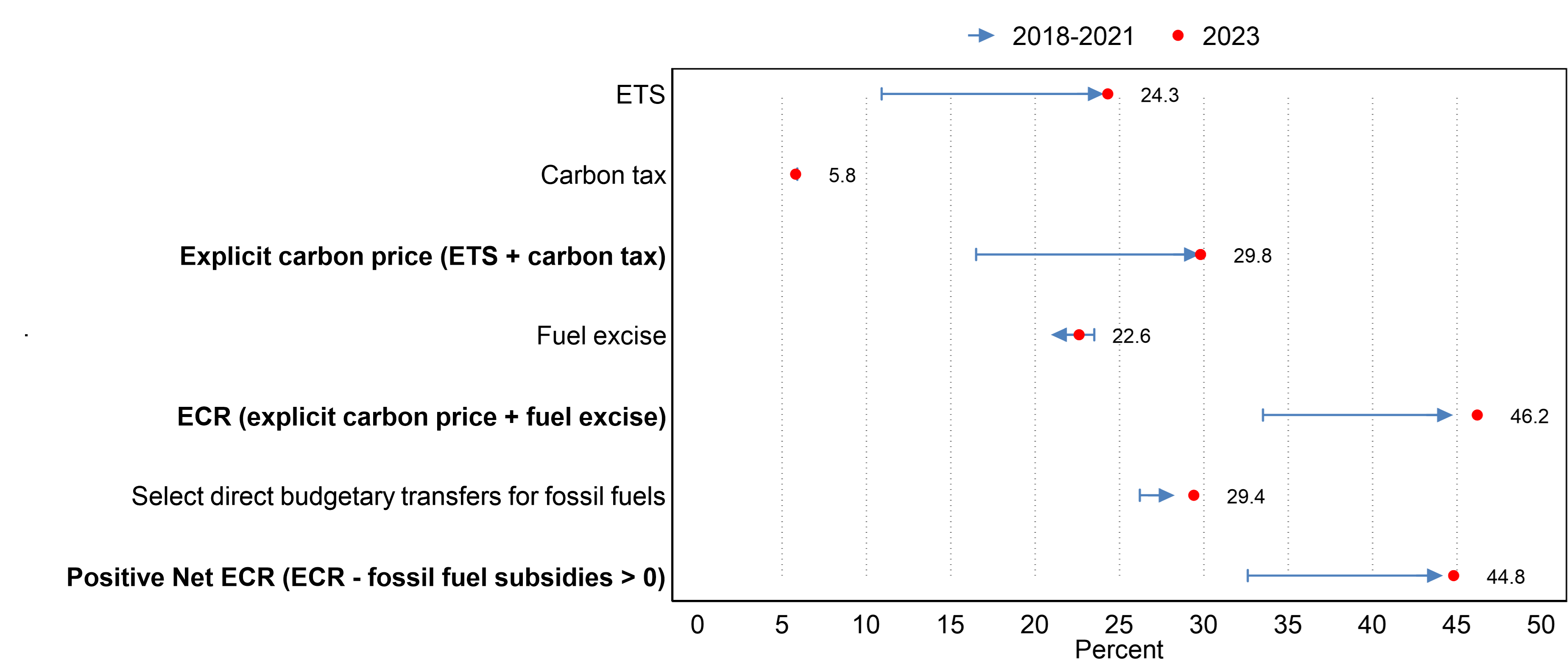
Note: ETS coverage estimates are based on OECD (2023[21]), with adjustments to account for recent coverage changes. Select direct budgetary transfers for fossil fuels estimates are based on the OECD’s Inventory of Support Measures for Fossil Fuels, where available, and original research for the other countries (OECD, 2023[22]). Due to data limitations, select direct budgetary transfers estimates for 2023 are based on data for 2022. GHG emissions are the sum of fossil-fuel related CO2 emissions, calculated based on energy use data for 2021 from the IEA (2023[23]) and other GHGs from Climate Watch (2024[24]). All 78 countries are covered for 2023, with varying country composition according to the coverage of previous editions in other years. Percentages are rounded to the first decimal place. Data for the United States has been removed for all years.
Source: OECD (2024[20]).
The largest change in the emission coverage by instrument from 2021 to 2023 was the expansion of direct budgetary transfers for fossil fuels, selected from the Inventory for countries covered in both databases (Section 2),2 which increased by 2 percentage points from 23.4% in 2021 to 25.4% in 2023. Such measures counteract the emissions coverage by positive price signals from carbon taxes, ETSs and fuel excise taxes. The emissions coverage of ETSs increased by 1.1 percentage points, while coverage of emissions from carbon taxes and fuel excise taxes remained almost identical from 2021 to 2023. These developments were mostly driven by only very modest expansions of, or no change to, coverage of explicit carbon instruments across most countries (Figure 3.2). This primarily reflects the increase in the average ETS permit price, which rose to EUR 4.88/tCO2e in 2023. In comparison, the average carbon tax rate remains much lower, at EUR 0.86/tCO2e, having changed little since 2021.
As in previous years, implicit carbon prices in the form of fuel excise taxes represented the strongest price signal at EUR 12.95/tCO2e, despite decreasing by EUR 1.5/tCO2e from 2021 (EUR 14.49/tCO2e). Given that only 47 countries out of the 78 countries covered had explicit forms of carbon pricing (carbon tax or ETS or both) in place and for many, at low rates, fuel excise taxes represented the strongest carbon price signal in many countries. Low- or middle-income countries were notably less likely to have explicit carbon pricing instruments and relied more on fuel excise taxes. The reduction in fuel excise taxes and the increase in direct budgetary transfers for fossil fuels, led to an average decrease in Net ECRs of EUR 3.68/tCO2e. Together, these changes reflect countries’ responses to rising fuel prices, which are also evident in the expanding coverage of emissions with direct budgetary transfers for fossil fuels from 2021 to 2023.
Net Effective Carbon Rates in 78 economies by carbon pricing instrument, in EUR/tCO2e
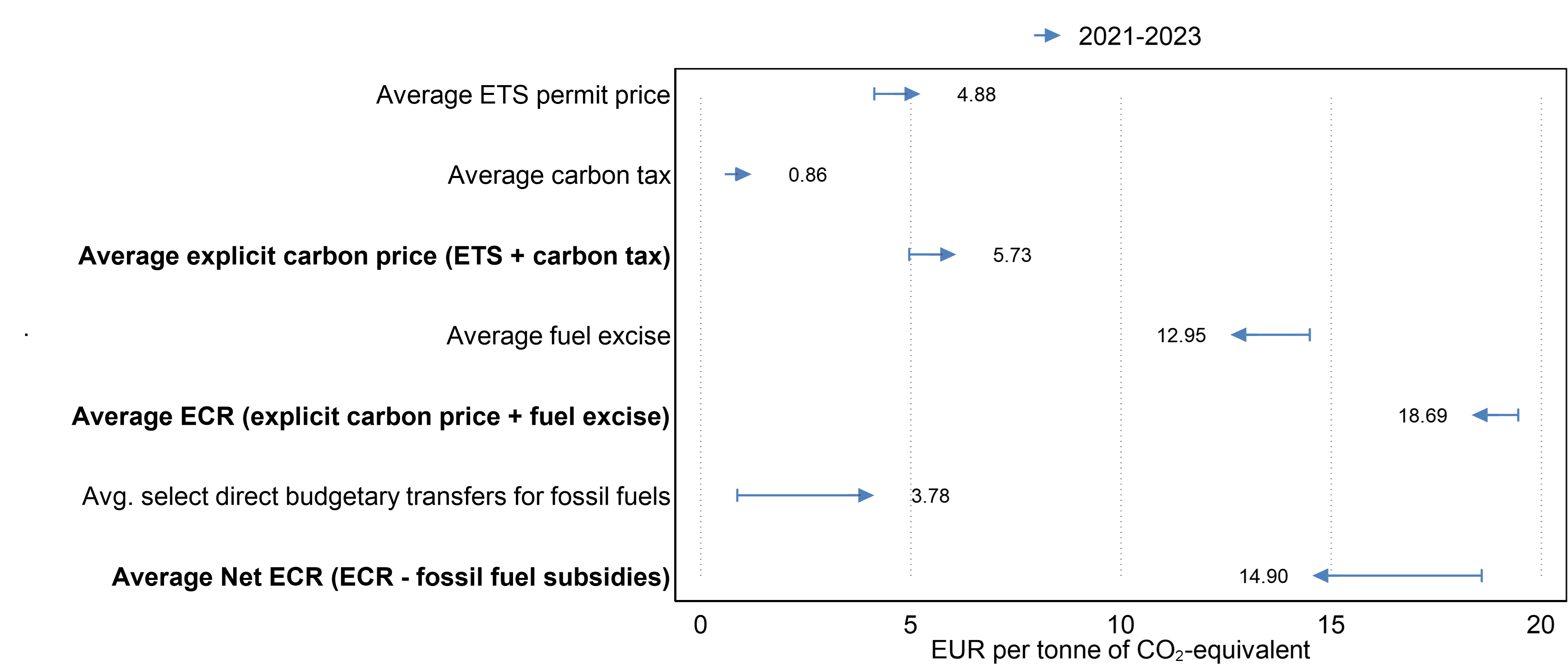
Note: Effective carbon rates are averaged across all GHG emissions of the 79 countries, including those emissions that are not covered by any carbon pricing instrument. Due to data limitations, select direct budgetary transfers for fossil fuels estimates for 2023 are based on data for 2022. All 78 countries are covered for 2023 with varying country composition according to the coverage of previous editions in other years. All rates are expressed in real 2023 EUR using the latest available OECD exchange rate and inflation data; changes can thus be affected by inflation and exchange rate fluctuations. Prices are rounded to the nearest eurocent. Data for the United States has been removed for all years.
Source: OECD (2024[20]).
← 1. Note that material in this section draws on data from 2023 as estimates are not updated annually.
← 2. Select direct budgetary transfers are direct budgetary transfers to fossil fuel suppliers or end-users that are expected to reduce domestic fossil fuel prices before taxes. Tax expenditures are already part of the ECR component. See Section 5 for more information on the methodology of the OECD Net Effective Carbon Rates.